

- Founded
- 1925
- Headquarters
- Fresnoy-le-Grand, France
- Specialty
- Enameled cast-iron cookware, stainless steel cookware, stovetop kettles, stoneware bakeware
- Category
- Kitchen
- Website
- lecreuset.ca →
Our verdict
Le Creuset is on this list because they have built a century-long institutional commitment to one idea — that the everyday kitchen tools you reach for most should be the ones engineered to last the longest — and they have the manufacturing and warranty discipline to back it up. The Classic Whistling Kettle in stainless delivers, at the $200 tier, the kind of fit-and-finish, mechanical thoughtfulness, and decades-long service life that used to require buying European antiques. Whether the cookware is made in France, Portugal, or China, the engineering specification and the warranty are consistent — and the warranty is for the lifetime of the original purchaser.
Background
Le Creuset was founded in 1925 in Fresnoy-le-Grand, in northern France, by two Belgian industrialists who set out to make enameled cast-iron cookware in a single factory. A century later, that same factory still produces every piece of enameled cast iron the company sells — and Le Creuset has expanded into stainless steel cookware, stoneware bakeware, and a hard-anodized nonstick line, while keeping its name on the same iconic silhouettes the brand has been making since the 1920s.
The Fresnoy-le-Grand factory is the heart of the company. Every Dutch oven, braiser, skillet, and traditional whistling kettle in enameled cast iron is made there. Other product lines — including the polished stainless steel cookware we reviewed in the Classic Whistling Kettle — are manufactured to Le Creuset’s specification in other facilities around the world, including China for the stainless line.
How we use Le Creuset
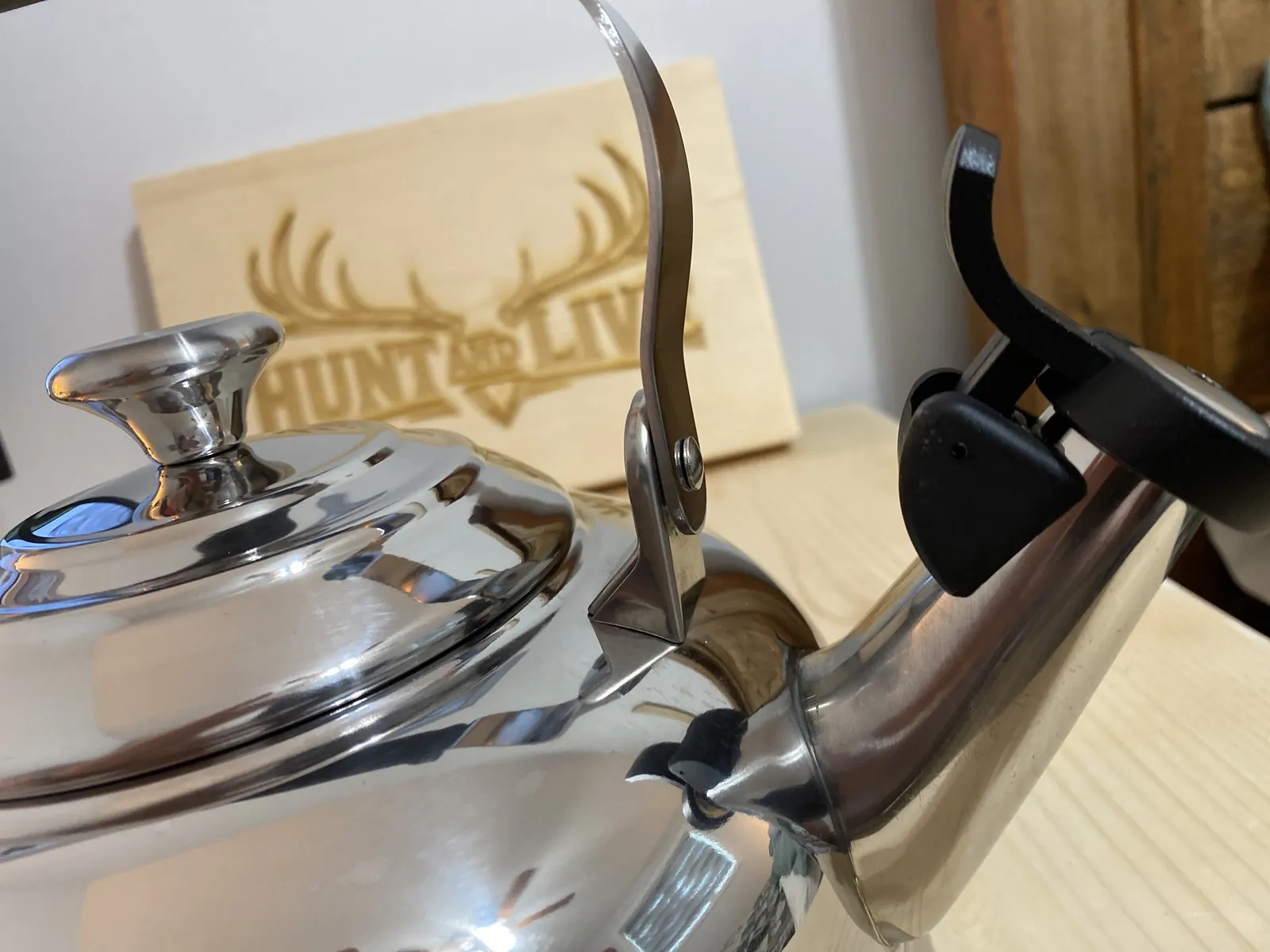
Le Creuset earns its place on this list through the small-engineering details that show up everywhere across the catalogue — but most clearly on the Classic Whistling Kettle in stainless steel. The kettle is the cleanest expression of what Le Creuset does well: a polished stainless body with no enamel to chip, a single-tone fixed whistle that’s genuinely pleasant rather than shrill, a wide flat induction-compatible base that also sits stably on a wood-stove cooktop, a spring-loaded thumb-lever spout cover that opens cleanly without putting your fingers in the steam, and the Le Creuset limited lifetime warranty backing the whole assembly.
For a homestead or off-grid kitchen, the kettle is the right Le Creuset to start with. The wood-stove compatibility, the multi-heat-source universality, and the no-chip stainless body all match the way an off-grid kitchen actually gets used.
What sets Le Creuset apart — engineering and warranty
Two things matter most.
The warranty. Le Creuset’s enameled cast iron and stainless steel cookware are both covered by a limited lifetime warranty against manufacturing defects in material and workmanship — for the lifetime of the original purchaser, with repair or replacement at no charge. That’s the warranty you want from a brand selling premium-tier cookware. The hard-anodized nonstick line and the stoneware bakeware carry shorter, line-specific warranties — read the fine print on those before buying.
The small-engineering details. The spring-loaded thumb-lever spout cover on the whistling kettle, the precise fit of cast-iron lids, the wide machined base that contacts a burner cleanly, the heat-resistant phenolic handles that stay cool through a full boil — these are the things that most cookware brands skip at the budget tier and approximate at the mid-tier. Le Creuset spends the engineering money on them, and they show up in real use.
Where Le Creuset falls short
We’re honest about the trade-offs.
Le Creuset is expensive. A $200 kettle is genuinely more than most kitchens budget for a kettle, and the brand premium is real — you can buy a perfectly functional stovetop kettle for $40 that will last several years. The Le Creuset value proposition is decades of service and resale longevity, not first-buy savings.
The stainless line is manufactured in China, not France, despite the brand’s French heritage. The product is still built to Le Creuset’s specification and carries the full lifetime warranty, but buyers who assume every Le Creuset piece comes from the Fresnoy-le-Grand factory should know that only the enameled cast iron does.
The stainless finish wants maintenance if you care about its showroom look. Polished stainless shows fingerprints, water spots, and mineral deposits, and a microfiber wipe after every use is the cost of keeping the finish bright. Enamel doesn’t do that — the trade-off is that enamel chips and stainless doesn’t.
Bottom line
Le Creuset is on our Recommended Brands list because the engineering is honest and the warranty makes the price stack up over the kitchen’s life. For a homestead kitchen, an off-grid cabin, or any household that values cookware that lasts over cookware that’s cheap, Le Creuset’s stainless and cast iron lines are among the best-engineered pieces of cookware money can buy at any price.
When we recommend a Le Creuset piece, we’re recommending a tool that you’ll still be using when your kids are grown. For the cleanest place to start with the brand, the Classic Whistling Kettle in stainless is the right pick.
Why we recommend them
Limited lifetime warranty on stainless cookware. Le Creuset's warranty on stainless products covers manufacturing defects in material and workmanship for the lifetime of the original purchaser — repair or replacement, no end date. This is the warranty you want from a brand whose pitch is 'buy it once.'
Engineering on the small details. The spring-loaded thumb-lever whistle cover on the Classic Whistling Kettle is the kind of small mechanism that should still be working in fifteen years — most $30 kettles use a wire-pull lever that gums up after a few hundred boils. That kind of careful design shows up across the line.
Honest material choices. The stainless kettles aren't enamel — they don't chip, don't develop the under-base discolouration enamel kettles get over years of heat cycling, and don't need cosmetic babying. The trade-off is honest: stainless shows fingerprints, but it doesn't degrade.
Multi-stovetop compatibility, including wood stoves. The wide flat base works on gas, electric coil, ceramic, halogen, induction, and (off-spec but functionally identical to electric coil) a wood-stove cooktop. For an off-grid kitchen that might run on three different heat sources in a year, that universality is genuinely useful.
Resale-grade build and brand longevity. A used Le Creuset still holds value decades after purchase — almost no other cookware brand keeps its resale price the way Le Creuset does. That's the market's vote that the product genuinely lasts.
Product lines
What they make.
Enameled cast-iron
The flagship line — Dutch ovens, braisers, skillets, and the original whistling kettles in enamel-on-cast-iron. Heirloom-grade cookware, made in France, with the lifetime warranty Le Creuset built its reputation on. The blue enamel kettle pictured in our review is from this line.
Stainless steel
Polished stainless cookware including the Classic Whistling Kettle (which we cover in our review), saucepans, sauté pans, and stock pots. Limited lifetime warranty on stainless, induction-compatible, no enamel to chip. Manufactured in China to Le Creuset's specification.
Stoneware bakeware
Enameled stoneware mugs, baking dishes, casseroles, and serveware. Lighter than cast iron but built for daily use and finished in the same Le Creuset enamel colour palette.
Toughened Nonstick Pro
Hard-anodized aluminum cookware with a multi-layer nonstick coating. Le Creuset's modern nonstick line, with its own dedicated warranty terms separate from the lifetime stainless and cast-iron warranties.
Reviews