Specialized lubricant · Moly · Air Venturi
Air Venturi Moly Metal-to-Metal Paste (1oz)
Molybdenum disulfide lubricant for spring-piston chambers and PCP bottle threads. Prevents metal-to-metal wear and galling.
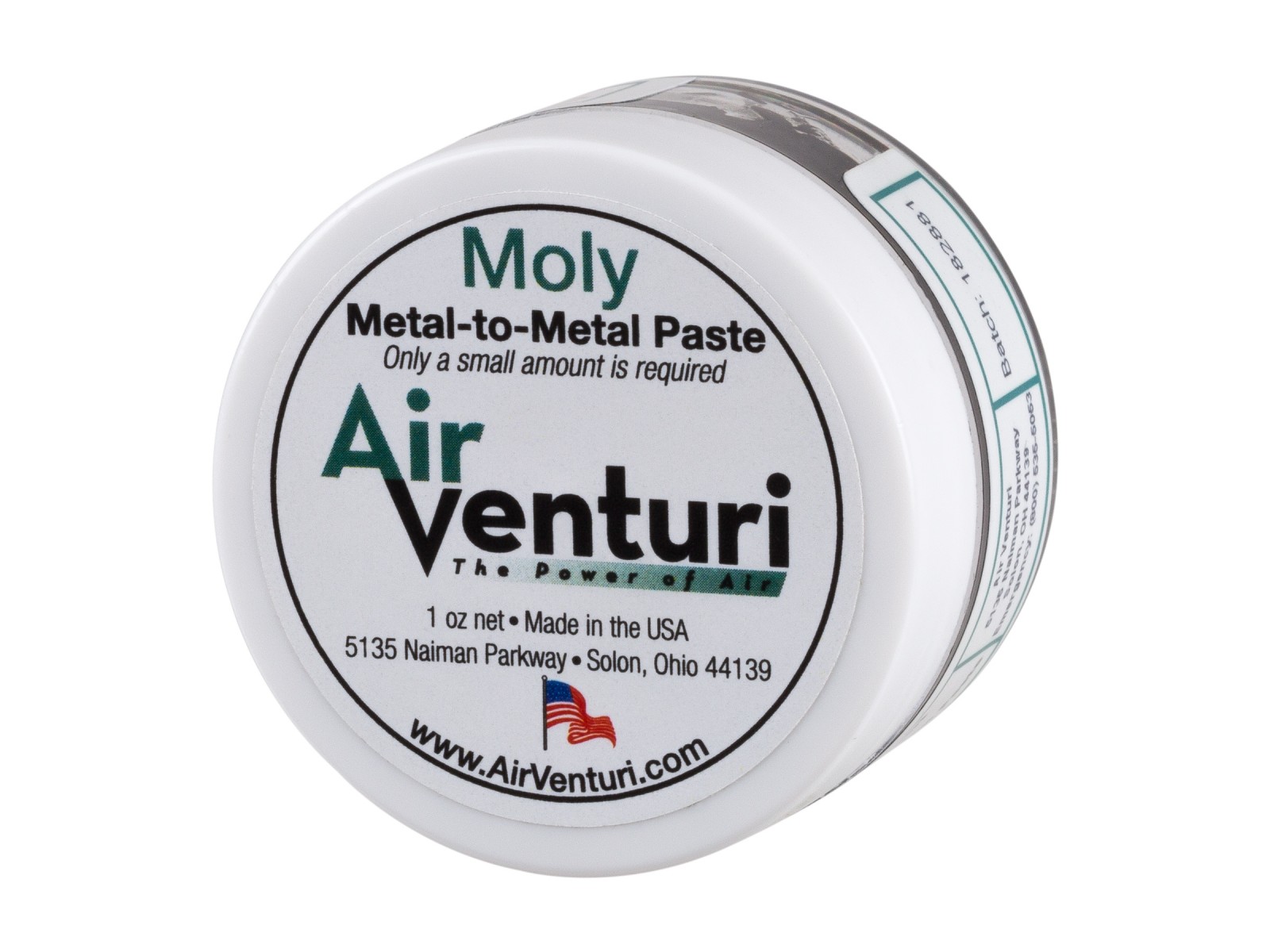
Image credit: Airgun Archery Fun
Quick take
Air Venturi Moly Paste — the specialized lubricant for high-pressure metal-to-metal contact points. 4 orders. Excellent for spring-piston chambers (the original use case), but also the right product for PCP bottle-to-rifle threads and any metal-to-metal surface that sees pressure and wear. Molybdenum disulfide bonds with the metal surface at the molecular level, prevents wear and galling. Unlike most lubricants, moly is safe for airgun seals — many oils harm rubber, this one doesn't. 1 oz size. Use sparingly for best results.
Canadian family business · Flat $17 CAD shipping
Specifications
Key specs
| Type | Molybdenum disulfide paste — metal-to-metal lubricant |
| Quantity | 1 oz |
| Best for | Spring-piston chambers, PCP bottle-to-rifle threads, metal contact points under pressure |
| How it works | Moly molecule bonds with the metal surface — prevents wear and galling |
| Seal safety | Safe for airgun seals (unlike many other lubricants) |
| Application | Use sparingly for best results |
| Caution | Keep away from clothing and skin (stains) |
| Buyer rating | 4 orders |
The Hunt & Live take
Why this paste earns the pick
Moly paste is the specialized lubricant for specific PCP applications — not a general-purpose oil. Its primary niche is metal-to-metal contact points that see pressure and would otherwise wear or gall. For PCP owners, the key use case is the bottle-to-rifle thread interface on bottle-fed PCPs (Snowpeak M60B, Max 1, Lynx Gen 3 — anywhere a high-pressure bottle threads onto the rifle).
Without moly, the bottle threads can gall over time — small metal particles transfer between the bottle and rifle threads, eventually making it hard to thread the bottle on or off. With moly, the molybdenum disulfide molecule bonds to the thread surface and prevents metal contact. Apply once when threading on a new bottle; reapply every 6-12 months.
The partner’s framing positions it for spring-piston chambers (the historical primary use), but the PCP application is equally valid. The key advantage is seal safety: unlike most heavy lubricants, moly doesn’t degrade rubber or silicone seals — meaning it’s safe to use near O-rings.
What it pairs with
- Bottle-fed PCPs with threaded bottles — Snowpeak M60B, Max 1, Lynx Gen 3, Mat 300
- Spring-piston guns — the original use case
- Any metal-to-metal high-pressure contact point in the catalog
- NOT for O-rings (use silicone grease for those)
Honest trade-offs
Use sparingly. A thin film is all you need. Over-applying moly means excess paste squeezes out and contaminates downstream surfaces.
Stains everything it touches. Black moly paste on hands, clothing, or rifle stocks is hard to remove. Wear gloves, work over a paper towel.
Not a routine maintenance product. Unlike Ballistol (used regularly) or silicone oil (used at every maintenance interval), moly paste is for specific contact points and gets re-applied infrequently (6-12 months on bottle threads, longer on most other surfaces).
Don’t substitute for silicone oil or grease on O-rings. Moly is the wrong product for rubber seals — use the silicone grease or silicone oil for those.
4 verified orders. Small sample. This is a niche product that the typical casual PCP owner may never need; for bottle-fed rifle owners doing periodic maintenance, it’s worth keeping a small tube on the bench.

Pillar resource · Featured
The Perfect PCP Starter Kit for Beginners
Every part. Every line item. Picked, budgeted, and linked. Snowpeak Lynx Gen 3 rifle with bundled scope, hand pump, pellets, mounts, silicone oil, fill adapter, bipod, and case — $1,200–$1,500 CAD total, every item from our Canadian partner.
Read the full starter-kit guide →In partnership with