Cleaner / preservative · Ballistol · 4oz
Ballistol Non-Aerosol 4oz
The European all-purpose since 1904 — barrel cleaner, exterior preservative, rust film. PCP-safe. Recommended by top airgun specialists. 41 orders.
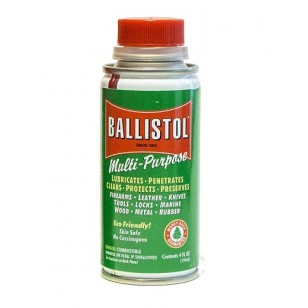
Image credit: Airgun Archery Fun
Quick take
Ballistol in the 4oz non-aerosol bottle — the European all-purpose preservation and cleaning oil that's been used since 1904. 41 orders. Safe for PCPs and recommended by top airgun specialists. Dissolves traces of copper, lead, brass, zinc and tombac; cleans, lubes and protects every part of the gun; forms a film against rust; never gums up or hardens; ideal for metal AND wood stocks. Originally invented for military use; biodegradable, non-toxic, no carcinogens.
Canadian family business · Flat $17 CAD shipping
Specifications
Key specs
| Type | Multi-purpose preservation oil — clean / lube / protect |
| Quantity | 4oz (~118ml) — non-aerosol |
| PCP safe? | Yes — recommended by top airgun specialists |
| Cleans | Copper, lead, brass, zinc, tombac traces; rust; bluing salts (new gun barrels); fingerprints (acidic) |
| Lubricates | Every part of the gun — metal, wood stocks, leather, rubber |
| Protects | Forms a film against rust |
| Properties | Never gums up or hardens; biodegradable; non-toxic; no carcinogens |
| History | Originally invented for military use, 1904 |
| Buyer rating | 41 orders |
The Hunt & Live take
Why this Ballistol earns the pick
Ballistol is the European all-purpose since 1904 — and that history is the story. Invented for the Imperial German Army to be a single product that cleaned, lubricated, and protected rifles, leather slings, wood stocks, and the soldier’s hands all at once. A century of military and civilian use has proven the formula on every kind of firearm, and modern PCP shooters use it because:
- It’s safe for PCP seals. Unlike most petroleum-based gun oils, Ballistol doesn’t degrade rubber and silicone seals.
- It cleans lead build-up in airgun barrels. This is the partner’s recommendation: pair Ballistol with Patchworm felts for the wet pass.
- It works on the whole rifle, not just metal. Wood stocks, leather slings, rubber butt pads — all benefit from Ballistol’s preservation film.
- It doesn’t gum up. Many gun oils dry out over time and become sticky residue. Ballistol stays workable.
The partner’s framing on the product page: “The perfect barrel cleaner for all your air rifles! Recommended by all the top Airgun specialists, ballistol is safe for use in pcp Rifles and can be used also for cleaning the outside of barrels and stocks.”
The 4oz bottle is the single-rifle owner size — enough for a year or two of regular care. For multi-rifle households, the 16oz Ballistol is the shop-size option.
What it pairs with
- Any PCP rifle — barrel cleaning (with Patchworm) + exterior preservation
- Patchworm Pocket Field Kit — Ballistol soaks the wet patches
- Patchworm .22/.25 Kit + VFG felts — the recommended .22/.25 cleaning workflow uses Ballistol
- VFG Cleaning Pellets — drip Ballistol on each pellet before shooting through
- Wood-stocked rifles — exterior wipe-down
- Leather slings — preservation oil
Honest trade-offs
The smell is distinctive. Ballistol smells like anise / licorice (it’s the carrier). Some people love it, some hate it. Doesn’t affect performance.
It’s not the strongest copper solvent on the market. Centerfire shooters scrubbing out heavy copper fouling use stronger products. For PCP work where there’s no copper fouling, Ballistol is more than sufficient.
Non-aerosol means slower application than spray. Use a patch or a dropper to apply rather than spraying. Most PCP owners prefer this — gives more control over how much oil you’re applying.
For high-volume use, buy the 16oz size — cheaper per ounce.

Pillar resource · Featured
The Perfect PCP Starter Kit for Beginners
Every part. Every line item. Picked, budgeted, and linked. Snowpeak Lynx Gen 3 rifle with bundled scope, hand pump, pellets, mounts, silicone oil, fill adapter, bipod, and case — $1,200–$1,500 CAD total, every item from our Canadian partner.
Read the full starter-kit guide →In partnership with