Scope · Discovery
Discovery MS 4-16×44 SFIR Rifle Scope
Higher magnification, second focal plane, red and green illumination. The PCP upgrade pick for shooters who know their zero and want to reach 50+ yards.
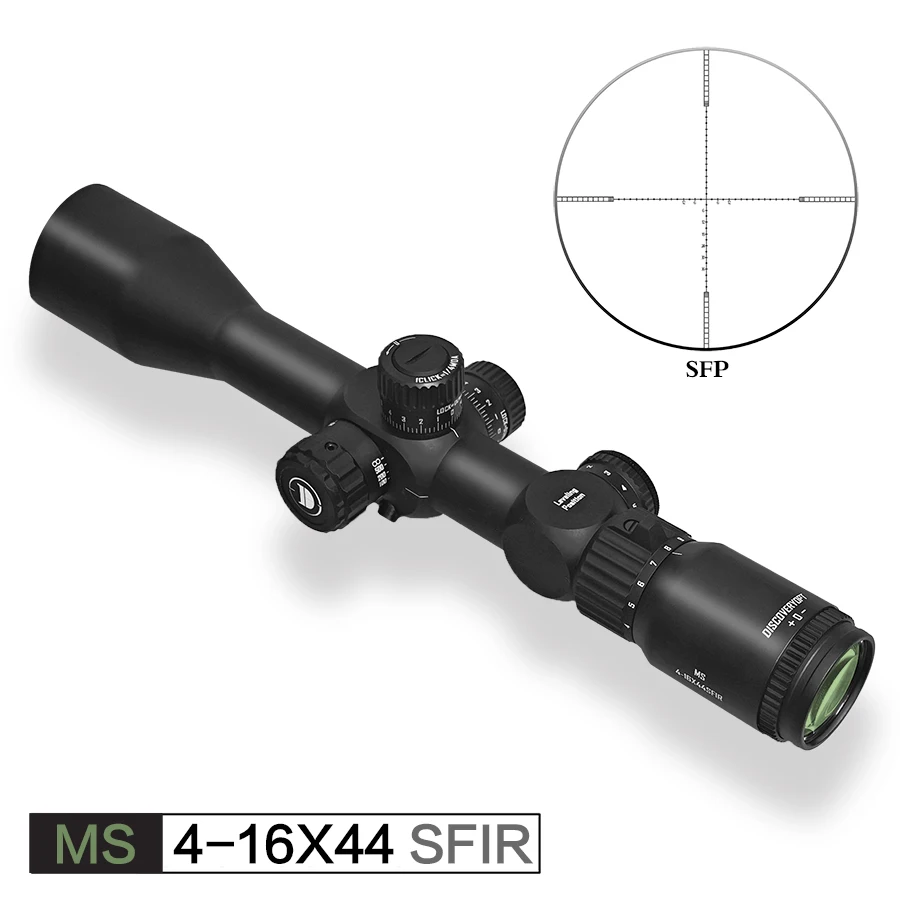
Image credit: Airgun Archery Fun
Quick take
The MS 4-16×44 is the right second scope when you've put 2,000 pellets through a 3-9× and you want more reach without going FFP. Side-focus parallax, red/green illuminated reticle, second focal plane (which feels familiar if you're coming from a hunting scope), shockproof to .308 — meaning every PCP made will be fine. The trade-off versus the FFP scopes above: you can only use your mil-dot holdovers at max magnification. For most pest-control work, that's not a problem.
Canadian family business · Flat $17 CAD shipping
Specifications
Key specs
| Magnification | 4× to 16× variable |
| Objective lens | 44mm |
| Tube diameter | 1 inch (25.4mm) |
| Reticle position | Second focal plane (SFP) |
| Illuminated reticle | Red and green, multiple brightness |
| Side focus parallax | Yes |
| Shockproof rating | .308 Win — covers all PCPs, .22LR, .22 WMR, .223, low-power springers |
| Field of view | Variable across 4–16× |
| Use case | Deer hunting (low-power centerfire), rimfire, PCPs |
| Ring options | High 11mm · High 20mm · Low 20mm · Low 11mm (selected at checkout) |
The Hunt & Live take
Why this scope earns the pick
The MS 4-16×44 lives in the “I know what I’m doing now” tier. If you’ve spent a season behind the Discovery HD 2-12×24 above and you want to push your effective range past 50 yards on rabbits, raccoons, or pest birds, this is the next scope. The 16× max magnification lets you actually see a head shot at 60-70 yards, and the side-focus parallax accommodates the close-range PCP work that hunting scopes can’t do.
The second focal plane (SFP) reticle stays the same visual size at every magnification — which means it’s easier to see at low power (good for fast acquisition) and your mil-dots only work at one specific zoom (typically max). For PCP work, that’s fine — you’ll typically be at max magnification anyway for the ranges that justify dialing.
What it pairs with
Pick the Low 20mm rings for a Snowpeak Lynx Gen 3 with a Picatinny rail and clear objective access. High 20mm if you have a tall front sight or thread protector. The 11mm options are for older dovetail-rail rifles. The 1-inch tube means don’t reuse 30mm rings from another build — order the rings you need with the scope.
Ring choice at checkout
- Modern Picatinny PCP, clear objective → Low 20mm
- Modern Picatinny PCP, front sight or shroud in the way → High 20mm
- 11mm dovetail PCP, low profile → Low 11mm
- 11mm dovetail PCP, tall obstruction → High 11mm
Honest trade-offs
The 1-inch tube means less elevation/windage adjustment range than the 30mm tube scopes (typically 60-80 MOA total versus 110+ MOA on the bigger tubes). For a PCP under 50 yards that’s not a real limitation, but if you plan to compete in field target or shoot at 100+ yards you’ll outgrow the adjustment range. The SFP reticle is not the right tool if you’ve already learned an FFP scope — going back to SFP feels like a downgrade in flexibility. And the side focus turret is on the eyepiece side rather than the front bell — slightly slower to adjust if you’re used to AO rings.
But for the majority of PCP hunters who want 16× without learning FFP math, the MS 4-16×44 is the honest pick.
Pillar resource · Featured
The Perfect PCP Starter Kit for Beginners
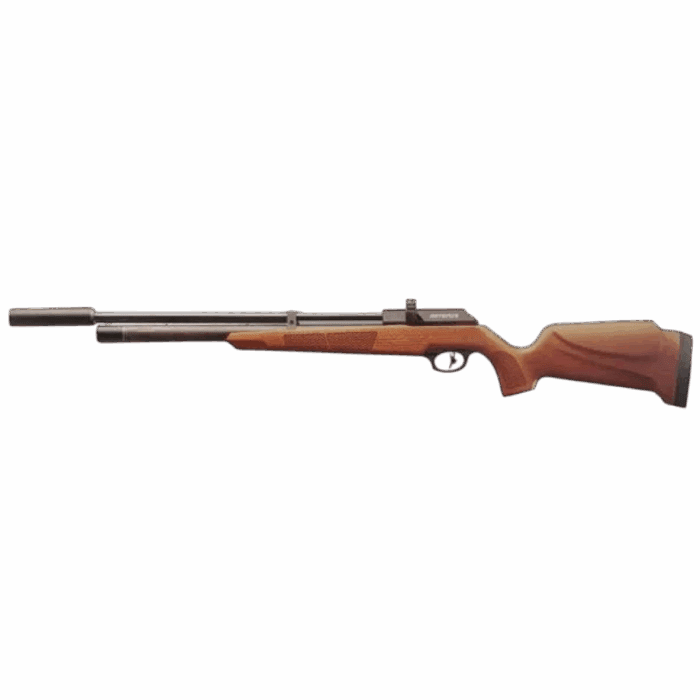
Every part. Every line item. Picked, budgeted, and linked. Snowpeak Lynx Gen 3 rifle with bundled scope, hand pump, pellets, mounts, silicone oil, fill adapter, bipod, and case — $1,200–$1,500 CAD total, every item from our Canadian partner.
Read the full starter-kit guide →In partnership with