On this page
Vurhonga Savanna is flat, open and long. The best way to read it is to get up high, and the kopjes are the way to do it. These rocky outcrops stand out of the grass like islands, with boulders, bush and an acacia or two on top. Here is how we use them, with screenshots from our own save.
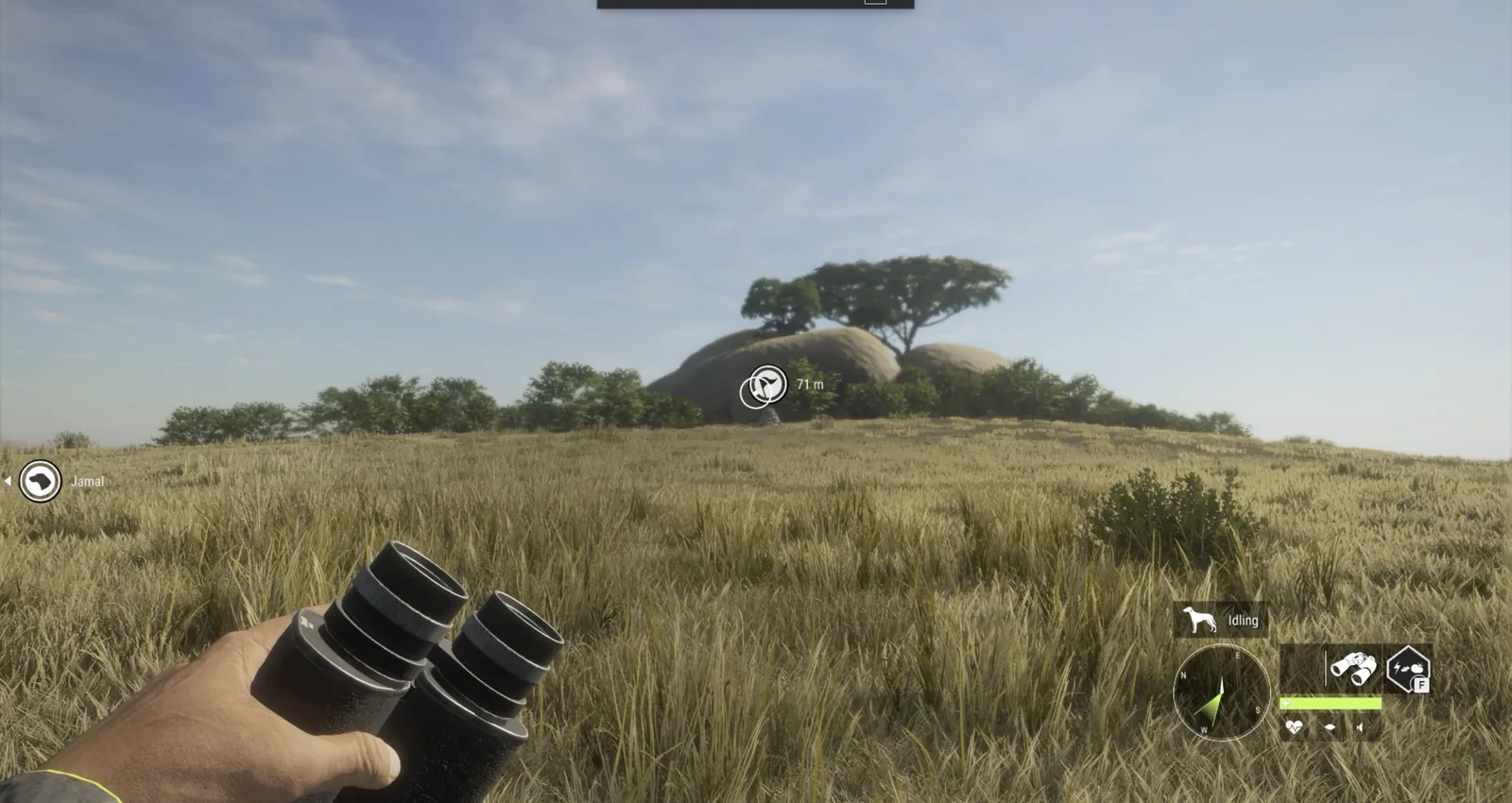 A kopje on the horizon, 71 m away. The flag marks the landmark on the compass
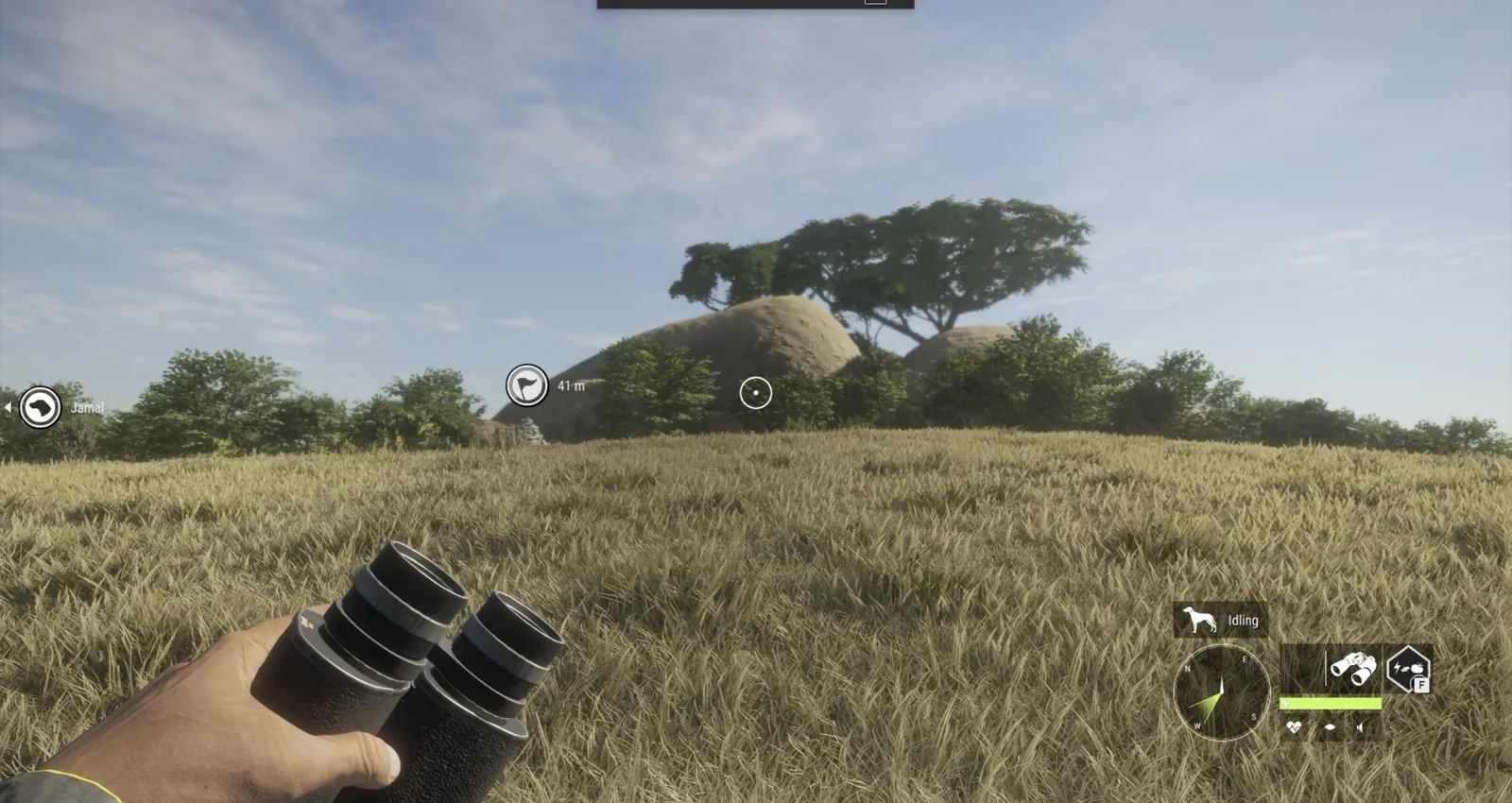 Closer, at 41 m: boulders, an acacia on top and bush around the base
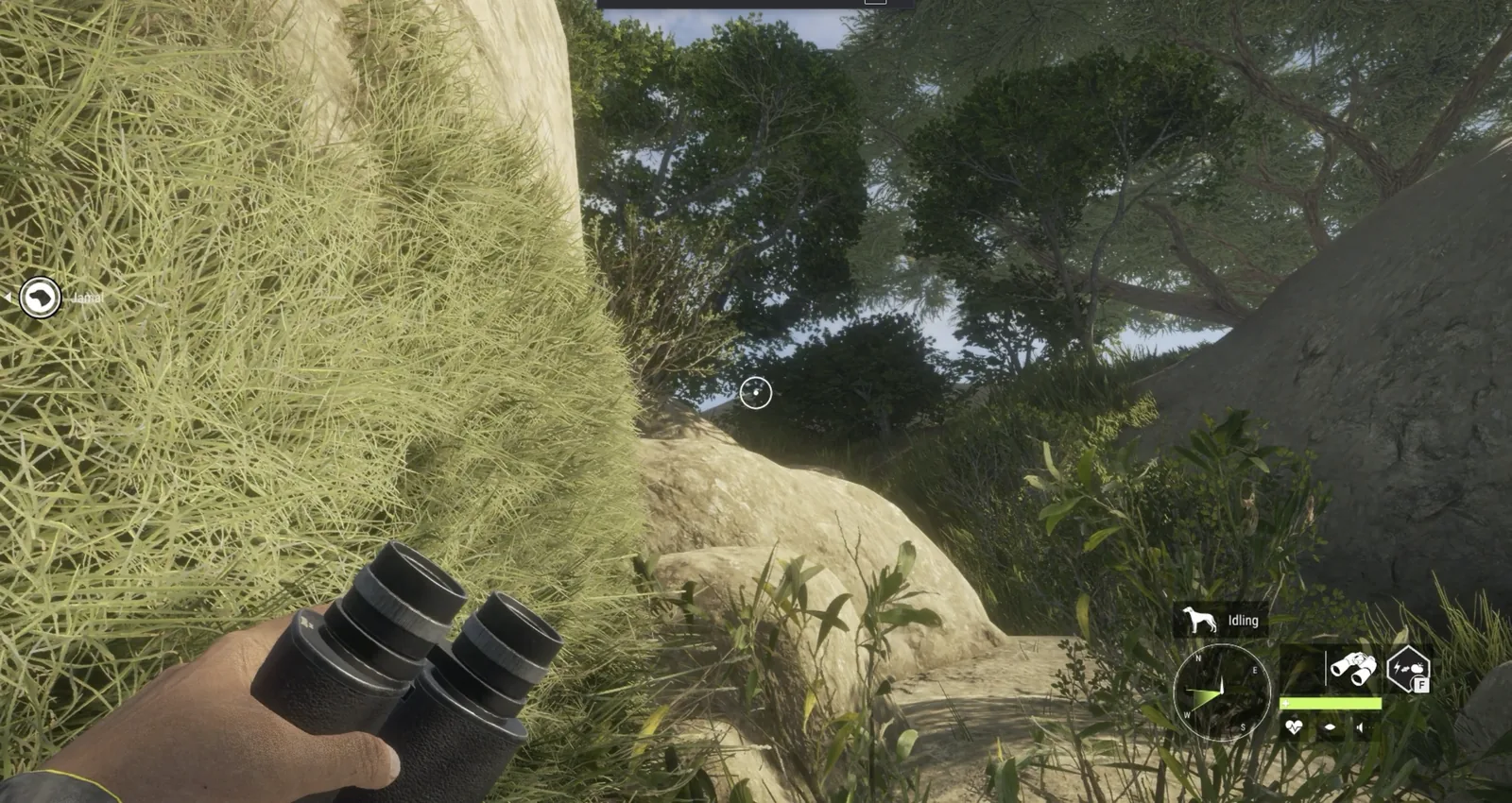 Up at the rocks: grass and boulders leave a narrow way in
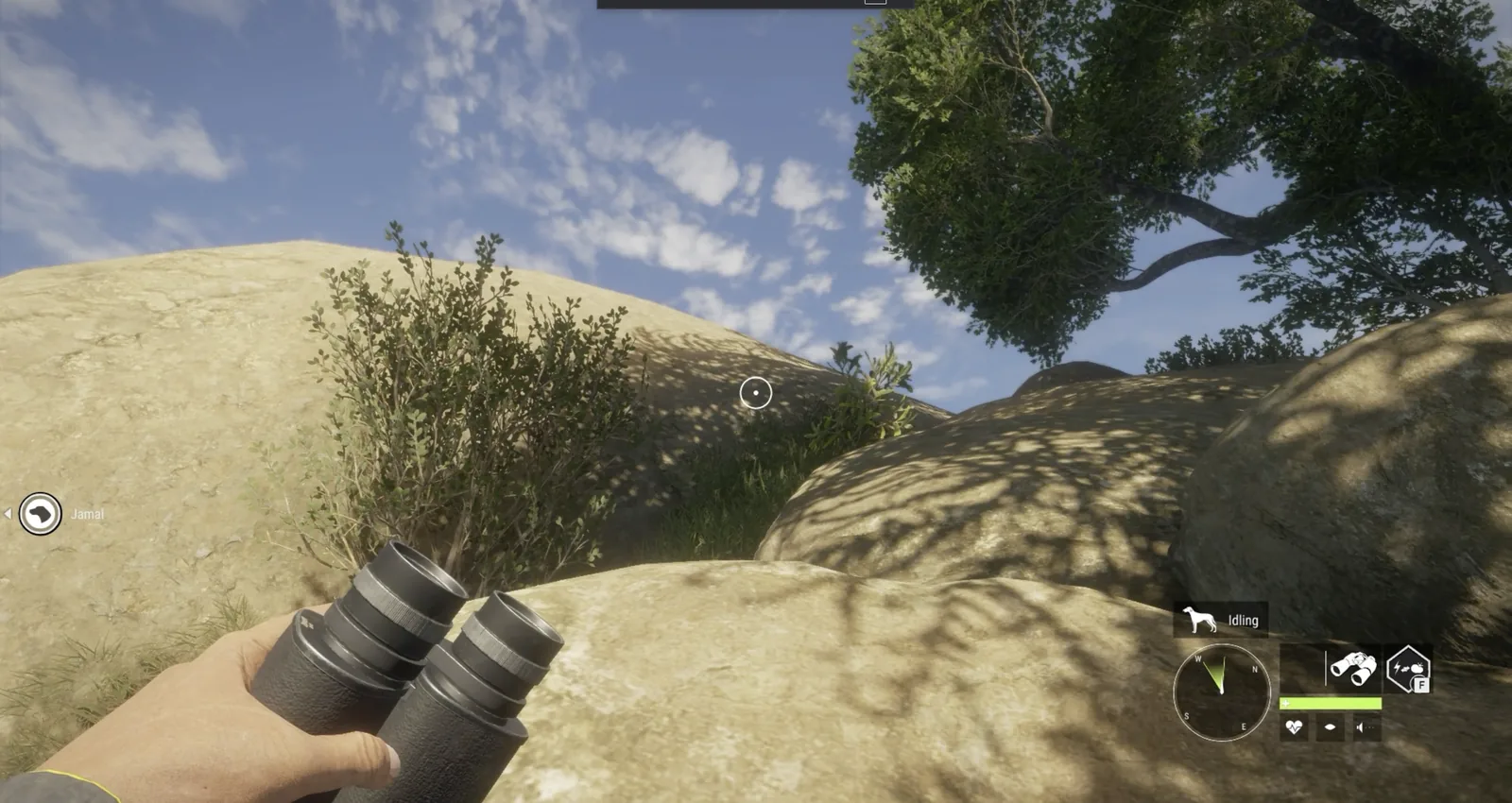 Deep in the shade among the boulders, with the dappled light that helps break up your outline
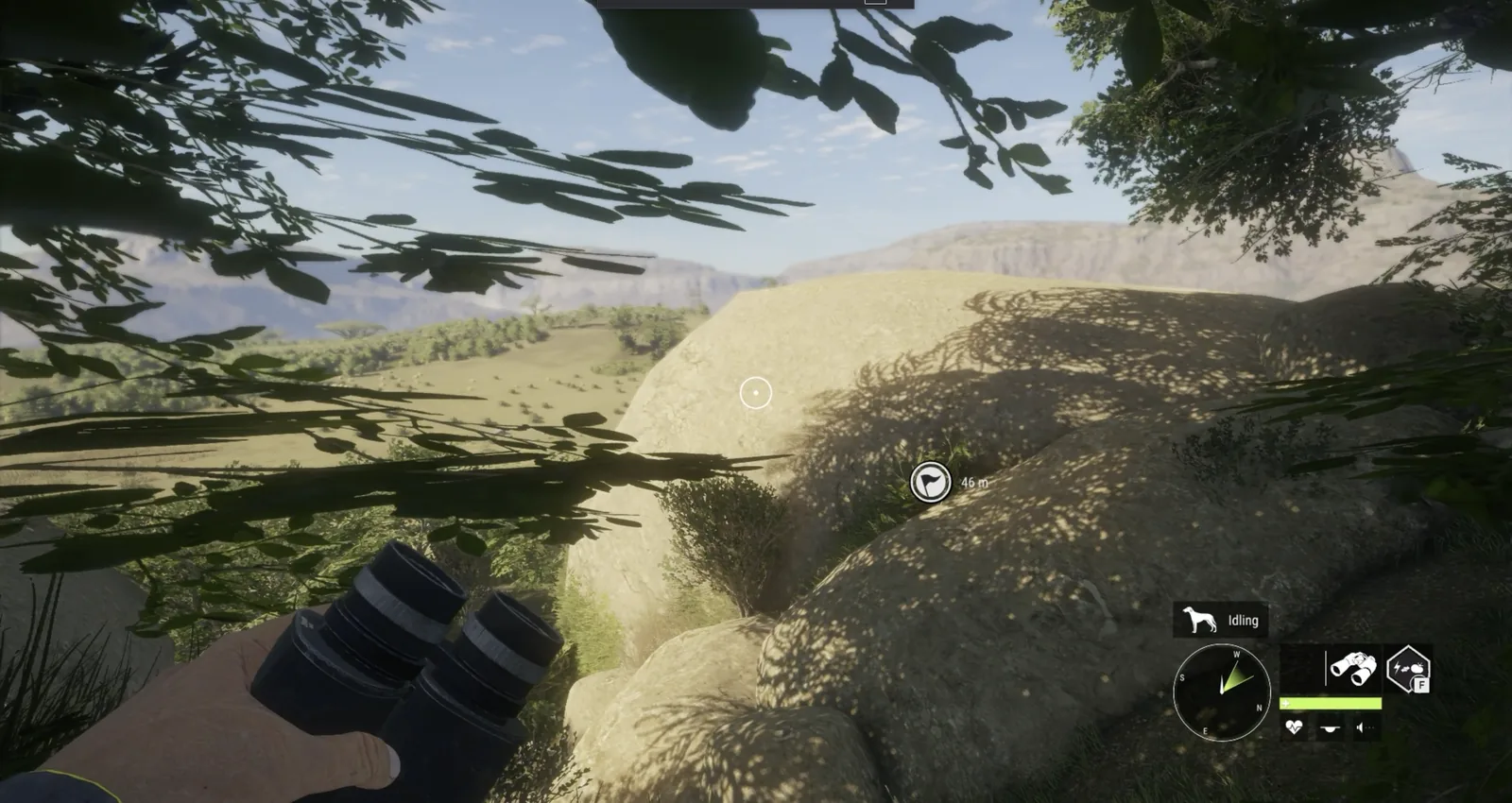 Near the top, 46 m from the flag. The plain opens up beyond the leaves
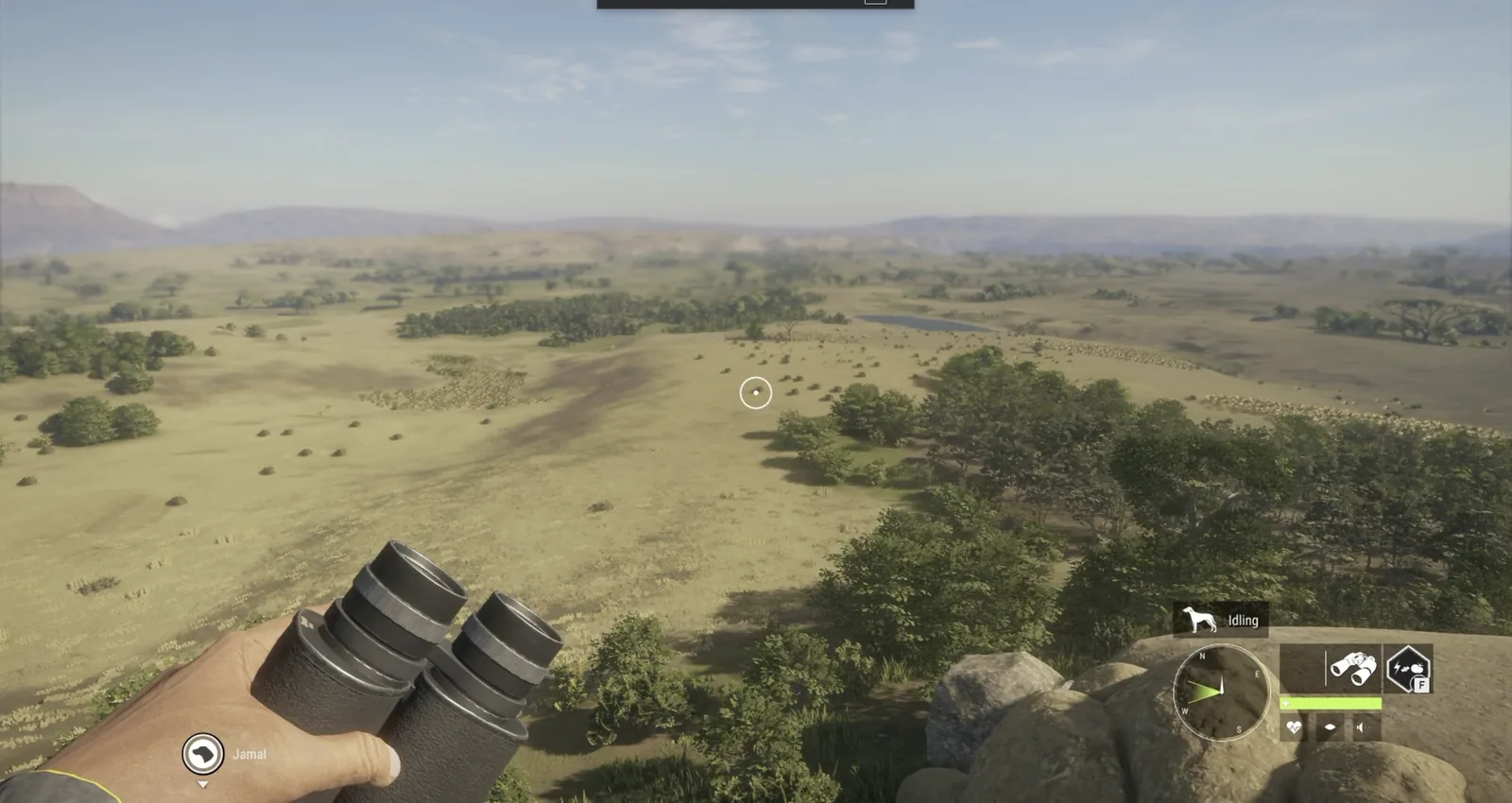 The view from the top: herds on the plain, a waterhole in the distance and the escarpment beyond
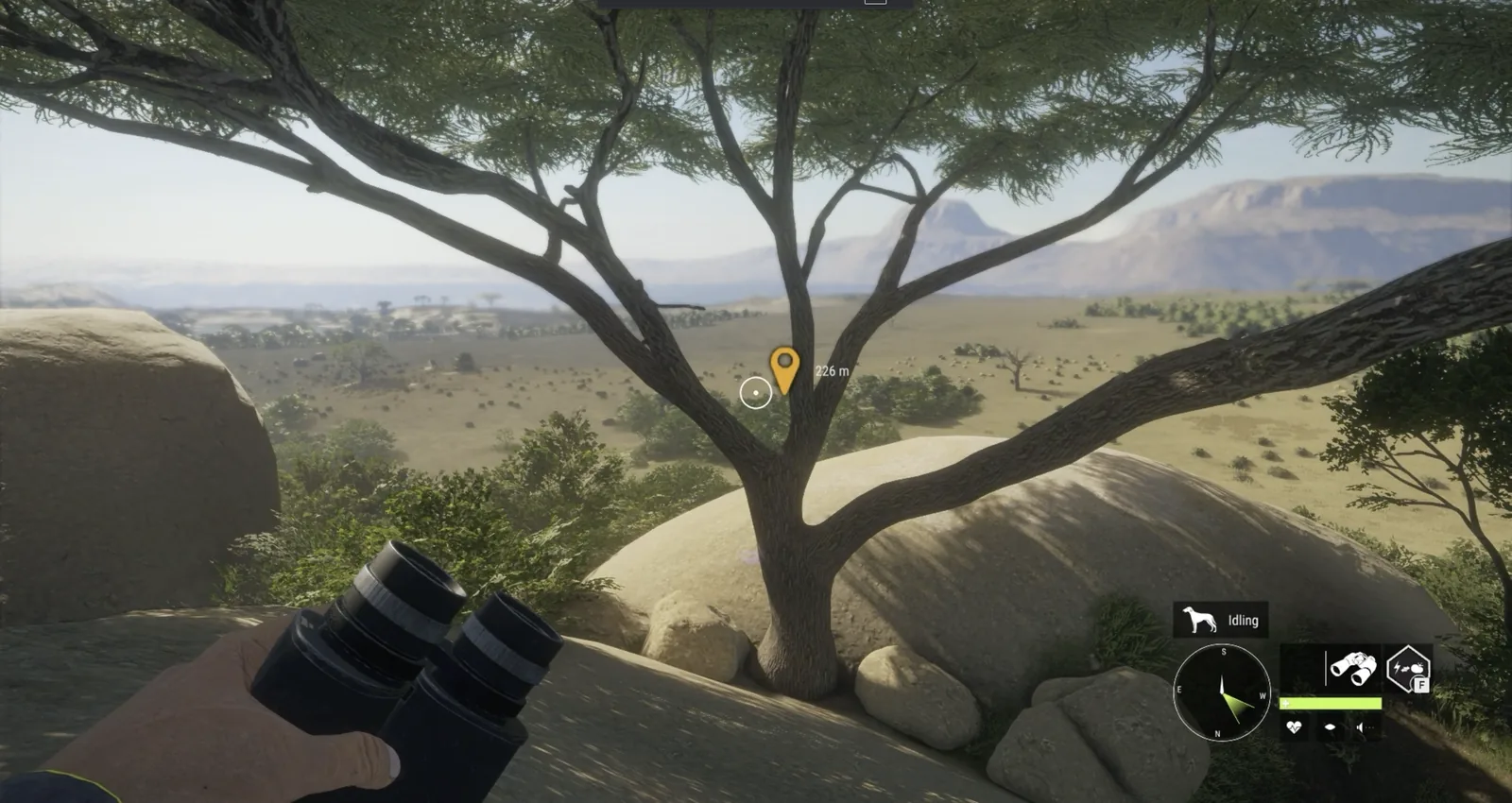 Looking out through an acacia from the rocks, a waypoint set 226 m out
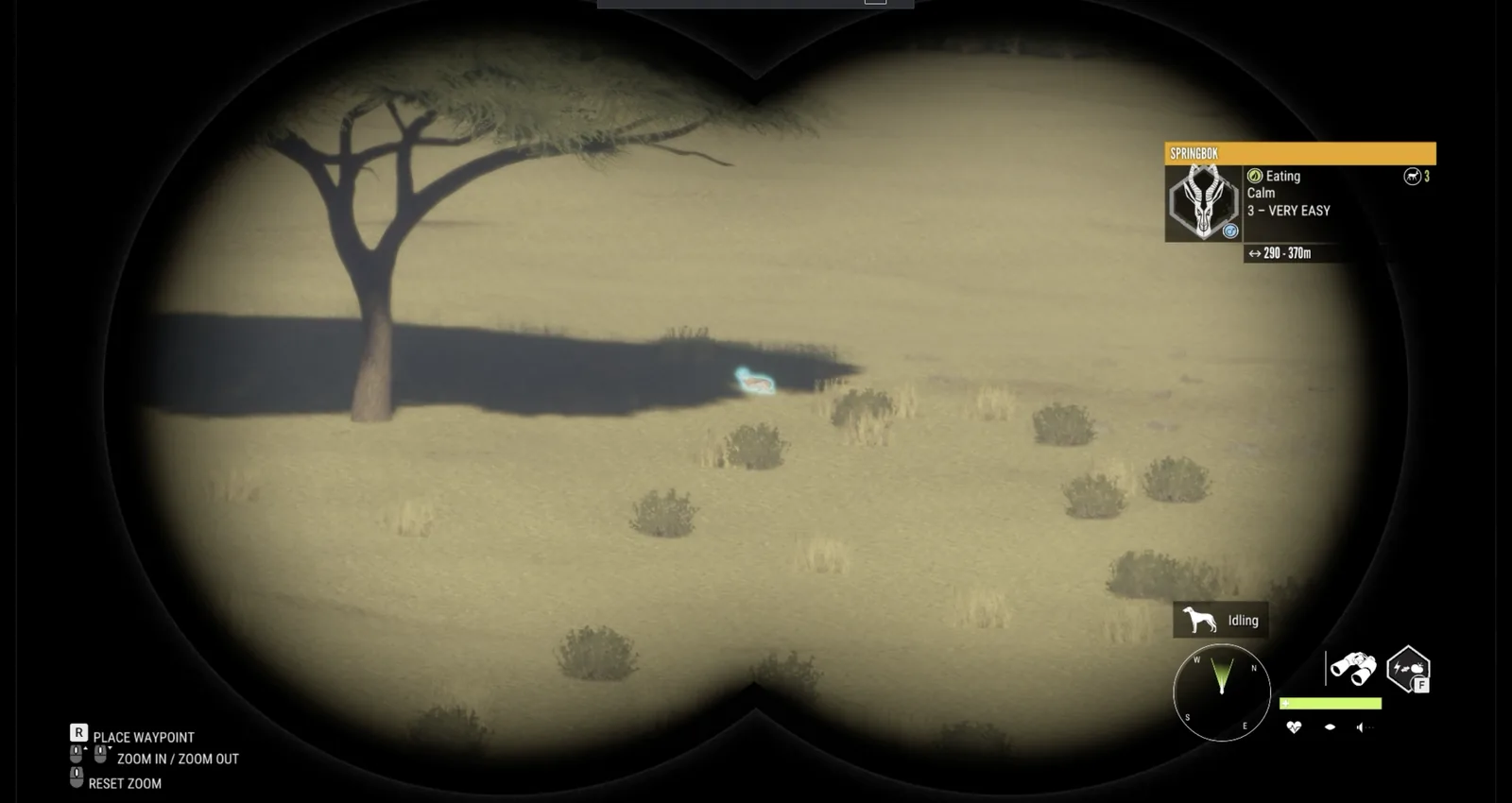 Glassing across the plain: a springbok eating in the shade of a tree, 290 to 370 m away
Screenshots from our own save. Tap any image to enlarge.
What a Kopje Is
The game’s own codex entry for Vurhonga Heights explains the name: the Dutch call these outcrops kopjes, which means “little head”, and they collect water and shade the plants that grow around them. That is why you find bush and trees around the base, and why animals use the shade nearby.
Why Glass From One
- You can see everything. From the top in our hero shot you can pick out herds on the plain, a waterhole in the distance and the line of the escarpment behind it.
- You are not on the skyline. The boulders and acacia leaves break up your outline while you look.
- You can plan the stalk before you move. Spot the herd, note the cover between you and it, then go.
Finding and Climbing One
- Look for the flag. Kopjes show up as a flag landmark on your compass. In our screenshots it reads 71 m, then 41 m, then 46 m as we closed in.
- Walk the bush line. The bush at the foot of the rocks gives cover on the approach.
- Take the gap in the boulders. There is a narrow way up between the rocks, as in the third picture.
- Stay low near the top. Peek out through the leaves rather than standing on the highest rock.
- Set a waypoint (key R in the binoculars) on whatever you want to stalk, so you can find it again when you climb down. Ours reads 226 m in the tree picture.
Reading What You See
Raise the binoculars and tag an animal. The panel gives you the species, what it is doing, how alert it is, its difficulty class and the distance range. On our springbok it read Eating, Calm, 3 – Very Easy, 290–370 m. It does not tell you the trophy rating, so you still have to get closer or track it to find out whether it is worth the shot.
Vurhonga Savanna has 10 species. The ones worth looking for from the top are springbok, blue wildebeest, gemsbok, lesser kudu and warthog, plus the Cape buffalo, lion and side-striped jackal that you will want to see before they see you.
Written from our own screenshots, October 2026. What spawns where changes every session, so treat the kopje as a lookout, not a guarantee. See our Vurhonga Savanna guide and map.
Frequently Asked Questions
What is a kopje in theHunter: Call of the Wild?
Why glass from a kopje?
How do I find a kopje on the map?
Does the animal overlay show up from a kopje?
Everything on this page comes from playing and studying the game. If it helped, pick it up from the official store and support the studio that makes it.
Get theHunter: Call of the Wild on Steam → Also on PlayStation and Xbox. Store prices change; check the store for the current price.