
How to Survive a 90-Day Power Outage: The First 72 Hours, the 24-Hour Decision to Leave the City, and What to Stock
A worst-case plan for a long grid-down event: how to read the first hours, when to leave a city, and how to cover water, food, light, heat, sanitation and power for 90 days, with the gear we have actually reviewed.
Contents
A three-day outage is an inconvenience. A 90-day outage is a different kind of event, and it is the one almost nobody has planned for. This post is about that second one: a long, widespread grid-down event, whether it comes from an EMP, a cyber or physical attack on the grid, a severe geomagnetic storm, or a cascading failure that takes months to repair.
Most outages are short, and the Government of Canada’s official advice is to be ready for at least 72 hours. We plan for 90 days because a household that is ready for the worst case is also ready for everything smaller. Nothing here replaces official emergency guidance, and the numbers below are planning figures, not promises.
We have built this plan around the gear we have actually tested. Where a product fits, we link to our review and say what we found, including the downsides.
Why cities are the danger zone
Cities run on electricity in ways that are easy to miss until it stops.
- Water. Treatment plants and many pumping stations need power. Pressure can drop within hours in some systems and within days in others, depending on towers and backup generators. When it does, taps stop and toilets stop flushing.
- Sewage. Lift stations that move waste uphill fail, and sewage can back up.
- Fuel. Gas station pumps are electric. A full tank in the driveway may be the last fuel you can easily get.
- Food. Grocery stores hold only a few days of stock and depend on trucks that run on fuel and on computers that run on power. Health Canada says an unopened fridge keeps food cold for about 4 hours and a full freezer for about 48 hours, so the clock on perishable food starts at once.
- Density. Millions of people competing for the same limited water, food and fuel is the real risk. The more people per square kilometre, the faster those supplies run out and the faster order can break down.
That is why the first big decision in a long outage is not what to eat or how to stay warm. It is where to be.
The Grid Down Danger Map
Here is the same plan on a map. Drag the timeline from day 0 to day 180 and watch the circles around the big cities grow as people leave and supplies run out. Switch the wind, turn the nuclear plant layer on or off, and click anywhere to see whether a spot grades as Defensible, Marginal or Leave. It covers the continental US and Canada, with every US metro over 500,000 and the larger Canadian ones.
Open the map full screen · Looking at where to go? See our Prepper Suitability Index, which scores every US county from 0 to 100.
How to read it. The city circles show where crowds and shortages build up over the first weeks. The nuclear layer marks operating plants and the standard 10-mile and 50-mile emergency planning zones, and shows how a long loss of power could spread contamination downwind if backup systems ran out, which is the worst case, not the expected one. The map was built from points made in the Jonathan Hollerman interview on The Resilient Show. It is a planning aid only: its wind directions are typical climate patterns, not a forecast, and its timeline is a worst-case scenario, not a prediction. Use it to decide where not to be, then plan your route and destination around that.
The first decision: the 24-hour clock
Everything below depends on one question you need to answer early: is this a short outage or a long one?
In the first hour, find out how big it is. Check whether neighbours have power, whether the outage covers your whole area, and what your phone, a battery radio and your utility are saying. Short, local outages usually come back in hours, and the right move is to stay put.
Signs that it may be long-term and widespread:
- Power is out over a very large area, not just your street or neighbourhood
- Vehicles, phones, or electronics fail at the same moment, as an EMP would cause
- Phones, internet and radio stations all go quiet together, and no one can tell you when power will return
- Official messages talk about days or weeks, or there are no official messages at all
- The cause is described as an attack or a major system failure, not a storm
If it looks long-term and you are in a city: decide within 24 hours
If you live in a city or dense suburb, have no backup power, no water source and no way to live self-sufficiently where you are, the safest decision is to leave within the first 24 hours. In the first day, roads are still moving, fuel can still be bought or is still in your tank, and most people have not yet decided what to do. After that, roads clog, fuel runs out, and desperation rises.
Leaving only works if you have decided in advance:
- A destination. A rural property, a family farm, a cabin or a friend’s place. Have two options in different directions.
- A route that avoids highways. Carry paper maps. GPS may be down and main roads will jam.
- Fuel. Keep your tank above half as a habit.
- Packed bags. You should be able to leave in 30 minutes.
- A plan for your family, including who you can’t leave without and where you will meet if you are separated.
If you have backup power for a few weeks: you can delay
If you already have solar and battery power, a water source, a stocked pantry and a lower-density home, you can shelter in place and watch. This buys time to see how bad things are, and it keeps you off the roads in the worst days. Set your triggers in advance: you will leave if water fails, if supplies fall below a set level, or if security in your area breaks down. Reassess at 72 hours, at one week and at two weeks.
Leave within 24 hours if…
- It looks widespread and long-term
- You live in a city or dense suburb
- No backup power, no water source
- You have somewhere to go and the fuel to get there
Shelter and watch if…
- It looks local or regional, with a restoration estimate
- You are rural, or have power, water and food on site
- You have weeks of backup power
- You have set triggers for when you will leave
The first 72 hours
If you stay, these are the priorities, in order.
Hour 0 to 1
- Find out how big the outage is (see above).
- If water is still running, fill everything: the bathtub, pots, buckets and every clean container. This is your stored water.
- Keep the fridge and freezer closed. Eat from the fridge first, then the freezer.
- Get cash if you can. Cards and ATMs will stop working.
Hour 1 to 24
- Set up light, heat and a way to cook. Use the plan below.
- Charge phones and power banks while the grid or your solar still gives power.
- Check on neighbours. In a long outage, the people around you are part of your plan.
- Make your leave-or-stay call.
Day 2 to 3
- Start rationing the water you stored and set up how you will collect and treat more.
- Move perishables into meals and set up your sanitation system before the toilets fail.
- Take an inventory. Count water, food, fuel and batteries, and divide by the number of people.
Water: the first thing that runs out
The Government of Canada recommends about four litres per person per day for a 72-hour kit. For 90 days and a family of four, that is about 1,440 litres. No one stores that much. You need a source and a way to treat it.
Stored water covers the first days. Everything after that comes from rain, a creek, a lake or a well, and has to be made safe.
Treating water, in order of simplicity:
- Boil. A rolling boil for at least one minute (two minutes above 2,000 m) is the standard guidance from HealthLink BC. It kills everything, including viruses, but uses fuel.
- Filter. A good filter removes bacteria, protozoa and sediment without fuel.
- Chemically treat. Health Canada’s emergency guidance is about two drops of unscented 5.25% household bleach per litre, stirred and left for 30 minutes. Use clear water, and double the bleach and wait longer if it is cloudy or cold.
What we have tested:
- Sawyer Squeeze with the Cnoc 2L bladder. A 0.1-micron absolute filter that Sawyer rates for up to 100,000 gallons with backflushing. It removes bacteria, protozoa and microplastics. It is a filter, not a purifier, so it does not remove viruses or chemicals. Hollow-fibre filters must also never freeze once wet.
- LifeStraw Personal Water Filter. At about 2 oz, it is the lightest backup you can carry. It filters bacteria and parasites but not viruses, and you can only drink straight from it, not store water.
The practical rule for a grid-down event: filter, then boil or chemically treat when the source is questionable, such as flood water, city water or anywhere near sewage. A filter alone is not enough when viruses may be present. Pair a filter with a pot, a fuel source and some unscented bleach.
 Sawyer Squeeze + Cnoc 2LFilter, not a purifier. Our review.
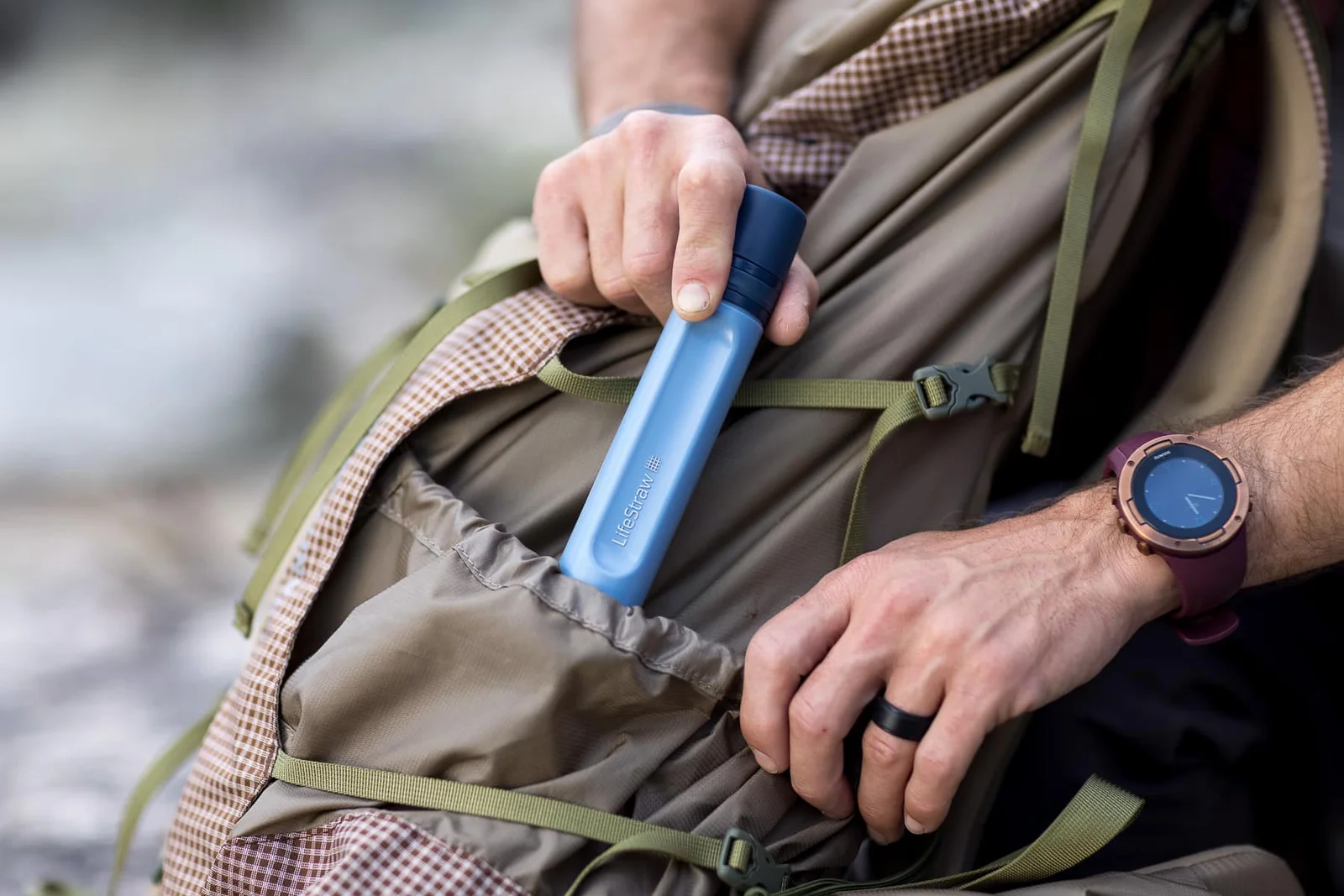 LifeStraw Personal2 oz backup filter. Our review.
Food: grains, beans and #10 cans
For 90 days, an adult needs about 180,000 calories at 2,000 a day. The cheapest, longest-lasting way to cover that is dry staples.
A rough 90-day base for one adult:
| Item | Amount | Approx. calories |
|---|---|---|
| White rice | 50 lb | 82,000 |
| Dry beans or lentils | 25 lb | 37,000 |
| Wheat berries, rolled oats or flour | 25 lb | 40,000 |
| Cooking oil | 3 litres | 23,000 |
| Total | about 180,000 |
Add salt, sugar or honey, spices, a multivitamin, canned meat or fish, and whatever makes the food worth eating. Calories keep you alive. Variety keeps you from giving up.
Why #10 cans and buckets. A #10 can holds roughly 3 quarts, or about 5 to 6 lb of rice or beans. A hundred pounds of staples is about 18 to 20 cans. Sealed cans or Mylar bags with oxygen absorbers, kept cool and dry, can keep white rice, dry beans and whole wheat berries for decades. Whole-grain brown rice, flour and anything oily go off much sooner. Buckets (5-gallon food-grade) hold about 35 lb of rice each and are easy to stack.
For the bucket you open every week, a spin-on lid saves your wrists and your seal. We tested the GAMMA Seal Lid, which turns a standard 12-inch bucket into airtight, pest-proof dry storage. It costs more than a snap-on lid and only fits 12-inch buckets, so it pays off for the bucket you open often. Keep deep storage sealed.
Other basics people forget:
- A hand grinder or mill if you store whole wheat
- A manual can opener, and a spare
- Cooking fuel for 90 days, which is a big number
- Enough to cook, wash and drink: the water side of every meal
- Pet food, baby formula and any medical diet
- Store what you eat, and eat what you store. Rotate the oldest first.
 GAMMA Seal LidAirtight bucket lid. Our review.
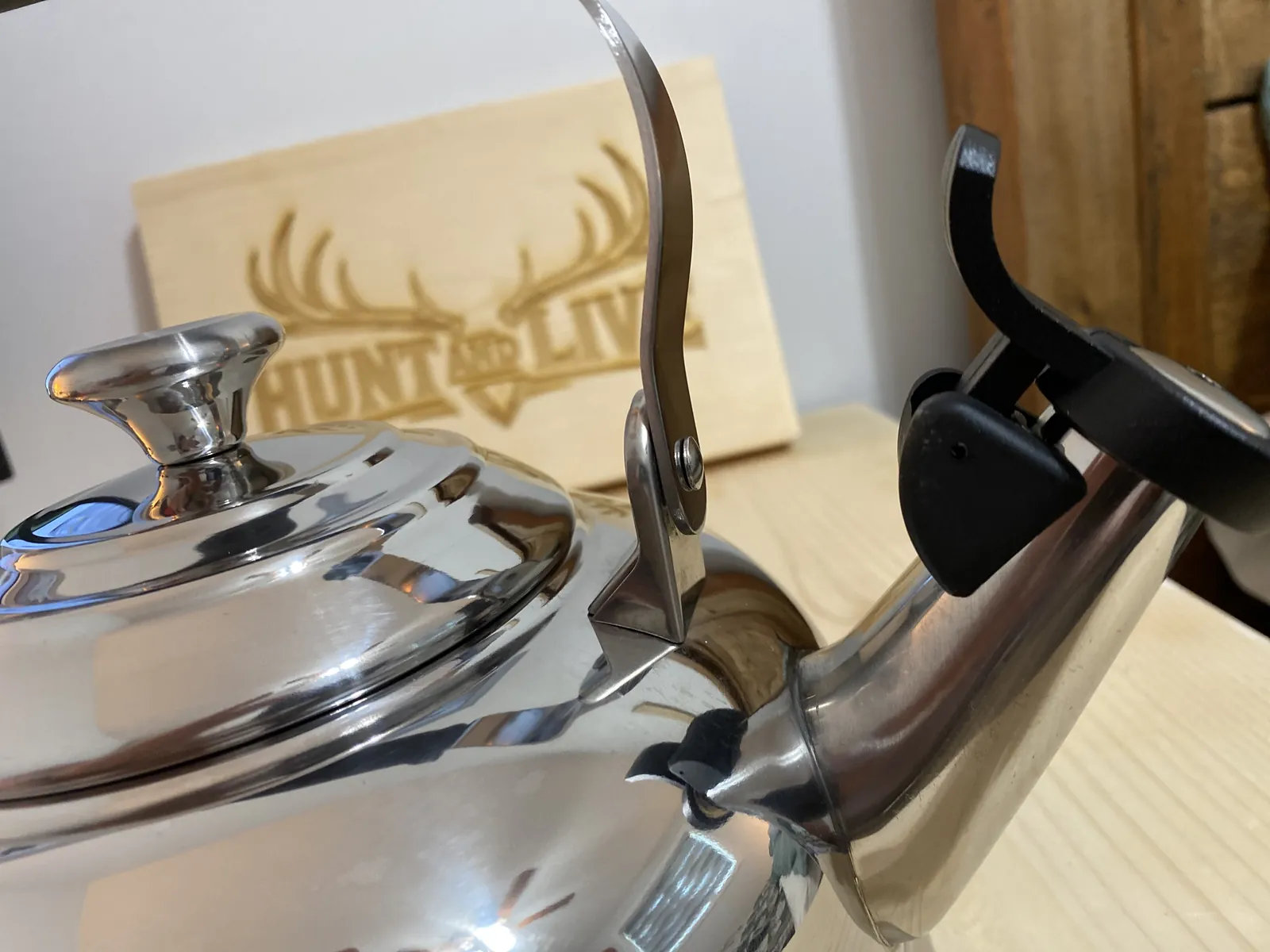 Le Creuset whistling kettleBoils water on gas, induction or a wood stove. Our review.
Light and power: keep it small and solar
Power is the thing people overestimate. You cannot run a house on a small battery for 90 days, and generator fuel runs out. The goal is to cover the few things that matter: light, phone and radio charging, and maybe a laptop or medical device.
A rough daily budget:
| Load | Approx. Wh per day |
|---|---|
| LED lighting, 5 hours | 25 |
| Phones, 2 charges | 30 |
| Radio | 5 |
| Laptop, 2 hours | 50 |
| Total | about 110 |
(These are our estimates for planning, and your numbers will vary.)
What we have tested:
- BLUETTI Elite 30 V2. 288 Wh of LiFePO₄ with 600 W of pure sine wave output. That is roughly two to three days of the budget above on one charge. In our review, one 100 W panel in good sun took about 3.5 to 4 hours of full sun to fill it from empty. In a BC winter, expect much less.
- BLUETTI SORA 130 and Renogy 200W portable panel. The panels that do the actual recharging. The Renogy weighs 17.6 lb, which is fine for a home but heavy to carry.
- Jackery Explorer 1000. 1,002 Wh and plenty of outlets, but heavy at 22 lb, and newer LiFePO₄ units offer longer life.
- HAVEN 10000 solar lantern. Our review found 120 hours on low from one charge, plus a solar panel on the lantern itself and a 10,000 mAh power bank. It is a compact first light you can leave charging in a window.
Solar math: a small panel gives you a few hundred watt-hours on a good summer day and much less in winter cloud. Plan for light, radio and phones, not a fridge or a space heater.
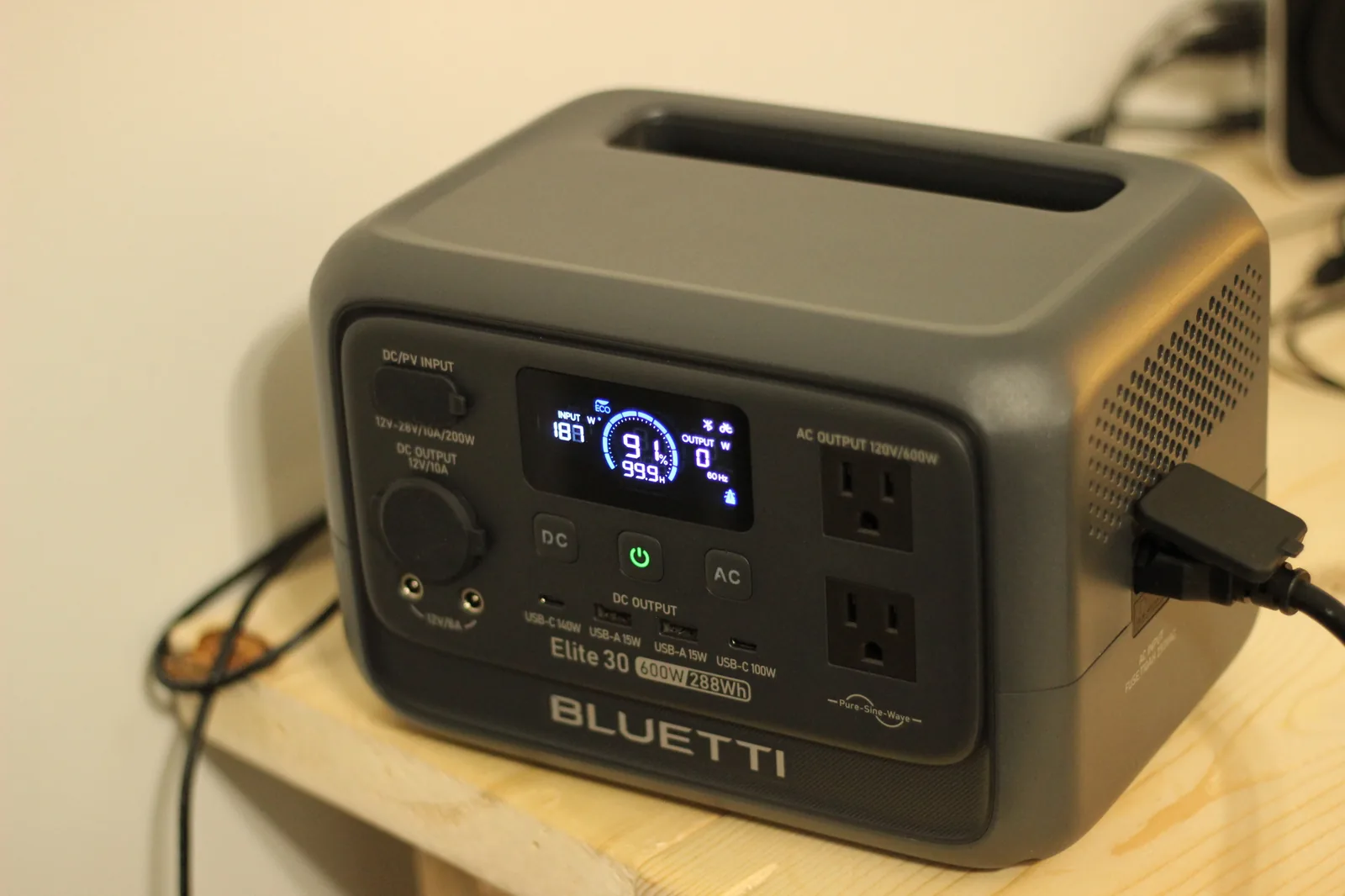 BLUETTI Elite 30 V2288 Wh LiFePO₄. Our review.
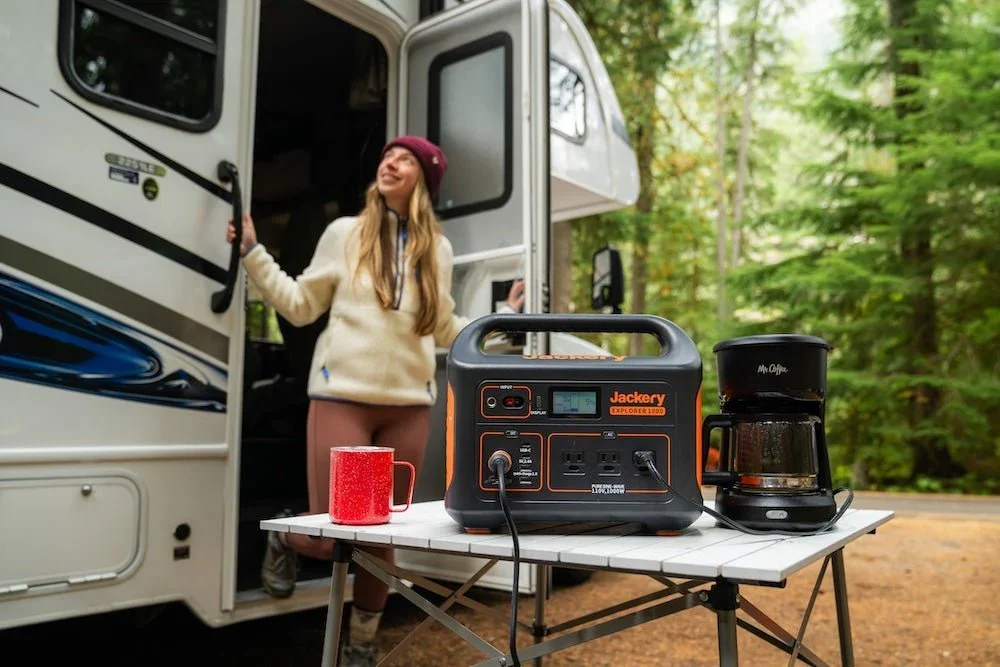 Jackery Explorer 10001,002 Wh. Our review.
 Renogy 200W panelFoldable solar. Our review.
 HAVEN 10000 lanternSolar light and power bank. Our review.
Heat and shelter
In most of Canada, a long outage in winter is a heating problem first. Pick one room, close it off, and heat only that room.
- Wood heat is the most reliable. It needs no electricity and you can cook on it. We reviewed the Winnerwell Nomad PLUS Double View stove and the VEVOR YT-02 hot tent, which is a cheap way into stove-heated shelter. In our review, the tent’s single wall means condensation and it has no floor, so treat it as a budget backup, not a main shelter.
- Firewood takes tools. A good axe and a sharp knife matter. See our reviews of the Hults Bruk Dvärdala axe and the Morakniv Garberg.
- Carbon monoxide kills. Never run a generator, a propane or charcoal heater, or a camp stove indoors. Keep battery-powered CO alarms.
- Insulate the room. Hang blankets over windows and doors, and sleep in layers.
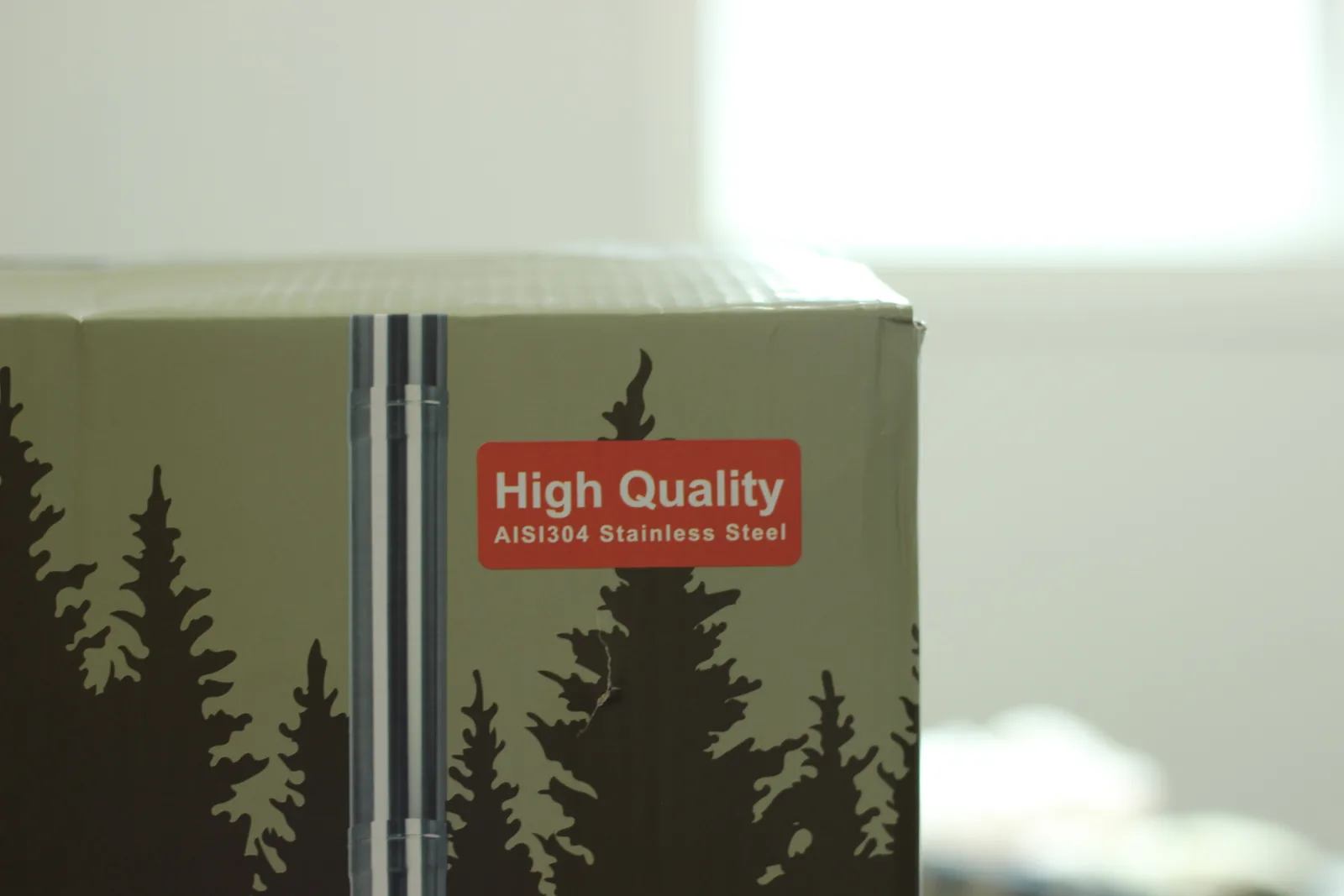 Winnerwell Nomad PLUSWood stove for tents and cabins. Our review.
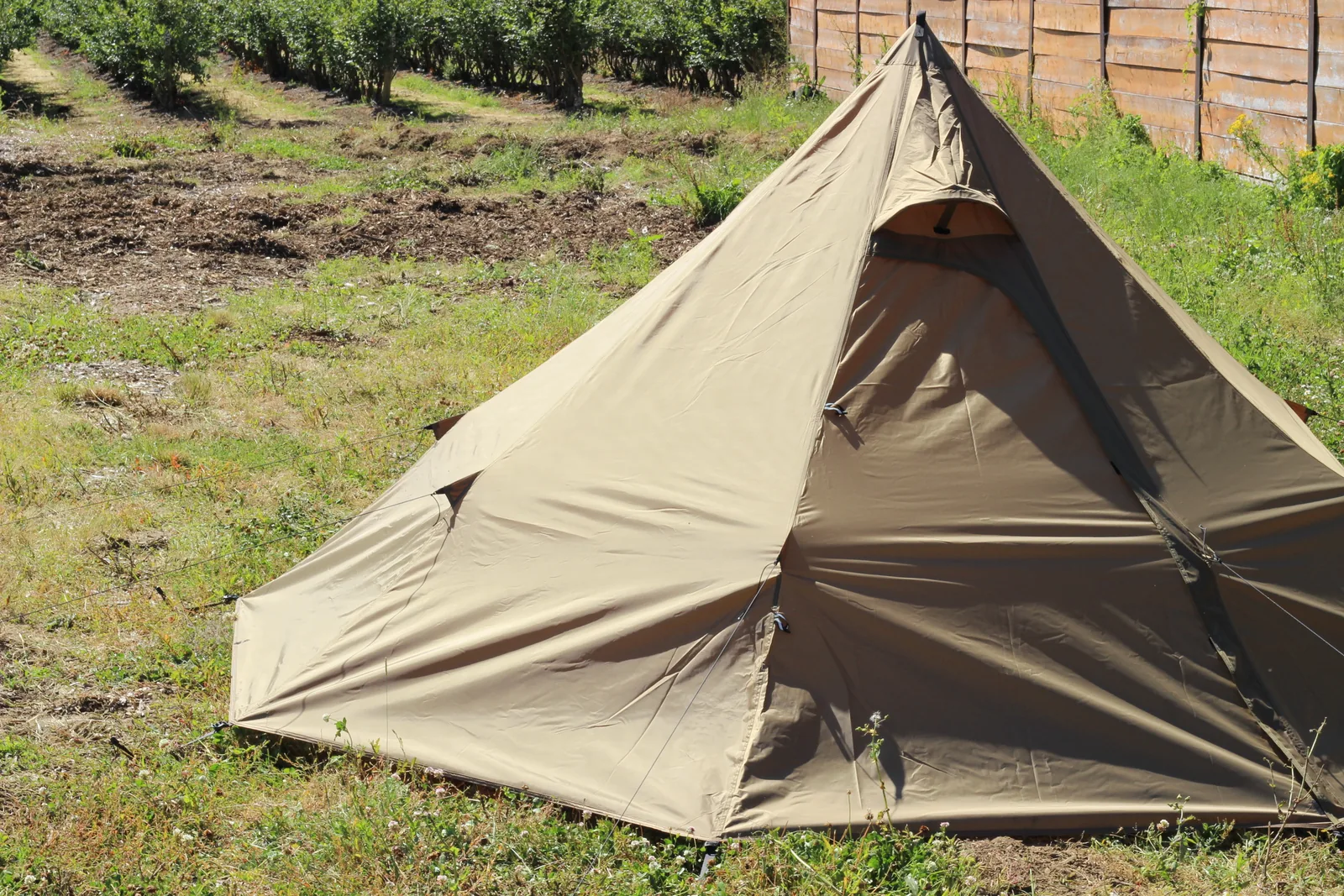 VEVOR YT-02 hot tentBudget stove-ready tipi. Our review.
 Hults Bruk Dvärdala axeForest axe for wood. Our review.
Sanitation: plan it before it fails
When water pressure drops, flush toilets stop working, and waste becomes a health problem within days. Set up a toilet before you need it.
- A bucket toilet with a lid, bags and a way to deal with the waste is the minimum.
- A urine-diverting system keeps odour down and slows how fast solids fill up. We tested two: the Separett Rescue Camping 25, a folding frame at 3 kg, and the Separett Privy 501 insert, which turns an outhouse or bench into a diverting toilet. For the Rescue kit, the compostable bags are single use, so stockpile them in advance. The Privy’s urine hose can freeze in a hard winter.
- Stock hand soap, sanitizer, garbage bags and household bleach.
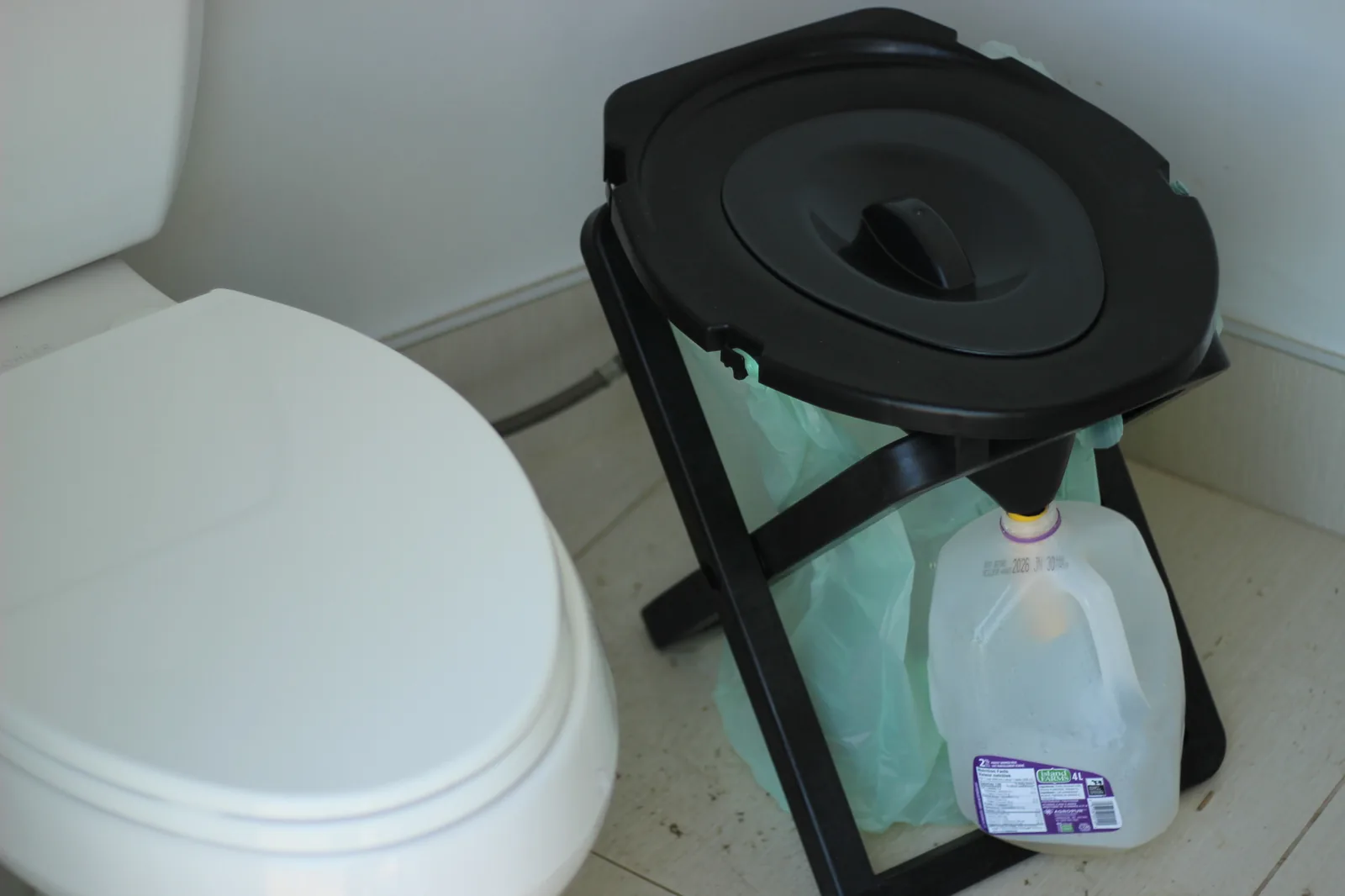 Separett Rescue Camping 25Folding waterless toilet. Our review.
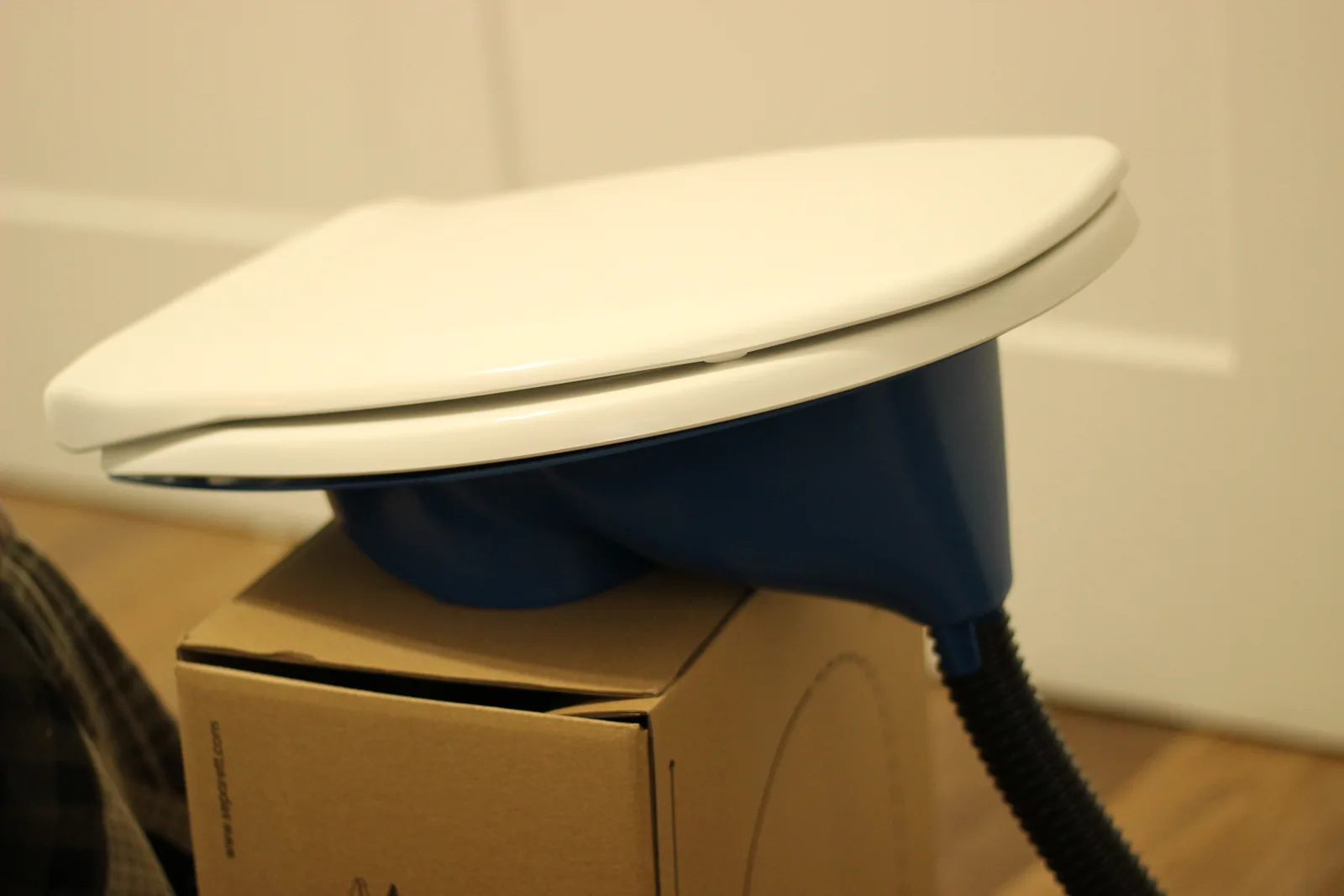 Separett Privy 501Outhouse insert. Our review.
If you have to leave: bags and gear
If you leave, you will have what is in the vehicle and on your back. Pack for the first three days of travel and for the walk if the vehicle stops.
- The 5.11 RUSH12 Survival Starter Bundle is a coherent starter kit. At 24 L, it is a day pack, not a three-day bag.
- The Eberlestock Cirrus dry bags keep spare clothes and electronics dry.
- Carry your water treatment, a knife, a light, a radio, a first aid kit, paper maps, cash and copies of key documents.
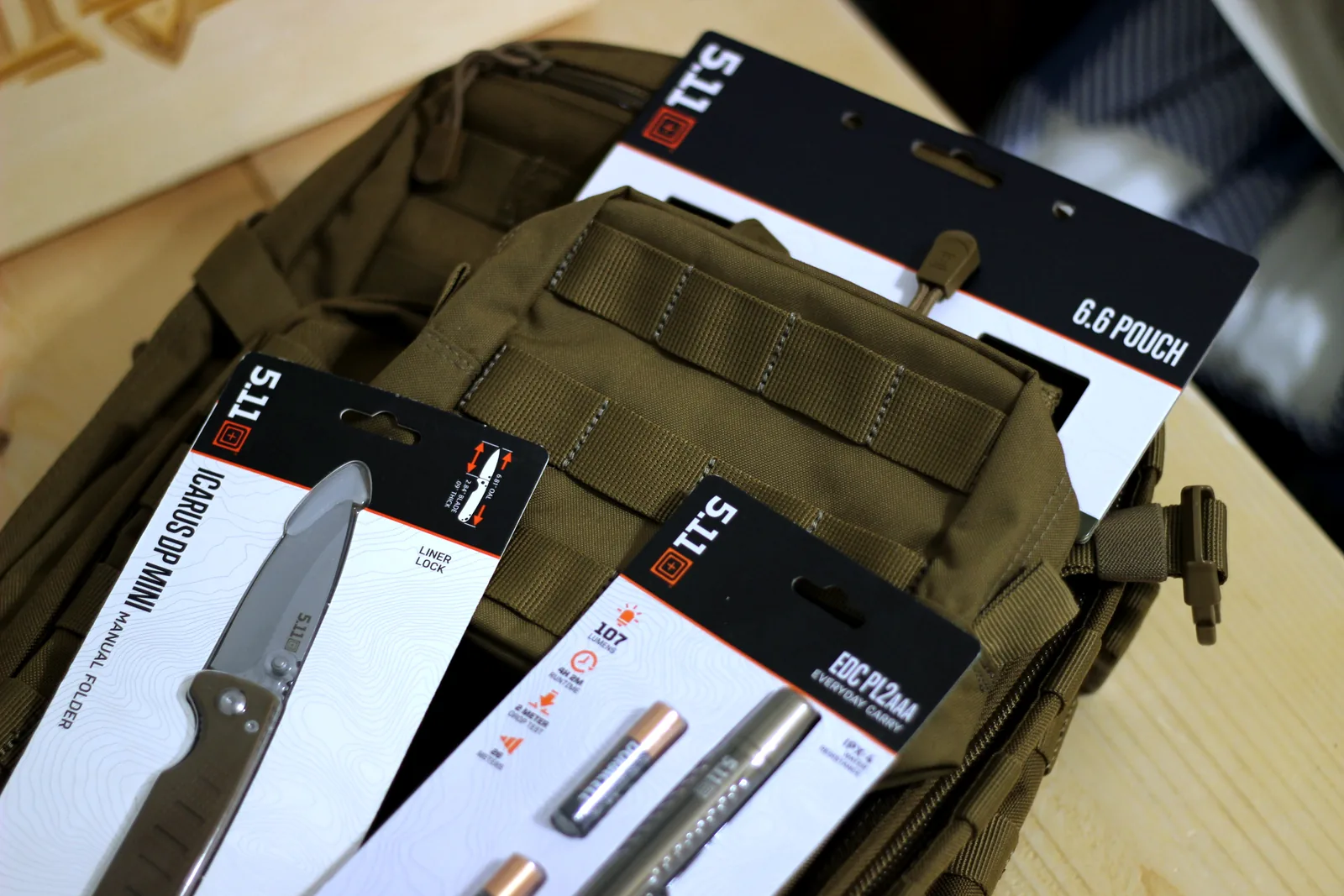 5.11 RUSH12 bundle24 L pack kit. Our review.
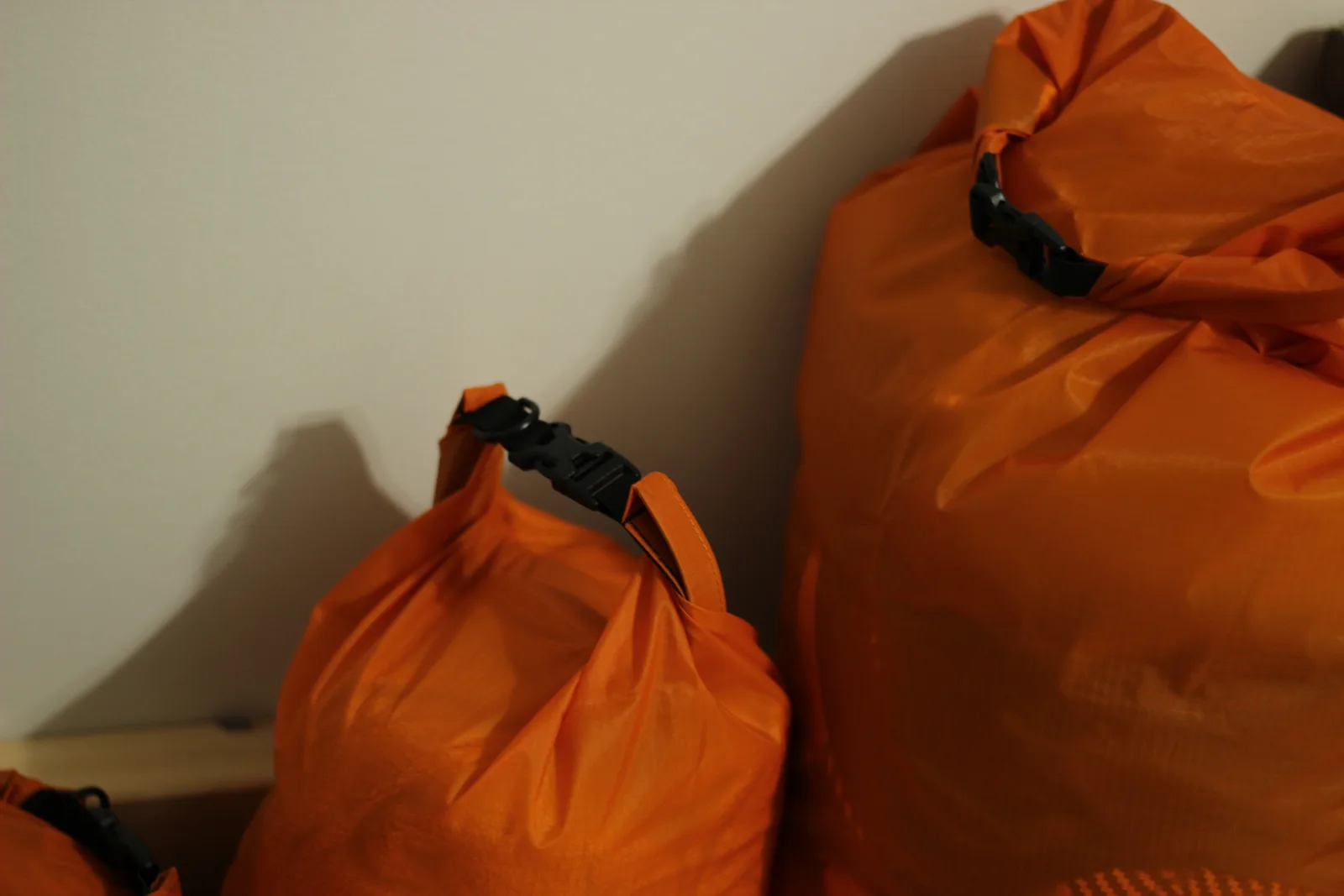 Eberlestock Cirrus dry bagsHigh-vis roll-tops. Our review.
Other basics
- Medication. Canada’s guidance is about two weeks of prescriptions. Ask your doctor about more.
- Cash. Small bills, enough for a few weeks.
- Information. A battery or hand-crank radio is how you find out what is happening.
- Documents. Copies of IDs, insurance and contacts, on paper.
- First aid. A real kit and the training to use it.
- Community. The best prep is people you trust. Know your neighbours before the lights go out.
- Skills. Fire, water, cooking from scratch and first aid matter as much as gear.
Watch this too
We think this video is worth watching alongside this plan.
The gear in this post, in one table
| Job | What we reviewed |
|---|---|
| Water filtering | Sawyer Squeeze + Cnoc 2L, LifeStraw Personal |
| Food storage | GAMMA Seal Lid |
| Cooking | Le Creuset whistling kettle |
| Power | BLUETTI Elite 30 V2, Jackery Explorer 1000 |
| Solar panels | BLUETTI SORA 130, Renogy 200W |
| Light | HAVEN 10000 solar lantern |
| Heat and shelter | Winnerwell Nomad PLUS, VEVOR YT-02 hot tent |
| Wood and tools | Hults Bruk Dvärdala axe, Morakniv Garberg |
| Sanitation | Separett Rescue Camping 25, Separett Privy 501 |
| Go-bag | 5.11 RUSH12 bundle, Eberlestock Cirrus dry bags |
Where to start this weekend
- Fill a few containers with water and write down how long your stored water would last.
- Buy a filter and a pot, and put them in the same box.
- Add one 5-gallon bucket of rice and one of beans.
- Charge a power bank and put a light and a radio next to it.
- Decide, with your family, where you would go if it looked long-term, and how you would get there. Our Prepper Suitability Index scores every US county and is a good place to start looking.
Then keep going, one item a week. A 90-day plan is built one bucket at a time.
Sources for the official figures used here: Government of Canada, emergency kits; Health Canada, food and drinking water safety in an emergency; HealthLink BC, disinfecting drinking water.