
Featured Review · BLUETTI · Portable Power Stations
BLUETTI Elite 30 V2 Review — The 288 Wh, 600 W LiFePO₄ Compact That Earns Its Place in the Truck, the Cabin, and the Go-Bag
Our Rating
Current Price
- Battery
- 288 Wh LiFePO₄
- AC output
- 600 W pure sine wave (1,000 W Power Lifting)
- AC outlets
- 2 × 120 V
- USB-C (primary)
- 140 W Power Delivery
Pros
- 288 Wh of genuine LiFePO₄ chemistry — 3,000+ cycles to 80% capacity, safe thermal behaviour, real cold-weather performance
- 600 W pure sine wave AC output (not modified sine) for safe operation of laptops, CPAP, photography gear, and other electronics that misbehave on cheap inverters
- 1,000 W Power Lifting mode for resistive loads — handles kettles, irons, and small heaters at reduced voltage instead of refusing to power them
- 140 W USB-C PD output charges a MacBook Pro or M-series Mac mini at full speed straight from the unit
- 200 W DC/PV solar input with regulated MPPT — pair with a single 100 W panel for trickle-charge, or a 200 W panel for full topping in good sun
- Dual 120 V AC outlets + secondary 100 W USB-C + 2× 15 W USB-A + regulated 12 V/10 A DC output covers every real-world charging case
- Clean colour display shows live input/output watts, percentage SoC, remaining runtime hours, and ECO mode status — no menu hunting
- 5-year manufacturer warranty backed by 22 service stations globally and real US phone support (+1 909 570-0909)
- Compact 6.7 × 4.7 × 5.8 in (170 × 120 × 148 mm) footprint with integrated soft-grip carry handle — fits in a truck cab, a homestead workshop, or a backpack
- Quiet enough at idle and under light load that it's usable indoors during a power outage
Cons
- BLUETTI's bundled 100 W panel is a separate purchase unless you buy the kit configuration — we paired ours with a Renogy RSP100DC instead, which works perfectly via MC4-to-XT60 adapter (see the Renogy sub-review at the end)
- Solar charging is real but slow — a single 100 W panel in good sun delivers roughly 75–85 W to the unit, meaning ~3.5–4 hours of full sun for a full top-up from empty
- AC fast-charge is loud — 200 W AC input is fast but the fan is audible enough that overnight indoor charging from the wall is noticeable
- 288 Wh is the right capacity for a compact unit but won't run high-draw appliances (microwaves, hair dryers, full-size induction) for more than a few minutes — buyers needing those should size up to the Elite 100 V2 or 200 V2
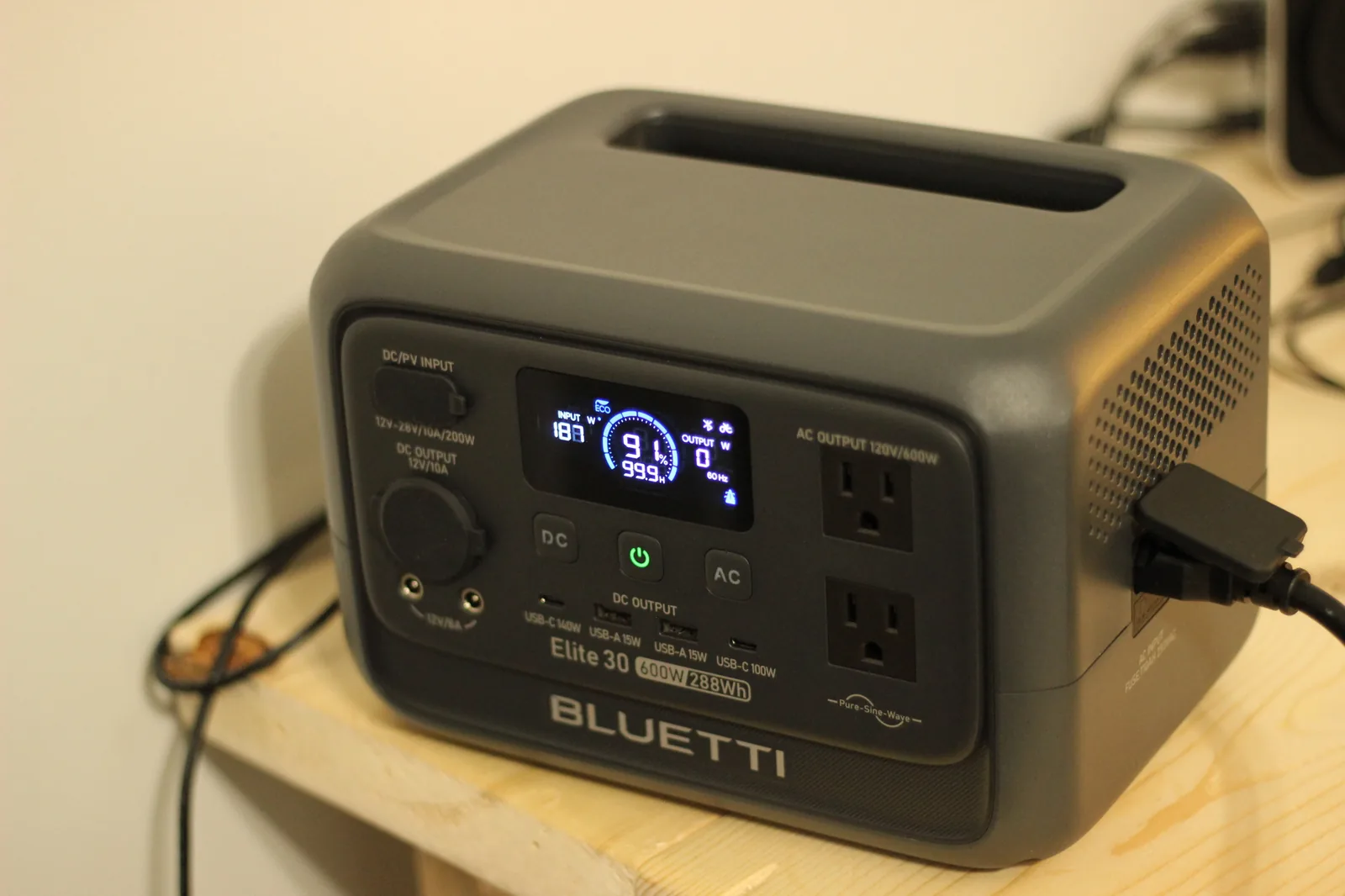
The compact power station that earns its place
The BLUETTI Elite 30 V2 is the right answer to a specific question: what’s the best compact LiFePO₄ power station for the truck cab, the homestead workshop, the hunting weekend, the cottage shed, and the multi-night power outage — at a price that doesn’t ask the buyer to commit a thousand dollars before they know if the off-grid power category even works for them?
The market is full of “300 Wh, 600 W” compact power stations. Most of them use NMC lithium chemistry that fades by year 2, modified sine wave inverters that misbehave with modern electronics, undersized solar inputs that make panel pairing a guessing game, and warranty terms that exist on paper but evaporate when you actually need them. The Elite 30 V2 is the one that gets all four of those decisions right: LiFePO₄ chemistry, pure sine wave AC, a regulated 200 W solar input with MPPT, and a 5-year warranty backed by a real global service network.
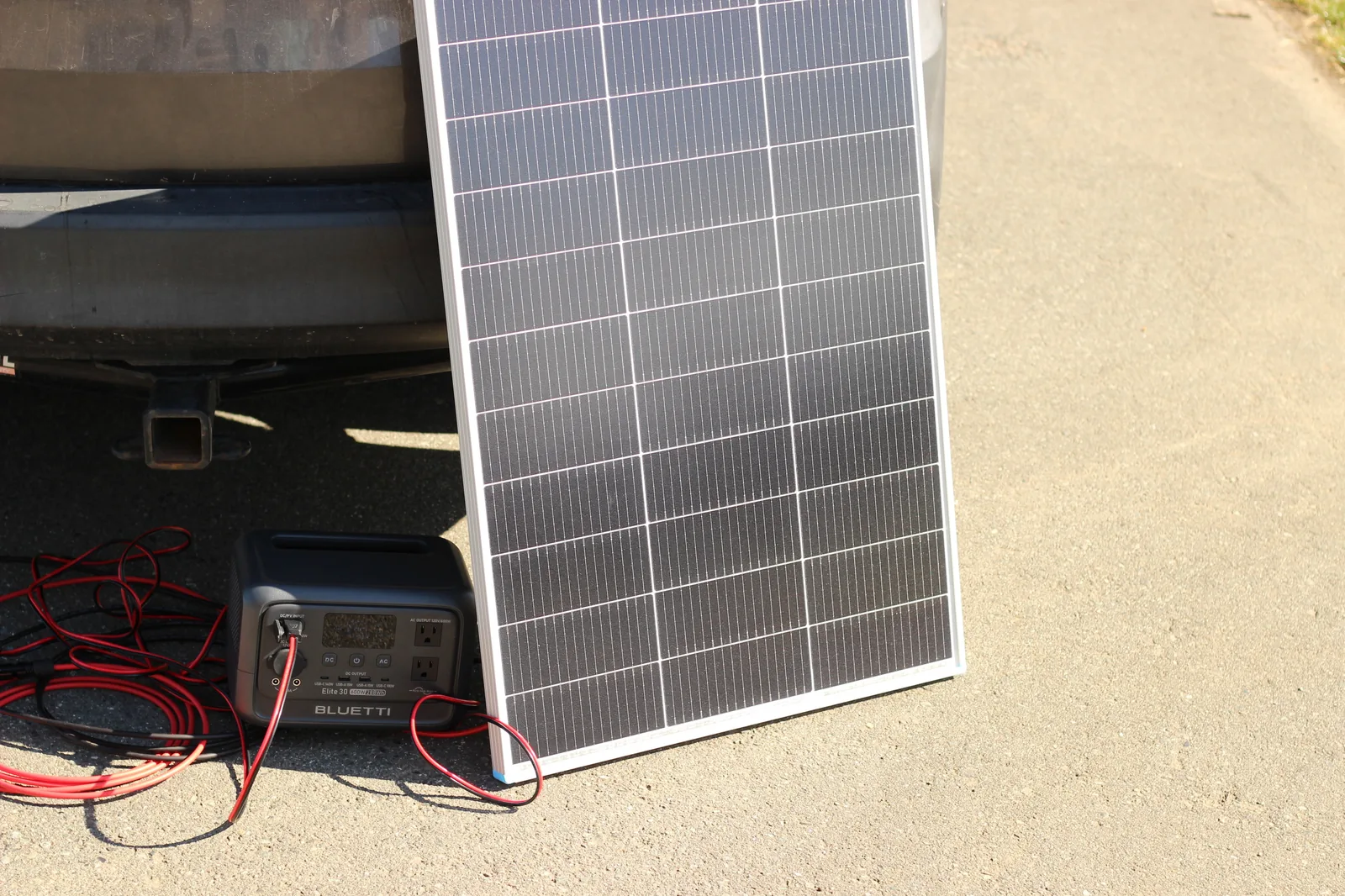
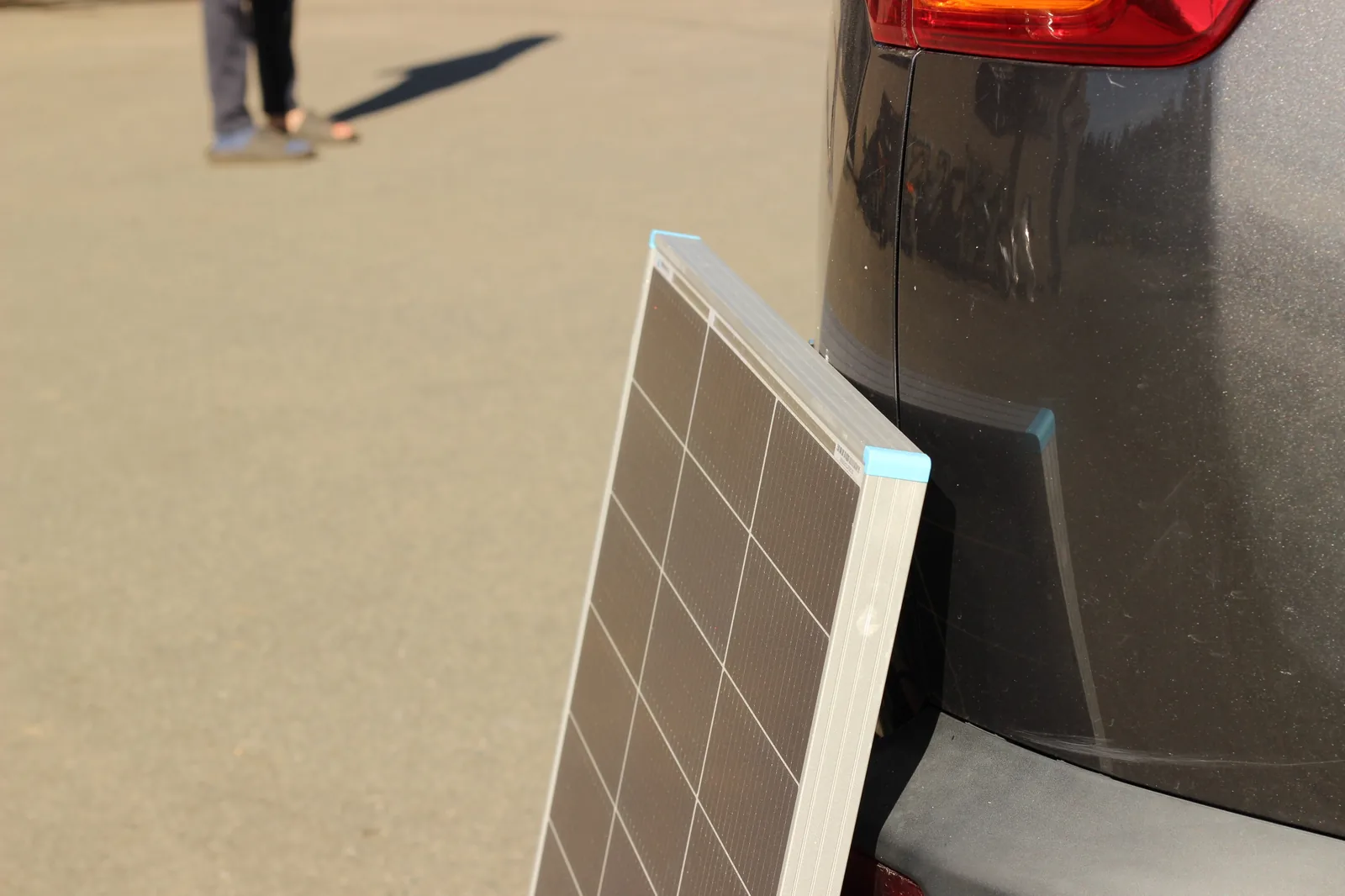
We ran ours through bench testing on AC fast-charge, real-world loads (laptop + phone + LED light + small fan + workshop power), USB-C Power Delivery to a MacBook Pro, and full solar deployment with a Renogy RSP100DC 100 W monocrystalline panel — paired through MC4-to-XT60 adapter cables purchased separately on Amazon — propped on the back of a vehicle for a parking-lot solar topping test. This review walks through what the Elite 30 V2 actually delivers — what’s class-leading at the price tier, what the honest caveats are, where it sits in the BLUETTI catalogue, and (at the end) a sub-review of the Renogy panel and the two Amazon accessories that wire the system together. Editorial cross-pollination: the Elite 30 V2 is the star of this review, but the third-party gear that makes it a real off-grid system deserves naming too.
What’s in the box
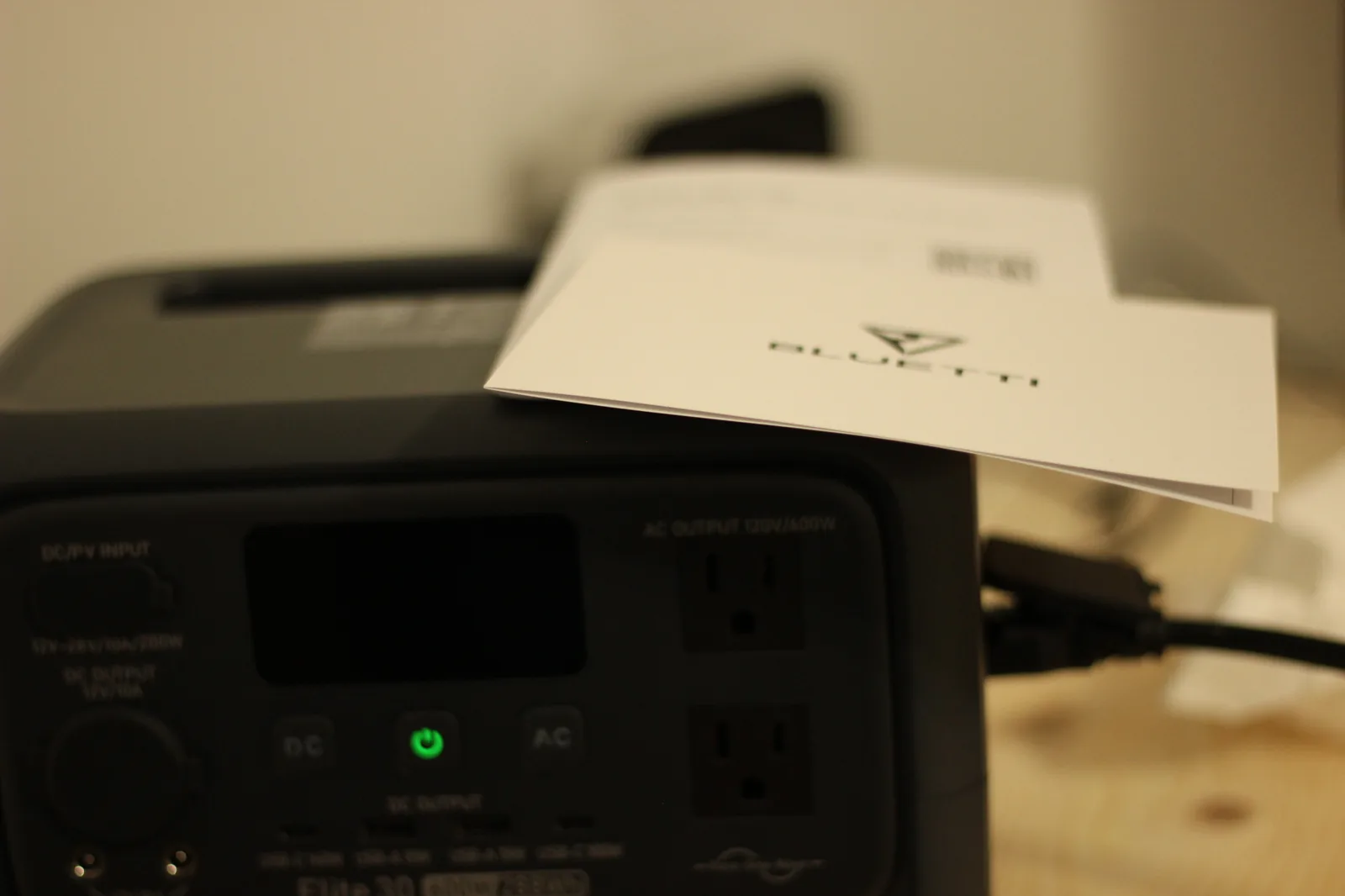
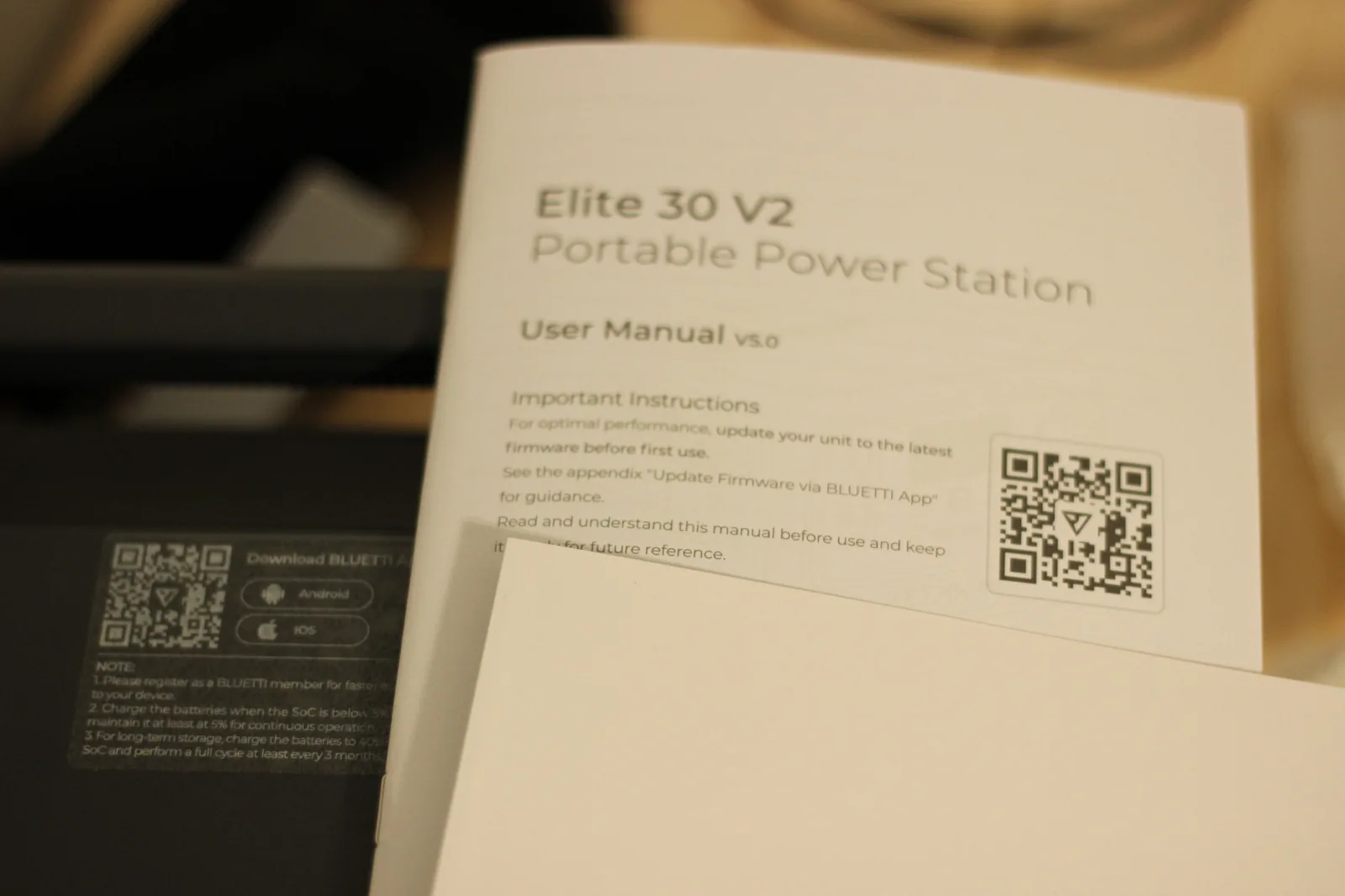
The box includes the Elite 30 V2 itself, an AC charging cable, a car-charge (12V) cable, a user manual, and the 5-year warranty paperwork. Plan on adding: an MC4-to-XT60 solar input adapter cable (we used the one at Amazon B07S1RW5N4), a solar charging extension cable kit for routing the panel some distance from the unit (we used Amazon B0F4DNMCDX), a 100 W or 200 W solar panel (we used the Renogy RSP100DC, reviewed in detail at the end of this piece), and a soft case if you’re throwing this in a homestead workshop drawer or a truck bed.
The build — what C$279 actually gets you
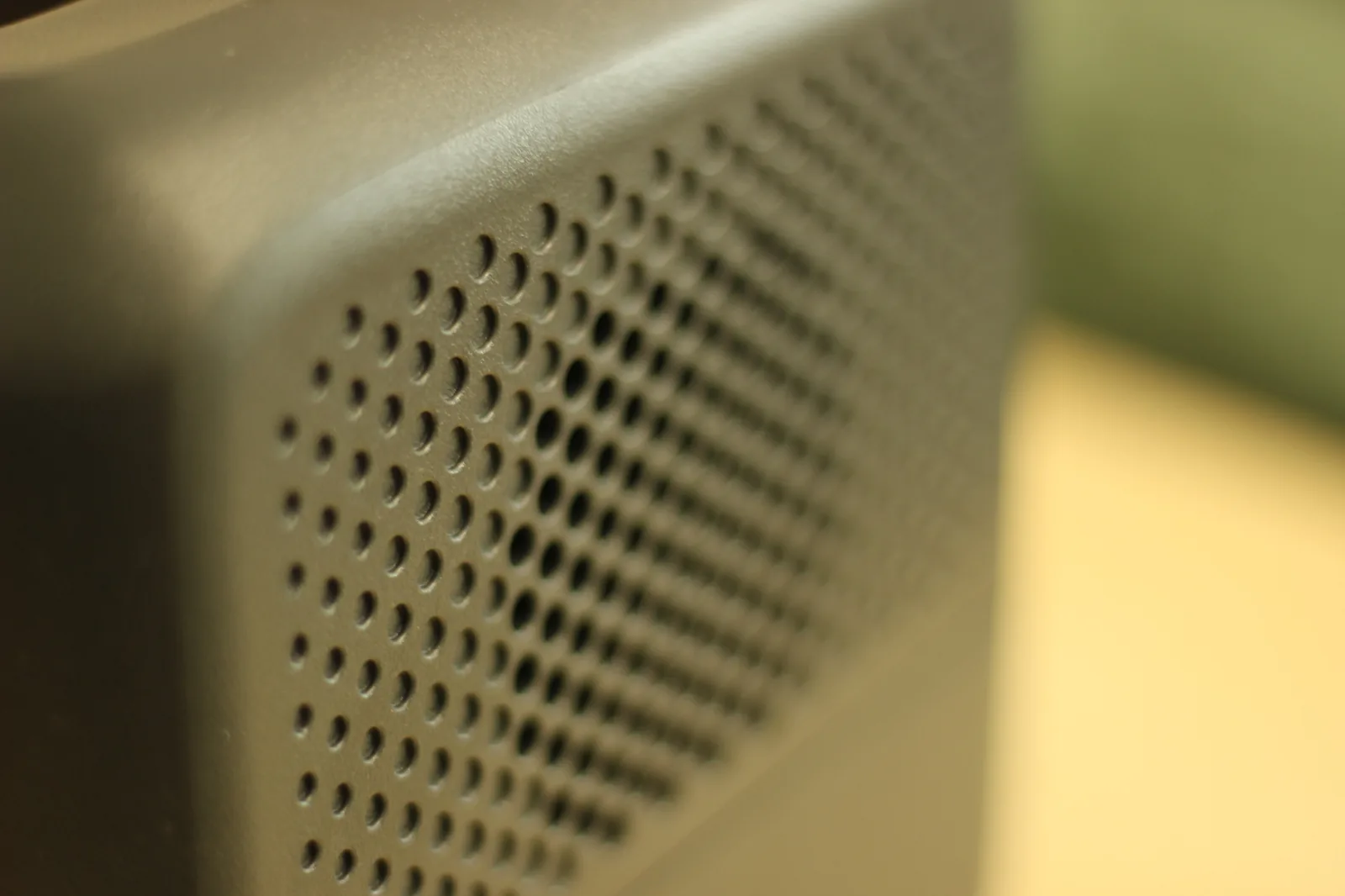
The Elite 30 V2 is a single-piece matte dark grey ABS housing with a soft-grip integrated carry handle on top, ventilation on both sides and the rear, and the operator panel on the front face. The build feels solid — no flex, no squeak under hand pressure, no rattling internals. At ~8.8 lb (4 kg) it’s hand-carryable for an adult one-handed, two-handed for longer distances.
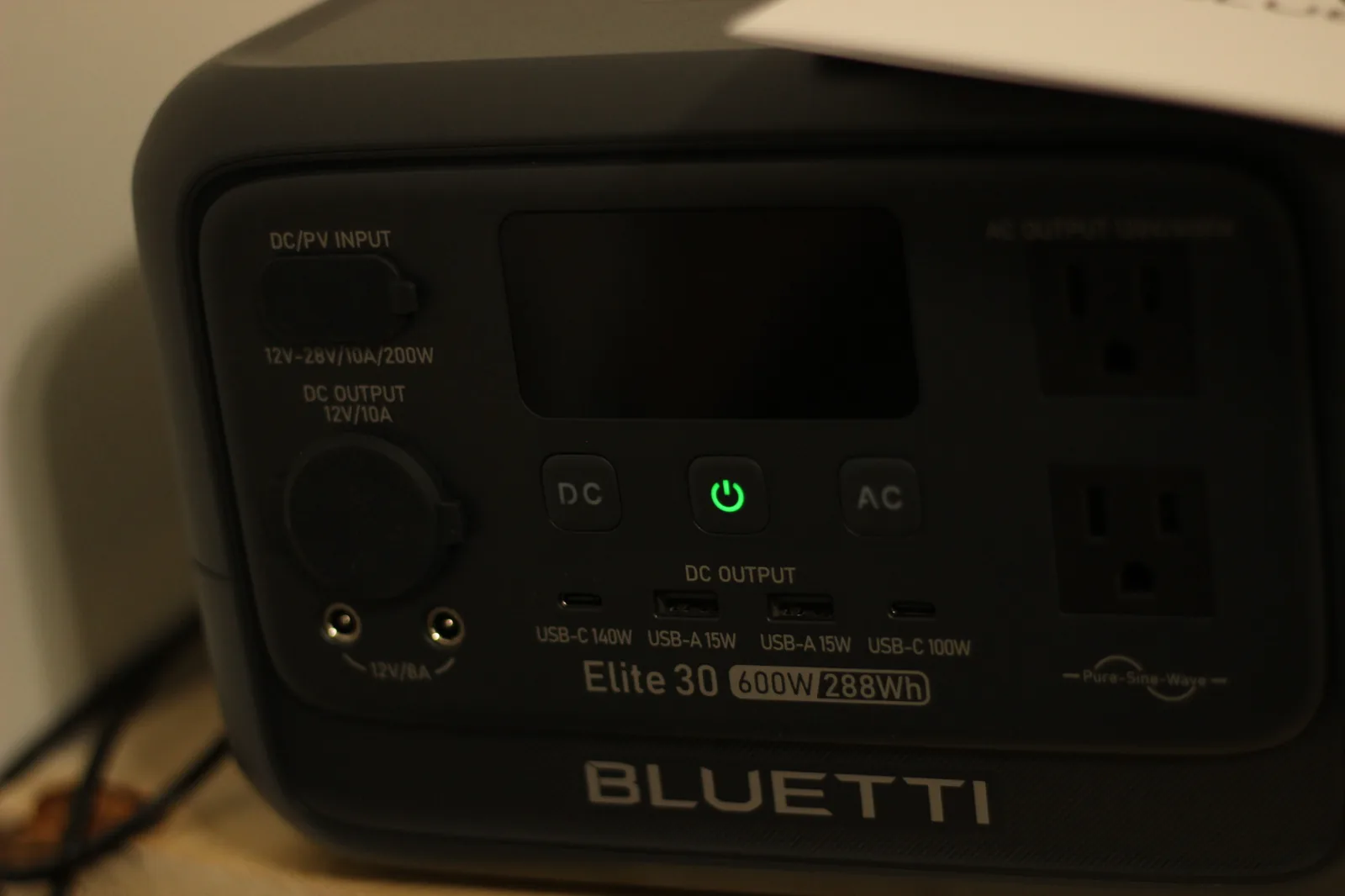
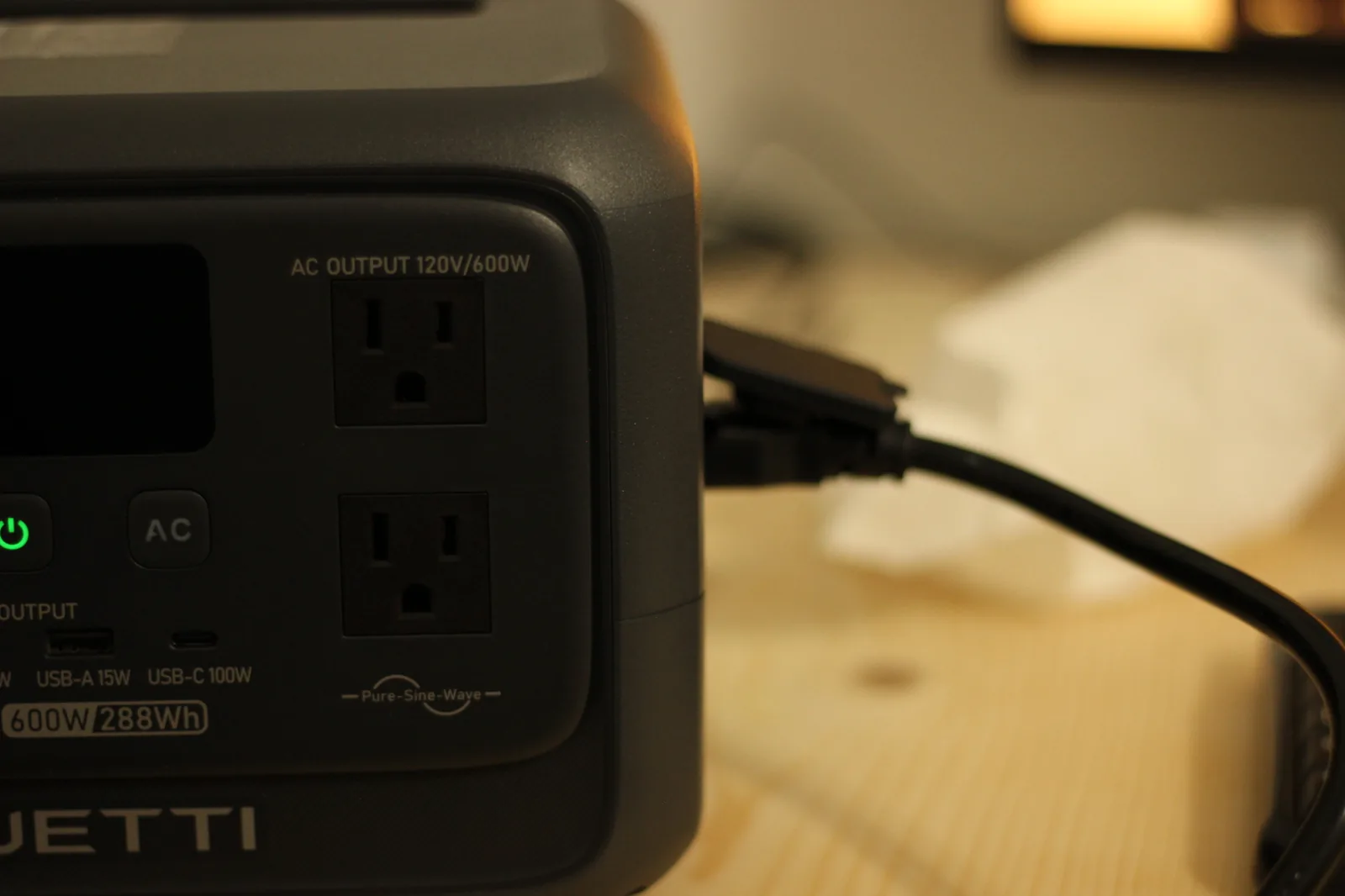
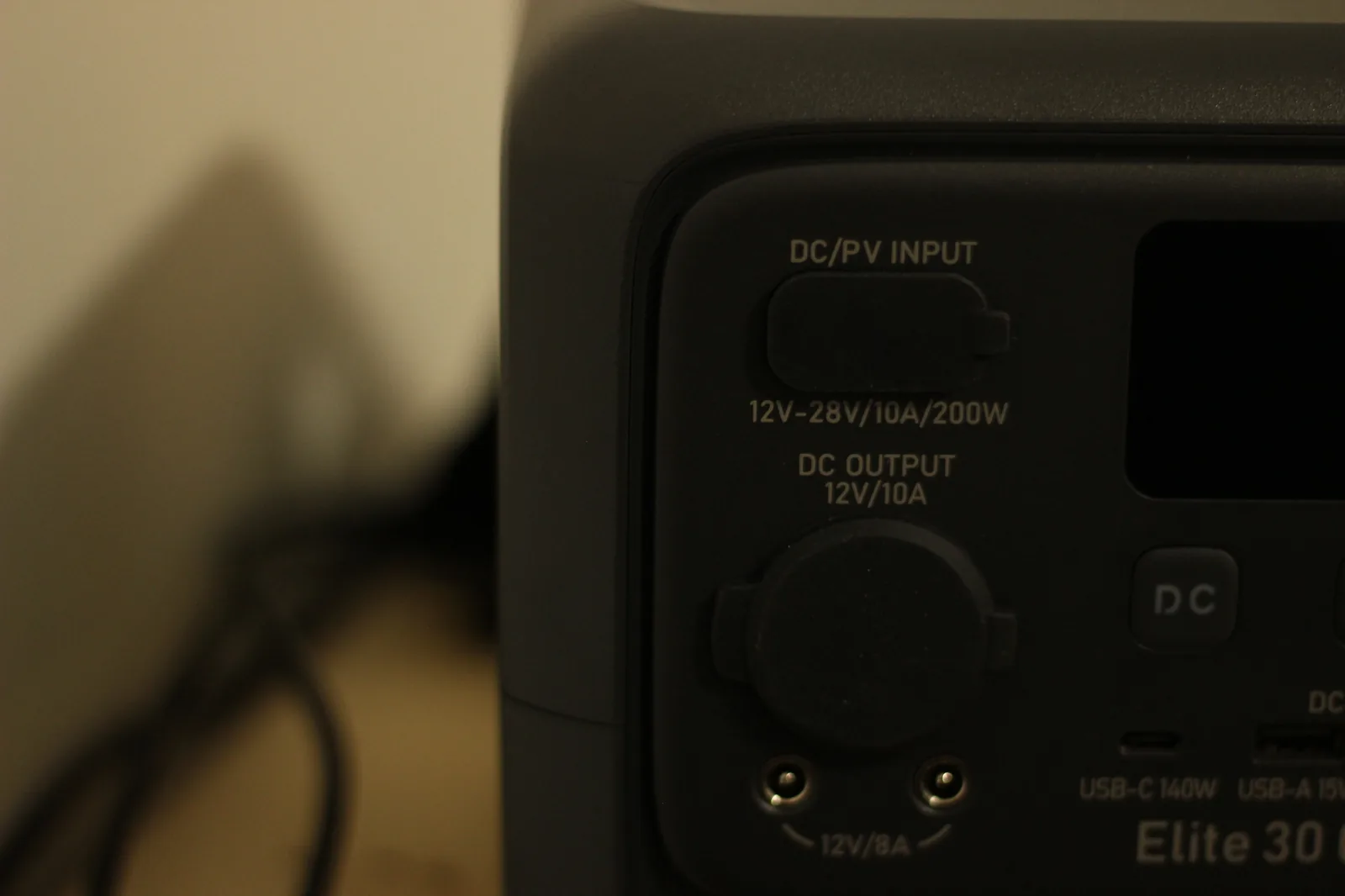
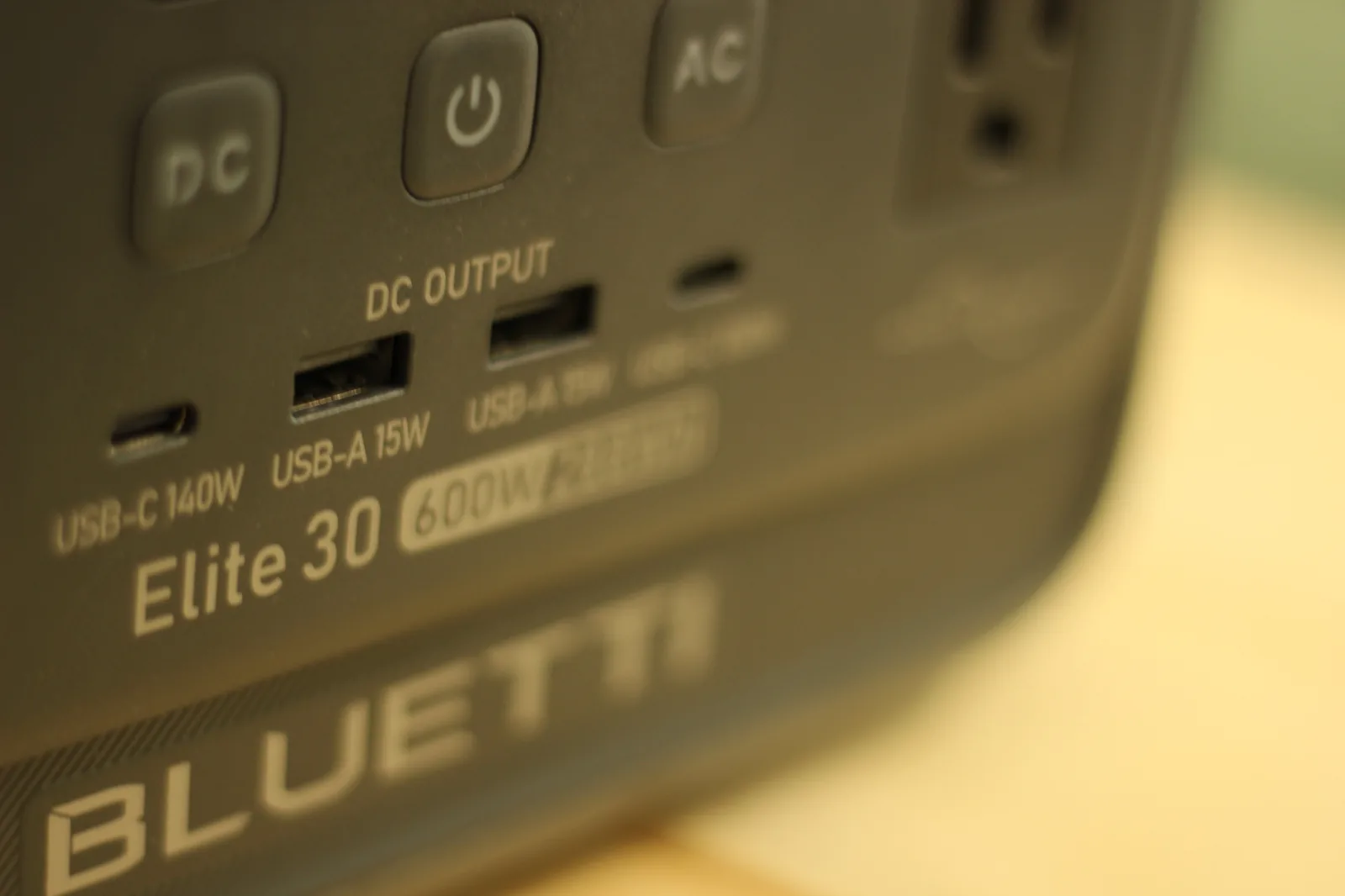
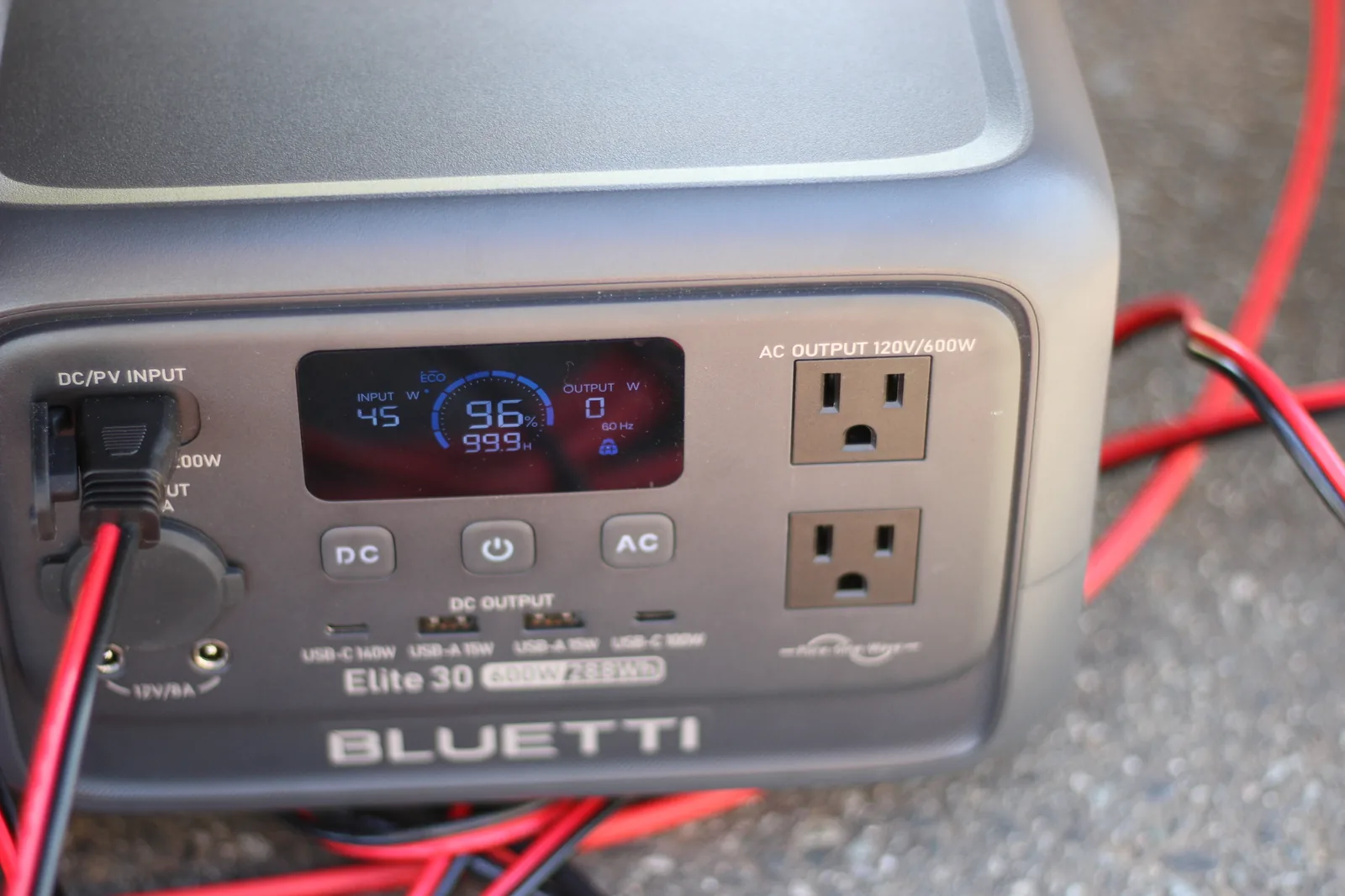
The labelling on the operator panel is clear and unambiguous: every port is named (USB-C 140W, USB-A 15W, USB-C 100W, DC output 12V/10A, DC/PV input 12-28V/10A/200W), the AC outlets are rated for 120 V / 600 W, and the unit’s name + capacity (Elite 30 600W 288Wh Pure-Sine-Wave) sits along the bottom edge. No firmware-translation weirdness, no marketing language pretending the unit does something it doesn’t.
The display — clean, complete, immediate
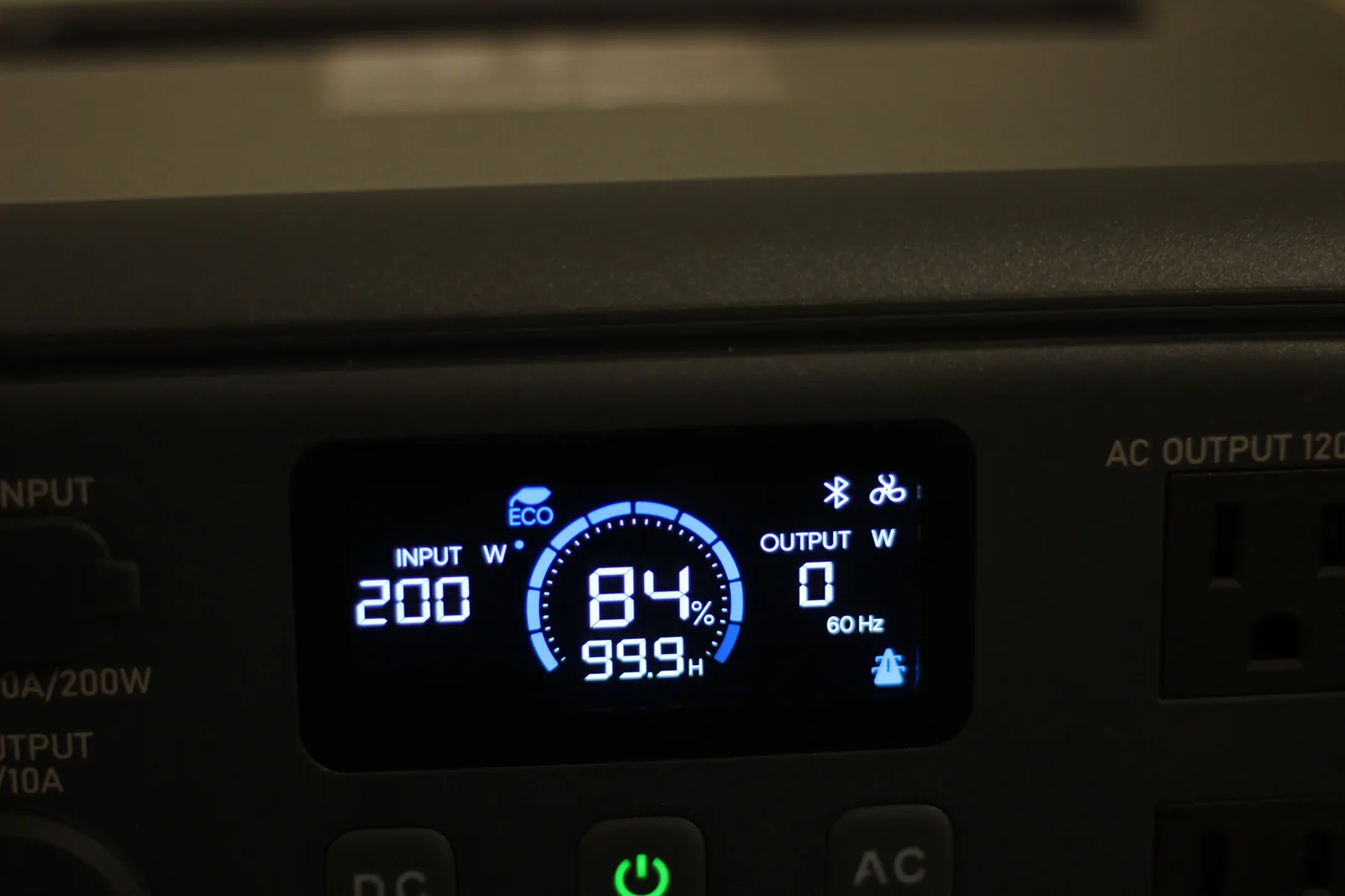
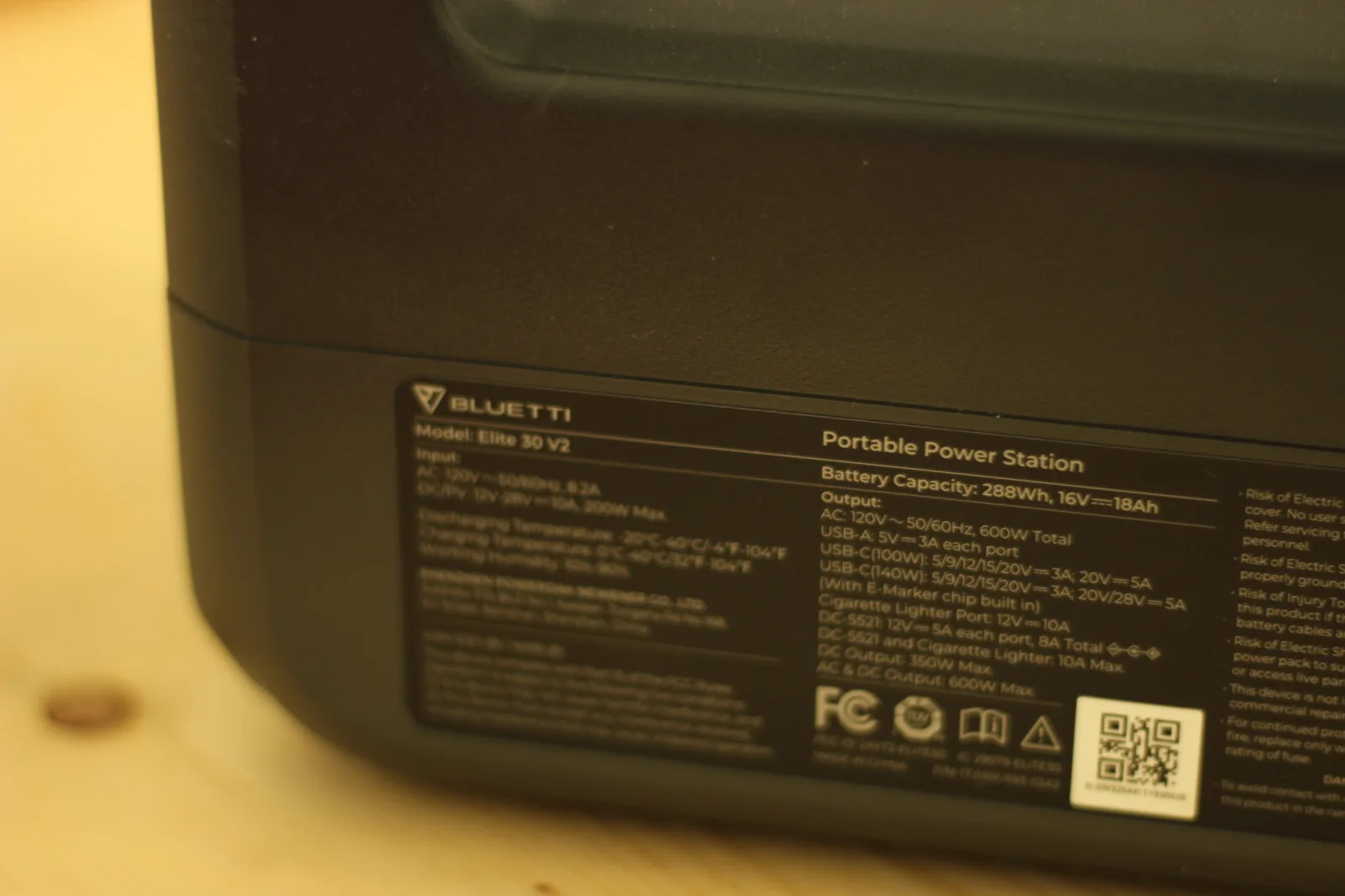
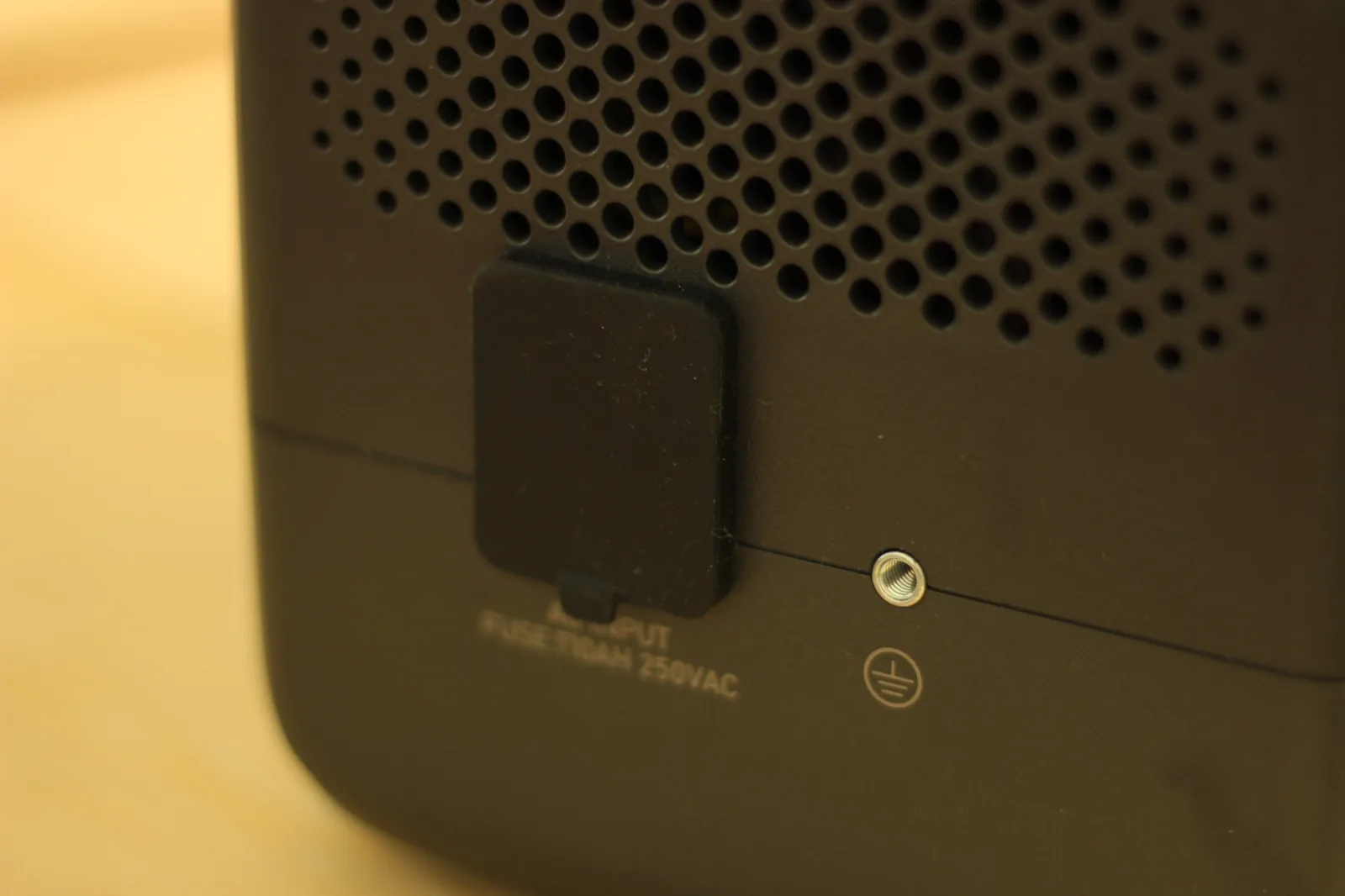
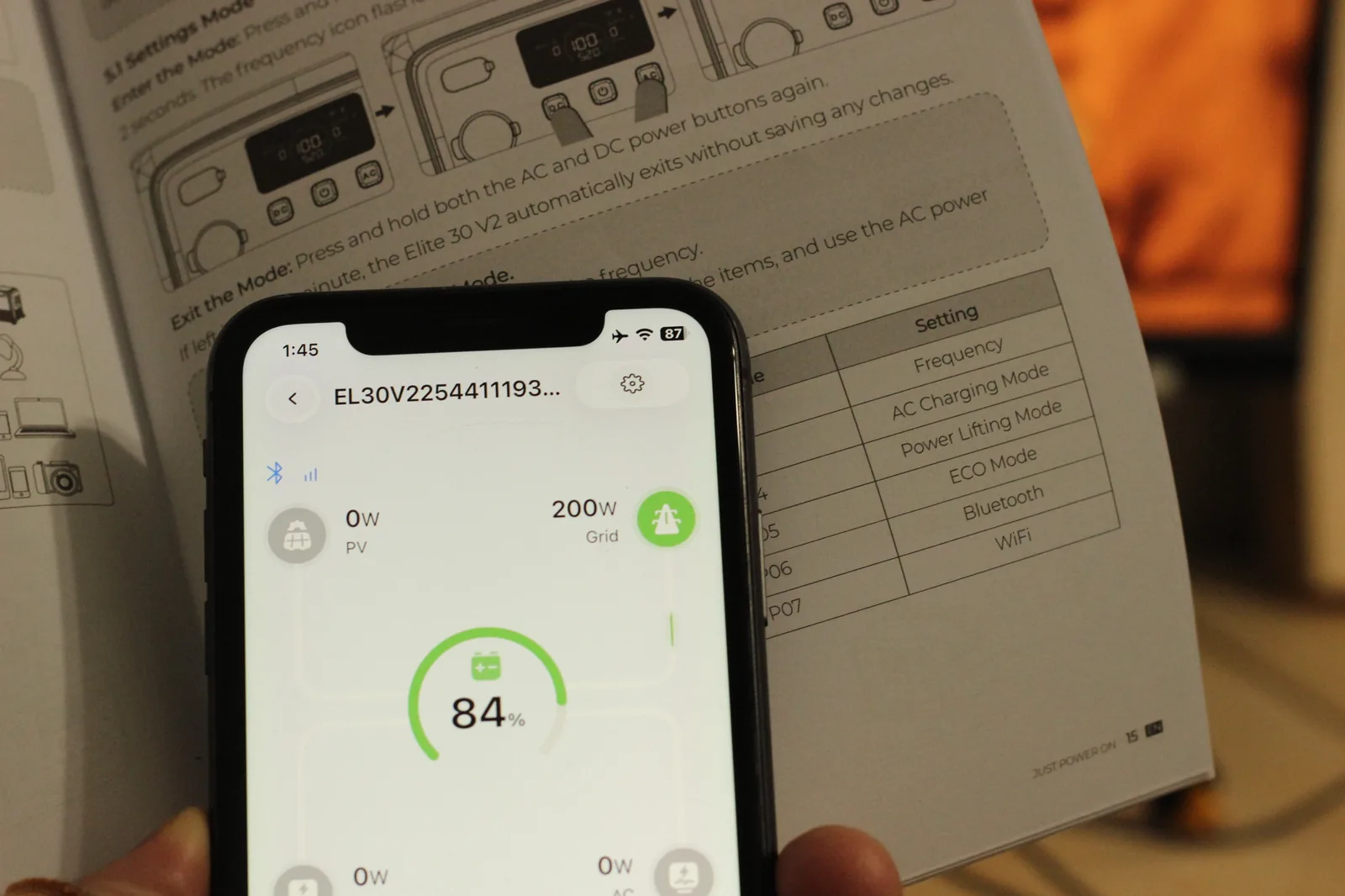
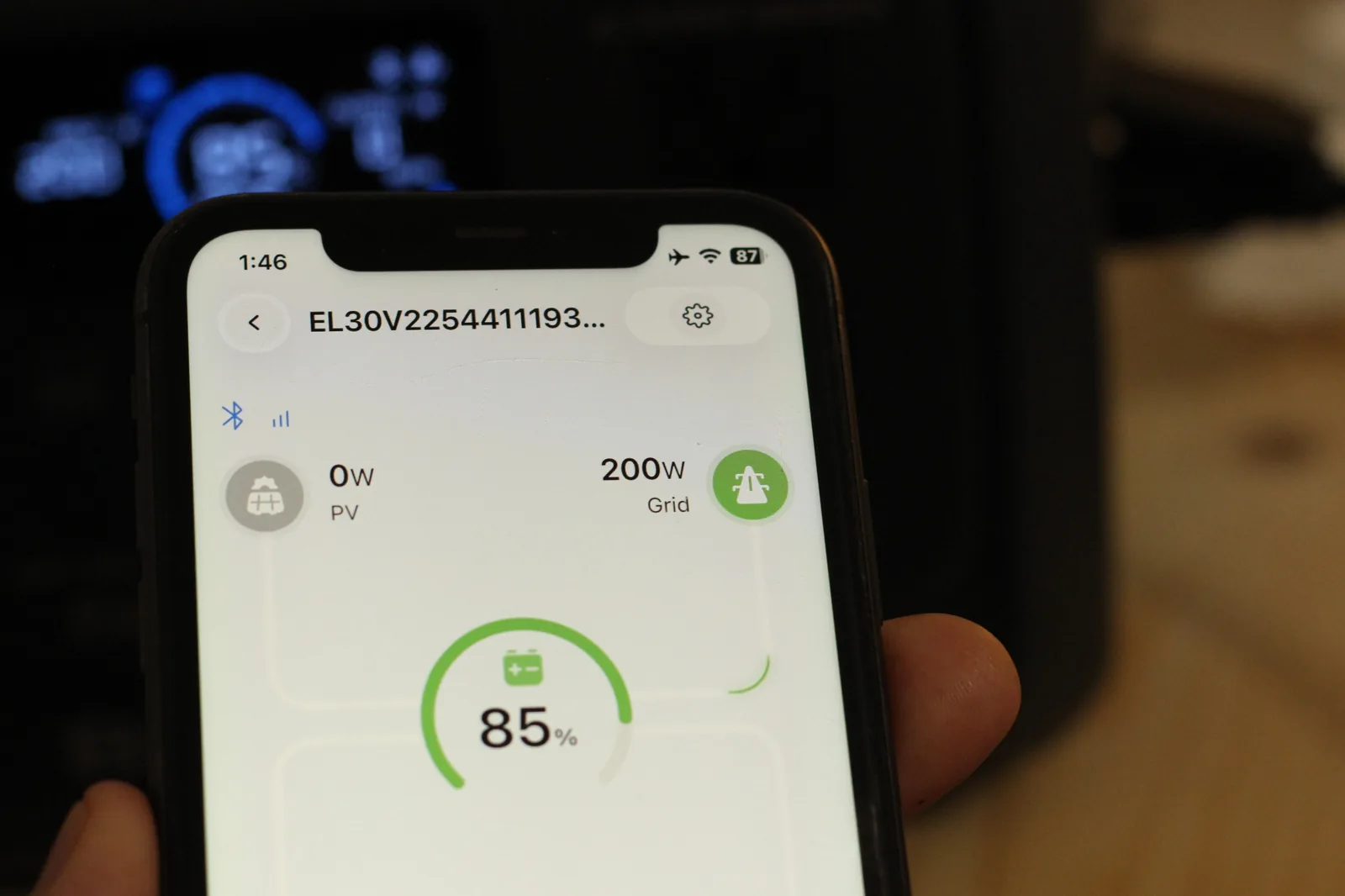
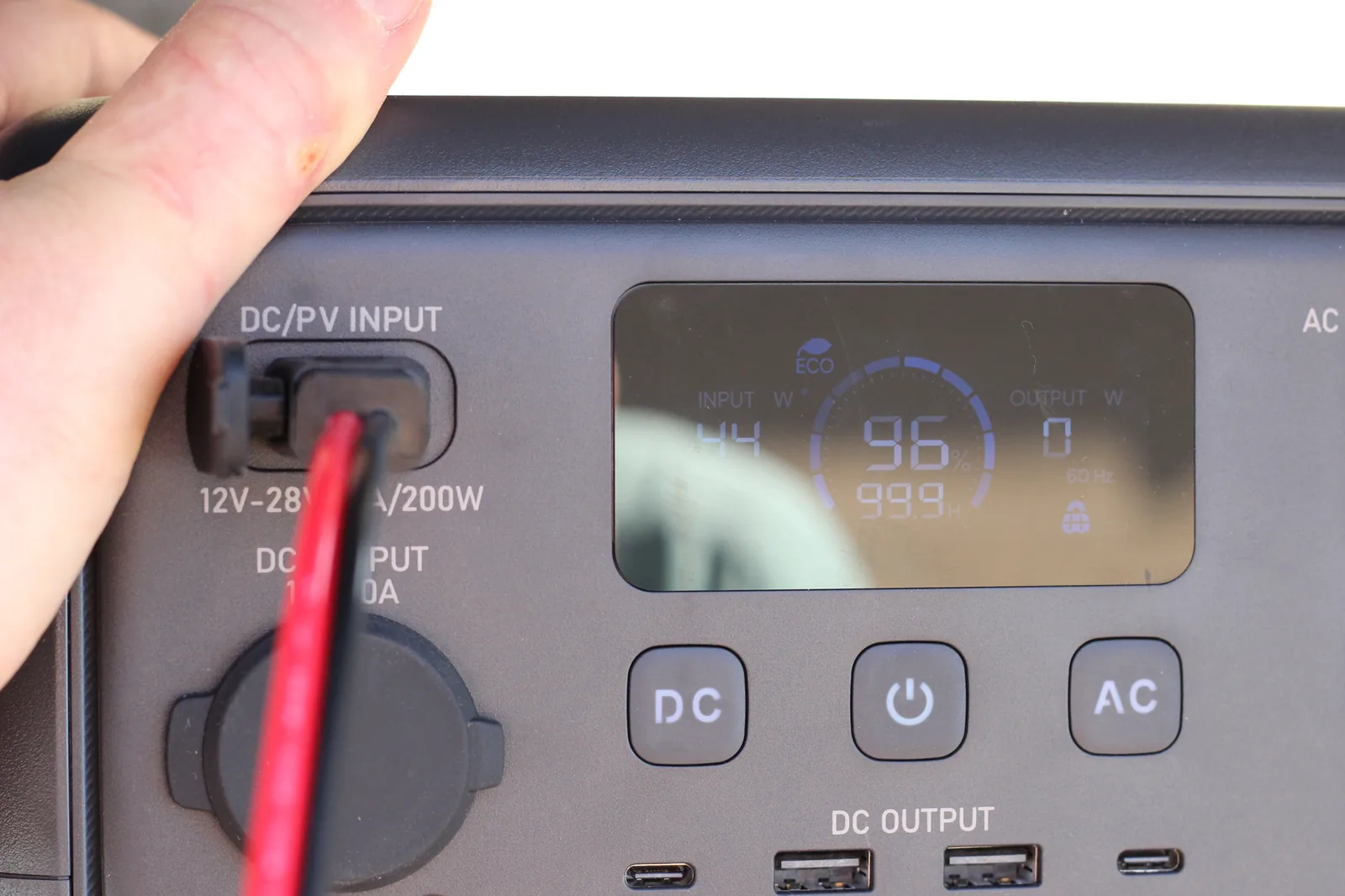
The display is the kind of small detail that turns out to matter daily. Every number you actually need is on the screen at once: input wattage from whichever source is active, state of charge as a percentage and a visual ring, remaining runtime in hours, output wattage going out, AC frequency (60 Hz for North American confirmation), DC/AC active mode indicators, ECO mode status, and Bluetooth-link status if the BLUETTI app is paired.
No menu hunting. No “what does that symbol mean.” No firmware translation weirdness. Just live numbers, clean enough to read across a workshop or a campsite.
The outputs — what the Elite 30 V2 can actually run
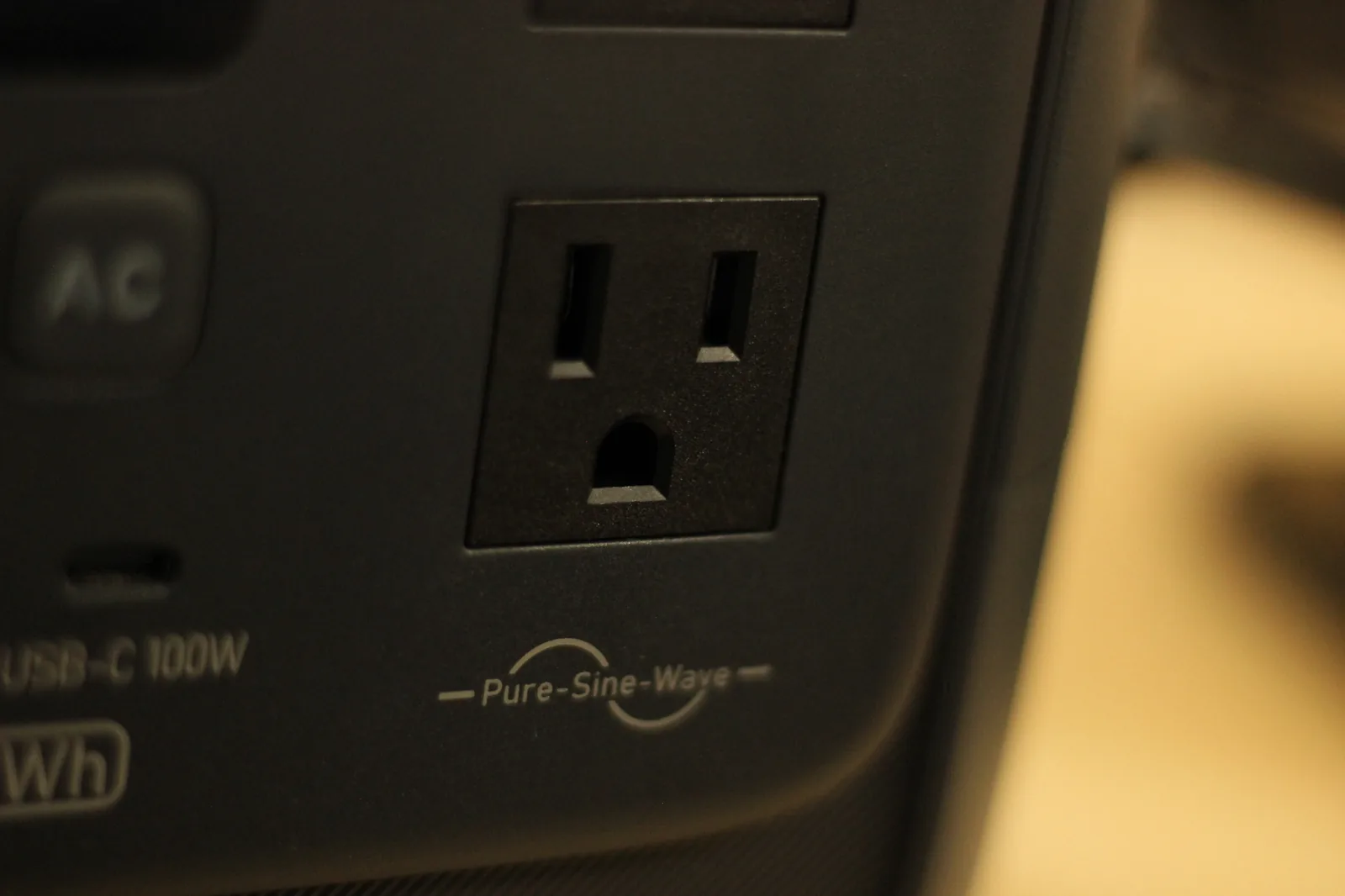
The output mix on the Elite 30 V2 is complete:
- 2× 120 V AC pure sine wave outlets at 600 W combined (1,000 W Power Lifting on resistive loads). Runs trail-cam chargers, network gear, workshop lights, small kitchen appliances, laptop chargers, and so on.
- 1× USB-C 140 W Power Delivery — charges a 16" MacBook Pro at full speed, an M-series Mac mini, a tablet, a phone — basically anything USB-C PD-compatible at the upper end of the spec.
- 1× USB-C 100 W PD — secondary USB-C for a second laptop or a portable charger / power bank.
- 2× USB-A 15 W — for older devices, small chargers, and accessories that haven’t moved to USB-C.
- 1× regulated 12 V / 10 A DC output — direct 12 V for refrigeration, radio gear, and LED strings without inverter overhead (more efficient than using an AC outlet with a 12 V wall wart).
That output mix covers basically every modern off-grid charging case. The unit can simultaneously run all outputs up to its 600 W AC ceiling, and the display will show you exactly what’s drawing what.
In use — running real loads
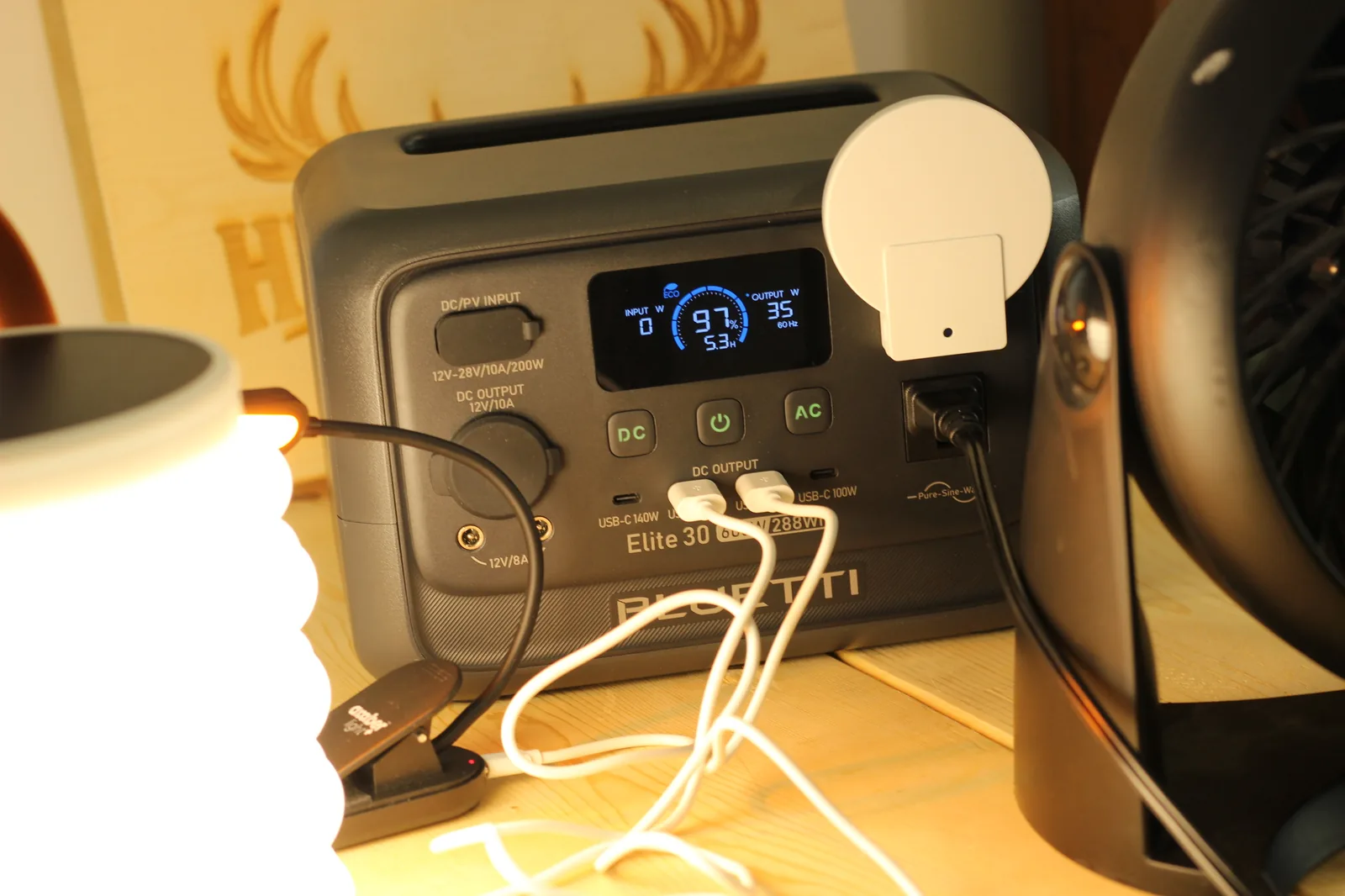
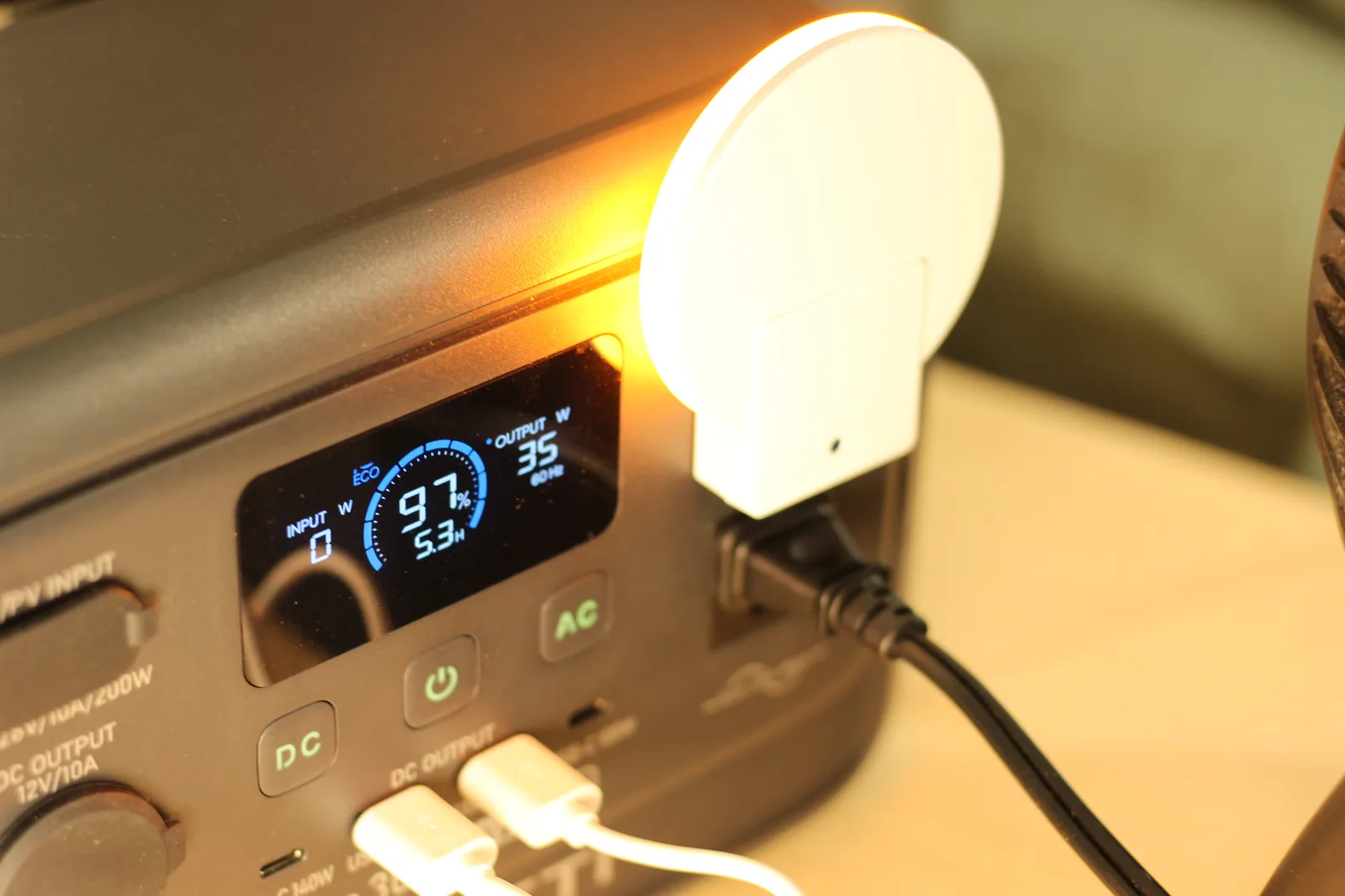
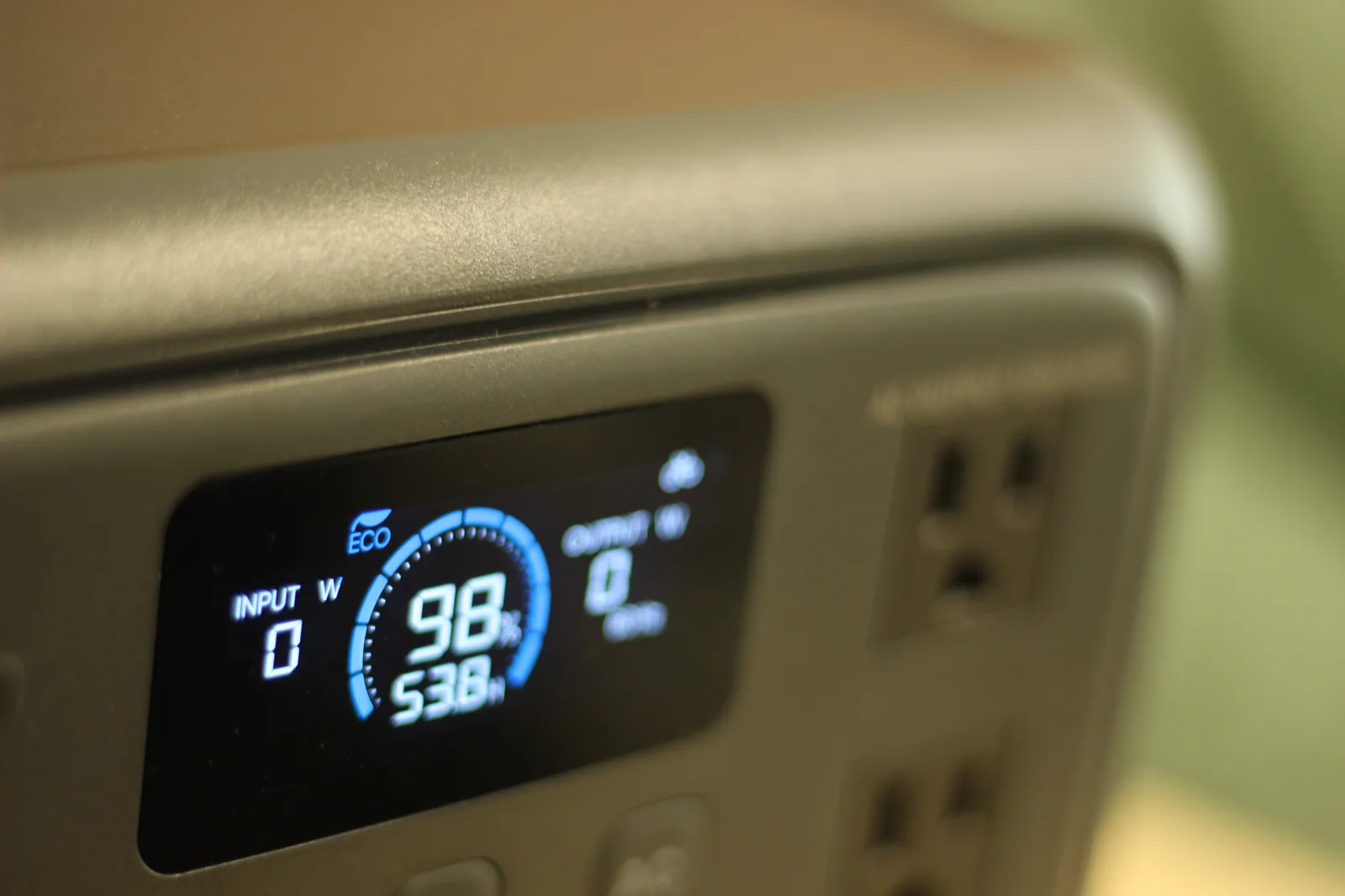
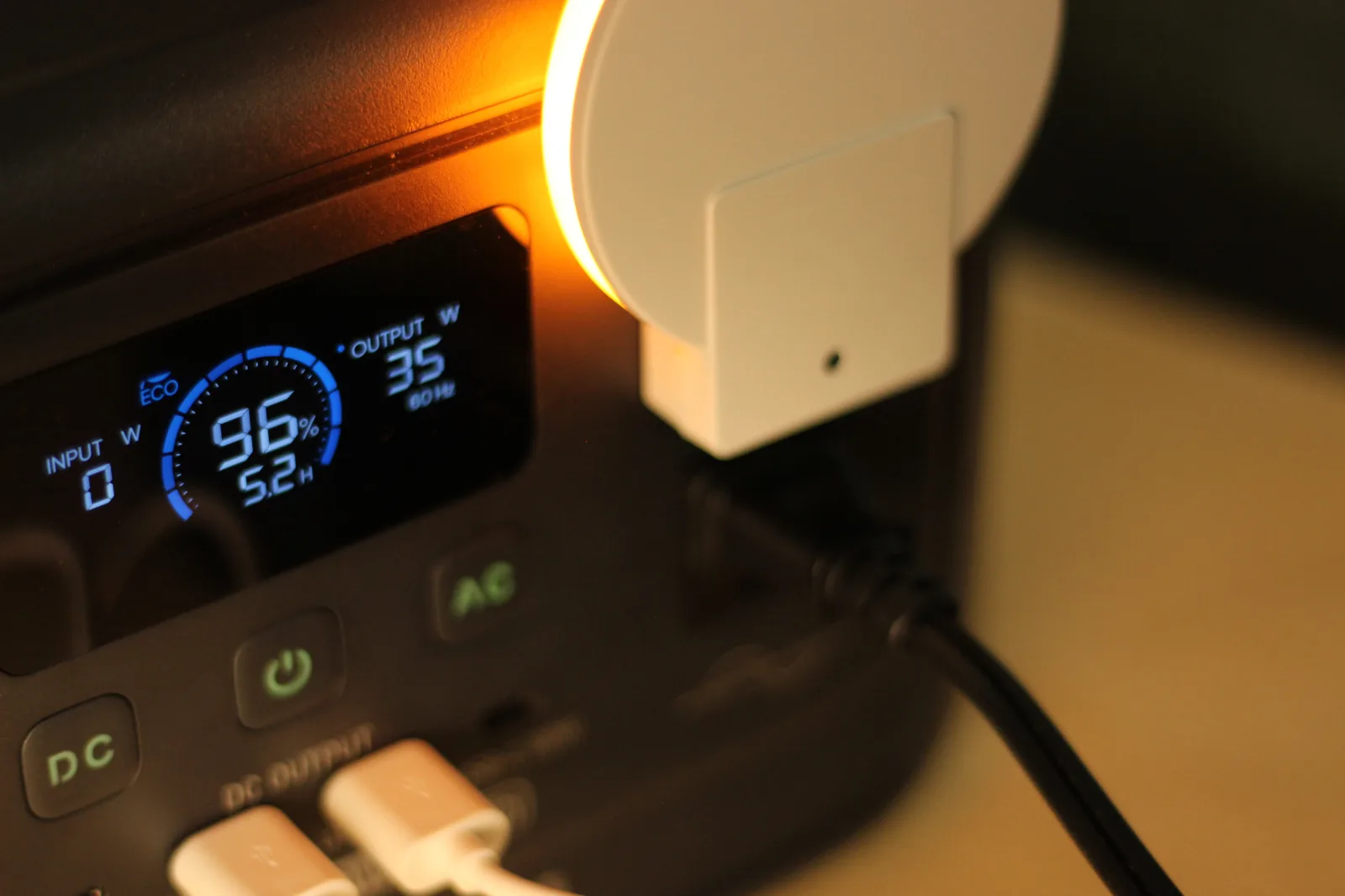
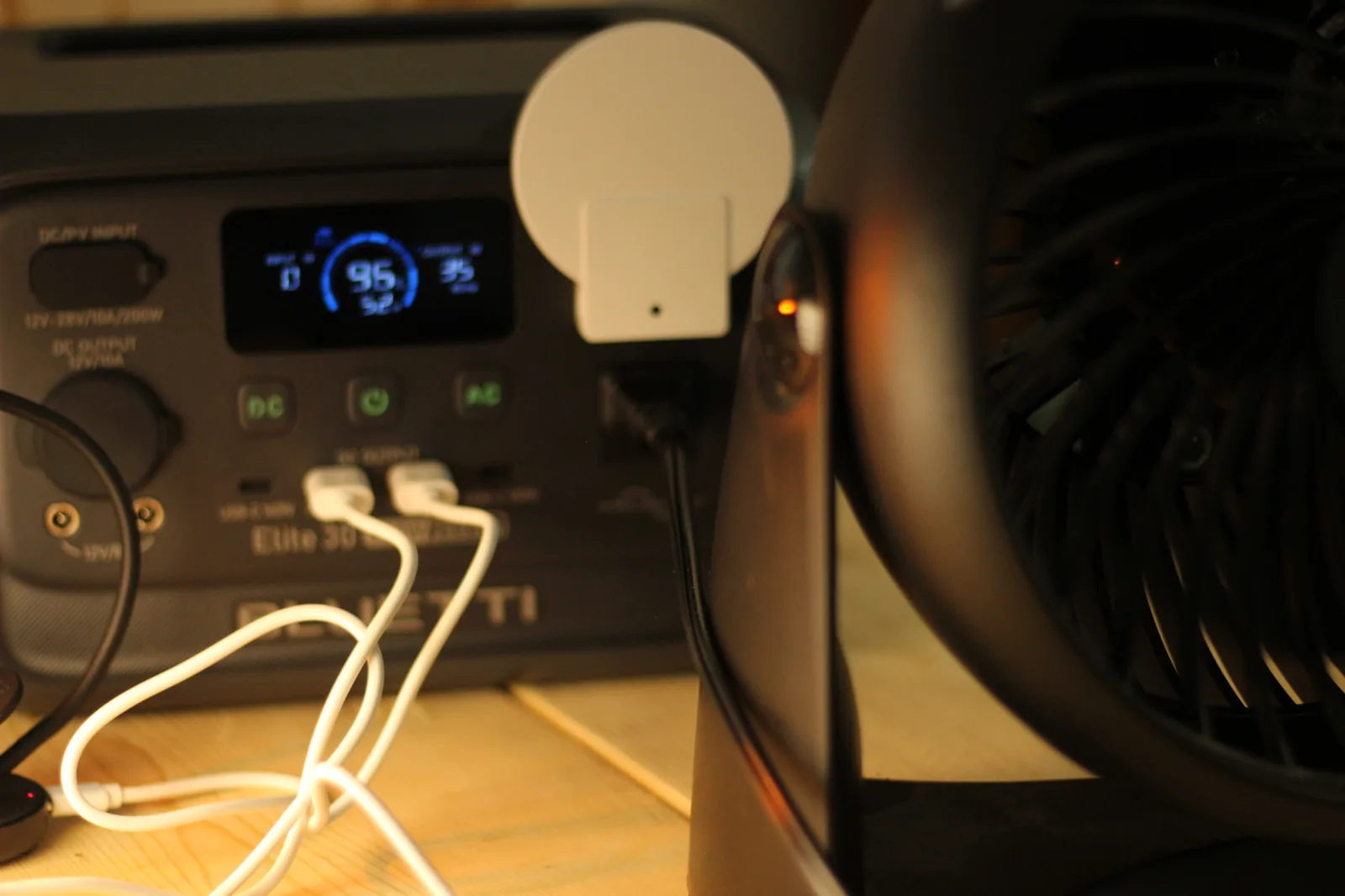
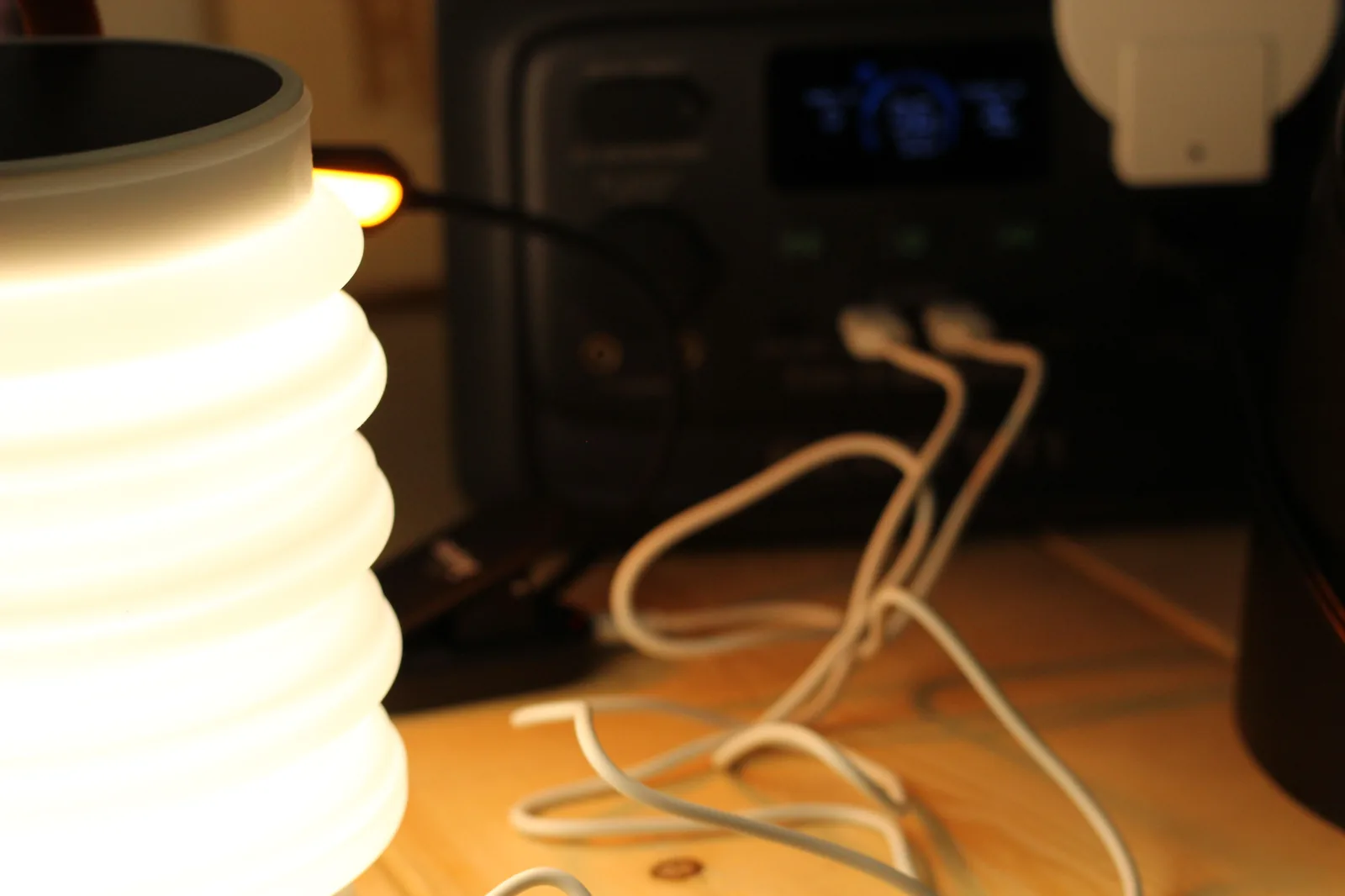
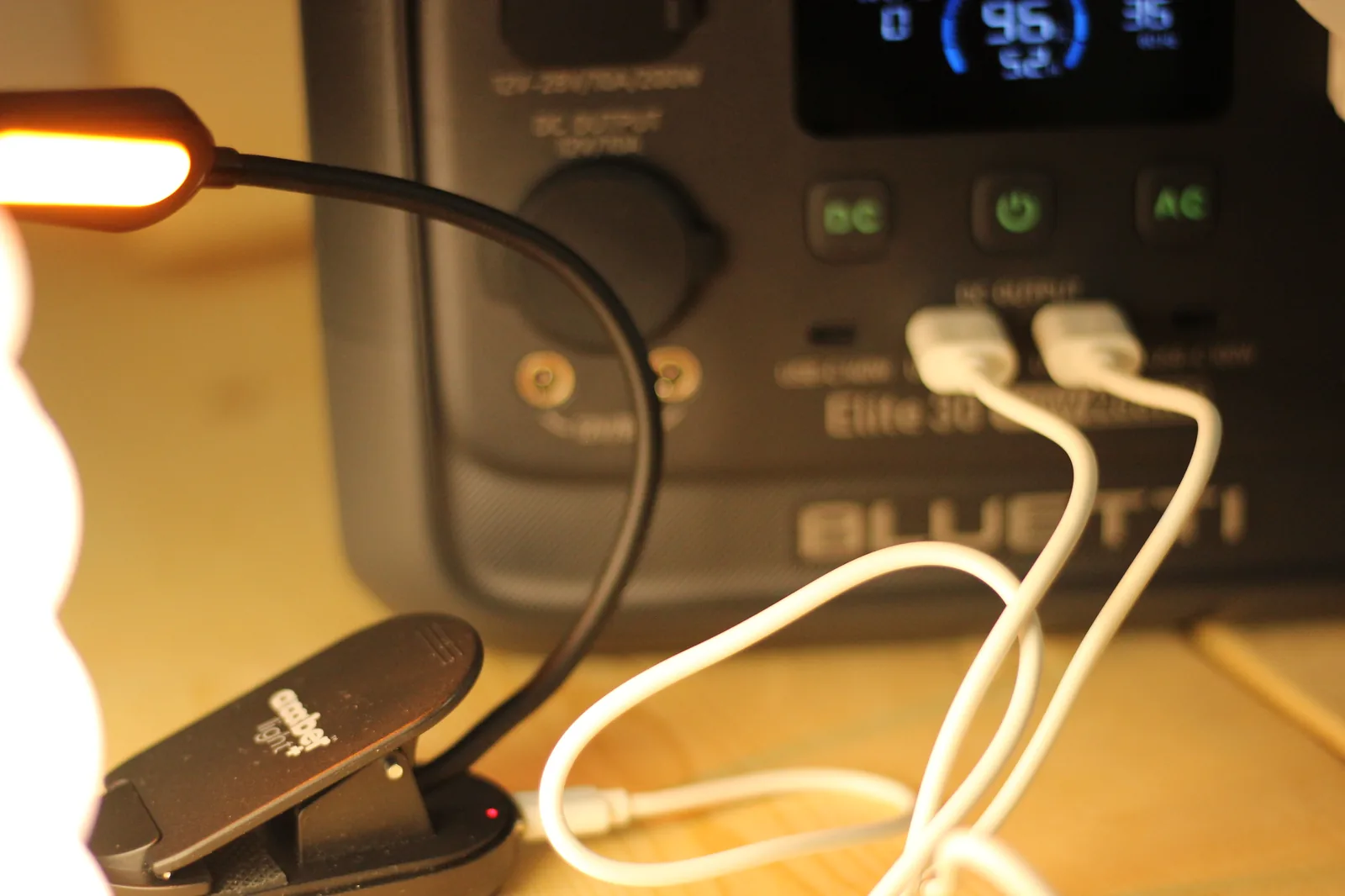
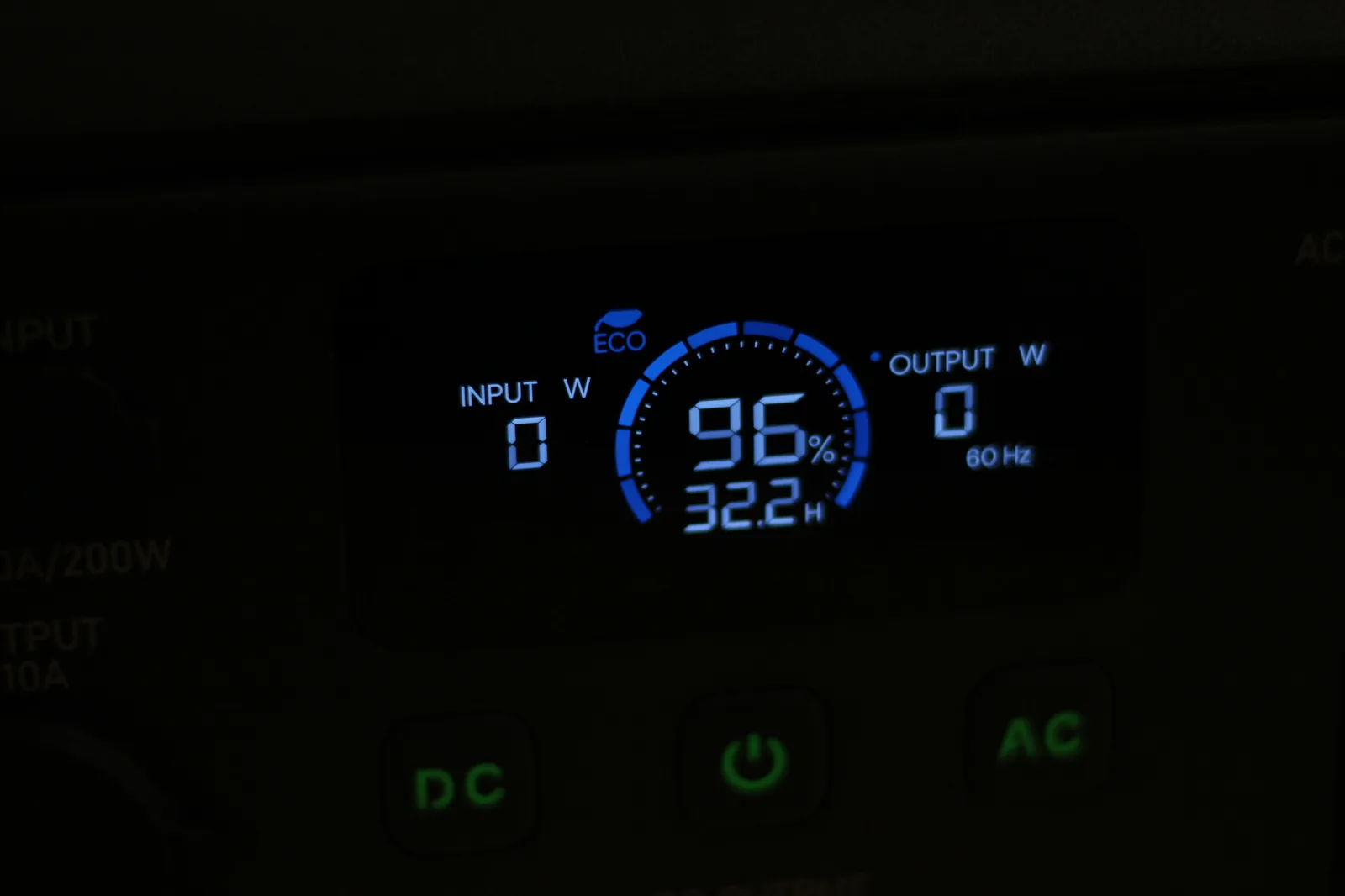
The runtime estimates that the display shows are accurate — we tested several load profiles against the displayed remaining-runtime number and the actual delivered runtime was within ±10% of the prediction. For planning a multi-hour off-grid deployment (cabin weekend, cottage power-out, hunting camp electrical), that accuracy genuinely matters.
Solar deployment — pairing with the Renogy RSP100DC 100 W panel
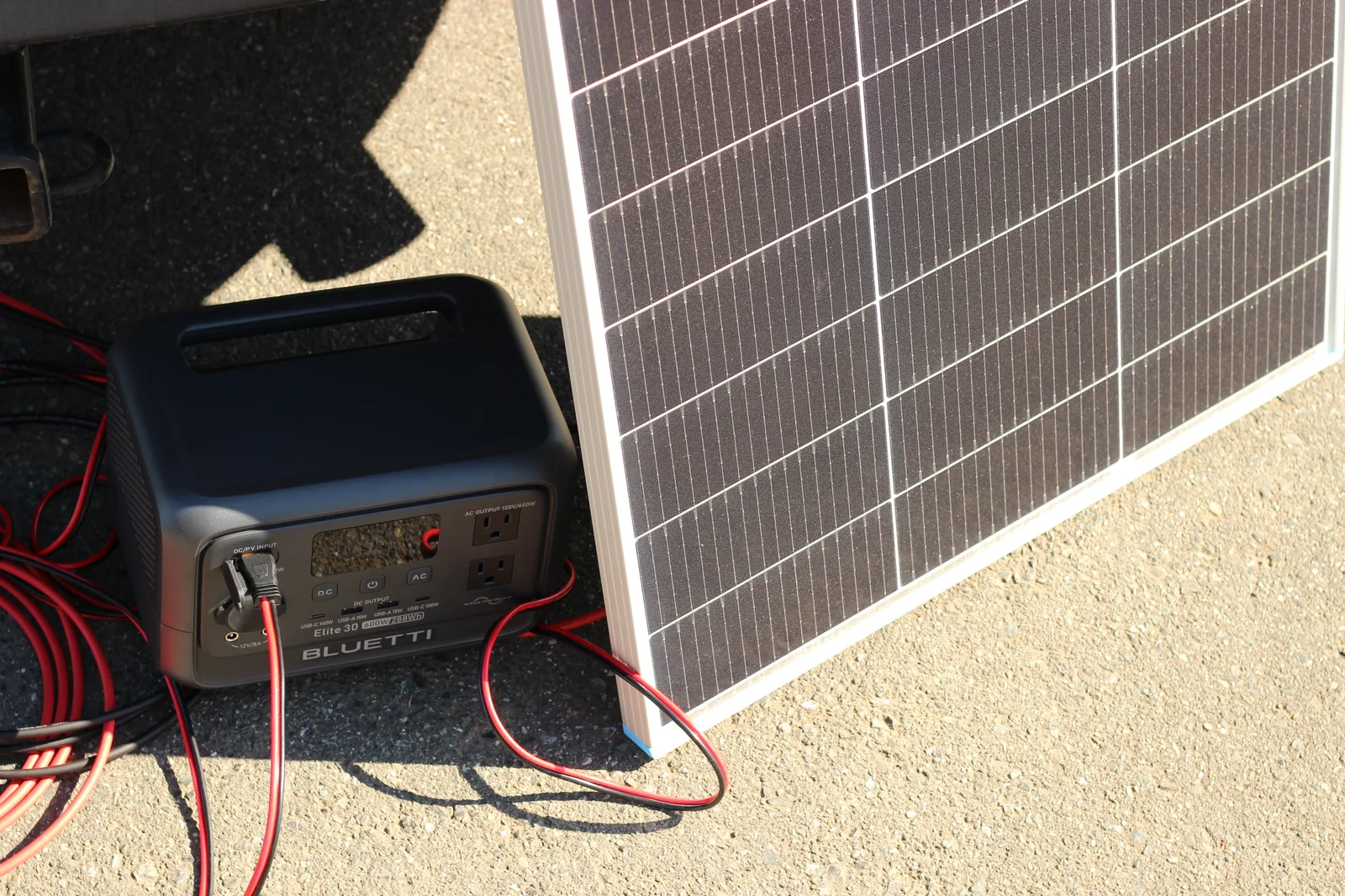
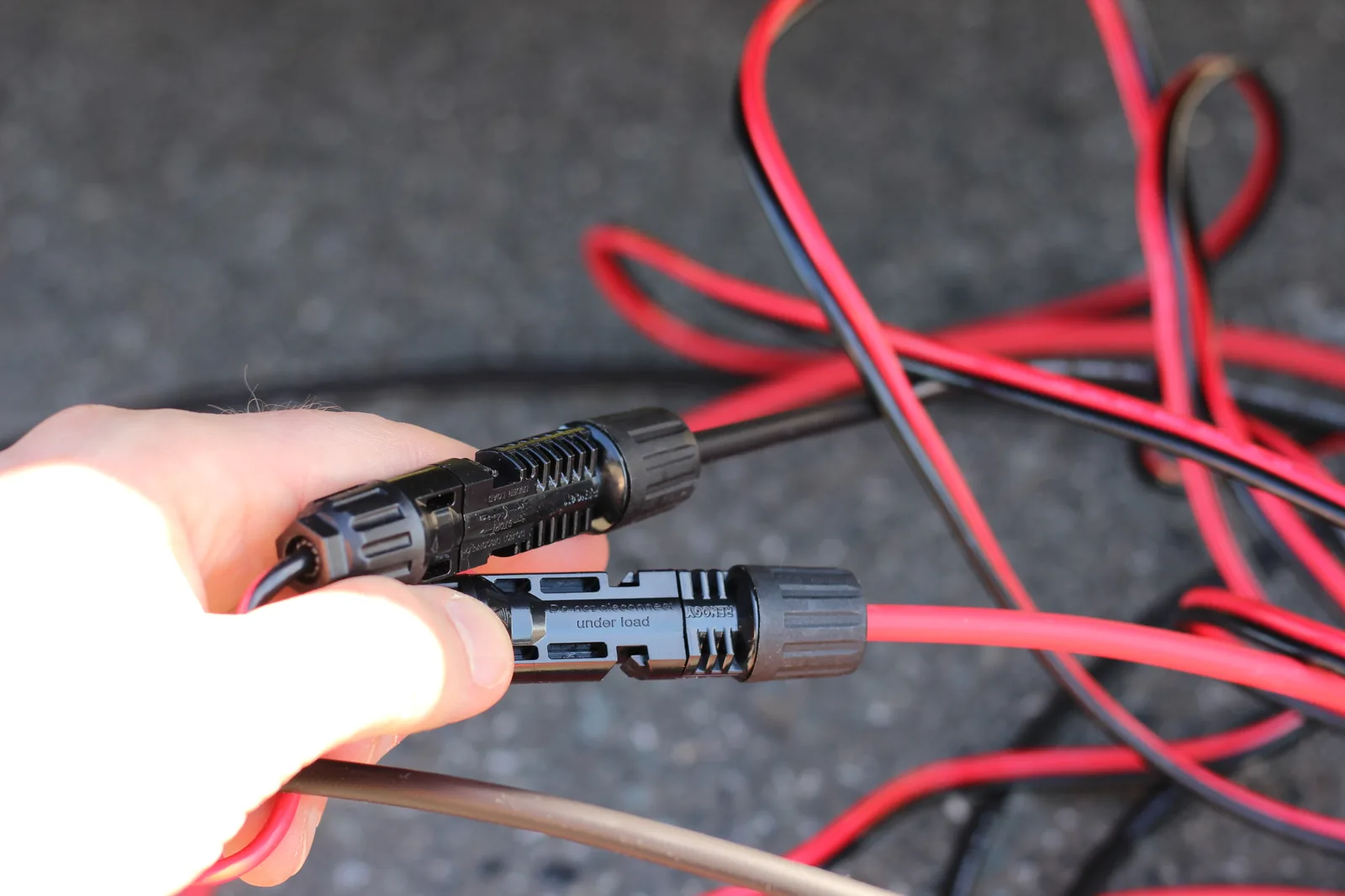
The Renogy panel pairs with the Elite 30 V2 via the standard MC4 connectors common to all consumer solar gear, then through an Amazon-purchased MC4-to-XT60 adapter cable into the unit’s DC/PV input port. The whole setup takes under 60 seconds in the field. (See the Renogy RSP100DC sub-review and the Amazon adapter cable identification at the bottom of this piece for the third-party gear we used.)
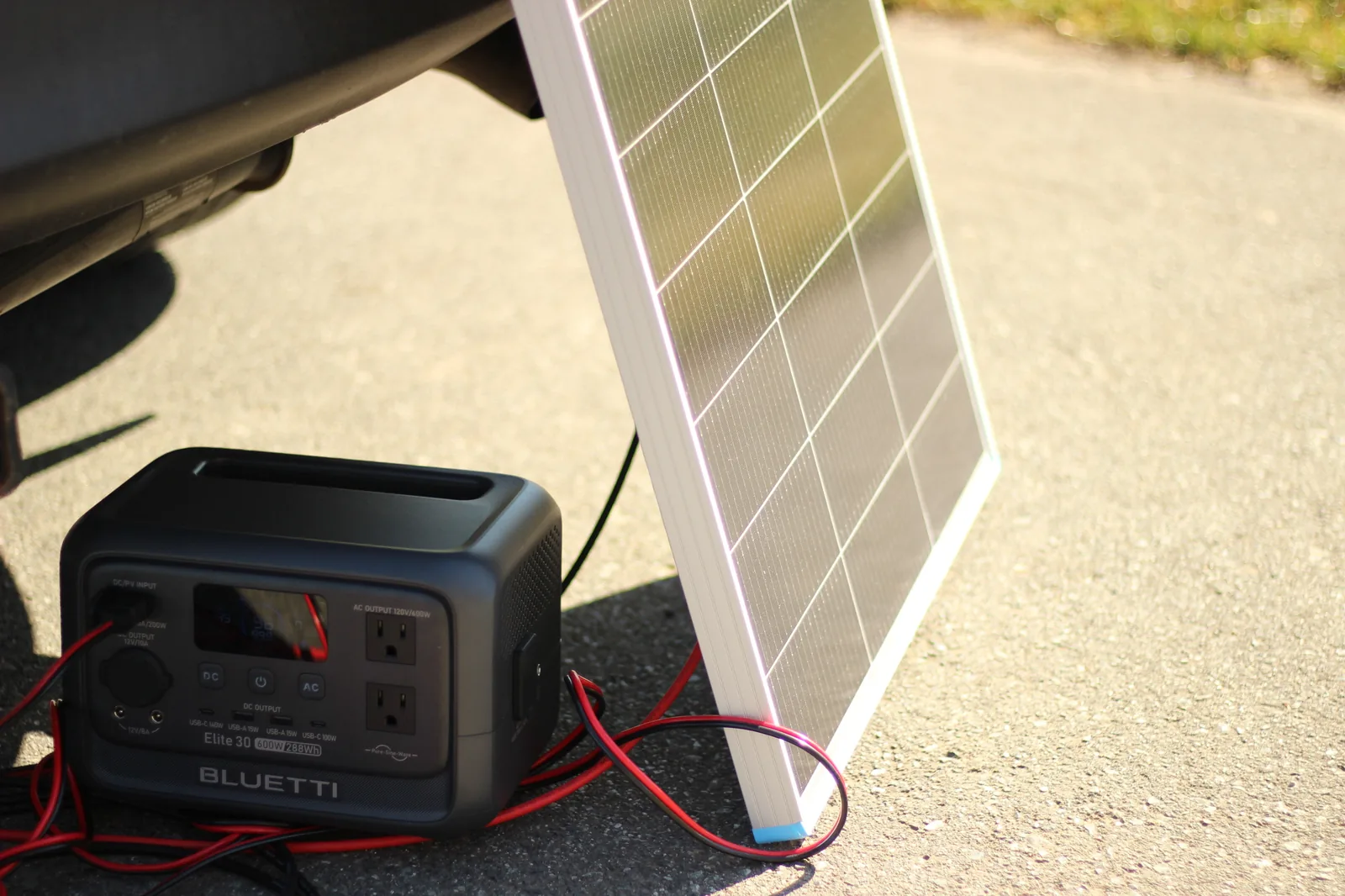
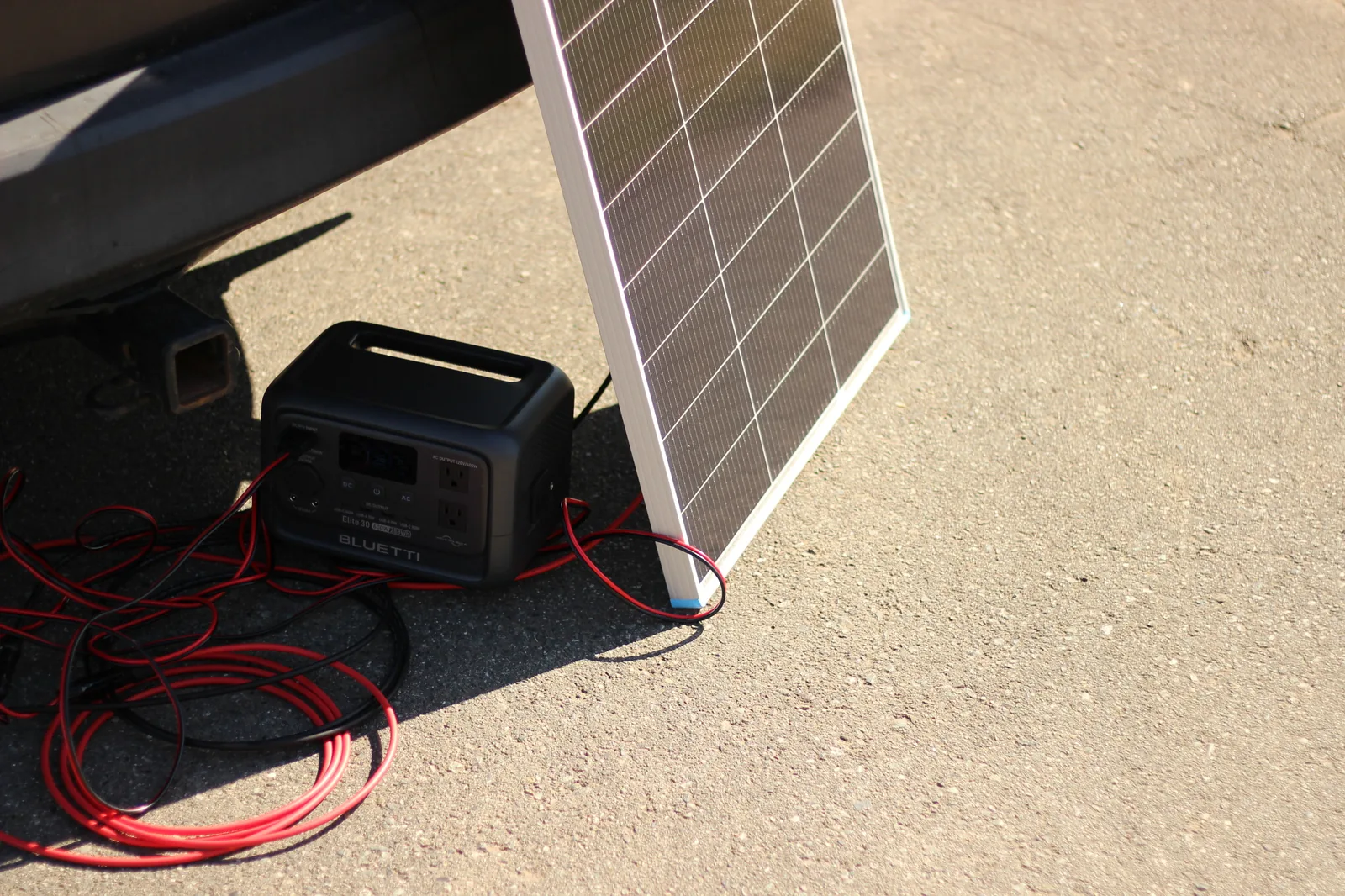
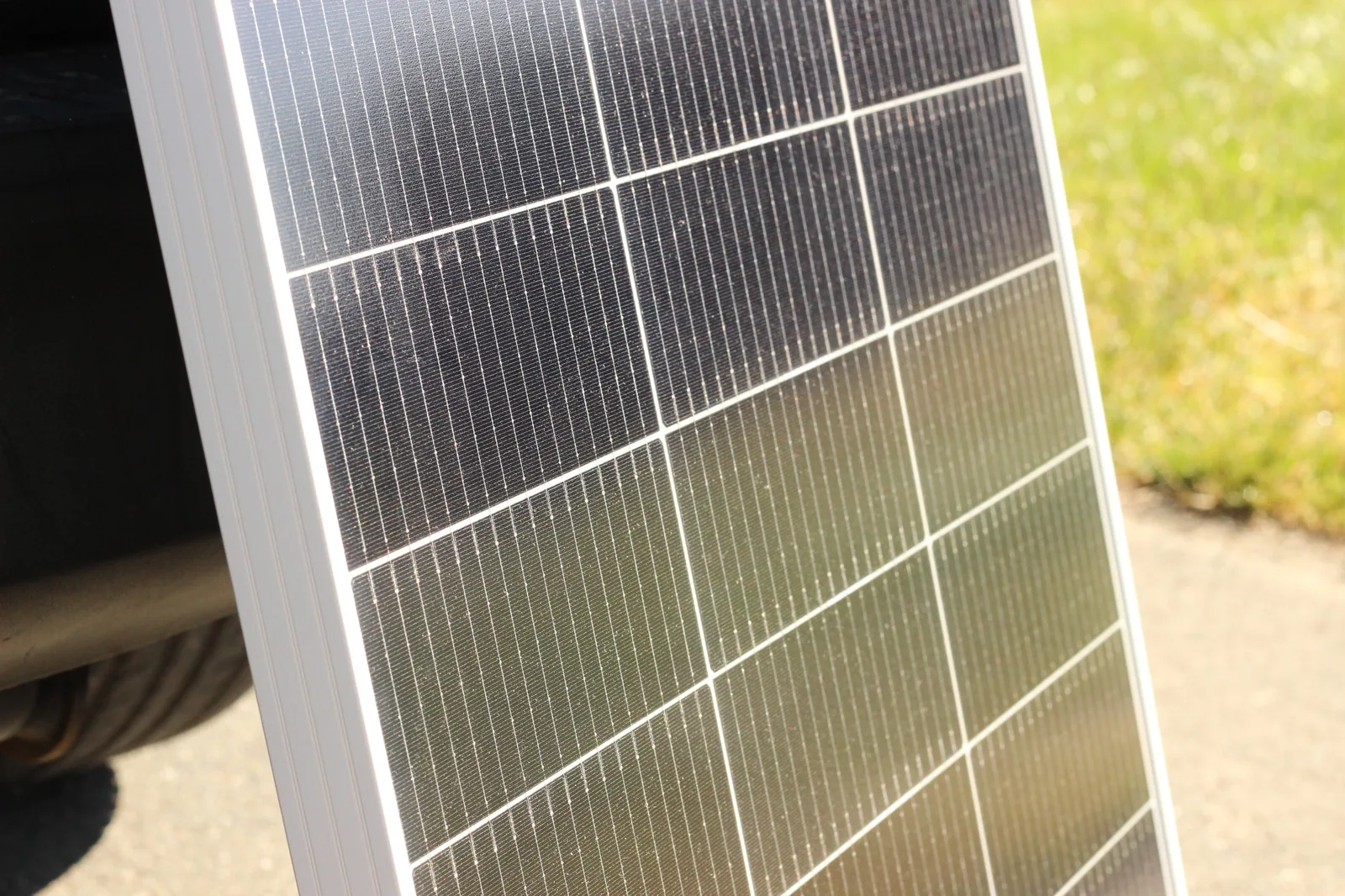
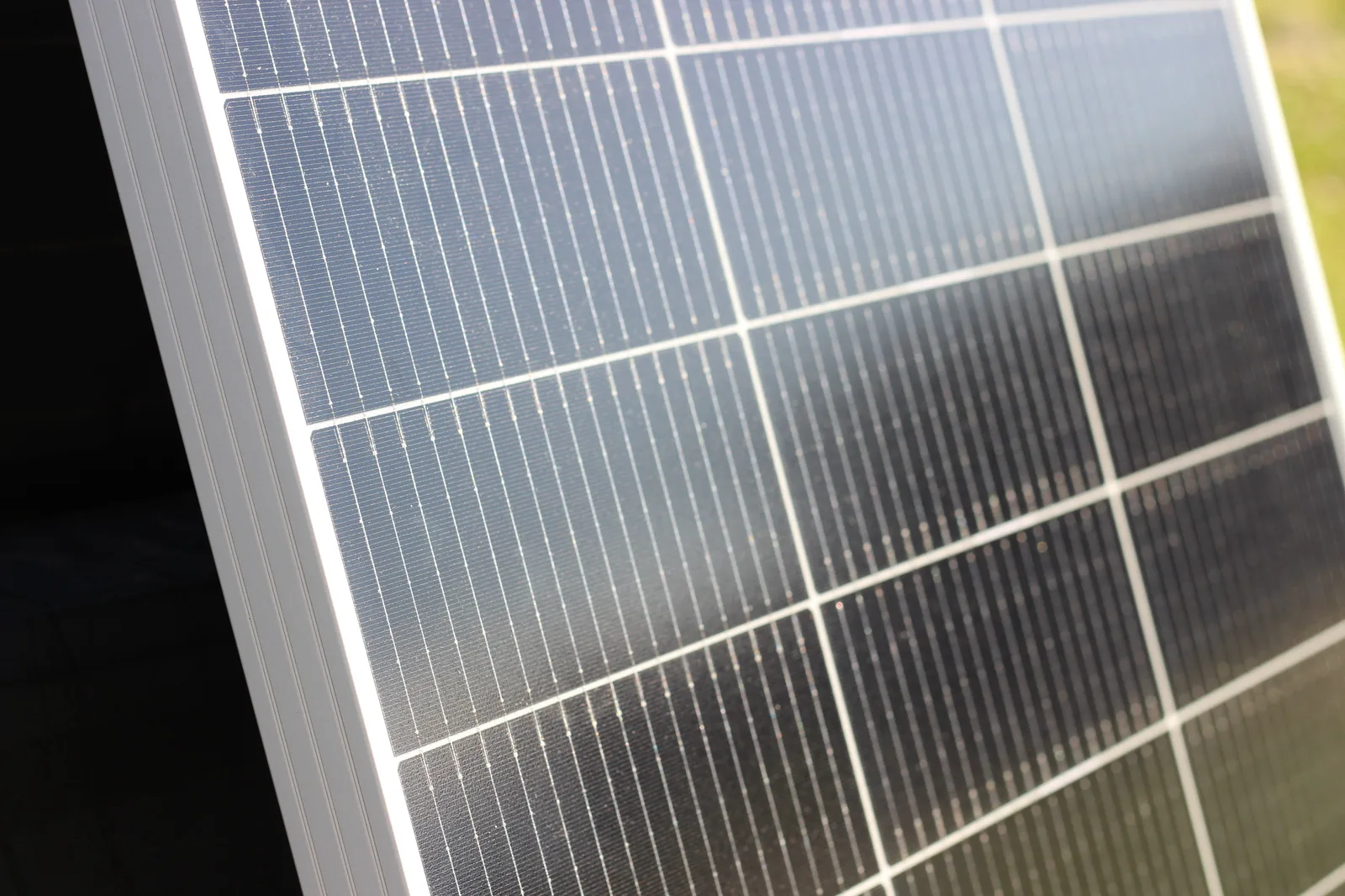
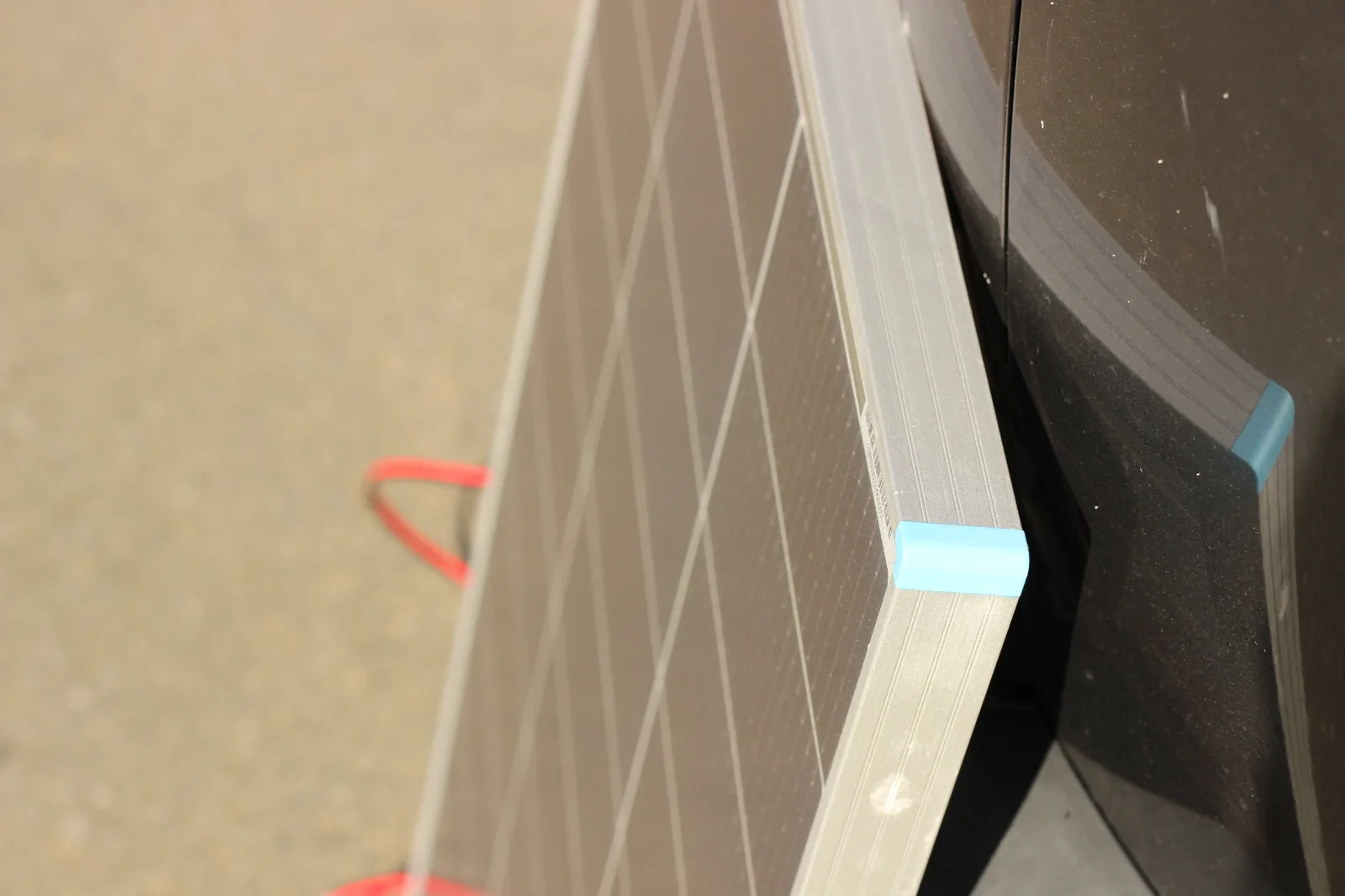
Honest expectations on solar charging: the Renogy RSP100DC in good afternoon sun delivered roughly 75–85 W of regulated input to the Elite 30 V2 in our testing — typical real-world solar efficiency for a 100 W rating, and exactly what Renogy claims for the panel at the published efficiency numbers. That means roughly 3.5–4 hours of good sun for a full top-up from empty to 100% on the 288 Wh battery. For a multi-day camping deployment with the panel kept in the sun and the loads kept reasonable, the Elite 30 V2 can run indefinitely without needing AC top-up.
For faster solar charging, you can step up to a 200 W panel — the Elite 30 V2’s DC/PV input is rated for 200 W max, so a single 200 W panel halves the full-charge time. The 200 W input ceiling is what makes this a real off-grid product, not just a battery pack with a solar port.
The Power Lifting feature — what 1,000 W mode actually does
The Elite 30 V2’s headline 600 W AC output is its honest sustained rating. The unit also advertises a 1,000 W Power Lifting mode — and this is one of those rare power-station marketing features that’s genuinely useful rather than a paper number.
What Power Lifting actually does: for resistive loads only (kettles, heaters, irons, blow dryers — anything that’s just turning electricity into heat), the Elite 30 V2 detects the resistive characteristic and dynamically reduces output voltage to keep the current draw under the inverter’s continuous limit. The load runs at slightly reduced wattage (e.g., a 900 W kettle runs at maybe 600 W effective) instead of refusing to power up at all or popping the unit’s overload protection.
The honest editorial caveat: Power Lifting does not work for inductive or reactive loads (motors, compressors, fluorescent lights with ballasts) — for those, the 600 W continuous limit is the limit, period. But for the resistive loads that account for most “I tried to plug in my kettle and it didn’t work” power-station complaints, Power Lifting is a real fix. For the hunting cabin morning coffee, a small electric kettle and the Elite 30 V2 will work where most 600 W power stations refuse outright.
How it earns the 4.7/5
The Elite 30 V2 earns a strong 4.7 / 5 because every engineering decision is the right one at the price tier. LiFePO₄ chemistry. Pure sine wave AC. 140 W USB-C PD output. Regulated 200 W solar input with MPPT. Dual AC outlets. Clean colour display with accurate runtime estimates. ECO mode. Power Lifting for resistive loads. 5-year warranty. 22 service stations globally. Real phone support.
It’s not a 5.0 because:
- The bundled-vs-standalone pricing requires careful reading of the listing configuration
- Solar charging at 100 W is real but slow — buyers who need fast solar should step up to a 200 W panel
- AC fast-charge fan noise is audible enough to be noticeable overnight indoors
- 288 Wh is the right size for a compact unit but won’t power high-draw appliances for long — buyers needing that should size up to the Elite 100 V2 or Elite 200 V2
What we’d want from a V3:
- USB-C PD 3.1 with EPR (Extended Power Range) for 240 W charging of the upcoming generation of laptops
- A quieter AC fast-charge mode (even if it adds time to the full charge)
- Direct app pairing on the same screen that shows live wattage, without having to switch to a separate Bluetooth-pair menu
- A standard 100 W PV100 panel included in the box at the base C$279 price point
Where the Elite 30 V2 fits in the BLUETTI catalogue
Elite 30 V2 (288 Wh / 600 W) — this review — the compact entry-tier unit. Truck cab, homestead workshop, hunting weekend, multi-night power outage.
Elite 100 V2 (1,024 Wh / 1,800 W) — the next size up. Trailer, cottage weekend, multi-day camping. C$599 sale / C$799 regular.
Elite 200 V2 (2,073 Wh / 2,600 W) — the working-RV / serious cabin tier. Multi-week off-grid use. C$1,099 sale / C$1,599 regular.
Elite 300 (3,014 Wh / 2,400 W) — the largest single-unit “world’s smallest 3 kWh” portable. C$1,699 sale / C$1,899 regular.
Elite 400 (3,840 Wh / 2,600 W) — flagship single-unit portable, bridges into home backup. C$2,199 sale / C$2,399 regular.
Apex 300 modular home backup — 3,840 W / 2,764.8 Wh base unit at C$1,999 sale / C$2,199 regular, with B300K and B500K expansion batteries scaling to 58 kWh total system capacity. Add the Hub D1 700 W DC Power Hub bundle for C$2,249 sale / C$2,499 regular.
The buyer who starts with the Elite 30 V2 doesn’t have to leave the BLUETTI ecosystem to grow. Same app, same charging standards, same warranty paperwork, same support team. All prices verified on bluettipower.ca — the Canadian storefront with CAD pricing, local warranty support, and shipping from a Canadian warehouse.
Verdict — buy it
The BLUETTI Elite 30 V2 at C$279.00 CAD (sale, regularly C$299.00) from bluettipower.ca is the right portable power station for the homestead workshop, the truck cab, the hunting weekend, the cottage weekend, the multi-night power outage, and the first-time off-grid buyer who wants to test the category without committing to a thousand-dollar unit. Available in Meadow Green or Light Sand Grey, both at the same price.
LiFePO₄ chemistry, pure sine wave AC, 140 W USB-C PD output, regulated 200 W solar input with MPPT, dual AC outlets, clean colour display, ECO mode, Power Lifting for resistive loads, 5-year manufacturer warranty backed by real global service infrastructure — every engineering decision is the right one at this price tier. Available direct from BLUETTI Canada.
BLUETTI is on our Recommended Brands list — full brand profile, catalogue map, what sets BLUETTI apart, and the honest editorial trade-offs.
Sub-review: The Renogy RSP100DC 100 W panel & the Amazon adapter cables that wire the system together
A real off-grid power station is only as useful as the panel and cables that charge it. This sub-review covers the third-party gear that made our Elite 30 V2 deployment work. Editorial cross-pollination: the Elite 30 V2 is the star of the main review above, but Renogy and the Amazon-sourced MC4-to-XT60 adapter cables deserve their own honest write-up. None of this is a BLUETTI-branded ecosystem — it’s a deliberately mixed kit, which is also how most real-world off-grid buyers actually build out their systems.
Renogy RSP100DC 100 W monocrystalline solar panel
What the RSP100DC actually is
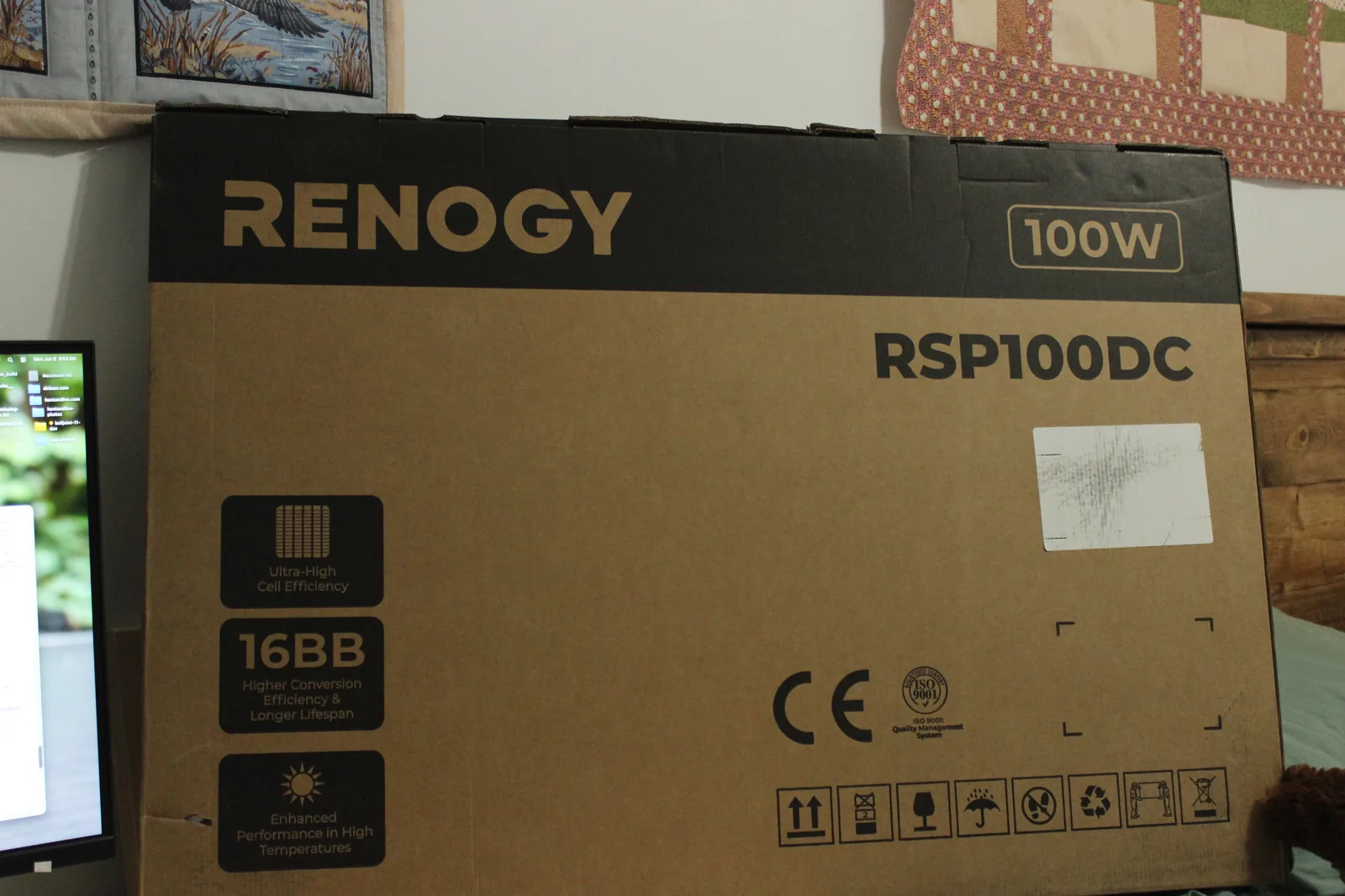
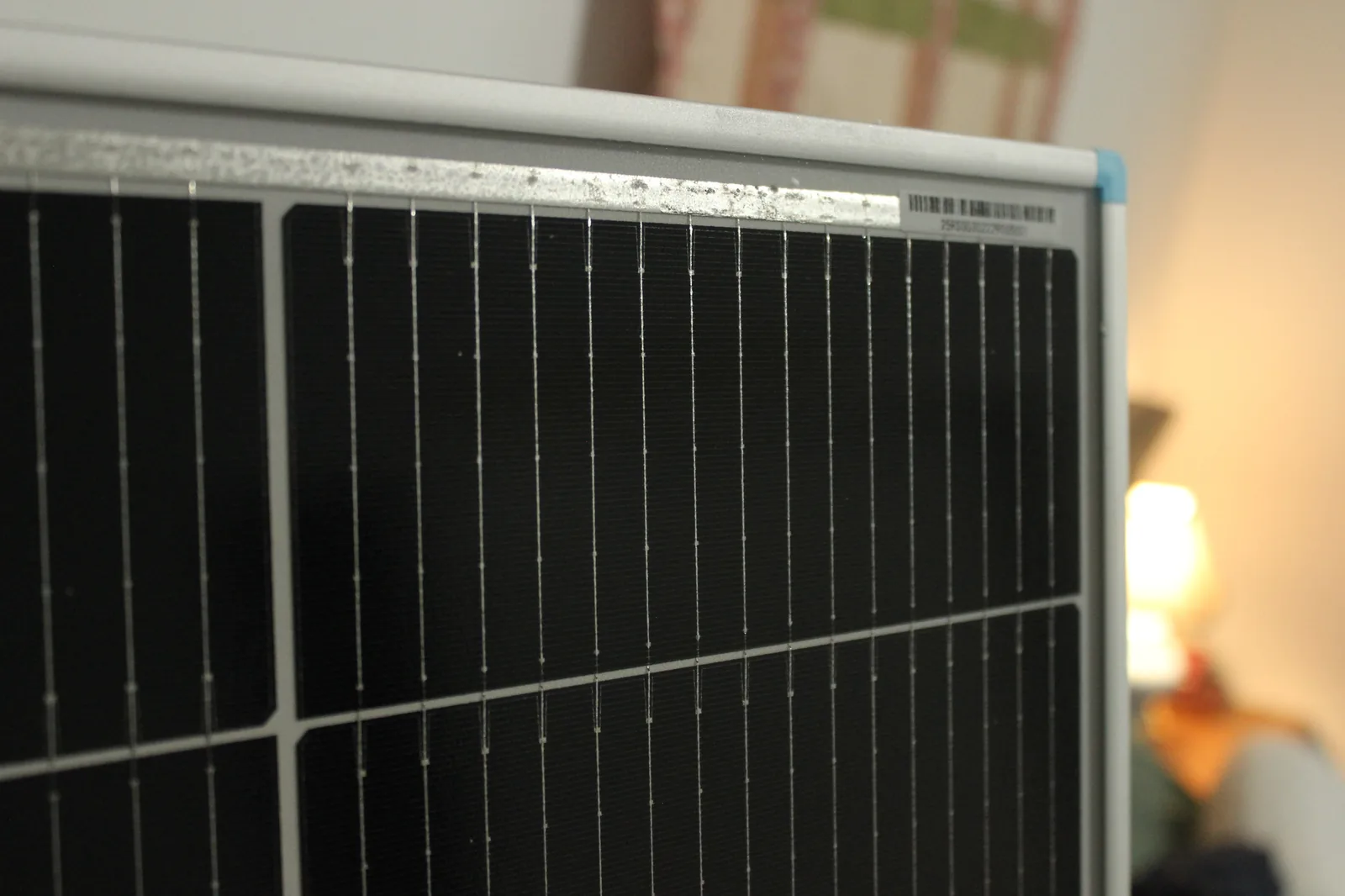
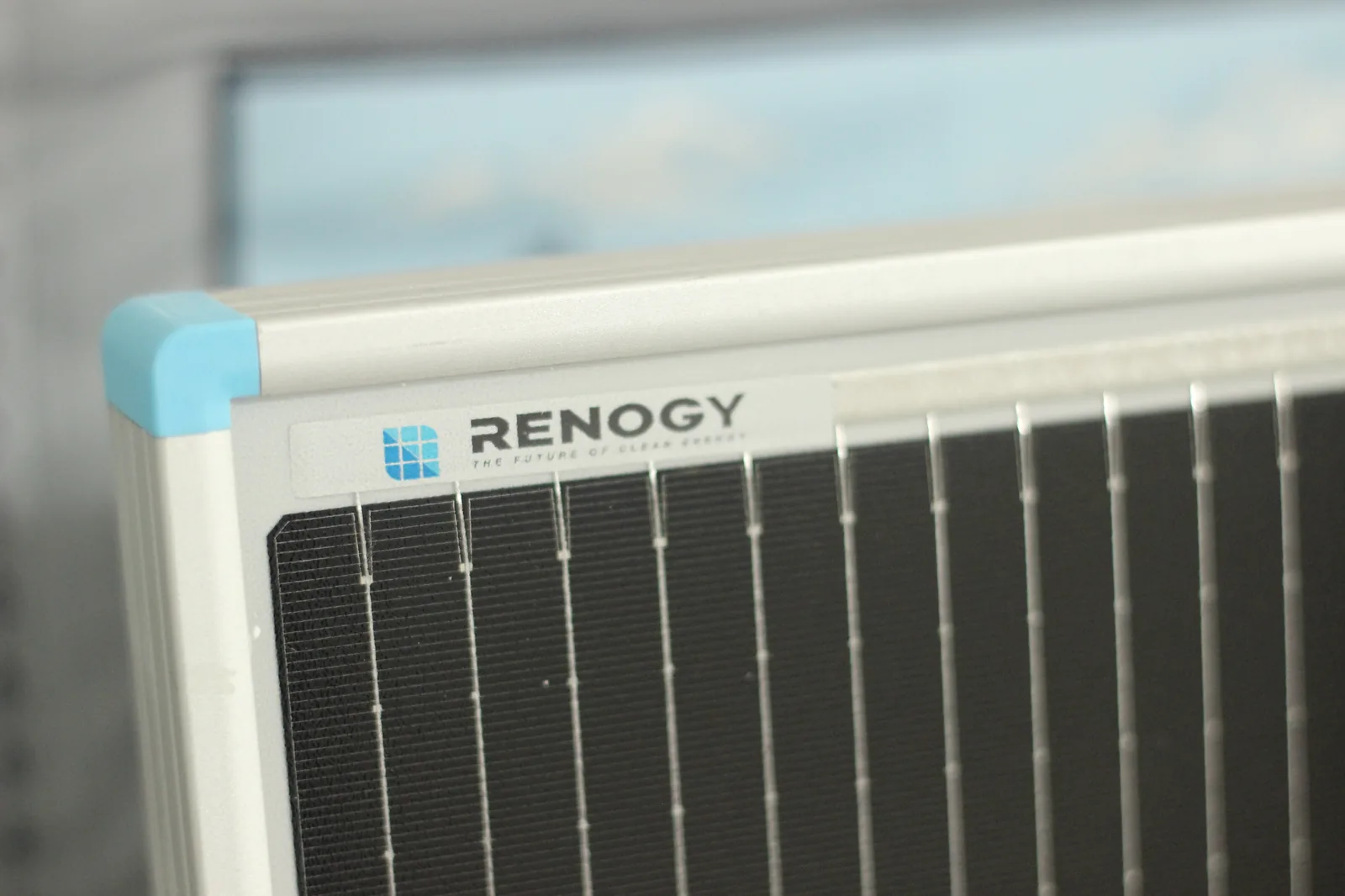
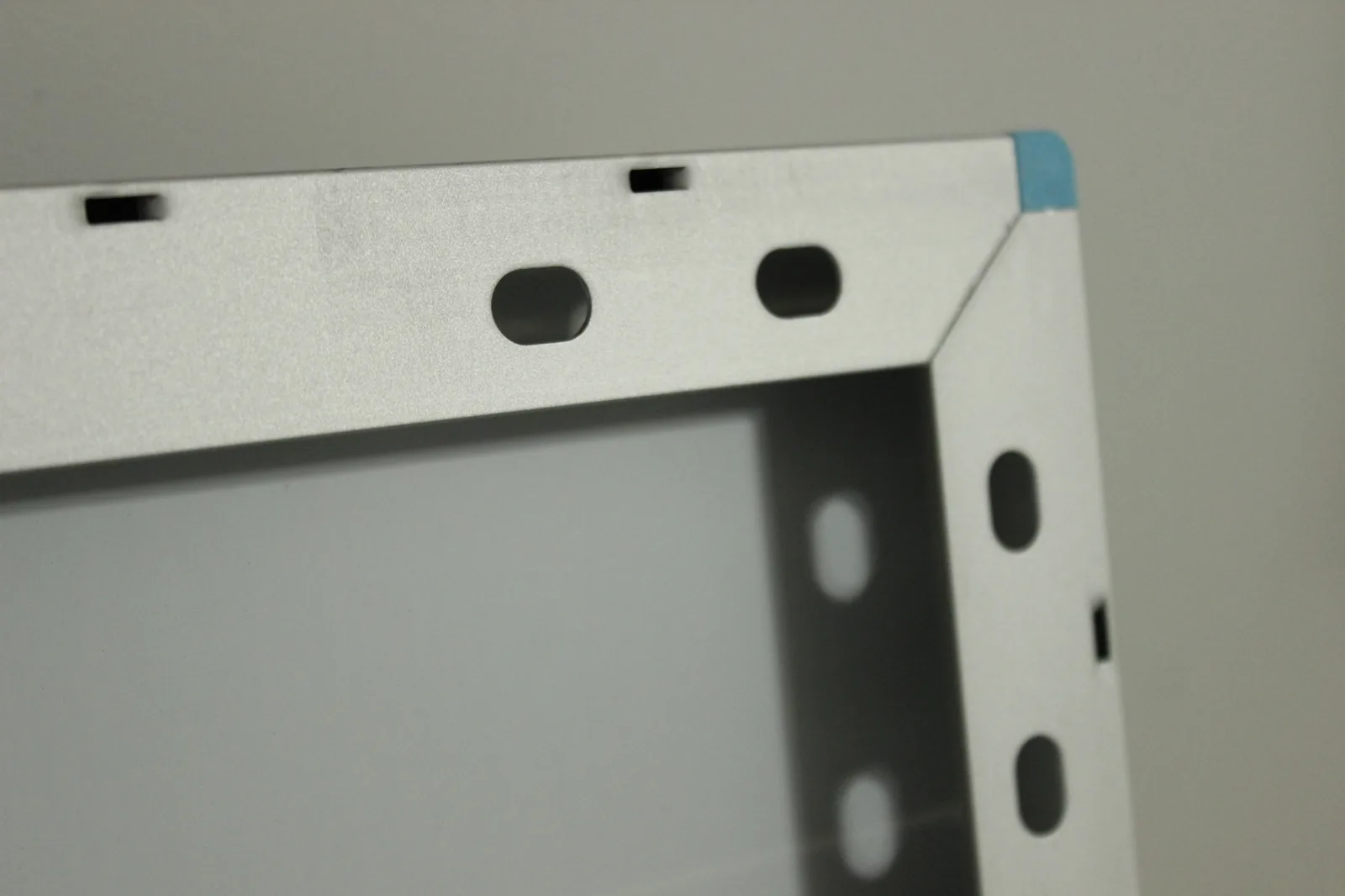
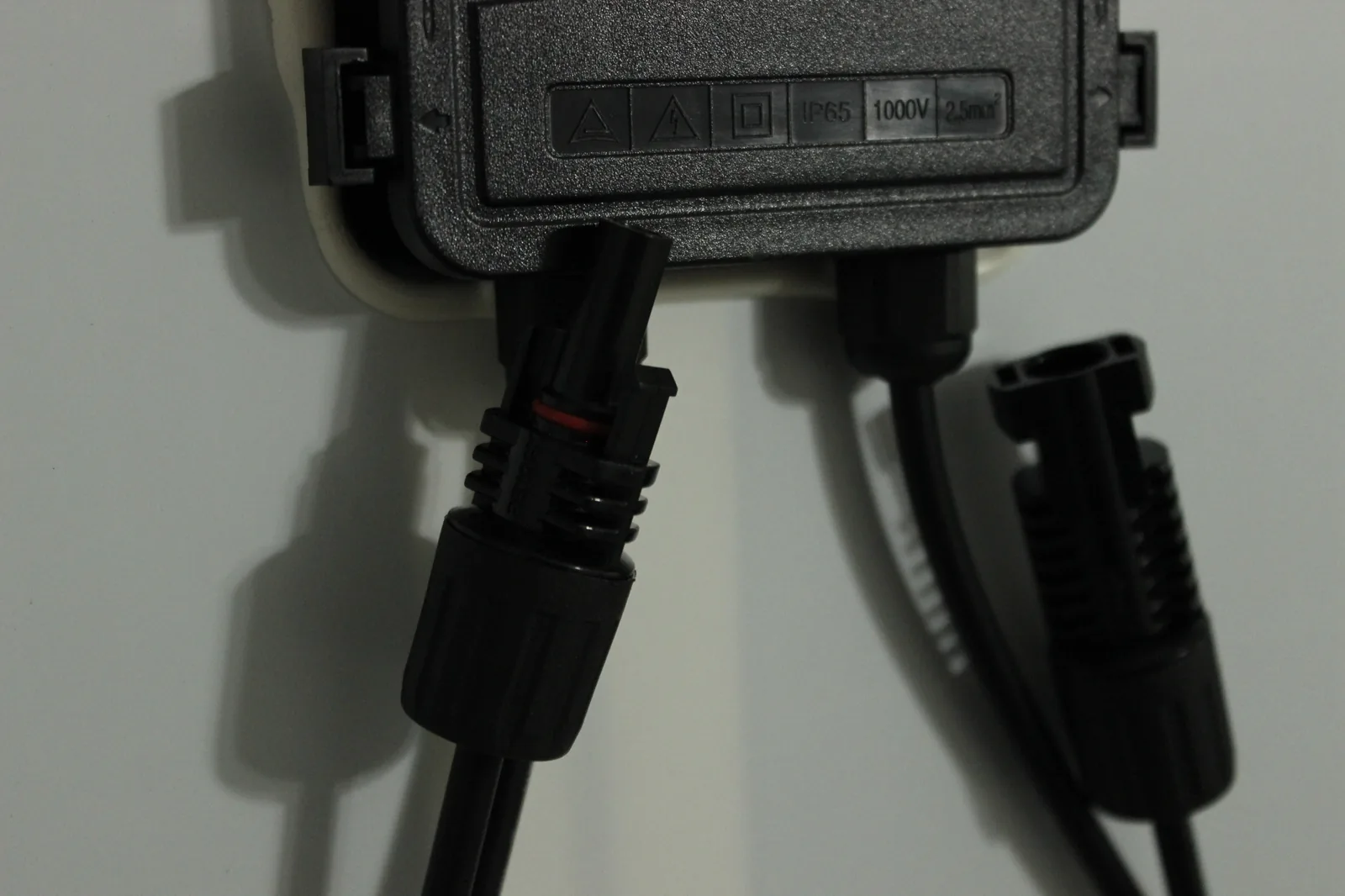
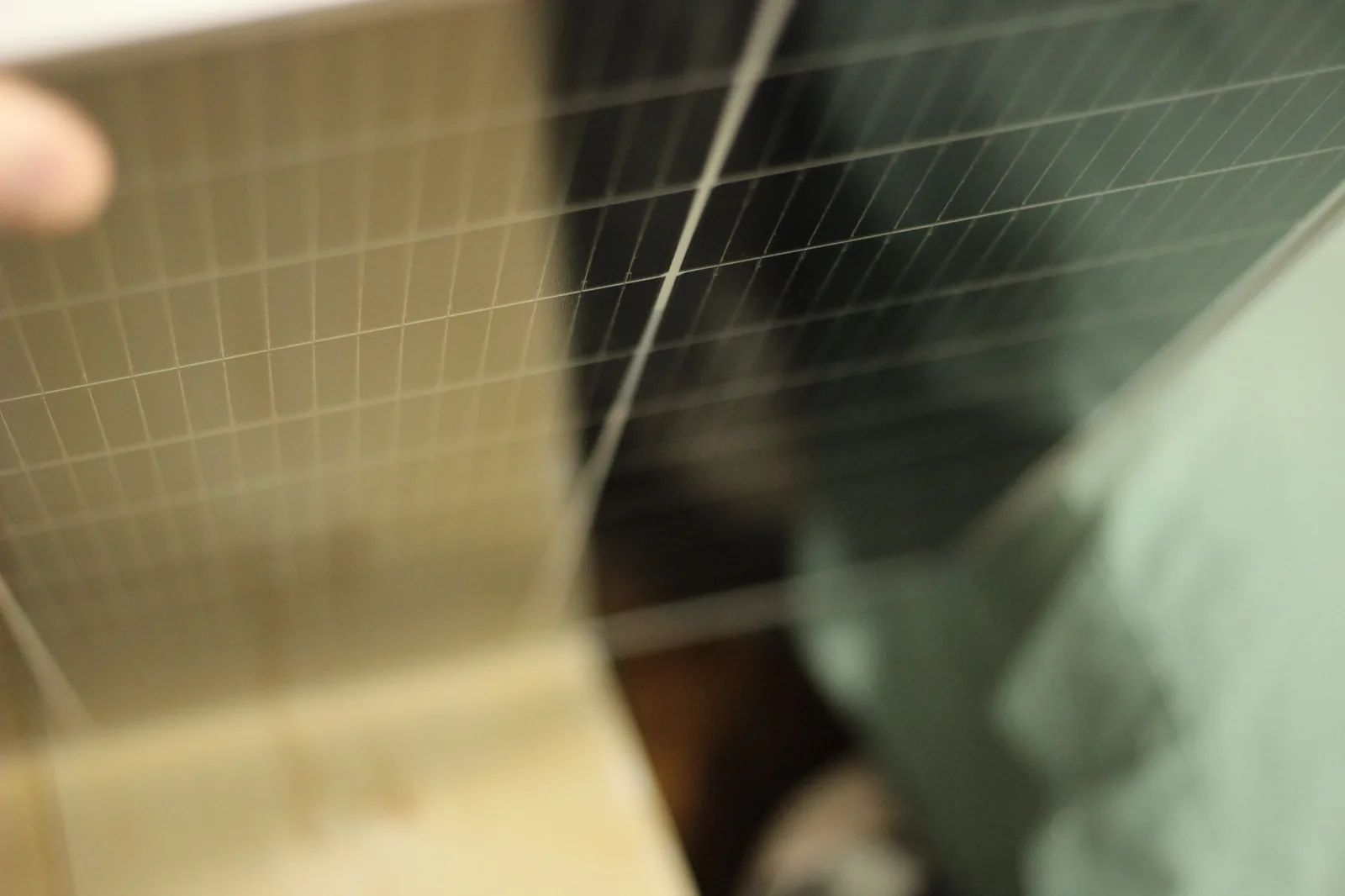
The Renogy RSP100DC is a 100 W rigid monocrystalline solar panel in Renogy’s current-generation 16-busbar (16BB) cell architecture. The 16-busbar layout is what’s new — older Renogy 100 W panels (the RNG-100D and similar) used 5BB or 9BB cells. The 16-busbar layout shortens the current path on each cell, reduces resistive loss, improves shade tolerance, and squeezes more usable wattage out of the same panel footprint. For a buyer who’s comparing a current-tier Renogy panel against a sub-budget Amazon-import equivalent, the 16BB cells are a real engineering decision, not a marketing claim.
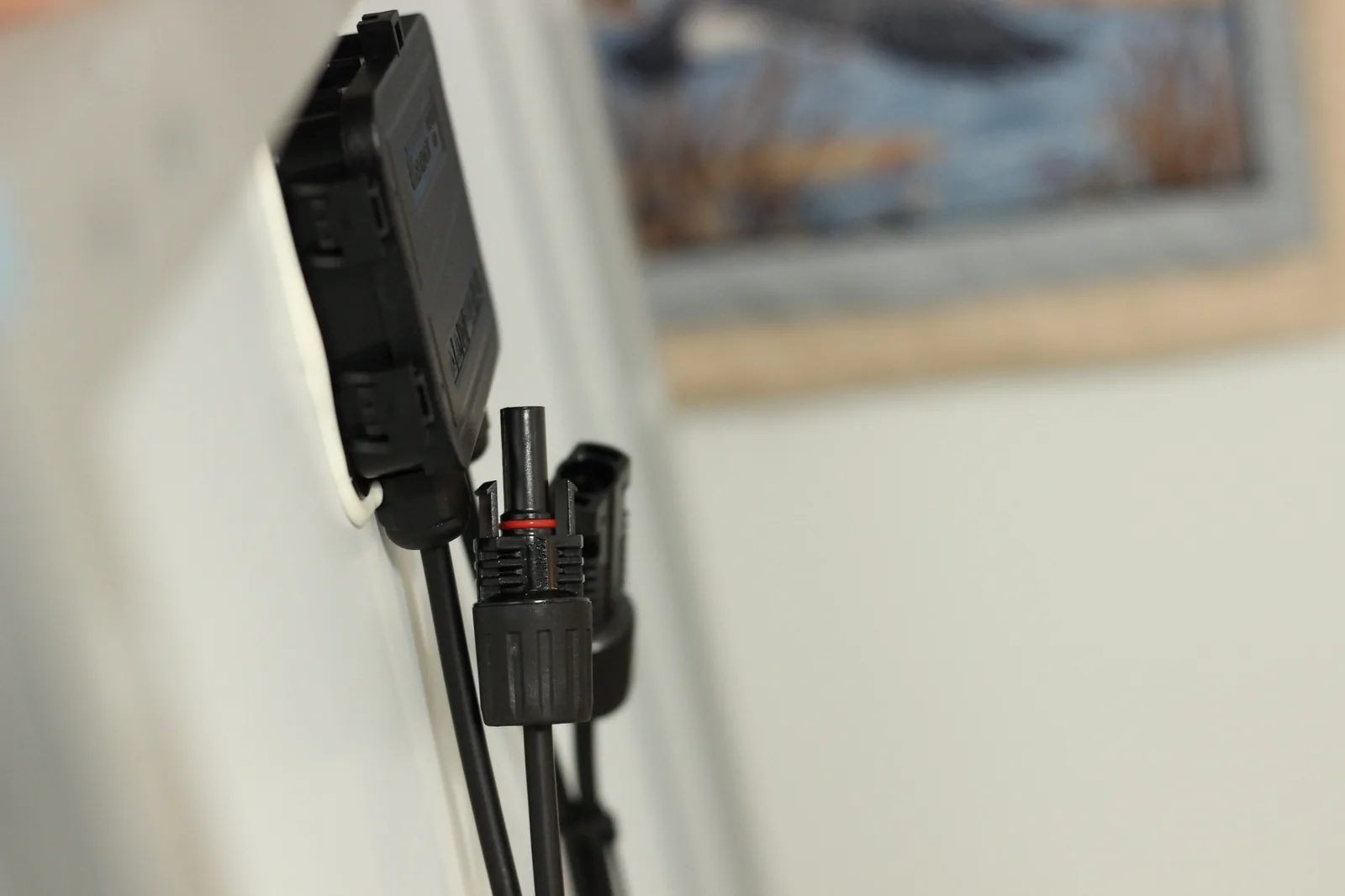
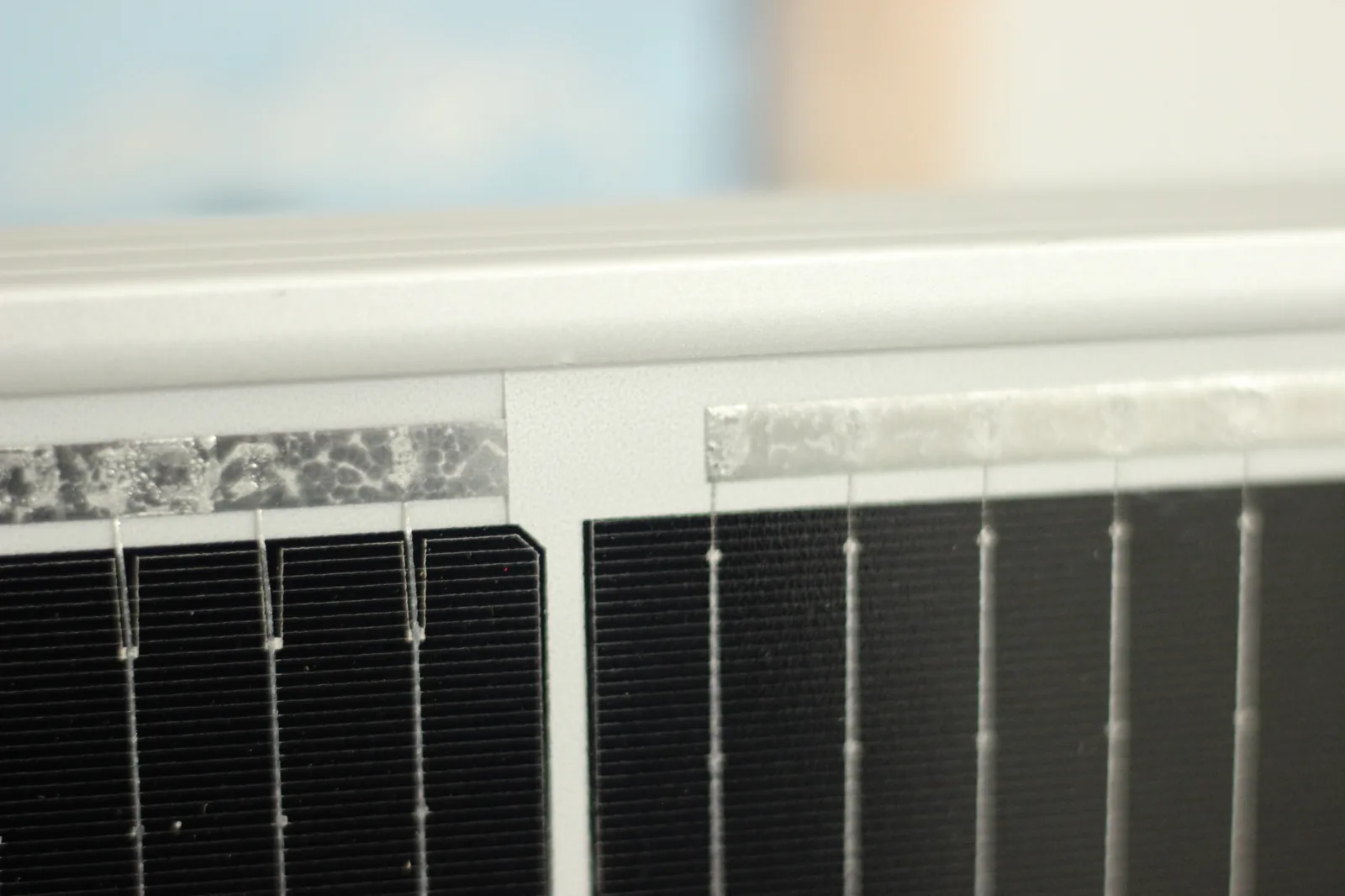
Build quality and the junction box
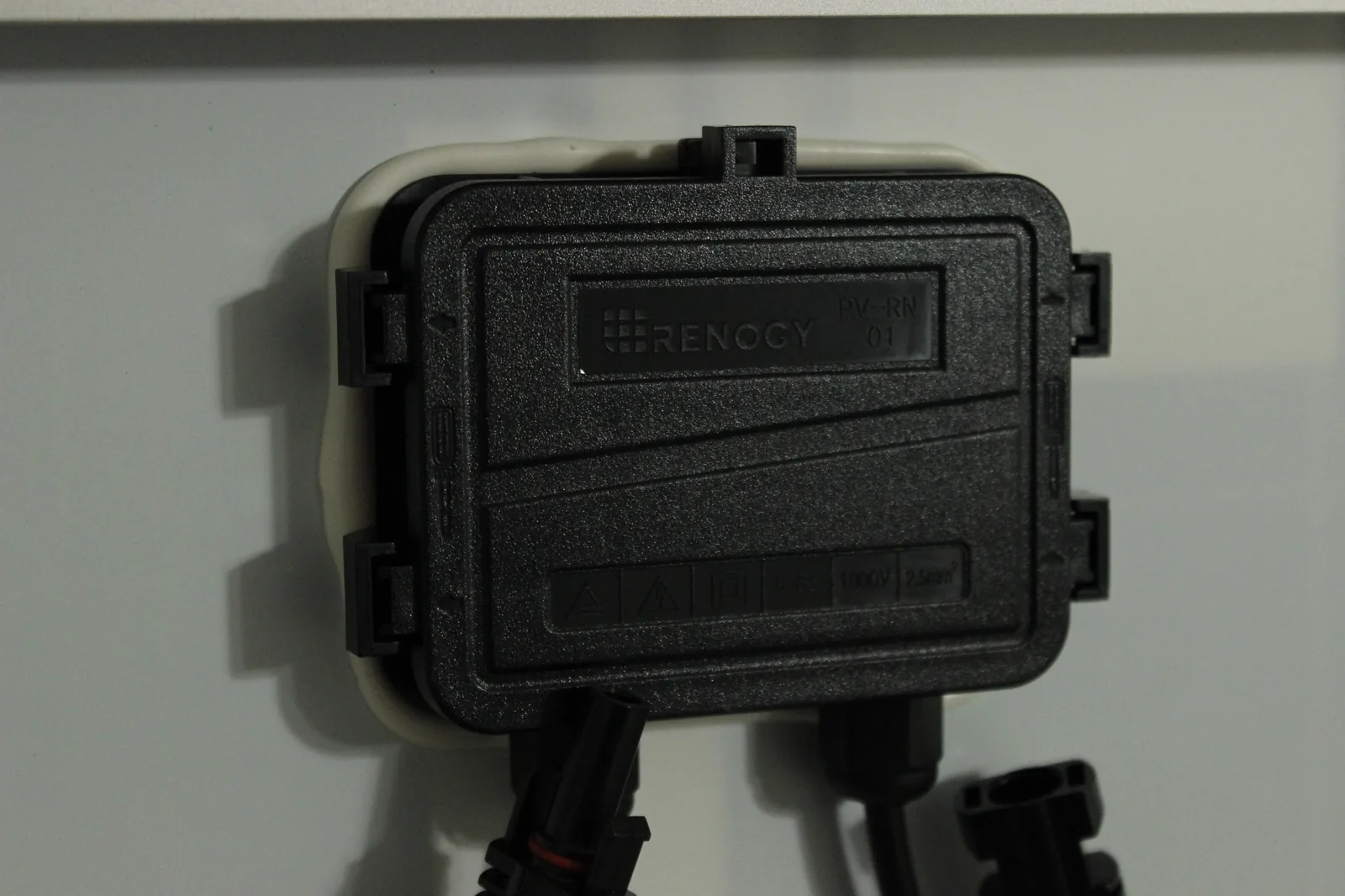
The Renogy RSP100DC verdict
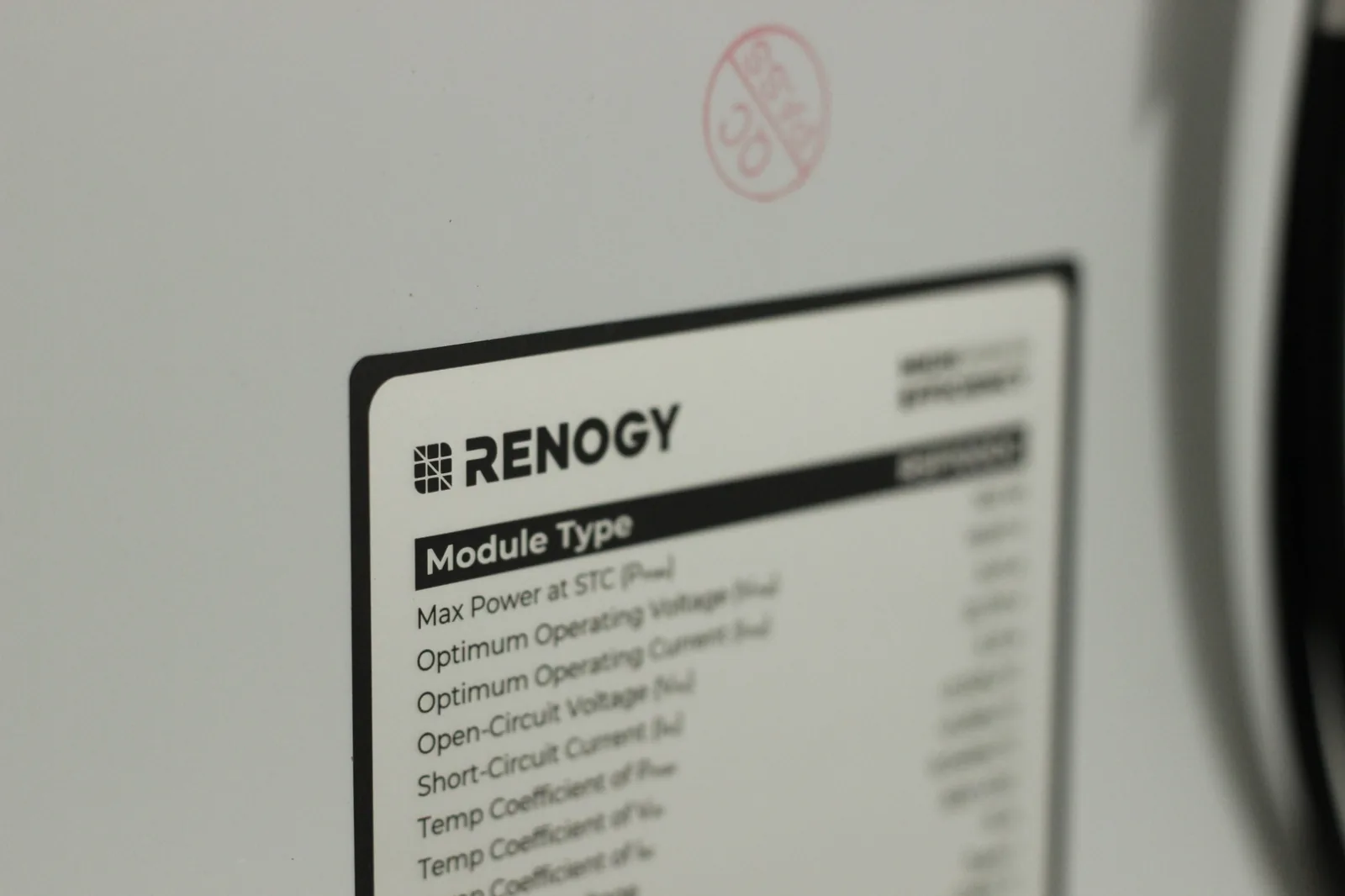
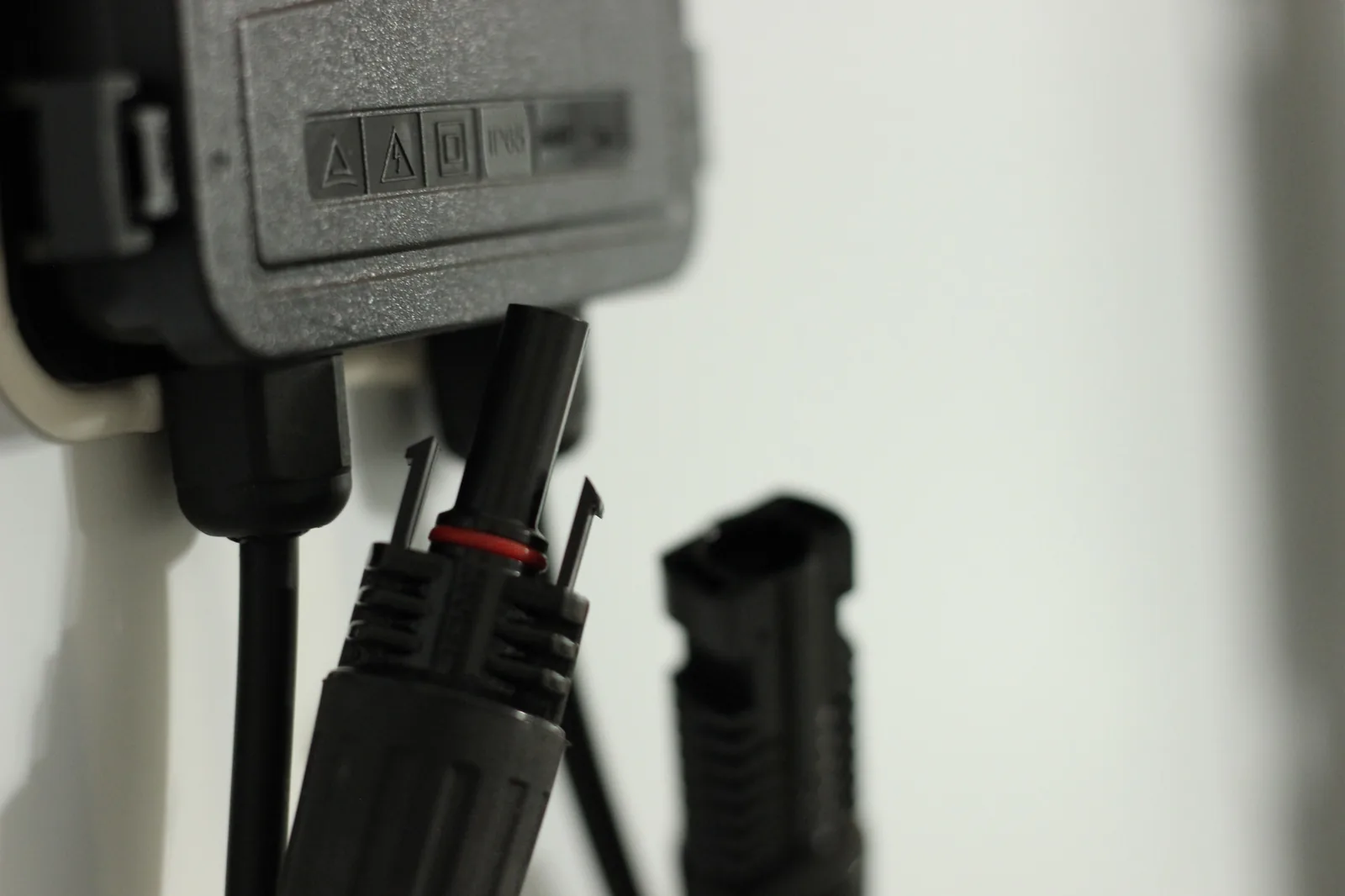
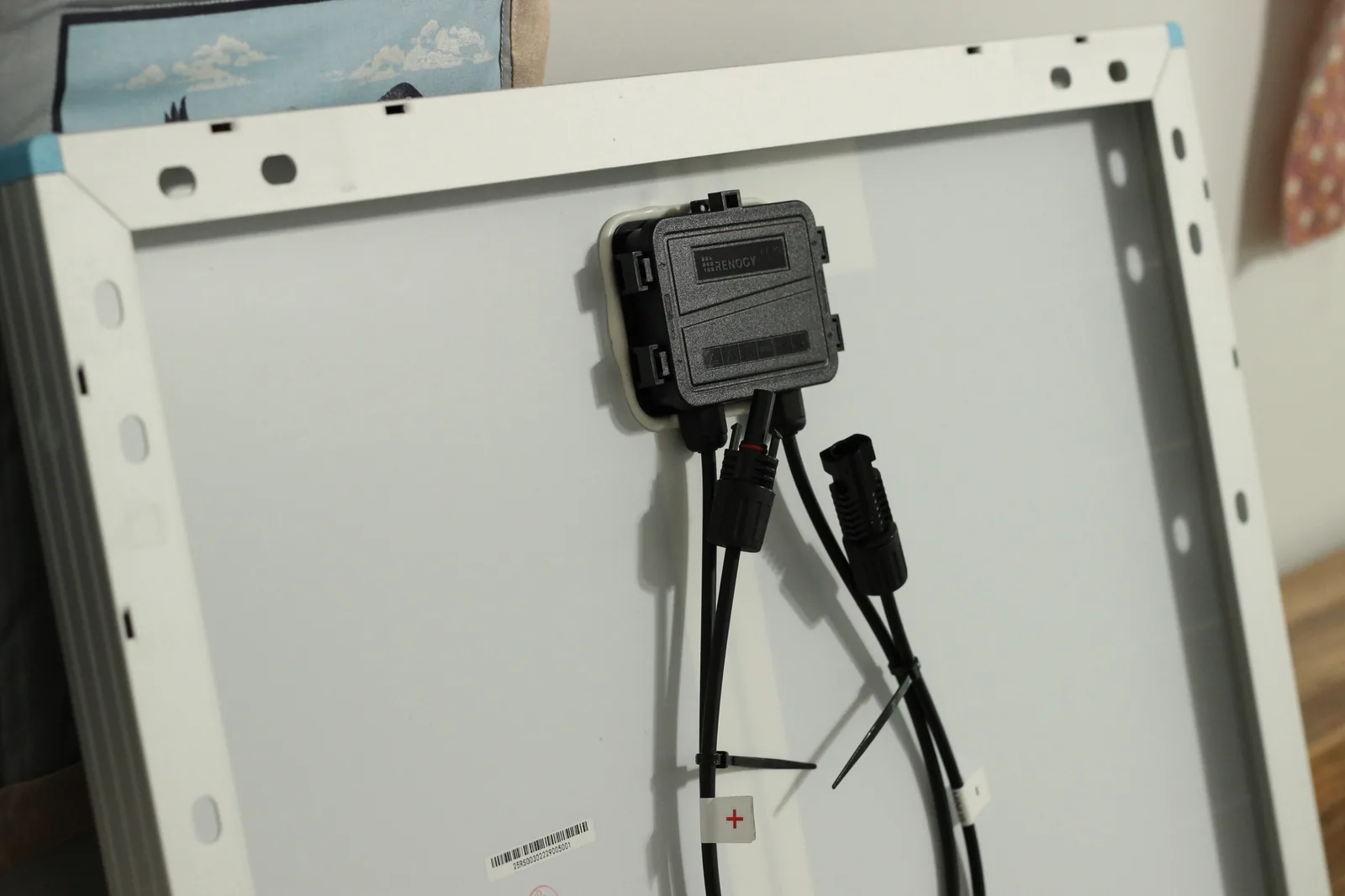
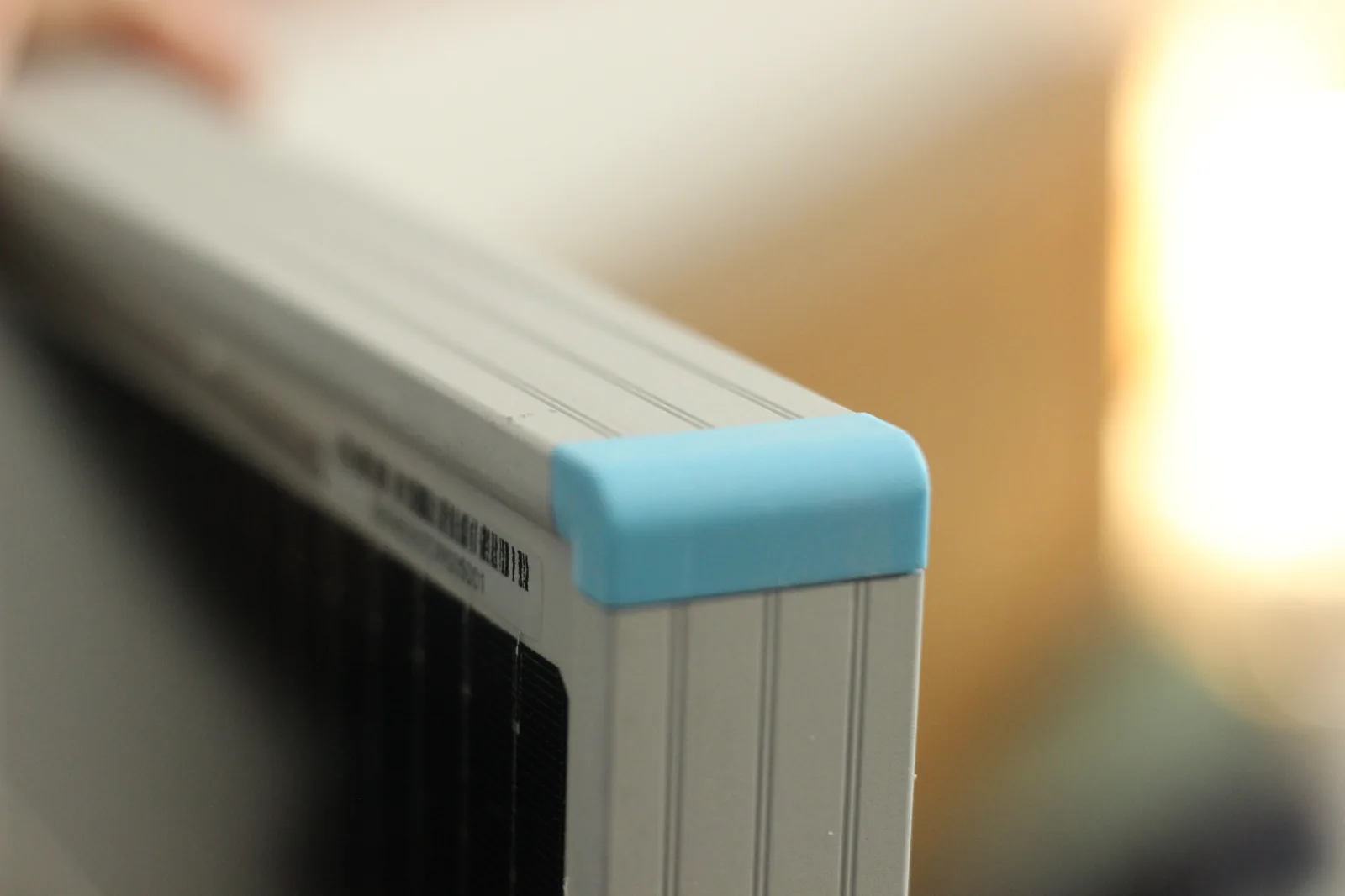
Paired with the BLUETTI Elite 30 V2 via MC4-to-XT60 adapter cables, the Renogy RSP100DC delivered 75–85 W of regulated input in good afternoon sun — exactly the real-world efficiency that Renogy claims for the panel at the published spec. The 16-busbar cell layout, the anodized aluminum frame, the PV-RN01 junction box with industry-standard MC4 leads, and the pre-drilled mounting holes are all engineering decisions you’d expect on a panel costing twice as much.
The Renogy RSP100DC is the right 100 W panel to buy if you’re building an off-grid system around a BLUETTI Elite 30 V2 (or any portable power station with a 200 W solar input ceiling). It’s compatible with every consumer power station that accepts MC4 input — BLUETTI, EcoFlow, Jackery, Goal Zero, Anker, Bluetti’s own future product lines — because it’s just a standard MC4-output solar panel. Rating: 4.7 / 5 for what it delivers at the price tier.
If you’re scaling up to a larger BLUETTI (Elite 100 V2 or Elite 200 V2) with higher solar input ceiling, Renogy makes 200 W and 320 W panels in the same family that pair just as cleanly. For our deployment with the Elite 30 V2’s 200 W input ceiling, the single 100 W RSP100DC is the right starting point — and you can always add a second 100 W panel in series later if you want to fill the 200 W ceiling.
Amazon-sourced connection accessories
The BLUETTI Elite 30 V2 uses an XT60 connector at its DC/PV input (not the older 8mm barrel jack found on some legacy power stations). The Renogy RSP100DC uses standard MC4 connectors at its output. Wiring them together requires an MC4-to-XT60 adapter cable — which is a 5-minute Amazon purchase that no power-station maker ships with their compact units by default.
We used two adapter cables for this deployment:
Amazon B07S1RW5N4 — MC4-to-XT60 solar adapter cable
This is the primary connection between the Renogy panel’s MC4 outputs and the BLUETTI Elite 30 V2’s XT60 input. A short adapter cable with two MC4 connectors on one end (one positive, one negative) and a single XT60 plug on the other. The whole thing routes the panel’s two-wire DC output into the single-plug XT60 input that the Elite 30 V2 expects.
Why you need it: the BLUETTI bundled solar kit configurations include this cable; the standalone Elite 30 V2 purchase from bluettipower.ca at C$279 does not. If you’re buying the Elite 30 V2 standalone (which is what we’d recommend, because it lets you pair with any third-party 100 W or 200 W panel), this adapter cable is the missing link.
Available at: Amazon Canada B07S1RW5N4
Amazon B0F4DNMCDX — Solar charging extension cable / additional adapter
This is a secondary extension cable that lets you route the panel some distance from the unit — useful when the truck or trailer is parked in shade but a sunny spot is 10-15 feet away. Plus it provides backup redundancy in case the primary cable develops a problem.
Available at: Amazon Canada B0F4DNMCDX
Honest editorial note on the Amazon accessories
These are third-party Amazon-marketplace adapter cables, not Renogy or BLUETTI branded. The connector standards (MC4 and XT60) are industry-standard, so a quality MC4-to-XT60 adapter from any reputable Amazon seller should work — the specific ASINs we link above are just the ones we bought. What matters is that the cable is the right gauge (10-12 AWG minimum for a 100 W panel) and the connectors are genuine MC4 and XT60 (not lookalikes).
The total system cost as we deployed it (all Canadian dollars, current pricing):
- BLUETTI Elite 30 V2 (sale on bluettipower.ca): C$279.00
- Renogy RSP100DC 100 W monocrystalline panel (typical Canadian retail): ~C$200
- Amazon adapter cables (the two ASINs above, B07S1RW5N4 and B0F4DNMCDX): ~C$60–C$80 total (prices vary by Amazon seller and current promotions — confirm at checkout)
Total real-world deployment cost: roughly C$540–C$560 CAD all-in — and what you get is a genuine off-grid system with LiFePO₄ battery chemistry, pure sine wave AC, 140 W USB-C PD output, dual AC outlets, a 100 W solar-charging path that keeps the system topped up indefinitely in good sun, and the freedom to scale the solar side independently by adding a second 100 W panel later (or stepping up to a 200 W panel) without locking yourself into a single-brand bundle.
For the Canadian buyer who wants a real off-grid power-station deployment at the compact tier, this is the right kit at the right price.