
Featured Review · BLUETTI · Solar Panels
BLUETTI SORA 130 Solar Panel Review — 123 Watts Into the Battery From a 130-Watt Panel
Our Rating
Current Price
- Model
- SORA 130 (PV130)
- Rated power
- 130 W
- Cell type
- Monocrystalline silicon
- Lamination
- ETFE
Pros
- The power station's own display read 112–123 W coming in from a 130 W panel — that is 86–95 percent of rated output, and it is a number we photographed rather than estimated
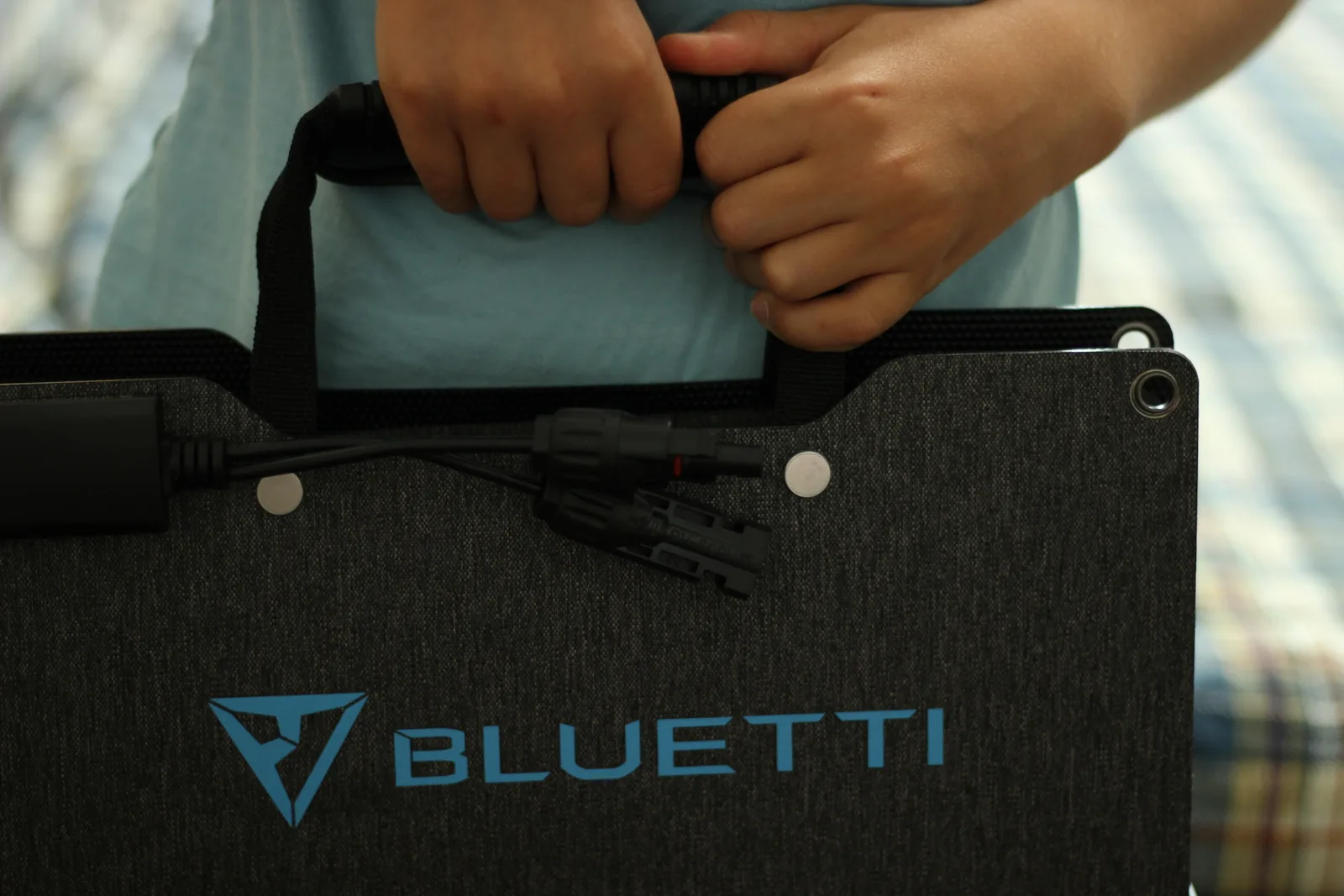
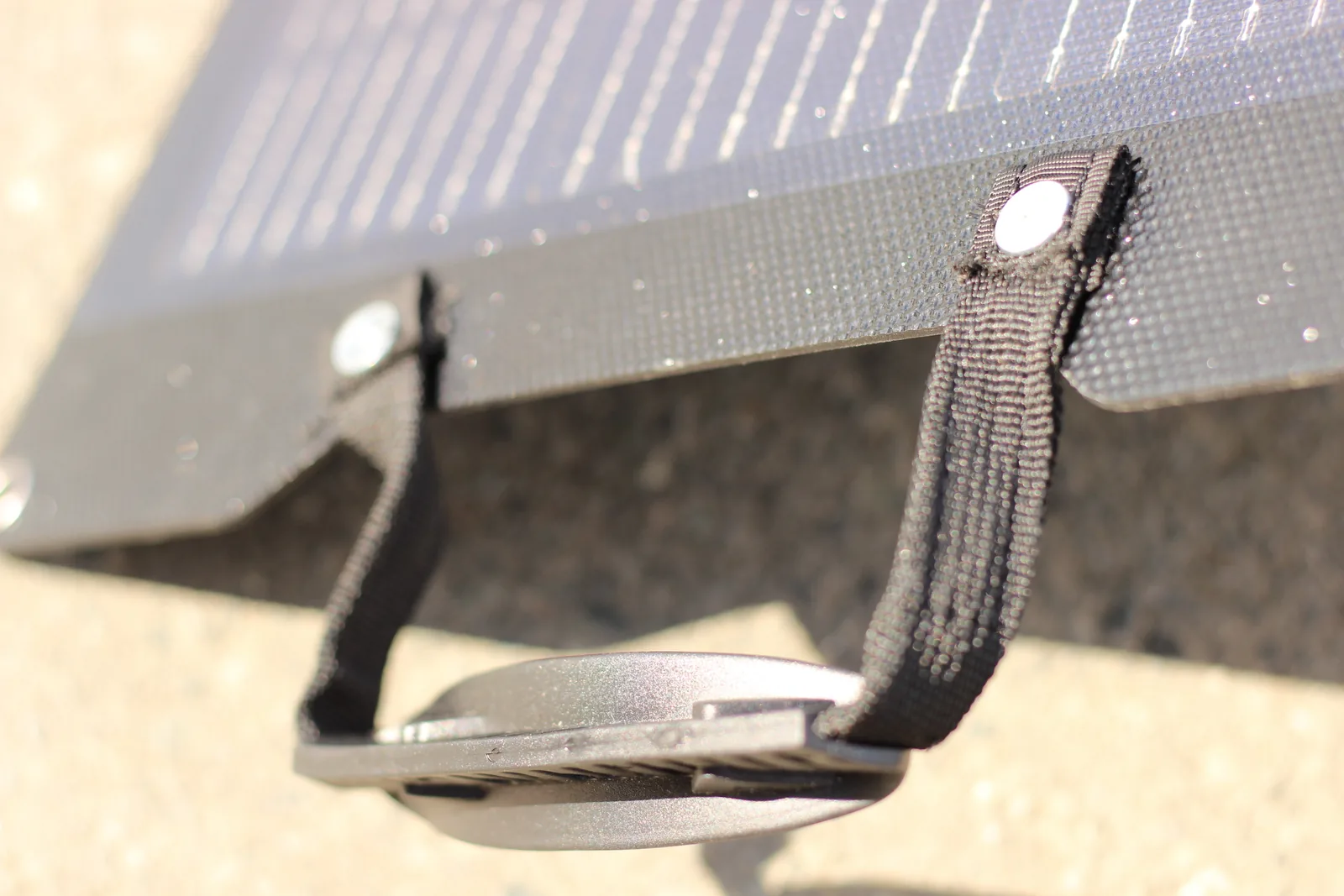
- 3.6 kg (7.9 lb) and folds to roughly 41.5 × 30.2 × 8.7 cm — small enough to carry one-handed by the sewn strap
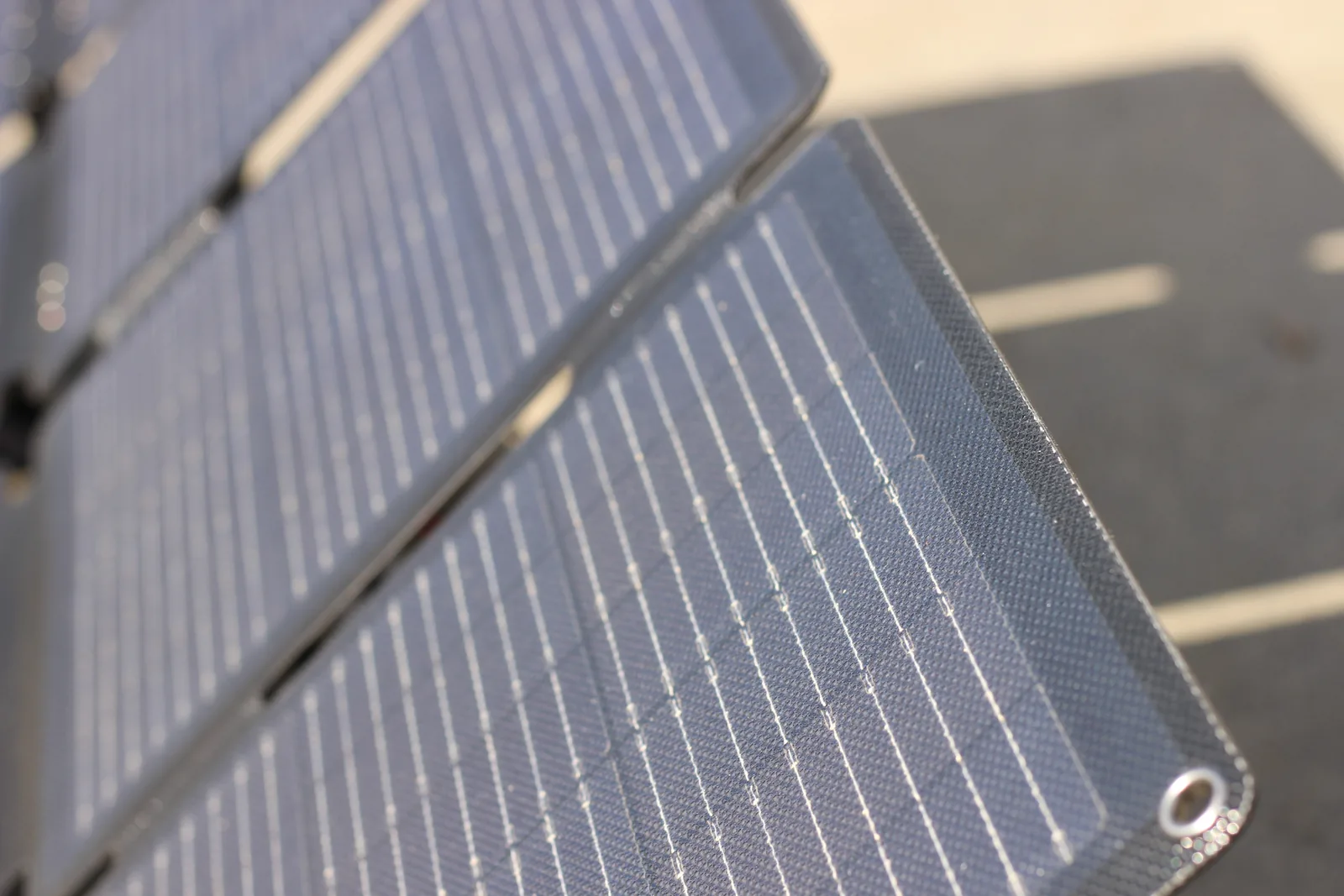
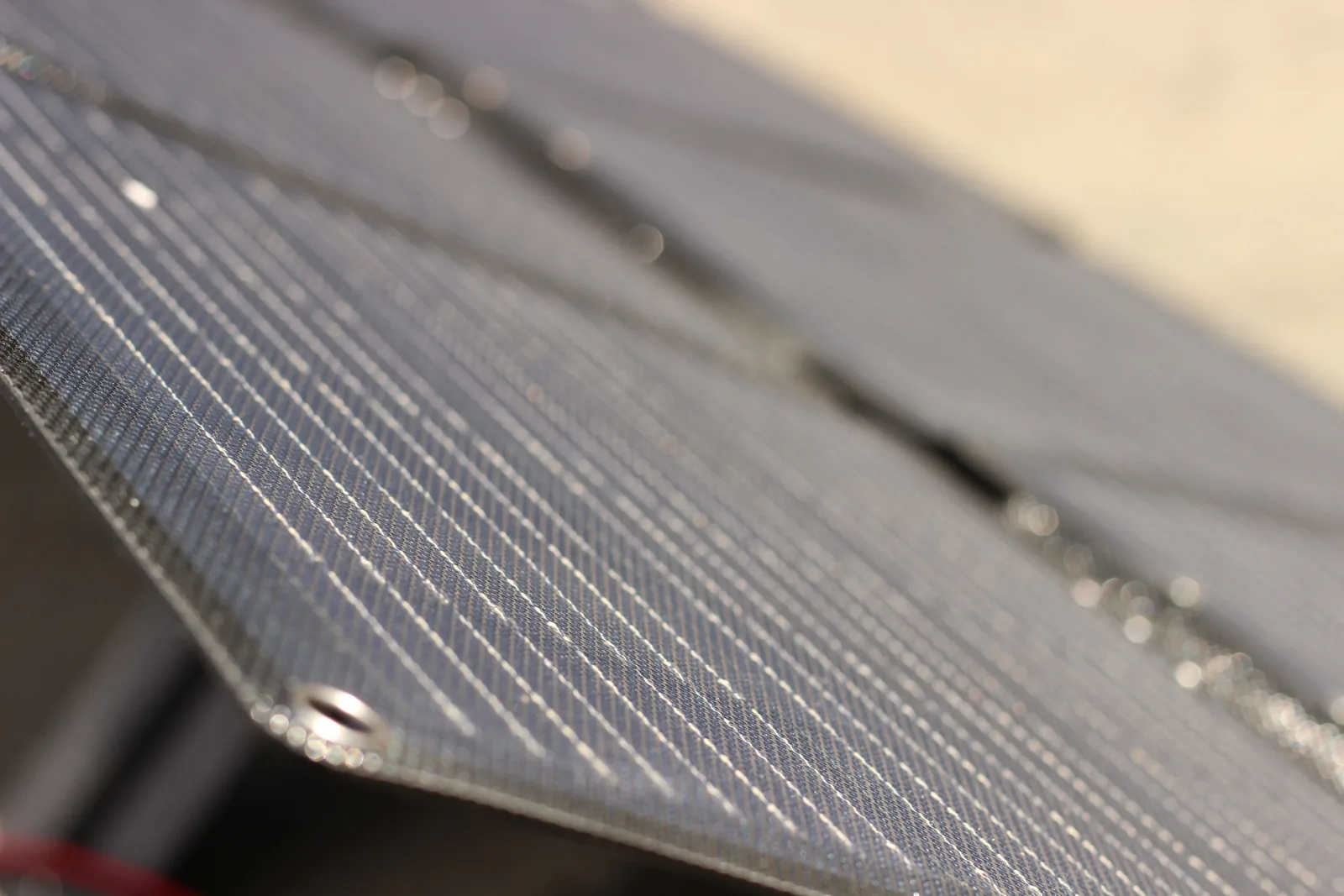
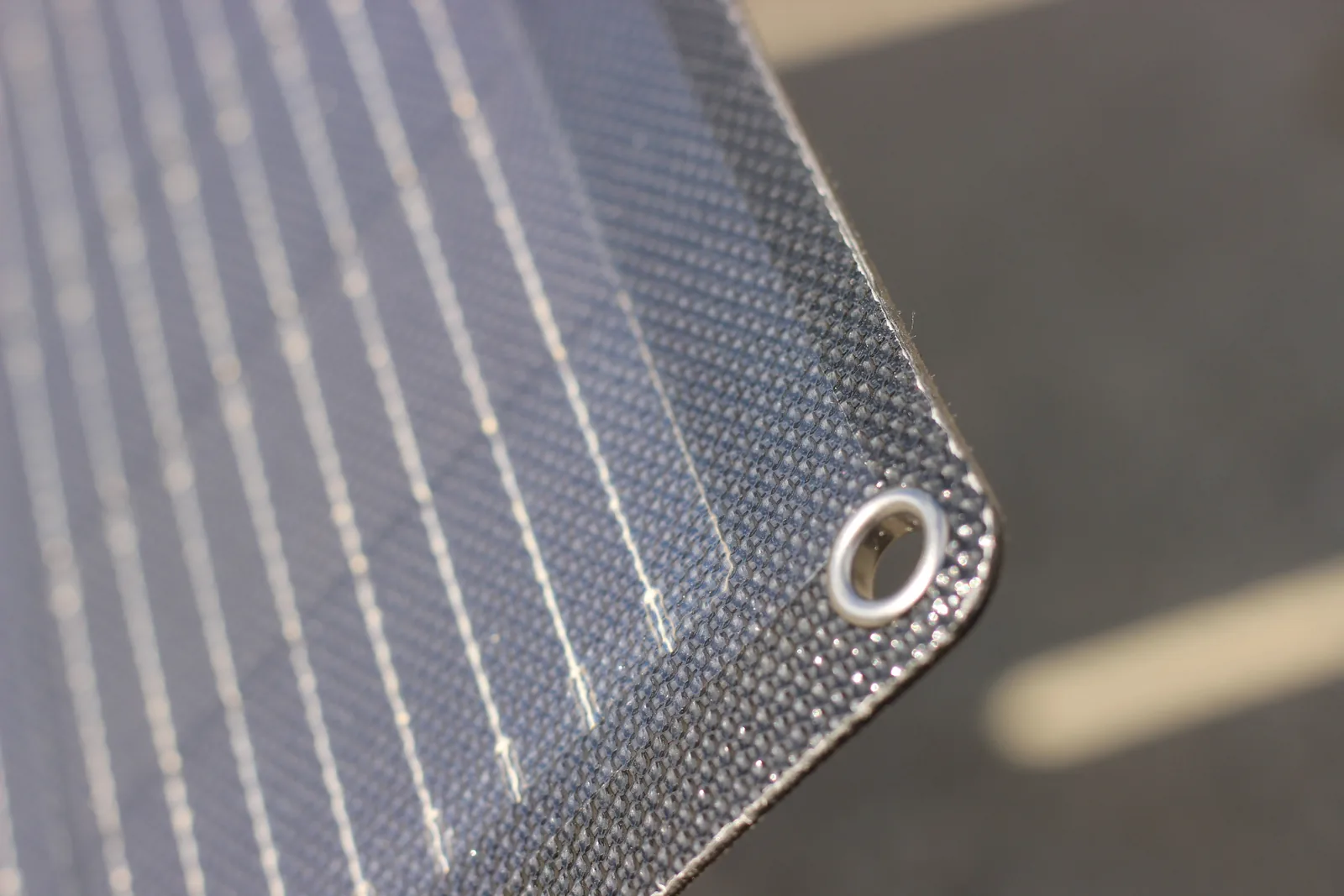
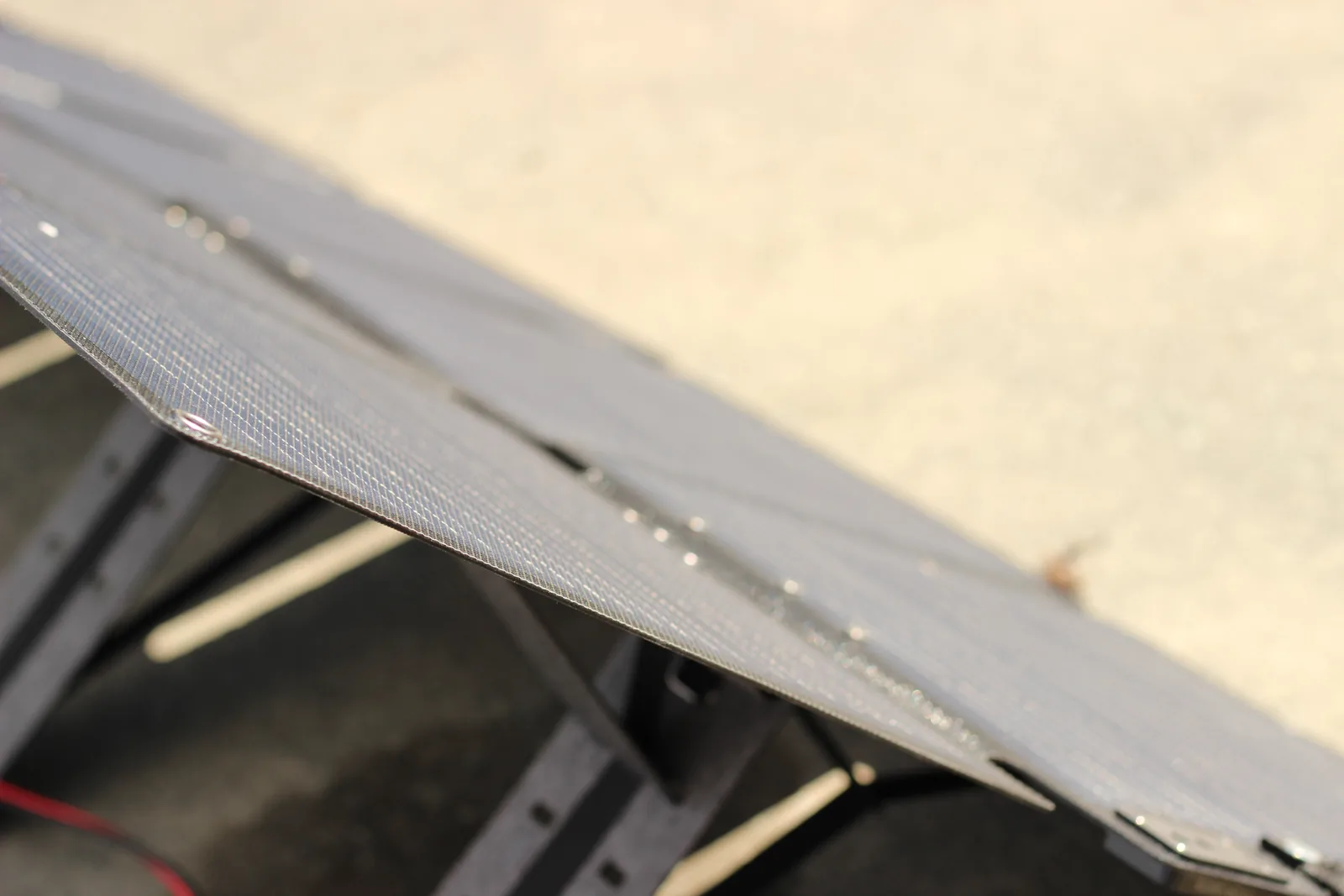
- ETFE lamination over monocrystalline cells rather than PET, which is the more durable and more UV-stable of the two common surfaces
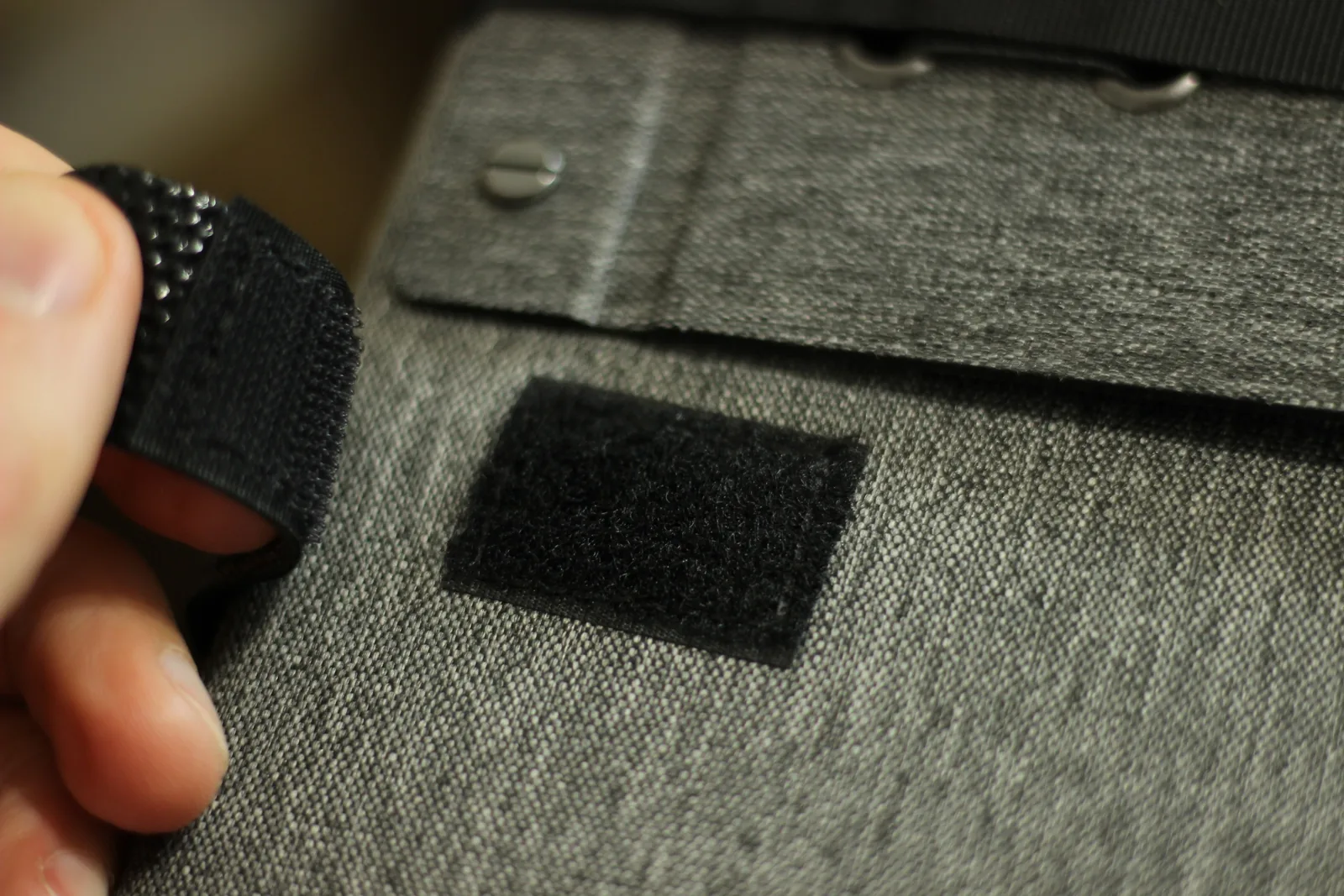
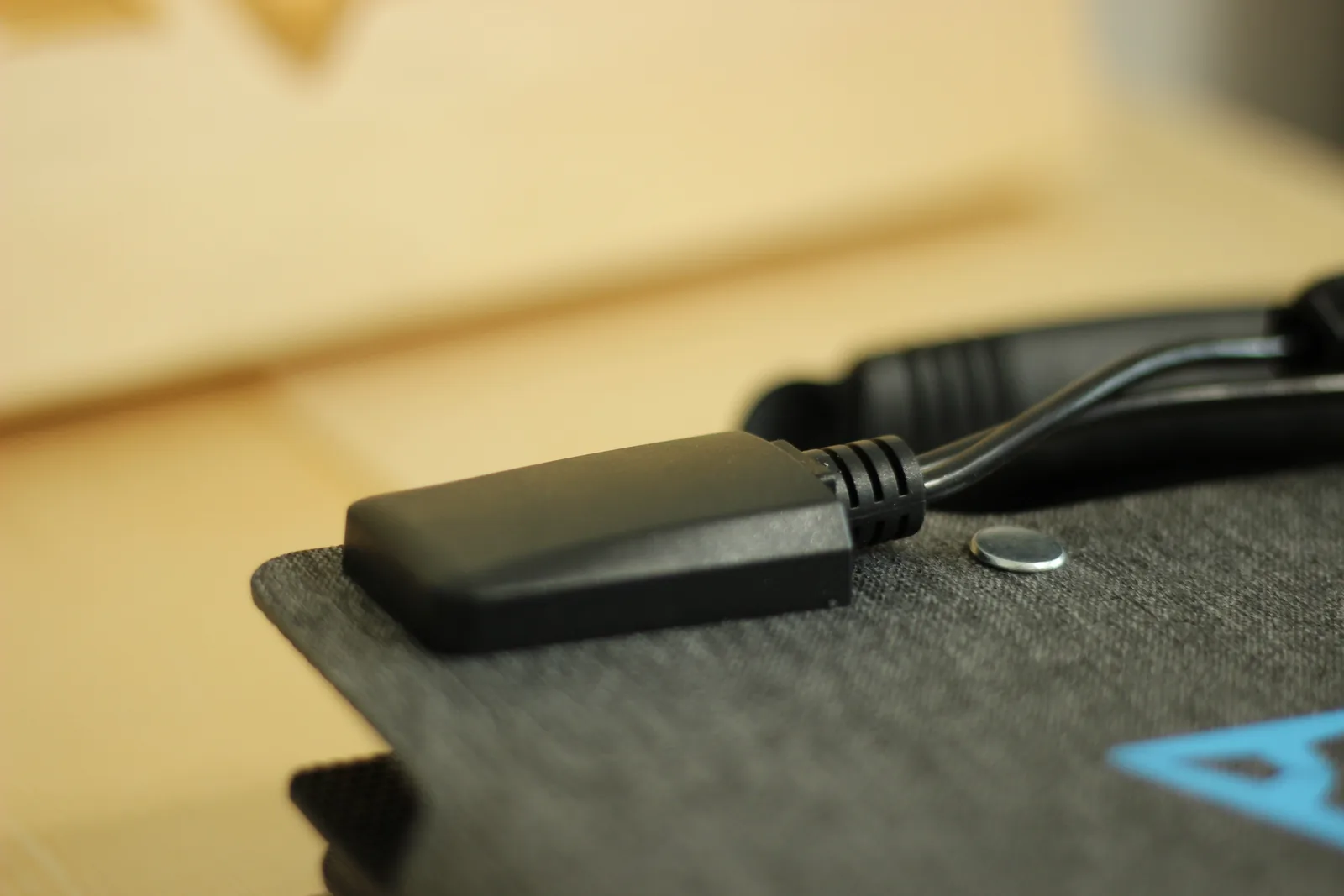
- IP67 rated, with rubber-sealed junction box, laminated edges and metal eyelets at every corner for hanging
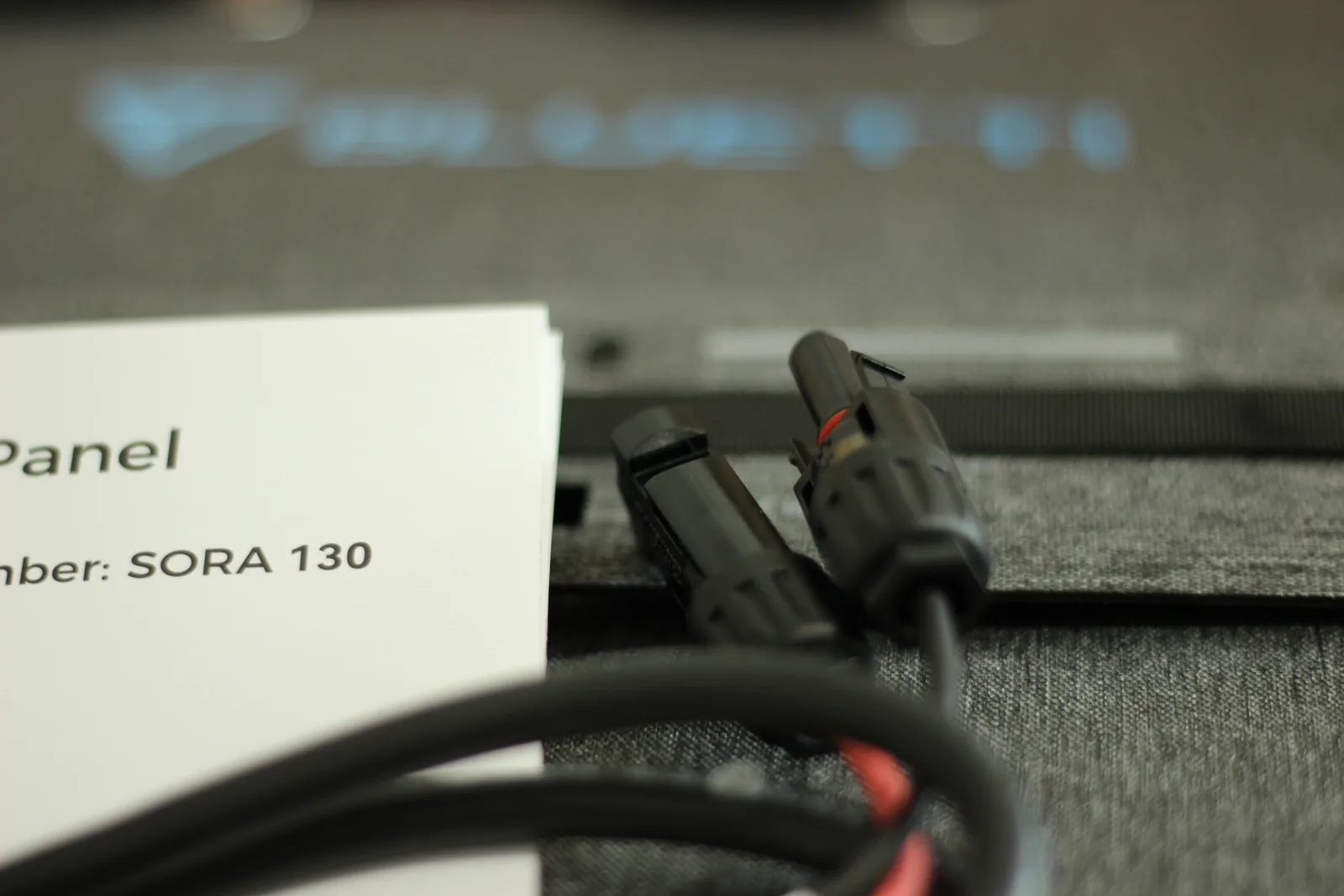
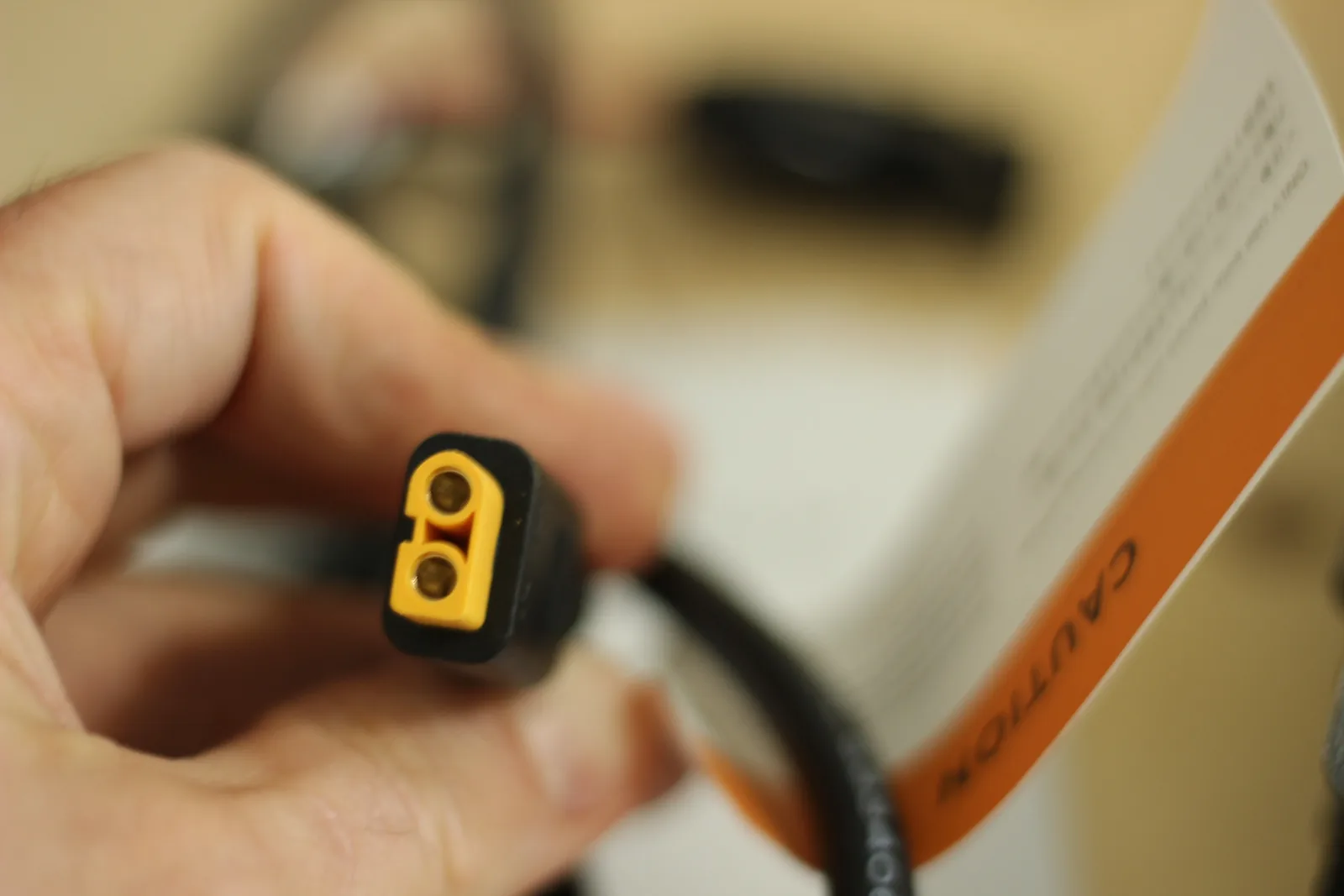
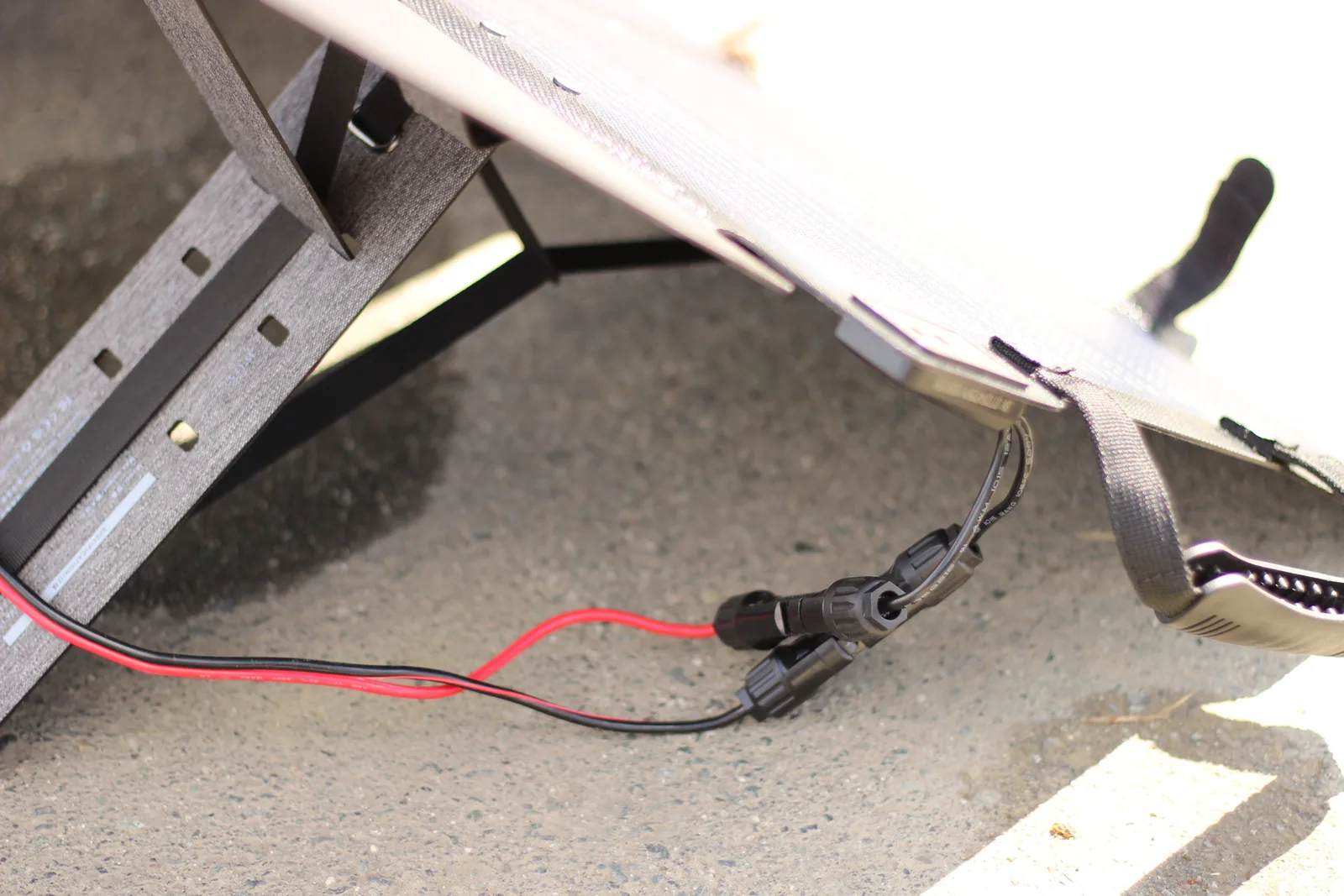
- Standard MC4 output plus an MC4-to-XT60 adapter in the box — it will feed non-BLUETTI gear without a fuss
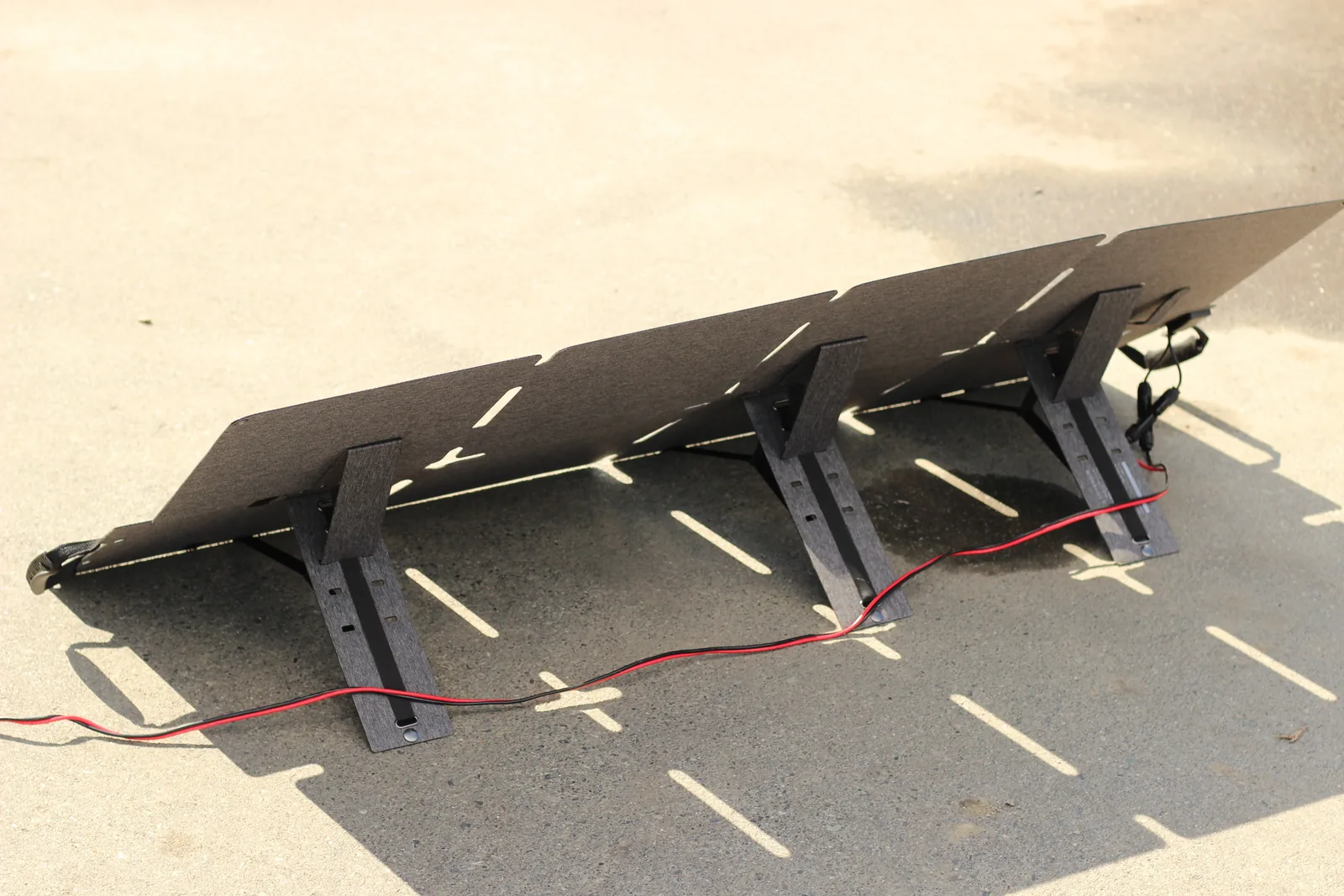
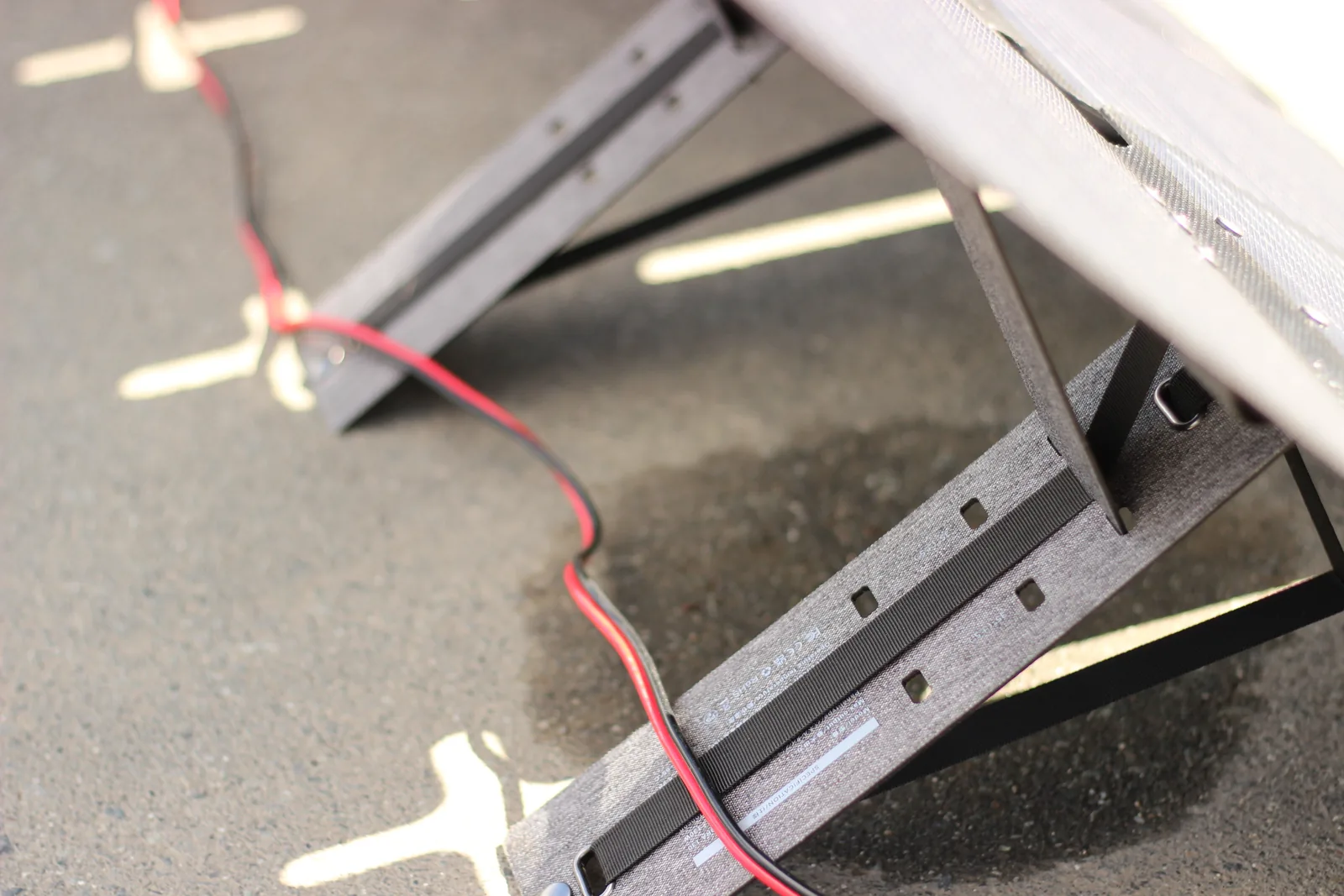
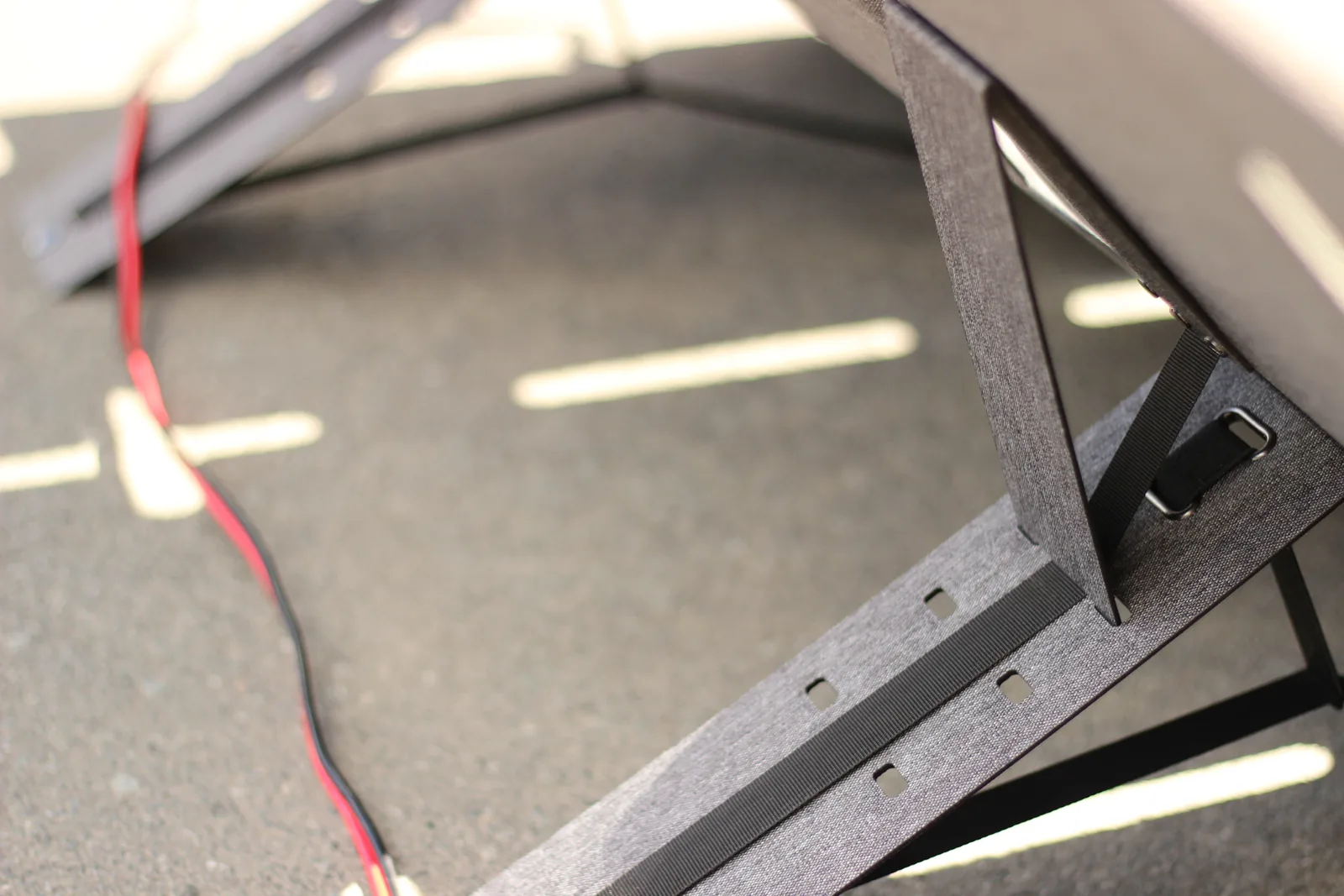
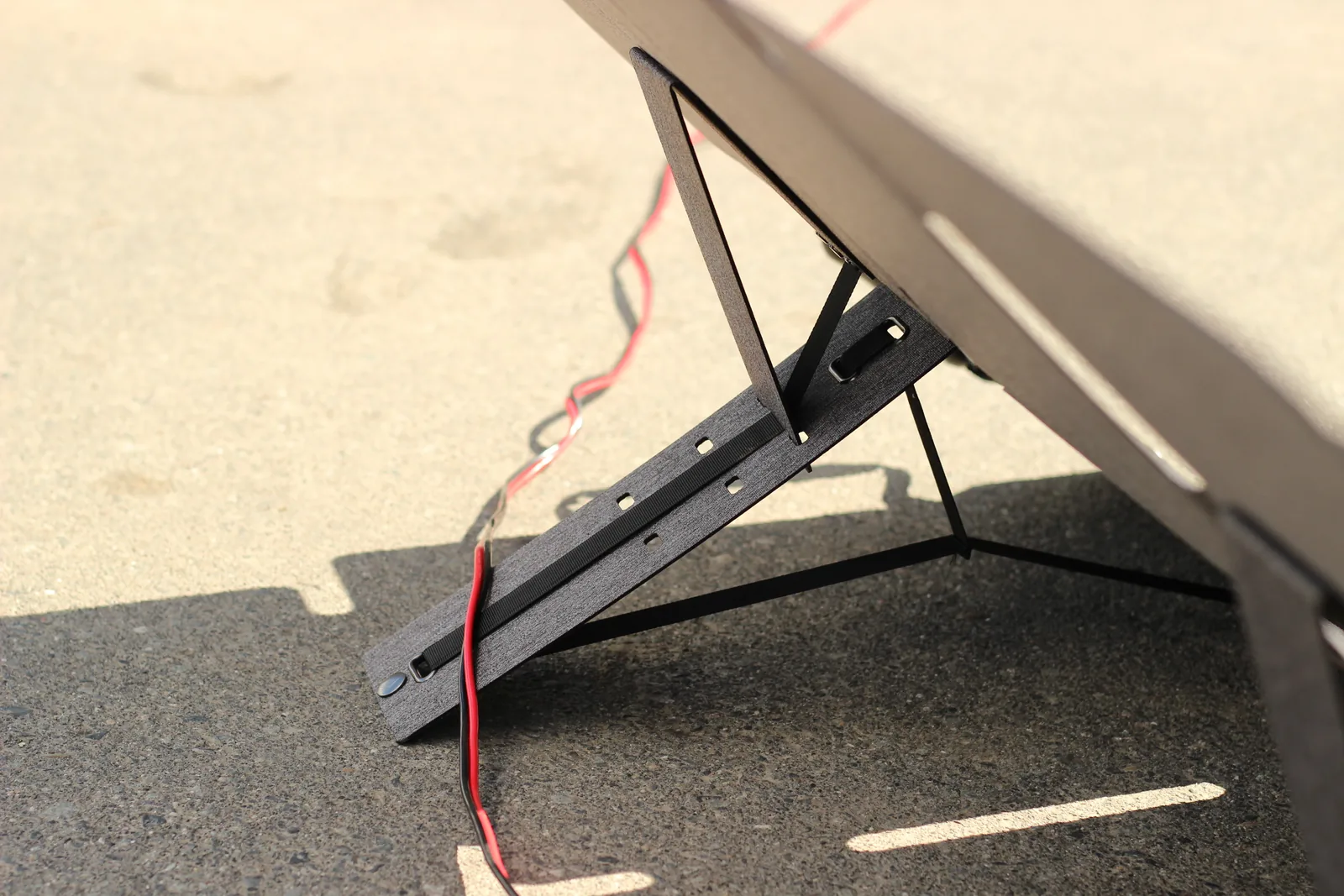
- Integrated kickstand panels adjust through several slot positions, so the angle can be set to the sun rather than to whatever the ground allows
Cons
- Nothing on the panel tells you when it is aimed correctly; there is no output meter, so you are reading the power station's display and walking back and forth
- The kickstand is fabric-and-webbing rather than rigid, and on a breezy day a panel this light needs weighting down or guying through the eyelets
- The fabric case picks up dust and grit readily, which is cosmetic but shows quickly on a light-grey heathered finish
Solar panel specifications are the least trustworthy numbers in the off-grid category. Every folding panel on the market is rated at its laboratory figure — full sun, perfect incidence, 25 °C cell temperature — and every one of them delivers less than that in a driveway in August. The interesting question is never what does the sticker say, it is how much of the sticker do you actually get.
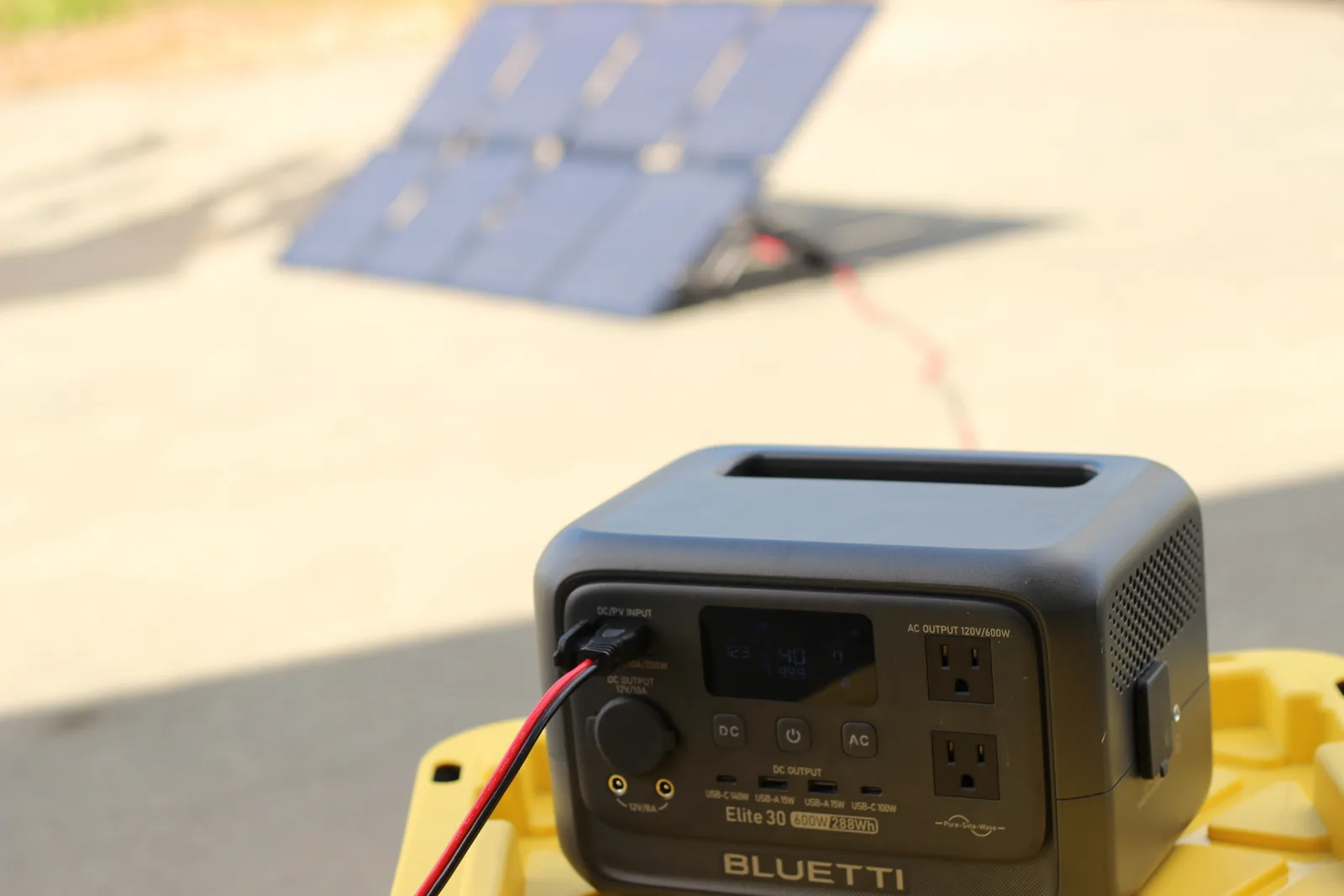
For the BLUETTI SORA 130 we can answer that from a photograph. Plugged into a BLUETTI Elite 30, the power station’s own display read 123 watts coming in — from a panel rated at 130. A second photograph minutes later read 112. That is 86 to 95 percent of rated output, it is on the screen in the pictures below, and it is a genuinely unusual result for a folding panel. In the ten to twenty minutes between those two frames the battery climbed two full points of state of charge — this thing puts power in quickly.
This review covers what is in the box, how the panel is built, the numbers on the station’s display, and one significant caveat about buying it in Canada.
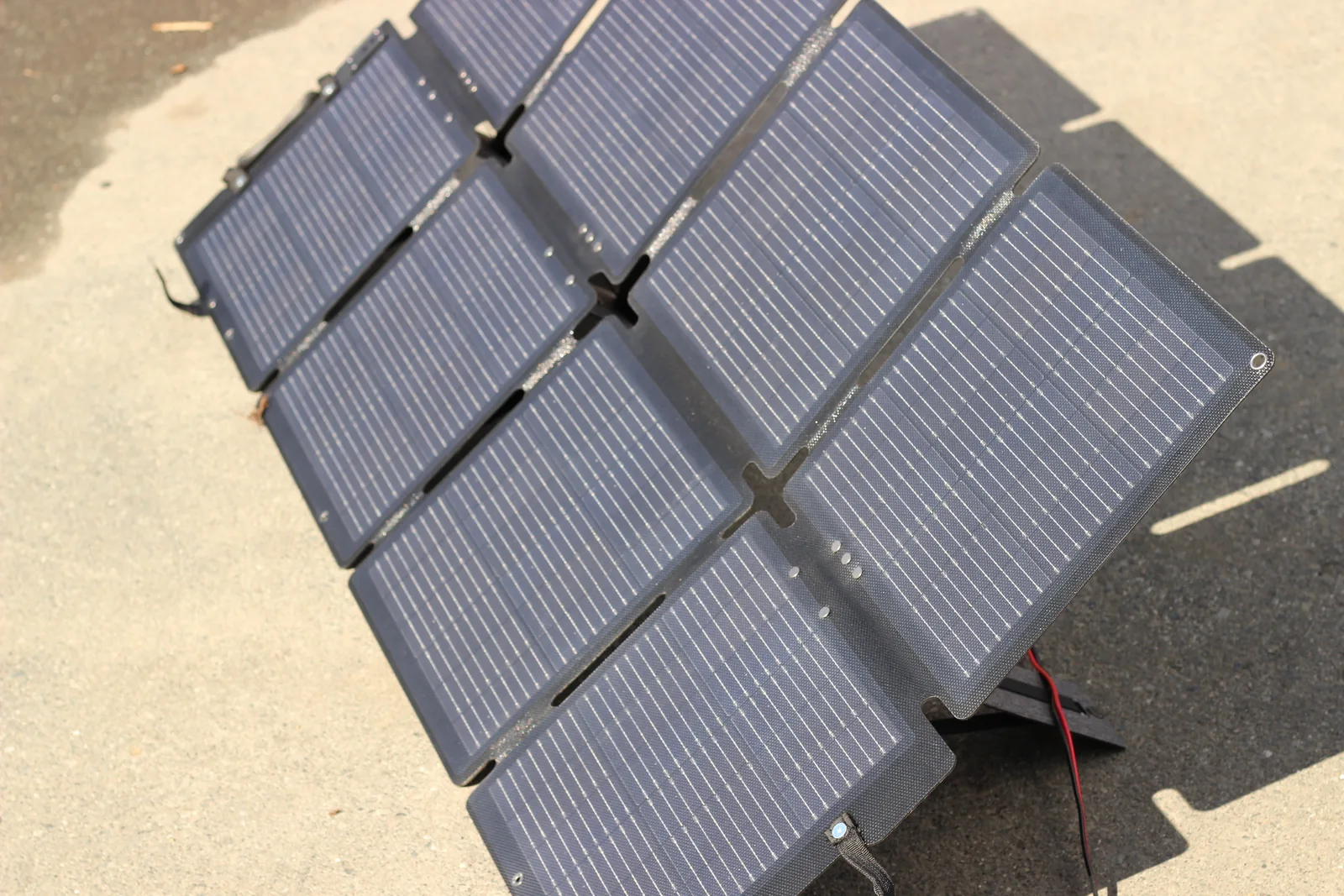
At a glance
Where to buy · reader discount
The SORA 130 is listed on BLUETTI's Canadian store, and the code HAL5off takes an extra 5% off the whole product series at checkout.
In the Box
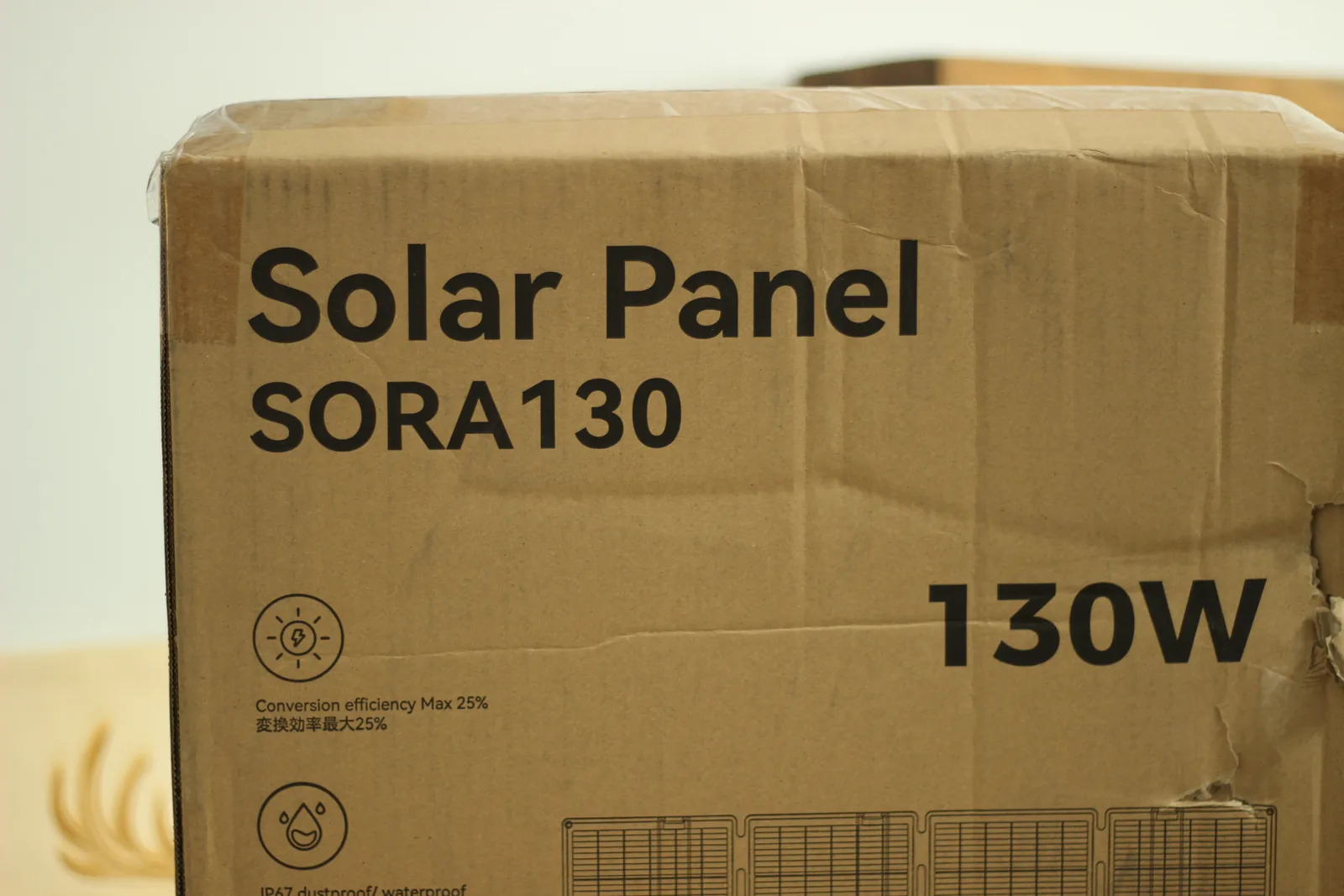
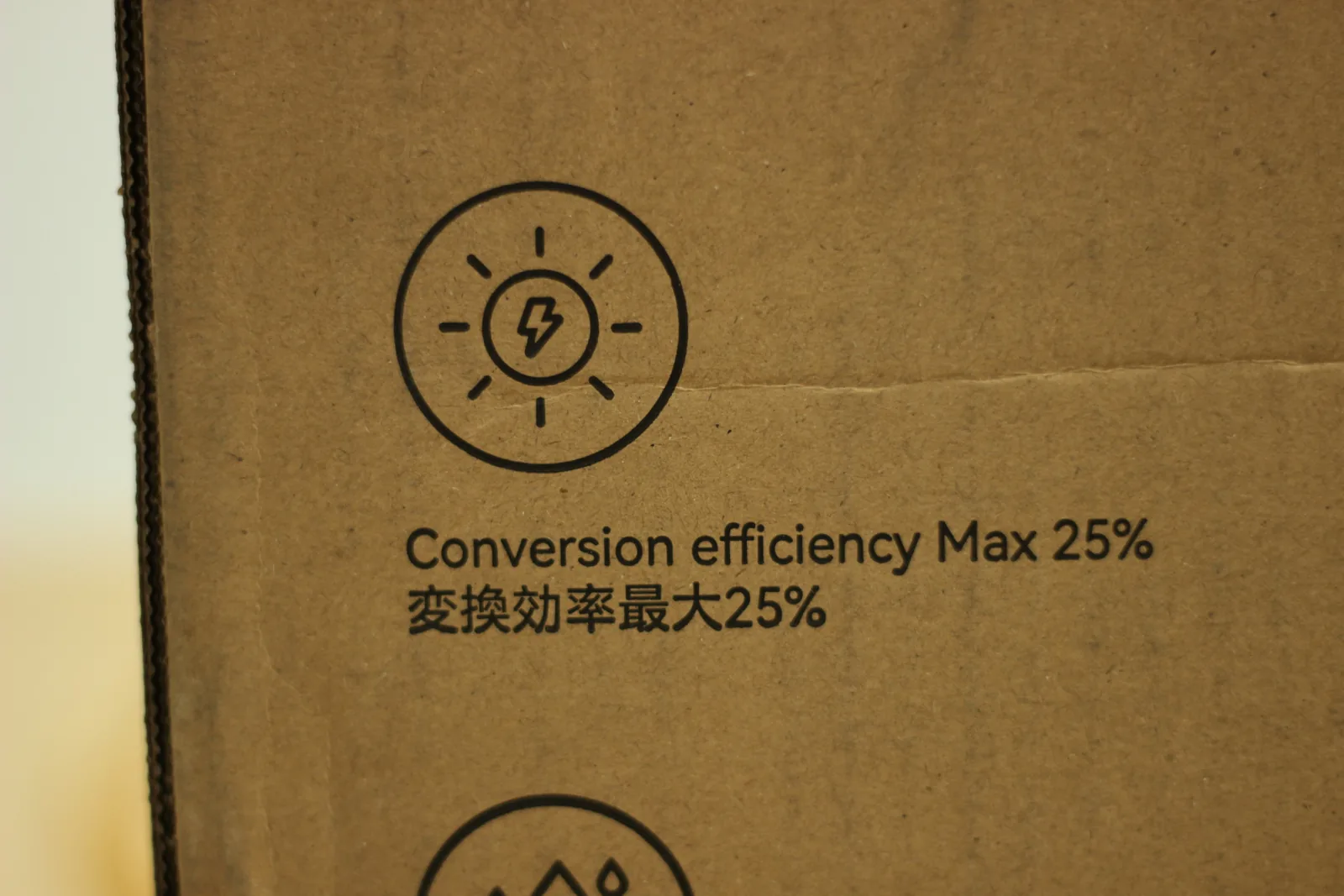
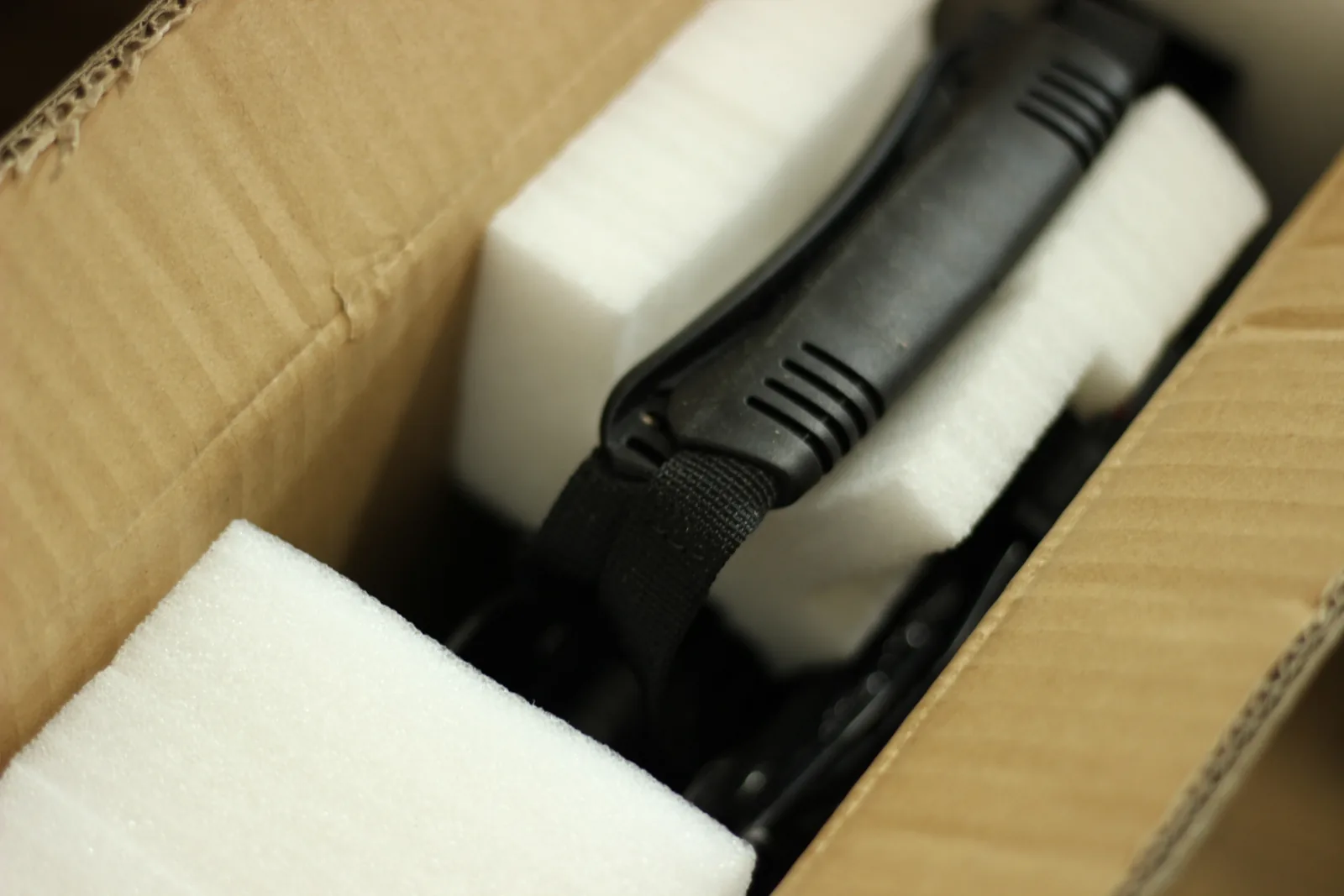
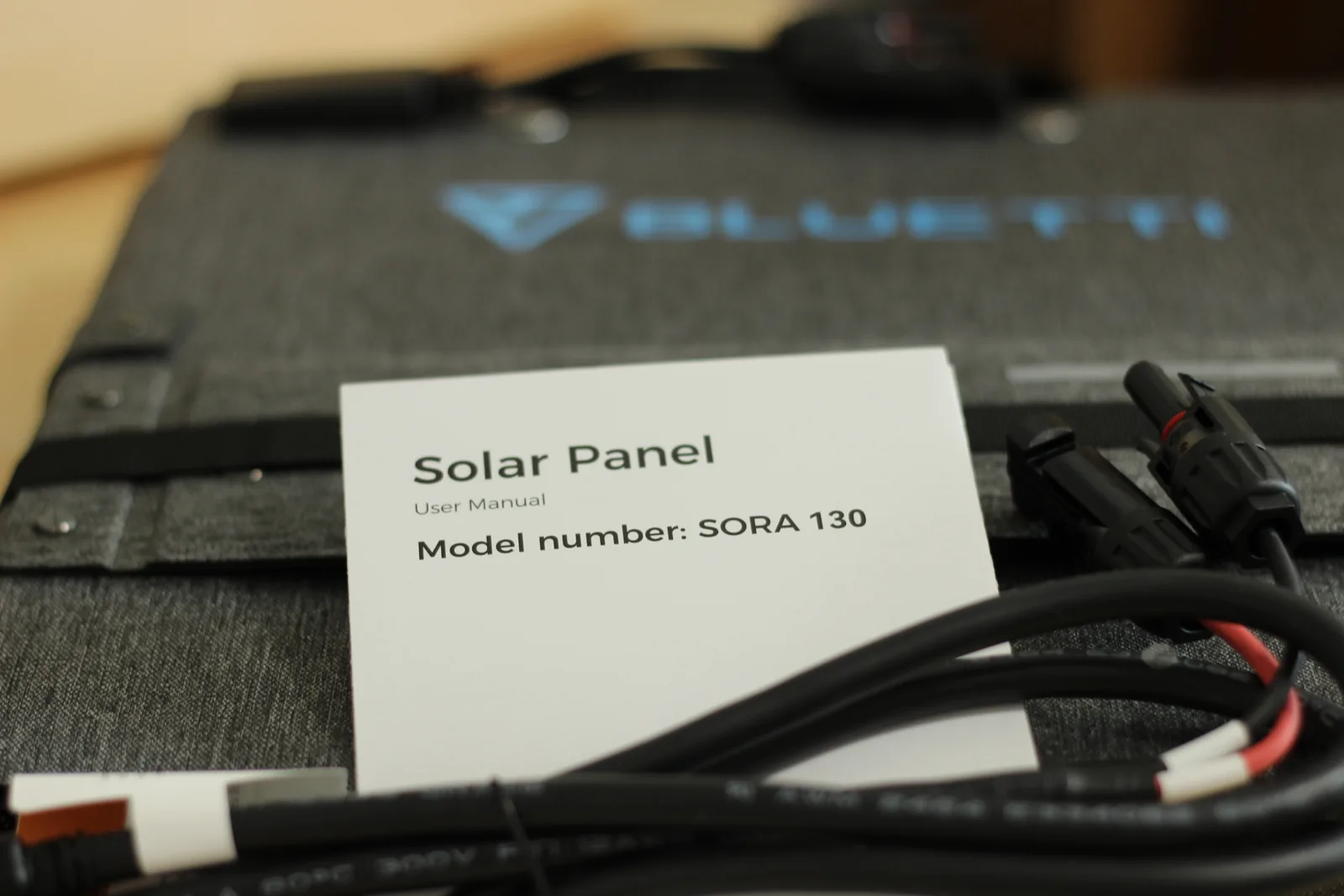
It ships in a plain kraft carton with the panel outline printed across the front and the specifications reduced to three icons down the side.
Design and Build
The surface — ETFE, not PET
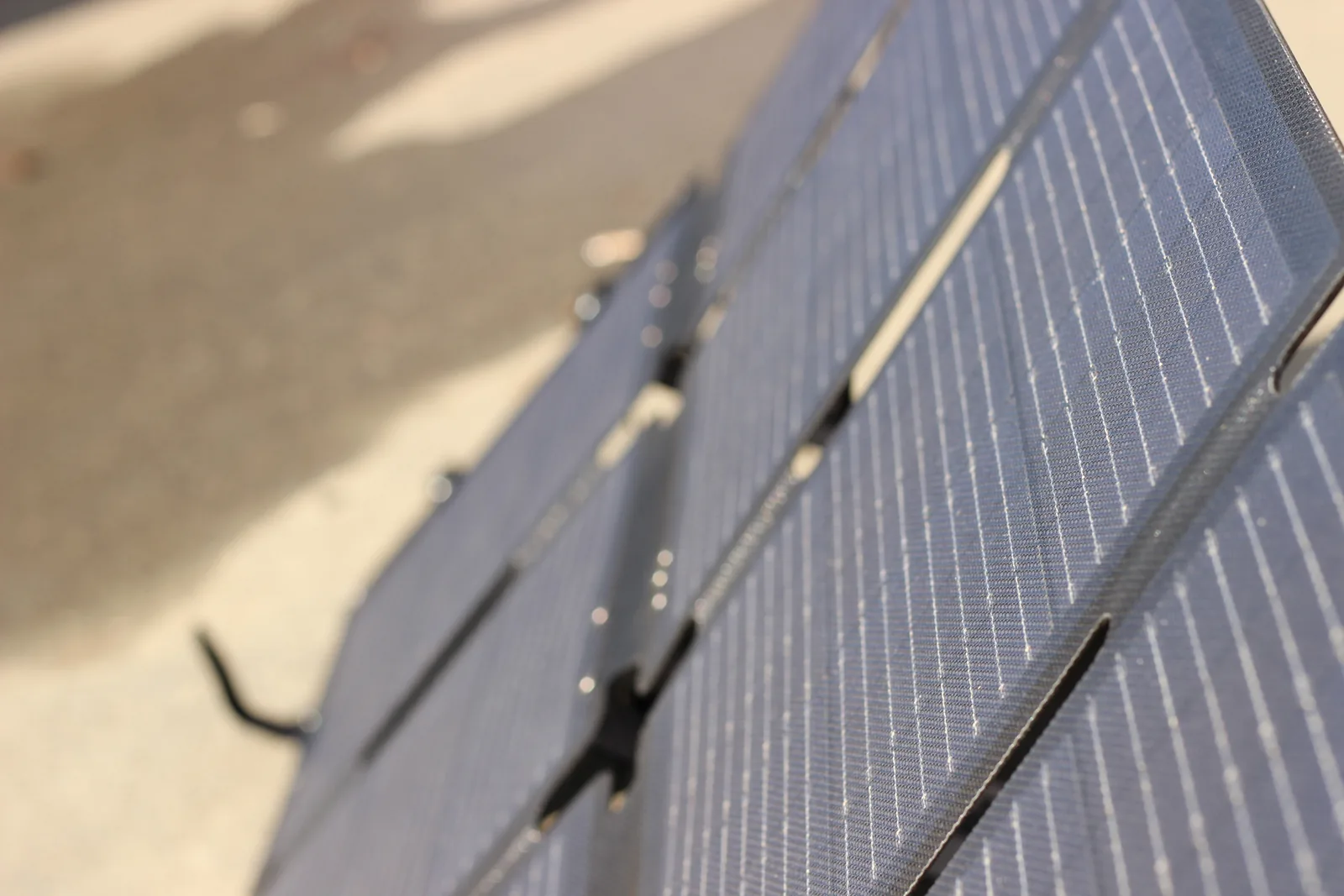
The single spec that separates a folding panel that lasts from one that clouds over in two seasons is what the cells are laminated under. The cheap answer is PET, which yellows and delaminates under UV. The SORA 130 uses ETFE, which is more UV-stable, more abrasion-resistant, and self-cleaning enough that rain does most of the maintenance.
The case and the hardware
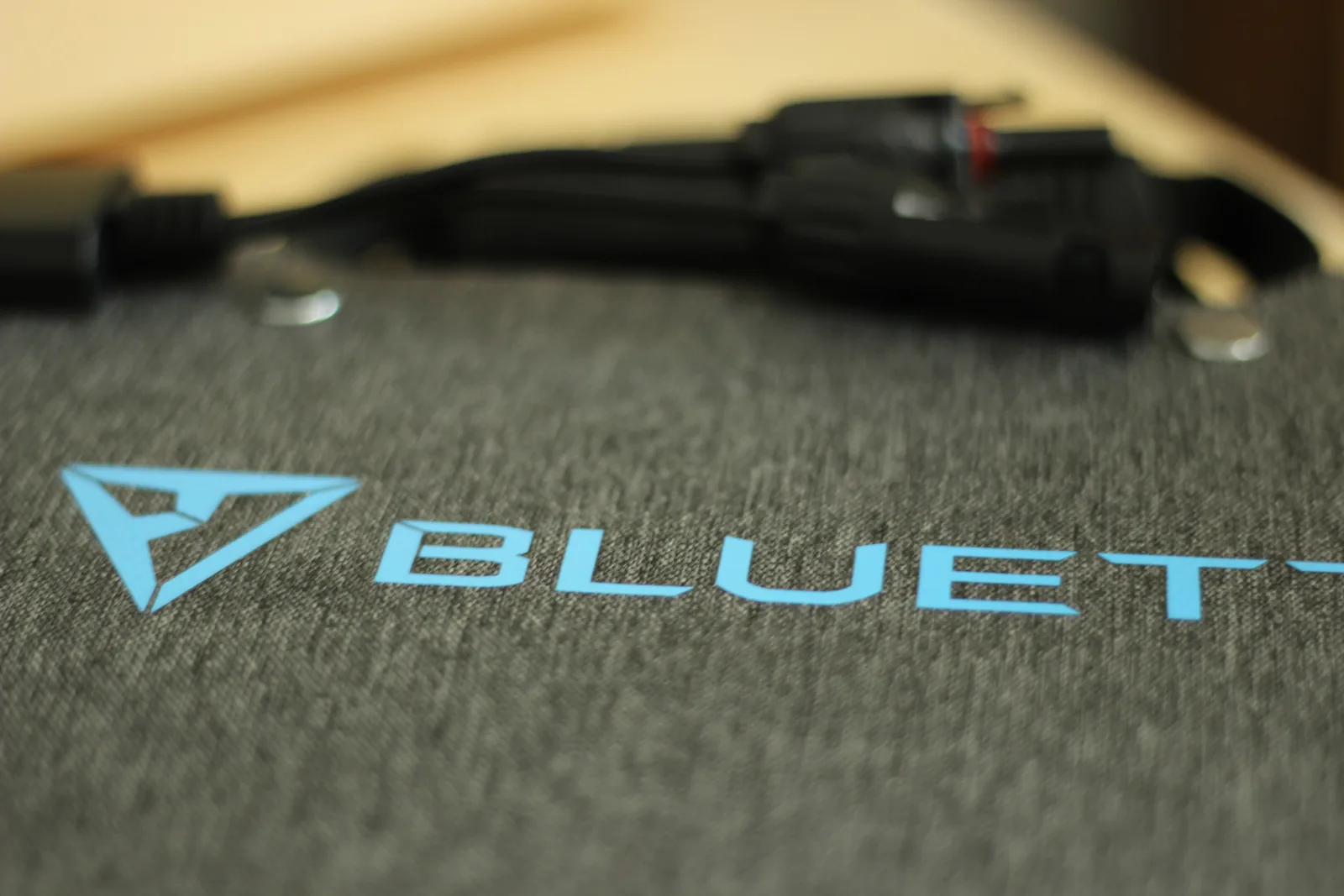
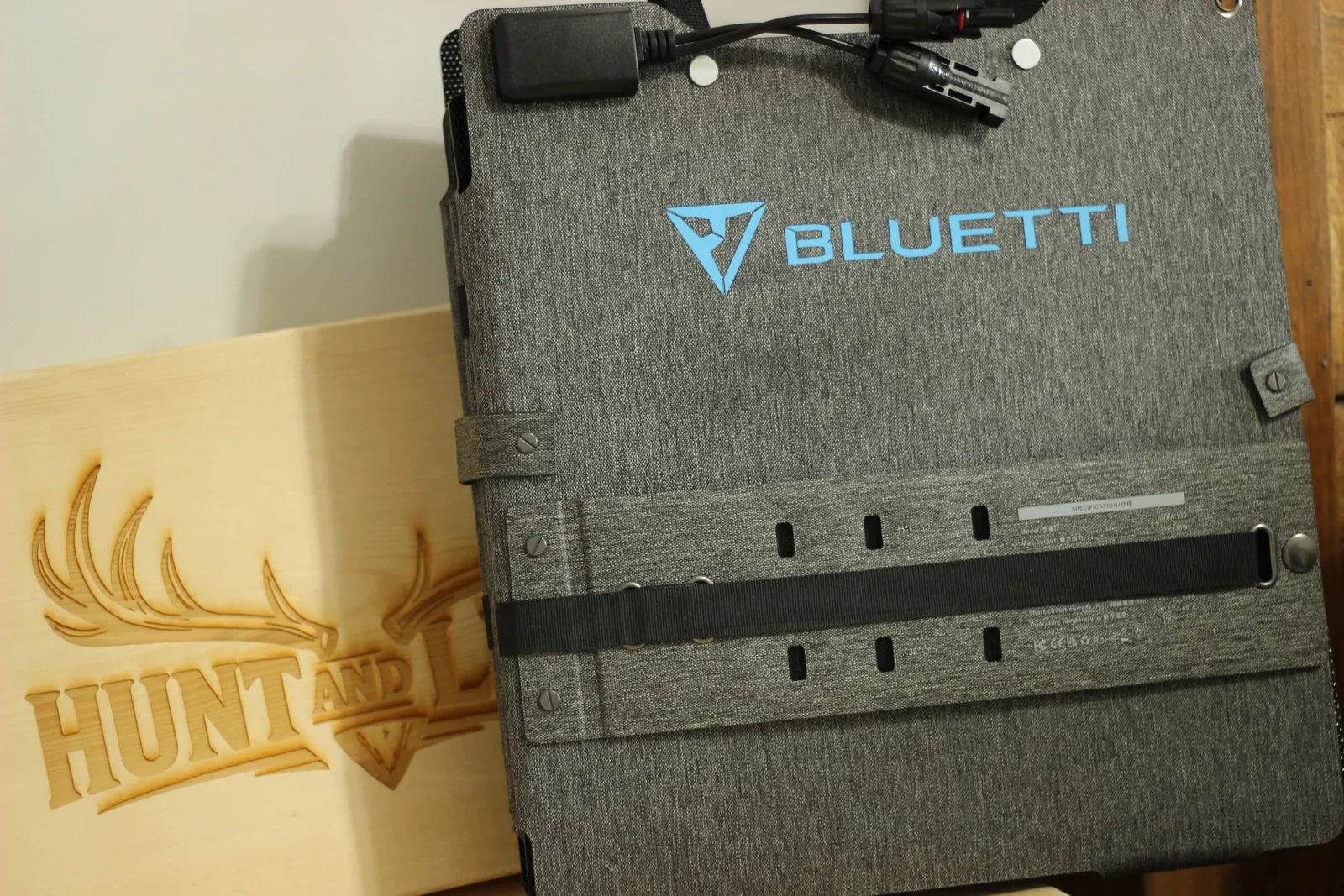
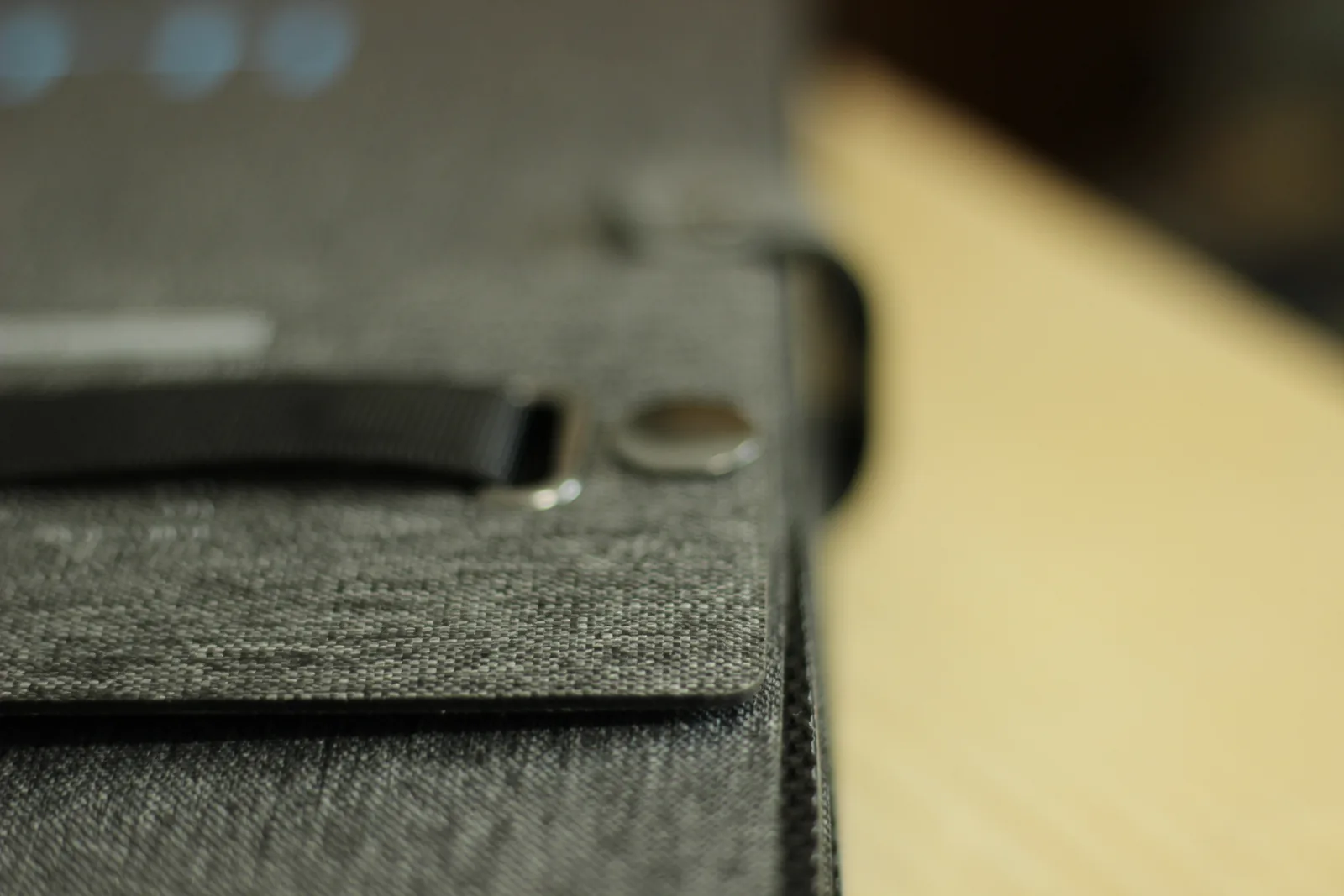
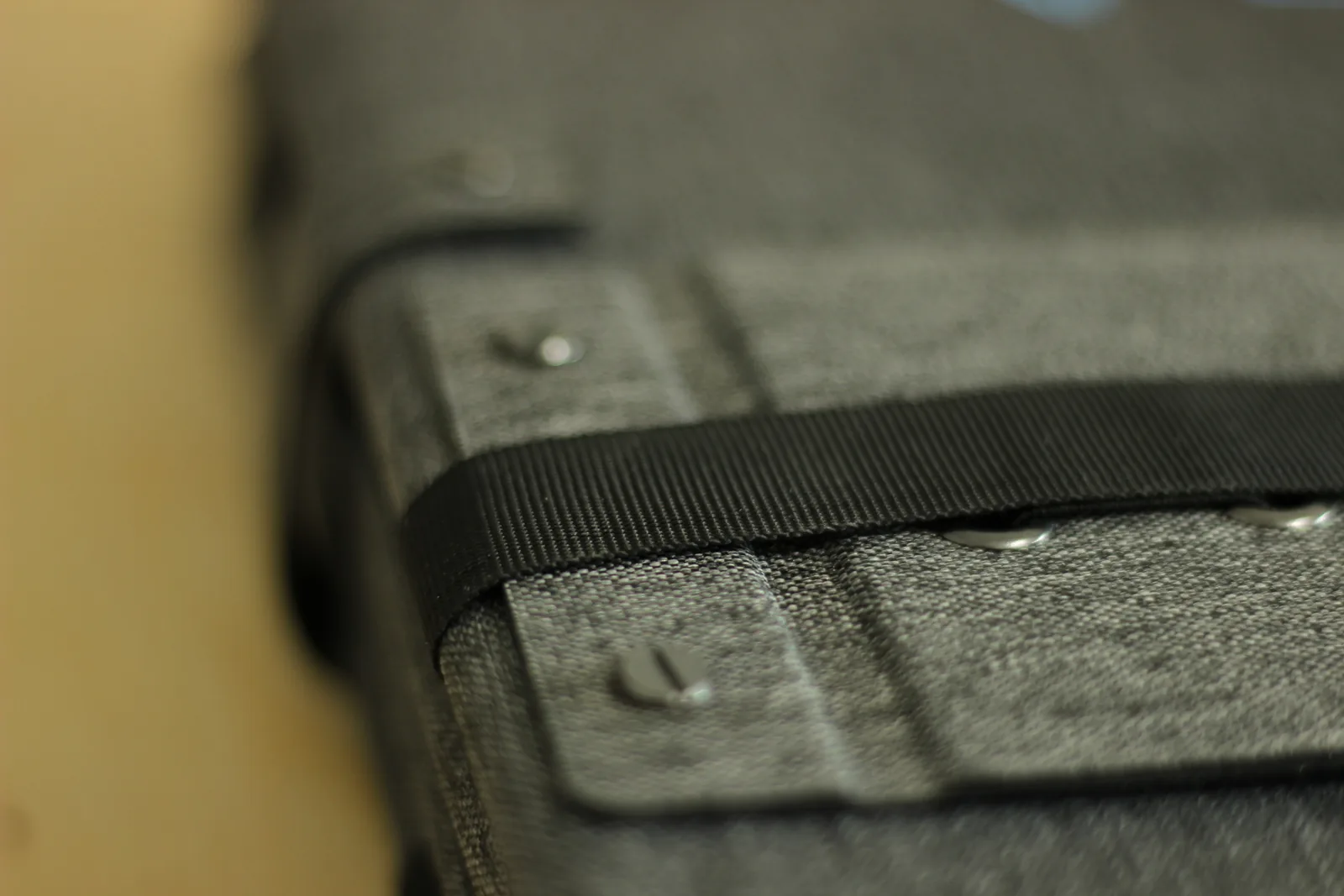
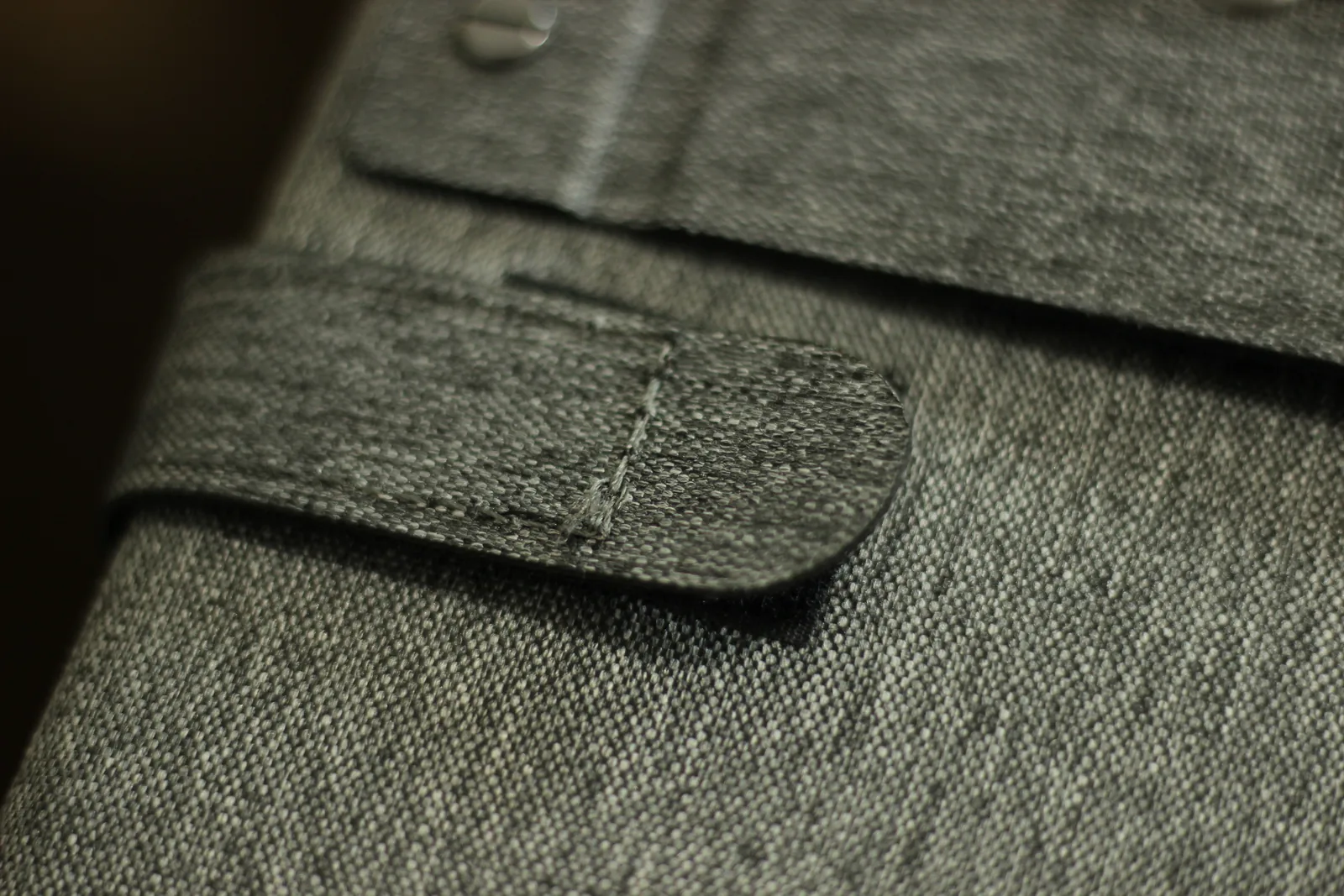
The back is a heathered grey fabric with the BLUETTI wordmark in blue, and the fittings on it are better than the price bracket usually delivers.
The kickstand
The stand is built into the case rather than being a separate accessory to lose, and it adjusts.
Why Panels Normally Miss Their Rating
Before the numbers, the context — because “130 W panel produced 123 W” only means something if you know what the 130 refers to.
Every solar panel on the market is rated at Standard Test Conditions: 1000 watts per square metre of irradiance, light striking the cells dead perpendicular, and a cell temperature of exactly 25 °C. Those three conditions almost never occur together outdoors. Irradiance at ground level on a clear day runs nearer 800–1000 W/m² and drops with haze. Perpendicular incidence requires the panel to be aimed, and every degree off costs output. And cell temperature is the one that catches people out: a panel sitting in full sun runs far hotter than the air around it, and silicon loses roughly half a percent of output for every degree above 25 °C. A panel at 55 °C cell temperature has already given up around fifteen percent before anything else goes wrong.
Stack those together and the reason folding panels commonly return sixty to seventy percent of nameplate becomes obvious. It is not that the manufacturers are lying about the rating — it is that the rating describes a laboratory, and your driveway is not one.
Which is what makes the figure in the next section worth the space.
The Numbers on the Display
This is the part of the review that could not be faked, because the power station reports its own input and we photographed the screen.
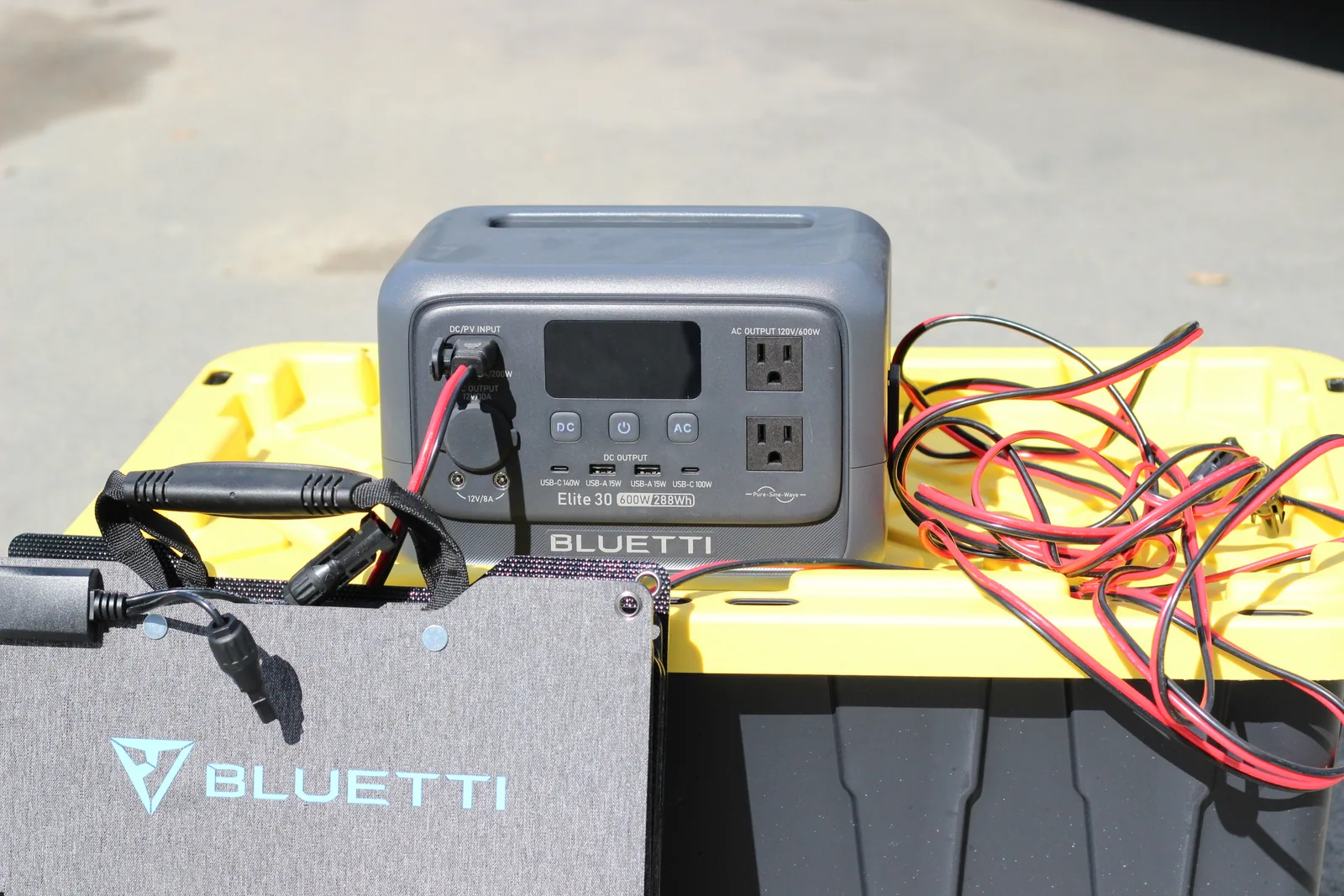
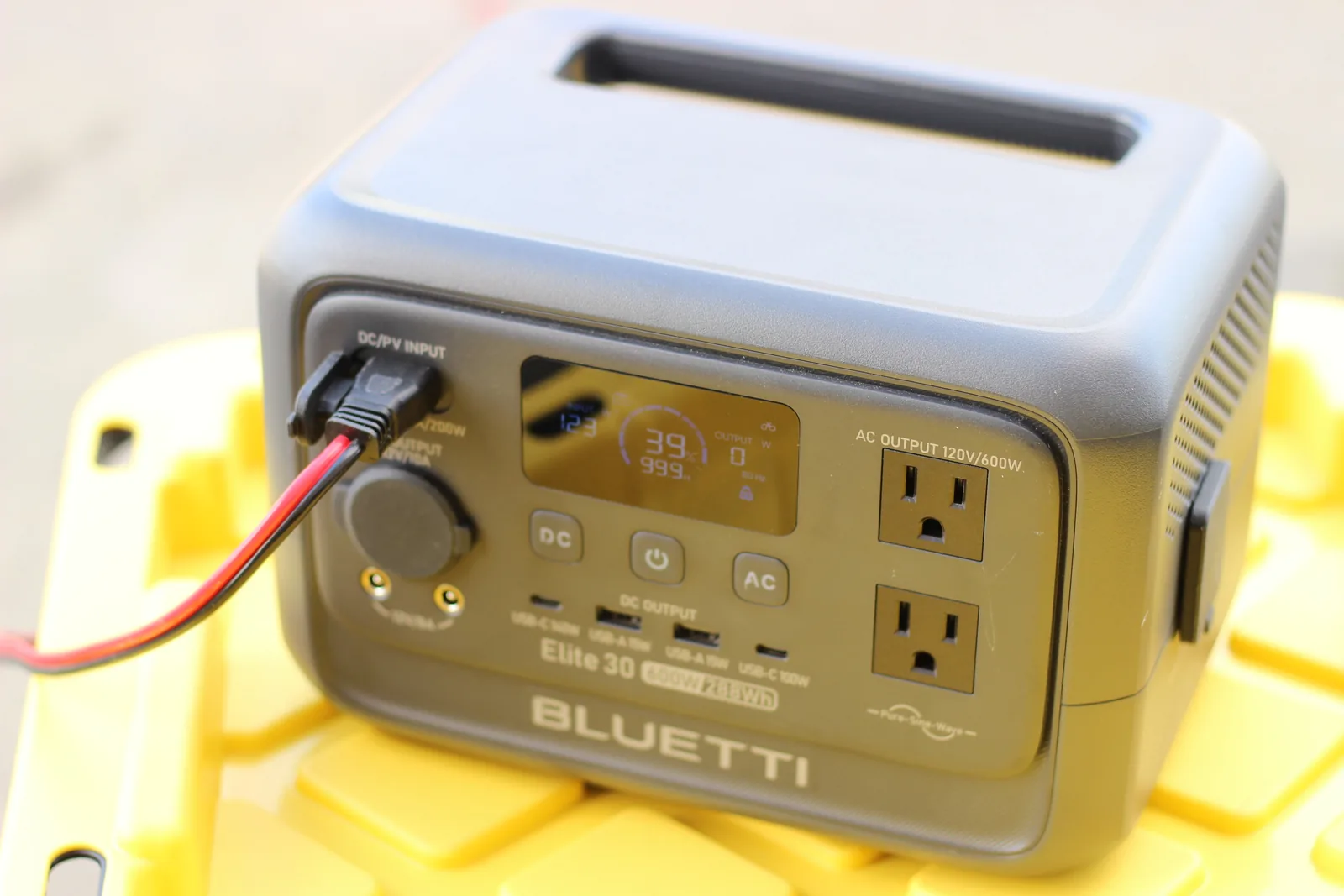
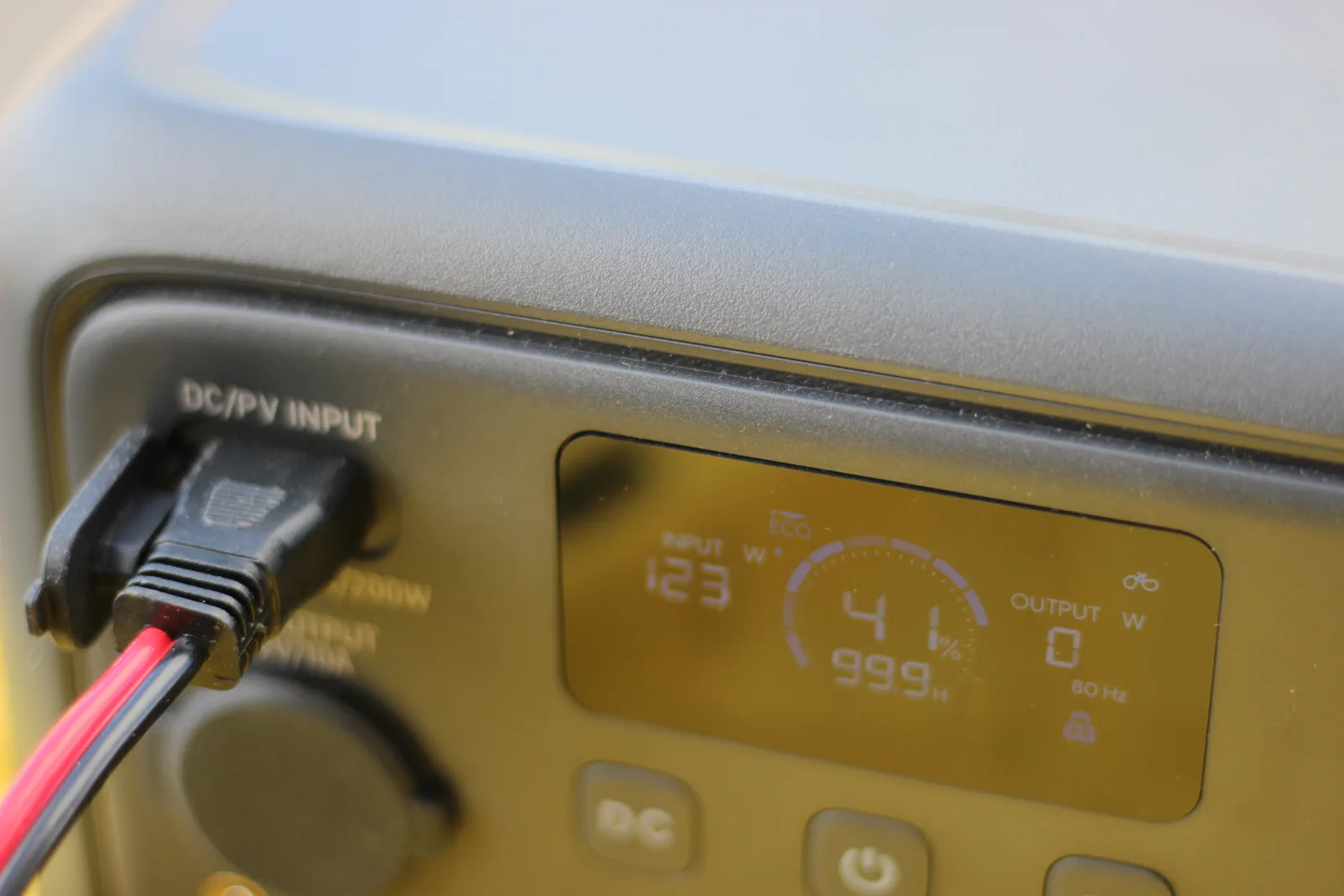
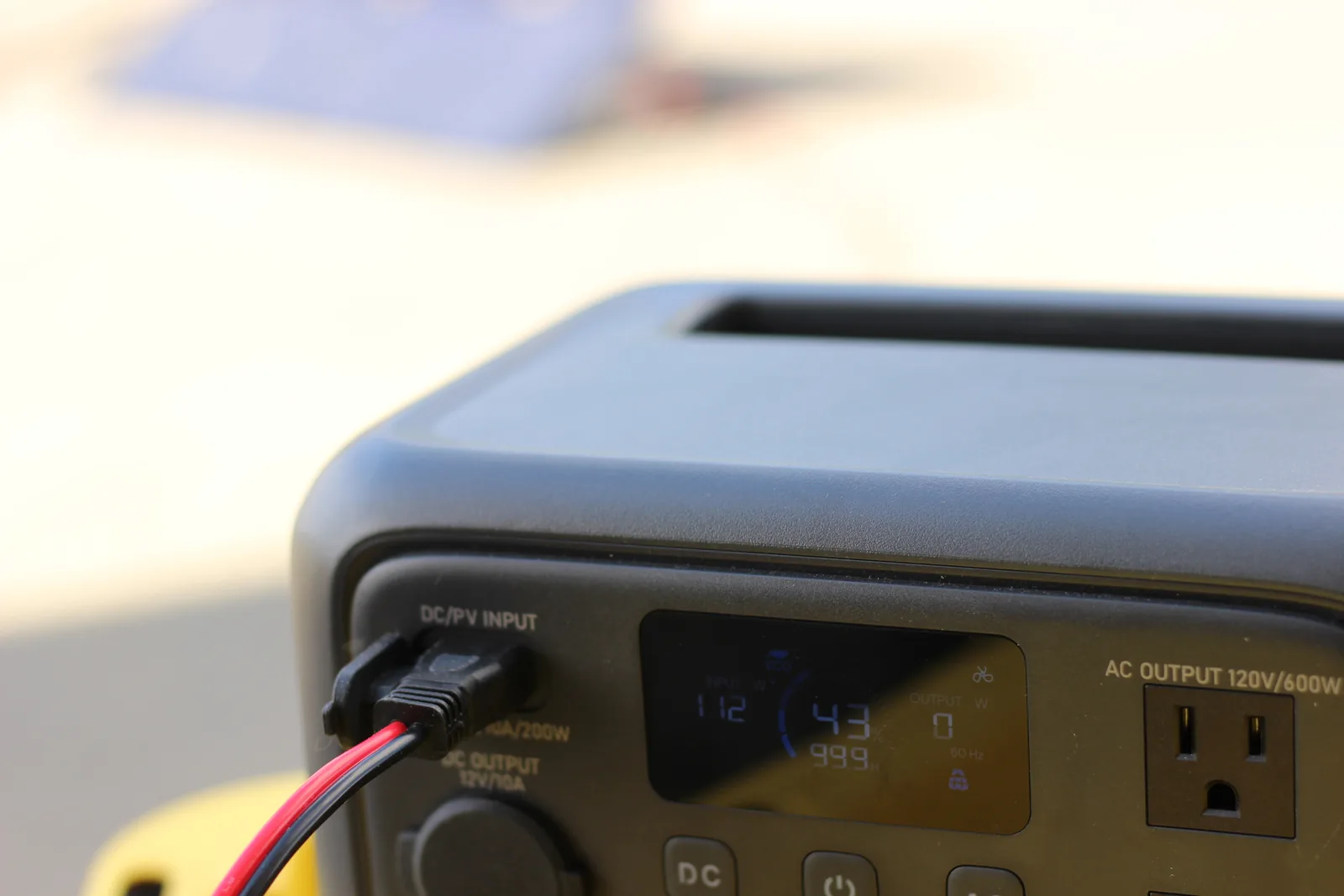
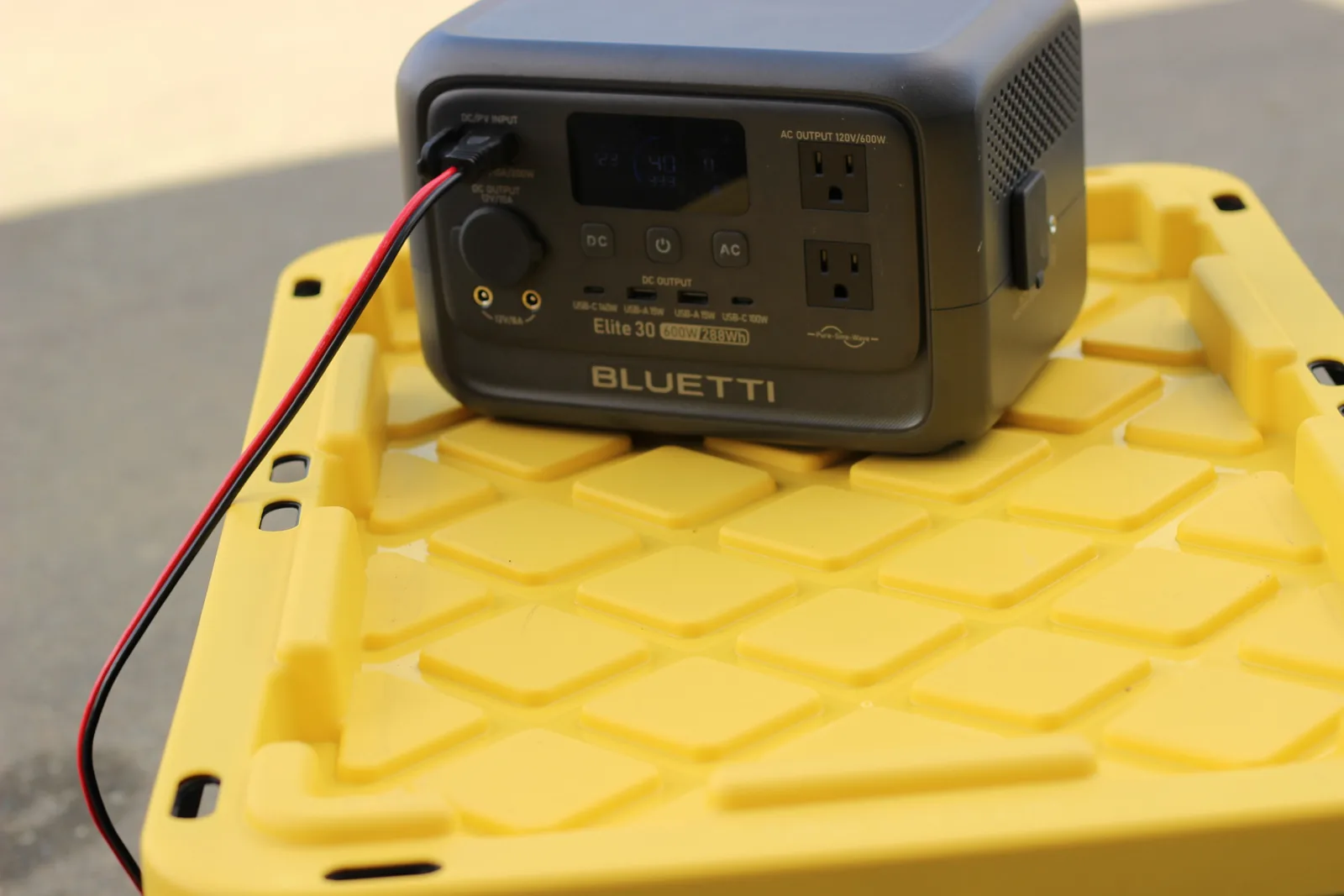
| Reading | Battery state | Input | Share of the 130 W rating |
|---|---|---|---|
| First reading | 41 % | 123 W | 94.6 % |
| Second reading, 10–20 min later | 43 % | 112 W | 86.2 % |
Both figures read directly off the BLUETTI Elite 30's own display and photographed — see the two figures above. Single clear-sky session on open concrete, panel angled by hand, no other input connected. Not a controlled test: no pyranometer, no cell-temperature measurement, no repeat runs. Treat these as two honest observations rather than a rated performance figure.
Watts. The first three are this panel — nameplate and the two figures on the display in our photographs. The last row is the 60–70 percent of nameplate that folding panels commonly return in real conditions, given for context; it is a general figure from the category, not a measurement of a specific competitor.
Reading the two numbers properly
It would be easy to read 123 dropping to 112 as the panel fading over an afternoon. It is not that. The two photographs are ten to twenty minutes apart, and in that window the battery went from 41 % to 43 %.
An eleven-watt swing across a few minutes is ordinary. Thin high haze moving across the sun costs output immediately; so does the panel’s own cell temperature, which climbs steadily for the first several minutes after it is set out in full sun and takes roughly half a percent of output with every degree. Neither is a fault, and neither is the panel running out of steam — it is simply what a live reading looks like when you photograph it twice rather than once.
The genuinely useful takeaway is the speed. Two points of state of charge in a quarter of an hour, from a panel that folds into a briefcase and weighs 3.6 kg, is the practical case for carrying one.
Angle is still worth attending to over a longer day — the sun does move, and re-aiming an adjustable kickstand takes ten seconds — but it is not what happened between these two frames.
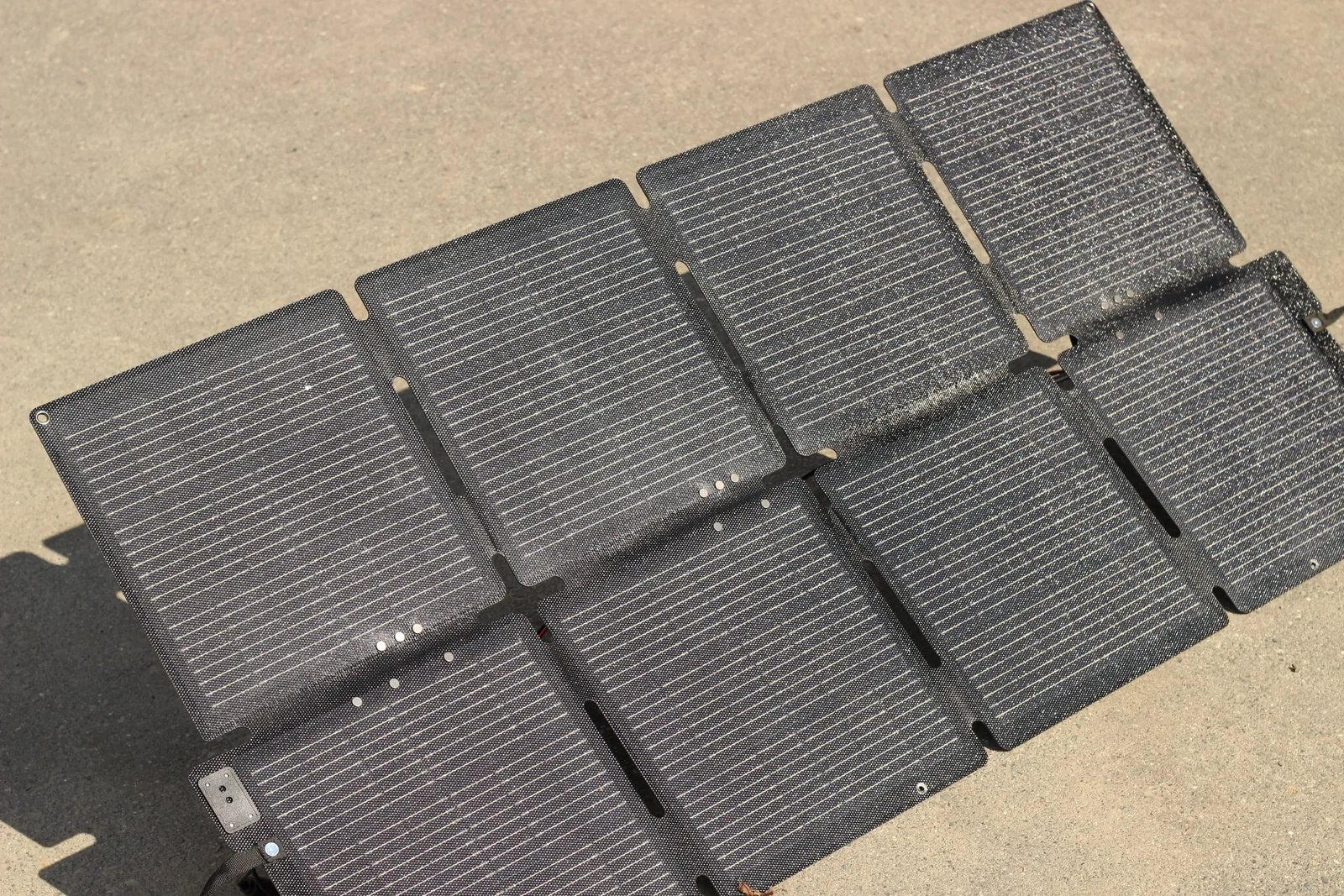
Two other things cost output and both are visible in the photographs. The surface picks up dust — on the flat shot you can see grit sitting across the cells, and on a light-coloured concrete driveway in summer that accumulates quickly. A wipe with a damp cloth is worth doing before a long charge. And shade is disproportionately expensive: because the cells are wired in series, a shadow across one section pulls down the whole string, not just the part it covers. A branch shadow that looks trivial can cost a third of the output.
Runtime, in plain numbers
What we can say from the photographs is narrow and useful: the Elite 30’s 288 Wh battery moved two points of state of charge in ten to twenty minutes, at an indicated 112–123 watts. Extrapolate that carefully rather than confidently — charge rate tapers near the top and conditions shift — but a station of this size clearly fills in a matter of hours rather than a full day, and over a clear summer day a single SORA 130 will put through more than one full charge of it.
Scale that to a bigger station and the arithmetic gets less comfortable. A 1000 Wh unit is most of a clear day on a single SORA 130, and that assumes nothing is drawing from it while it charges.
Setting It Up
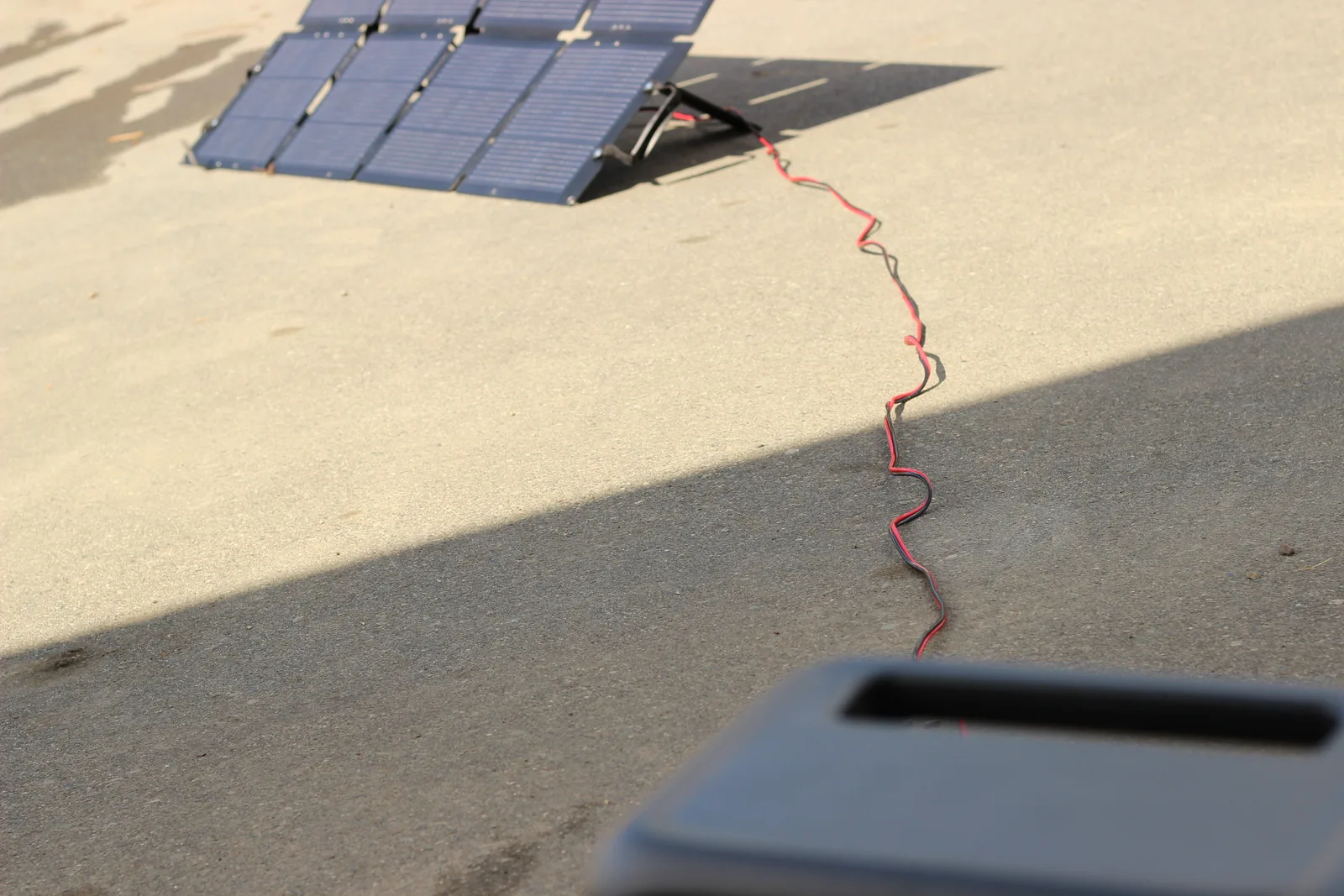
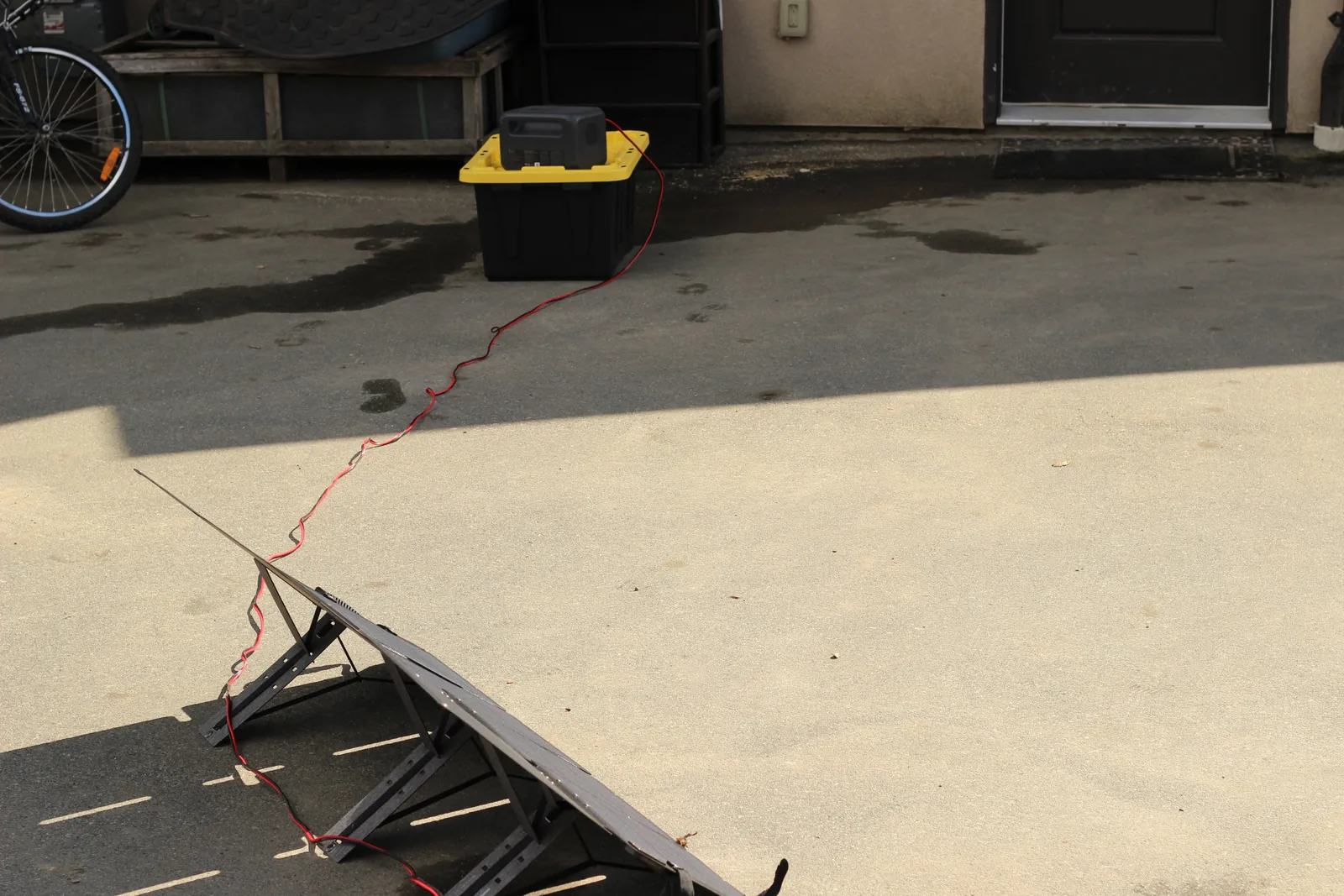
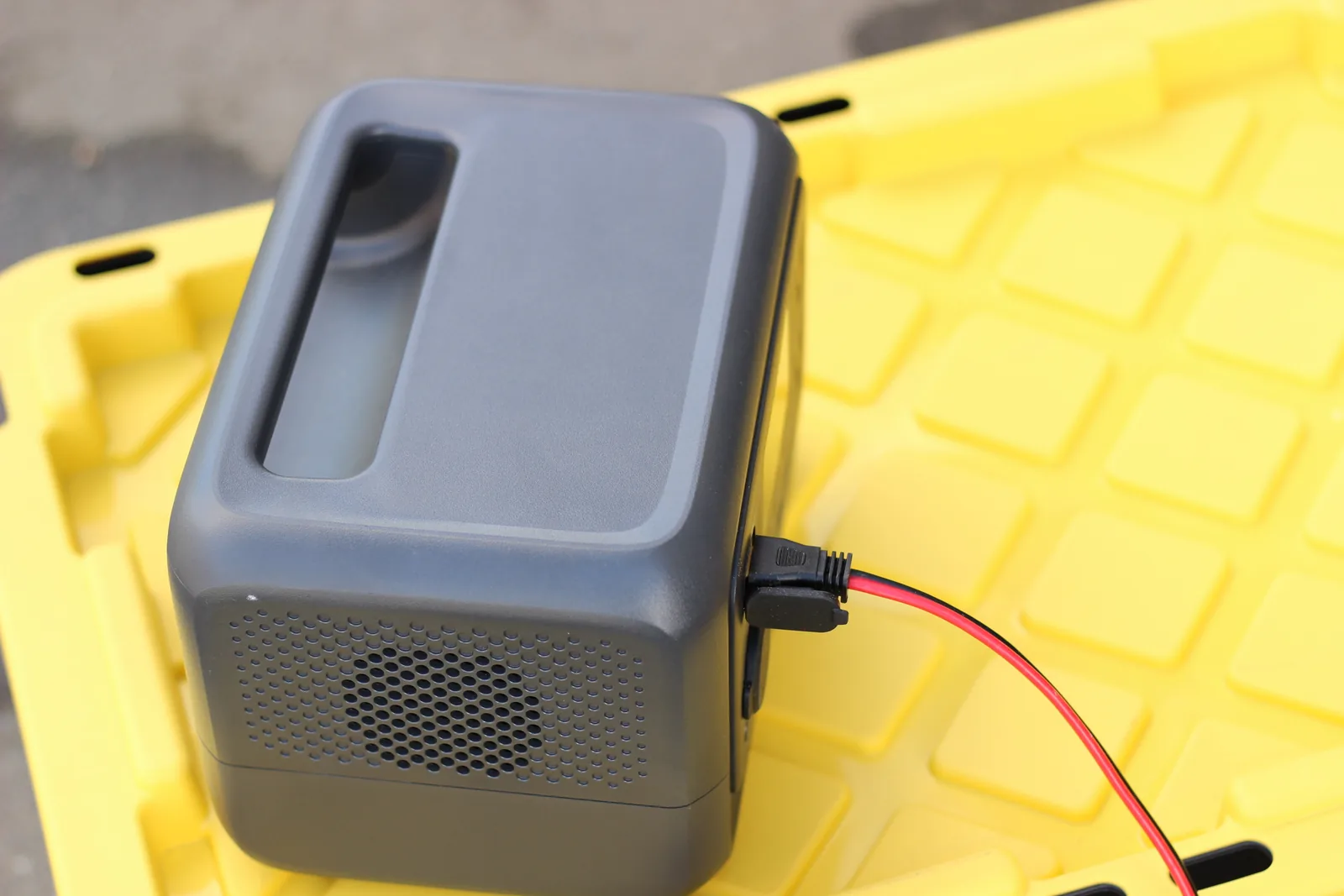
How It’s Built to Be Used
Camp and truck
3.6 kg and a briefcase footprint is the whole argument. A panel this size lives permanently behind a seat or in a pack lid without anyone having to decide whether it is worth bringing, and at 123 W it refills a 288 Wh station in an afternoon.
The cabin or the deer camp
Four corner eyelets mean it hangs — off a rail, a wall, a roof edge — as readily as it stands. For a camp where the panel goes out at breakfast and comes in at dark, the fabric case and the ETFE surface are the parts that decide whether it survives five seasons.
Running alongside a bigger system
Standard MC4 is the important detail here. This is not a proprietary plug that locks the panel to one brand’s ecosystem — it is the same fitting used across the solar industry, so the SORA 130 can be paralleled into a larger array or fed into a third-party charge controller without adapters.
Where it is genuinely limited
Anything with a compressor. 130 W will not run a fridge and charge a battery at the same time in shoulder-season sun, and a panel this size is a top-up device rather than a primary generation source. If the plan is to live off it, the honest answer is two of them or a bigger panel.
Pros and Cons (the Honest Version)
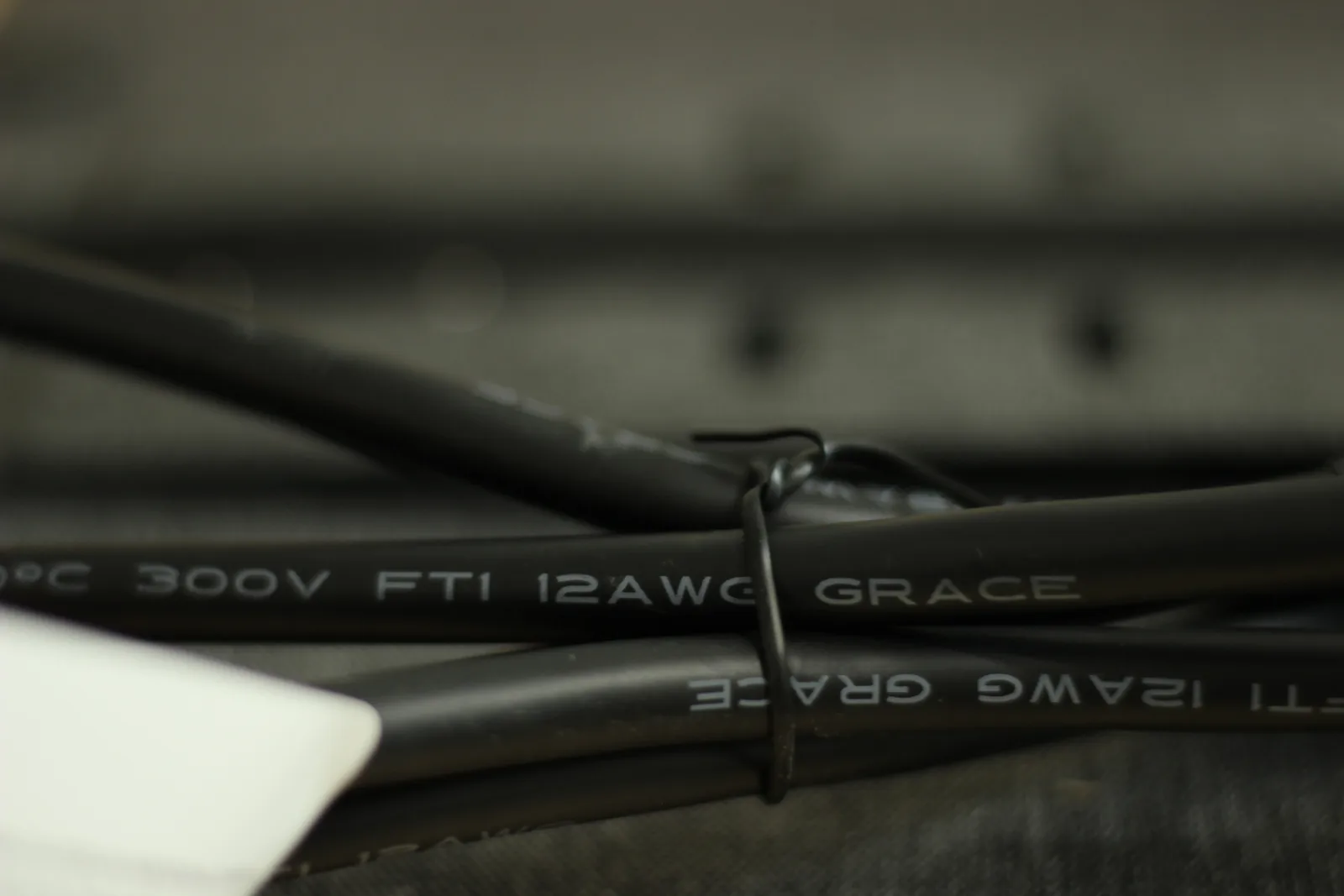
What it does exceptionally well. It returns very nearly its nameplate. 123 watts into a battery from a 130 watt panel is the headline, and everything else about the panel — the ETFE surface, the 12 AWG cable, the sealed junction box, the built-in adjustable kickstand — is consistent with a product engineered to deliver its number rather than to advertise one. It is also light enough that it gets carried, which is the quality that determines whether a solar panel ever generates anything at all.
Where it falls short. There is no output indication on the panel itself, so aiming it means walking back to the station and reading the display. The kickstand is fabric and webbing, which is light and packable but wants weight or a guy line in wind. Both are small next to what the panel returns.
How It Compares
vs. BLUETTI’s own 100 W panel (C$299). Thirty watts less for a similar footprint, and it is a standalone catalogue item on the Canadian store where the SORA 130 is not. If you want to buy one panel today with a Canadian warranty and a Canadian return path, this is the pragmatic answer.
vs. BLUETTI’s 200 W panel (C$499). Substantially more generation, substantially more panel to carry and store. The 200 W is the right choice if the panel lives in a vehicle or at a fixed camp; the SORA 130 is the right choice if it has to be carried by one person along with everything else.
vs. a rigid 100 W framed panel (~$120). Cheaper per watt by a wide margin, and better in a permanent installation. It is also aluminium-framed, glass-fronted, and roughly four times the weight — a different product for a different job. Nobody carries one of those to a camp on foot.
Who Should Buy It
Buy it if you already own a BLUETTI power station and want a panel that will actually deliver close to its rating; if the panel has to be carried rather than driven; if you want ETFE and IP67 rather than the PET-laminated panels that dominate the budget end; if you want a standard MC4 output so the panel is not tied to one brand forever.
Don’t buy it if 130 W is your entire power plan — it is a top-up panel, not a generating station. Canadian buyers can order it directly from BLUETTI Canada.
Buying It in Canada
Good news for Canadian buyers: the SORA 130 now has its own listing on BLUETTI’s Canadian storefront, so you can order this exact panel directly rather than hunting for it inside a power-station bundle. Canadian pricing, Canadian shipping and Canadian support, on the panel reviewed here.
Reader discount
BLUETTI has given Hunt & Live readers a code: HAL5off takes an extra 5% off the whole product series on bluettipower.ca. Enter it at checkout.
The rest of the Canadian panel range sits either side of it — 60 W, 100 W, 200 W, 350 W, the PV100FX flexible and the SORA 500 — so if 130 W is the wrong size for your setup there is a catalogue alternative on the same store.
Final Verdict
The BLUETTI SORA 130 is the rare piece of solar equipment that comes closer to its sticker than the category has trained anyone to expect. A 130 watt panel reporting 123 watts into a battery is not a rounding error in the panel’s favour — it is a genuinely strong result, and it is visible on the power station’s own display in the photographs above rather than inferred from a spec sheet. Pair that with an ETFE surface, a properly sealed junction box, 12 AWG cable, four corner eyelets and 3.6 kg on the scale, and the engineering reads as consistent throughout.
The reservations are real but small: no output indication on the panel, and a kickstand that wants weighting in wind. Against a panel that delivers this much of what it promises, neither changes the recommendation.
It is on the Canadian store as its own listing, and the code HAL5off takes another 5% off.
Rating: 4.6/5 Stars
Brands sometimes provide samples for review. Hunt & Live writes its honest opinion either way — gear that doesn’t earn its keep doesn’t get a recommendation.