
Featured Review · CRKT · Knife Kits
CRKT Nathan's Knife Kit Lockback Review — The $17 Wooden Folder That Teaches a Kid How a Lockback Actually Works
Our Rating
Current Price
- Model
- Nathan's Knife Kit Lockback — item 1032
- Designer
- Glenn Klecker with his son Nathan
- Blade material
- Beech wood
- Handle material
- Beech wood
Pros
- A genuinely working lockback — the lock bar, the spring dowel and the pivot are all real mechanisms, so a child assembling it learns how the lock on a real folder engages and releases
- No tools required and no cutting edge anywhere on the kit — every wooden part arrives shaped with soft rounded edges, so the build itself carries no risk
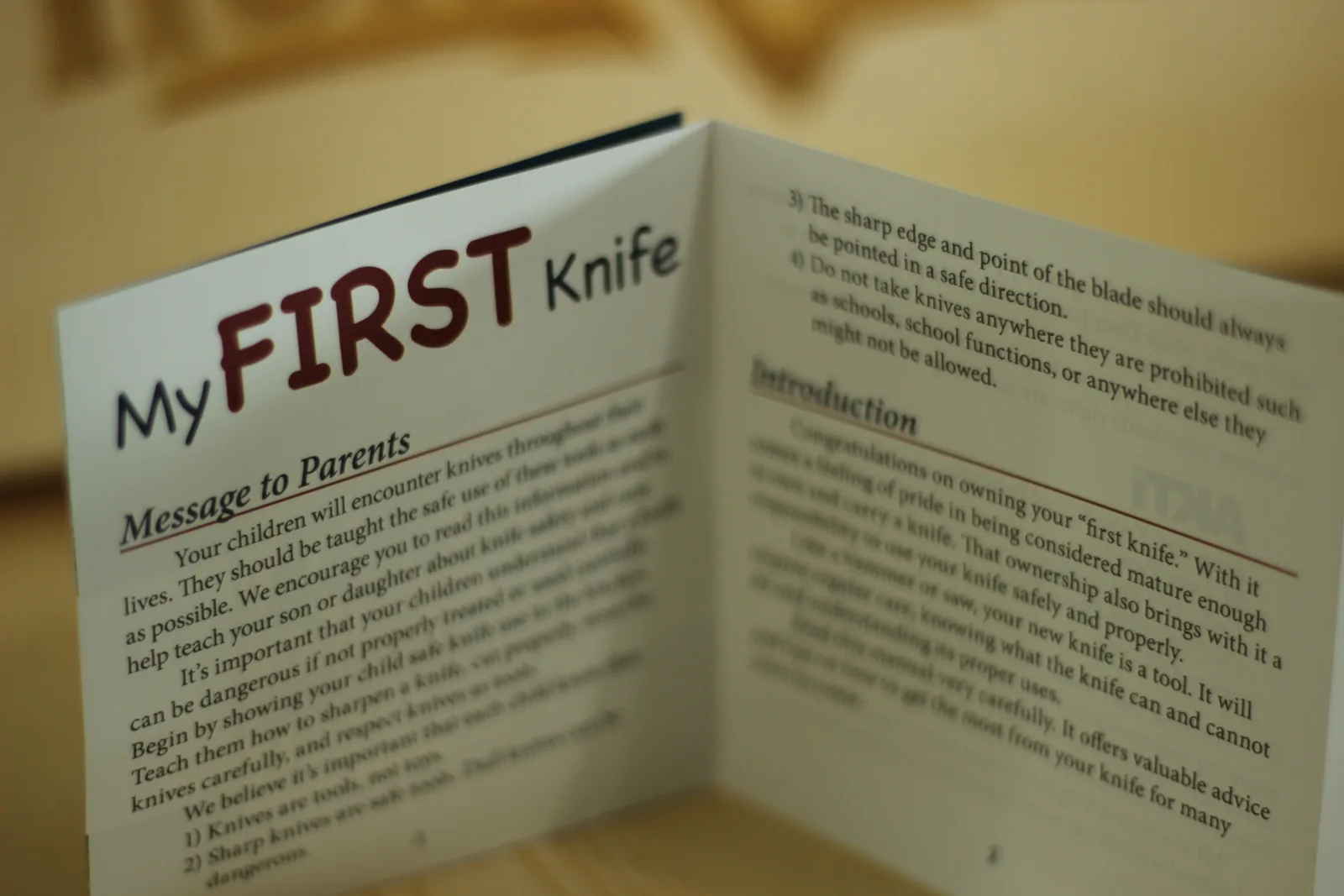
- Ships with the 'My FIRST Knife' safety booklet, which is a properly written parent-and-child guide rather than a legal disclaimer
- Beech wood takes paint, stain and pen — the finished knife is meant to be decorated, so the project does not end when the assembly does
- $17.00 for something that occupies an afternoon and leaves a keepsake behind
Cons
- The dowel pins are small and fiddly — a seven-year-old at the bottom of the recommended age range will want an adult's hands nearby for the pin work
- It is a display and teaching object, not a functioning knife; the beech 'blade' cannot cut and is not meant to
- The exploded assembly diagram is printed on the back of the card, so you have to keep the packaging rather than throw it away
- Beech is soft — the pinned joints and the blade tip will mark and dent with rough handling
Every knife review on this site eventually runs into the same problem: at some point a young person is going to be handed a real one. The Buck 284 Bantam ships with a card from CJ Buck that opens “if this is your first Buck Knife, welcome aboard.” The question that card does not answer is what happens in the years before that — how a child learns what a lock is, why a blade closes on fingers, and what respect for a tool actually looks like in practice.
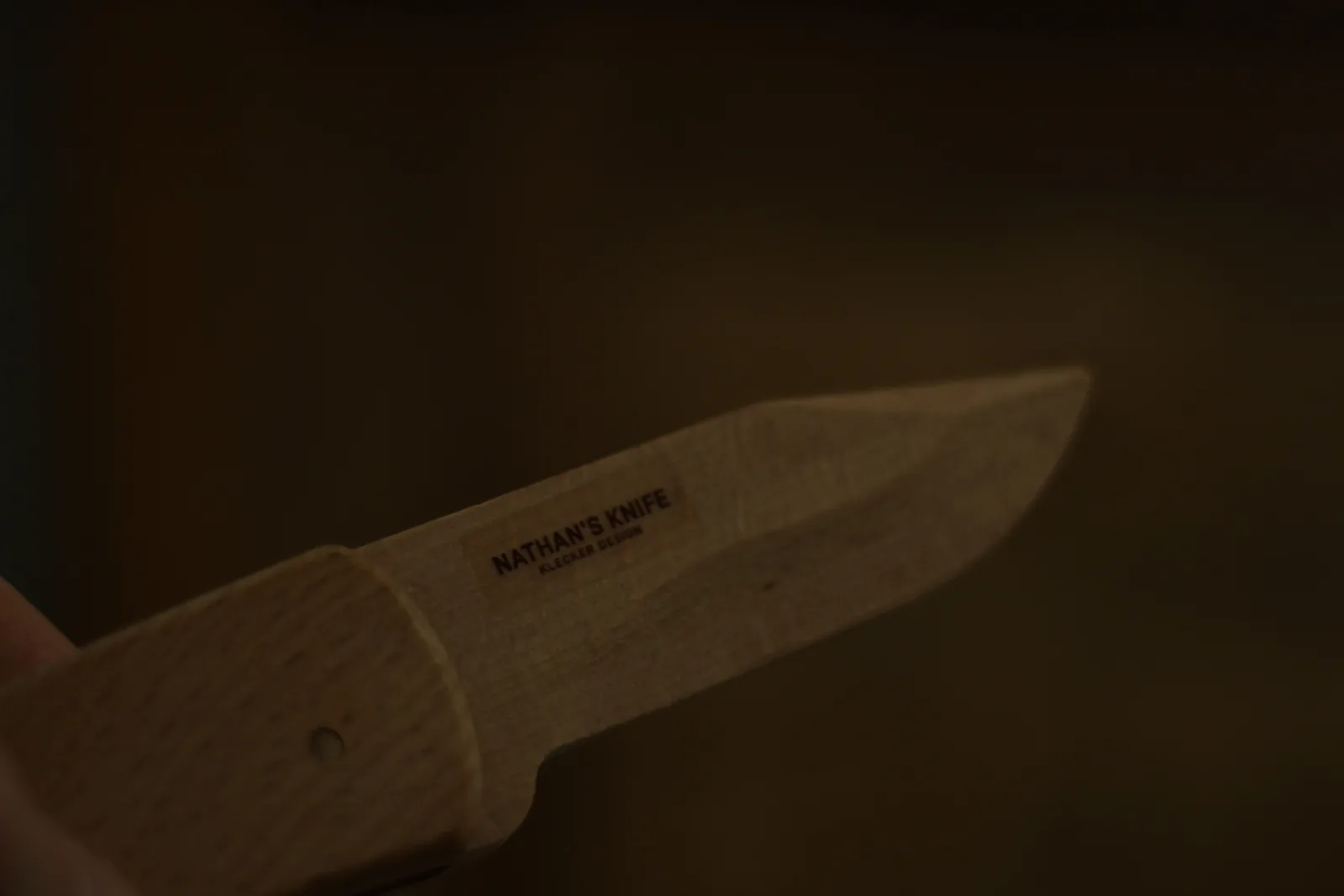
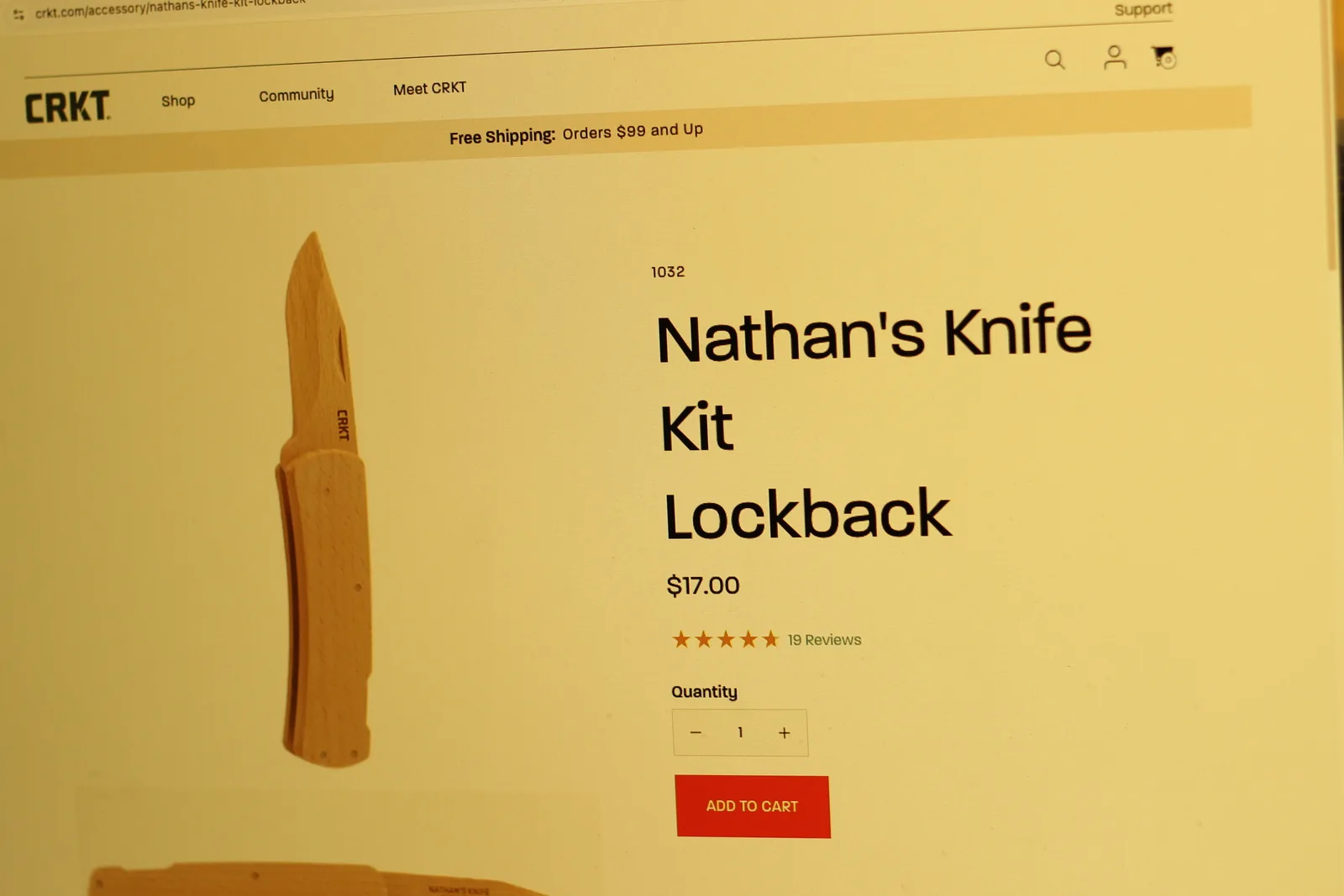
CRKT’s answer costs seventeen dollars and is made entirely of beech. Nathan’s Knife Kit Lockback is a folding knife you build yourself, with a real pivot, a real lock bar and a real spring — and no cutting edge anywhere on it. It was designed by CRKT designer Glenn Klecker together with his son Nathan, and CRKT sells it as a teaching tool rather than a knife. This review looks at what is actually in the packet, how the mechanism is put together, and whether a seventeen-dollar box of wood earns the claim on the front of the card.
At a glance
In the Box
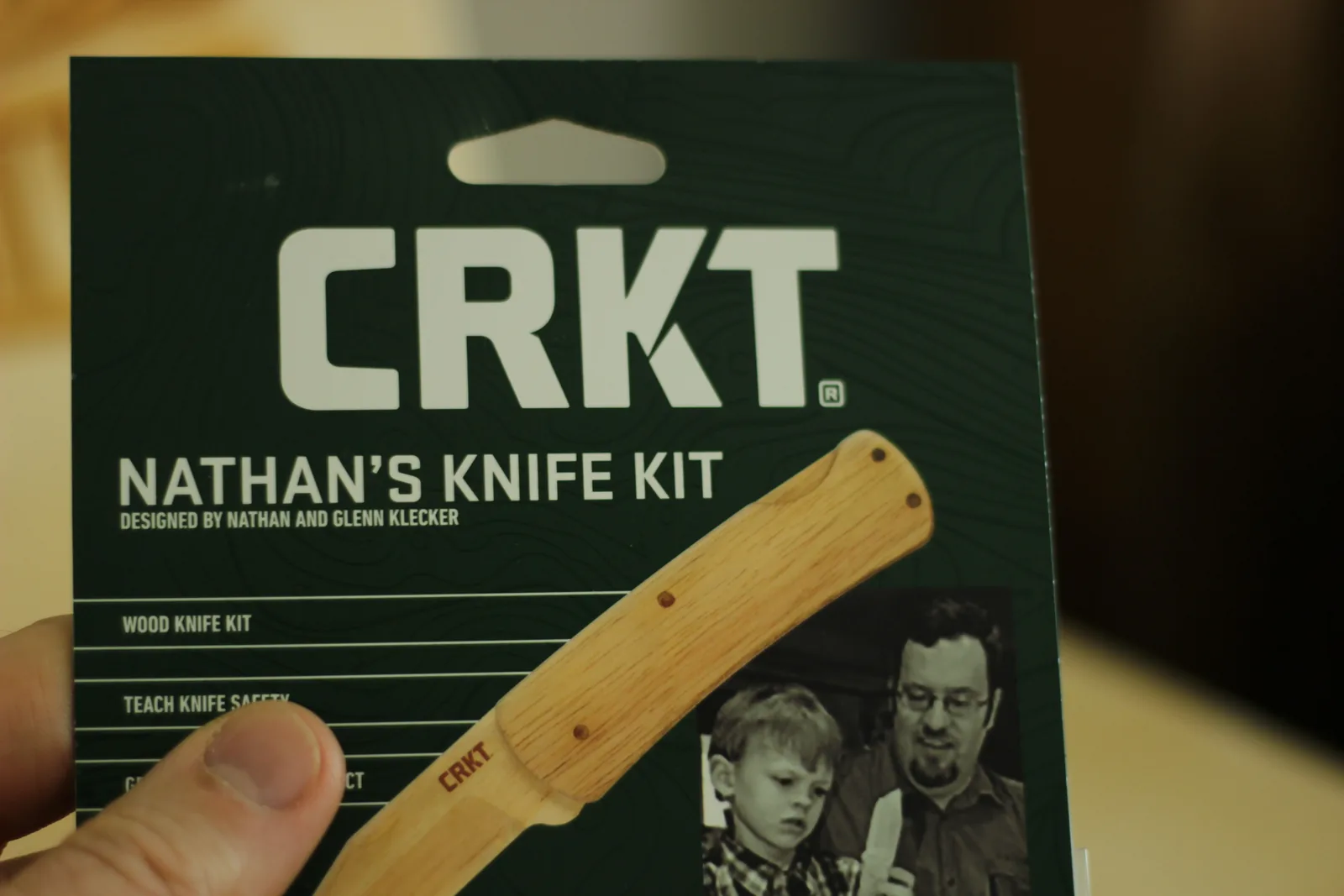
It arrives as a hanging card in a clear blister — a flat packet you could post in an envelope. The front is the same forest green CRKT uses across the accessory line, with a photograph of the finished knife and, beside it, a black-and-white photo of a boy and a man working on one together.
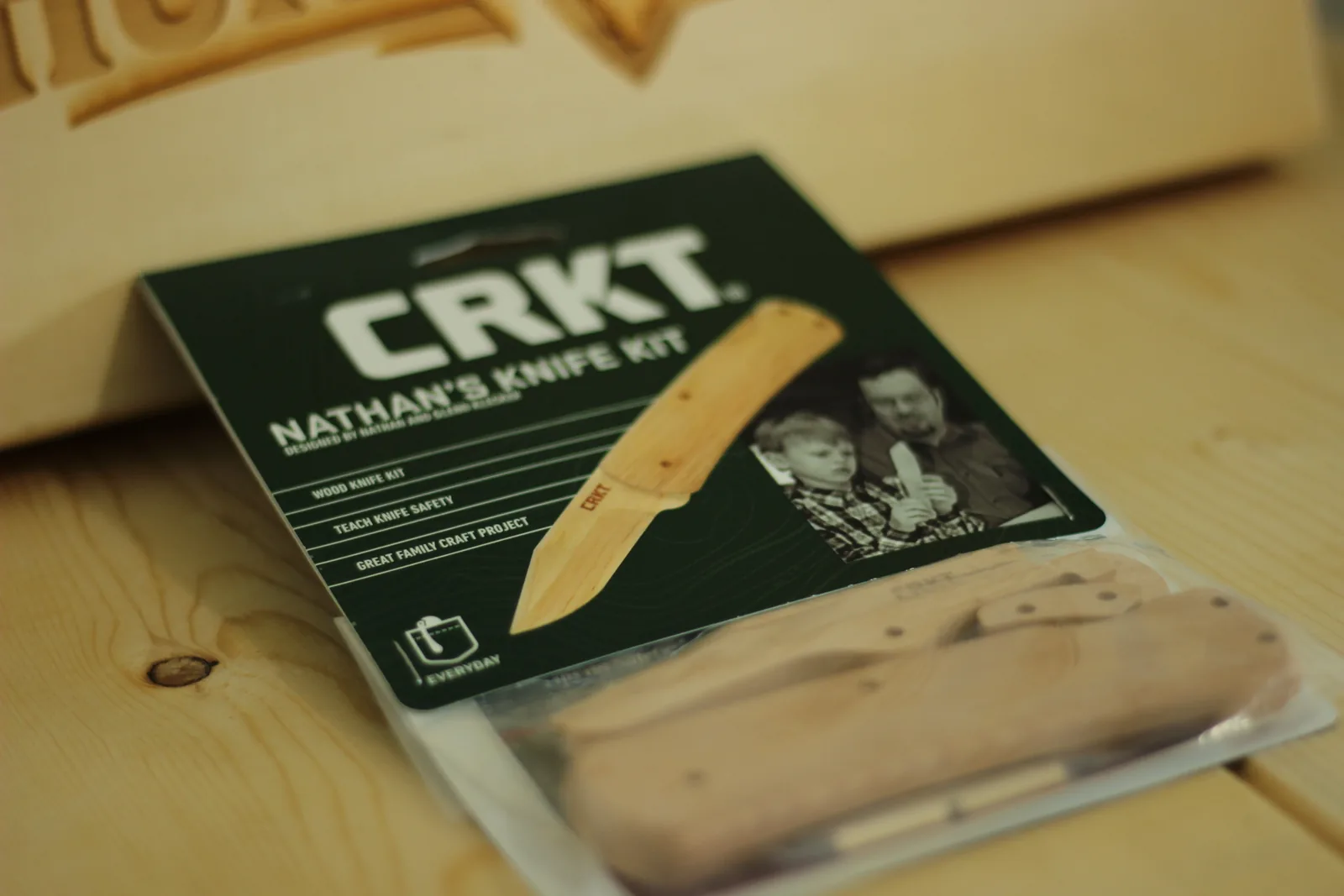
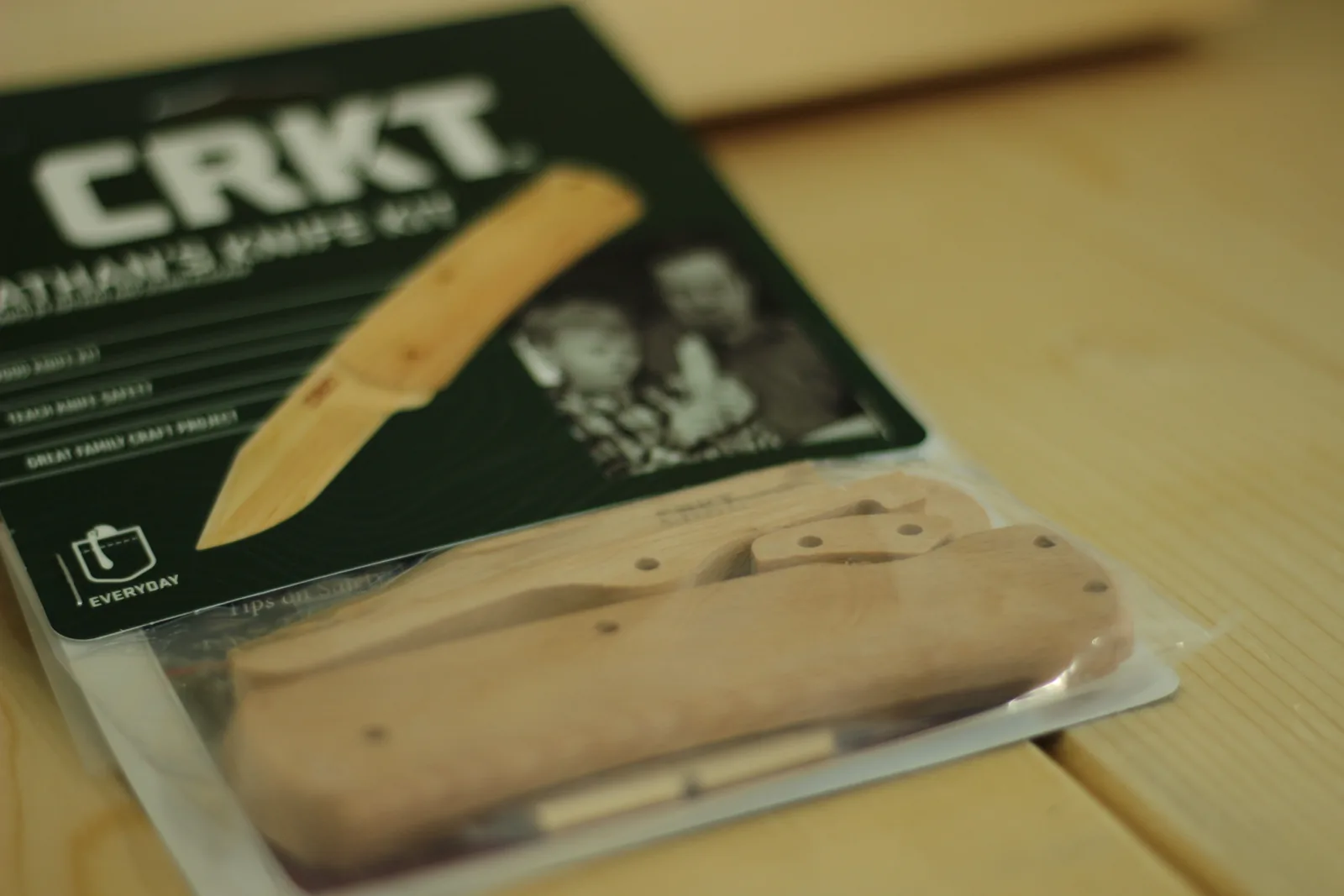
The back of the card is where the kit earns its keep, because CRKT prints the exploded assembly diagram and the full specification there rather than burying them in a leaflet.
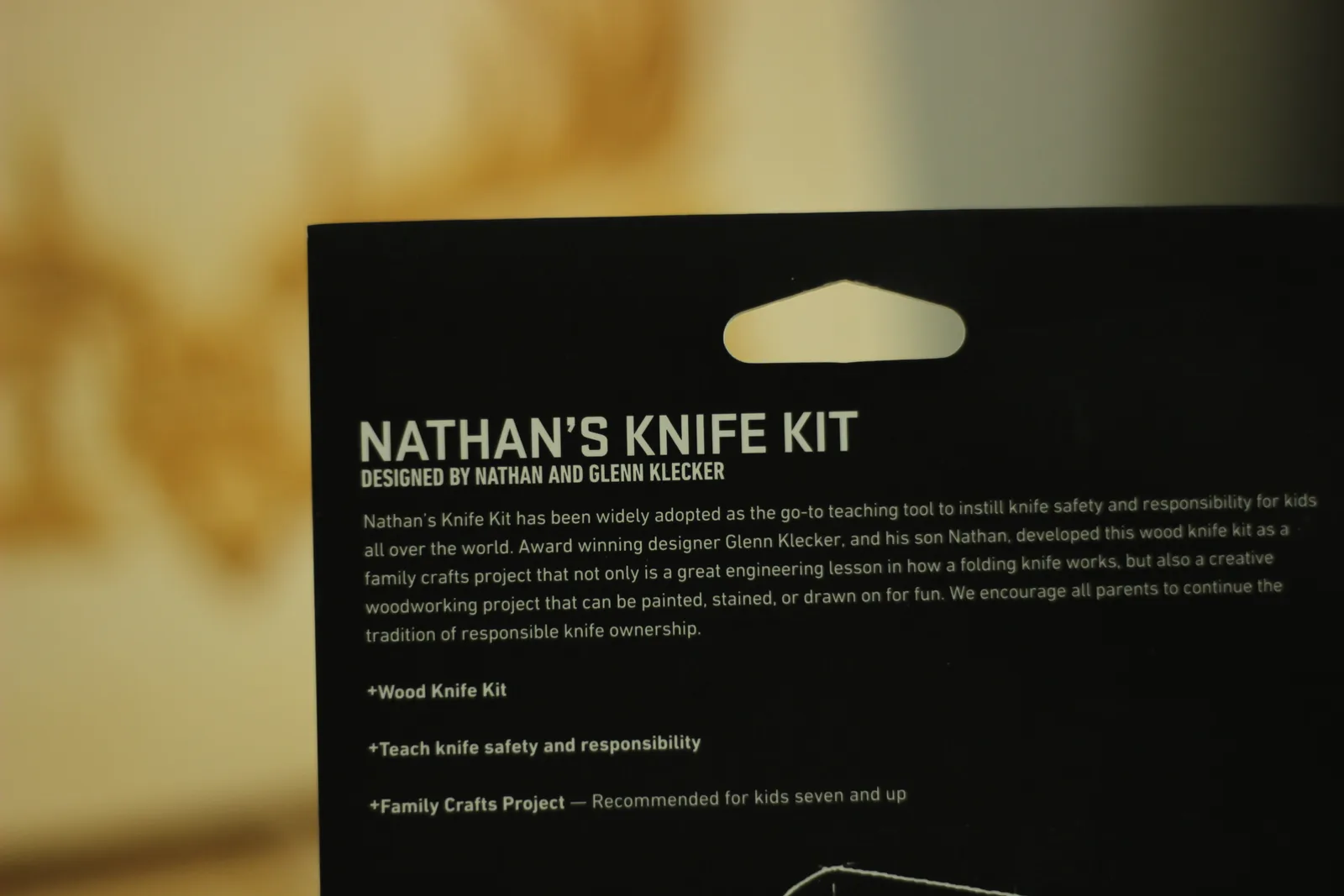
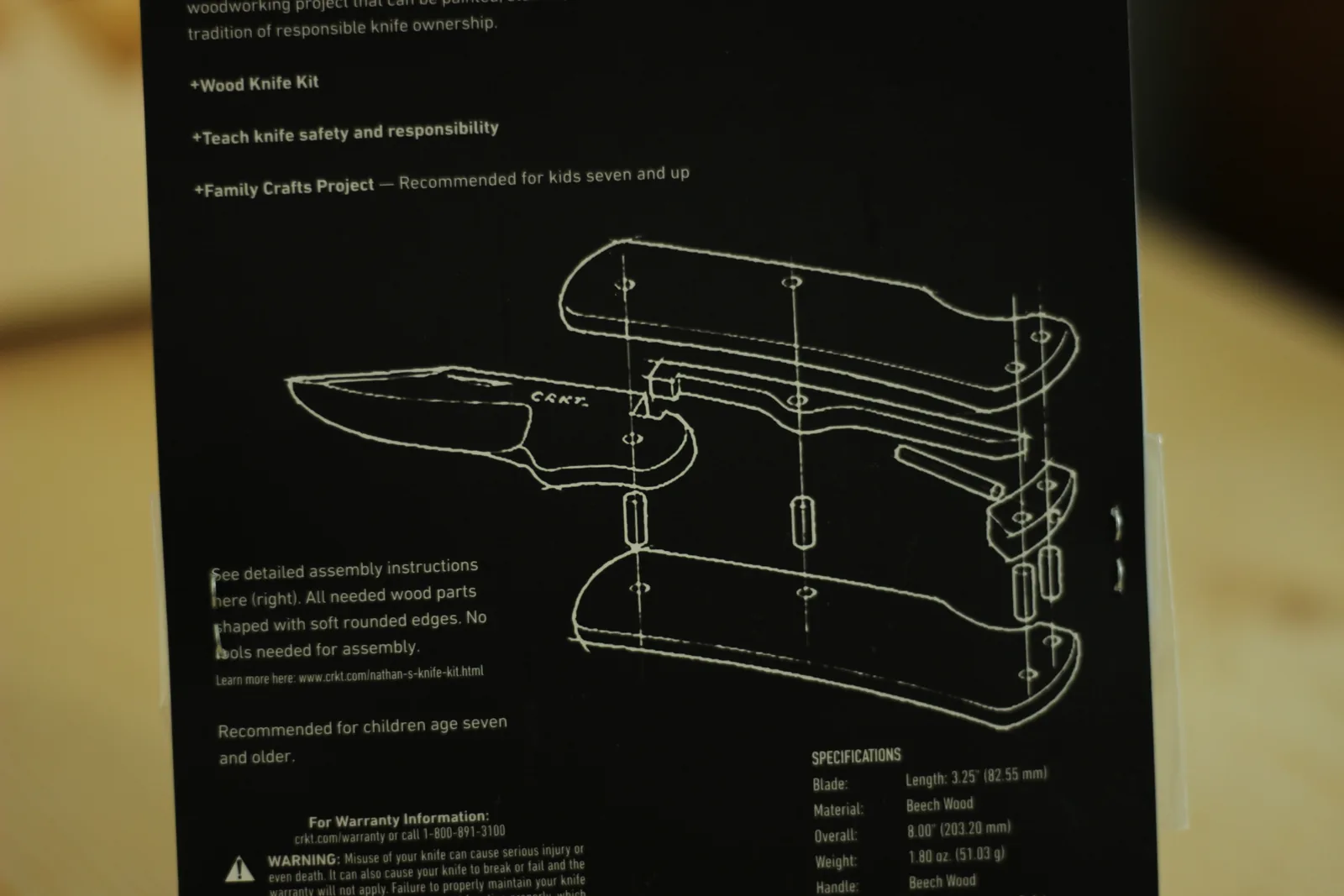
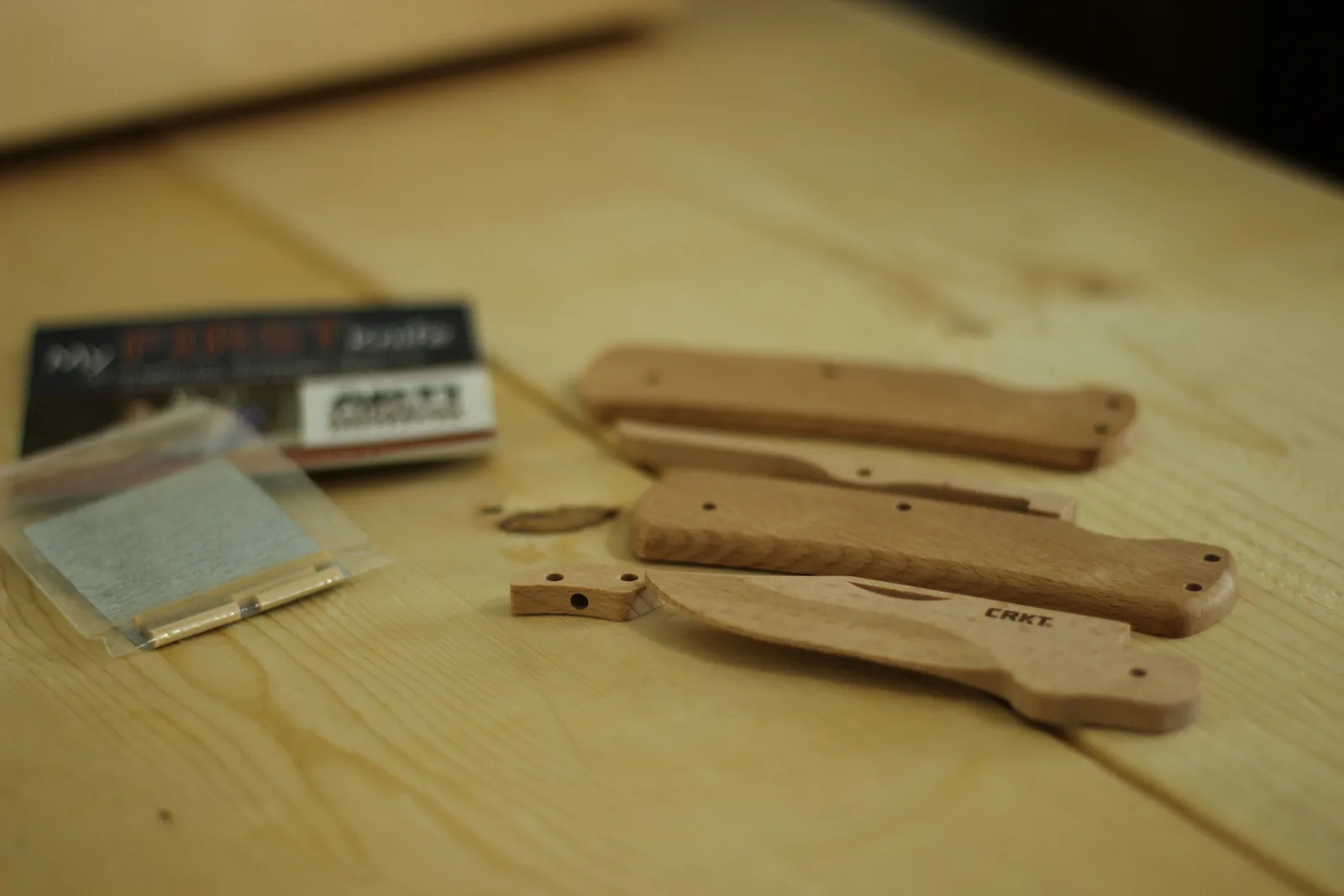
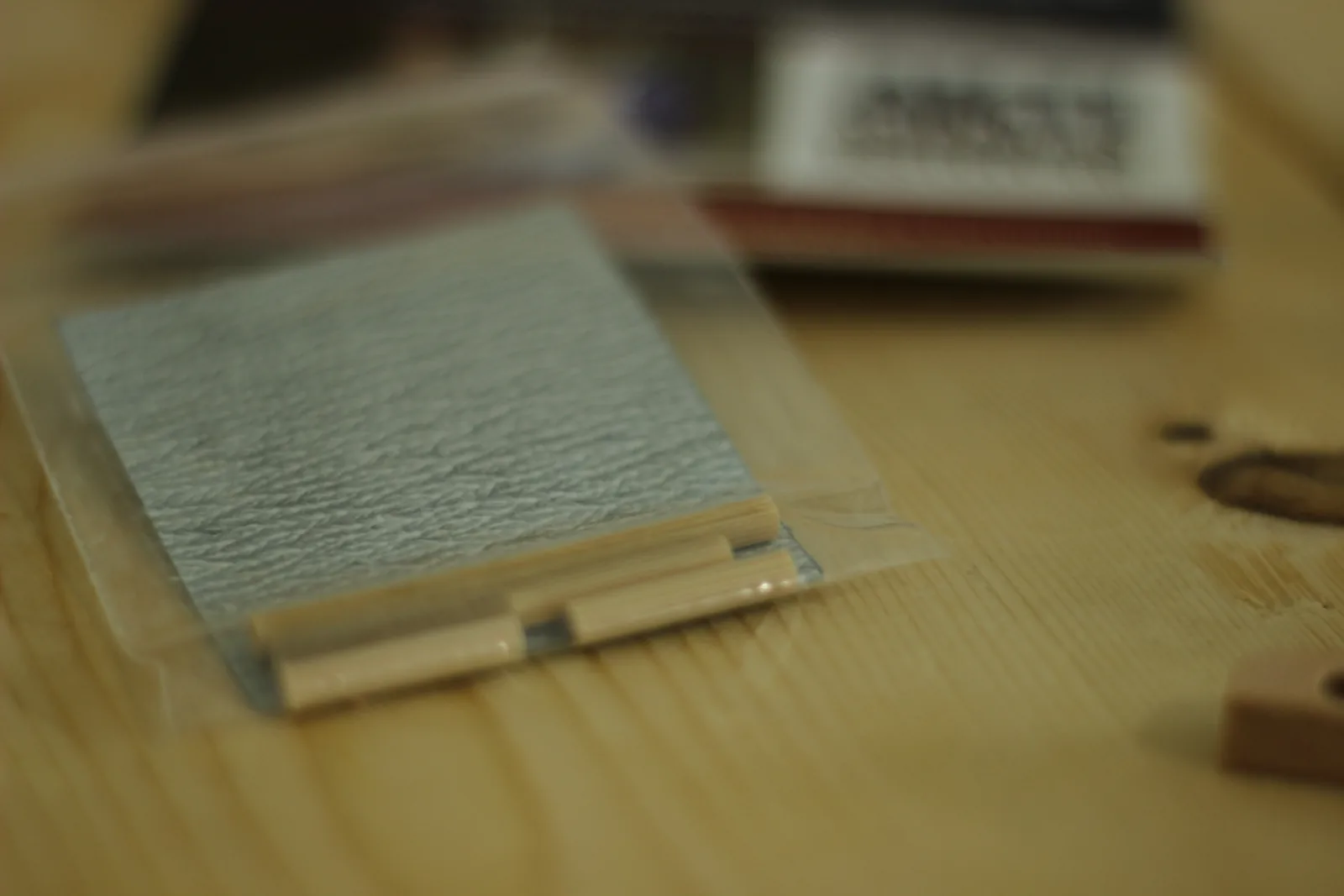
Opened up, the kit is nine pieces and a bag.
Design and Build
The parts are already finished
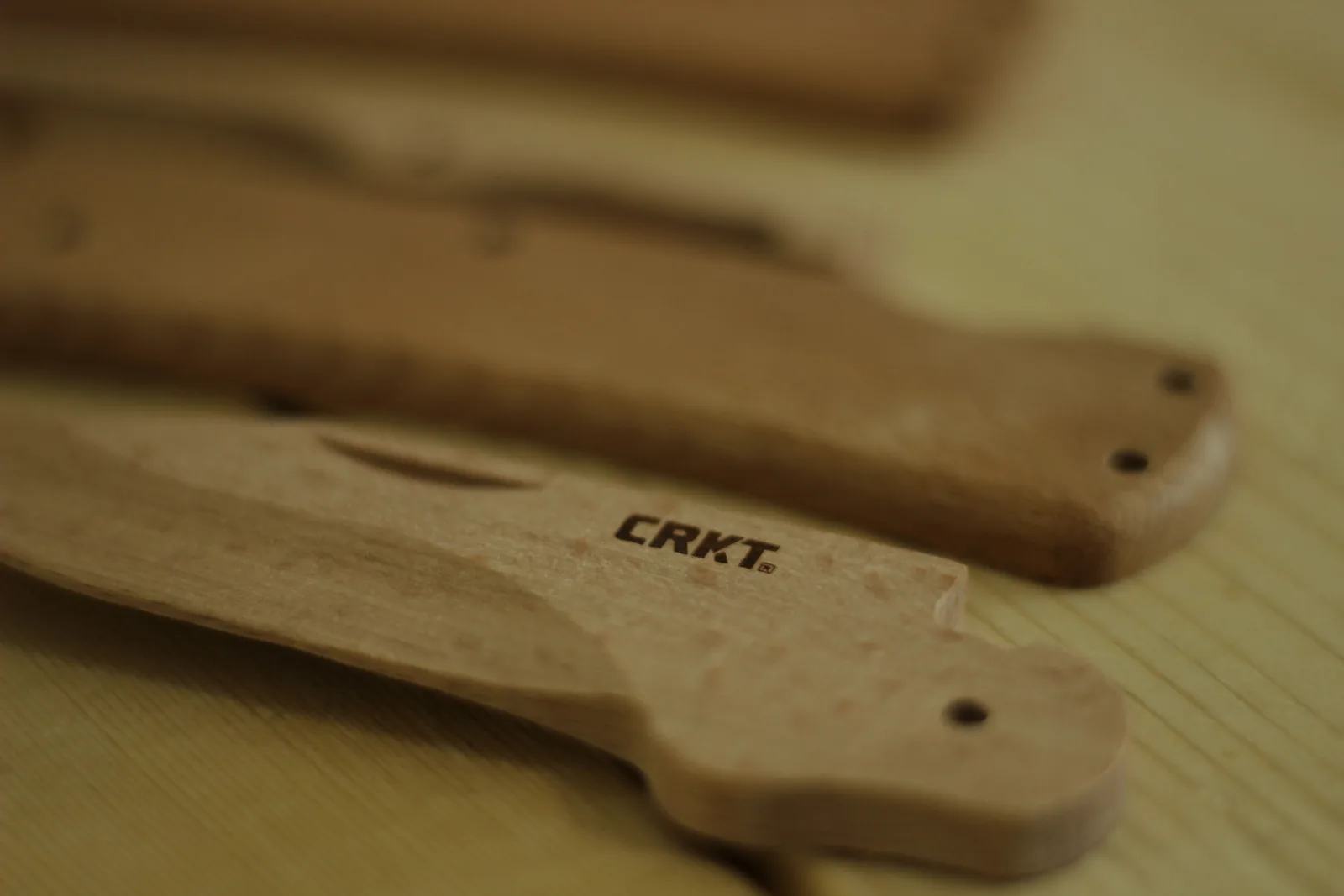
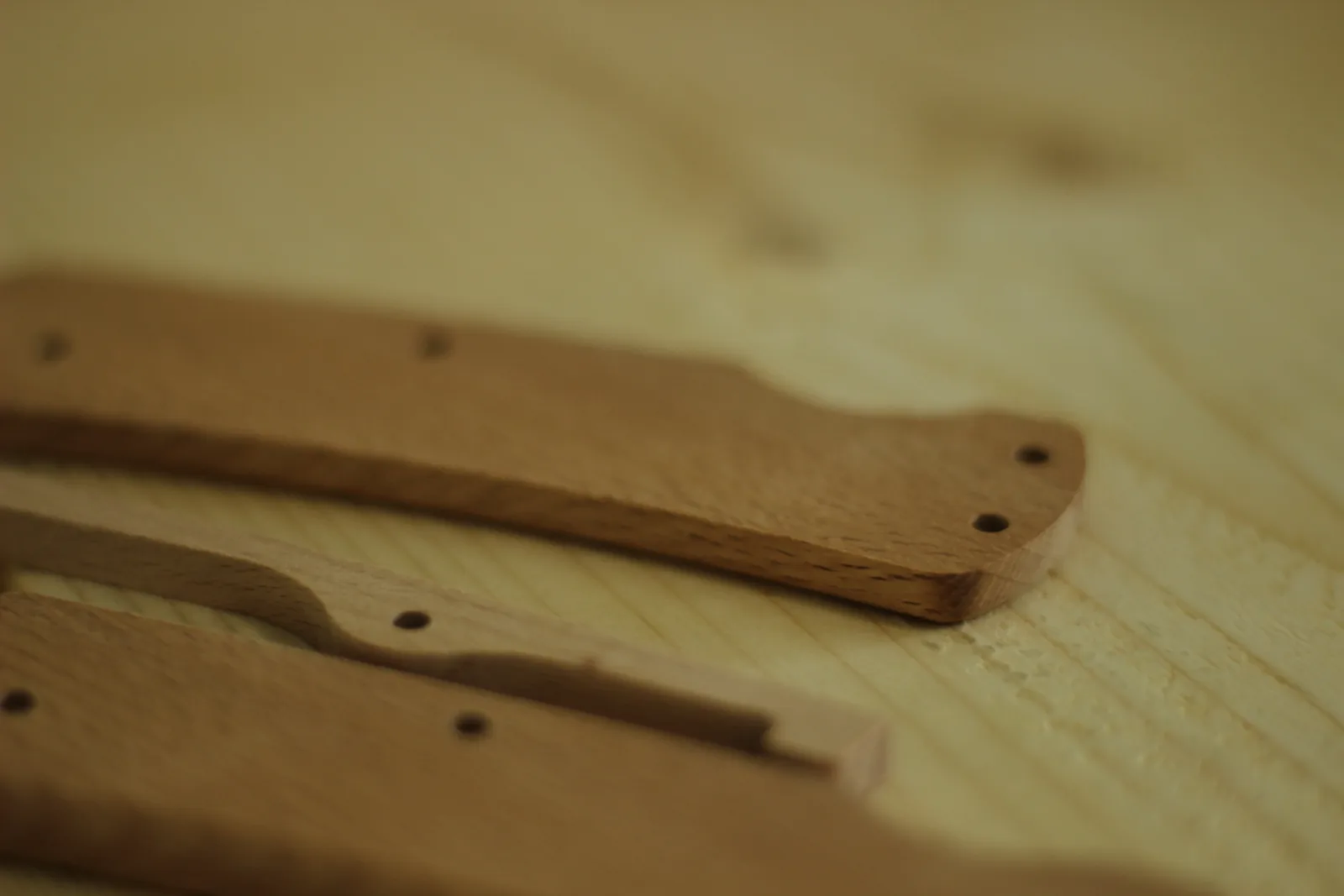
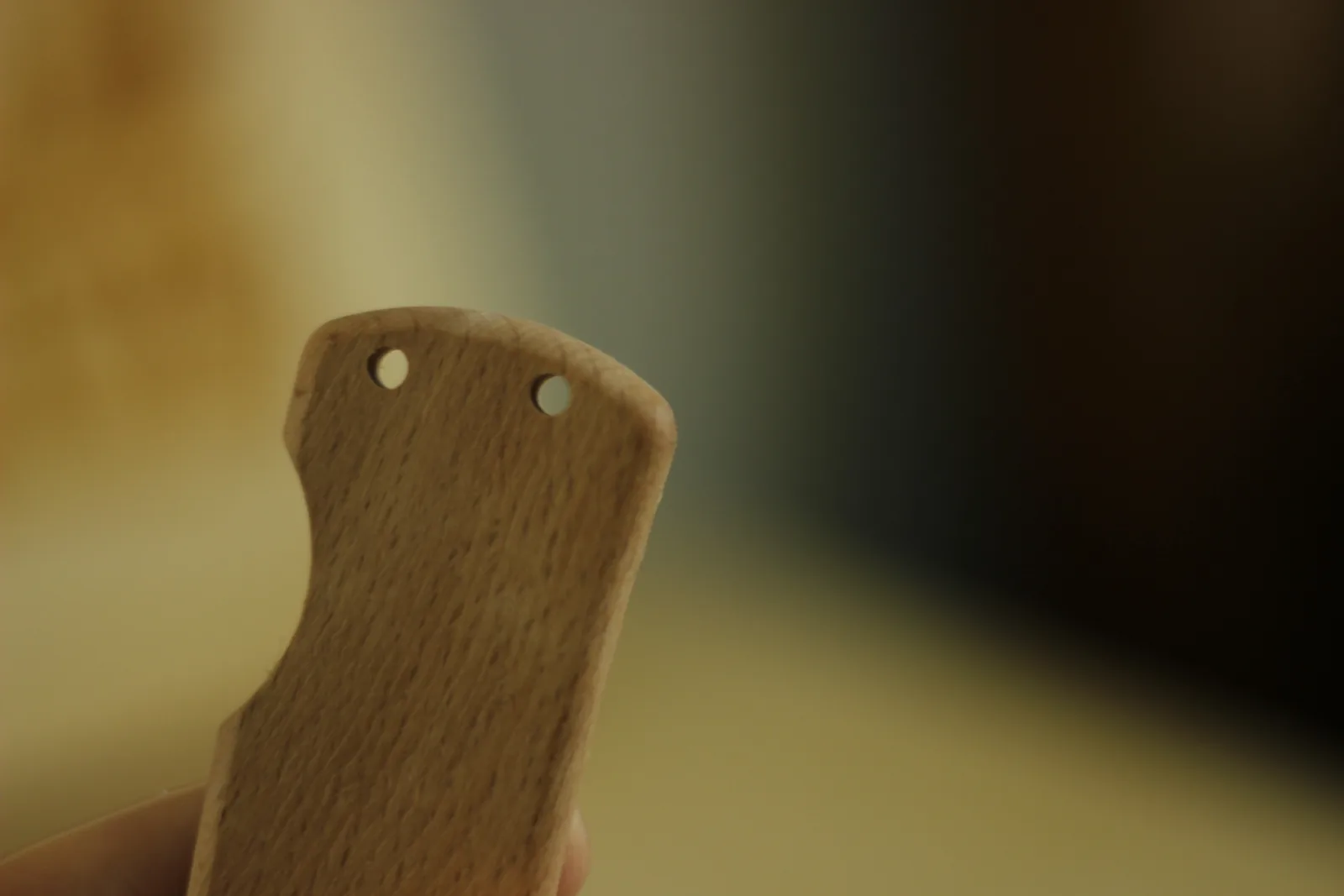
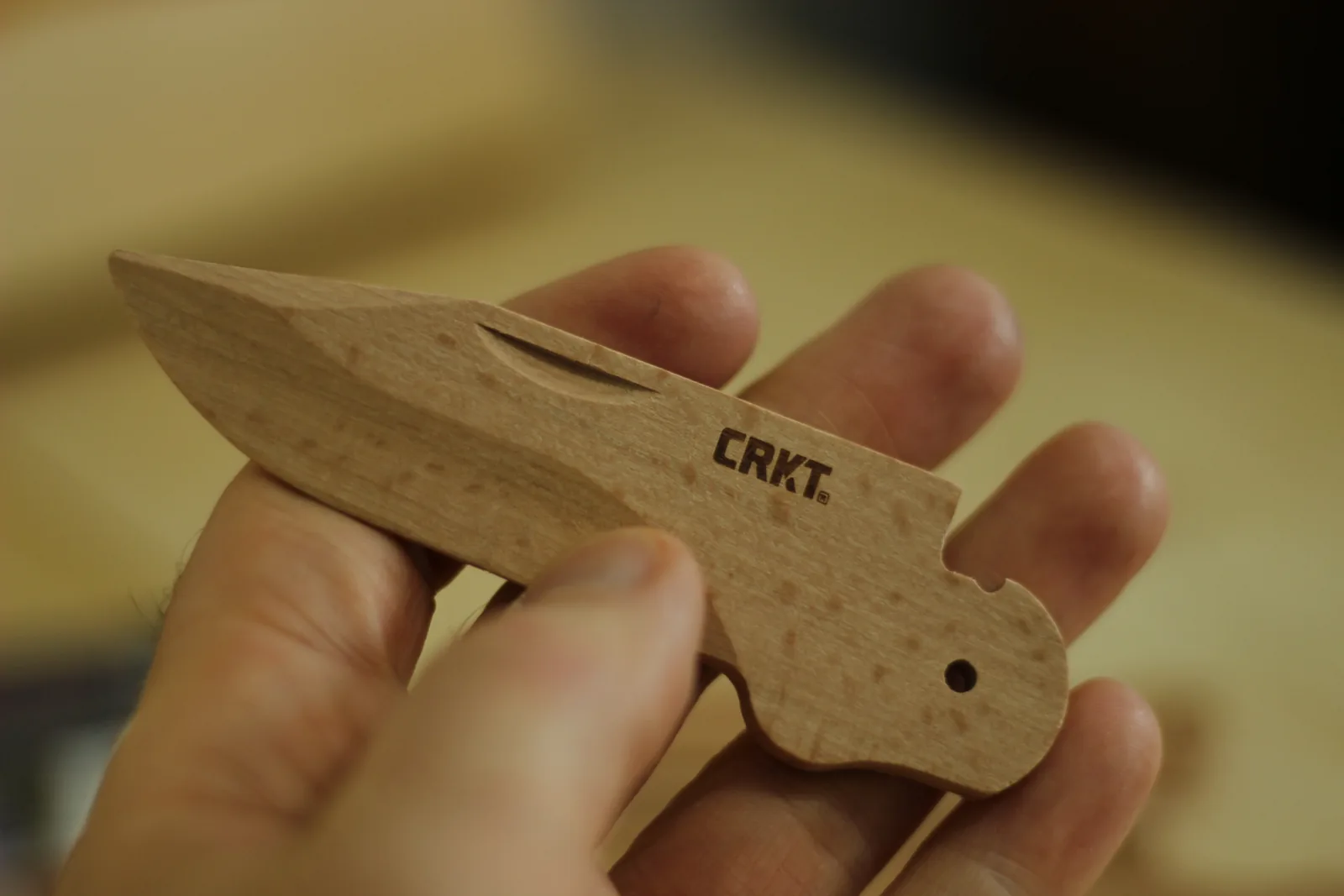
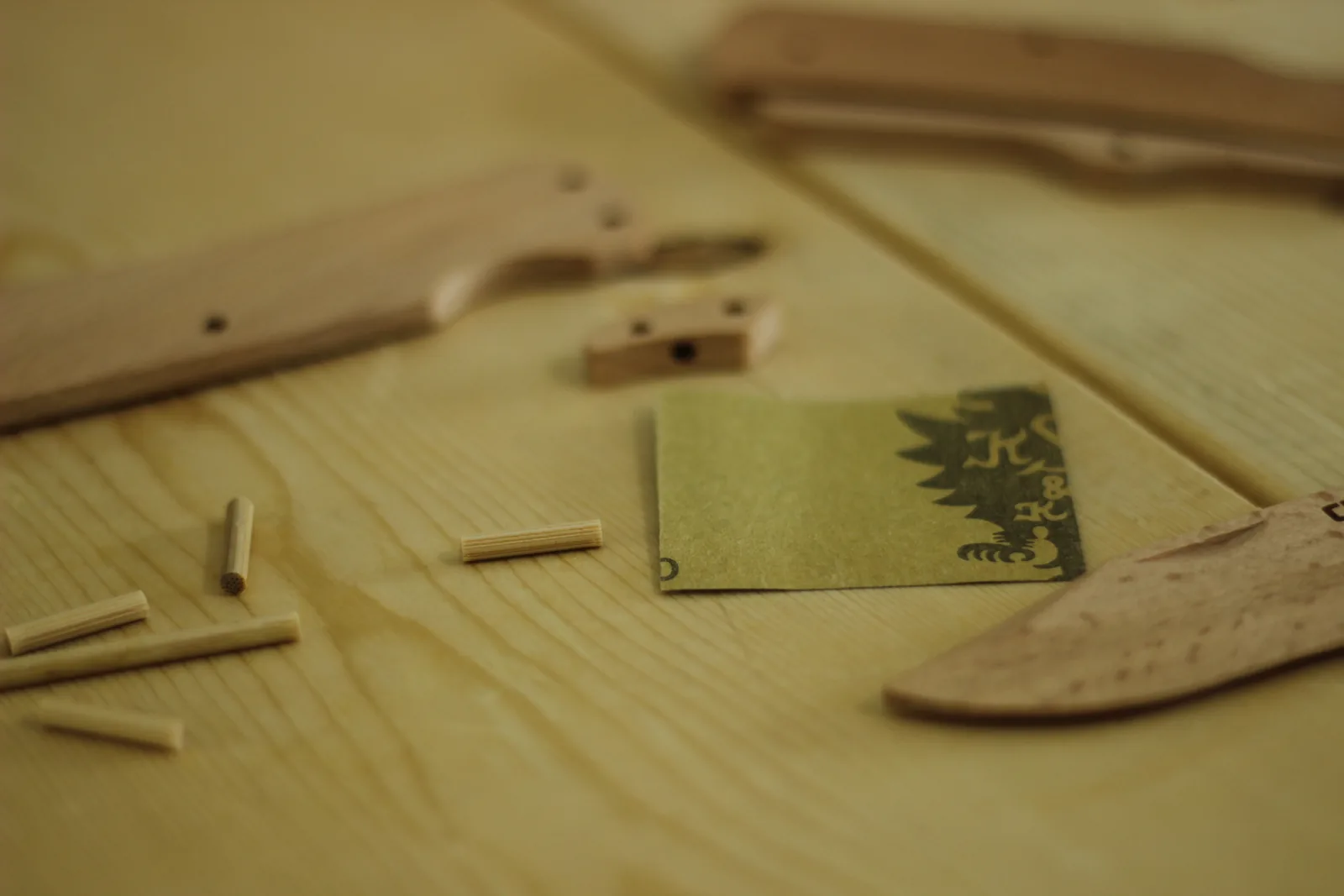
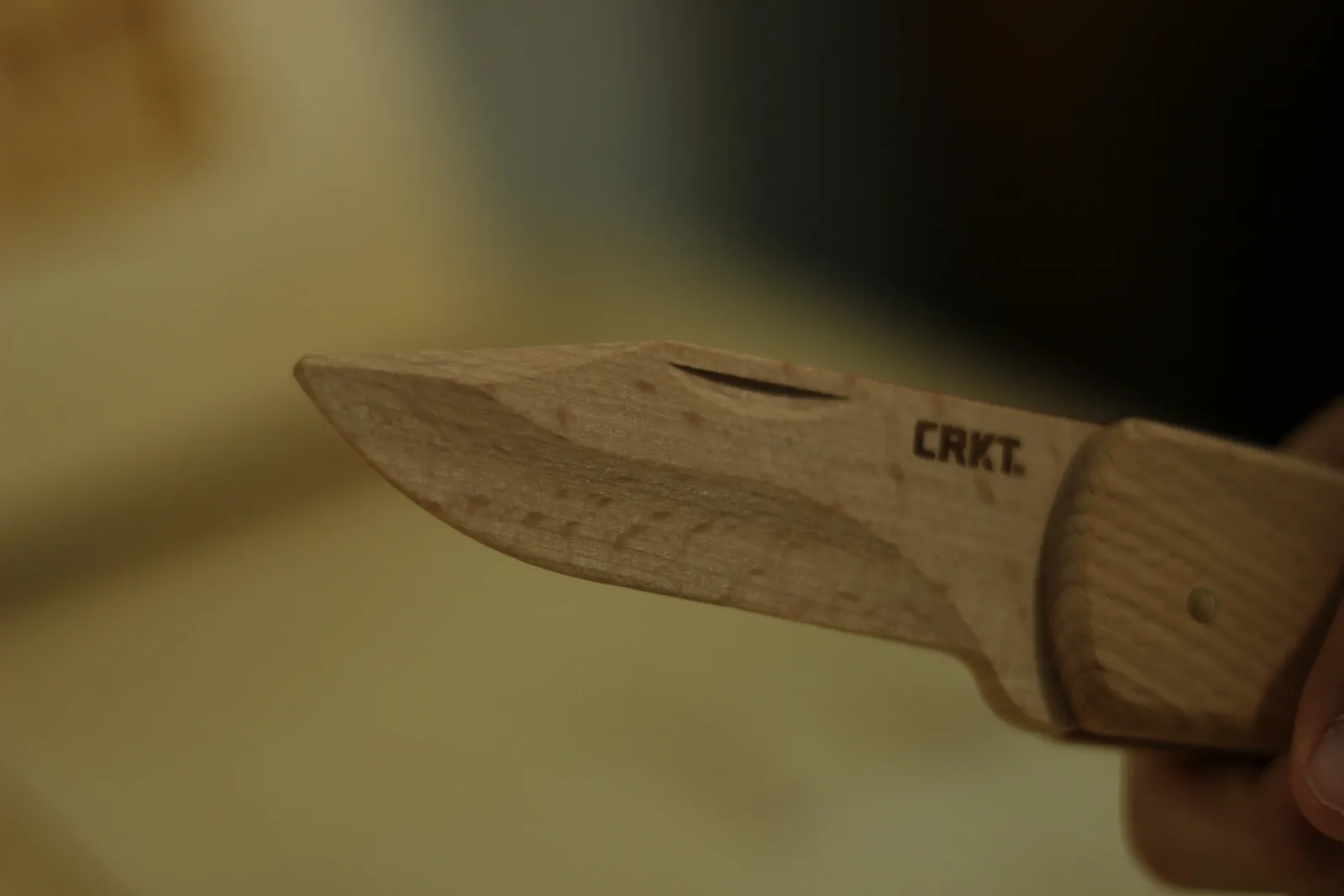
The single most important thing about this kit, and the thing that makes it appropriate for a seven-year-old, is that no shaping is required. The blade is already cut to its drop-point profile with a bevel ground into the flat. The scales are already contoured. Every edge has been broken and rounded.
Why beech, and what that means for the finished thing
Beech is an unglamorous hardwood and it is the correct choice here for reasons that have nothing to do with looks. It is close-grained and even, so it machines cleanly at small scale — the drilled pin holes in this kit have no tear-out around their rims, which matters when a friction-fit dowel has to hold a mechanism together without glue. It is hard enough to hold a pinned joint but soft enough that a child can push a dowel home with thumb pressure. It has no strong grain runout to split along, which is why a 3.25-inch blade profile can be cut in it without the tip snapping off in the packet. And it takes finish readily, which is the point of a project CRKT explicitly designs to be painted, stained or drawn on.
The trade is that beech is soft. The finished knife will pick up dents at the tip and around the pivot with rough handling, and the pin holes will loosen slightly if the knife is taken apart and rebuilt repeatedly. Neither matters for what this is, but a parent expecting an heirloom should recalibrate — this is a project, and its value is in the building.
The designer, and why it isn’t a novelty
It is easy to read a $17 wooden knife as a gift-shop item. The provenance says otherwise. Glenn Klecker is an engineer and knife designer from Silverton, Oregon, a former US Marine Corps captain who led a Marine detachment during Operation Desert Storm. At CRKT he is the designer behind the NIRK Tighe and the Graphite, and the originator of the Klecker Lock, a proprietary locking mechanism that appears on several CRKT production models.
In other words, the man who designed this teaching toy is someone whose actual professional speciality is how knives lock. That shows up in the kit as the decision to build a working lockback rather than a friction folder — the harder engineering problem, in wood, at a price point where nobody would have objected to the easy version.
The mechanism — a lockback, honestly built
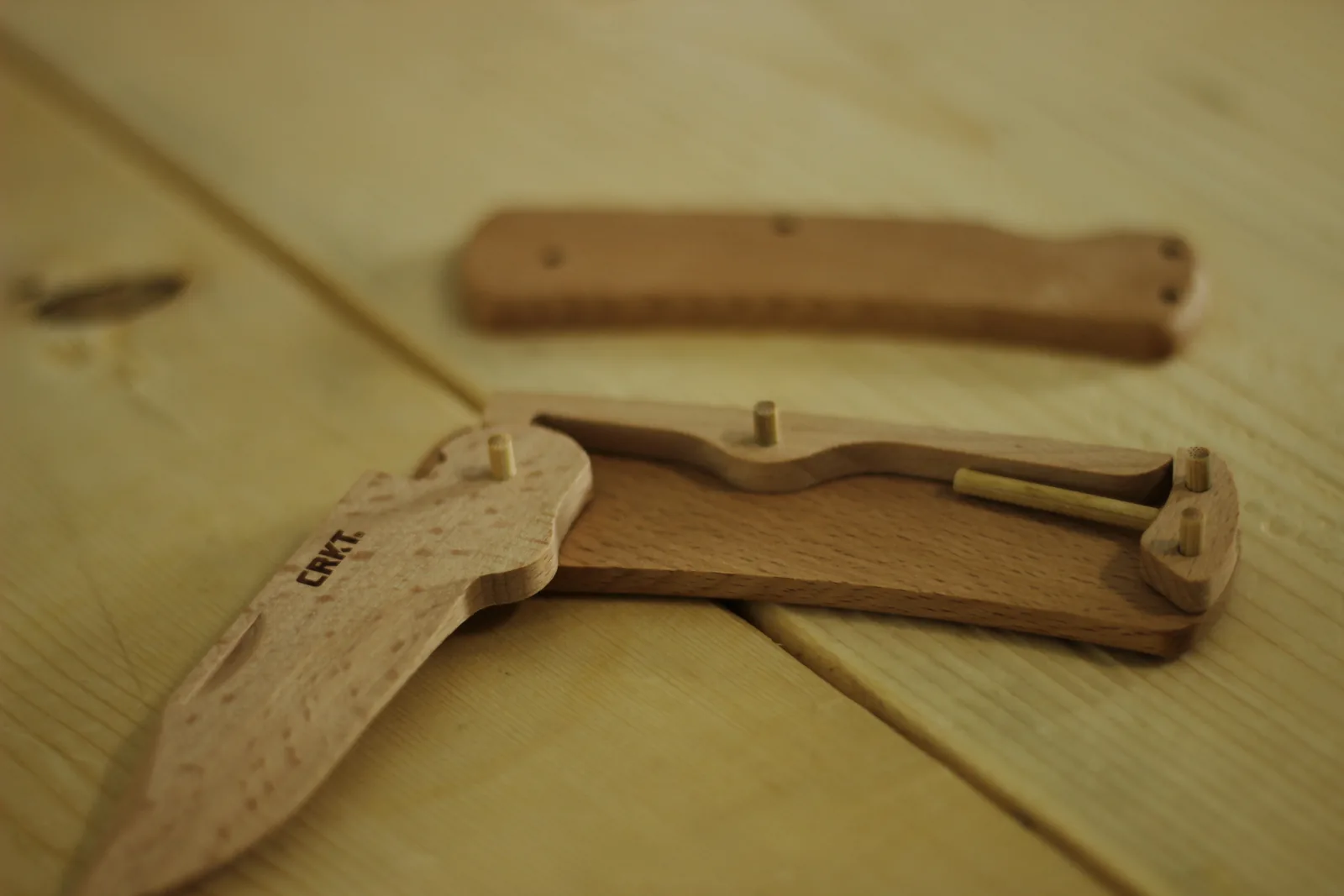
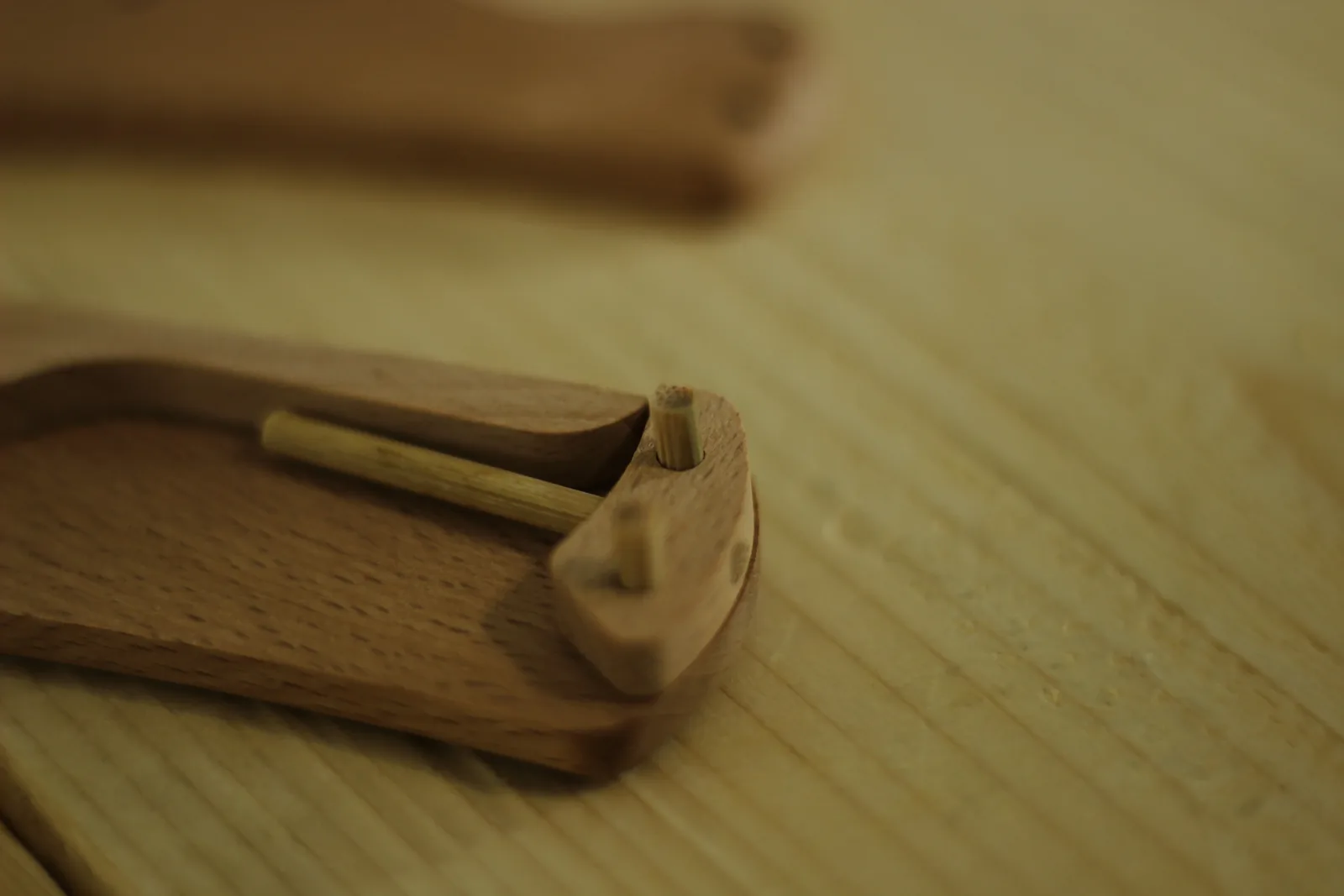
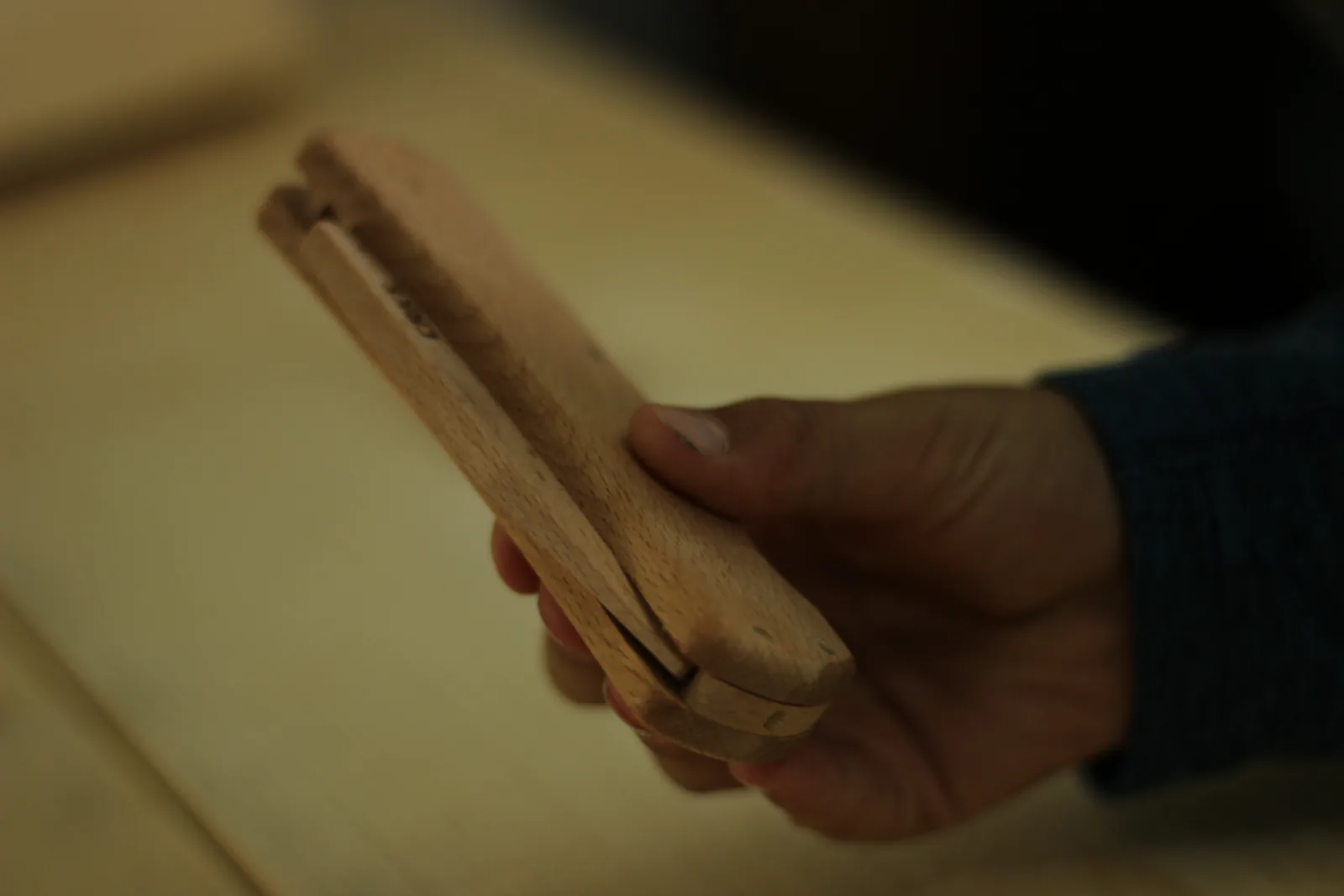
CRKT could have made this a friction folder and nobody would have complained. They did not. The kit builds a real mid-lockback, and watching it go together is the closest thing to a cutaway diagram a child will ever hold.
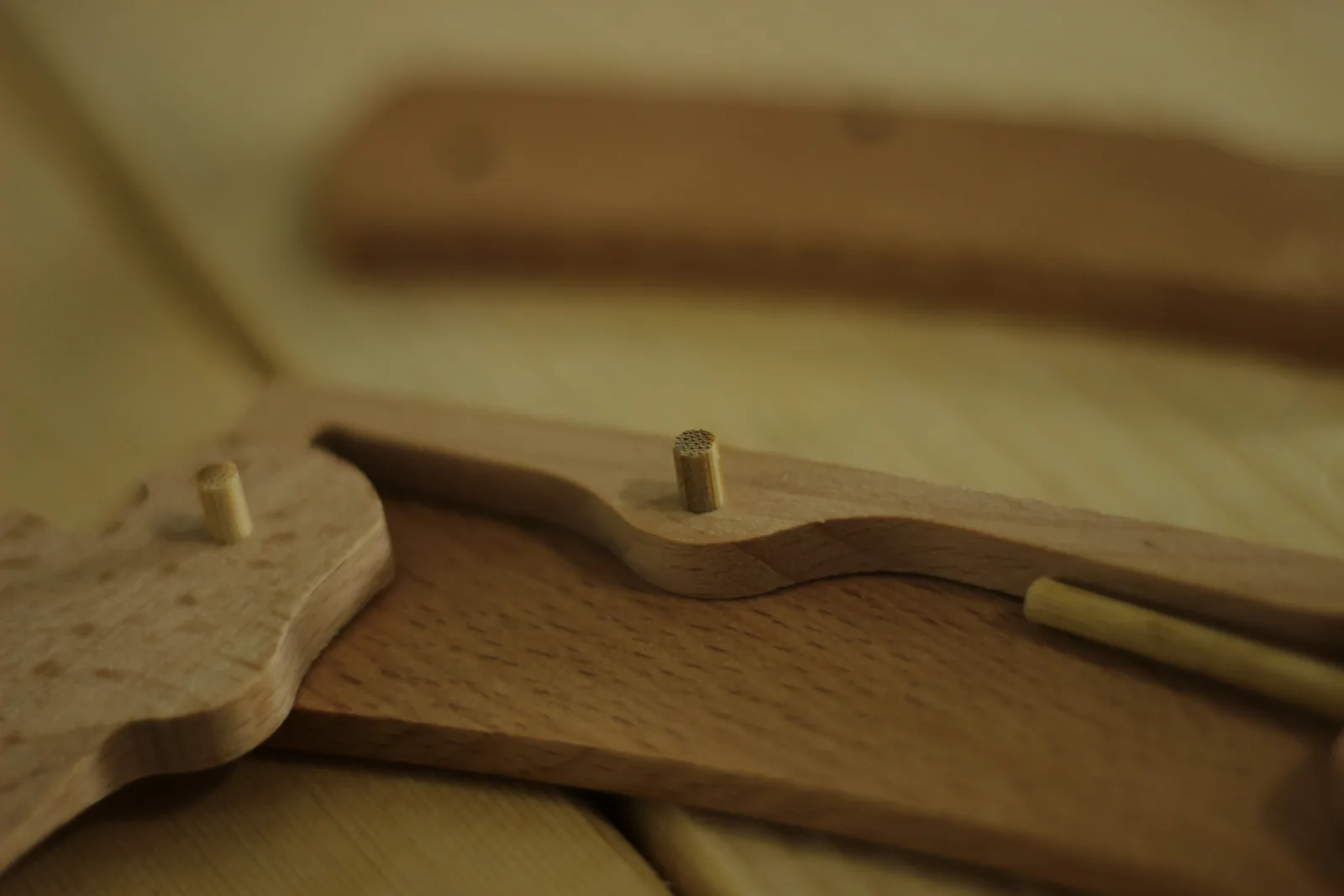
Building It
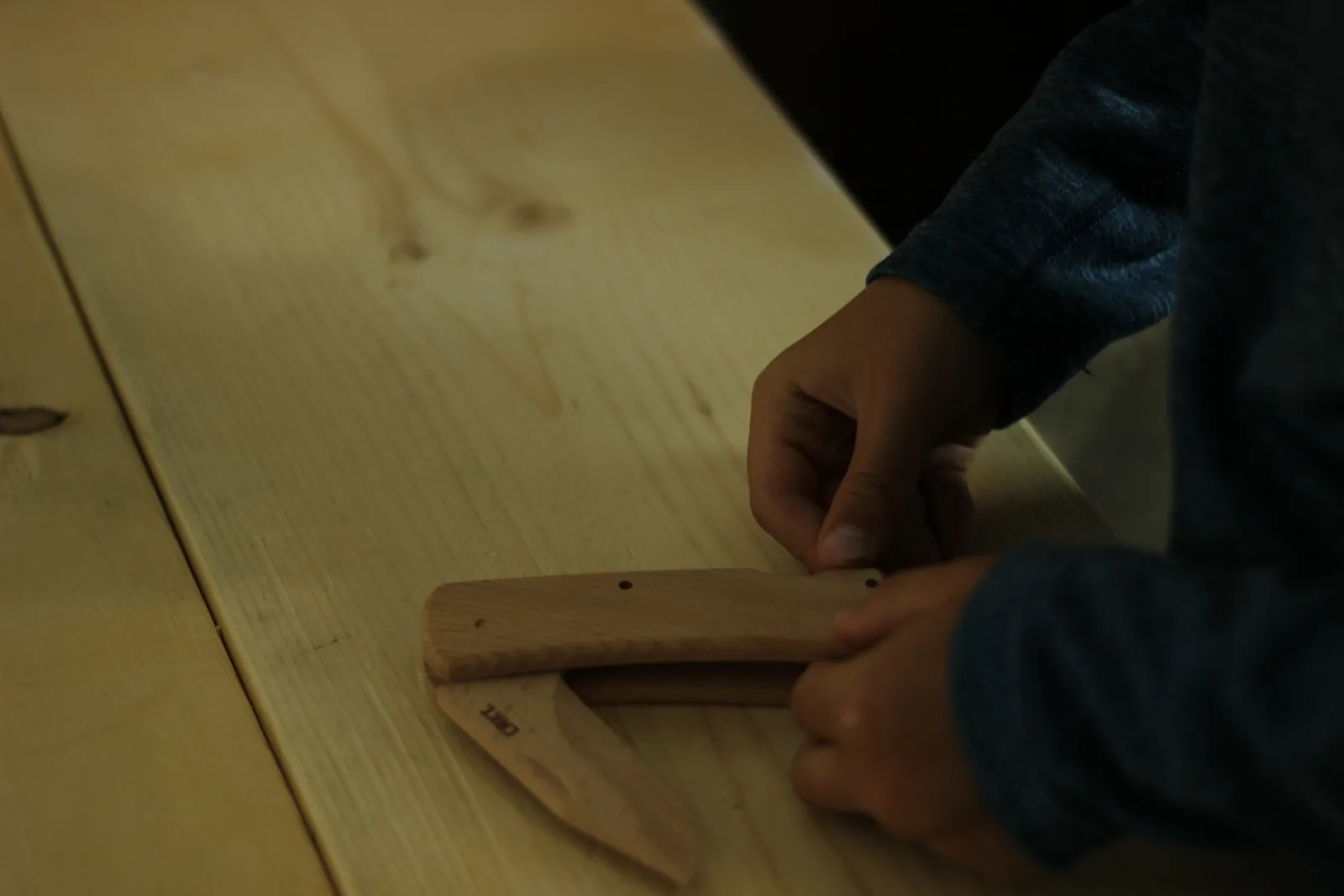
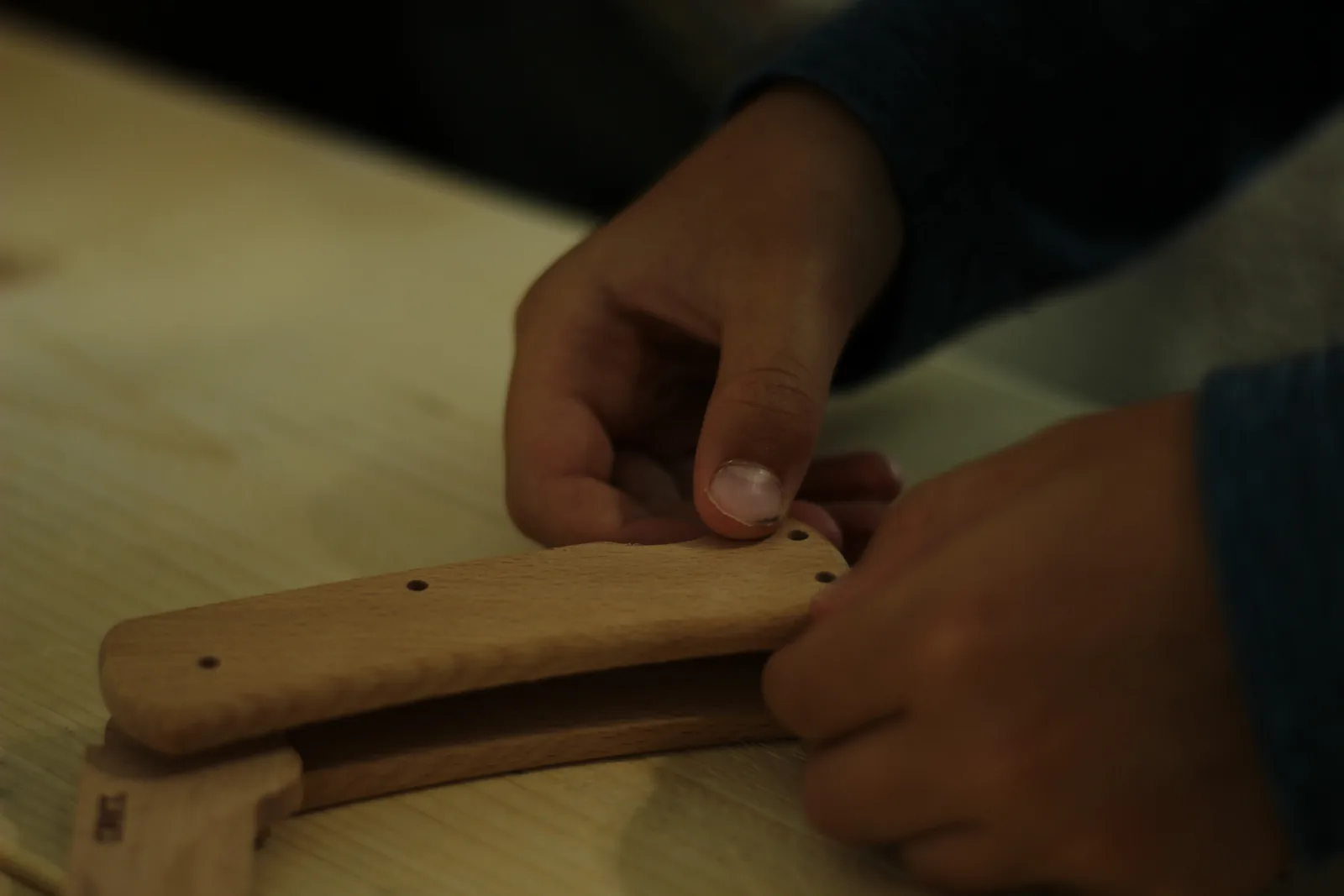
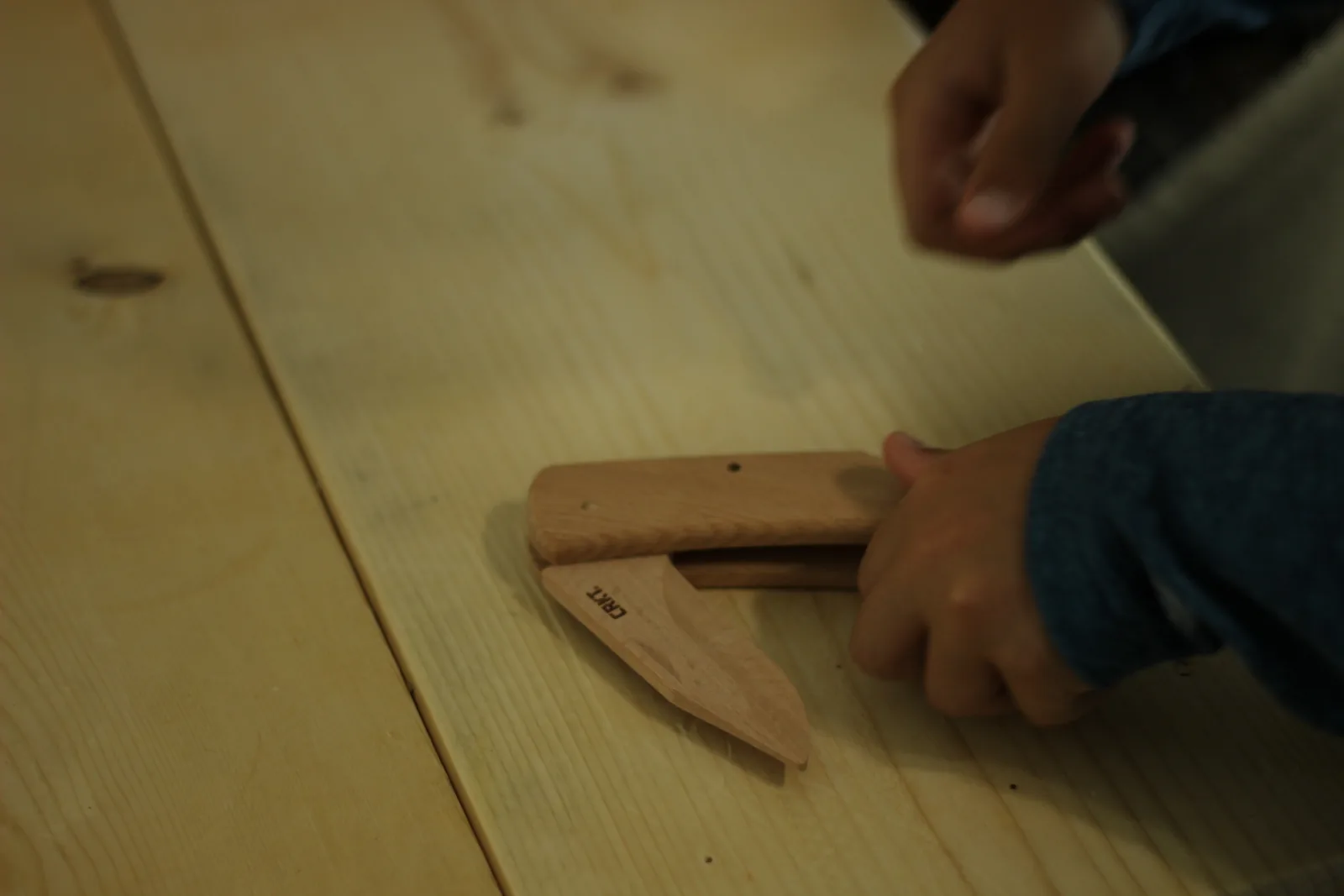
The assembly is the product. There are no tools, no glue in the packet and no fasteners — the pins are a friction fit into drilled holes, and the two scales sandwich the works between them.
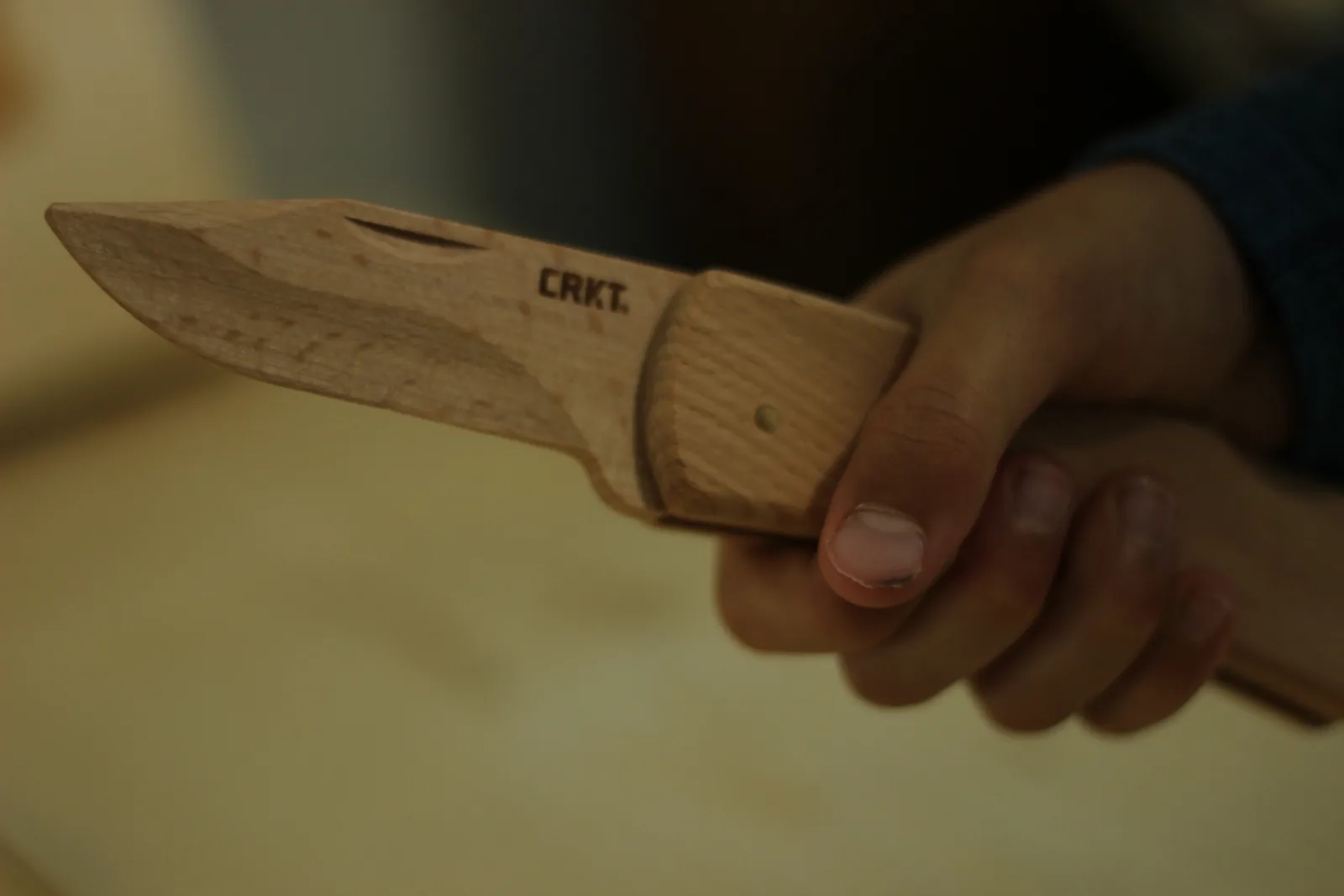
The Finished Knife
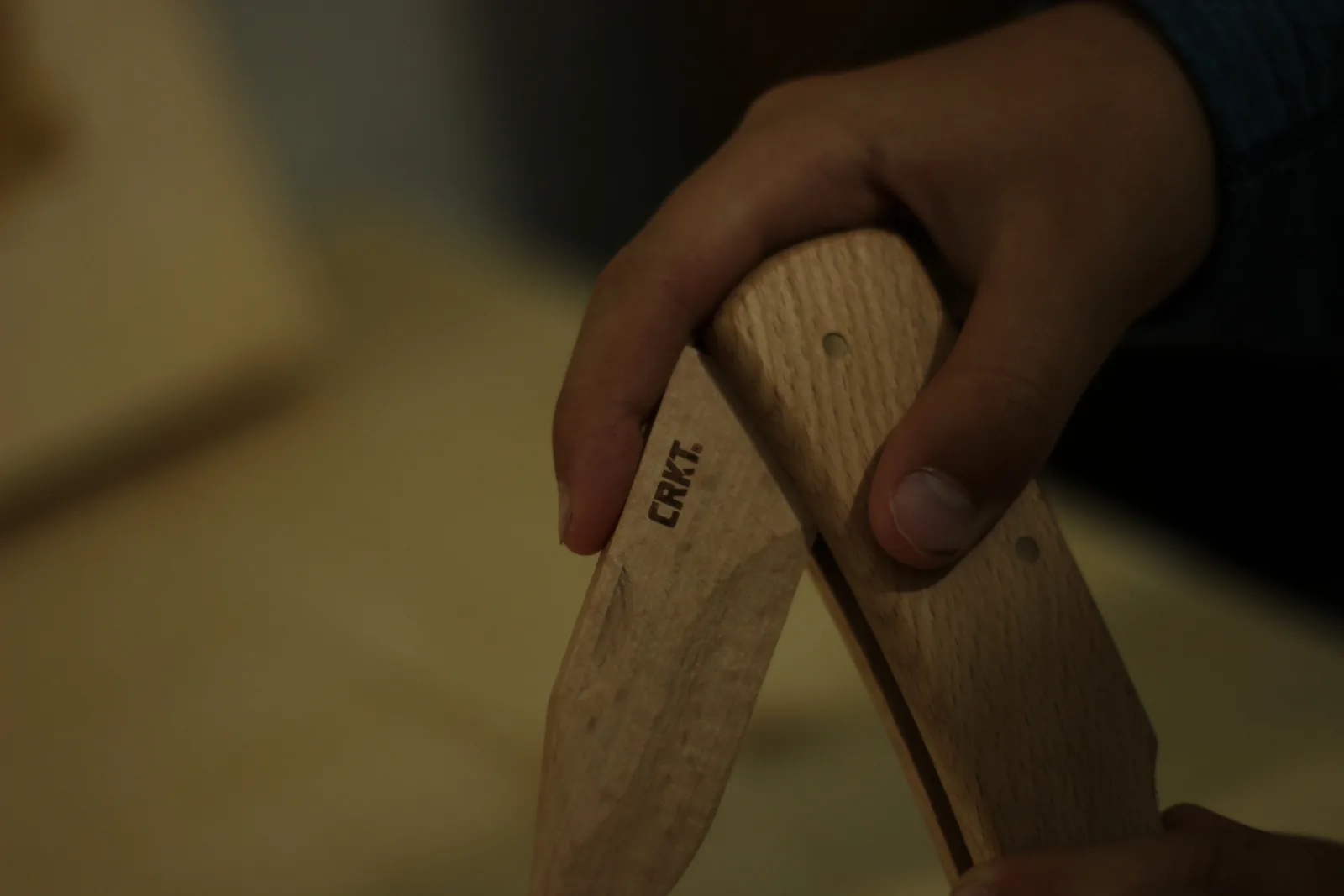
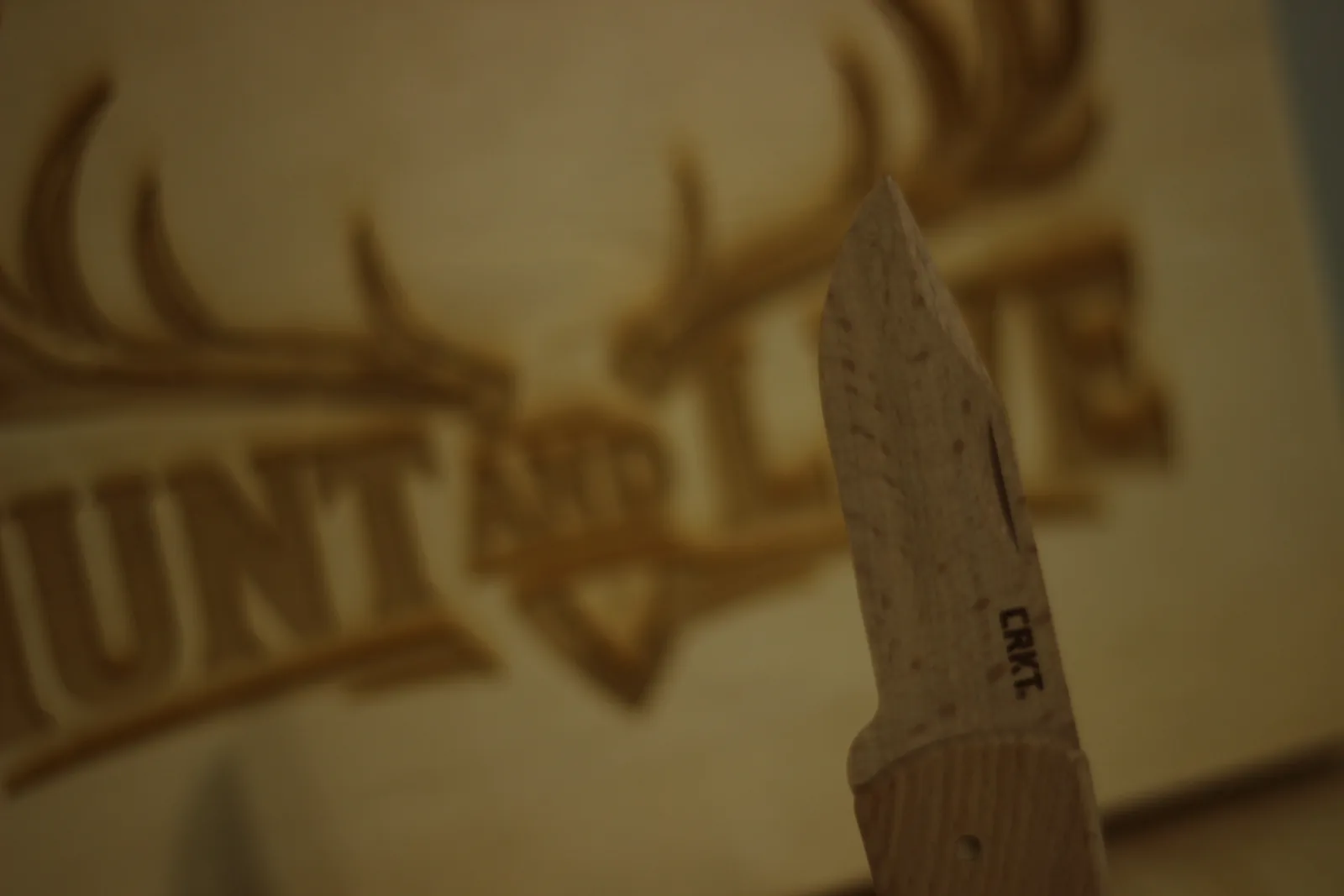
What It Actually Teaches
How a lock works. The lesson here is mechanical and it lands because the child builds it. Once you have seated a lock bar on a pin and felt a dowel push it into a notch, the spine press on a real folder stops being a magic button and becomes a thing you understand. The Buck 284 Bantam and the Buck 110 Folding Hunter both use a mid-lockback — the same mechanism, in steel.
That a folding knife closes on fingers. No amount of telling teaches this as well as ten minutes of opening and closing a wooden one. The blade in the kit swings shut on the same arc as a real one and lands in the same place.
That knives have rules. The booklet does the work here, and CRKT wrote it properly. It addresses parents first, then the child, then lists the rules plainly — where a blade points, where a knife may and may not be taken.
That a tool can be yours. Beech takes paint, stain and pen, and CRKT says outright that decorating it is part of the project. That step is what turns an assembled object into a possession, which is the actual point.
Where It Sits on the Path to a Real Knife
Most parents approach this as a single question — when do I give them a knife? — when it is really a sequence, and the useful thing about the CRKT kit is that it occupies a rung most people skip.
| Step | Typical age | Edge involved | Price | What it teaches |
|---|---|---|---|---|
| Nathan's Knife Kit Lockback | 7+ | None | $17.00 | How a lock engages and releases; that a blade closes on fingers; the rules |
| Plain Nathan's Knife Kit | 7+ | None | ~$12 | How a pivot works — but no lock, so the core lesson is missing |
| Whittling knife + basswood | 9+ | Yes, from day one | ~$20 | Cutting technique, grain, patience — a different and later skill |
| Buck 284 Bantam BBW | 10+ | Yes | ~$21 | Carrying and maintaining a real lockback in 420HC |
Ages are CRKT's stated recommendation for the kits and our own editorial judgement for the rest — every child is different and this is a parent's call, not a spec sheet's. Prices are US street or MSRP at time of writing.
The kit is the only row in that table where a child handles a folding knife mechanism with zero risk attached, and it is the cheapest row. That combination is what makes it worth a full review rather than a footnote.
Running the Build
A note for anyone planning the afternoon, based on how this one went together.
Keep the packaging out and face-up — the exploded diagram on the back is the only assembly reference you get, and you will look at it more than once. Work on a surface where a dropped dowel stops rather than rolls; the pins are the one genuinely fiddly component and they are small enough to vanish into a floorboard gap. Dry-fit the whole knife before committing to any glue at all, because the friction fit is snug enough to hold on its own and a dry-built knife can be taken apart and rebuilt, which is worth more as a teaching object than a permanently bonded one.
Give the lock bar and spring dowel their own moment. That is the part of the build where the lesson lives, and it is worth stopping to work the mechanism by hand before the second scale goes on and hides it — once it is closed up, the child can never see the inside of a lockback again.
Pros and Cons (the Honest Version)
What it does exceptionally well. It makes an abstract mechanism physical. A child who builds this understands what the spine press on a folding knife is doing, and understood knowledge is what actually produces careful handling. That it costs $17, needs no tools and carries no cutting risk anywhere in the process is close to the ideal shape for a first knife experience.
Where it falls short. The dowel pins are small and easy to drop, and the bottom of the recommended age range will need help with them. Beech is soft, so the finished knife will pick up dents. And the assembly diagram lives on the back of the packaging, which means the packaging is not disposable — an odd choice on an otherwise well-made product.
How It Compares
vs. a real first folder like the Buck 284 Bantam (~$21). Not a competitor — a predecessor. The Bantam is a working knife in 420HC that a child eventually graduates to. The sensible sequence is this kit first, the steel one after, and the price of both together is under forty dollars.
vs. the plain Nathan’s Knife Kit (~$12). Same wood, same designer, no lock. It saves five dollars and loses the entire mechanical lesson. Buy the Lockback.
vs. a whittling knife and a block of basswood (~$20). The traditional route, and it teaches a different and also valuable thing — cutting technique, grain, patience. It also involves a sharp edge in a child’s hand on day one. The CRKT kit teaches mechanism and respect before any edge is involved, which makes it the earlier step rather than the alternative.
Who Should Buy It
Buy it if you have a child between roughly seven and twelve who is starting to ask about knives; if you want a structured way to introduce knife safety before handing over anything sharp; if you want a rainy-afternoon project that ends in a keepsake rather than a tidy-up; if you are the grandparent looking for the right thing to give and do not want to be the one who gave a seven-year-old a blade.
Don’t buy it if you want a functioning knife — this cuts nothing and is not meant to. And don’t buy it for a child much under seven; the pin work will frustrate them before the lesson lands.
Final Verdict
CRKT’s Nathan’s Knife Kit Lockback is the rare product where the price, the purpose and the execution all line up without compromise. It is seventeen dollars of shaped beech that teaches a child exactly how the lock on a real folding knife works, gives them an hour of careful work with an adult, ships with a safety booklet worth actually reading, and leaves behind something they made and can decorate. There is no edge anywhere in the process. Glenn Klecker designed it with his son and it shows — this is a product built by somebody who had thought hard about the moment a kid first asks for a knife.
Everything we would criticise is small: fiddly pins, soft wood, instructions printed on the packaging. Against a product that does its one job this cleanly, they do not amount to much.
Rating: 4.6/5 Stars
Brands sometimes provide samples for review. Hunt & Live writes its honest opinion either way — gear that doesn’t earn its keep doesn’t get a recommendation.