
Featured Review · Daisy · BB Rifles
Daisy Buck Model 105 Review — The 8-Year-Old's First Rifle, Cocked Easily, Shot Freehand, and Genuinely the Right Way to Start
Our Rating
Current Price
- Manufacturer Number
- 992105-633
- SKU (Daisy Canada)
- 272121
- Power source
- Spring-powered lever action
- Caliber
- .177 BB (steel)
Pros
- Spring-powered lever action cocks easily enough for an 8-year-old to operate completely unassisted — the single most important spec on a youth first rifle
- 29.8 inches long and light enough that the same 8-year-old can shoulder it, aim it, and shoot it free-hand without needing a rest, even fully loaded with hundreds of .177 BBs
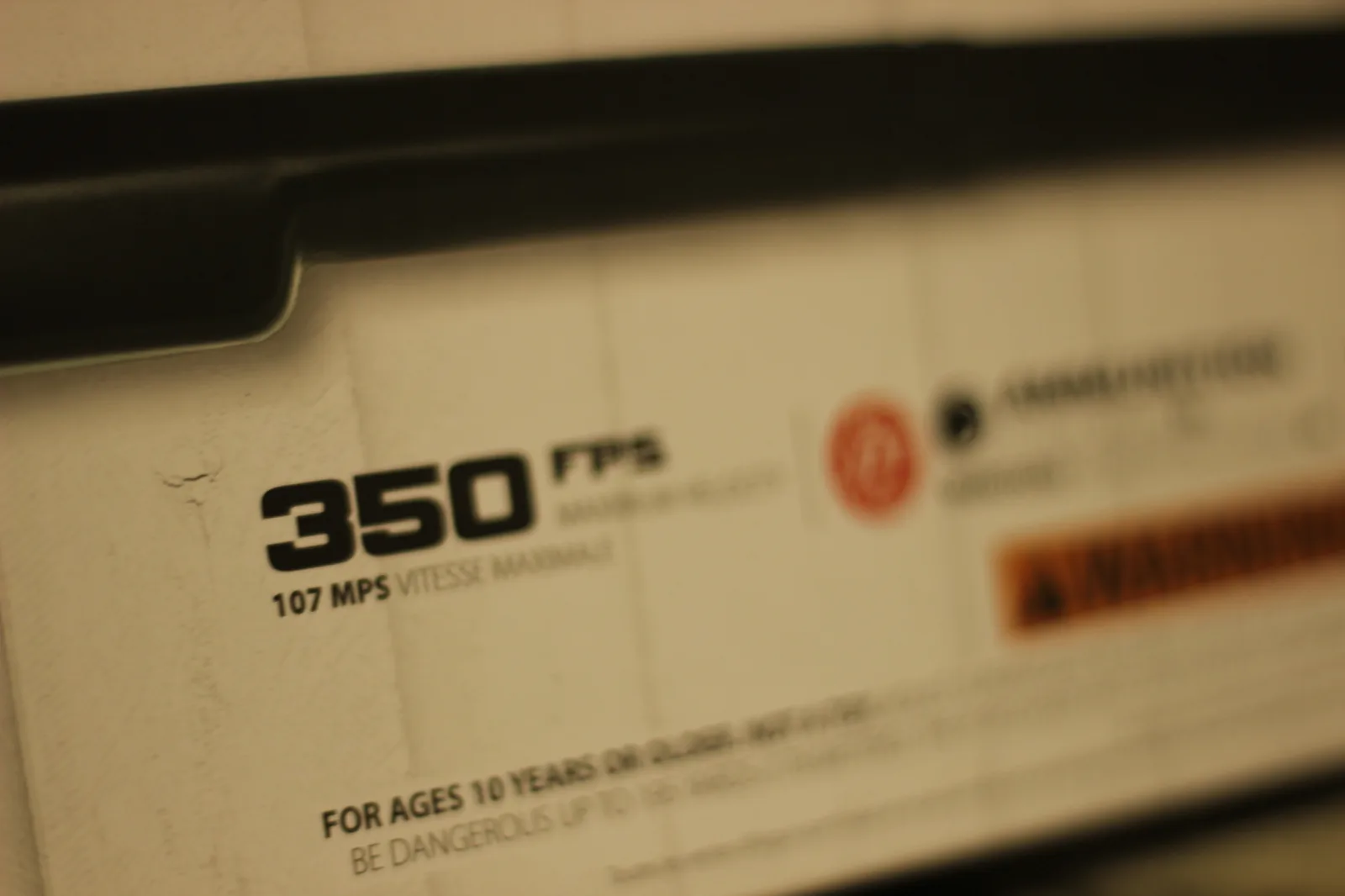
- 350 fps muzzle velocity is the correct power level — fast enough to be satisfying on a paper target, slow enough to be safe for supervised backyard use
- Crossbolt trigger-block safety is positive, intuitive, and impossible for the young shooter to engage or disengage by accident
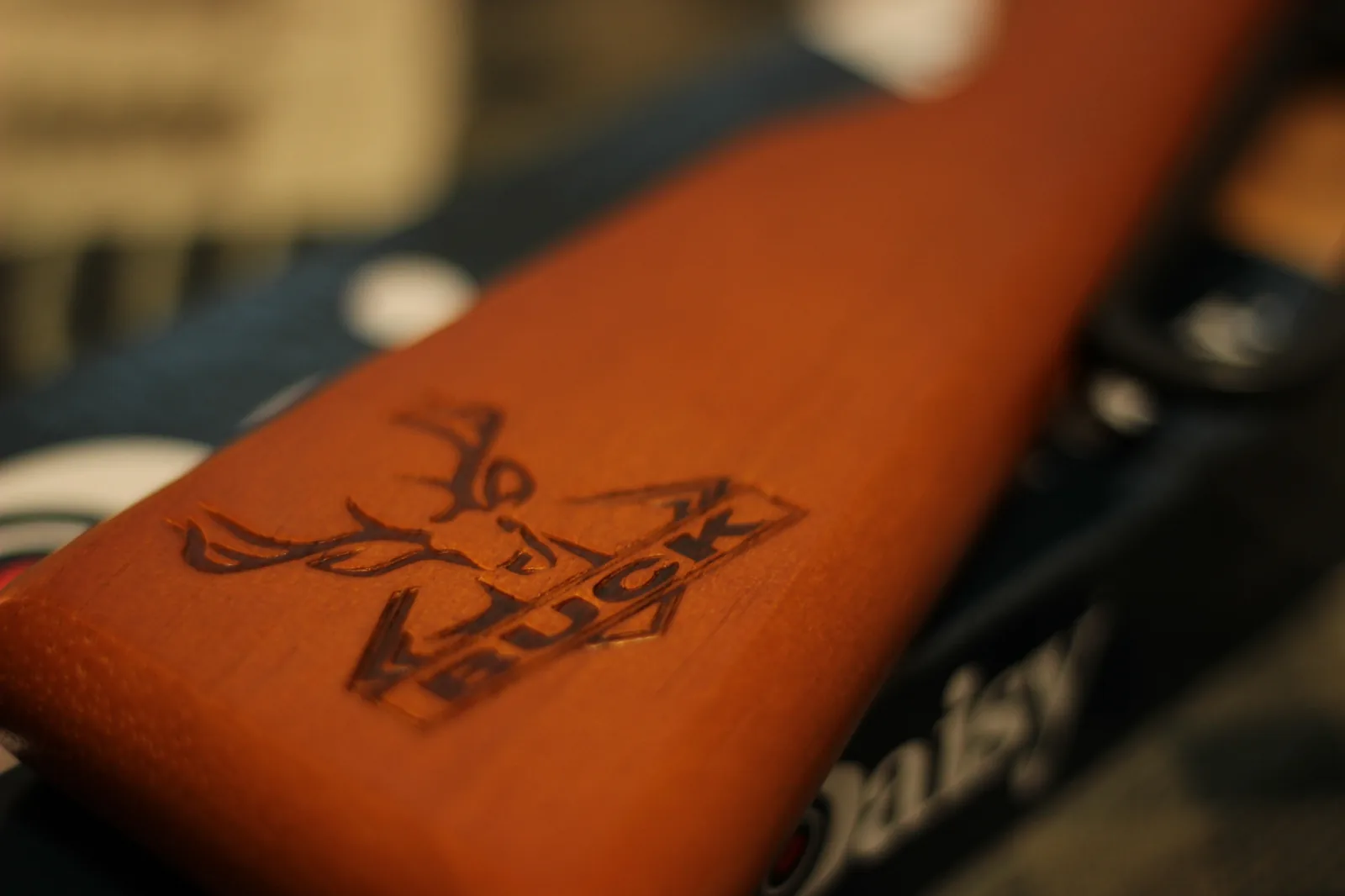
- Real wood stock and steel-over-plastic construction — feels like a rifle, not a toy, which matters for the lifelong respect-for-firearms lesson the first rifle teaches
- Blade front sight + fixed open rear sight is the right teaching configuration — the shooter learns iron sight alignment before ever touching a scope
- C$79.99 CAD at Daisy Canada is an honest entry-tier price point — and Daisy has been making essentially this rifle since 1886, so the spare-parts and warranty ecosystem is mature
Cons
- Fixed open rear sight is the right teaching tool but offers no windage or elevation adjustment — sight-in is by knowing your holdover, not by dialing the sight
- BB-only — no pellets — which is correct for the price tier and the use case but means you can't easily move the same rifle up to higher-precision target shooting later
- Spring power means cocking effort is a one-shot-per-cock operation; nothing about that surprised anyone in our family, but it's worth saying clearly for first-time buyers
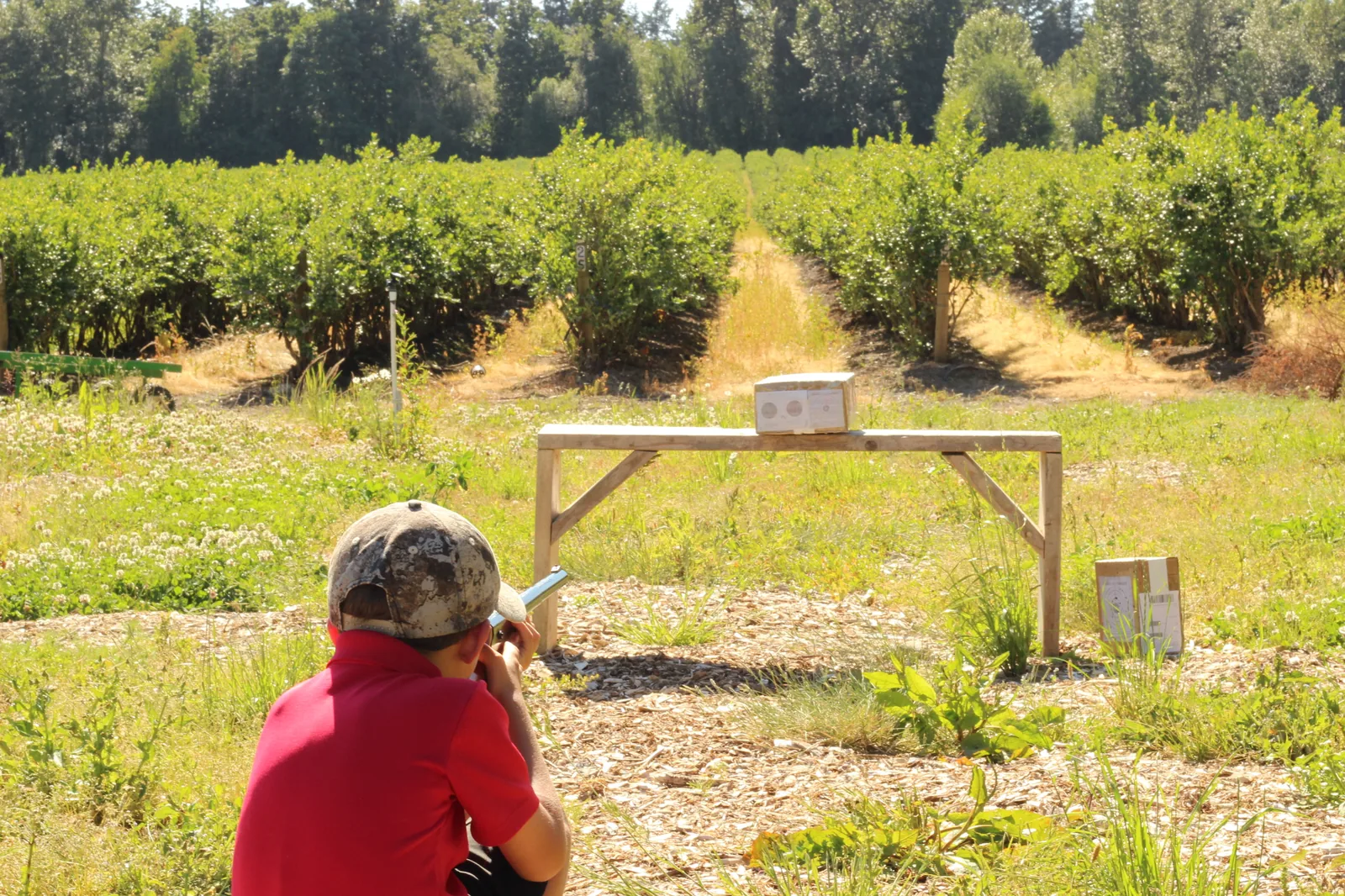
The first rifle that’s actually sized for the first rifle owner
There’s an entire category of “youth” rifles on the market that aren’t actually sized for kids. They’re adult rifles in 50%-shorter packages that an 8-year-old still can’t shoulder properly, still can’t hold steady, and still can’t cock by themselves. The kid ends up shooting from a rest because that’s the only way the rifle works at his size — and the independence that’s the whole point of learning to shoot well never actually arrives.
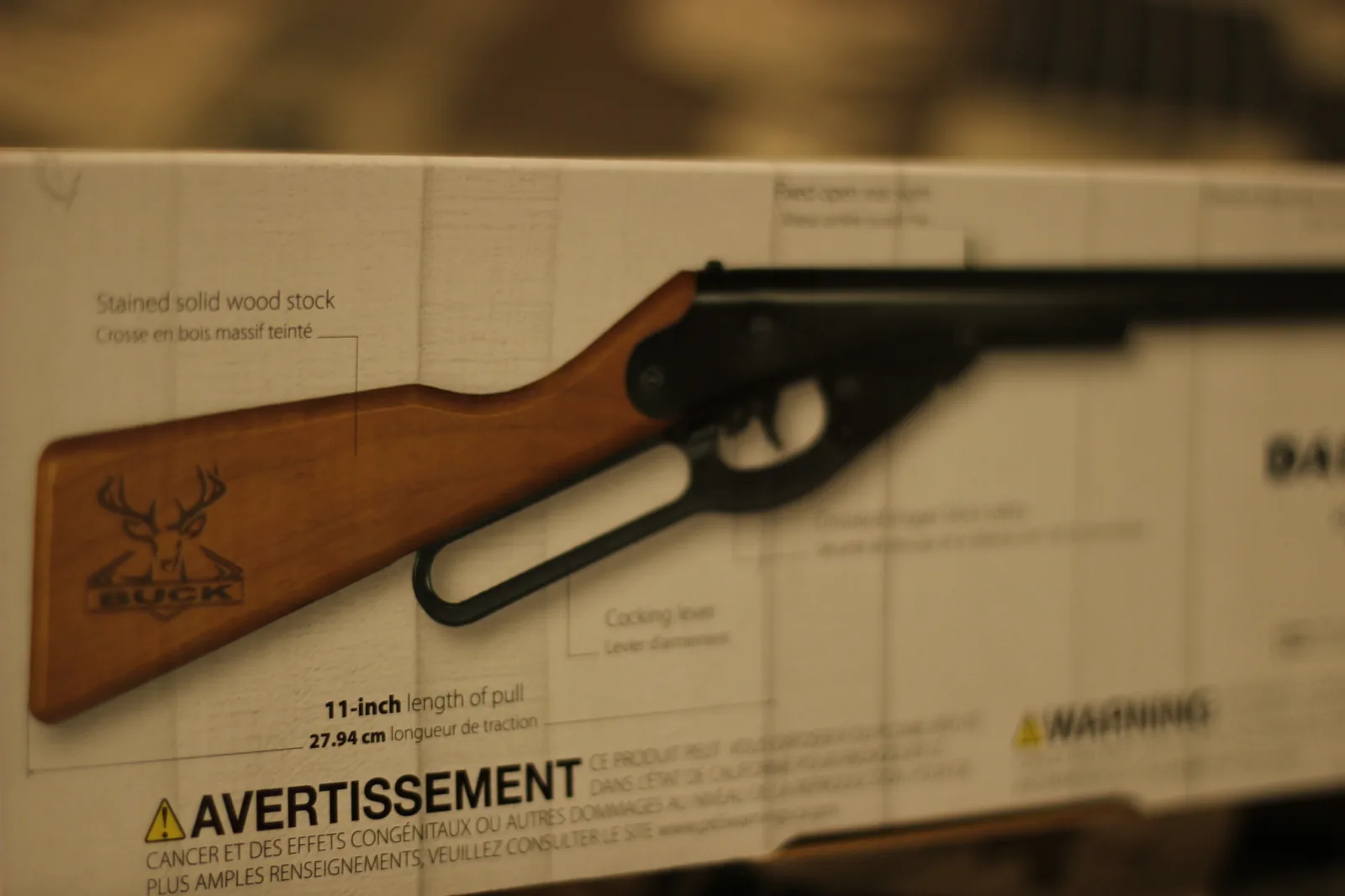
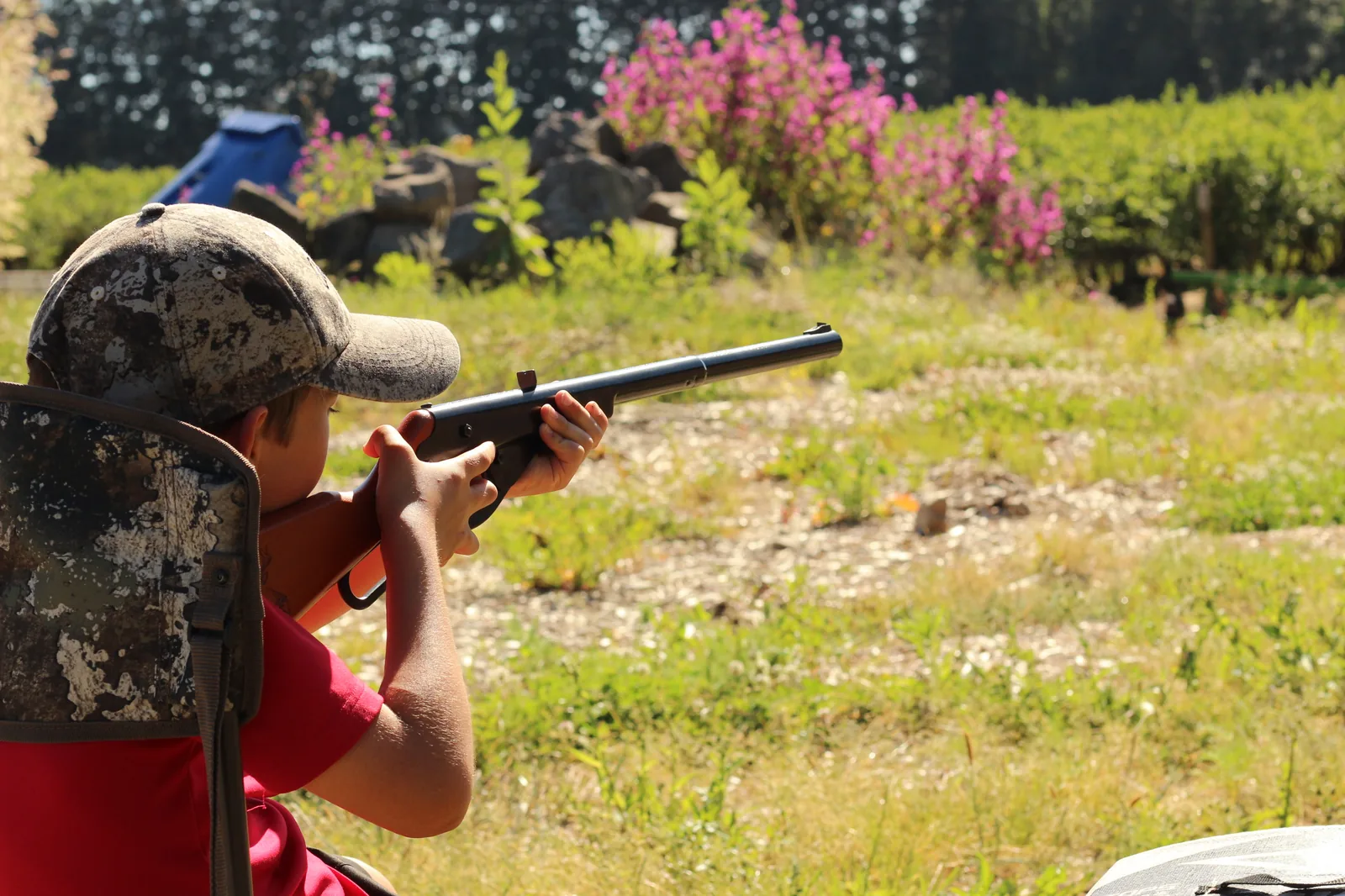
The Daisy Buck Model 105 is the rifle that fixes that. At 29.8 inches overall length, it’s genuinely scaled for a small-framed shooter. The spring-powered lever cocks with kid-sized hand strength. The wood stock is light enough that an 8-year-old can hold the rifle on target free-hand, fully loaded with hundreds of .177 BBs, for as many shots as he wants to take. The kid runs the rifle. Not the other way around.
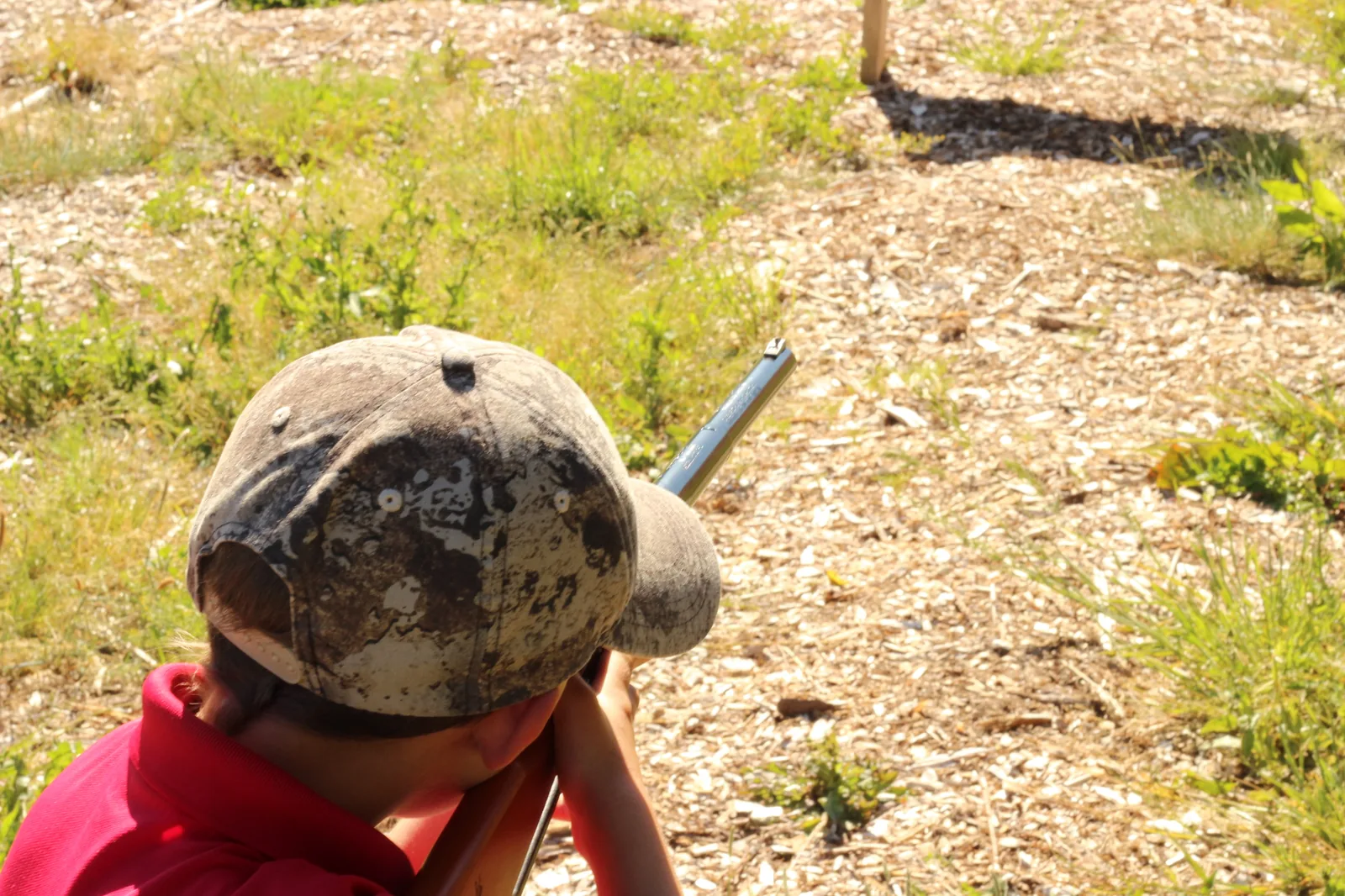
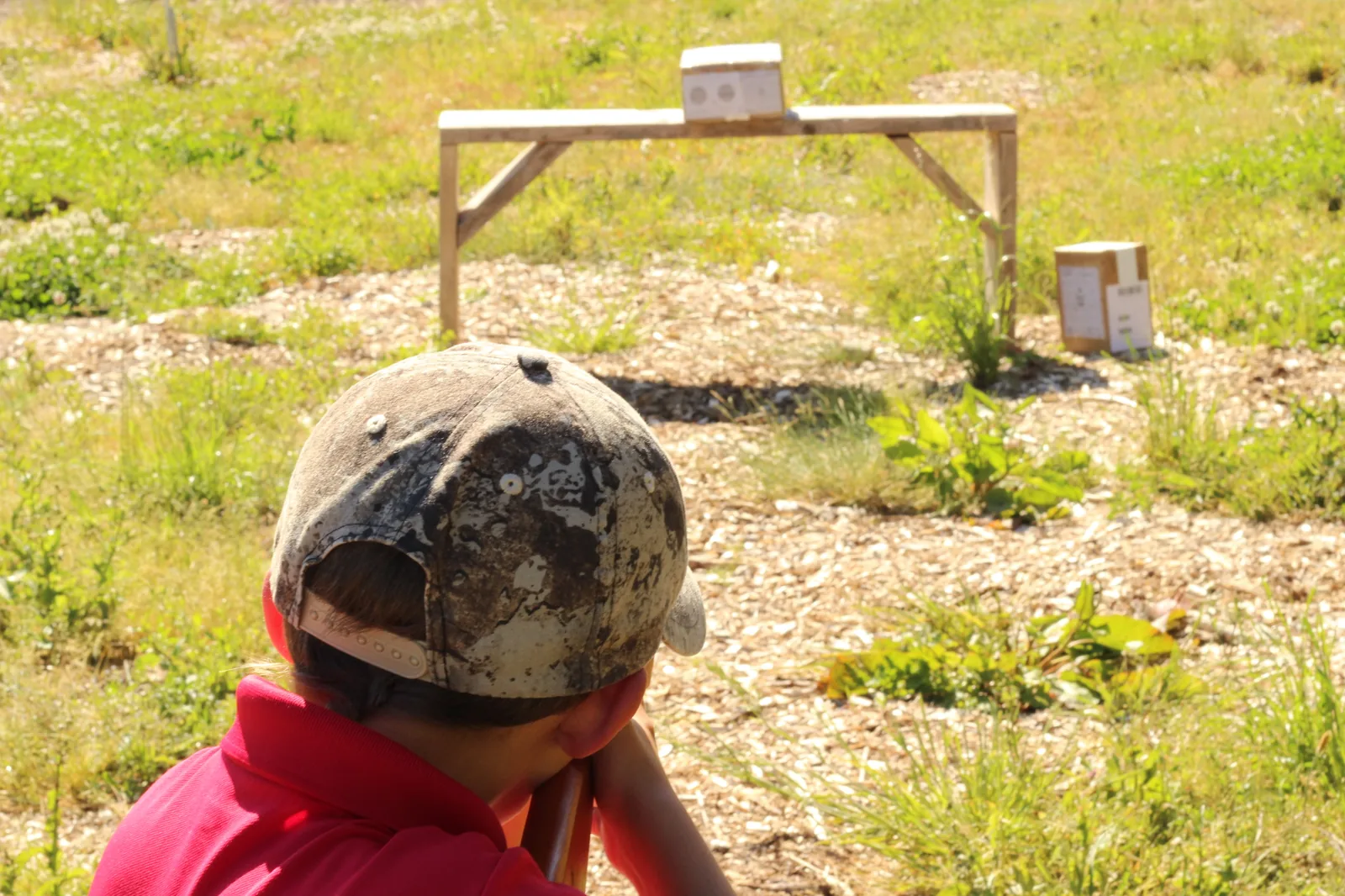
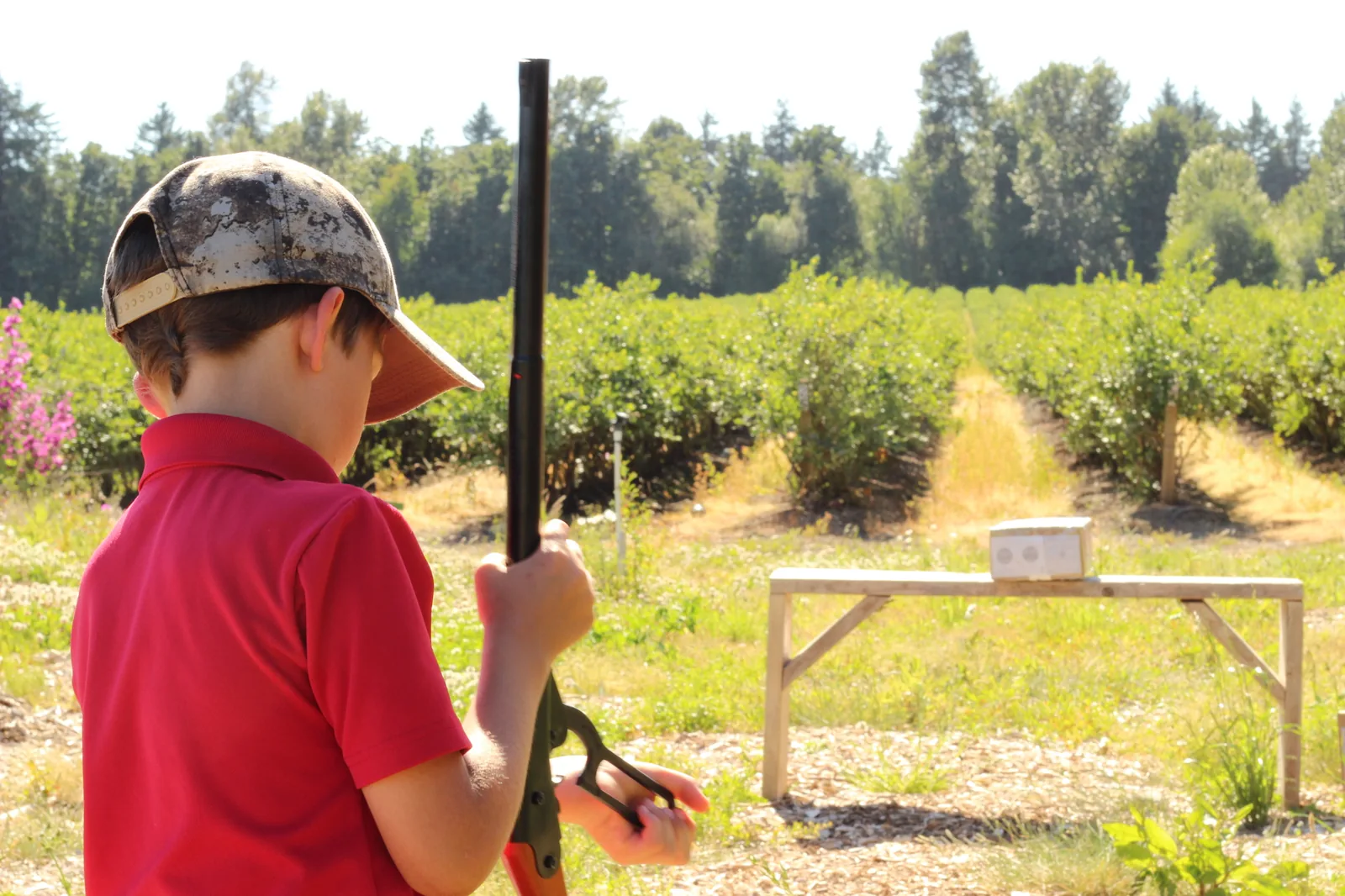
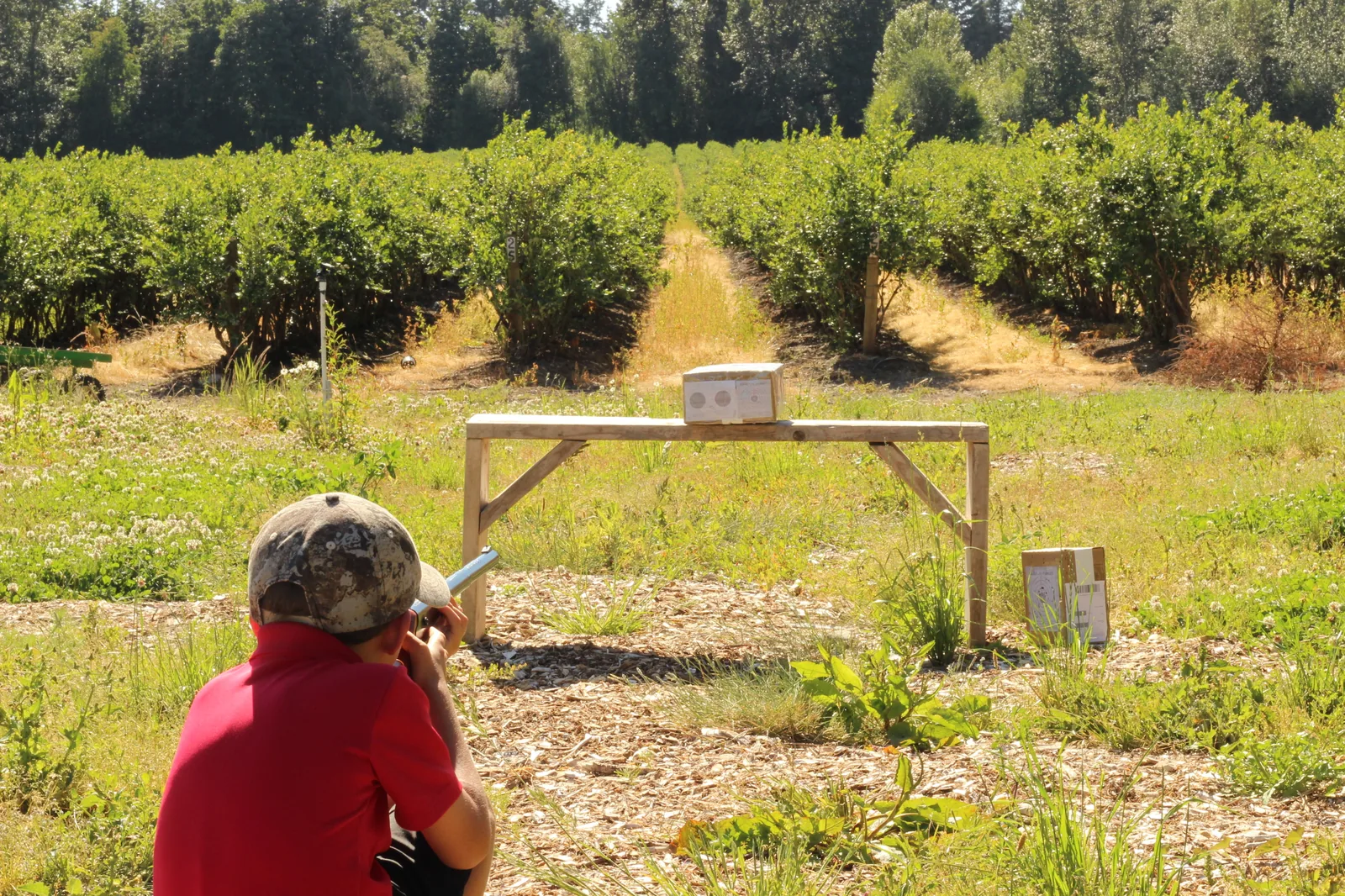
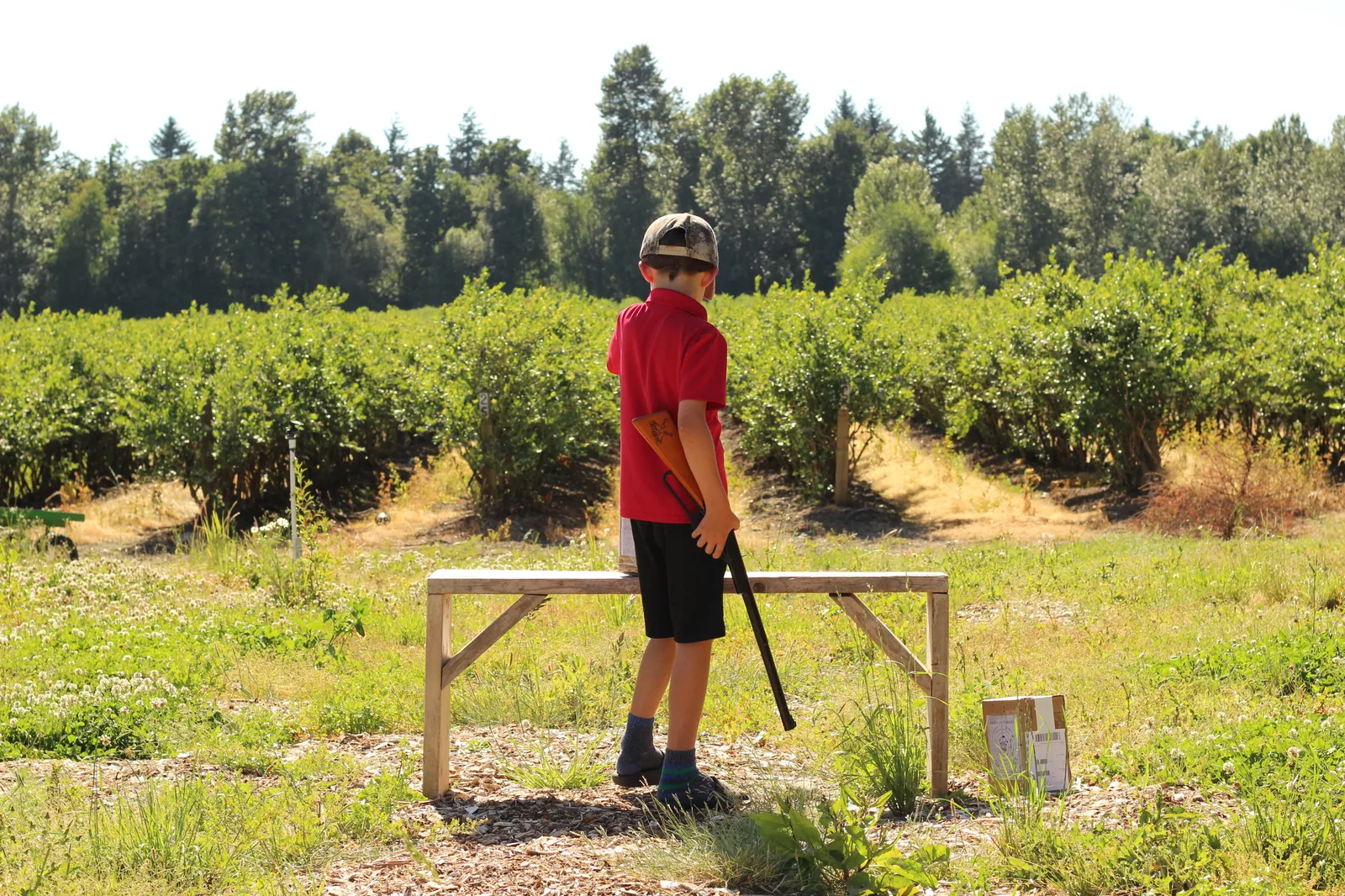
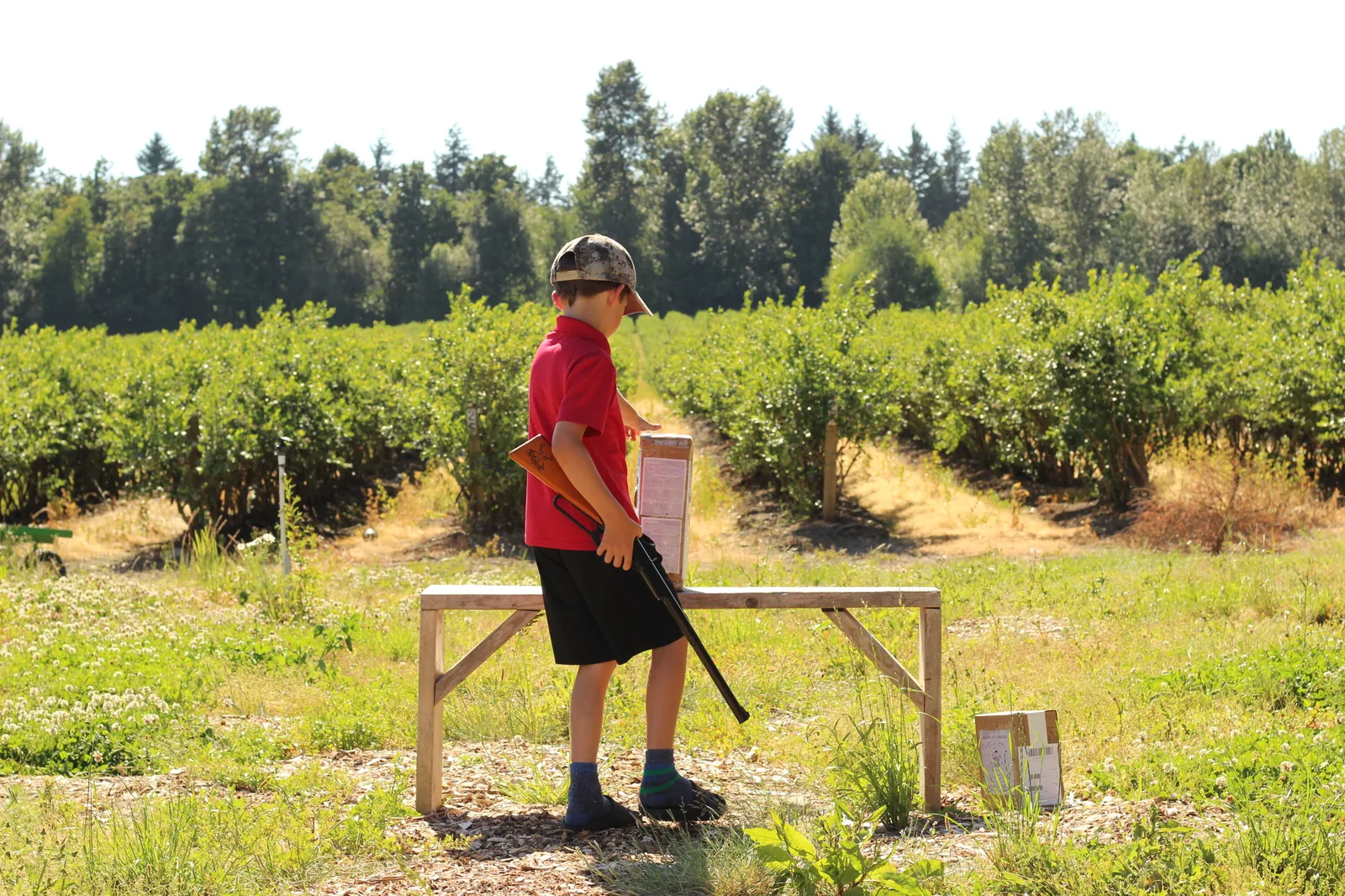
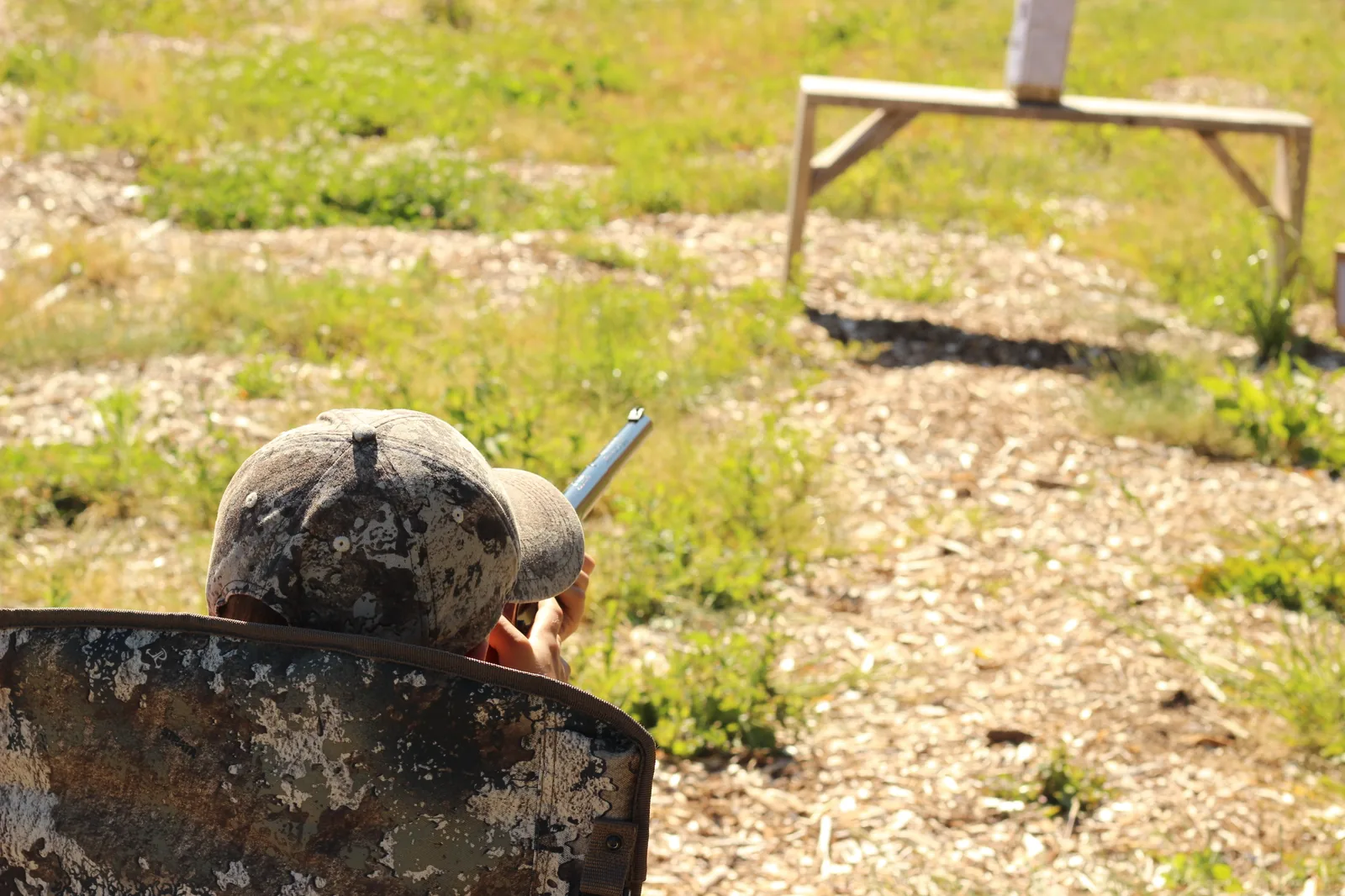
We tested ours with our 8-year-old at the local property — outdoors, supervised, on a paper target backed by a blueberry-farm dirt berm. The photos in this review are his. The lever-action cocking shots are his. The aiming and free-hand standing shots are his. We didn’t help. We didn’t need to. That’s the editorial proof of the product — and it’s the only meaningful test of a youth first rifle.
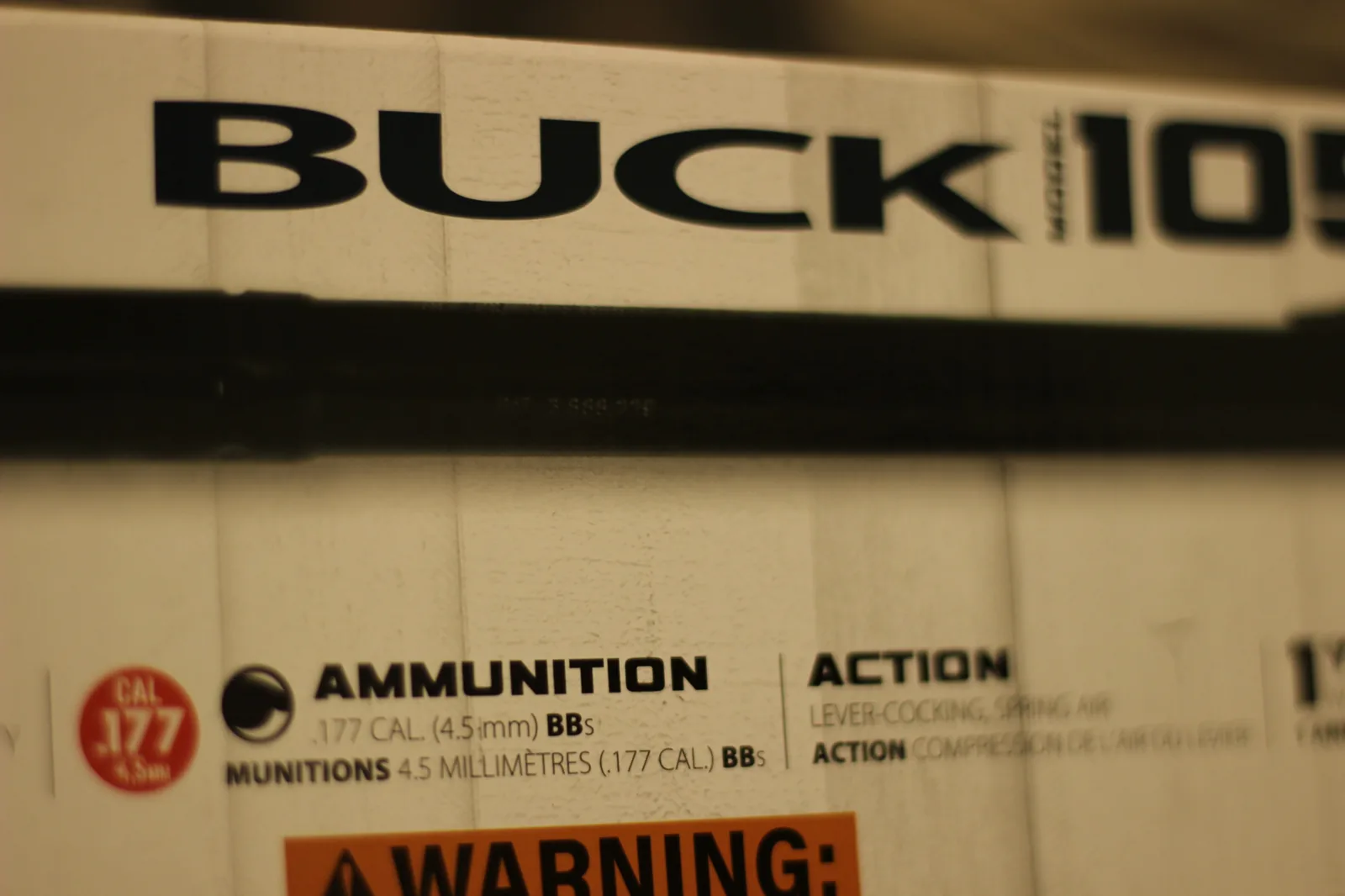
Unboxing — Daisy heritage in a clean retail package
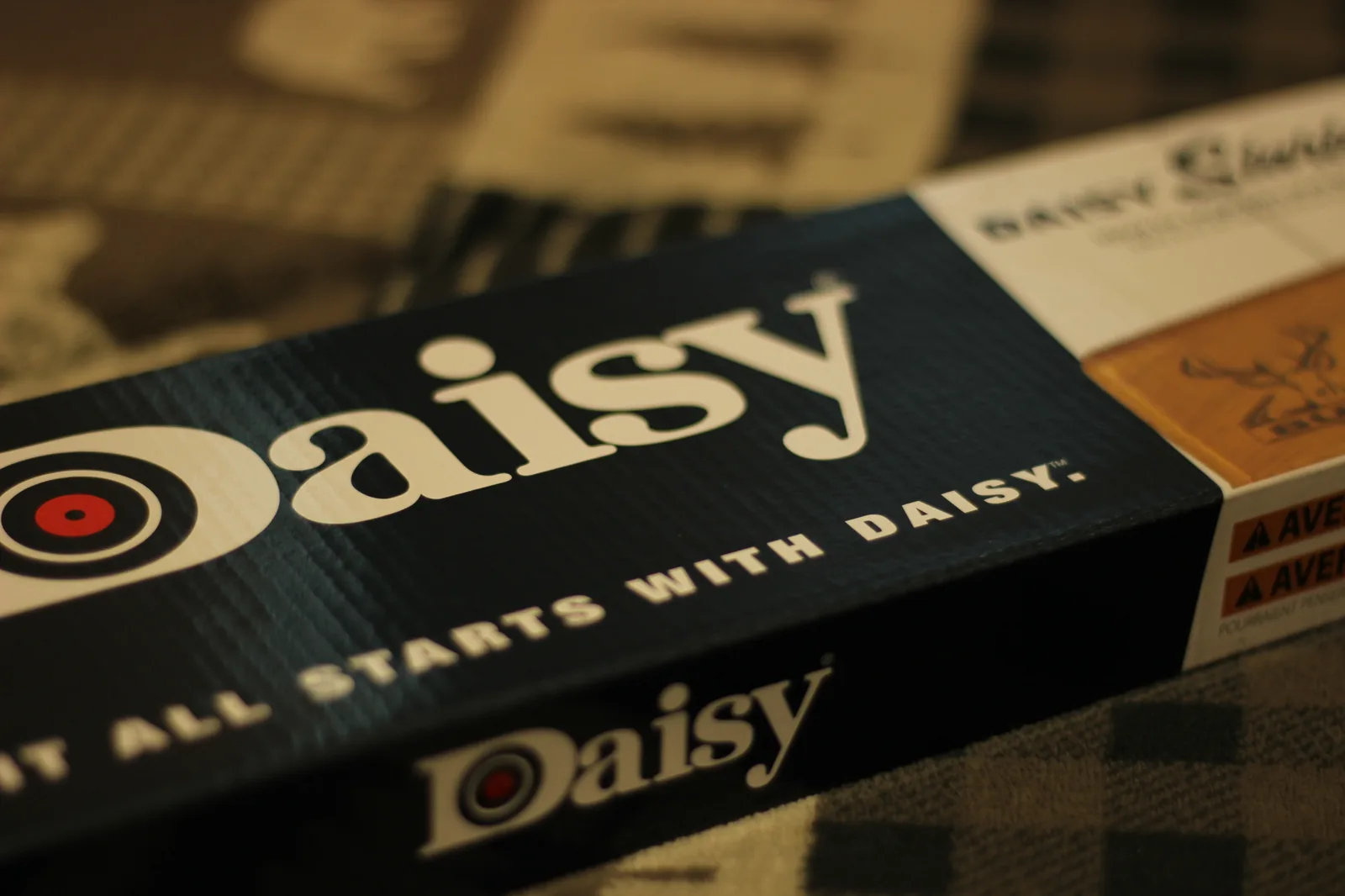
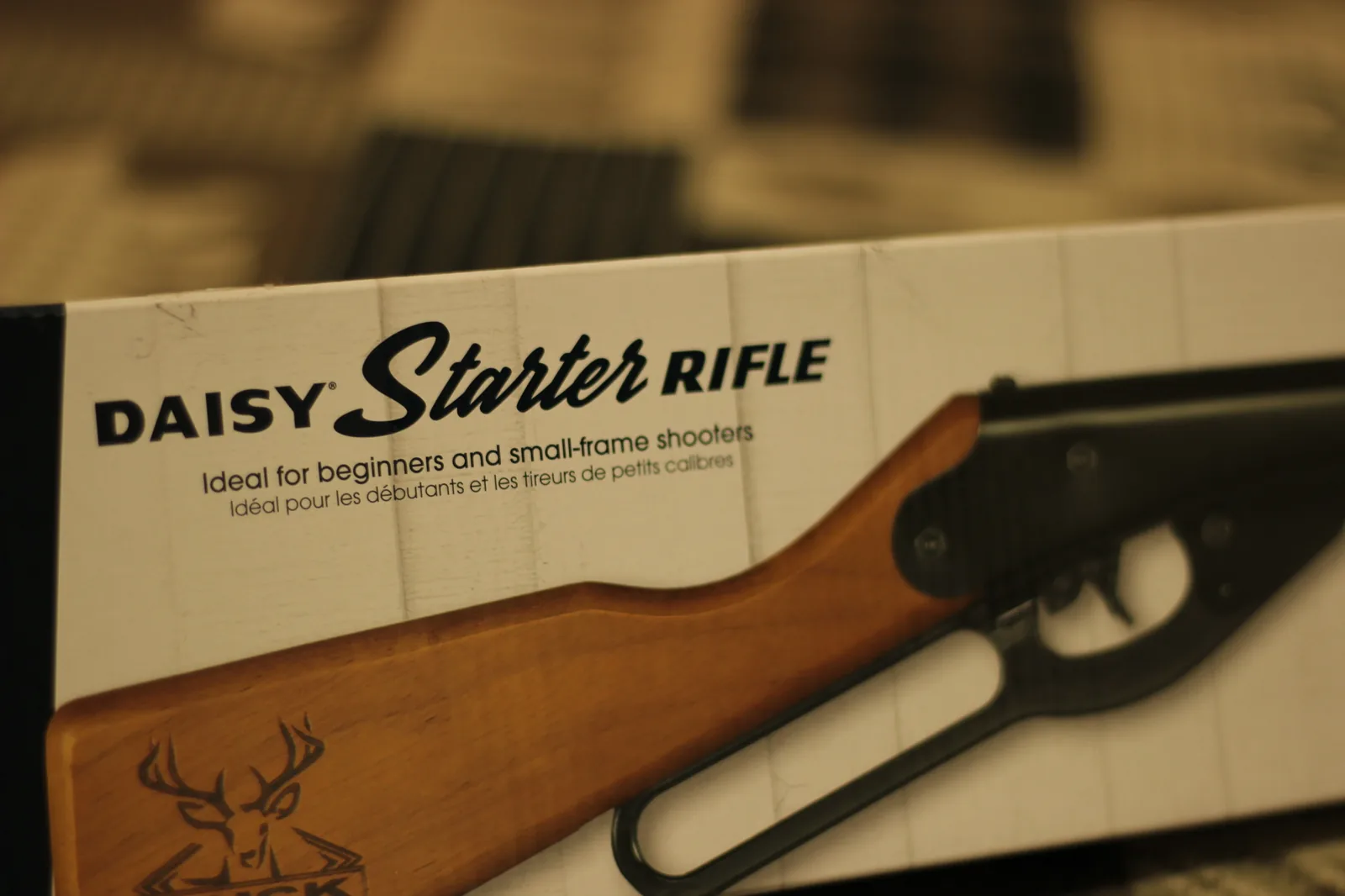
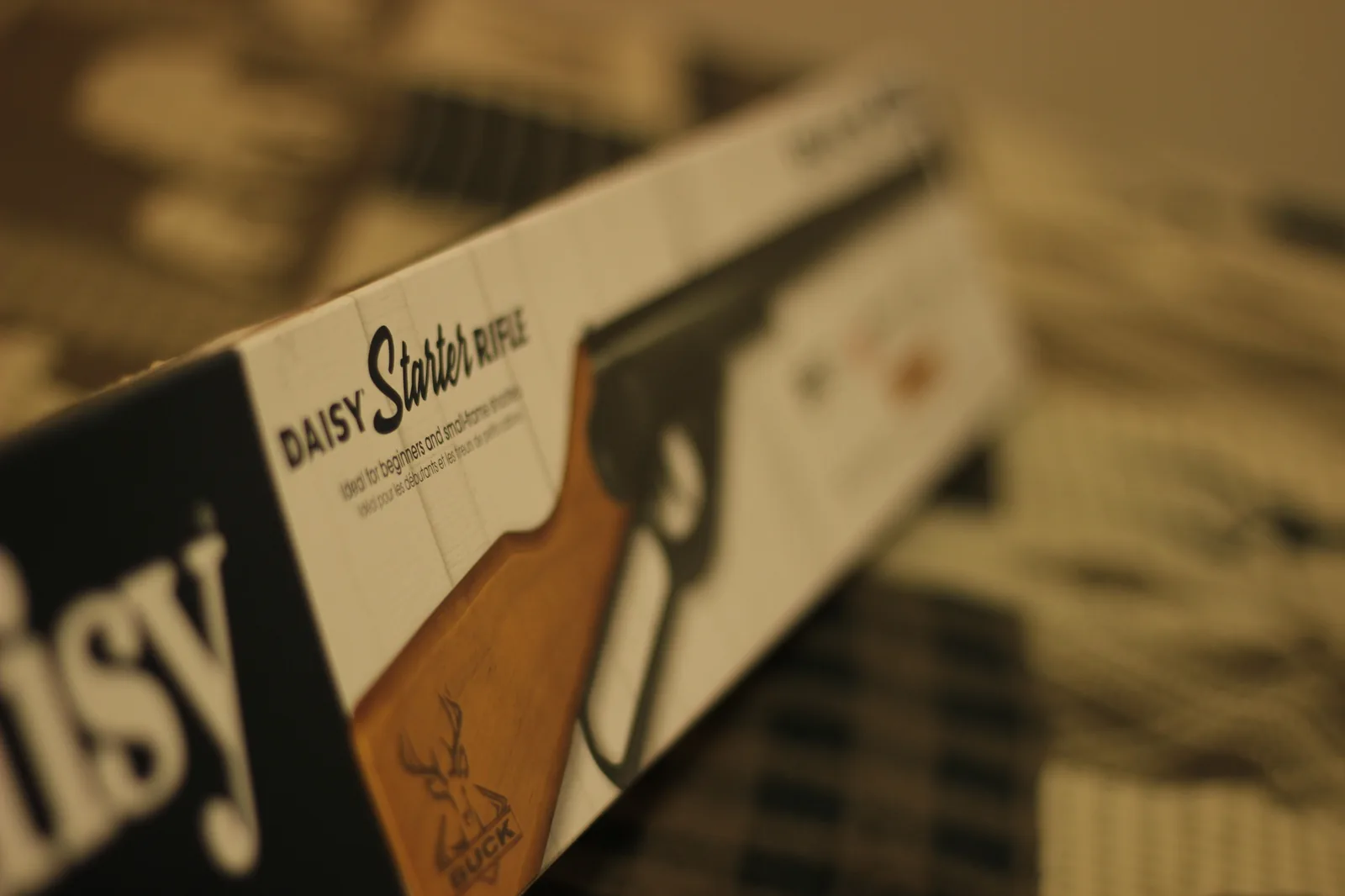
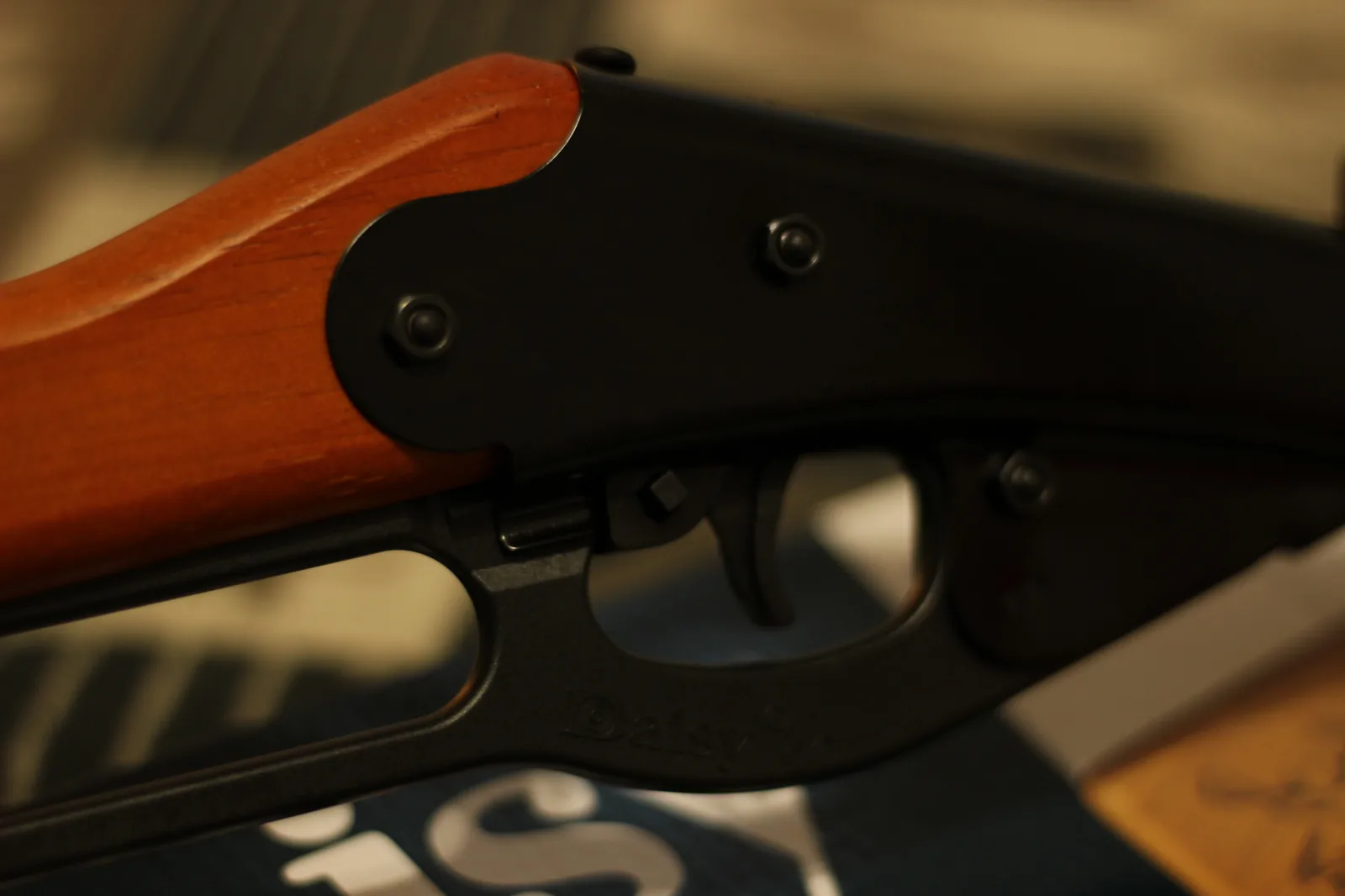
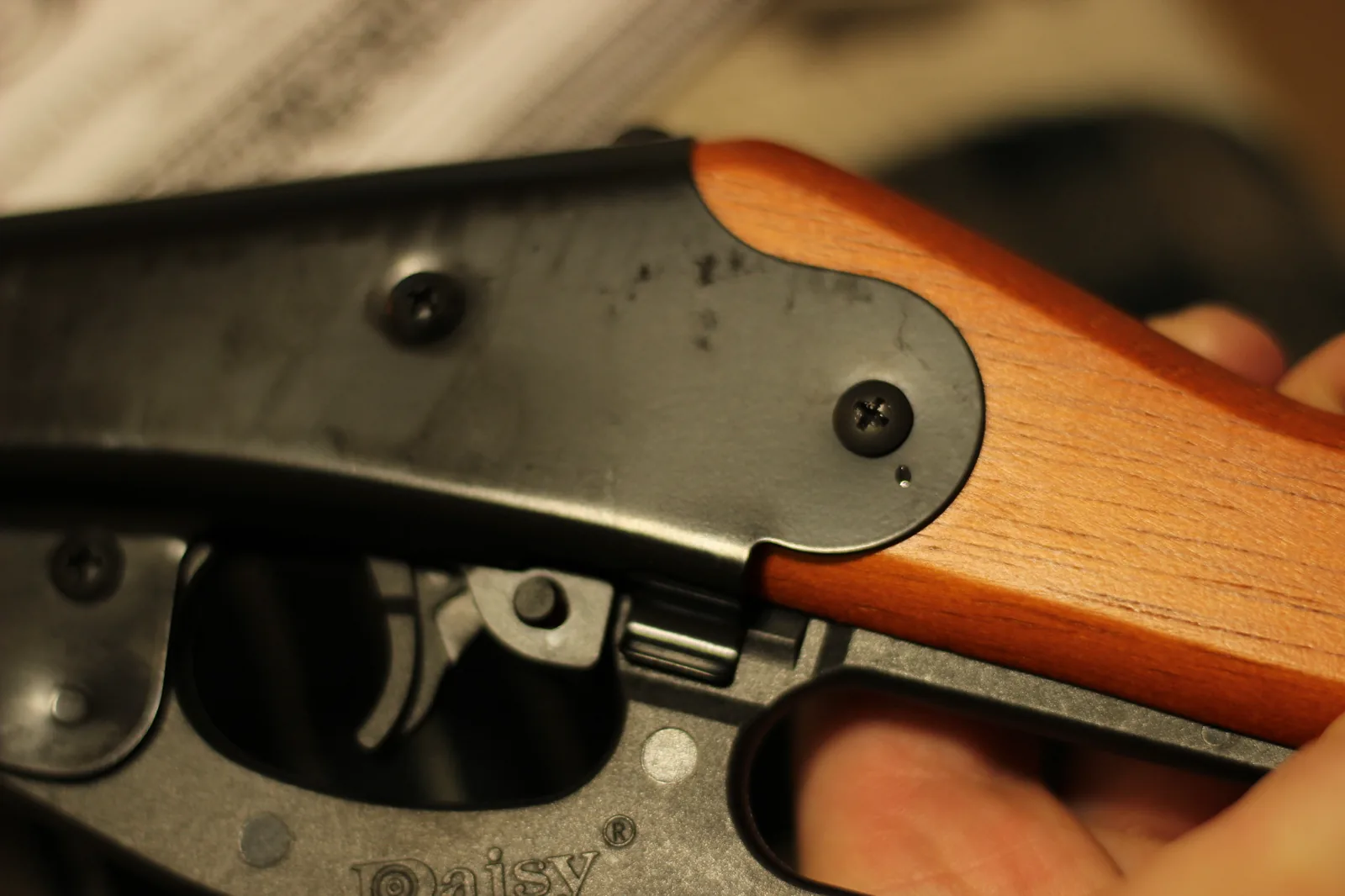
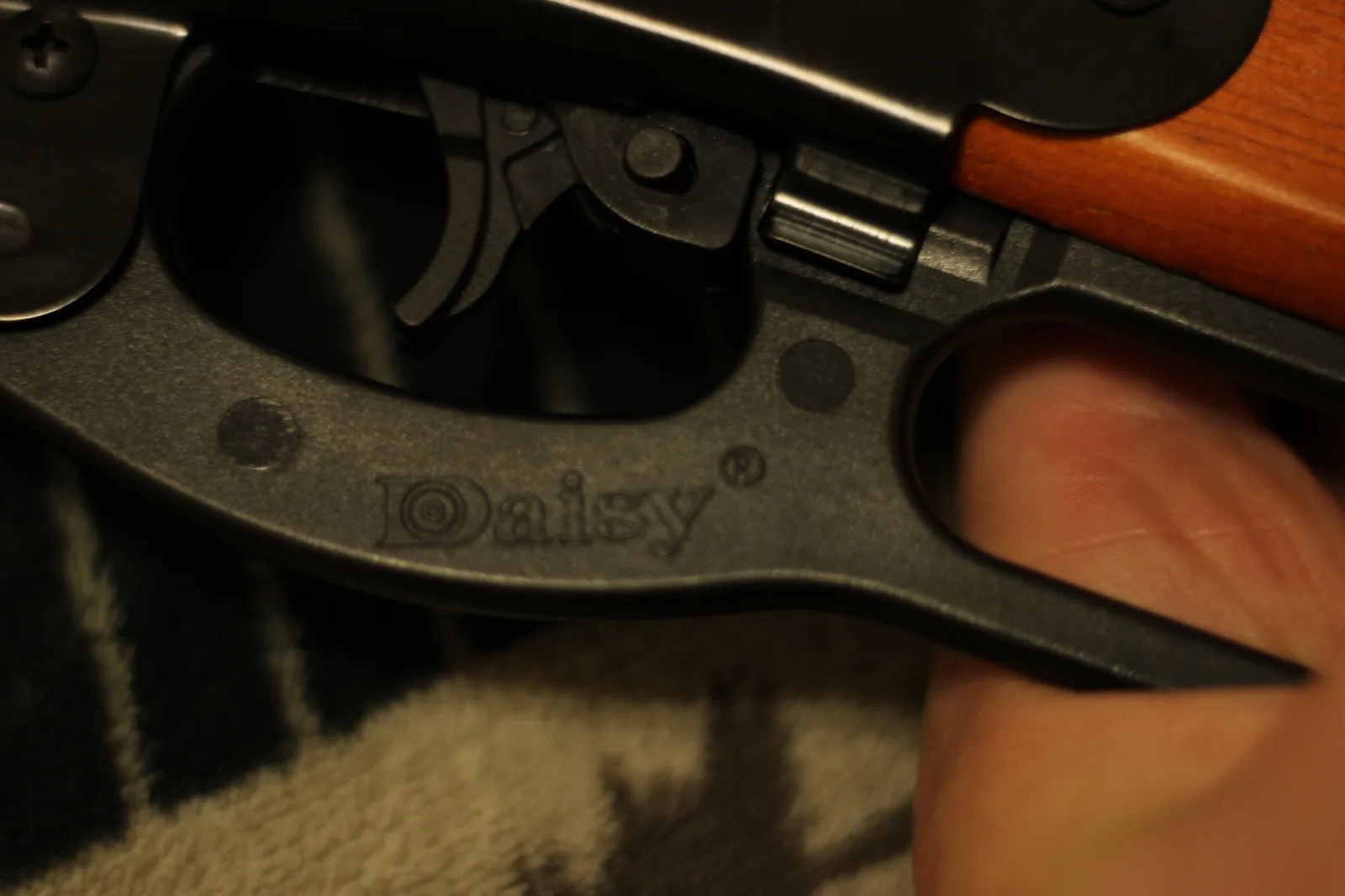
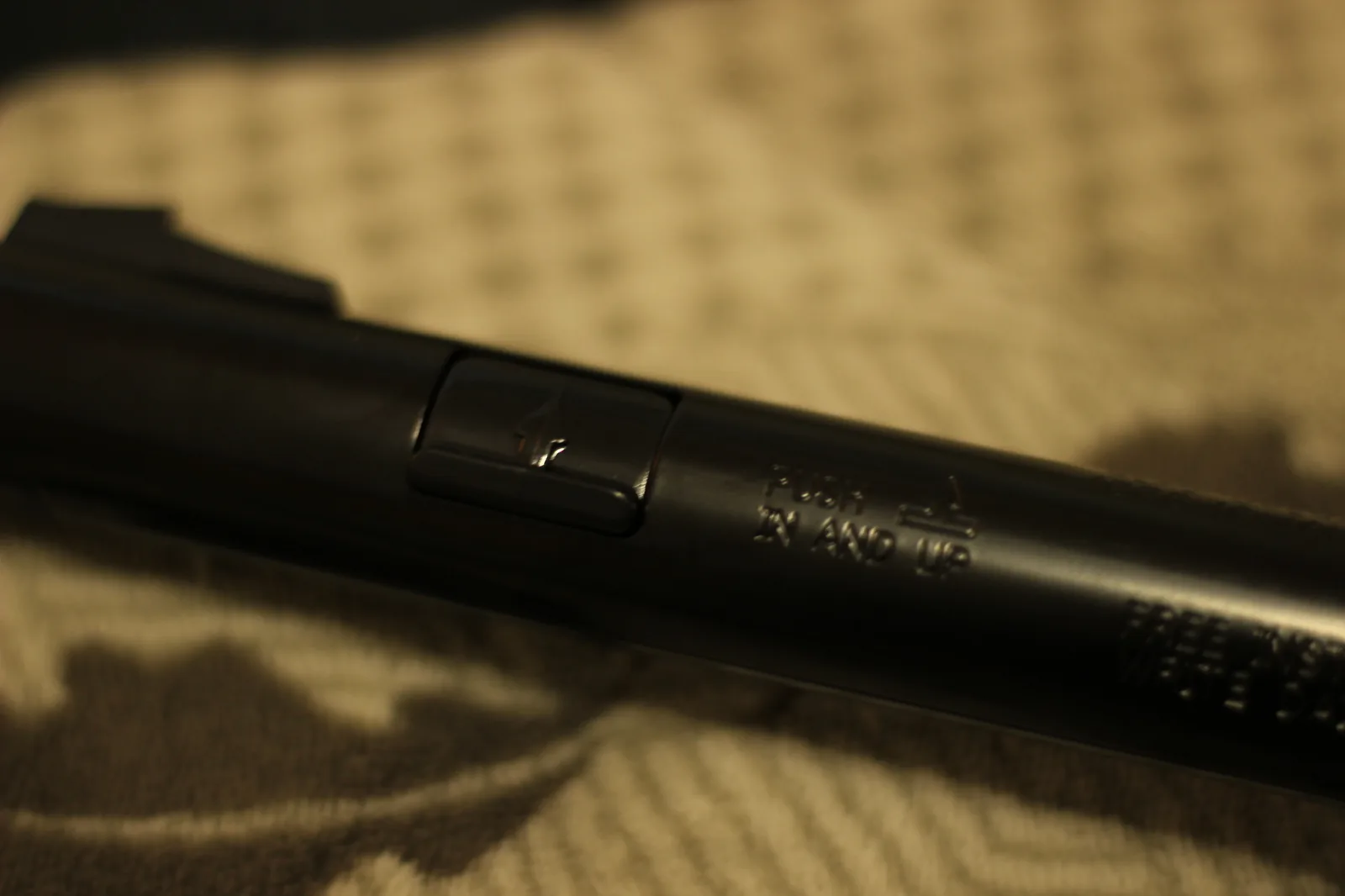
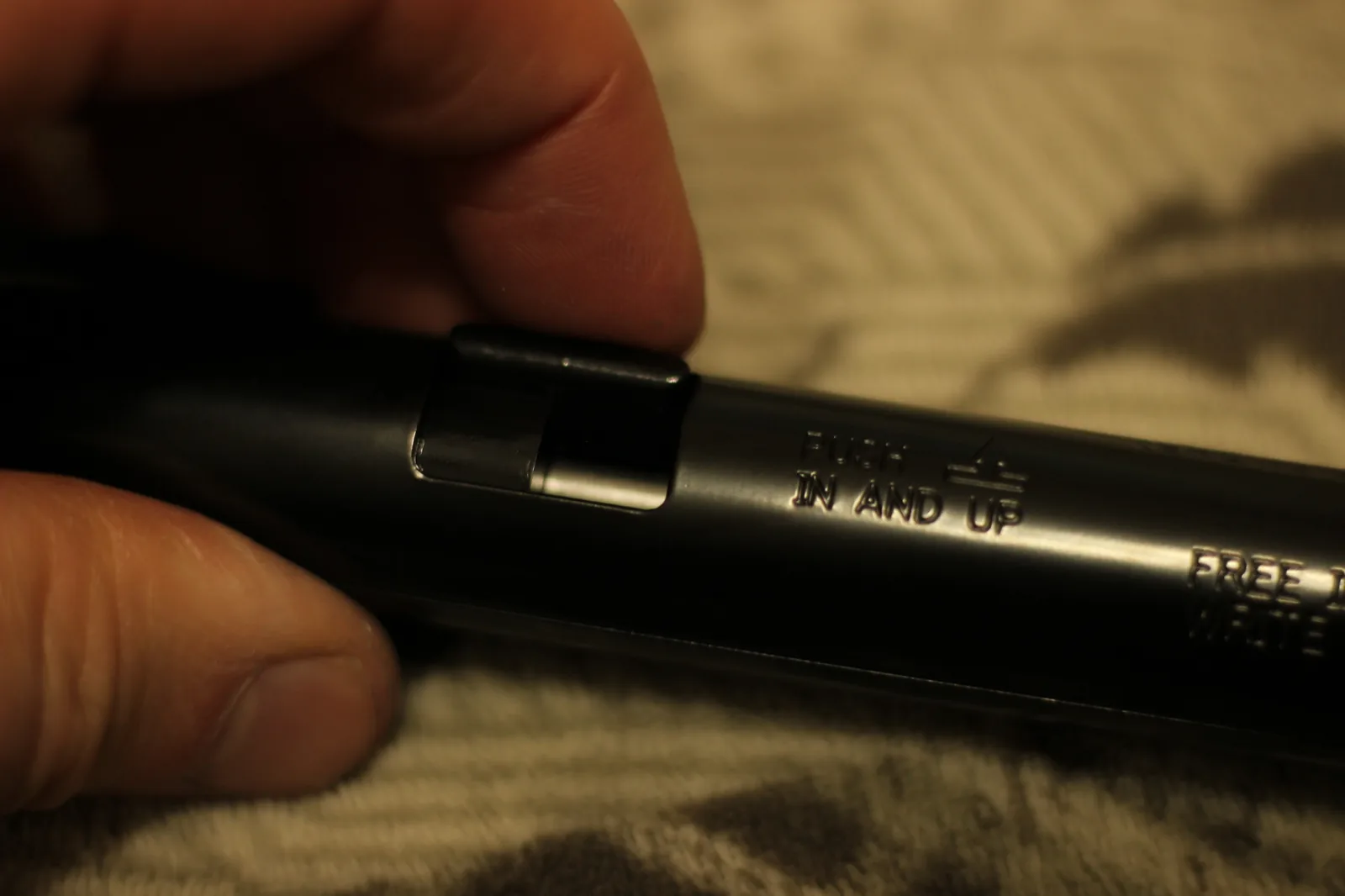
The build — what C$79.99 actually buys you
The 8-year-old runs the rifle — the actual test
This is where the review stops being about the product and starts being about the kid using it. Every photo from here on is the 8-year-old, no adult assistance.
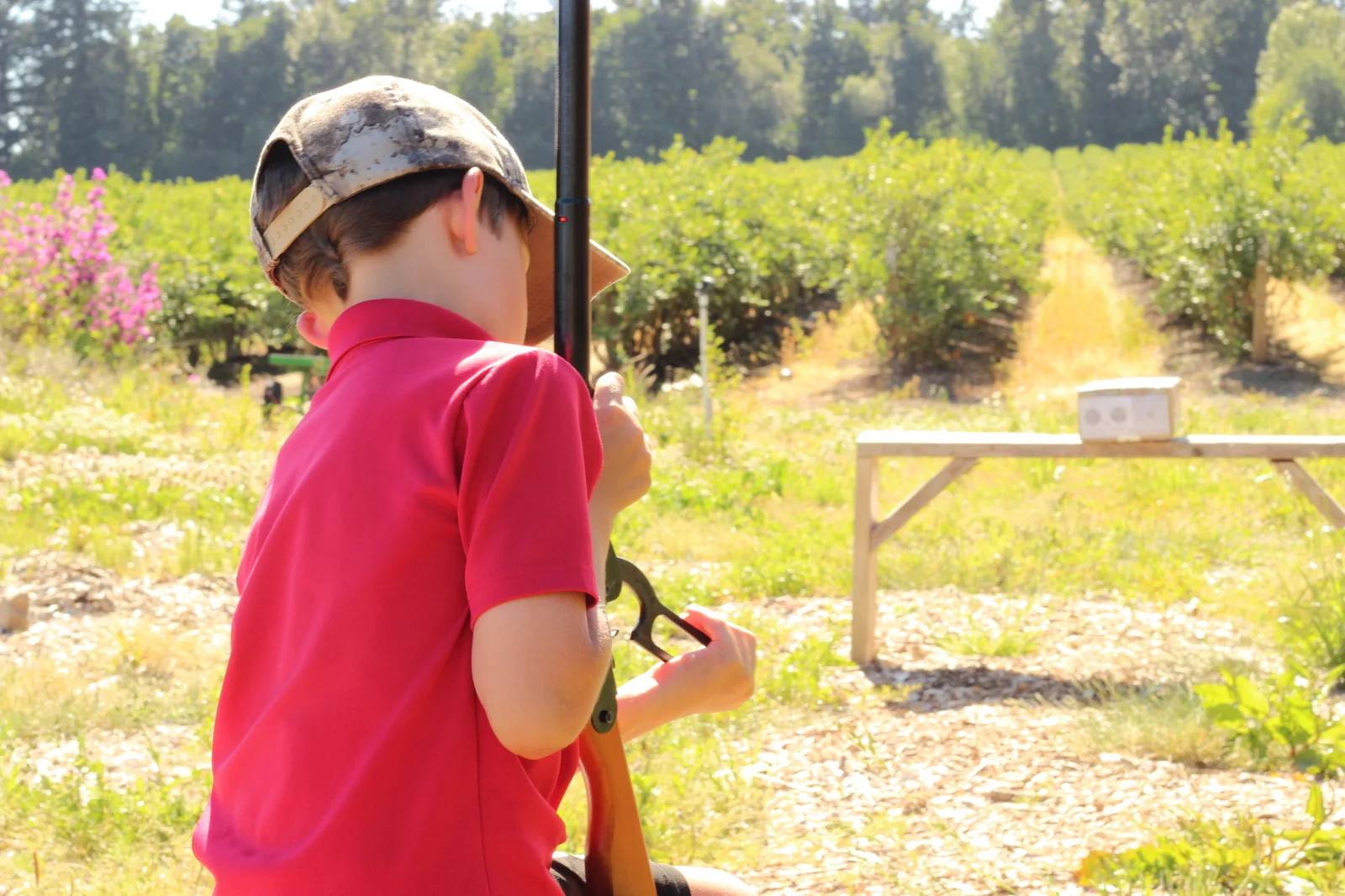
The cocking lever — the spec that has to work
For any spring-piston BB rifle marketed as a youth first rifle, this is the spec that decides everything. If the kid can’t cock the rifle himself, he can’t operate the rifle himself — and the rifle has failed at the only thing it has to do.
The Daisy Buck 105’s lever cocks with roughly 10–12 pounds of hand effort. That’s well within the range that an 8-year-old of typical strength can manage, and our shooter cocked it dozens of times in a single session without complaint. The photos below are unedited — every cock-the-lever shot is the kid, no help.
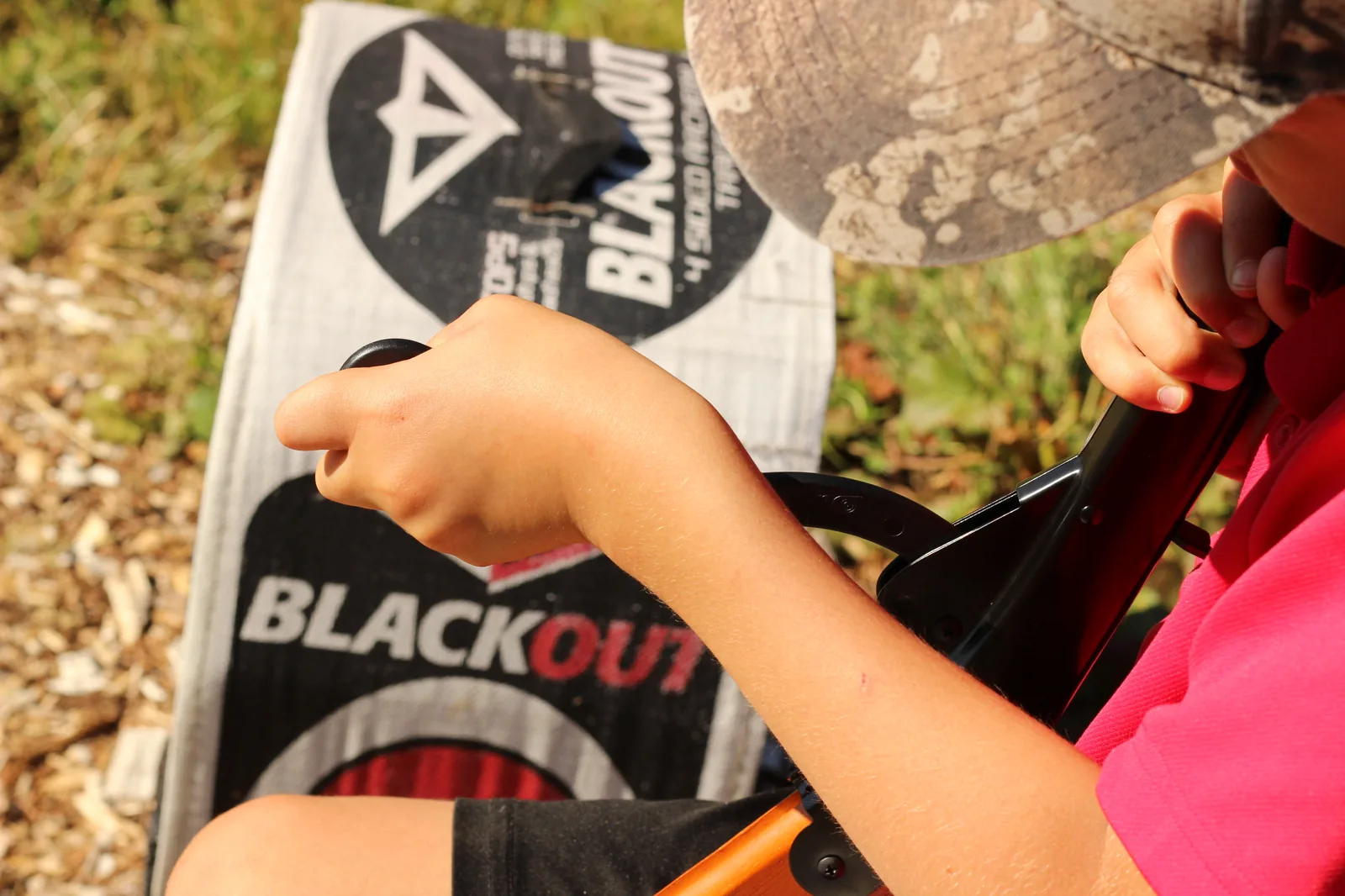
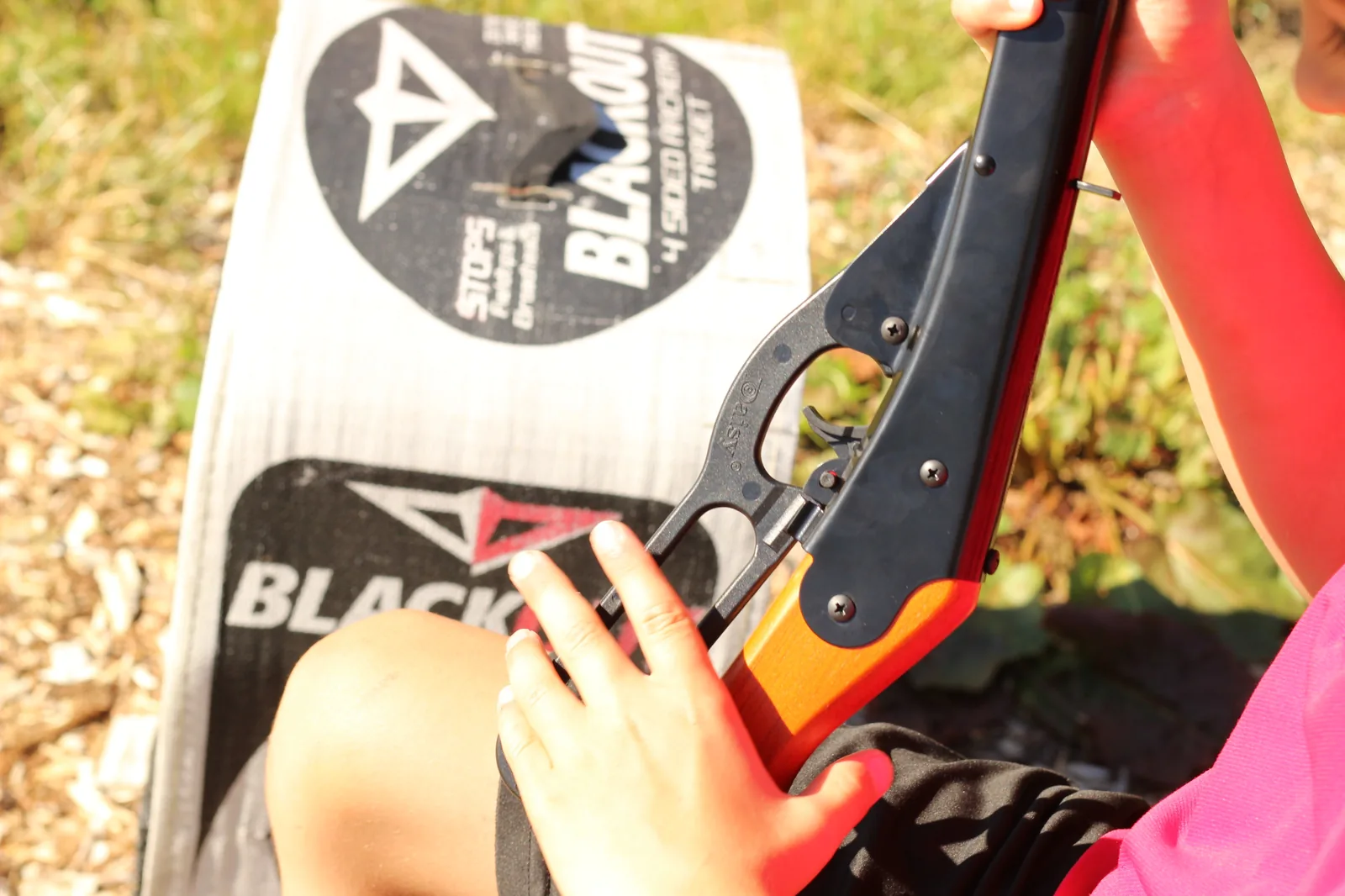
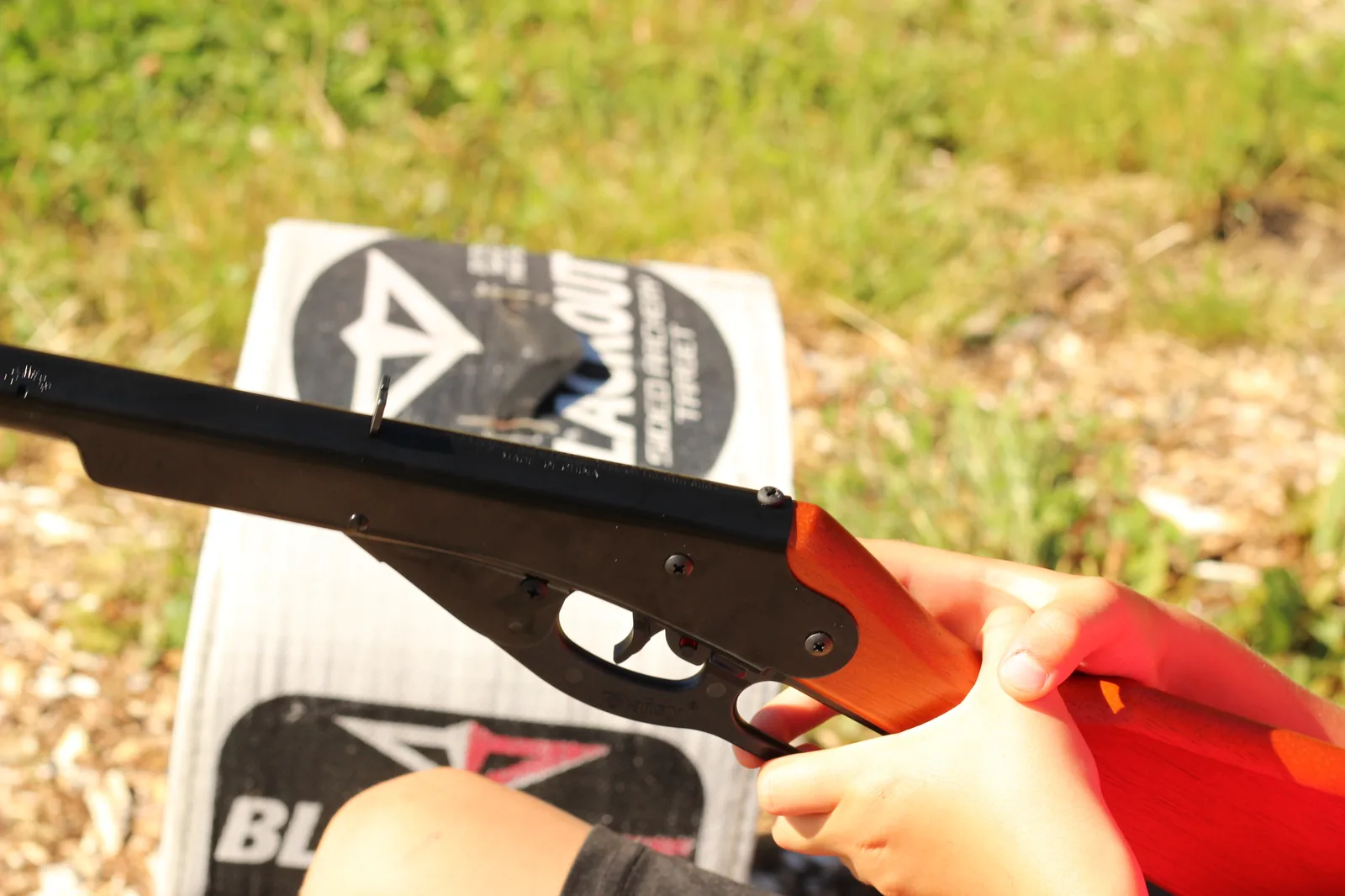
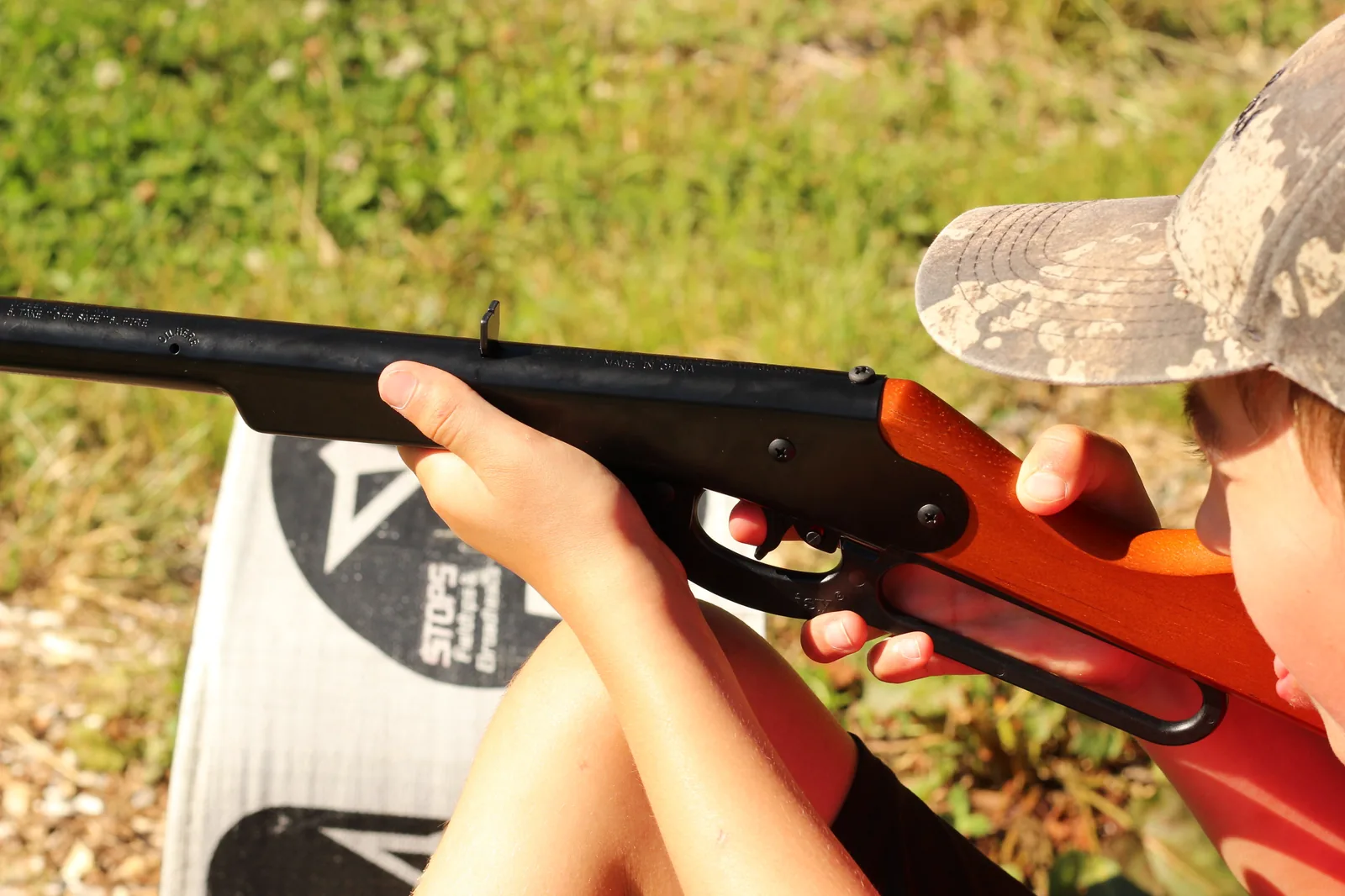
The “easy cocking” claim isn’t marketing fluff — it’s the editorial proof of the product. Daisy’s spring tension is calibrated for the user. If you’re buying this for a 6 or 7-year-old, the cocking might be on the edge of their strength; if you’re buying for a 9 or 10-year-old, they’ll find it trivial. For our 8-year-old, the rifle landed exactly where it should: hard enough to feel like a real piece of equipment, easy enough that he was never asking for help.
Why this is the right first rifle — the editorial argument
The Daisy Buck Model 105 is purpose-built for a single, specific use case: a small-framed first-time shooter learning the fundamentals of safe rifle handling under supervised conditions. Every engineering decision serves that use case.
Length. 29.8 inches is the right size for a 7–10-year-old to shoulder properly. The kid gets real form practice, not a “hold this thing while leaning on the bench rest” experience.
Weight. Light enough to hold on target free-hand for a full shooting session. The kid learns standing-position offhand shooting from the first day rather than being trained to shoot only from a rest.
Cocking effort. The spring tension is calibrated for the shooter — easy enough that he can do every cocking cycle himself.
Power. 350 fps is fast enough to be satisfying on a paper target at 10–15 yards, slow enough that minor handling errors are forgiving, and slow enough that the rifle is safe for supervised backyard or property use (always with eye protection, a safe backstop, and adult supervision — these aren’t optional, even for a 350 fps BB rifle).
Sights. Blade front + fixed open rear is the right teaching configuration. The shooter learns iron sight alignment as the foundational skill before ever touching a scope. By the time he moves up to a higher-tier rifle, the sight picture is muscle memory.
Safety. The crossbolt trigger block is positive, intuitive, and impossible to disengage accidentally. The kid can verify safe/fire at a glance, and the safety is large enough that little fingers can operate it deliberately without fumbling.
Heritage. Daisy has been making essentially this rifle in some form since 1886. The spare-parts ecosystem, the BB ammunition supply, the warranty path — all mature. This isn’t a one-season Amazon import. It’s a product that’s been refined for 140 years.
How it earns the 4.7/5
The Daisy Buck Model 105 earns a strong 4.7 / 5 because every engineering decision serves the actual user. Length, weight, cocking effort, power, sights, safety, heritage — all dialed to the small-framed first-time shooter. The 8-year-old running the rifle in the photos above is the editorial proof.
It’s not a 5.0 because:
- The fixed open rear sight is the right teaching tool but offers no windage or elevation adjustment for fine-tuning sight-in
- BB-only — no pellets — which is correct for the price tier and the use case but means the same rifle won’t move the shooter up to higher-precision target shooting later
- The spring-piston action is genuinely easy to cock for our 8-year-old, but a 5 or 6-year-old might find it on the edge of their strength — the rifle is sized for ages 7+ realistically
What we’d love to see from Daisy:
- An optional aperture rear sight kit so families who want to progress the same shooter into more precision work can do that without buying a different rifle
- A slightly larger BB reservoir capacity indicator window so the young shooter can see when he’s running low without breaking aim
Verdict — buy it as the first rifle
The Daisy Buck Model 105 at C$79.99 CAD from Daisy Canada is the right first rifle for a 7–10-year-old learning to shoot under supervised conditions. The 8-year-old in the photos above ran the rifle completely independently — cocked the lever himself, loaded BBs himself, shouldered and aimed and fired free-hand without a rest. That’s what a youth first rifle is supposed to do.
It’s not a permanent or competition rifle. It’s a teaching rifle, and that’s the right design for the price tier and the user. Buy it as the first one, get the kid 1,000 BBs and a few paper targets, set up a safe backstop in the yard or on a property, and let the kid run his own rifle. That’s how you raise a safe, competent, lifelong-respectful shooter.
The Buck 105 has been in continuous production for decades for a reason. It works. Available in Canada at C$79.99 CAD with free shipping over C$74 from Daisy Canada.
For Hunt & Live readers thinking about a first rifle for a kid in the family, this is the one.
Daisy is a heritage American brand — founded 1886 in Plymouth, Michigan, currently headquartered in Rogers, Arkansas — and the Canadian distribution arm at Daisy Canada handles the Canadian market with full warranty support. Daisy is a strong candidate for our Recommended Brands roster once we have additional Daisy products on the site (the Daisy Red Ryder Model 1938 is the natural next review).