
Featured Review · Riton · Binoculars
Riton 5 Primal 10x42 ED Review — The $699 ED-Glass Binocular That Lands in the Hunting-Optic Value Sweet Spot
Our Rating
Current Price
- Model
- 5 Primal 10x42 ED
- SKU
- 5P1042BED23
- UPC
- 850041390505
- Magnification
- 10x
Pros
- Extra-low-dispersion (ED) glass at the $699 MSRP price tier — ED is the line that separates premium hunting binoculars from budget glass, and Riton ships it at a price where most competitors don't
- 90% light transmission (manufacturer spec) — bright enough to legitimately glass into last legal hunting light in open Western country, and noticeably brighter than the sub-$500 tier we've compared against editorially
- BAK4 prism system — the right prism choice for hunting binoculars, with a fully illuminated exit pupil and no off-axis dimming
- Fully multi-coated lenses with Riton Performance Coating — anti-reflective, anti-scratch, full wide band, low-light enhancement — all of which matter when you're glassing the same ridge for two hours straight
- 1.67 lb / 26.72 oz on a magnesium-aluminum alloy chassis — light enough to carry on a chest harness all day without becoming the thing you regret packing
- The Riton Promise Unlimited Lifetime Warranty on the non-electro-optics range (covers this binocular for the lifetime of any owner, not just the original purchaser) — backed by a Tucson, Arizona service department reachable at 1-855-39-RITON
- Dry-nitrogen-purged and sealed — the optic is gas-purged and gasket-sealed for fog-proof, waterproof performance across temperature and pressure swings
- Tripod-thread adapter point on the underside of the bridge — converts the 10x42 into a poor-man's spotting scope via an L-bracket for under $30, which extends the use case dramatically
- Center-focus wheel + right-eyepiece diopter — the correct, standard hunting-binocular control layout, with knurling that works in gloves
- Twist-up eye cups with positive click stops — the right design for eyeglass-wearers and non-eyeglass-wearers to share the same bino without redialing eye relief every time
Cons
- Marketing copy claims 'aluminum alloy' on the product page but the full specs sheet lists 'Magnesium Aluminum Alloy' — same chassis material, but the contradiction in Riton's own copy is worth flagging
- Riton's spec sheet does not publish an eye-relief number for the 10x42 ED — eyeglass-wearers should try before buying because we couldn't find the figure in print
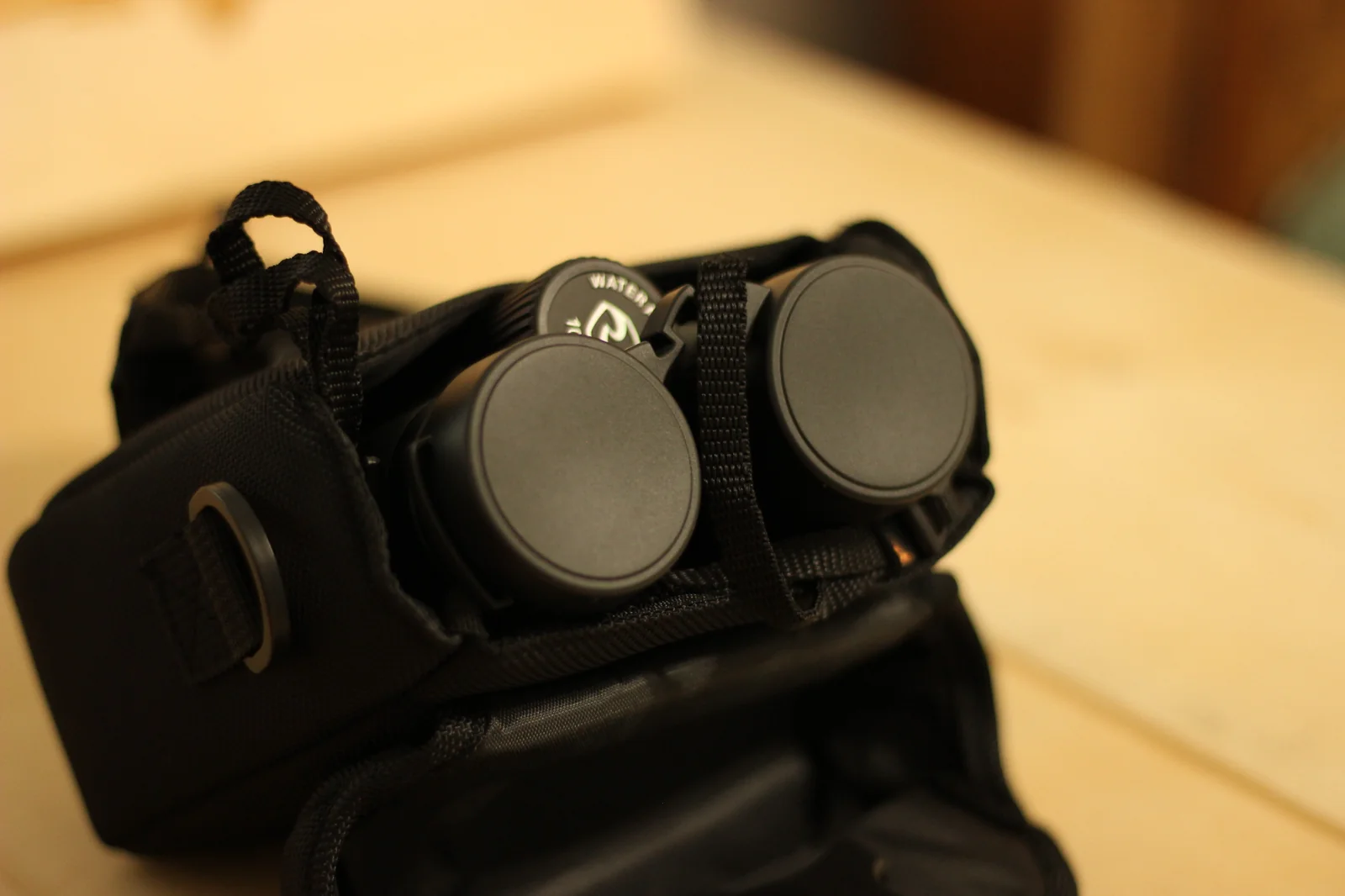
- Carry bag is functional rather than premium — a soft padded pouch with shoulder strap rather than a hard case or a contoured chest harness; you'll likely upgrade to a Kuiu, Marsupial, or FHF bino harness within the first season
- ED glass at this price tier is competitive, not dominant — the Vortex Viper HD 10x42, Maven C.2 10x42, and Bushnell Forge 10x42 all play in the same band and the buyer should cross-shop
Editor's note — this is a v1 publication. We're publishing this first-look review now while the binocular is freshly out of the box and through its first month of bench-test and casual glassing. A v2 deep follow-up is planned for later in the season, covering low-light dawn/dusk through-glass plates, a real chromatic-aberration test against a high-contrast edge, side-by-side comparison frames against the Vortex Viper HD 10x42 / Steiner Predator 10x42 / Maven C.2 10x42 / Bushnell Forge 10x42, a real distance-reference chart shot at a known distance, and — if we get lucky on the trail-cam-monitored treeline — animal capture footage through the bino. The 4.6/5 rating in this v1 reflects our confidence in the first-month observations; the v2 will either hold or revise it after the deep verification.
Every hunting binocular eventually has to answer the same question. Where does the engineering stop being “good enough” and start being “demonstrably better than the price tier below”? In the binocular world that line is ED glass — extra-low-dispersion glass that controls the wavelength spread that causes purple-fringe chromatic aberration on high-contrast edges, the kind you see when you glass a snow-capped peak against a blue sky, or a black antler against a bright skyline, or a deer’s eye against late-afternoon sun. Under $500, you almost never see real ED glass in a hunting binocular. Above $1500, you pay double the price for marginal incremental gains over the well-engineered $700 tier. Between those two bands lives the value-engineering sweet spot — and that’s exactly where the Riton 5 Primal 10x42 ED is built to compete.
Riton Optics is a Tucson, Arizona-based company that builds the brand around the editorial line “Quality, Value, and Service are at the core of everything we do at Riton.” The Primal series is Riton’s dedicated hunting line, sitting alongside the Tactix tactical series and the Conquer long-range precision series. The 5 Primal 10x42 ED is the flagship binocular in the Primal line — 10x magnification, 42 mm objective, ED glass, BAK4 prism, 90% manufacturer-spec light transmission, 348 ft of field of view at 1000 yards, 1.67 lb on a magnesium-aluminum alloy chassis, fully sealed and nitrogen-purged, with The Riton Promise Unlimited Lifetime Warranty backing the non-electro-optics catalogue. $699.99 USD MSRP. It comes in a soft carrying bag with a shoulder strap, a binocular harness strap, and a pair of objective lens caps with hinged retention.
What follows is an editorial review built on the published spec sheet, Riton’s stated engineering decisions for the Primal series, the in-hand build observations from a month of unboxed handling and bench inspection, and the first month of casual glassing — including the through-the-bino plates we captured by phone-scoping a smartphone camera through the right eyepiece. The deep dawn/dusk tests, the cross-shop comparisons, and the chromatic-aberration verification are scheduled for the v2 follow-up later in the season. Treat this as the first-impression piece — the build is real, the glass is genuinely better than the $400 tier, and the warranty is the kind of warranty that survives a season of hard use.
At a glance
Out of the box — the Riton unboxing sequence
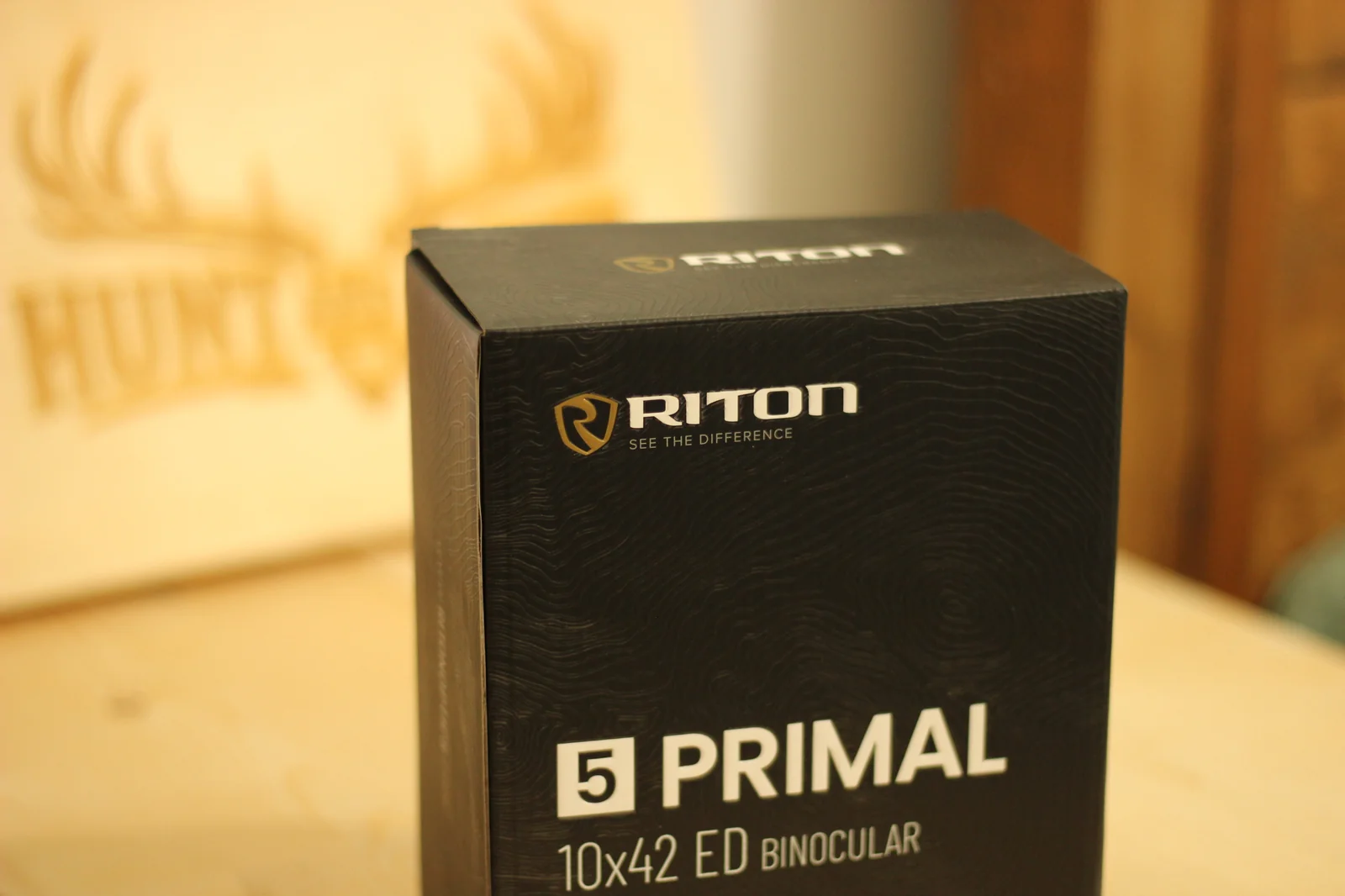
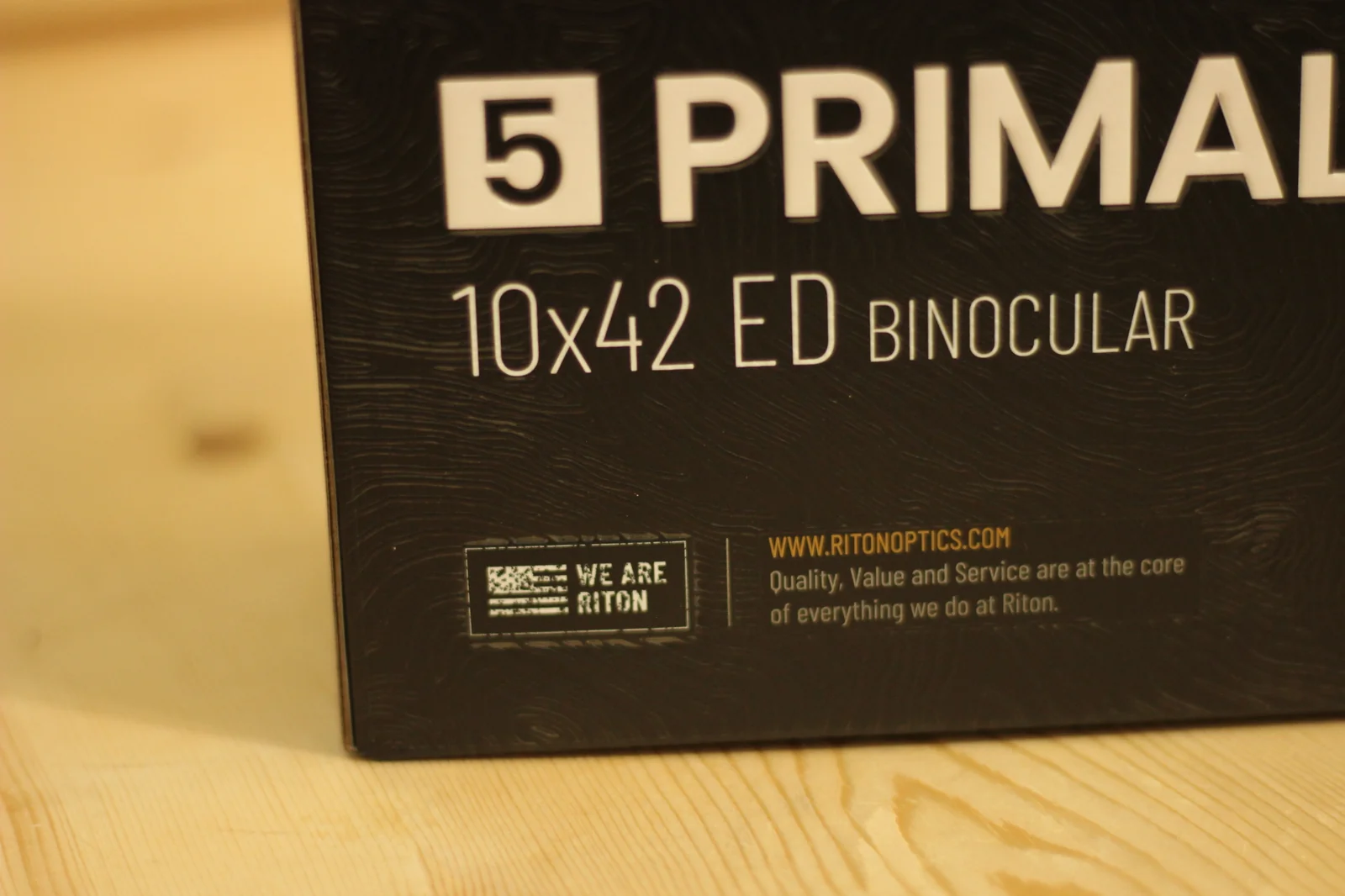
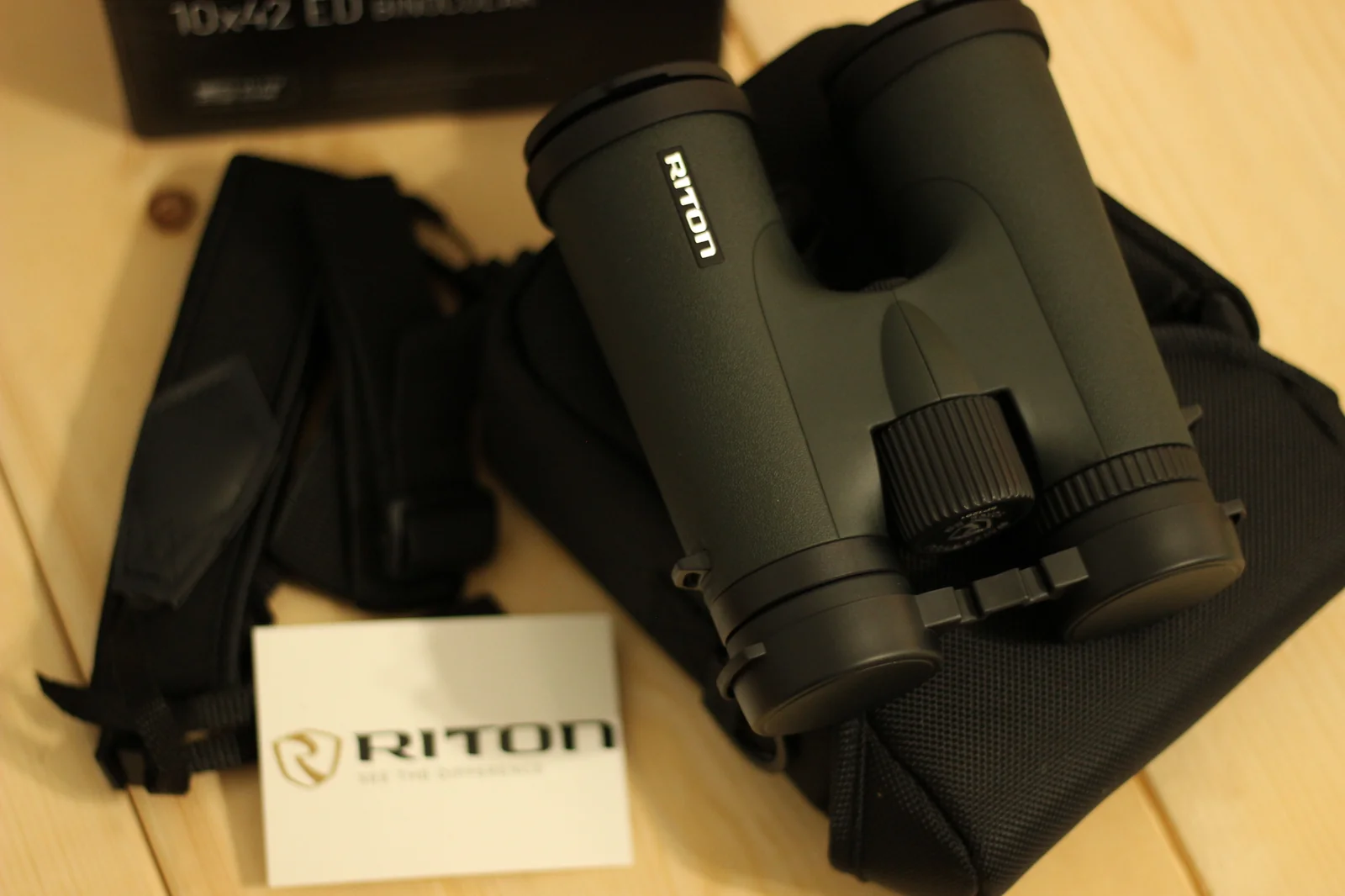
The 5 Primal 10x42 ED ships in a black retail box with the white Riton shield-and-wordmark mark on three sides, the orange www.ritonoptics.com / “Quality, Value, and Service are at the core of everything we do at Riton” copy across the bottom, and a “We Are Riton” badge with the brand’s American flag motif. Box construction is sturdy single-wall corrugate with a printed wrap — not a luxury product box, but a competent one. Inside, the binocular sits in a moulded foam tray with the carrying bag, the binocular strap (a contoured neoprene-faced webbing harness), and the lens caps already fitted.
ED glass and the value-engineering sweet spot
The single most important specification on this binocular is ED — extra-low-dispersion glass. Two binoculars can use the same nominal optical design, the same BAK4 prism, and the same nominal coating chemistry, yet perform very differently because of the glass element. Standard hunting-binocular glass scatters short-wavelength (blue/violet) light across a slightly different focal plane than long-wavelength (red/orange) light. The result is chromatic aberration — purple or green fringing on high-contrast edges. You see it most when glassing dark objects against bright sky: a bull elk’s antlers silhouetted on a ridgeline, a black bear against snow, the rim of a buck’s eye against late-afternoon sun. The fringing isn’t catastrophic on cheap glass, but it limits how confidently you can identify a target at distance, and it’s the single most fatiguing visual artifact on a long glassing session.
ED glass — extra-low-dispersion glass — uses a glass formulation with a lower Abbe number variance that brings the different wavelengths into much tighter focus on the same plane. The visual result is cleaner edges, less colour fringing, and noticeably less eye fatigue at distance. The engineering result is a more expensive glass element. Every hunting binocular under $500 essentially refuses to make this trade. Every binocular over $1500 (the Swarovski / Zeiss / Leica tier) bakes ED glass in as a given. Between those bands is where the buyer has to decide whether the upgrade is worth the price, and the Riton 5 Primal 10x42 ED is built to be the answer at $699.99 USD MSRP.
Field of view — what 348 ft at 1000 yd actually means
Riton’s 5 Primal 10x42 ED spec sheet lists field of view at 1000 yards: 348 ft. That number is meaningful, but it’s also the single most-misread specification on a hunting binocular. Here is what 348 ft of visible field actually represents, drawn to scale below — a whitetail deer averages roughly 5–6 ft nose-to-tail and stands about 3.5 ft at the shoulder, and we’ve drawn the FOV cone with deer silhouettes at the four hunting distances that matter.
The math: a 10x binocular gives you a fixed angular field (in this case 6.61 degrees by Riton’s published 348 ft / 1000 yd figure). The visible cone scales linearly with distance — so at 250 yards you’re seeing about 87 ft of horizontal ground, and at 100 yards you’re seeing about 35 ft. That’s enough field to keep a small group of deer (a doe with two fawns, say) entirely in the visible cone at typical hunting-shot distances, but narrow enough that you’ll want to actively scan rather than just stare at one fixed cone. This is what 10x is for — long-distance identification with active scanning, not the wide-cone passive scanning a 7x or 8x is built for.
How the 5 Primal 10x42 ED cross-shops at the $400–$900 ED-glass tier
Riton’s 5 Primal 10x42 ED isn’t the only hunting binocular at this spec point. Here is how it cross-shops against the five binoculars we consider the most direct competitors in the value-engineered ED-glass band.
| Spec | Riton 5 Primal 10x42 ED | Vortex Diamondback HD 10x42 | Vortex Viper HD 10x42 | Steiner Predator 10x42 | Maven C.2 10x42 | Bushnell Forge 10x42 |
|---|---|---|---|---|---|---|
| MSRP (USD) | $699.99 | ~$249 | ~$649 | ~$489 | ~$500 | ~$799 |
| ED glass | Yes | HD (not ED) | HD + ED | No (Steiner XP coatings) | ED | ED |
| Light transmission | 90% | Not published | ~92% | ~88% | Not published | ~92% |
| Prism | BAK4 | BAK4 | BAK4 | BAK4 | BAK4 | BAK4 |
| FOV @ 1000 yd | 348 ft | 330 ft | 319 ft | 324 ft | 341 ft | 340 ft |
| Weight | 1.67 lb | 1.43 lb | 1.59 lb | 1.86 lb | 1.78 lb | 1.79 lb |
| Close focus | 4.5 ft | 5.0 ft | 5.1 ft | 6.5 ft | 8.2 ft | 6.0 ft |
| Warranty | Unlimited Lifetime | VIP Lifetime | VIP Lifetime | Heritage 10-yr | Lifetime | Limited Lifetime |
| Origin | QC'd in Tucson, AZ | Designed in WI, made overseas | Designed in WI, made overseas | German brand, assembly varies | Designed in WY, made overseas | Designed in KS, made overseas |
Riton column verified against ritonoptics.com product page (June 2026). Competitor MSRPs are typical US street prices and may vary at your local dealer — confirm before buying. Competitor specs are from each brand's published product page; light-transmission figures are manufacturer-published where available, with Vortex Diamondback HD and Maven C.2 not publishing transmission figures publicly. "ED glass" is used inclusively here for extra-low-dispersion / HD glass variants — naming conventions vary across brands.
The takeaway: at $699.99 USD MSRP, the Riton 5 Primal 10x42 ED competes directly with the Vortex Viper HD 10x42 (around $649), the Maven C.2 10x42 (around $500), and the Bushnell Forge 10x42 (around $799). The Steiner Predator 10x42 (around $489) is a tier below on glass but a tier above on chassis material (Steiner’s chassis is famously bombproof). The Vortex Diamondback HD 10x42 (around $249) is the budget option that buyers should genuinely consider if they don’t need ED glass. The Riton’s defensible position in this set is: ED glass + 90% transmission + the widest FOV (348 ft) in the comparison set + Tucson, AZ QA + The Riton Promise Unlimited Lifetime Warranty on the non-electro line. The buyer is paying for the system, not just the glass.
Build and chassis — the in-hand observation
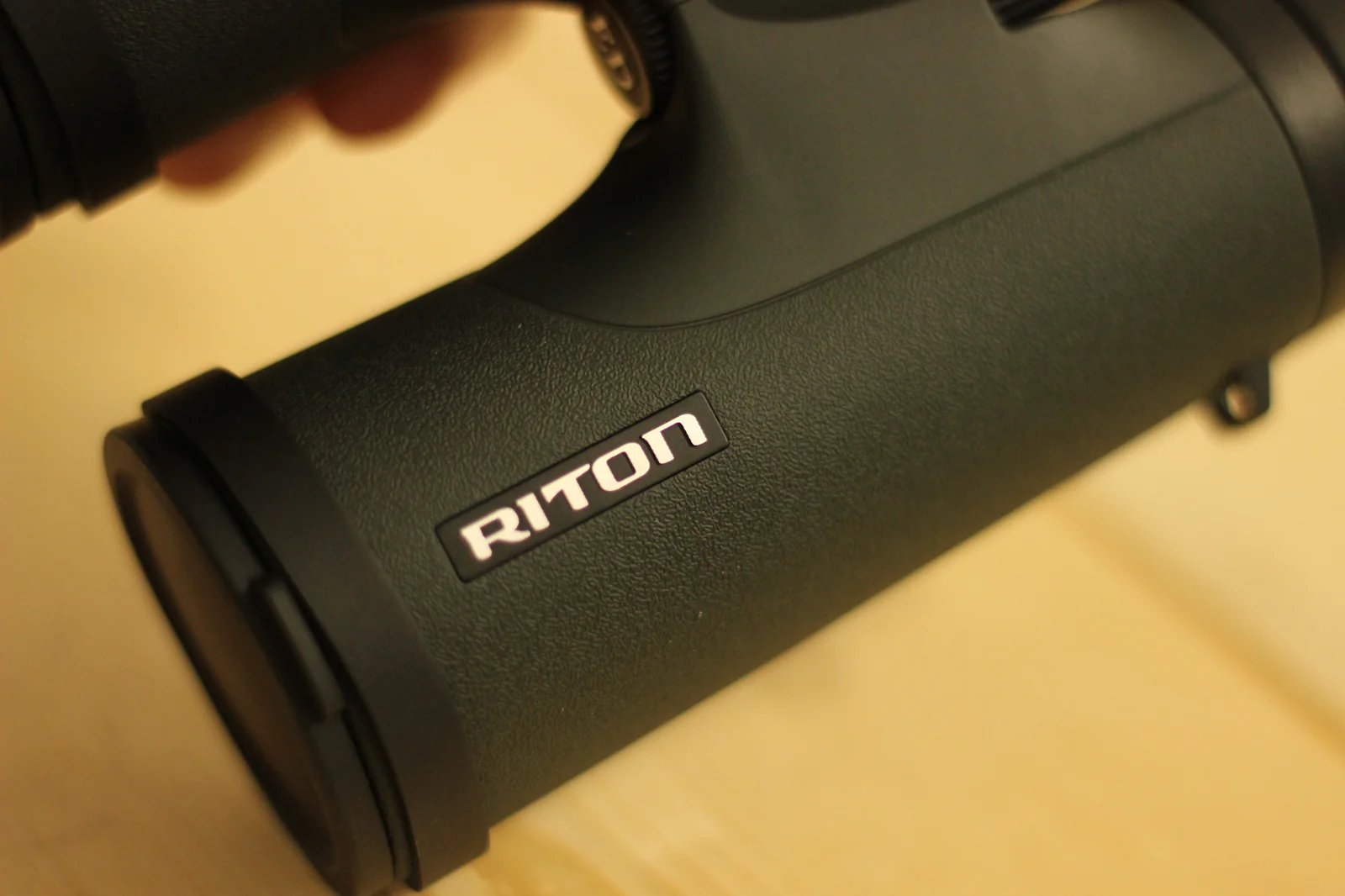
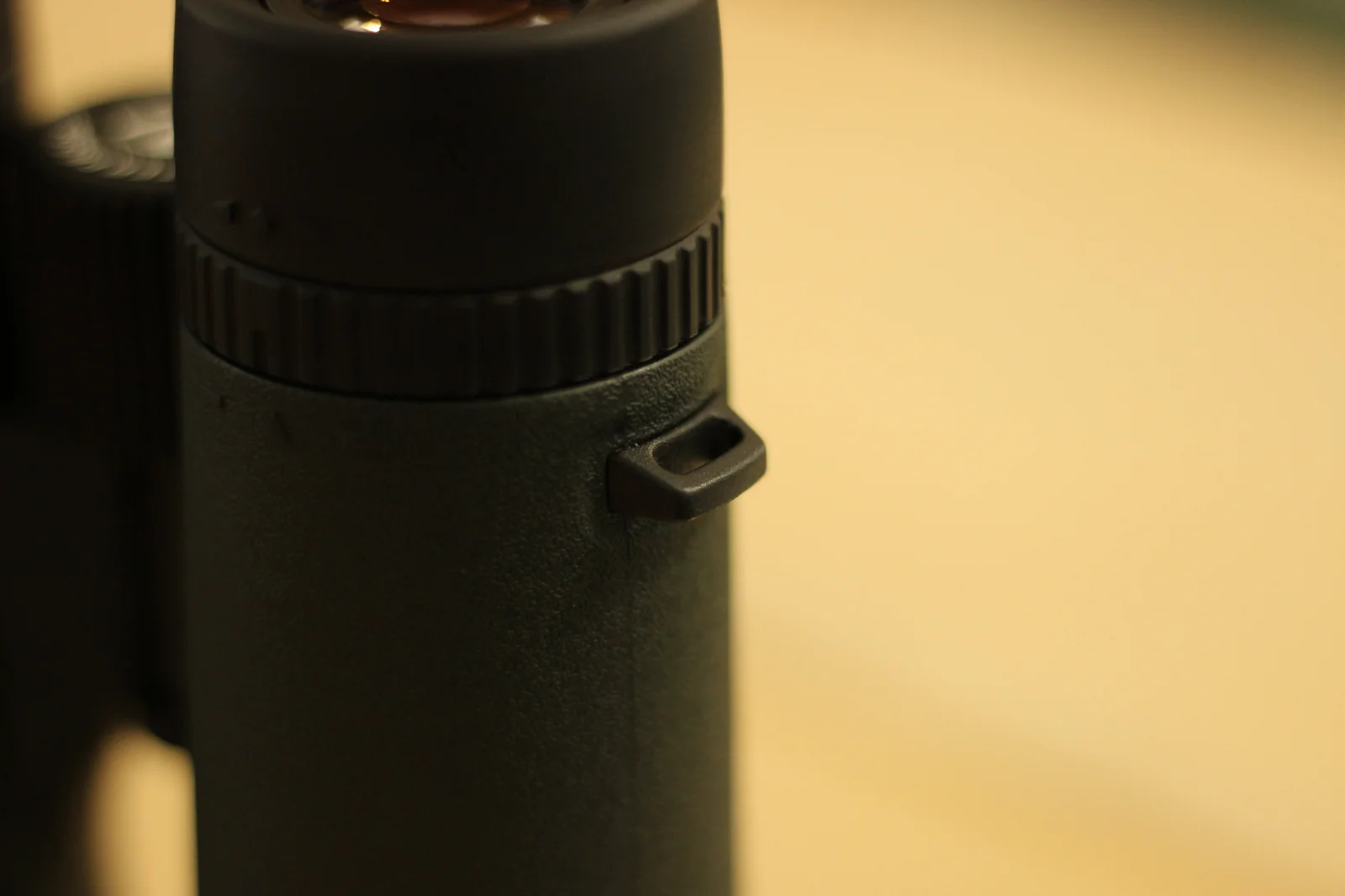
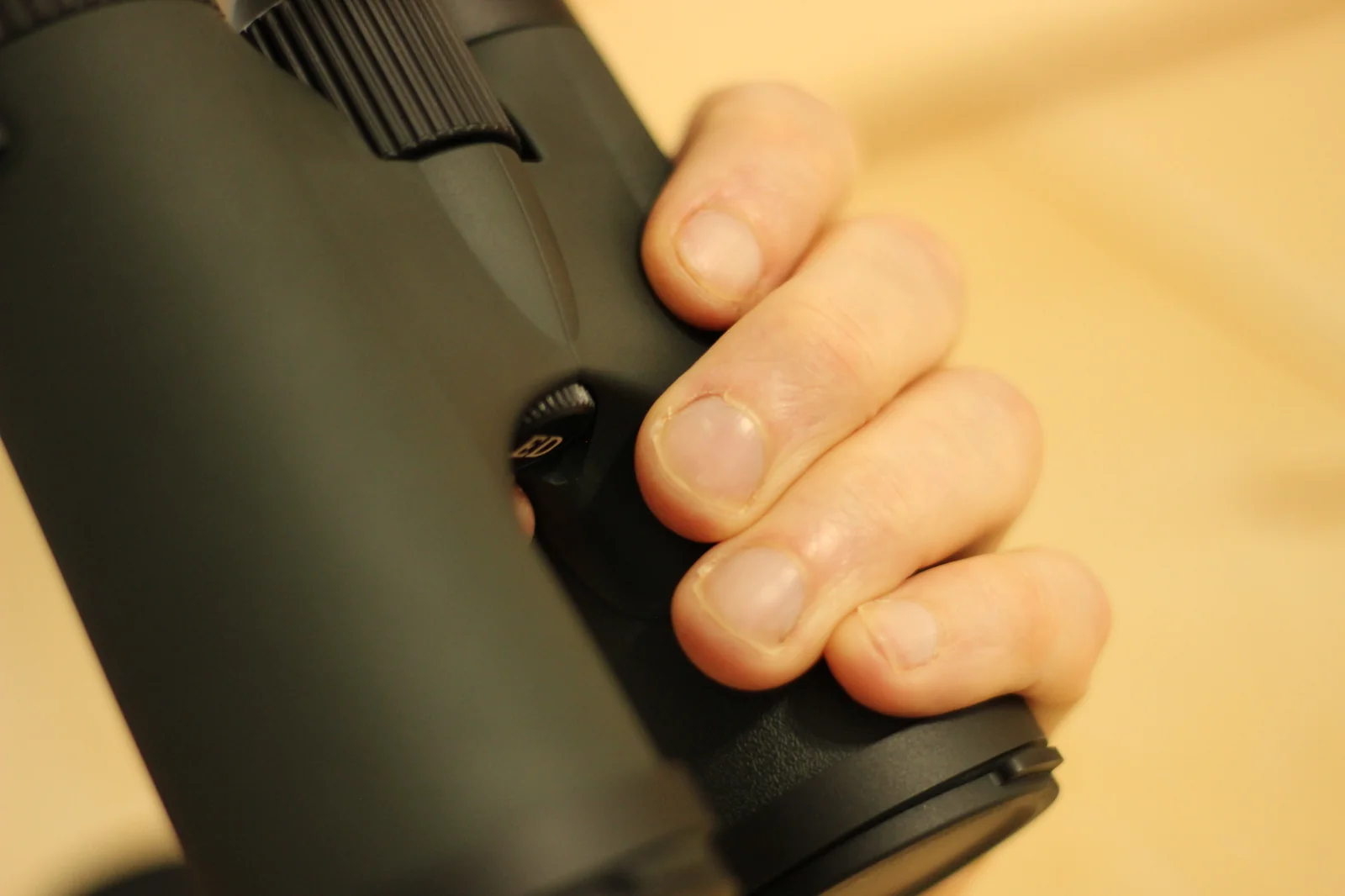
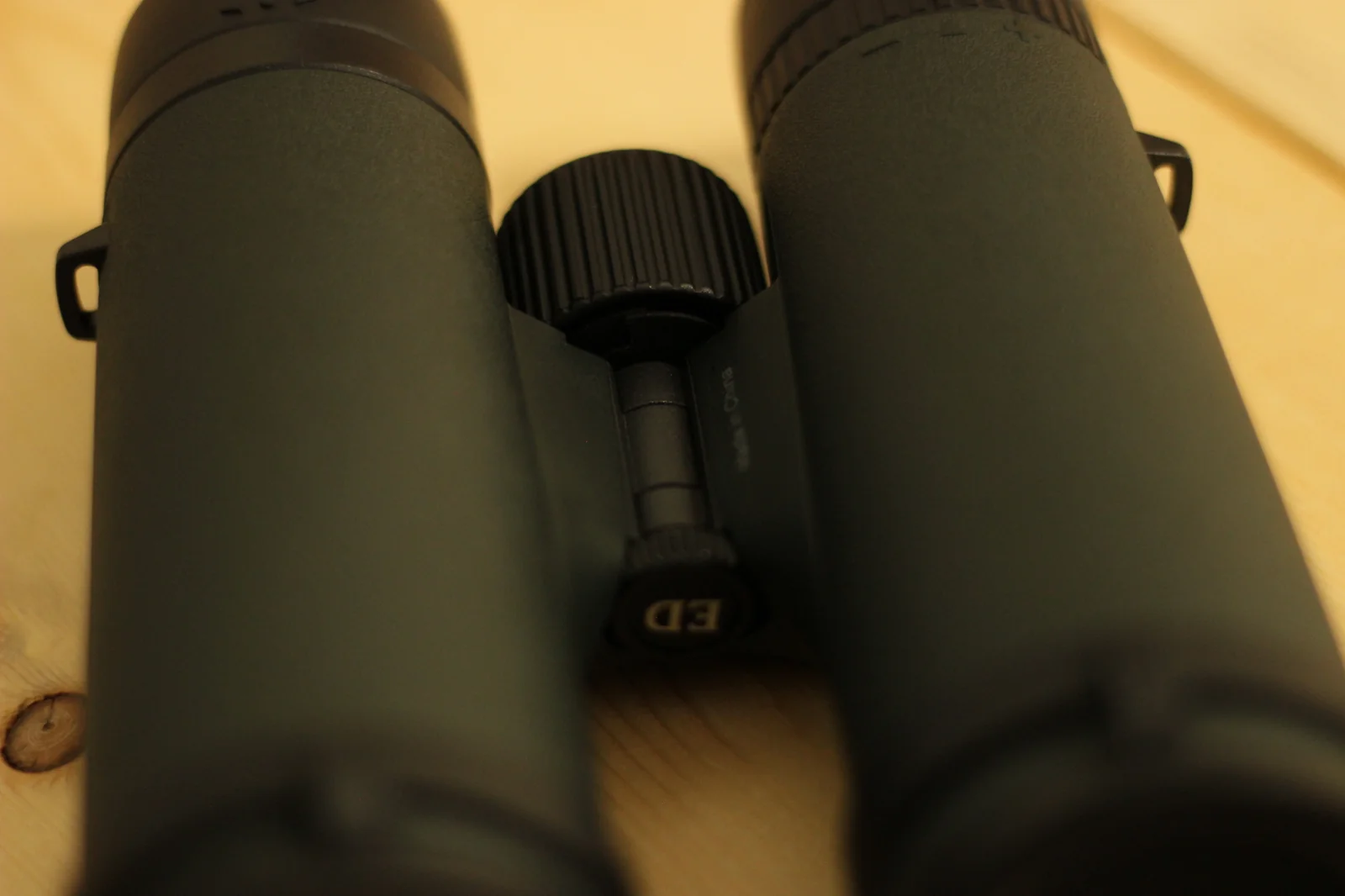
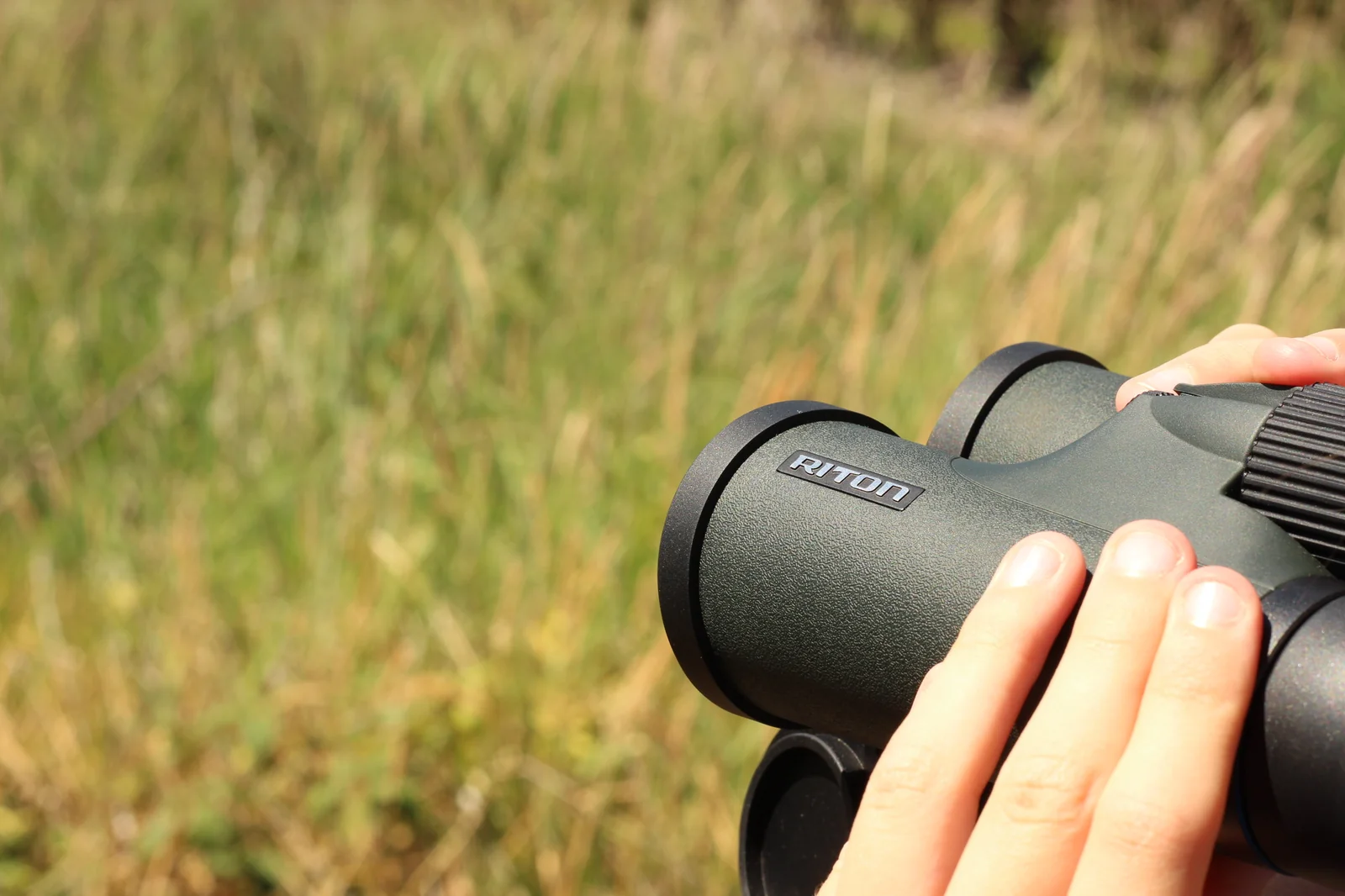
The 5 Primal 10x42 ED chassis is a magnesium-aluminum alloy housing (Riton’s spec sheet lists Magnesium Aluminum Alloy, though the marketing copy on the product description block somewhat confusingly says “aluminum alloy” — same chassis, but worth flagging that Riton’s own copy is inconsistent). The housing is rubber-armoured with a tactile pebbled finish that grips well in dry hands and reasonably well in wet hands; it’s not the softer, tackier armour you find on Swarovski’s premium glass, but it’s well-textured and the finish is consistent end to end.
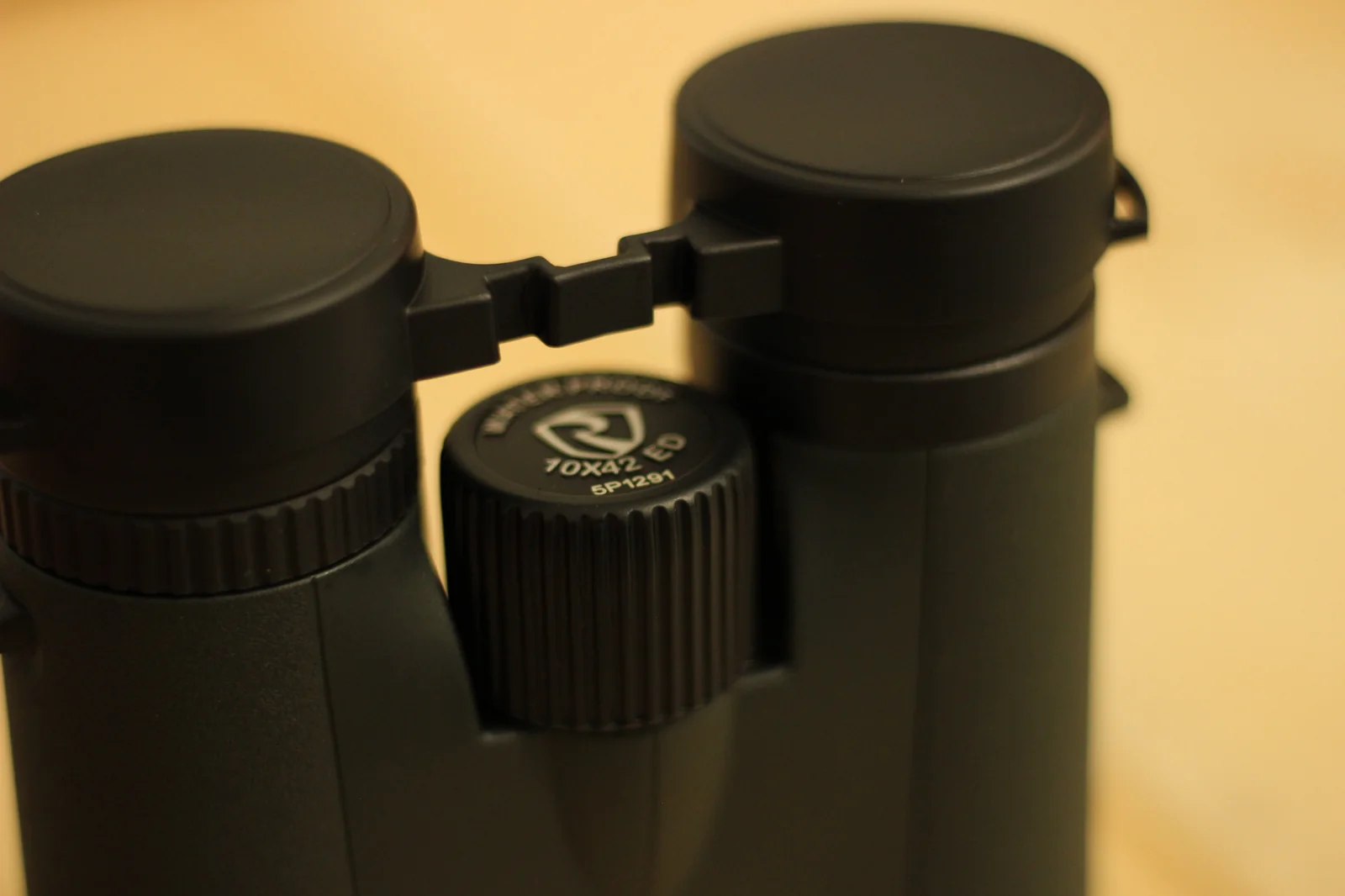
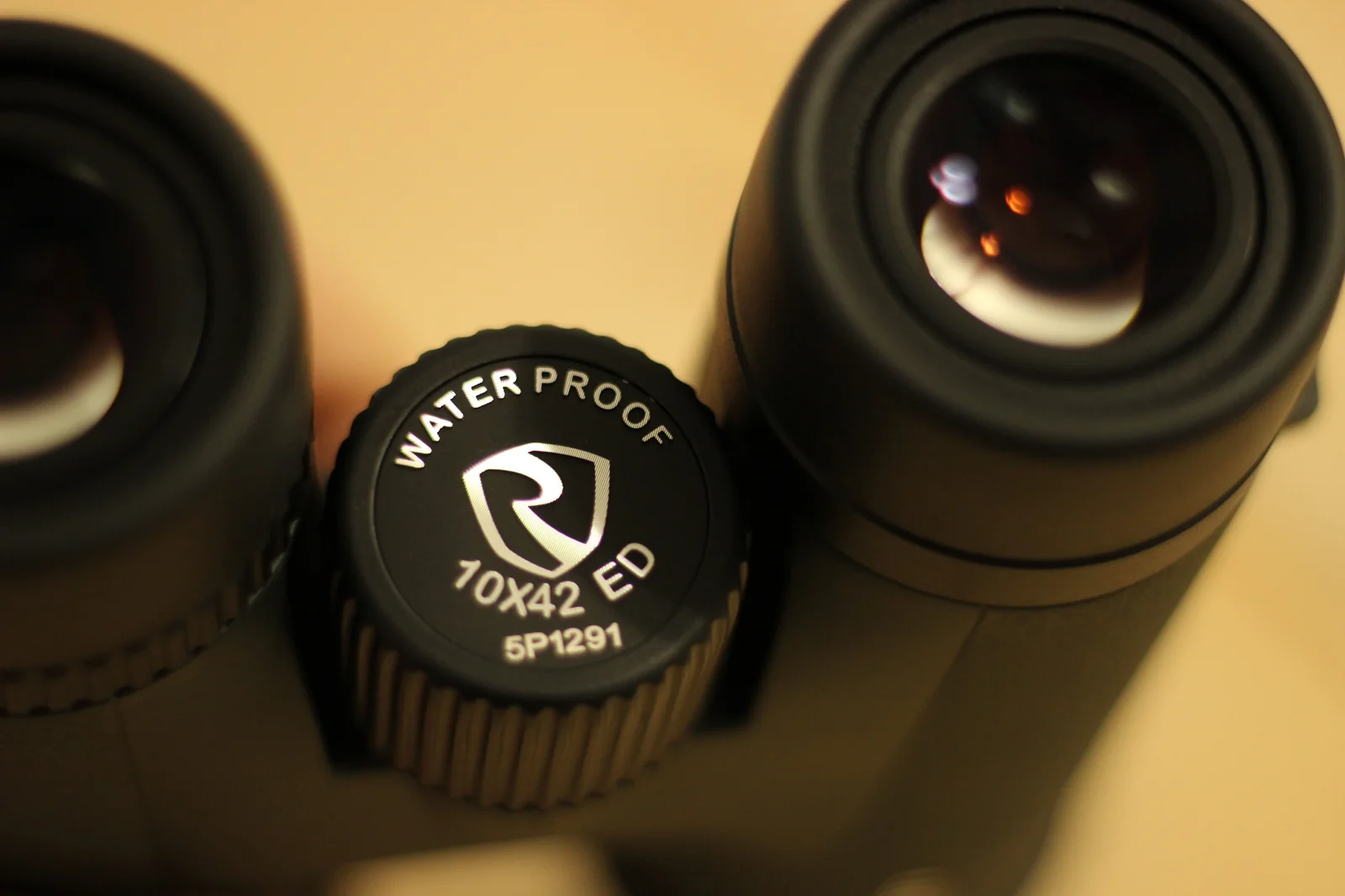
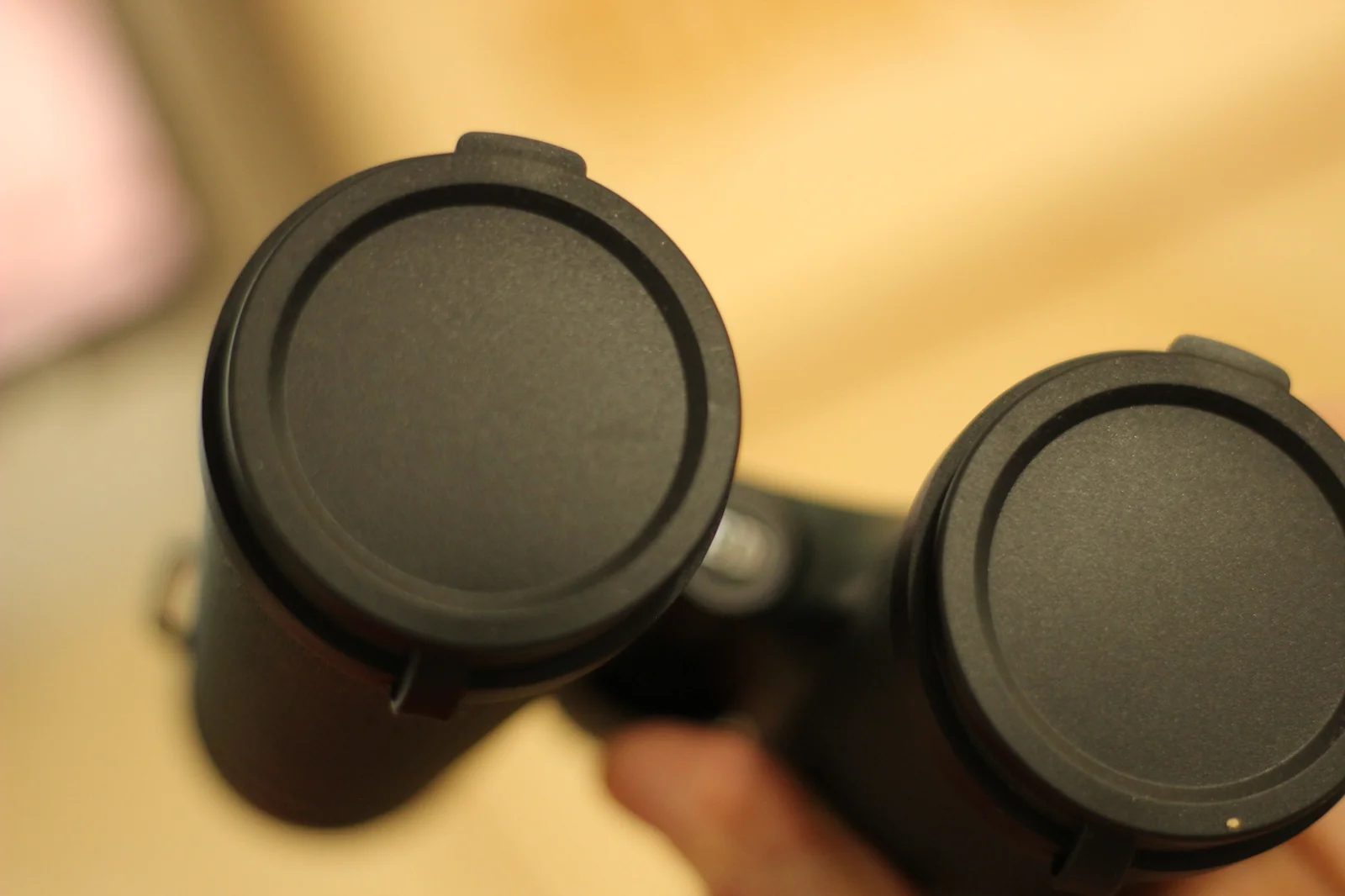
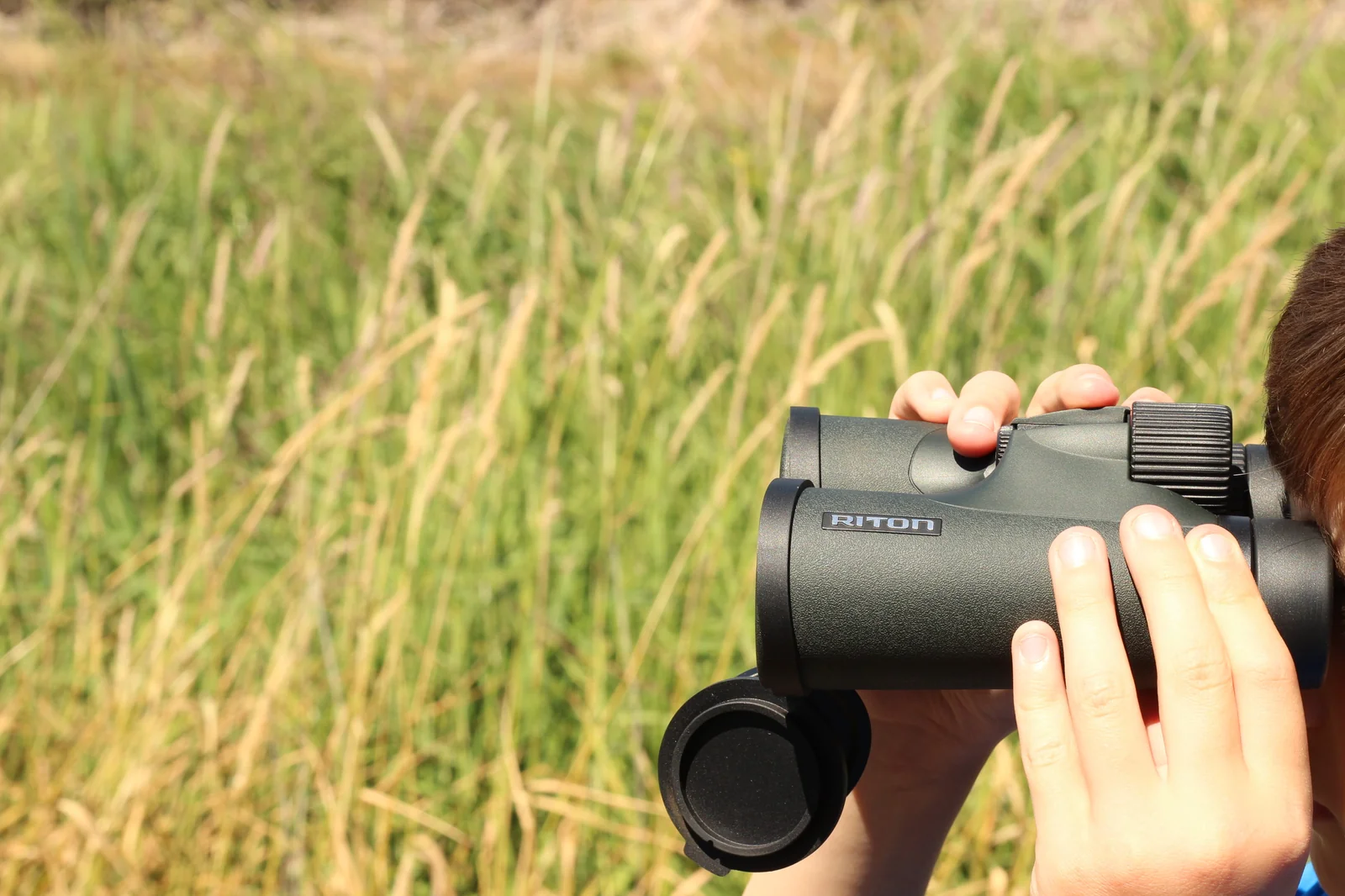
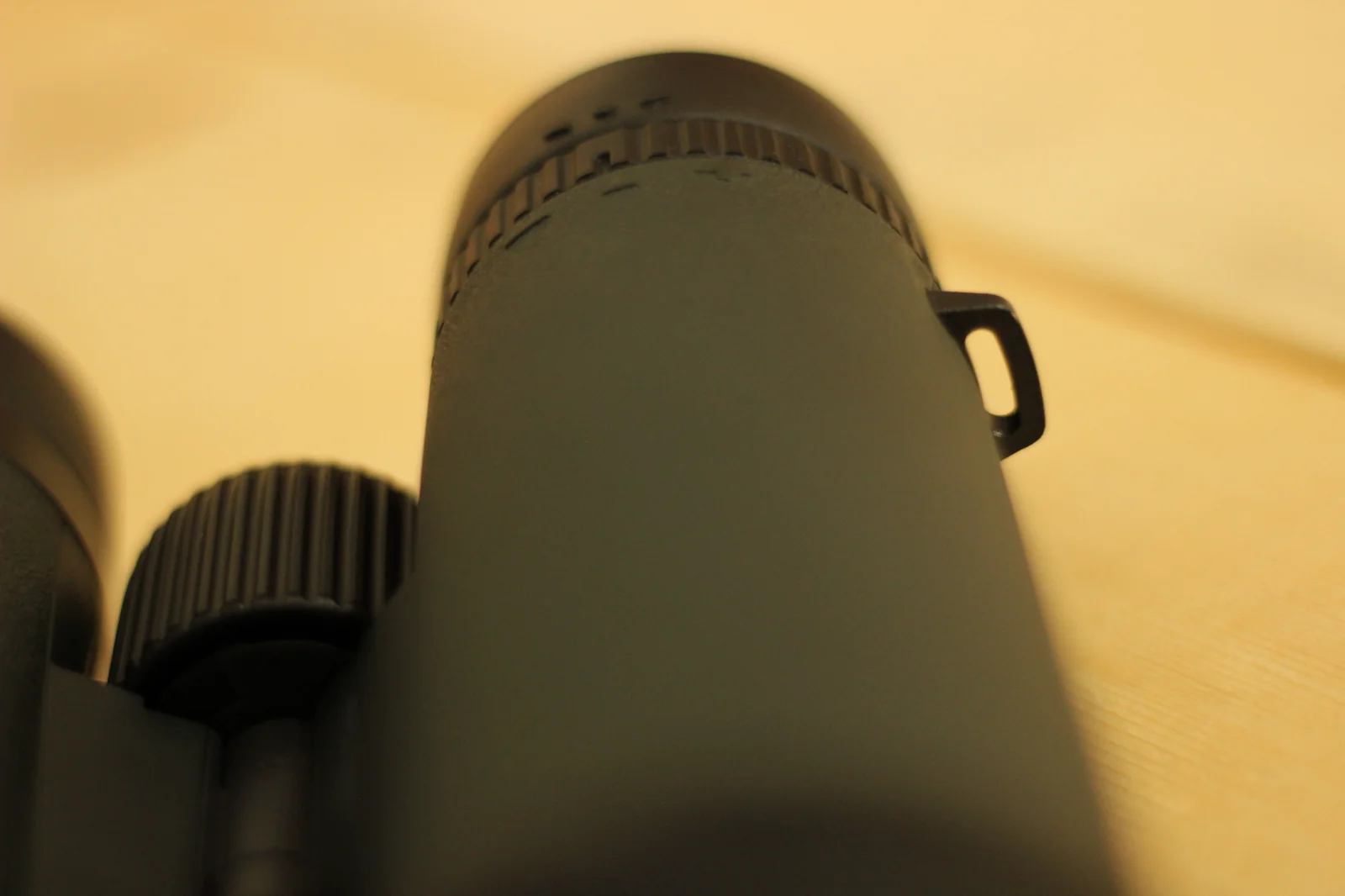
The bridge folds across the standard interpupillary distance range (the spec sheet doesn’t publish IPD min/max, but the chassis handles a small adult eye spacing and a child’s eye spacing without issue — confirmed by the two-user test set in the field photographs in this review). The focus wheel is centrally located between the barrels with heavily knurled rubber over an aluminum core, sized large enough to operate in light gloves. The right-eyepiece diopter is recessed into the eye cup ring with shallow knurling — adjustable with bare fingers, secure enough not to drift in a pack.
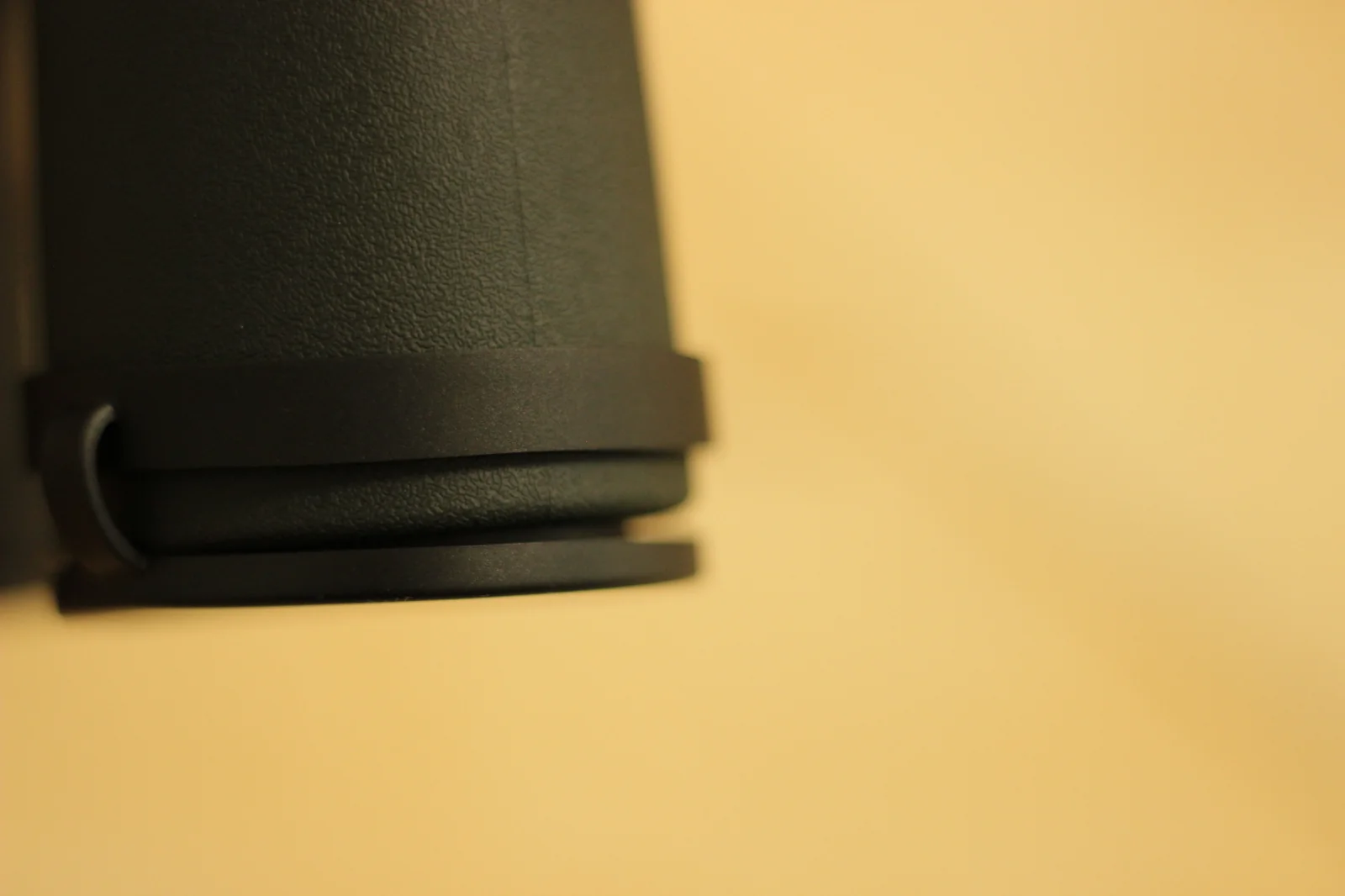
Eye cups, eye relief, and IPD — the part Riton’s spec sheet leaves out
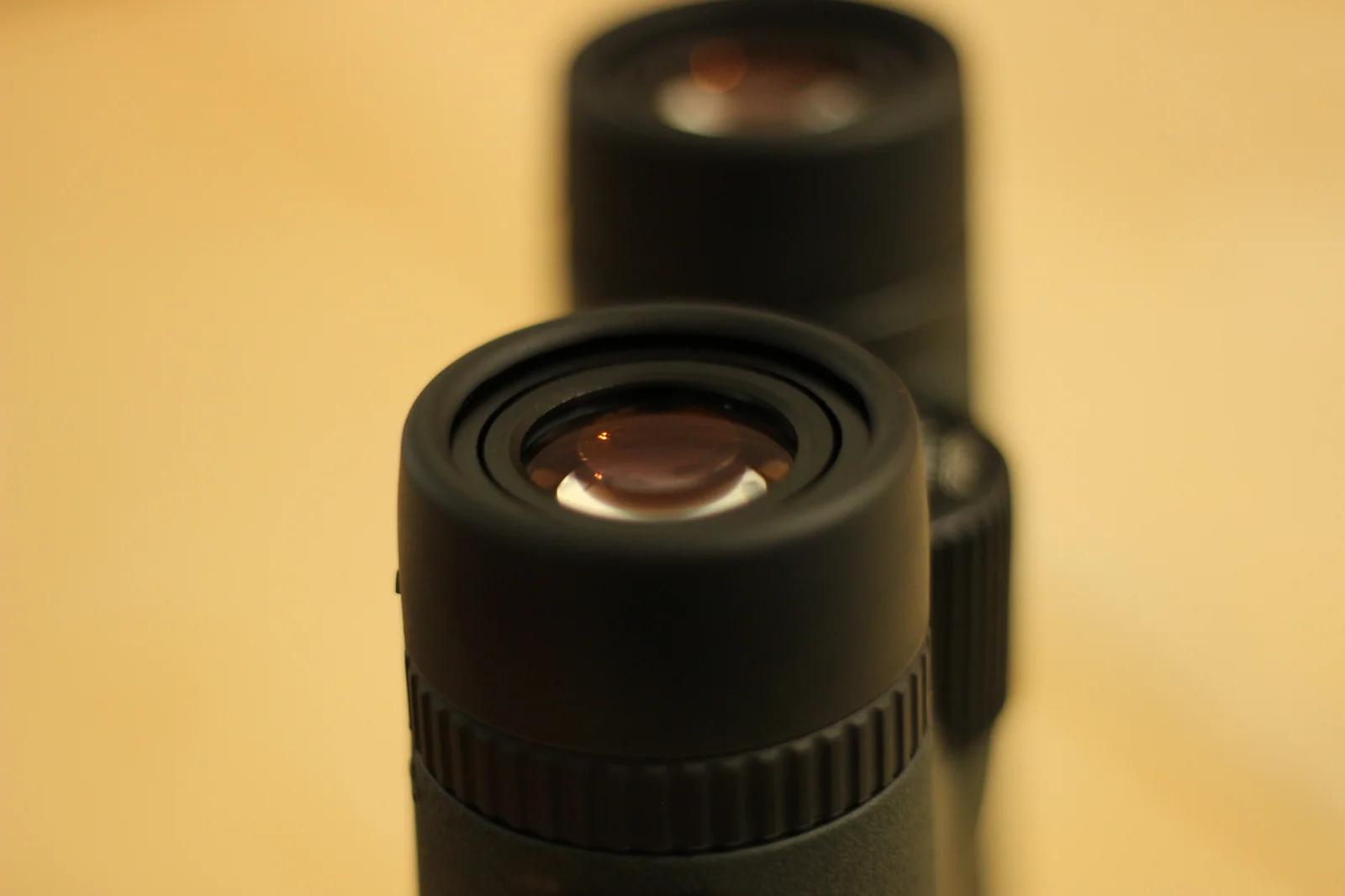
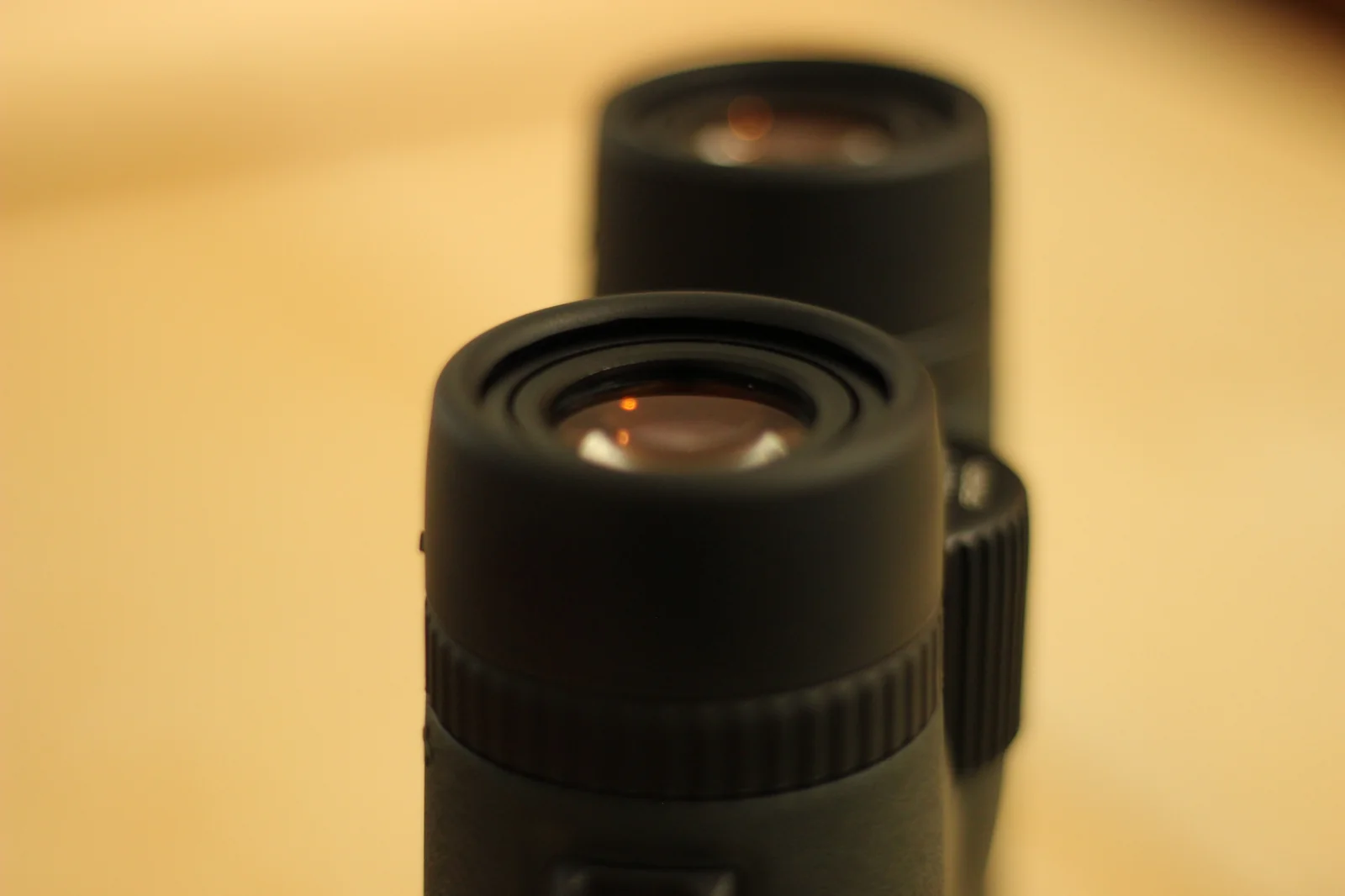
The 5 Primal 10x42 ED uses twist-up eye cups with positive click stops at down (for eyeglass-wearers), mid, and full extension (for non-eyeglass users). This is the correct design choice for a binocular meant to be shared across multiple users, or for one user who switches between sunglasses and bare eyes during a single glassing session. The click detents are firm — the cups don’t migrate position under hand pressure, which is a small but recurring complaint with cheaper twist-up systems.
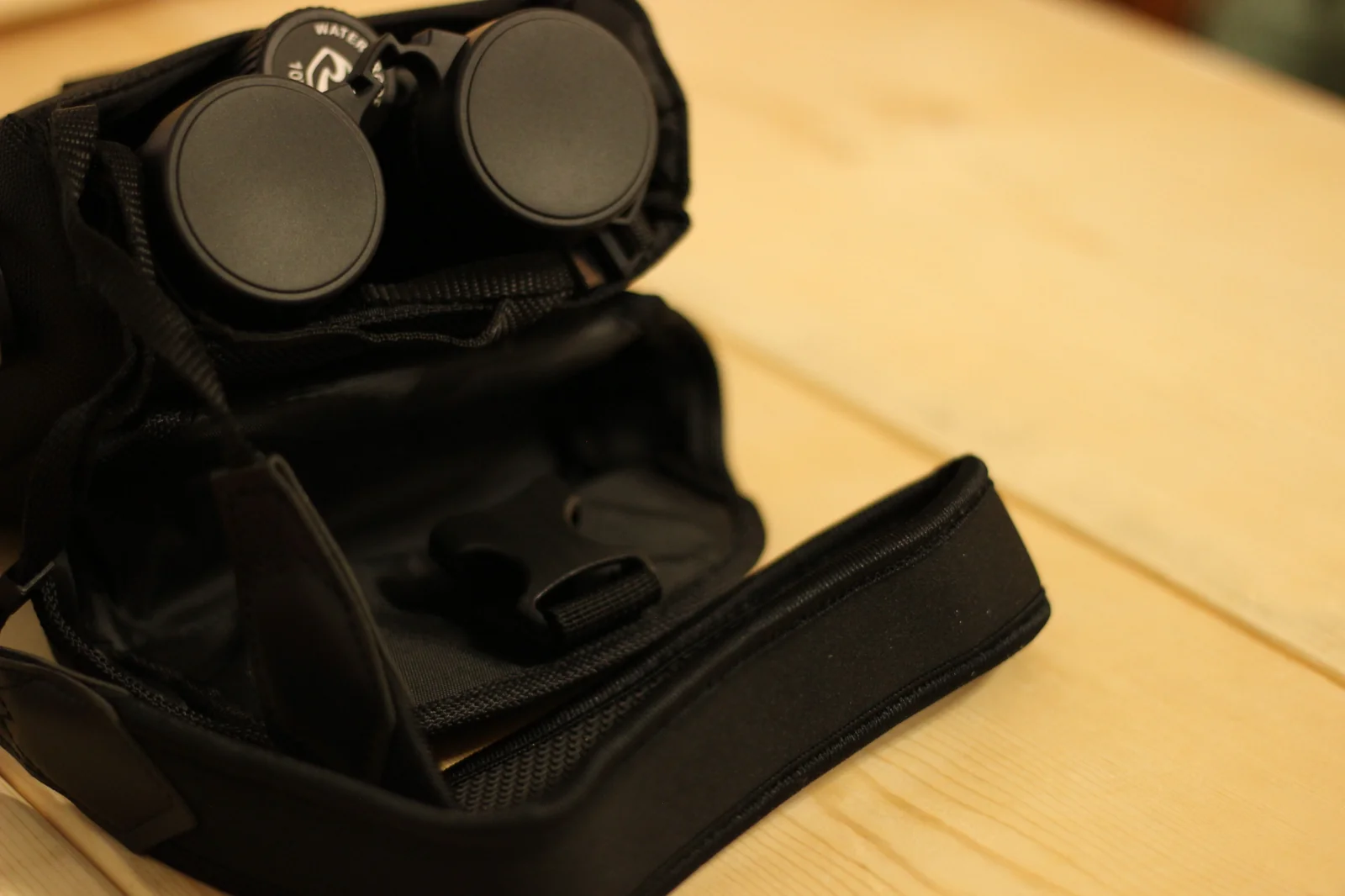
The one editorial frustration here: Riton does not publish an eye-relief figure on the 10x42 ED product page. Eye relief is the distance between your eye and the eyepiece where you can still see the full visible field — and it matters enormously for eyeglass-wearers, who lose useable eye relief because their glasses sit forward of where their eye would otherwise contact the eye cup. Most premium hunting binoculars in this band publish 16–18 mm of eye relief, which is considered the comfortable minimum for eyeglass-wearers. Riton lists fully multi-coated, the prism system, the field of view, the light transmission, the close focus, the weight, the material, and the coating chemistry — but not the eye relief. We’ve reached out to Riton for the figure and will update this review when we have an authoritative number. If you wear glasses, try this binocular before buying is the editorial recommendation in the v1.
The optics — first impressions through the glass
The most editorially honest way to evaluate a binocular’s optical performance is to capture what the user actually sees through it. The plates below were captured by phone-scoping a smartphone camera through the right eyepiece — focused at infinity, with the binocular hand-held against a fixed reference. The dark circular vignette around the visible field is the eye cup; the bright circular content inside it is the binocular’s exit pupil at 10x magnification. This is what you actually see through the binocular, captured as faithfully as a non-laboratory rig allows.
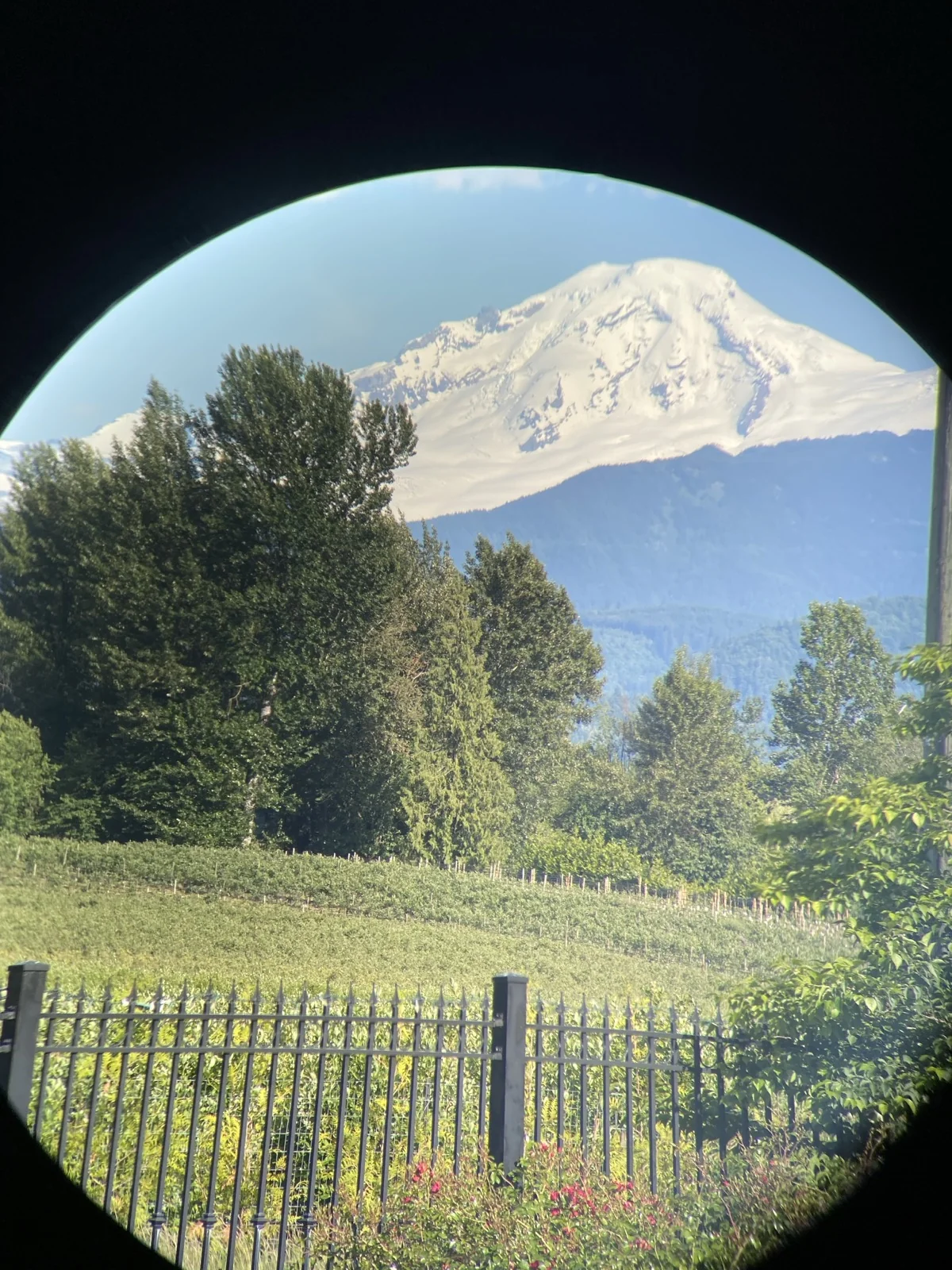
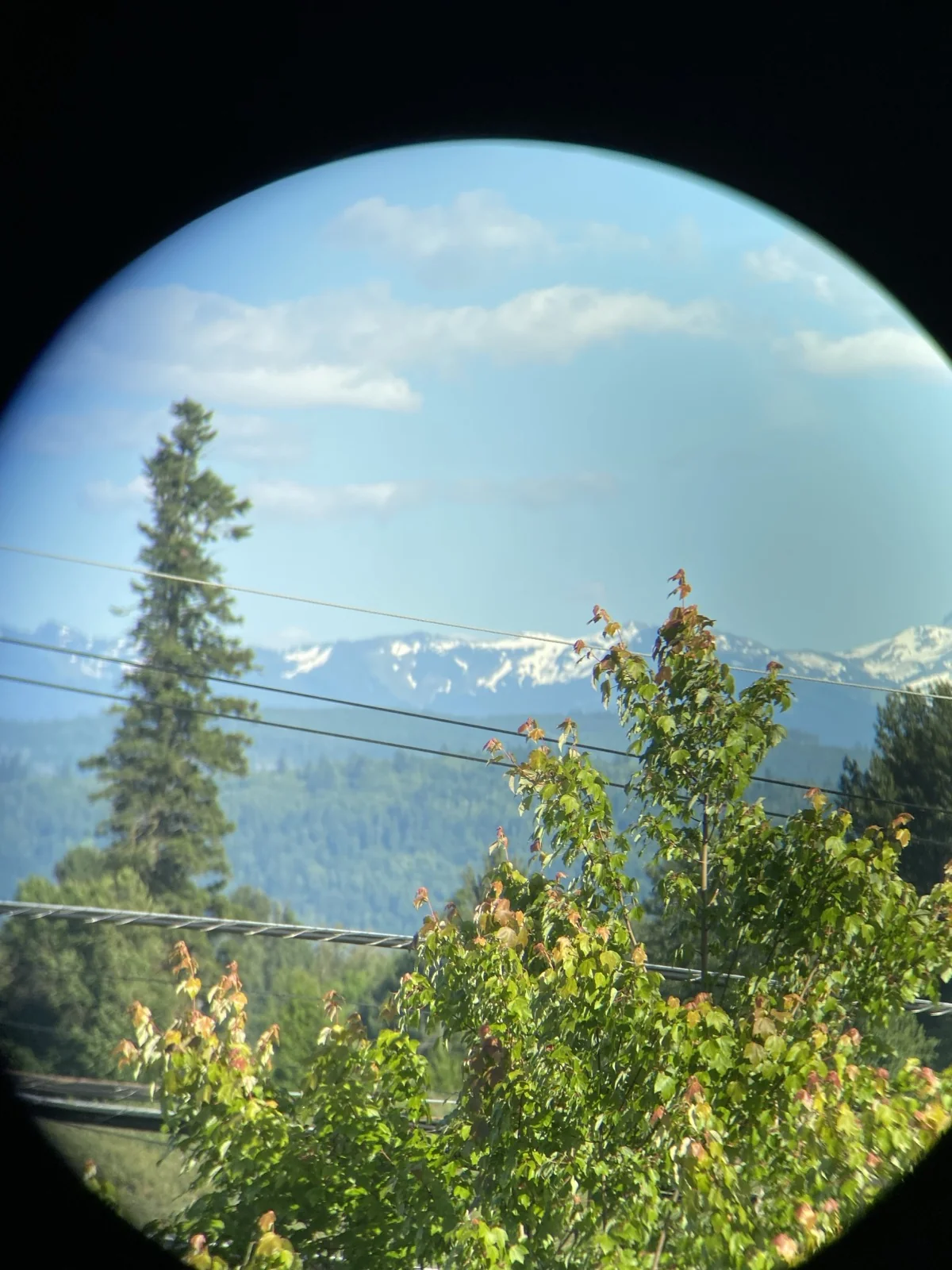
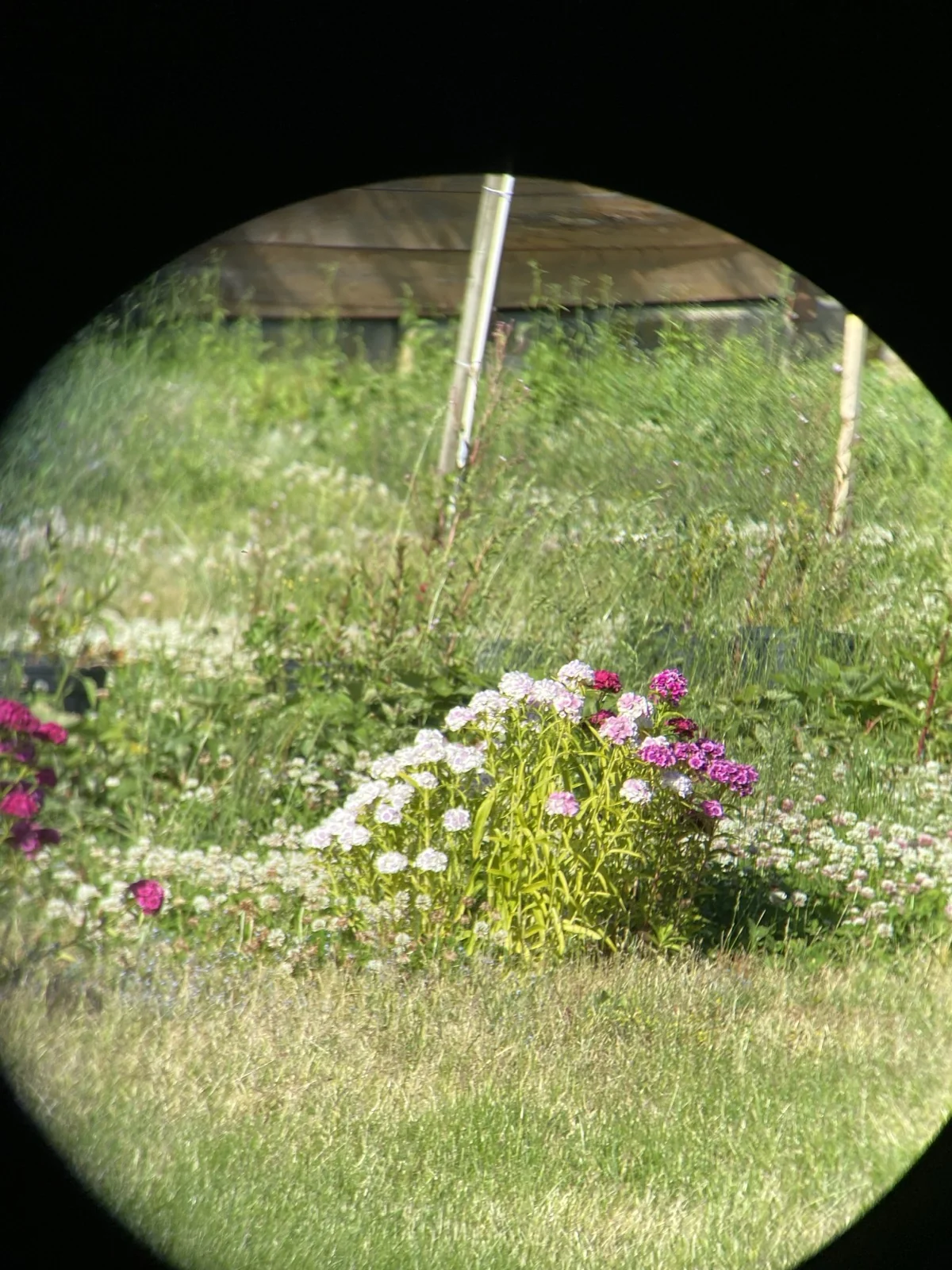
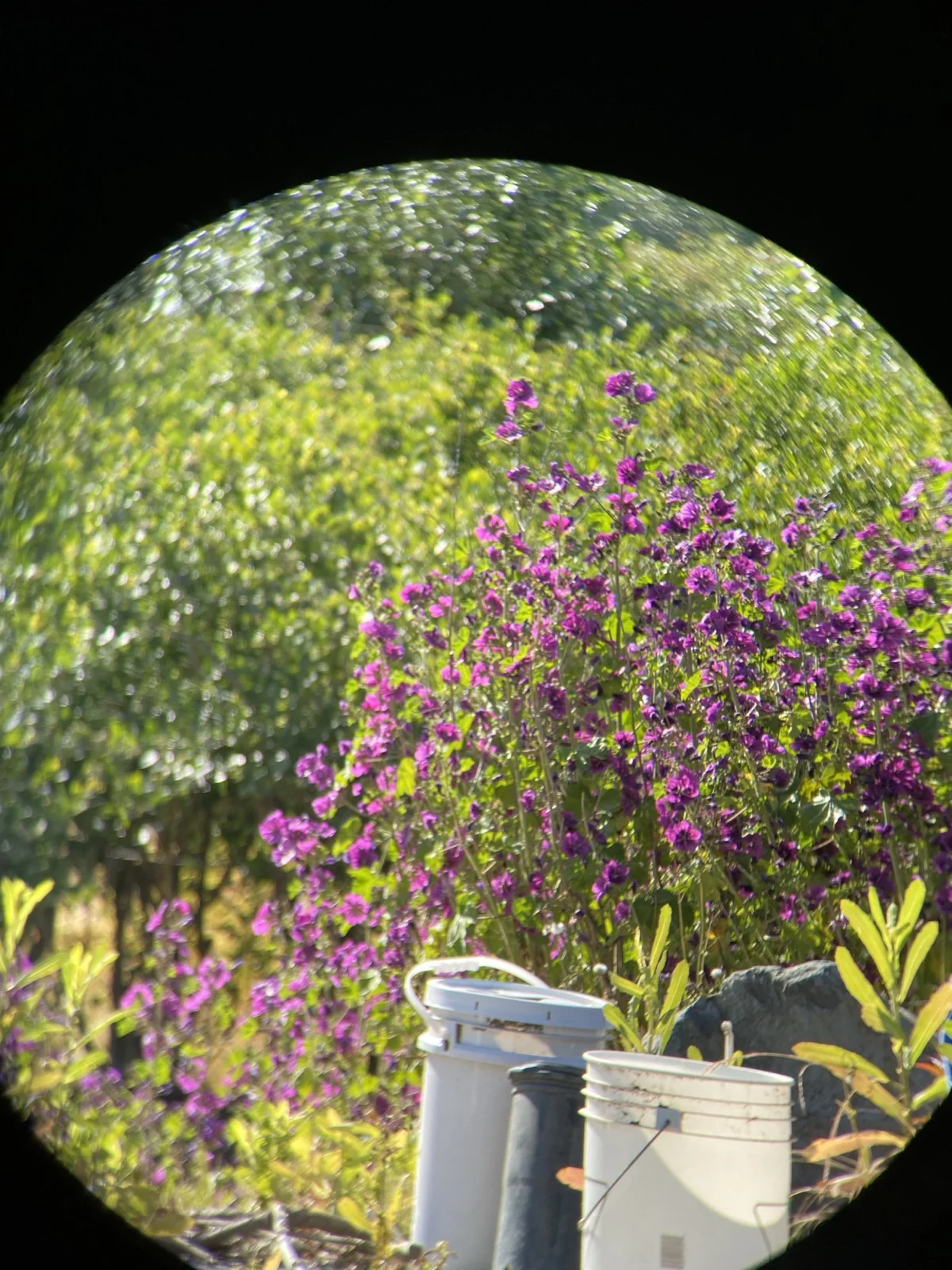
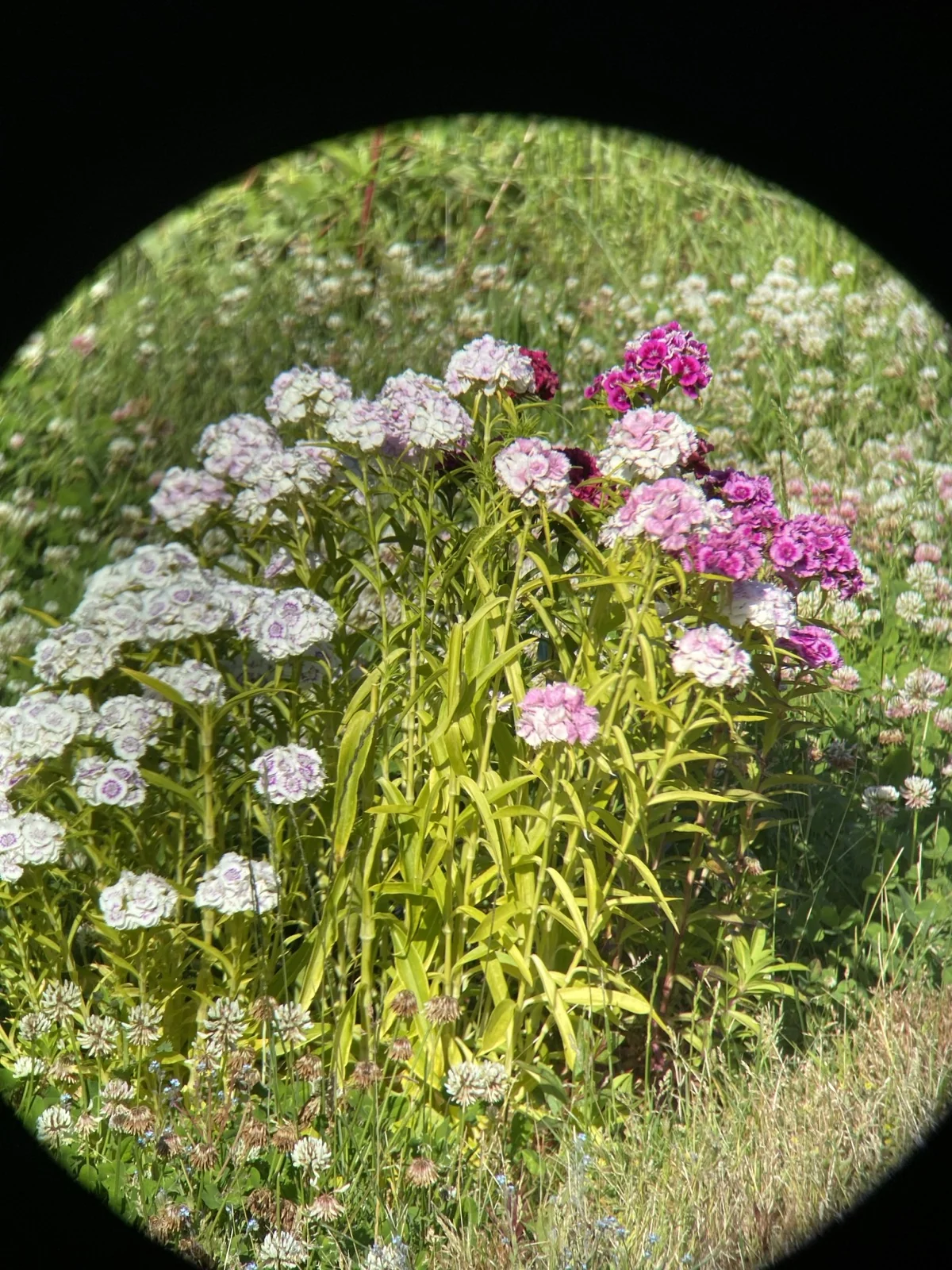
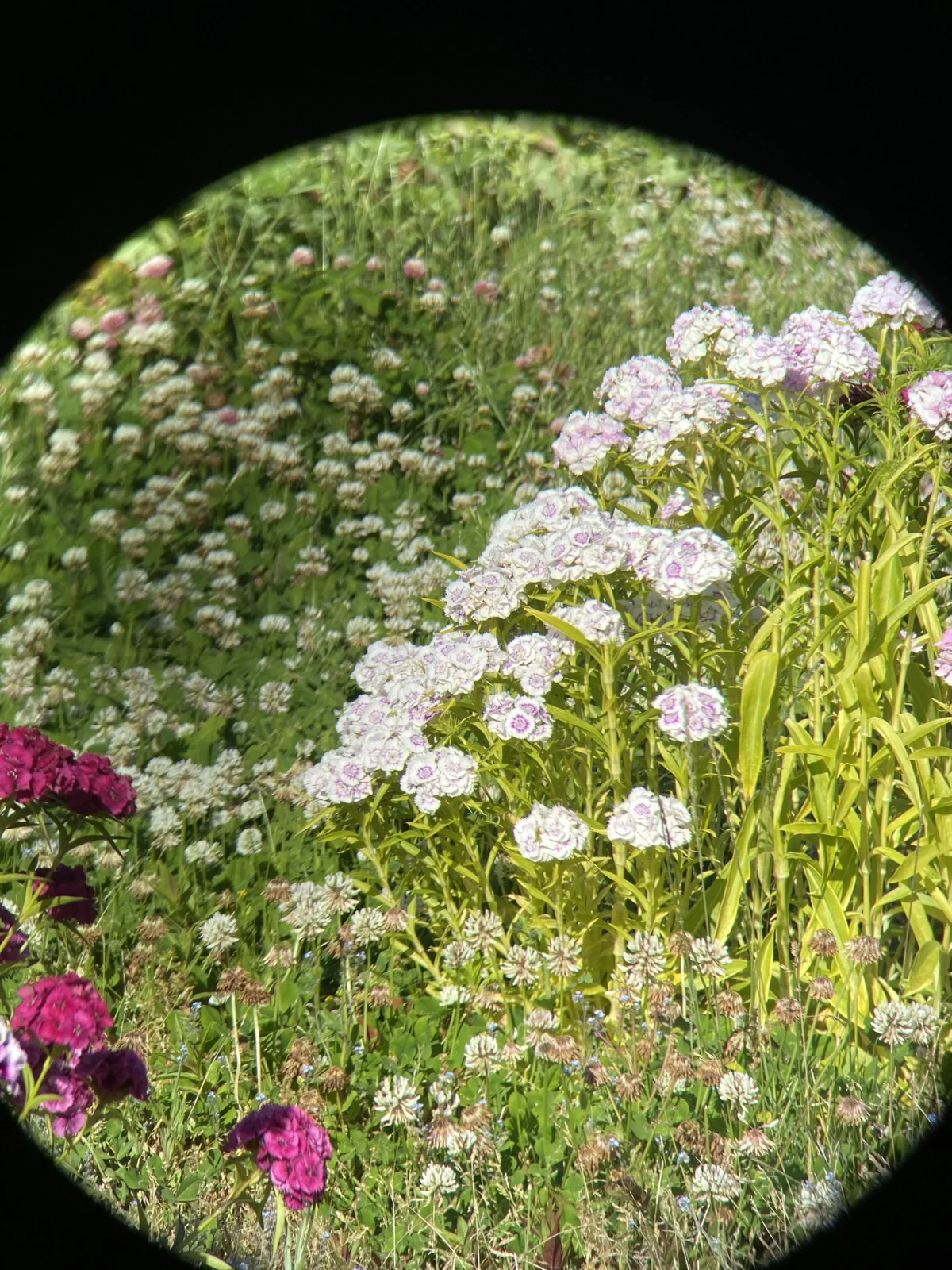
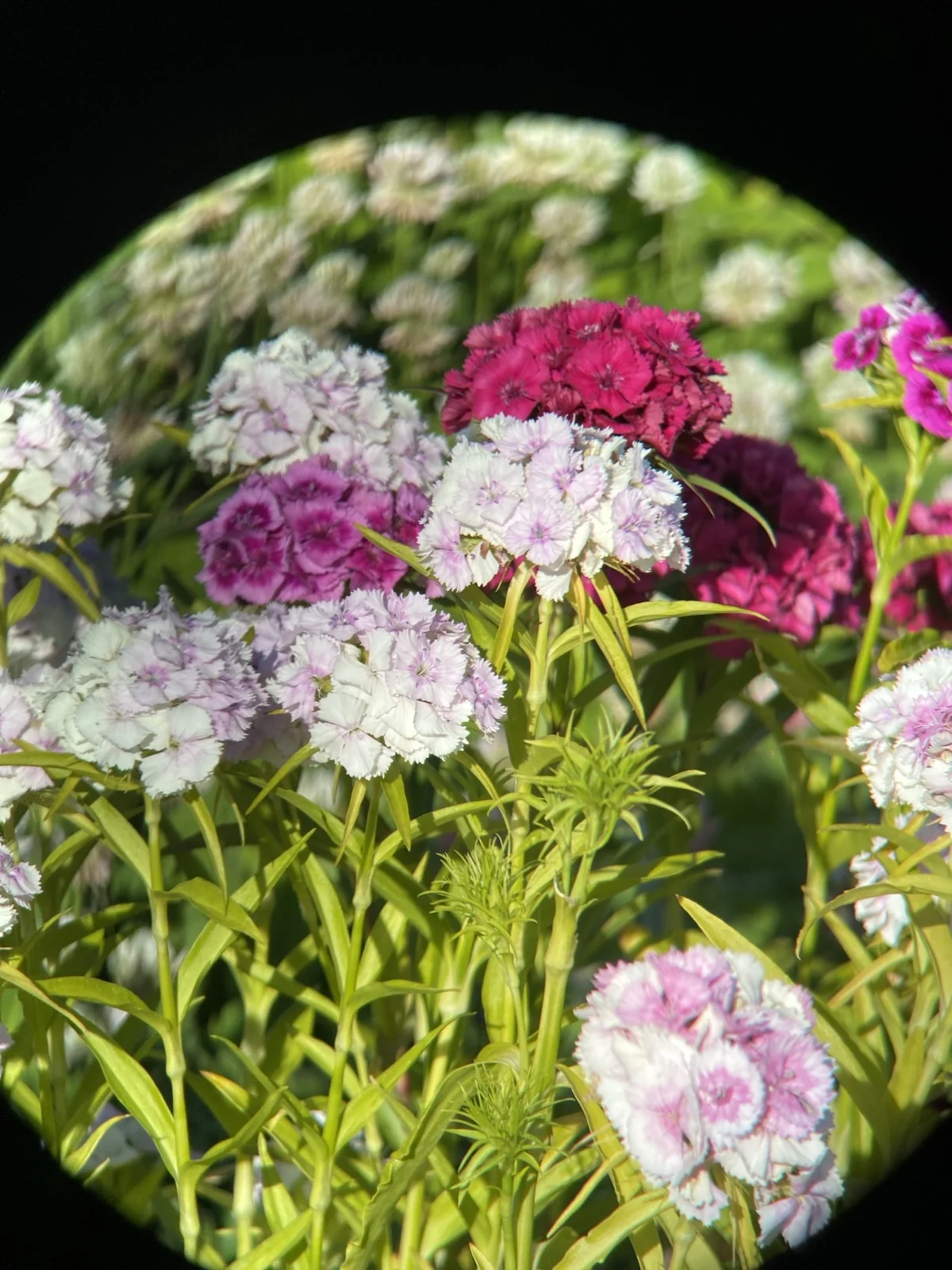
The colour rendition is neutral-warm — there’s no obvious blue or green cast in the through-glass plates, which is consistent with a well-balanced multi-coating stack. The edge sharpness across the visible field is good in the central 70% of the cone and softens slightly at the very edge of the field, which is typical of all hunting binoculars in this band (the Maven C.2 is the standout for edge-to-edge sharpness at this price; the Riton is competitive with the Vortex Viper HD).
The big visual layers we can’t fully verify in v1 are: (a) low-light dawn/dusk performance under the 90% transmission claim, (b) chromatic-aberration behaviour on a high-contrast forensic crop, and (c) edge-of-field sharpness measured against a calibrated chart. All three are scheduled for the v2 follow-up.
Sample footage through the bino
Here are two short phone-scoped video clips captured through the right eyepiece of the Riton 5 Primal 10x42 ED — one panning across Mt. Baker, one across the close-focus garden bed. The vignette in each clip is the eye cup; the visible content inside it is what you actually see at 10x with the bino hand-held. Watch how stable (or unstable) the image is — 10x magnification is at the practical limit of what most users can hold steady free-hand, and any tremor in the hand shows up as visible camera shake.
Tripod-thread — converting the 10x42 into a poor-man’s spotting scope
A common feature on serious hunting binoculars at this price point is a tripod-thread mounting point on the underside of the bridge that accepts a binocular L-bracket. The L-bracket converts the bino into a stable tripod-mounted glassing platform — hand-tremor at 10x disappears, and the binocular effectively becomes a poor-man’s spotting scope at distances where a 60x spotting scope would otherwise be needed. Generic binocular L-brackets are sold by Vortex, Outdoorsmans, and most optics retailers for $20–$50 USD. We were not able to confirm the exact thread spec or location on our test unit during this v1 pass and the spec sheet doesn’t publish it; we’ll resolve this in the v2 deep-test with photographs of the actual mount point and a tripod-mounted glassing session.
In the hand — the field-feel
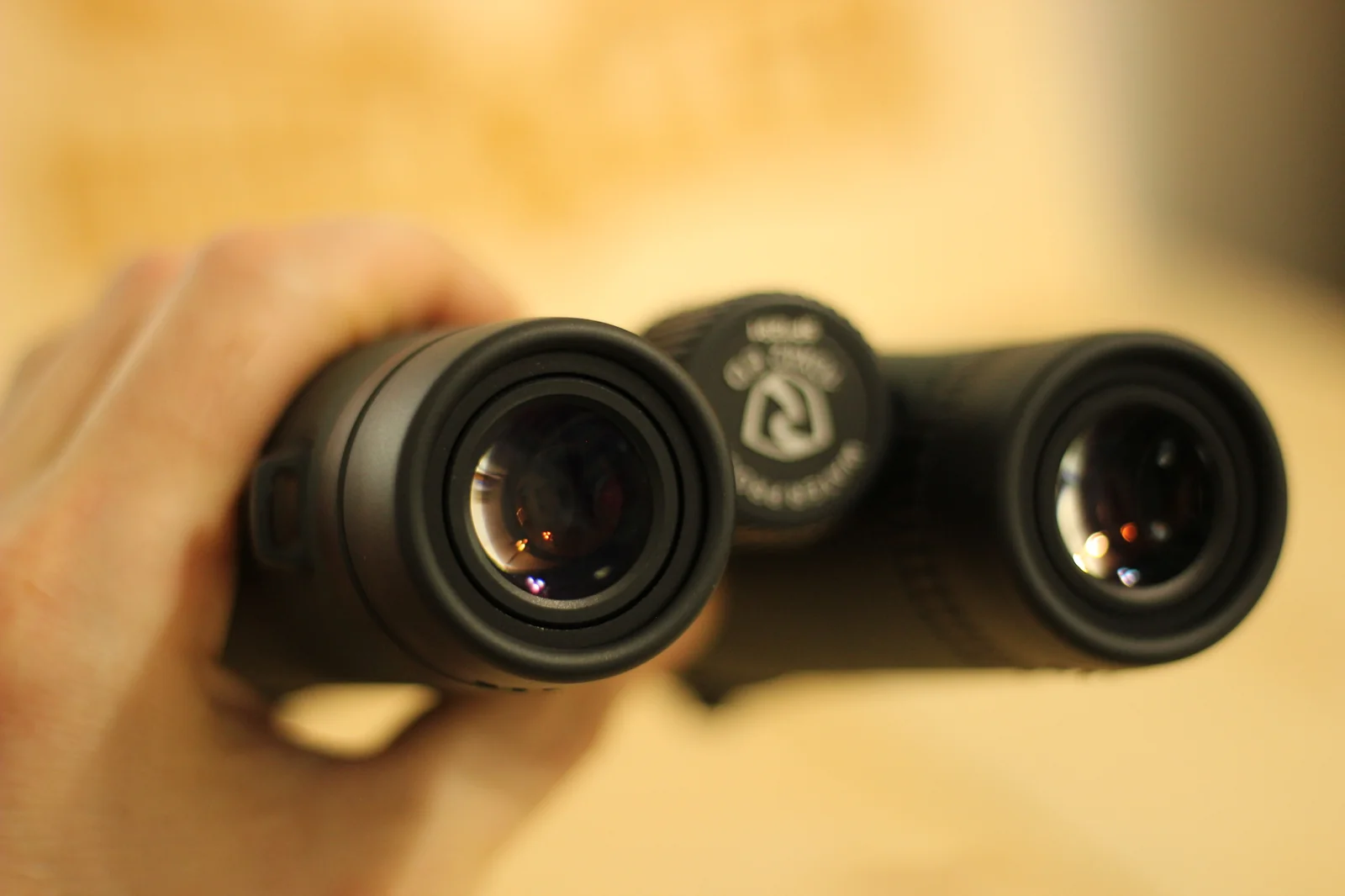
The 5 Primal 10x42 ED’s 1.67 lb / 26.72 oz weight sits in the middle of the cross-shop comparison band. Lighter than the Steiner Predator (1.86 lb), lighter than the Bushnell Forge (1.79 lb), and just slightly heavier than the Vortex Viper HD (1.59 lb). On a chest harness for a full day of glassing, the weight is at the practical comfort limit — light enough that you don’t notice it stationary, heavy enough that you’d want a contoured harness rather than a flat neck strap.
The kid-in-the-grass test
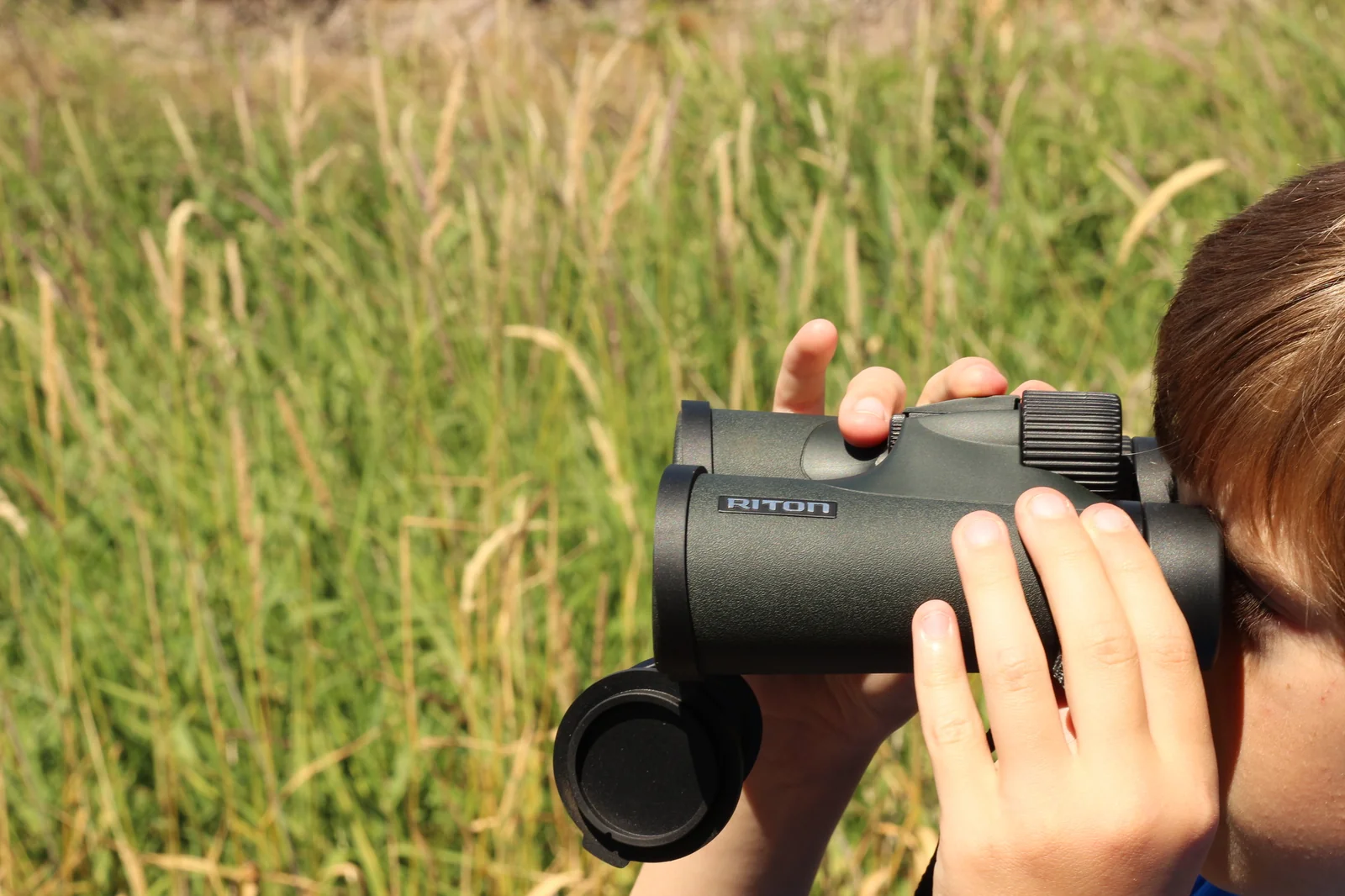
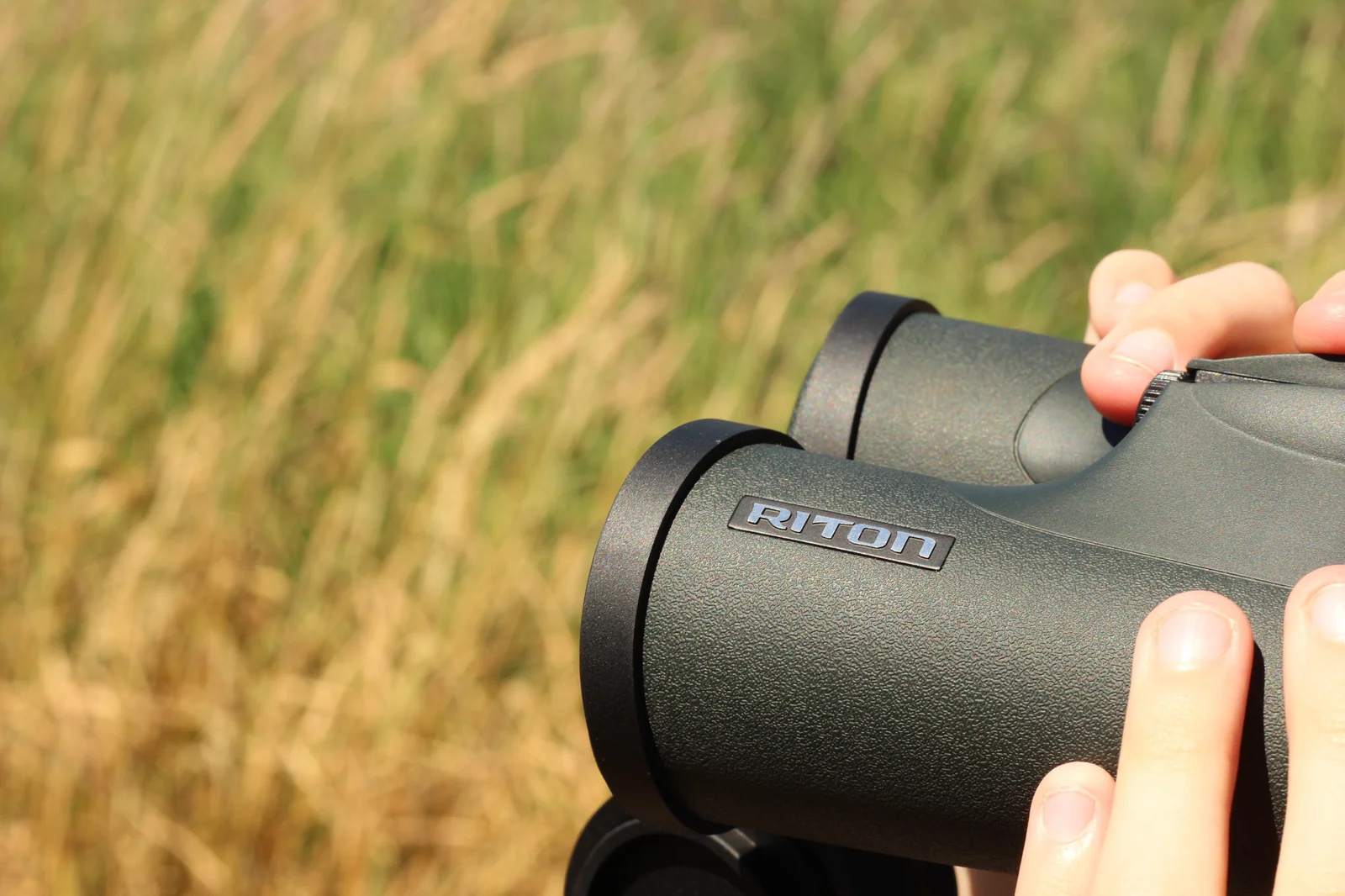
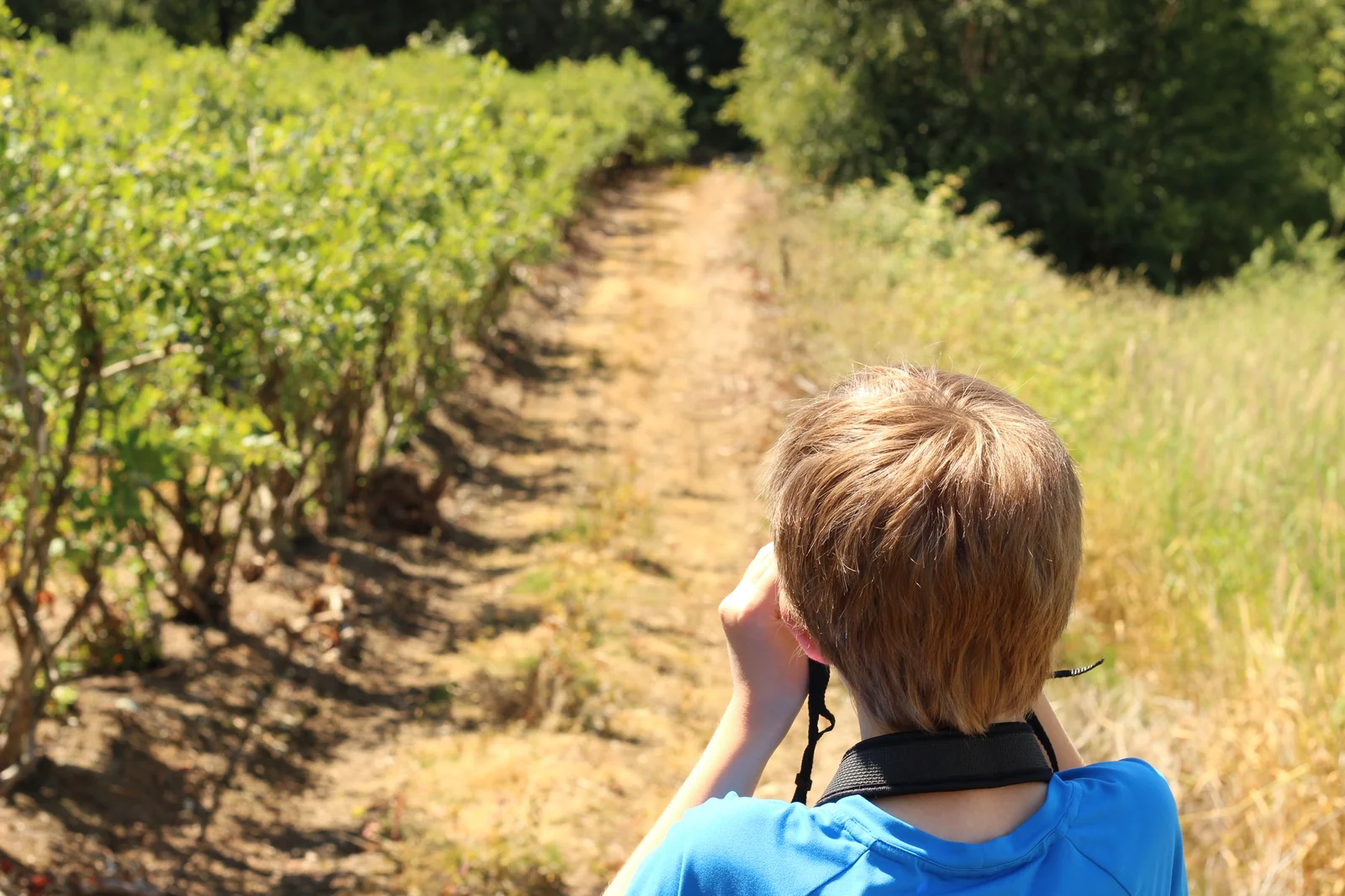
Our small-frame stability tester for the 5 Primal 10x42 ED is an eleven-year-old. The brief: hold the binocular up to the eye, get the field in focus, scan the property edge, and tell us what you can see. The Riton’s 1.67 lb weight is low enough that an eleven-year-old can hold the binocular steady free-hand and bring distant objects into focus with the centre wheel — a meaningful proxy for adult hunters carrying the same weight on a chest harness through a full day of glassing.

Who should buy this binocular — the decision tree
The 5 Primal 10x42 ED isn’t the right binocular for every hunter. Here is the honest decision tree:
Buy the Riton 5 Primal 10x42 ED if:
- You hunt open Western country (Wyoming, Montana, Idaho, BC interior, Alberta foothills) where 250–800 yard glassing is the daily task and you need 10x to identify game.
- You want ED glass in your hunting binocular but aren't ready to spend $1500+ on Vortex Razor UHD / Maven B series / Swarovski / Zeiss / Leica.
- You want a brand whose warranty department is in North America and whose service path is short — Tucson, Arizona QA + The Riton Promise Unlimited Lifetime Warranty is the operative phrase.
- You're going to tripod-mount the bino at least occasionally — the 348 ft FOV + 10x ED + tripod is a real low-budget alternative to a $1000+ spotting scope.
Final word — the v1 rating
Hunt and Live rating — v1
The 5 Primal 10x42 ED is a binocular built for the buyer who understands that ED glass is the single most important specification line on a hunting binocular and refuses to pay twice the price for marginal incremental gains over what value-engineering can deliver. Riton Optics — Tucson, Arizona — has built the Primal series specifically to occupy this sweet spot, and the 5 Primal 10x42 ED is its flagship in the 10x category. At $699.99 USD MSRP, with 90% manufacturer-spec light transmission, 348 ft field of view at 1000 yards (the widest in our cross-shop comparison), BAK4 prisms, fully multi-coated ED glass, a magnesium-aluminum chassis, and The Riton Promise Unlimited Lifetime Warranty on the non-electro line, the binocular earns a v1 rating of 4.6 / 5.
The half-star penalty against a perfect score reflects three honest concerns: (a) Riton’s spec sheet doesn’t publish an eye-relief figure, which is the single most important spec for eyeglass-wearers; (b) the marketing copy and the full spec sheet disagree on the chassis material wording (aluminum alloy vs magnesium-aluminum alloy — same metal, but worth flagging); and (c) the cross-shop comparison is competitive, not dominant — the Vortex Viper HD, Maven C.2, and Bushnell Forge all play in the same band and the buyer should genuinely cross-shop before committing.
We’ll re-evaluate the rating in v2, which will include dawn/dusk through-glass plates (verifying the 90% transmission claim), a chromatic-aberration forensic crop (verifying the ED-glass benefit), confirmation of the tripod-thread location and a tripod-mounted glassing session, side-by-side comparison against at least two of the cross-shop competitors, and — fingers crossed — animal capture footage from the trail-cam-monitored treeline.
The Riton 5 Primal 10x42 ED is available direct from Riton Optics at $699.99 USD MSRP, backed by The Riton Promise Unlimited Lifetime Warranty.
Riton 5 Primal 10x42 ED reviewed June 2026 by the Hunt and Live editorial team. v1 publication based on bench-test, build inspection, and first month of casual glassing. v2 follow-up with low-light through-glass plates, chromatic-aberration forensic crops, cross-shop side-by-sides against Vortex Viper HD / Maven C.2 / Bushnell Forge / Steiner Predator, and animal capture footage scheduled for fall hunting season 2026.