
Featured Review · Victorinox · Multi-Tools
Victorinox SwissChamp & Swiss Tool MX Clip Review — The Heritage Benchmark and Its Modern Companion, Reviewed Honestly
Our Rating
Current Price
- SwissChamp model
- 1.6795
- SwissChamp functions
- 33
- SwissChamp dimensions
- 91 × 26 × 33 mm
- SwissChamp weight
- 185 g (6.5 oz)
Pros
- SwissChamp: 33 functions in 185 g and 91 mm — the most tool-density-per-gram of any pocket carry on the market
- SwissChamp: Same fundamental design since 1968 — a near-60-year-old reference point that still earns its place in 2026
- Swiss Tool MX Clip: 26 lockable functions with one-handed blade opening — Victorinox's direct entry into the pliers-driven full-size category
- Swiss Tool MX Clip: All tools open from the outside and lock — completely different ergonomic class from the SwissChamp
- Swiss Tool MX Clip: Integrated carry clip — clip it to a belt, backpack, tool tote, or workshop apron and it stops being a pocket object and becomes everyday workshop gear
- Both: Swiss-made in Ibach, lifetime warranty (and 2-year on the Swiss Tool's mechanical assembly), genuinely repairable
- Both: The brand-recognition value alone makes either tool a household heirloom — you're buying something your grandchildren will recognize
- Two-tool ownership: Pocket the SwissChamp for fine work, belt-clip the MX for heavy work — they're complementary, not redundant
Cons
- Neither tool is the lightest in its category — the SwissChamp at 185 g is dense in the pocket; the MX Clip at 300 g rides like a serious belt tool, not a daily-carry
- Both ship from Switzerland through Victorinox.com or Canadian authorized retailers — direct CA pricing excludes tax, so budget closer to $165 + $230 respectively
- The SwissChamp's nail-nick blade opening and the absence of a one-handed blade is a deliberate design choice — not a flaw — but it is an ergonomic adjustment for users used to thumb-stud blades
Every premium-tier multi-tool buyer ends up at the same crossroads. Do you want the vintage red Swiss Army Knife — the Victorinox SwissChamp, the 33-function red-Cellidor pocket classic that’s been in continuous production since 1968 — or do you want the modern all-stainless workshop tool — the Victorinox Swiss Tool MX Clip, the 26-function pliers-driven full-size belt-clip multi-tool with one-handed lockable blades? Both are Victorinox. Both are Swiss-made in Ibach to the same factory standard. Both carry the lifetime warranty. But they answer fundamentally different design questions — and the right buyer for one isn’t always the right buyer for the other.
This is the long-form editorial reading of both tools, side-by-side, so you can make that choice honestly. The SwissChamp is read on its own terms — the smaller, lighter, vintage red Officer’s-knife format with the nail-nick blades and the fine-work bias. The Swiss Tool MX Clip is read as Victorinox’s modern, pliers-driven, all-stainless answer to the post-Leatherman full-size category. Two tools, one editorial conversation, one buyer decision.
We tested both, simultaneously. Here’s what we found.
At a glance — both tools
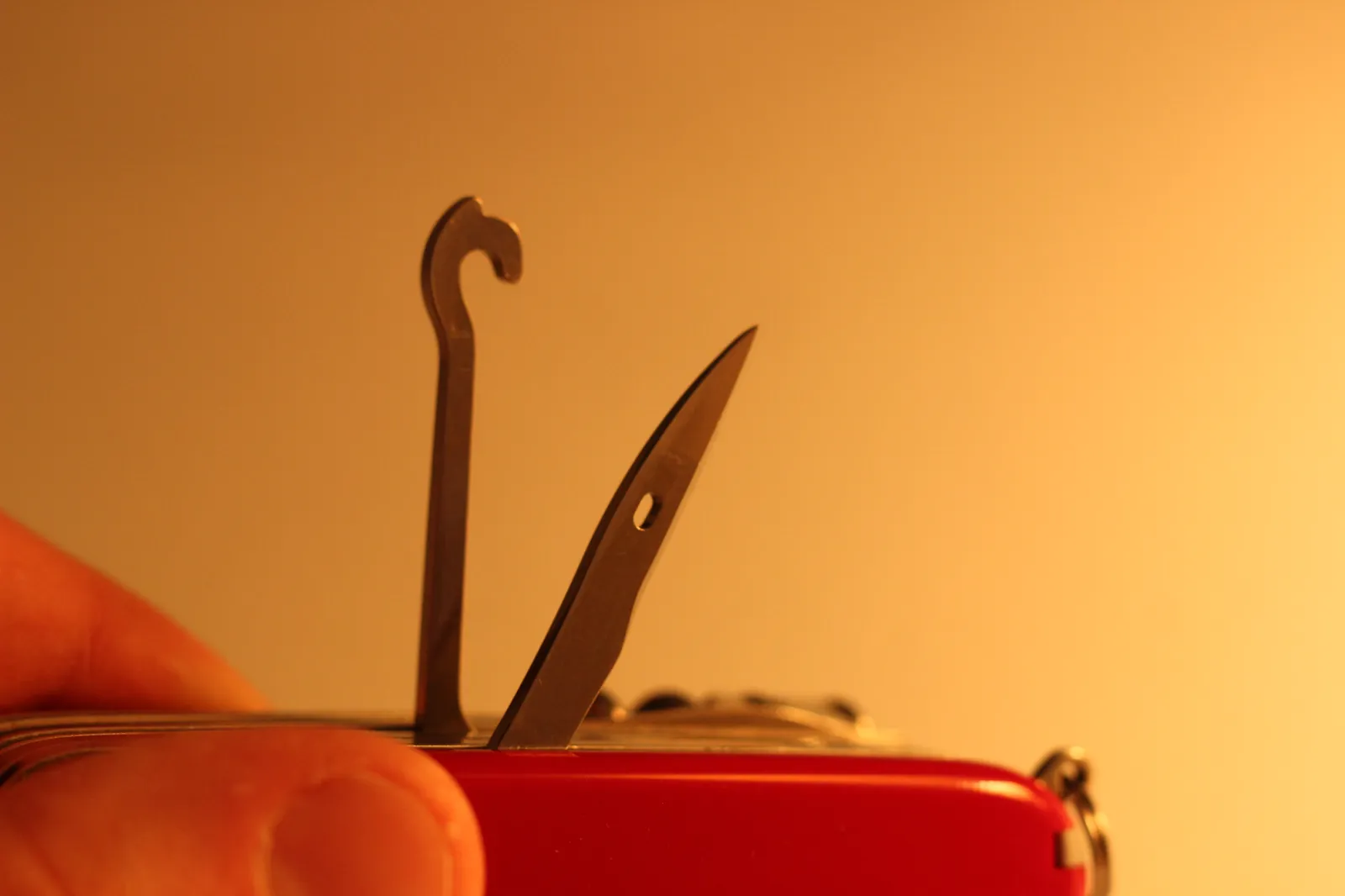
The Two Tools, Two Buyers
Before we go deep on either tool, here’s the framing.
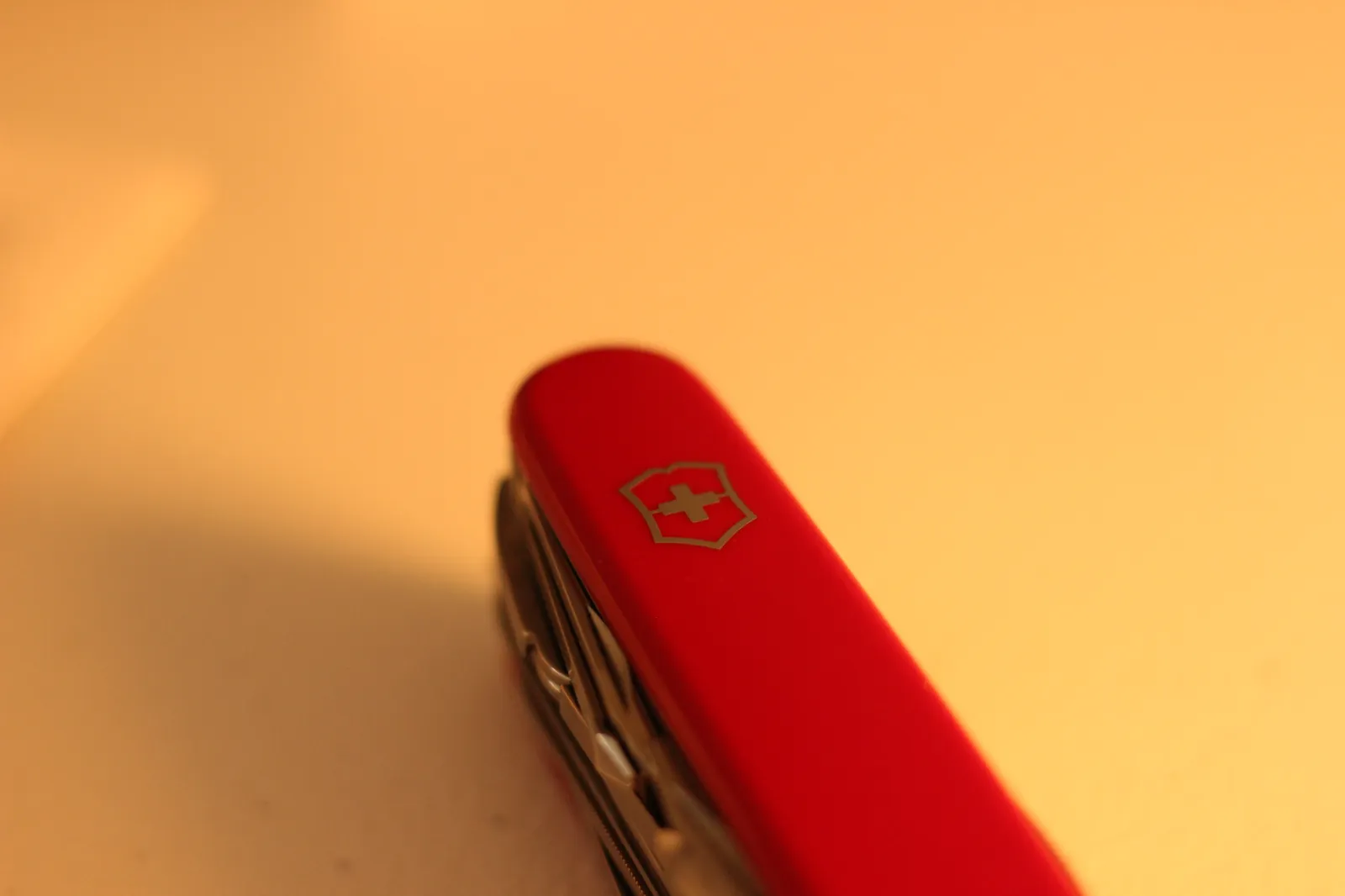
The SwissChamp is the vintage choice. Red Cellidor scales, 91 mm closed, 185 g, nail-nick blades, no lock, pocketable in any pair of pants. The design has been in continuous production since 1968. This is the Swiss Army Knife format your grandfather carried. It is unambiguously a pocket tool, biased toward fine work — small blades, scissors, the awl, tweezers, the magnifying glass, six screwdrivers, a corkscrew. It is the tool the rest of the multi-tool world quietly measures itself against.
The Swiss Tool MX Clip is the modern stainless choice. All-steel construction, 115 mm closed, 300 g, integrated carry clip, one-handed-opening lockable drop-point blade, real pliers as the spine of the tool. This is Victorinox’s serious answer to the post-Leatherman full-size category. It rides on a belt clip, not in a pocket, and it’s biased toward workshop and tradesperson tasks — heavy drivers, the chisel, a wood saw that handles real lumber, and pliers proportional to the work.
If you want the heritage pocket classic, you want the SwissChamp. If you want the modern stainless workshop tool, you want the Swiss Tool MX Clip. If you want both — and we’ll argue at the end that for a homestead or off-grid kit, you do — that’s the cleanest answer.
Part One — The SwissChamp
In the Box
The SwissChamp ships in the same matte tan slipcase Victorinox has been using for decades — the red shield, the wordmark, and almost nothing else. Inside, a tan tray cradles the knife in its closed configuration, a folded multi-language warranty and instruction booklet sits underneath, and the loose ballpoint pen refill and pin sit in a small paper sleeve. The Cellidor scales catch the light immediately — that specific, slightly-translucent deep Victorinox red that you’d recognize across a room.
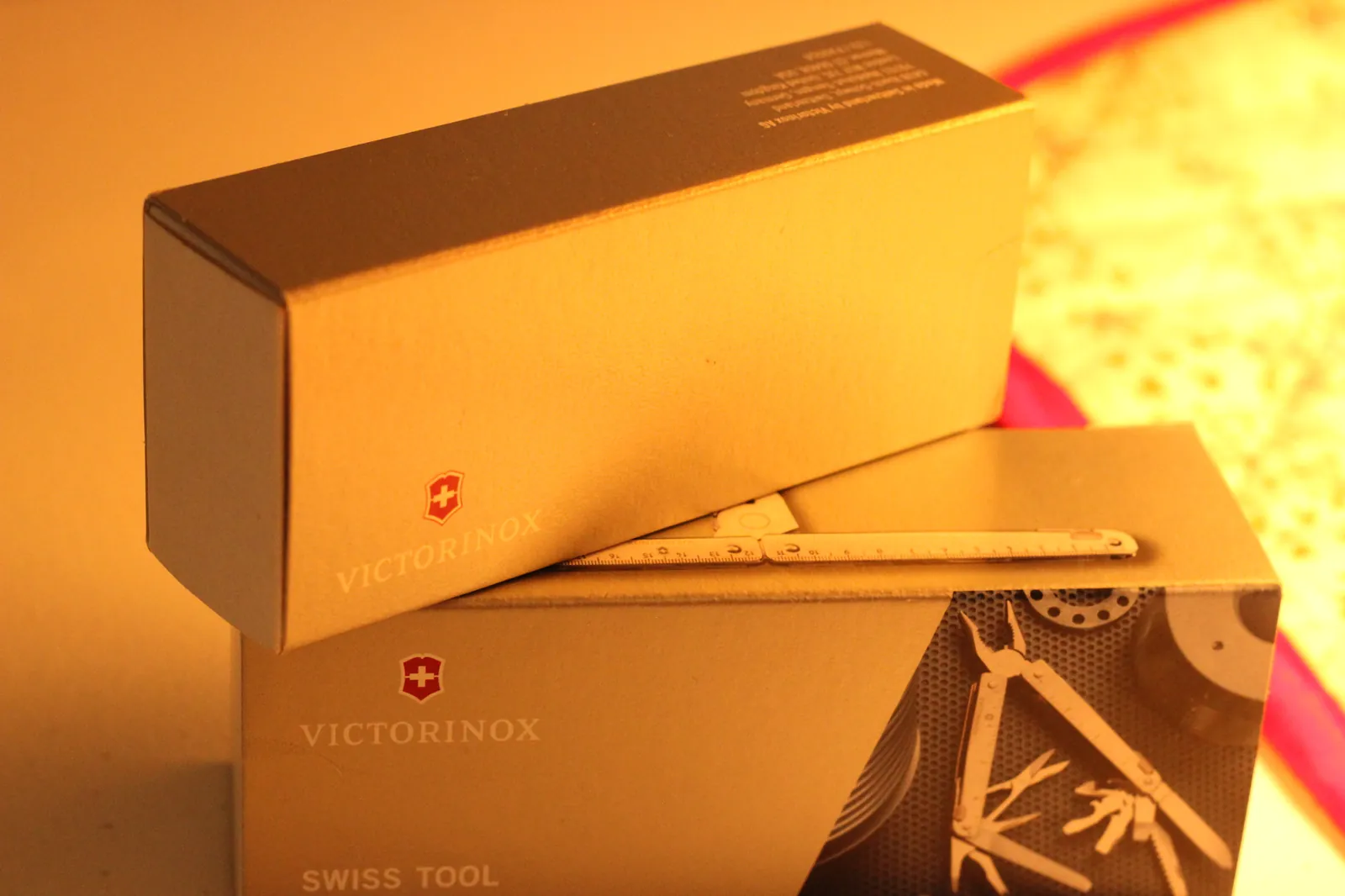
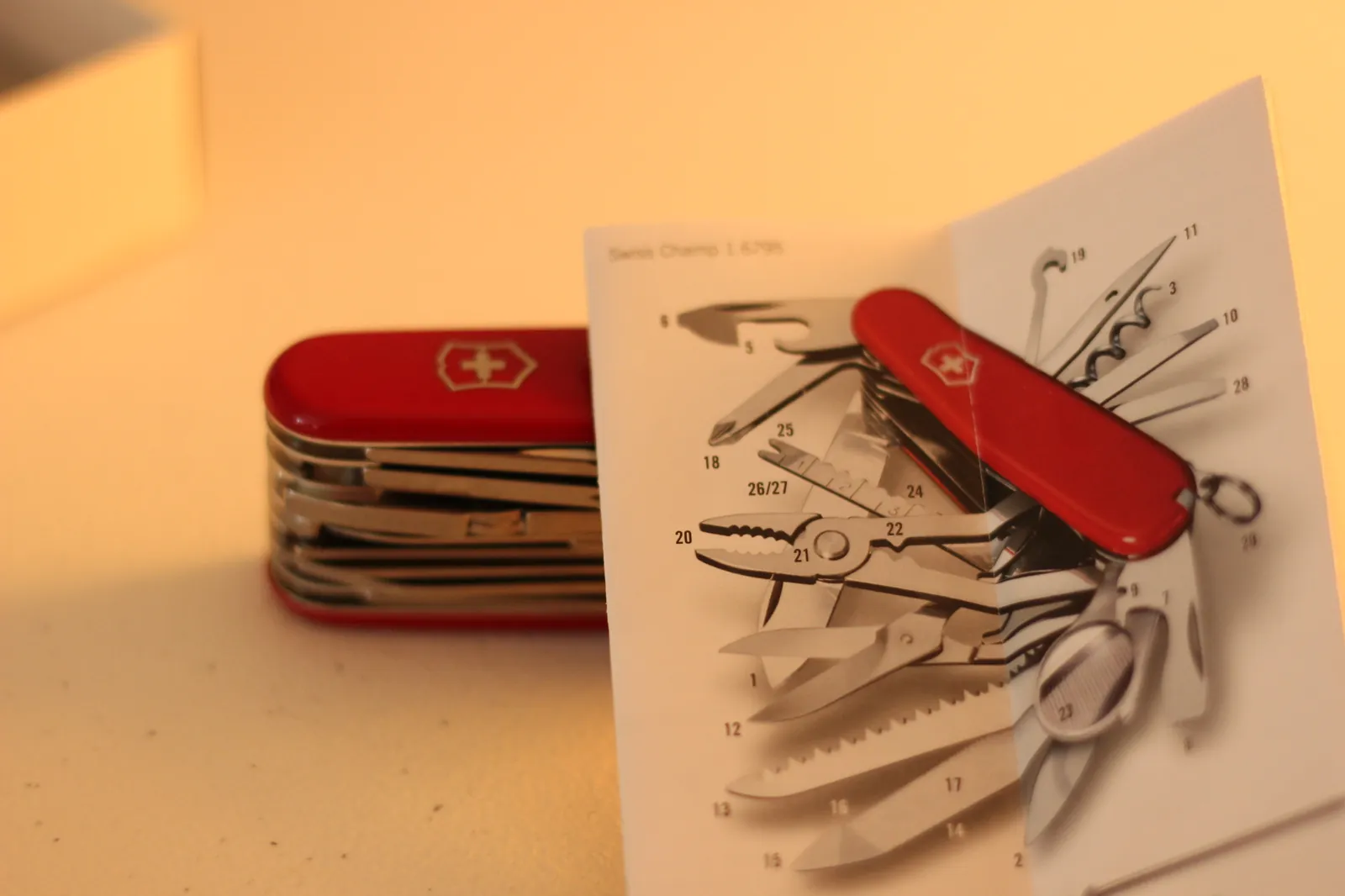
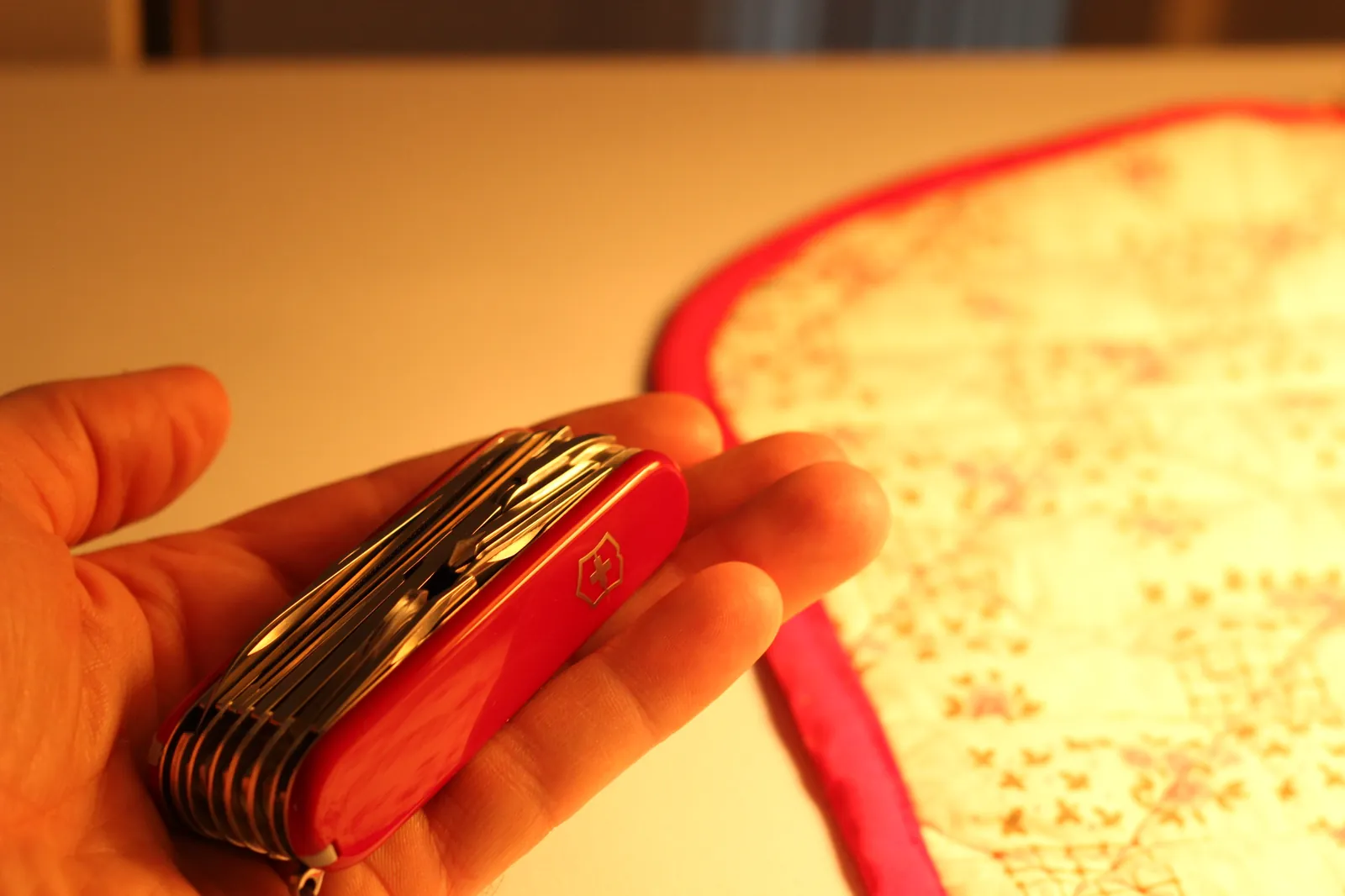
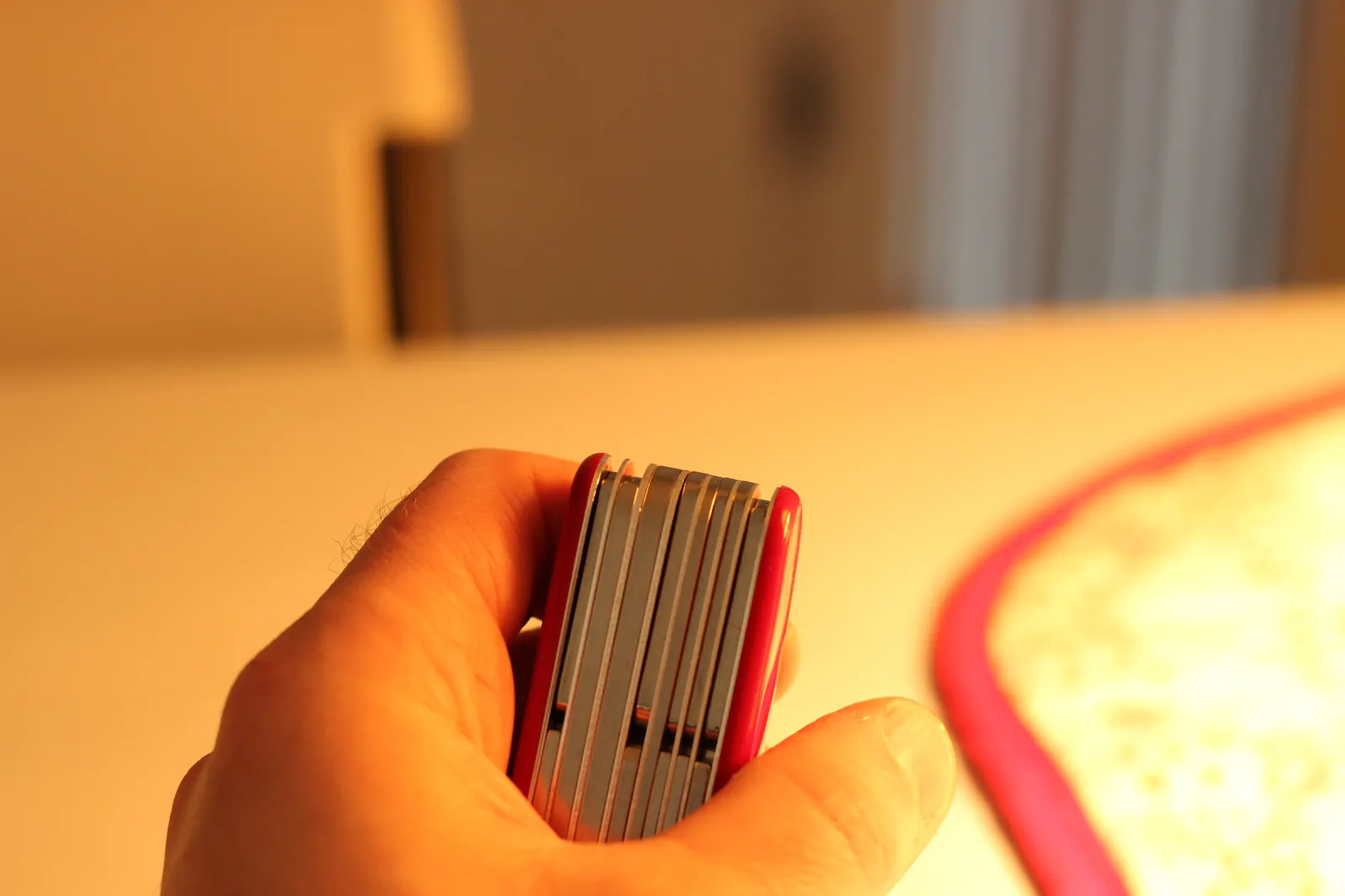
The closed SwissChamp sits in the hand at 185 grams — heavier than most pocket-carry users expect, lighter than its visual mass suggests. The Officer’s-knife silhouette is unmistakable. Pick up the included tool-diagram card and you can see all 33 functions laid out around the body of the knife — each tool numbered, each one with a labeled position.
The Engineering Question
Here’s the editorial premise. The SwissChamp design has been in continuous production since 1968. That is a 58-year-old design still being sold, today, at the premium tier of a category that has otherwise been completely modernized around it. Leatherman didn’t exist until 1983. The original Leatherman PST was 1986. Gerber’s multi-tool line came later still. Every modern competitor — the Wave+, the Free P4, the Center-Drive, the Skeletool — emerged into a market the SwissChamp already defined.
A near-60-year-old design that still earns its place is telling you something. Either the design is fundamentally correct, or the category has fragmented around it in ways that don’t actually matter. We argue it’s mostly the former — with one genuine modernization gap that the Swiss Tool MX Clip directly addresses, which we’ll get to in Part Two.
The 33 Functions, Honestly Tested
The published function count is 33. The honest accounting depends on how you count — some “tools” are really sub-functions of others. Here’s the verified list direct from Victorinox, grouped by working family:
Blades & cutting (5): Blade large, Blade small, Wood saw, Metal saw, Scissors Drivers (6): Mini screwdriver 1.5 mm (lives in the corkscrew), Screwdriver 2.5 mm, Screwdriver 3 mm, Screwdriver 6 mm, Phillips screwdriver 1/2, Chisel 4 mm Pliers / electrical (4): Combination pliers, Wire crimper, Wire stripper, Wire cutters Openers (2): Bottle opener (with the 6 mm flat-blade screwdriver at its tip), Can opener Hand tools (5): Reamer/punch/sewing awl (with sewing-eye), Metal file, Nail file, Nail cleaner, Magnifying glass Specialty (5): Corkscrew, Fish scaler, Hook disgorger, Multipurpose hook, Pressurized ballpoint pen Utility (6): Toothpick, Tweezers, Pin, Key ring, Ruler (cm), Ruler (in)
That’s 33. Some of them — the toothpick, the pin, the rulers — are nominal functions that you genuinely use more often than you’d expect, exactly because they’re always there.
We tested each working group across real scenarios. Here’s what matters editorially.
The blades
The large blade is the headline. At 6.4 cm with the classic Victorinox stainless edge geometry, it sharpens easily, holds an edge for normal cutting tasks, and takes a polished mirror edge with very little effort. The blade-flat etching reads VICTORINOX INOX SWITZERLAND STAINLESS — verification that you’re holding a real Ibach-made knife.
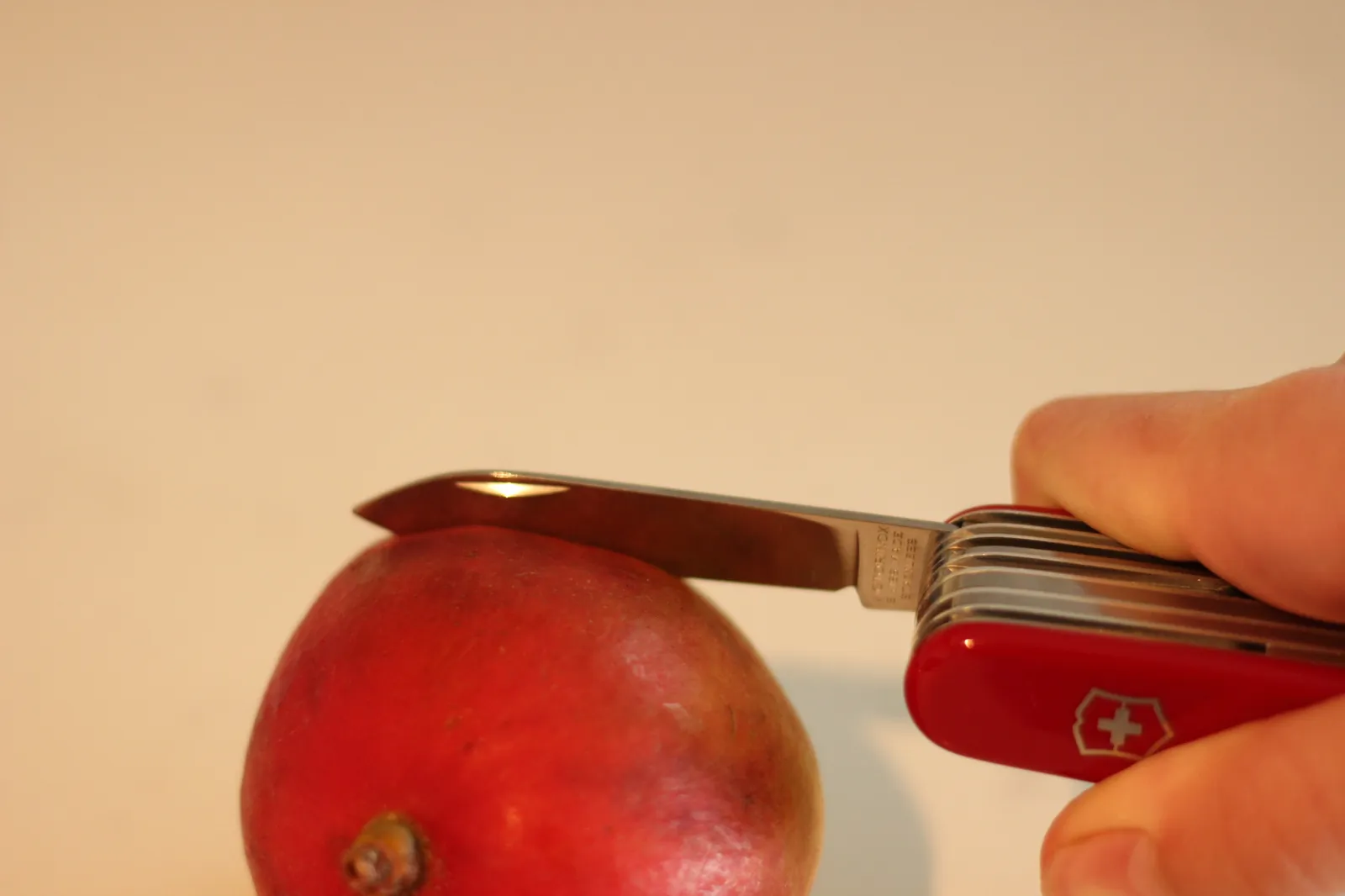
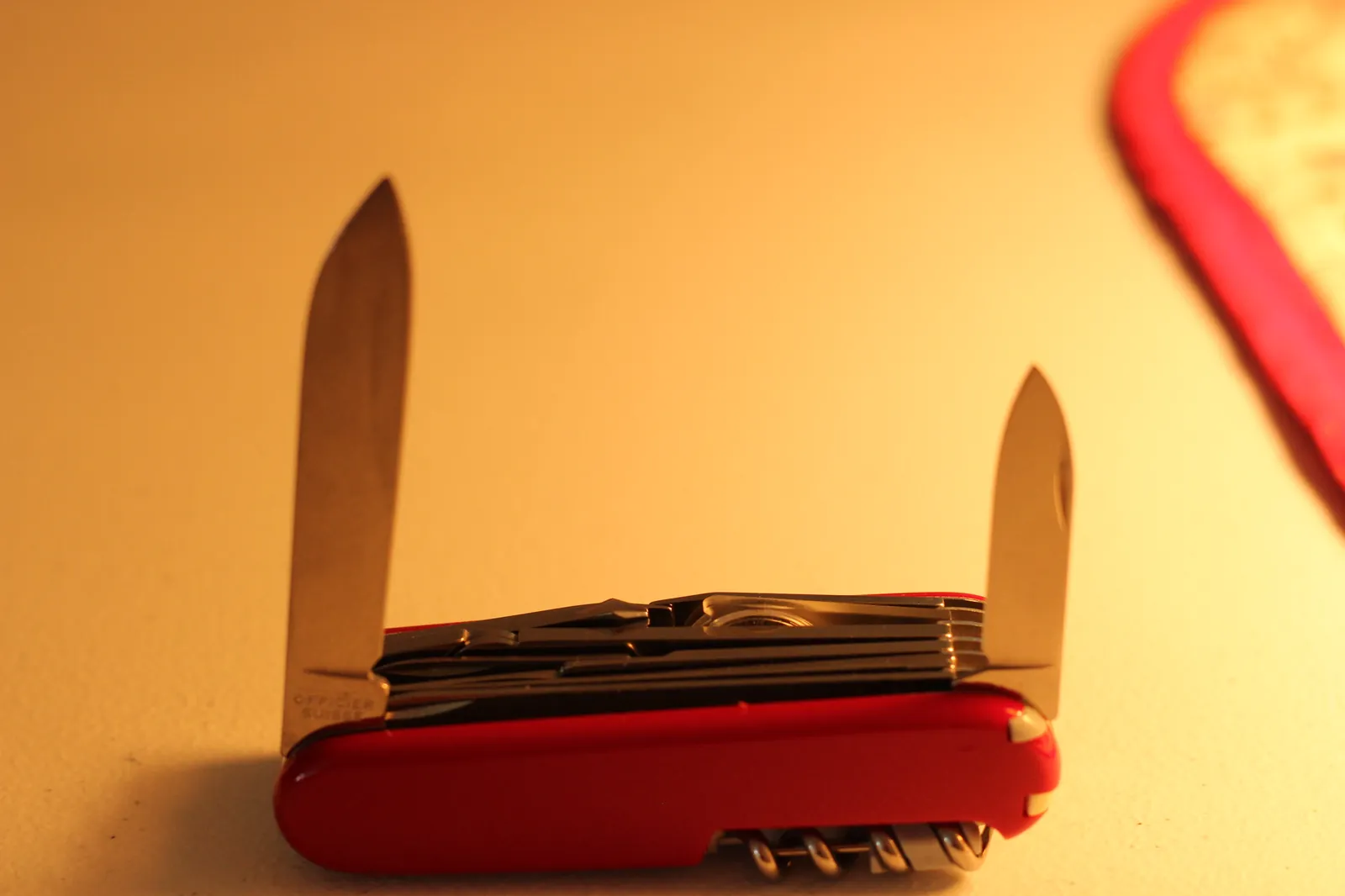
The small blade is the surprise. People dismiss it as redundant; we use it more than the large one for daily detail work — package openings, label peeling, small whittling, food prep at the desk. Both blades open with a nail-nick. There’s no thumb stud, no flipper, no assisted opening. That’s a design choice, and we’ll address it directly later in this section.
The saws — both of them, and a beginner-knife angle
The SwissChamp has a wood saw and a metal saw. Most people don’t realize there are two; most reviews mention only the wood saw. Both are real working tools.
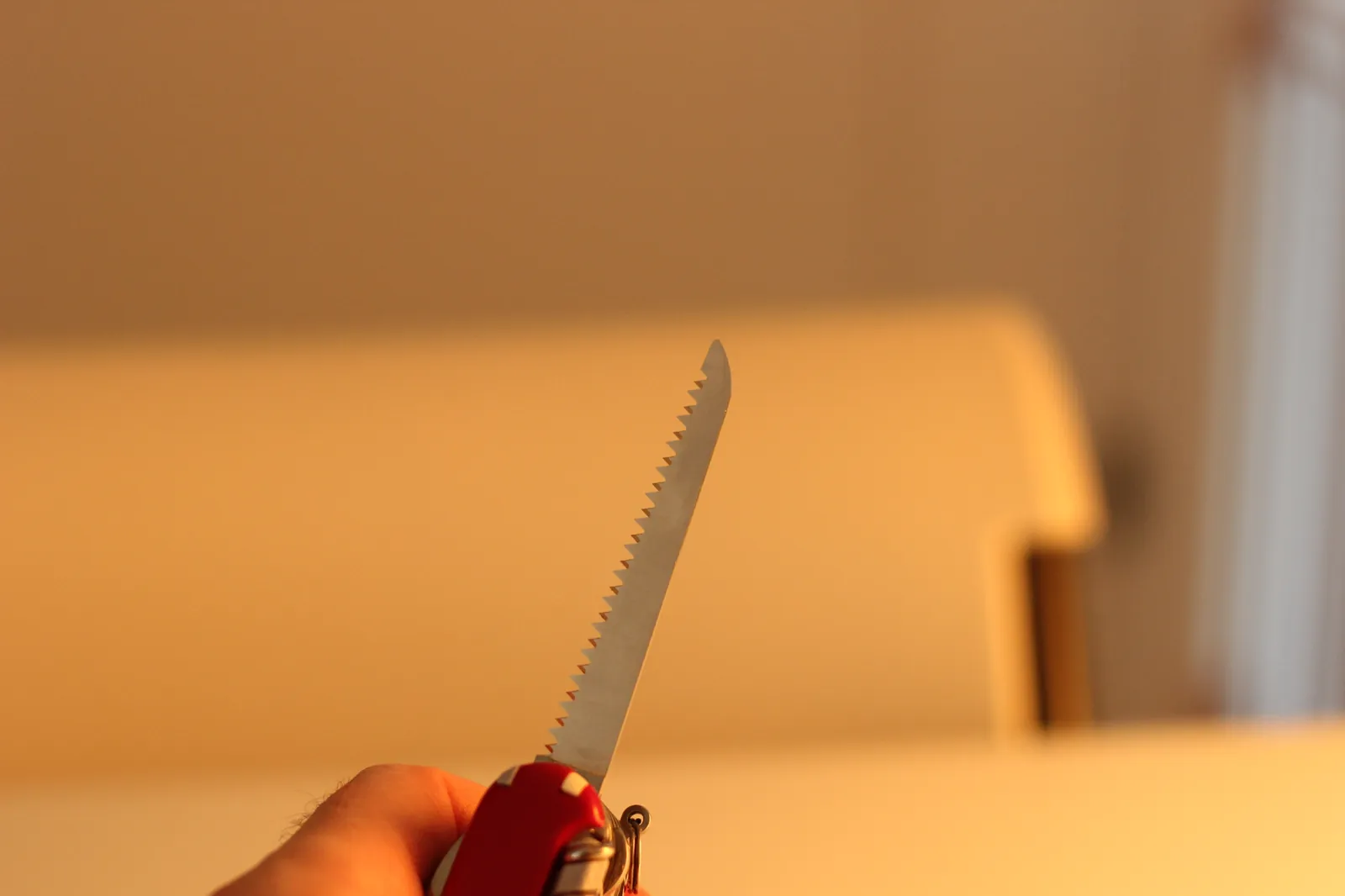
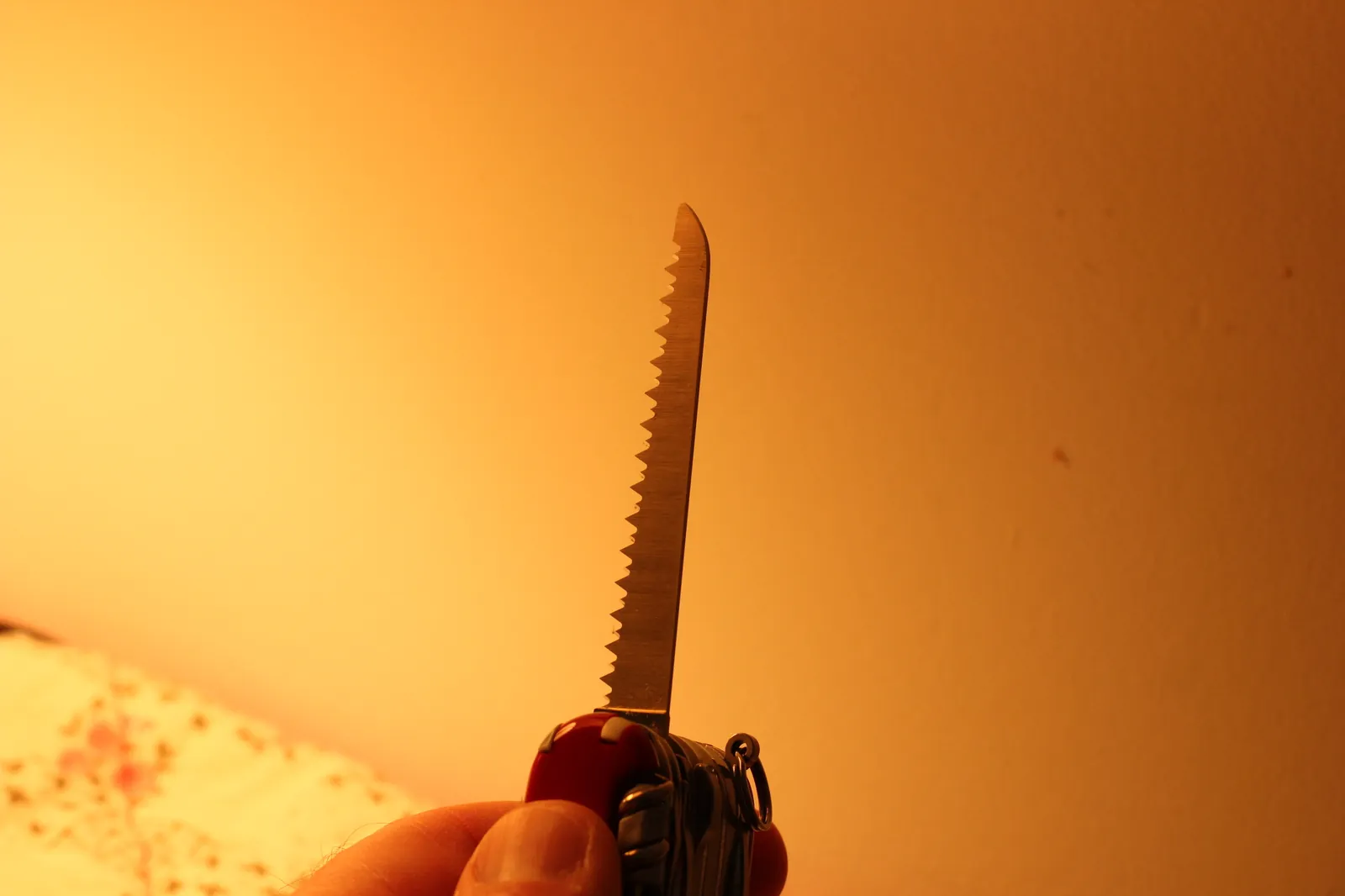
The wood saw is the better tool. With staggered teeth and aggressive set, it’ll cut through 1-inch dry pine in about 30 seconds and through a green branch up to about 2-inch diameter without complaint.
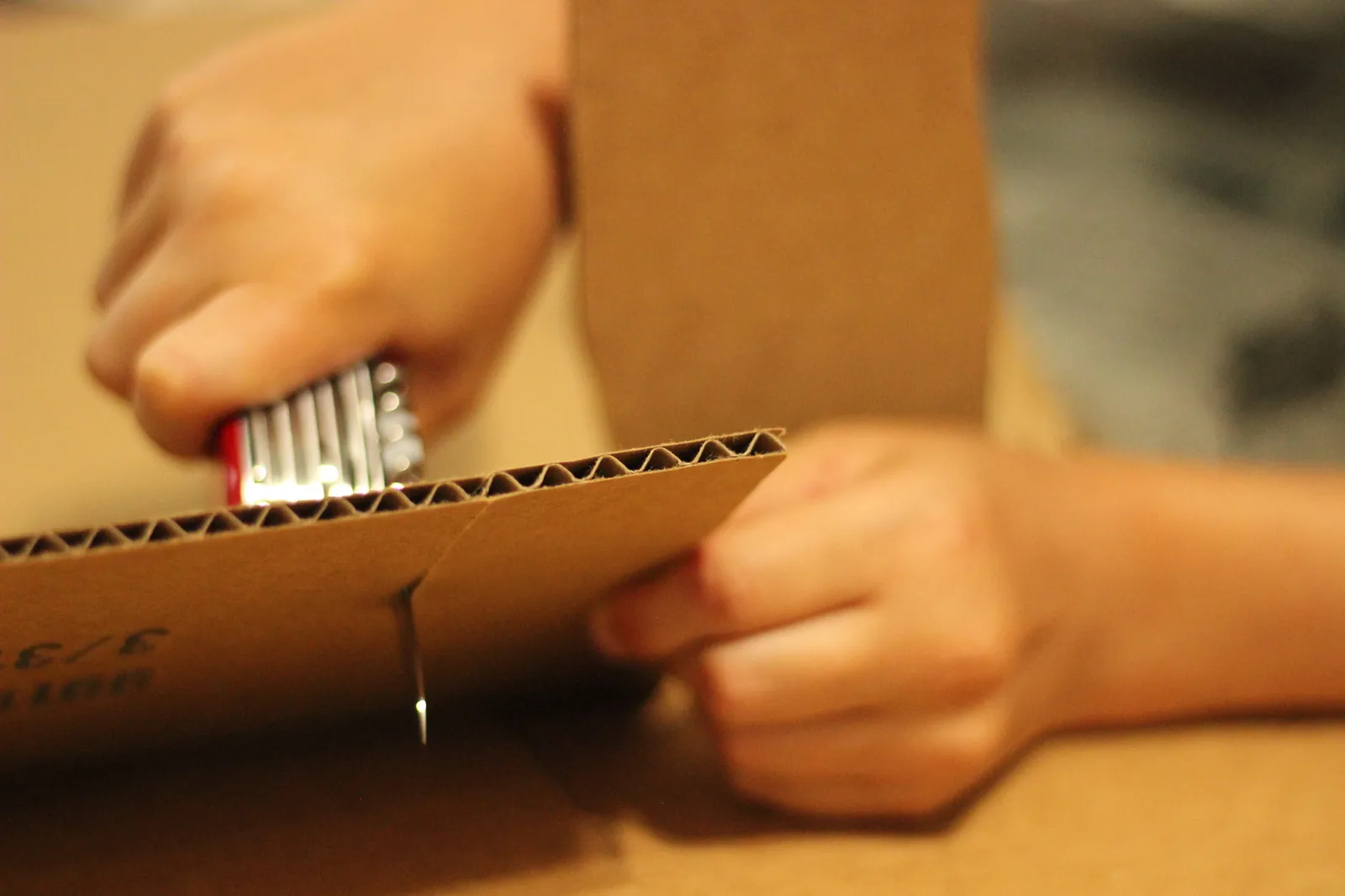
Worth a callout on the SwissChamp as a first knife for a younger user. The large blade is honest, sharp, and controllable, and under supervision it’s a genuinely well-engineered teaching tool — a child learning what a proper, factory-made, lifetime-warranted Swiss working blade is before they ever touch a fixed-blade knife. Our test photo here is an 8-year-old confidently and controllably opening a cardboard box with the SwissChamp large knife, hands well clear of the blade path.
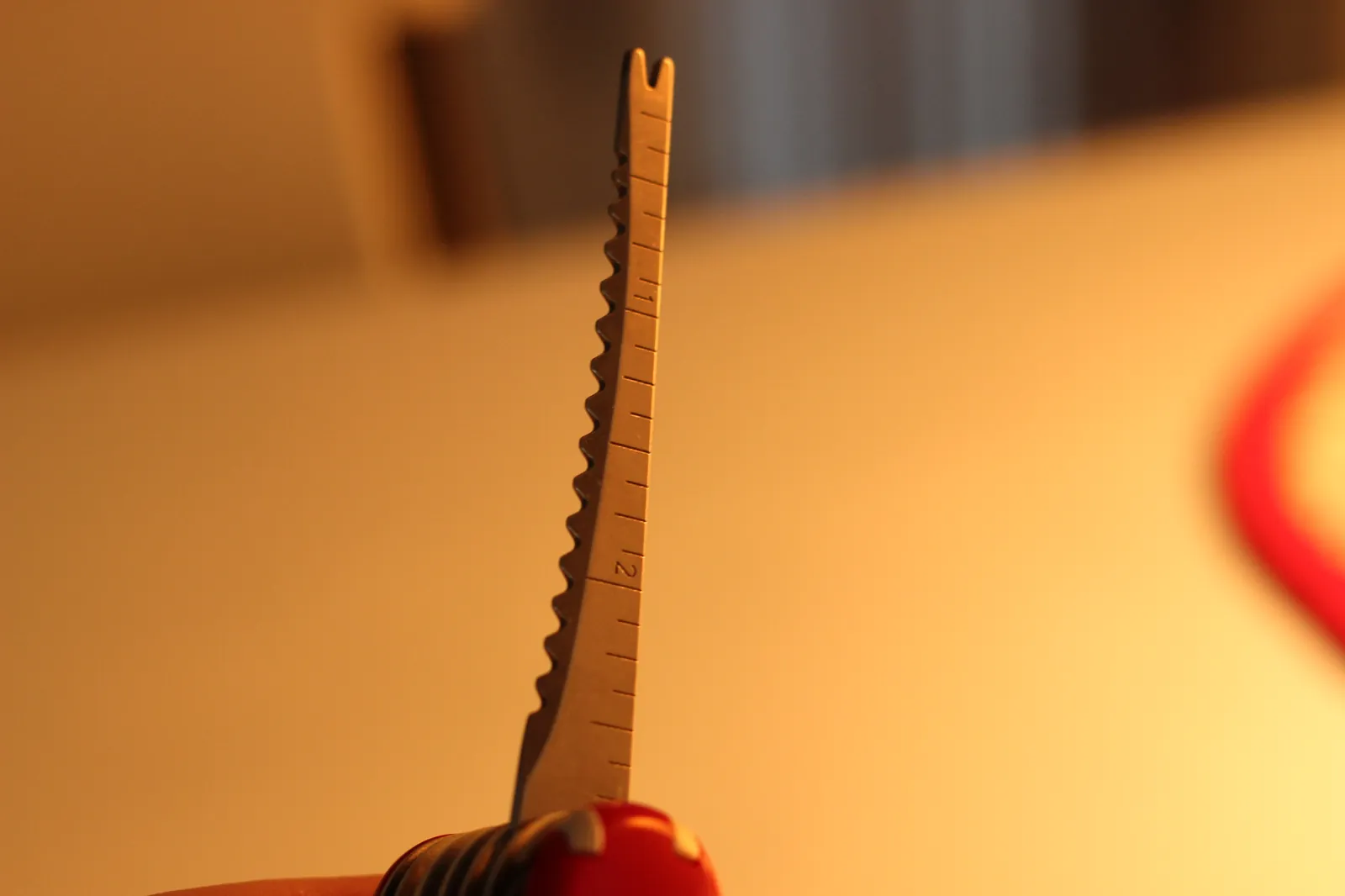
The metal saw is a slower, fussier tool, but it works on the small-gauge metal it’s designed for: cutting through a coat hanger, a small bolt, a stuck zipper-pull. It’s the kind of tool you don’t realize you need until you do.
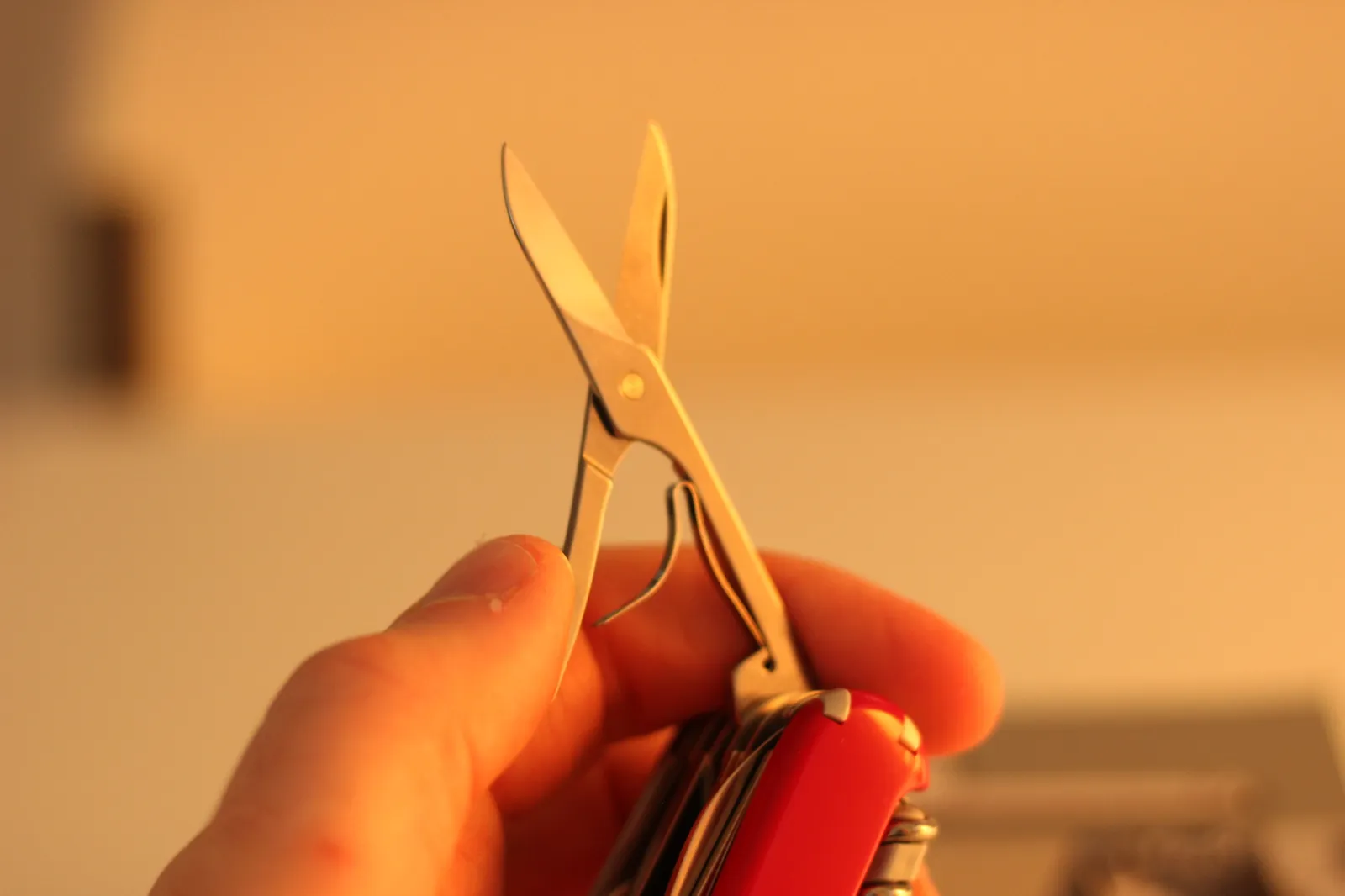
The scissors
Genuinely the most surprising tool on the SwissChamp. They’re spring-loaded, they cut cleanly through paper, fabric, fishing line, plastic wire ties, and (with patience) light-gauge metal banding. The hinge is exposed but precise, and after 50 years of design refinement they cut better than most kitchen scissors.
The pliers
This is where the SwissChamp design conversation gets honest. The combination pliers are real — they cut, they grip, they wire-crimp — but they’re proportional to the knife, not to the work. They’re 36 mm jaw-length, suitable for small wire work, fishhook adjustment, sewing-needle pulls, and tight-spot grips. They are not the pliers you’d reach for if you had a Leatherman or a Swiss Tool MX Clip in the other pocket.
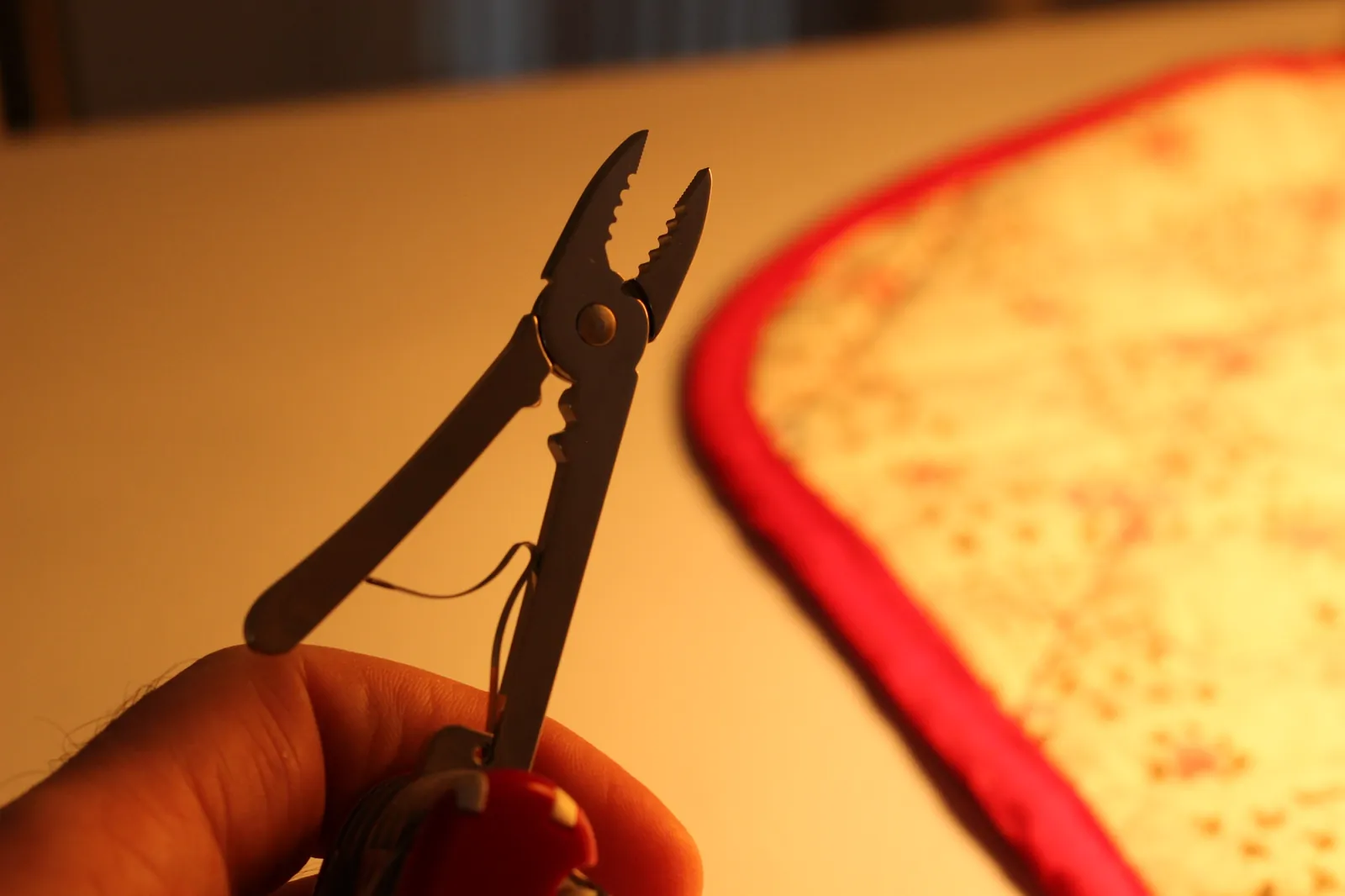
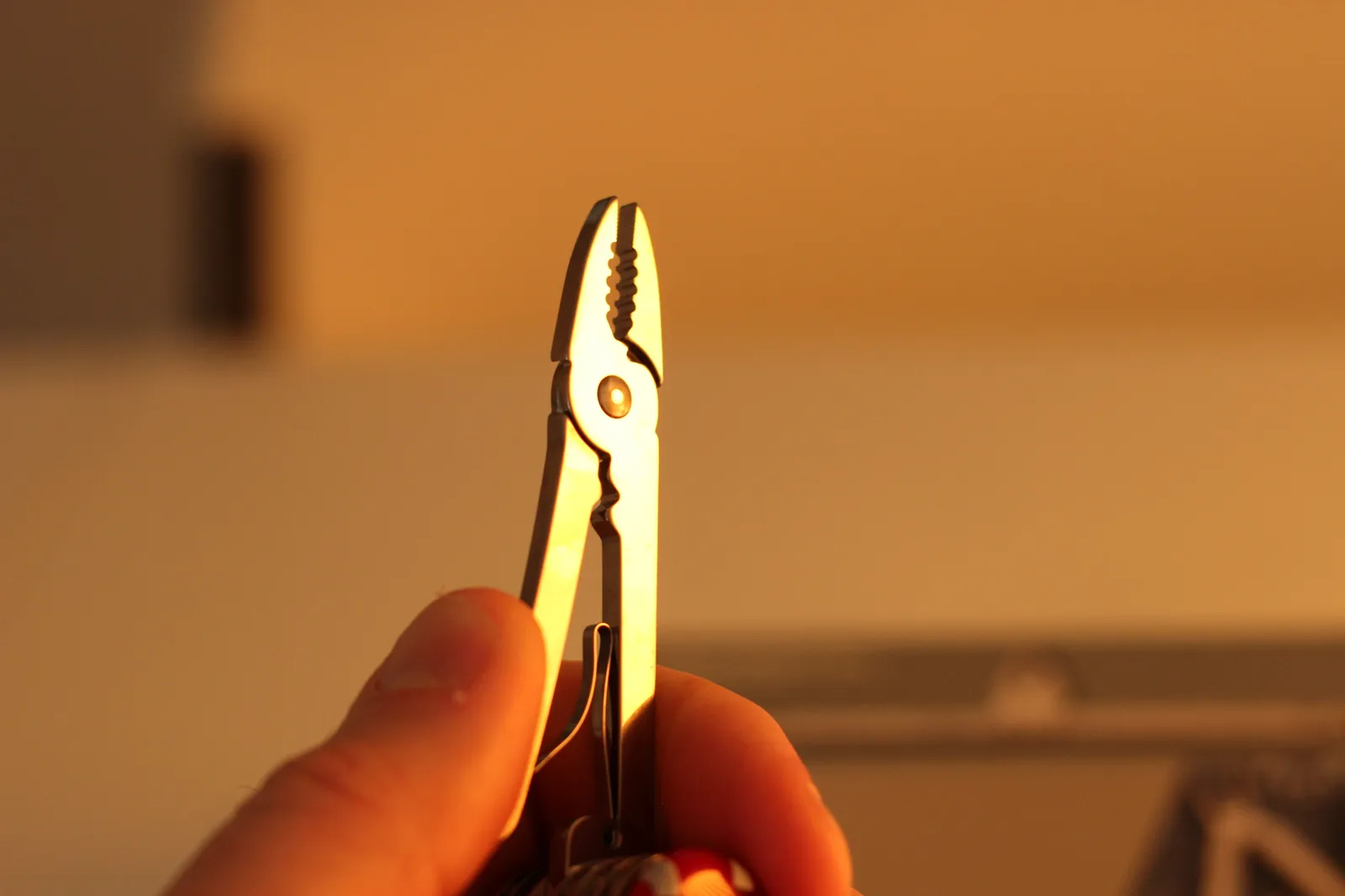
The honest point: the SwissChamp’s pliers are not a Leatherman alternative. They were never meant to be. A Leatherman Wave+ is built around the pliers; the pliers are the spine of the tool. The SwissChamp is built around the blades and the screwdrivers; the pliers are an included function, not the load-bearing tool. Treating the SwissChamp pliers as a failed Leatherman is a category error. They are exactly the pliers the design intended.
If you need real pliers, Victorinox sells the Swiss Tool MX Clip. More on that in Part Two.
The screwdrivers and the Phillips driver in the back tang
Six drivers in total. The mini screwdriver 1.5 mm lives inside the corkscrew (a quietly clever feature — the corkscrew’s hollow body holds the tiny driver). There’s a 2.5 mm flat, a 3 mm flat, and the 6 mm flat-blade (which doubles as the bottle opener and as a wire-stripper notch). The chisel 4 mm is the heavy-duty flat-edge tool. And the Phillips screwdriver 1/2 lives in its own dedicated slot in the back tang — that’s the small-Phillips driver for eyeglass screws, electronics, and household fitting screws.
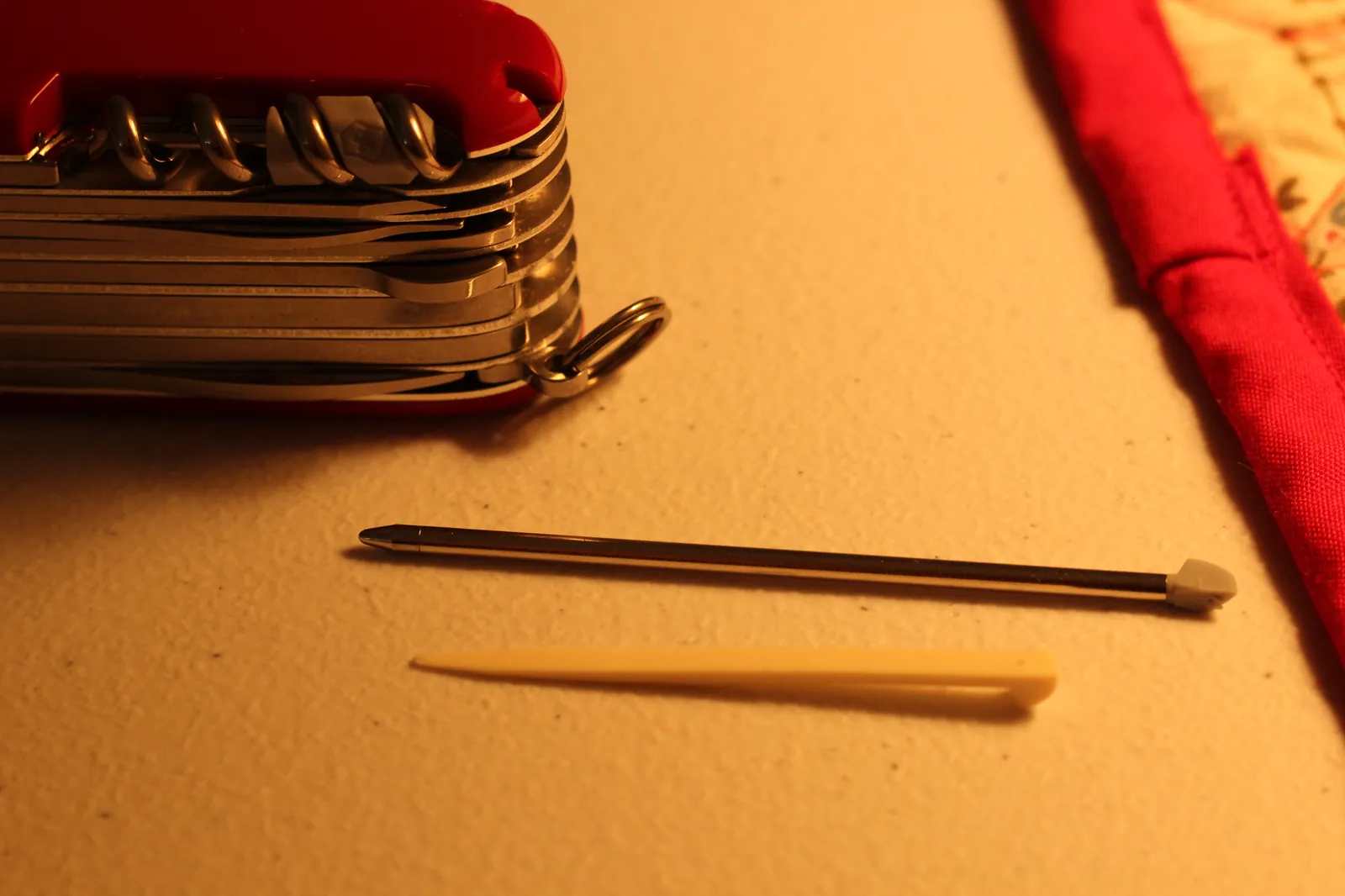
The toothpick, also slip-fit into the scales, deserves an honest call-out: white plastic, contoured tip, genuinely the tool you use most often on the entire knife. Together the Phillips and the toothpick are the two most-handled “small tools” the SwissChamp carries, and they live in the back of the body so they don’t interrupt the main tool stack.
The bottle opener / can opener cluster
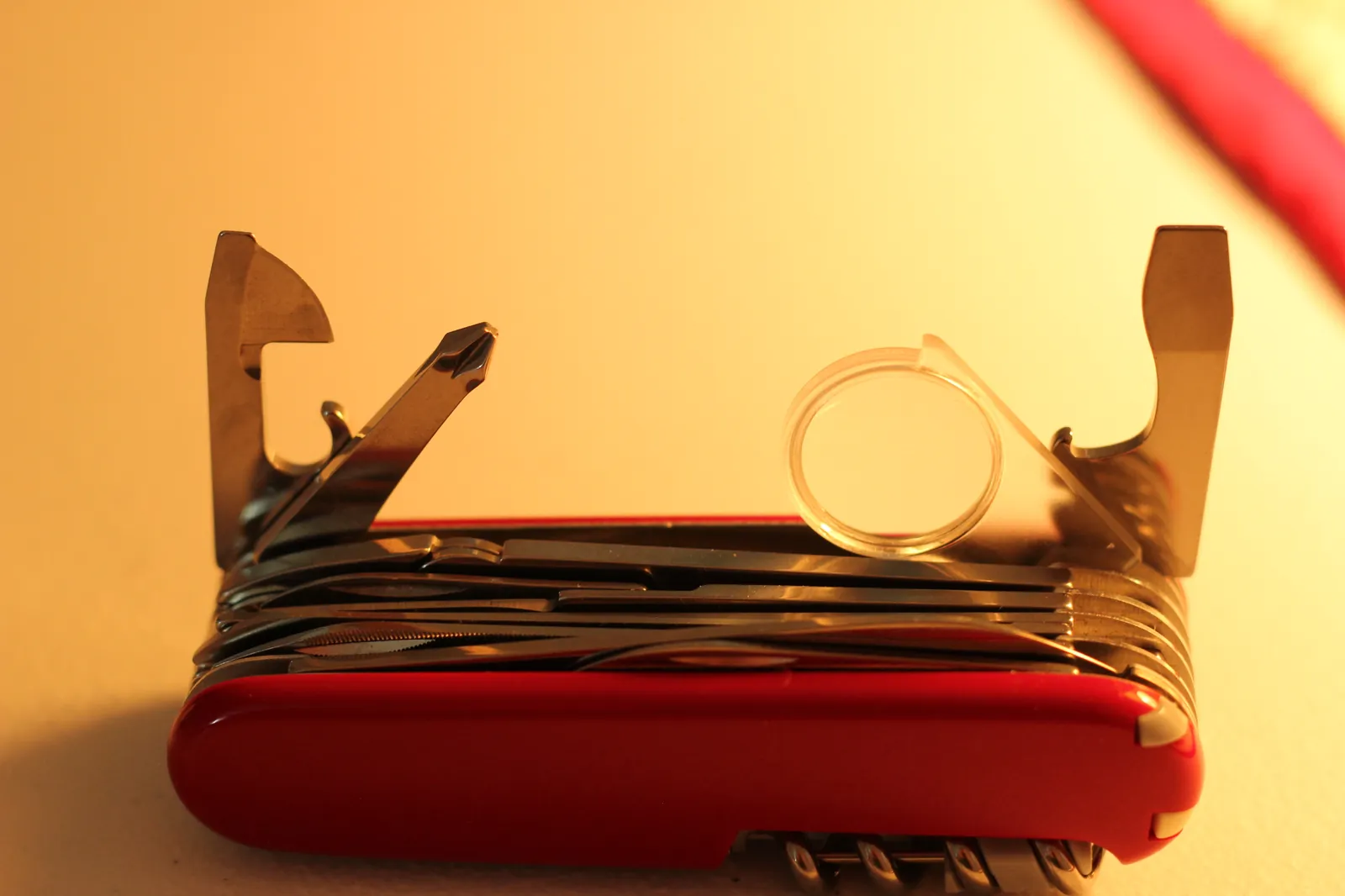
The SwissChamp’s can opener is one of the most refined tools on the knife. It’s a curved hook with a tiny single-tooth blade that walks around a can rim and severs the metal as you go. It works on rolled-rim cans — the standard format for everything from beans to tuna — and it works without hand-fatigue, unlike most camping can-openers. The bottle opener has the 6 mm screwdriver bit at its tip and a wire-stripper notch at the base.
The “small things” that earn their place
The toothpick and tweezers slot into the scales. They’re plastic and steel respectively. They are exactly the toothpick and tweezers you actually use — splinter removal, stuck-food, ingrown-eyelash-fishing, embedded wood-fragment-after-cutting-kindling. They are not novelty.
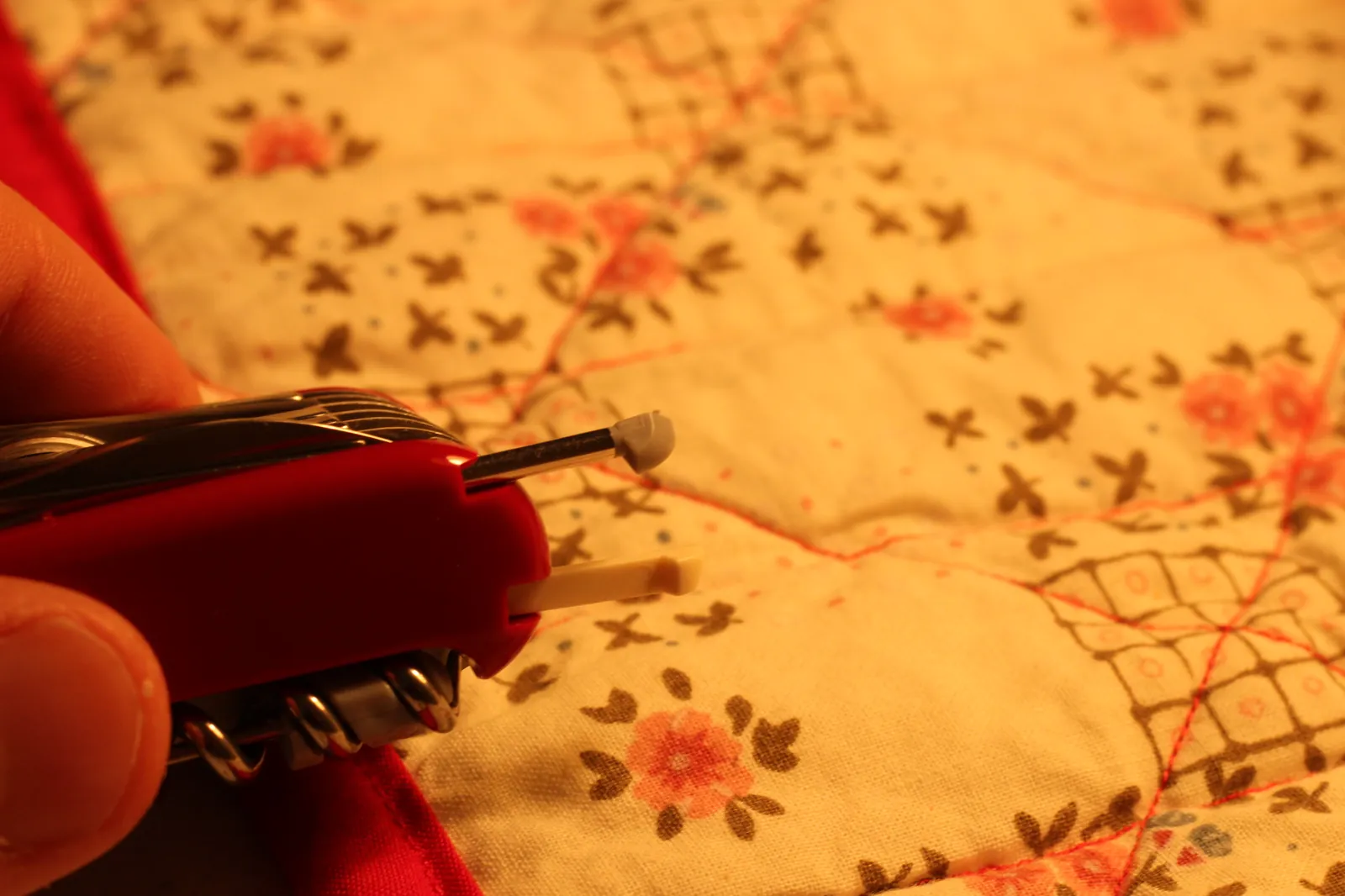
The corkscrew works. The included mini screwdriver 1.5 mm lives inside the corkscrew and is the right tool for an eyeglass arm.
The magnifying glass works. It’s small, it’s plastic-lensed, and it actually does what magnifying glasses do — splinter examination, fine-print reading, fire-starting in direct sun if you have nothing else.
The hook disgorger and fish scaler are the two tools we genuinely don’t use. If you’re a freshwater angler they earn their keep; if you’re not, they’re inert. That’s six grams of nothing for most owners.
The pressurized ballpoint pen is included in a small paper sleeve. It works for years — pressurized refills last roughly 4–5x as long as gravity-fed ones and write at any angle. It clips into the back tang of the knife and the cap doubles as a touch-friendly stylus on modern screens. Genuinely useful.
The pin is a tiny straight piece of stiff wire that lives in the scales. Manual-reset buttons on routers, modems, factory-reset pinholes on phones, jewelry repair, small clasp work. It earns its place.
The reamer / punch / sewing awl is the most genuinely Swiss tool on the knife. It’s a curved, hardened, sharp-tipped awl with a sewing-eye drilled near the tip. Punch leather, scribe metal, ream a hole in canvas, thread the hole with cord, and you’ve just stitched a tarp grommet with a single tool. There is nothing on a Leatherman that matches this function.
The Design Philosophy Argument
Here’s the editorial reading. The SwissChamp is screwdriver-driven. It was designed in 1968 around the requirement that an officer or soldier carrying it could perform field maintenance on small mechanical assemblies — rifles, optics, radios, equipment — with the knife as the only tool available. The screwdriver-rich design (six drivers, plus the reamer/awl) reflects that.
The modern Leatherman is pliers-driven. The Wave+ and the Free P4 are designed around the requirement that a working tradesperson or technician can grip, twist, cut, and crimp without needing a real tool roll. The pliers are load-bearing; everything else is folded around them.
These are different products for different jobs. The honest editorial truth is that the SwissChamp is the better pocket tool for fine work, daily carry, household maintenance, sewing, fishing prep, eyeglasses, electronics, food prep, and quiet utility. The Leatherman Wave+ is the better belt tool for trades work, mechanical repair, plumbing, electrical, and heavy fastener work. They overlap on perhaps 10–15% of tasks and they are genuinely complementary tools.
The SwissChamp doesn’t compete with a Wave+. It competes with carrying nothing.
What the SwissChamp Doesn’t Have
Two honest design notes, framed as design choices rather than flaws.
No one-handed blade. The SwissChamp blades open with a nail-nick. You need two hands. Modern competitors have thumb studs, flippers, and assisted openings. This is a deliberate Victorinox design choice — Officer’s-knife format means the blade folds the same way it has for 130 years. Buyers who need one-handed deployment for tactical, EMS, or single-hand work should reach for the Swiss Tool MX Clip or a dedicated EDC knife. Buyers who are opening a blade across a workbench are not affected.
No blade lock. Same story. The slip-joint design has worked for over a century. A locking blade is a different category of tool. If you need a locked blade — for hard cutting, for safety, for batoning small wood — buy a fixed-blade knife or the Swiss Tool MX Clip. The SwissChamp blade is for cutting, not for prying.
These are entirely intentional design points. The SwissChamp is the right tool for what it does; the wrong tool for what the modern category has tried to make every multi-tool do.
The Heritage Question
We started this feature with the question: does the SwissChamp still earn its place in 2026?
The answer is yes, decisively, on two grounds.
First, the engineering is honest. Nothing has been added that isn’t useful, and nothing has been removed that was. Almost 60 years of design refinement on a tool produced in continuous Swiss manufacturing — that’s not a heritage purchase, that’s a working tool with the longest production-tested track record in its category.
Second, the category the SwissChamp competes in — the fine-work pocket-carry tool category — has no modern equivalent. Leatherman doesn’t make one. Gerber doesn’t either. Companies have tried (CRKT, SOG, off-brand knockoffs) and none have produced a 33-function pocket tool with this level of materials, fit, and brand-recognition value. The Wenger merger meant Victorinox absorbed the only real competitor in the Swiss-knife tradition; everything else is shadow.
For pocket EDC across cutting, fine driver work, scissors, openers, awl/reamer, tweezers, magnifier, and household micro-tasks — the SwissChamp is the right tool. It will be for decades.
Part Two — The Swiss Tool MX Clip
If the SwissChamp is the vintage red pocket classic, the Swiss Tool MX Clip is the modern all-stainless workshop tool. It is a fundamentally different product — built around real pliers, with one-hand-opening lockable tools, an integrated belt clip, and a tradesperson’s bias in the function selection.
The honest framing: the Swiss Tool MX Clip is Victorinox’s pliers-driven, one-hand-opening, lockable, belt-clip full-size multi-tool. It’s the tool you compare to the Leatherman Wave+ and the Gerber Center-Drive. It’s not the SwissChamp’s replacement; it’s the SwissChamp’s modern stainless counterpart.
What’s Different
Three things, immediately.
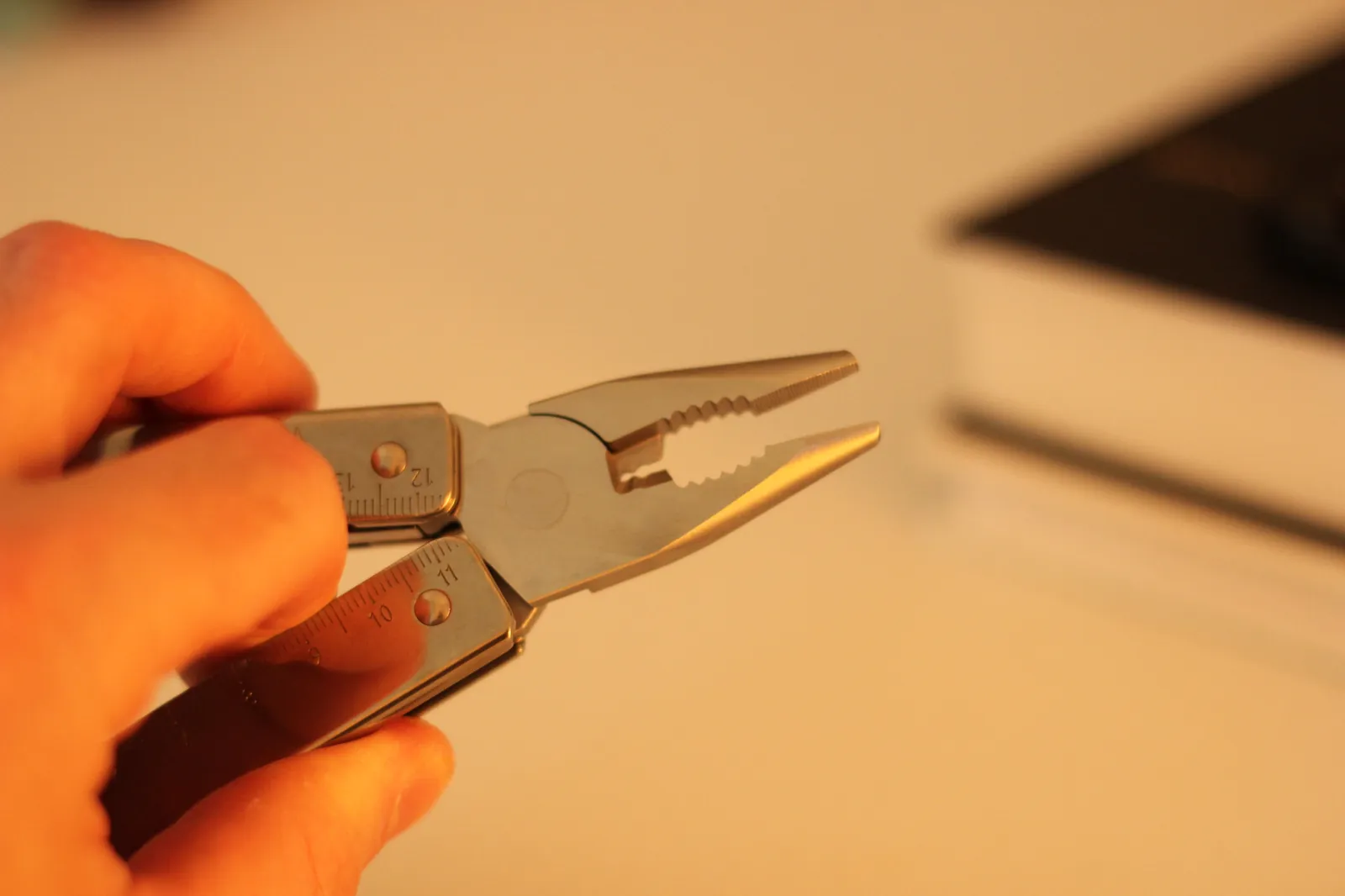
The pliers are the spine. The Swiss Tool MX Clip’s needle-nose pliers are the central tool. They include a wire cutter for soft and thin wire (up to 40 HRc), a separate hard wire cutter for heavier work, and a wire crimper integrated into the jaw. This is exactly what a working multi-tool’s pliers should be — and they’re proportional to the tool, not to the knife.
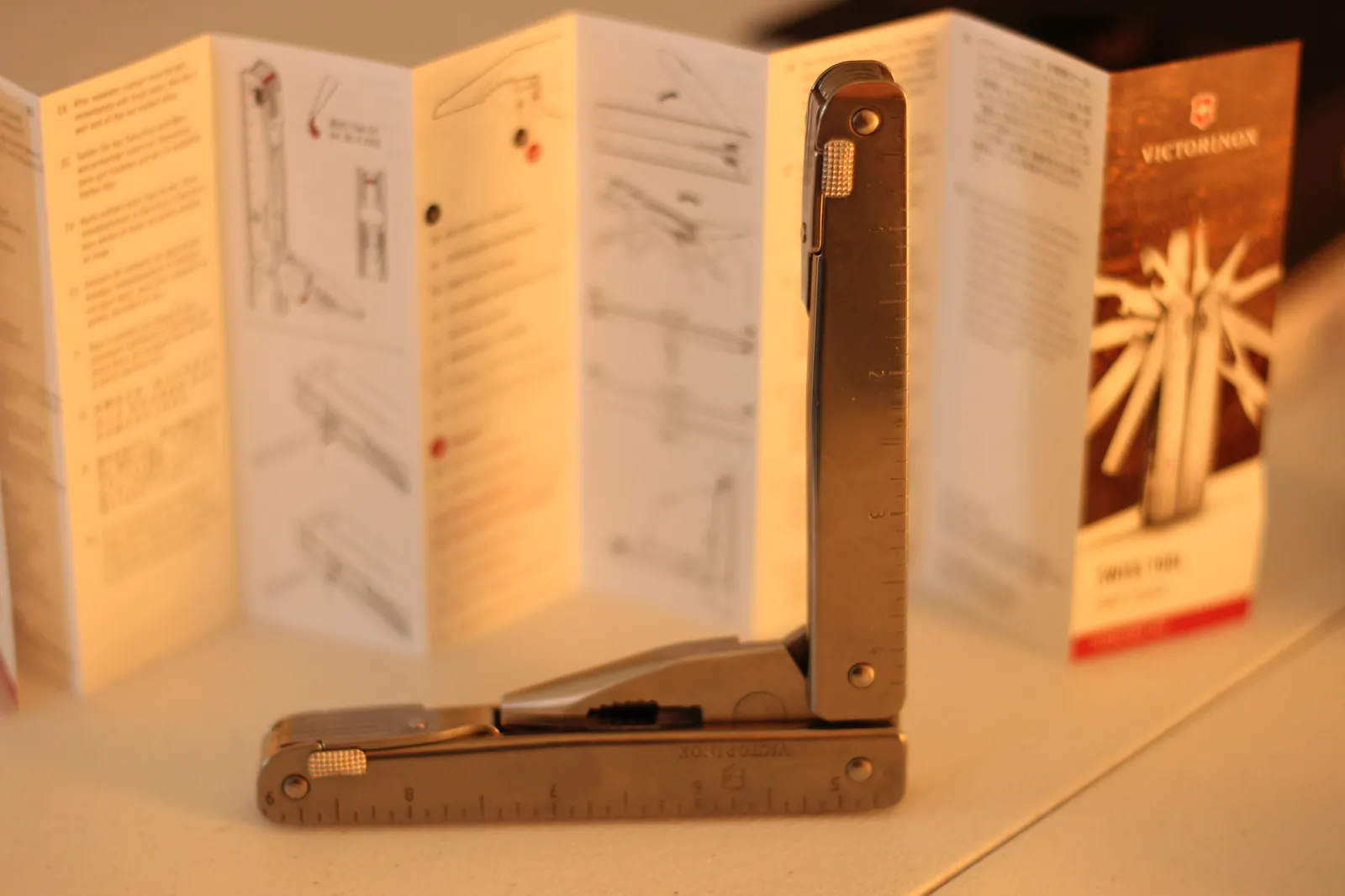
Tools open from the outside, and they lock. Each of the 26 tools opens from the outer edge of the handle, not from the spine. You can open any tool one-handed, and once it’s open it locks fully against accidental folding. The large blade, in particular, opens one-handed via a thumb-accessible opening cut — exactly the modernization the SwissChamp didn’t make.
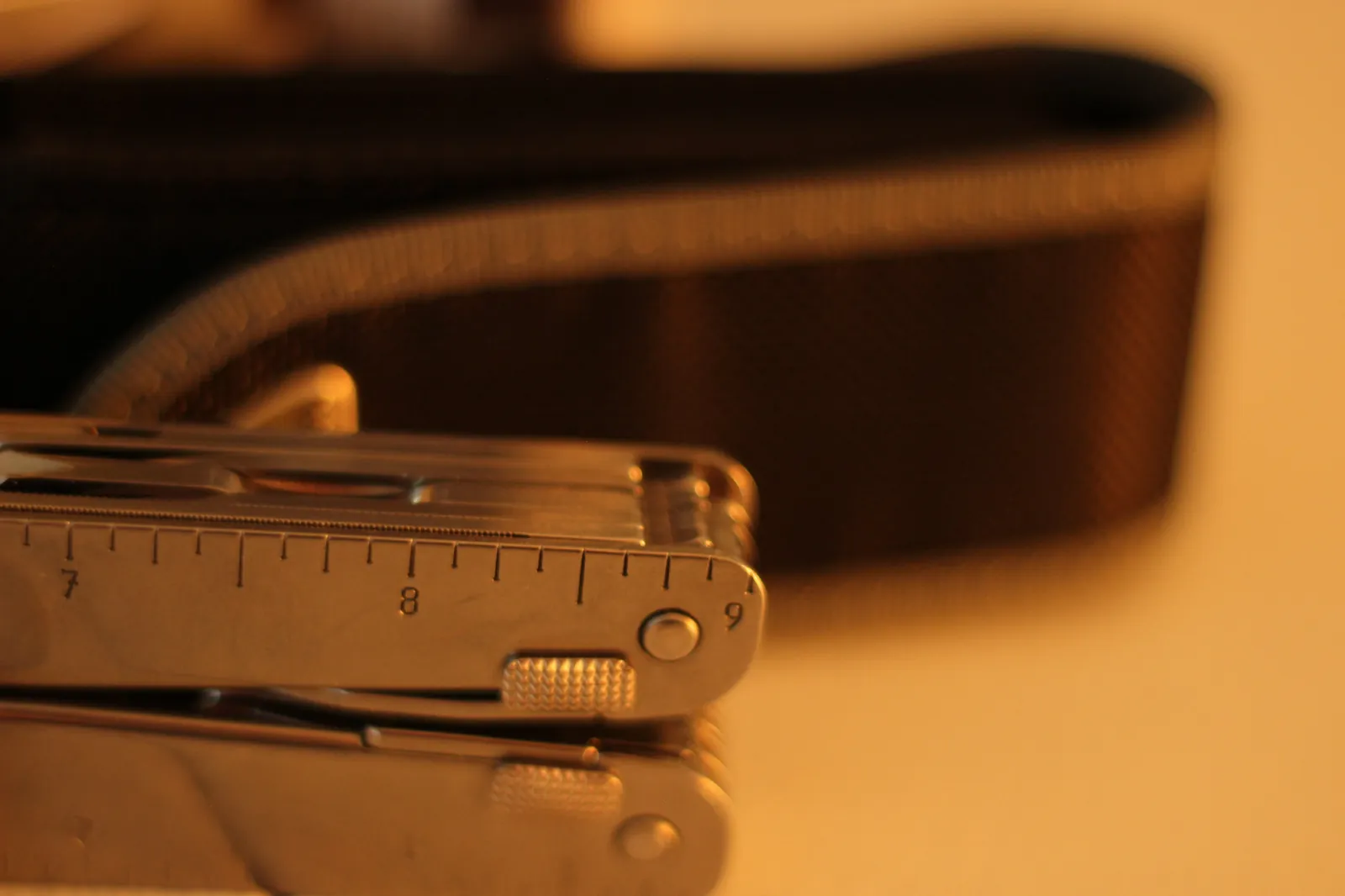
It clips. The integrated carry clip is the namesake. It clips to a belt, a backpack strap, an apron, a tool tote, a backpack daisy chain, or the lip of a workshop bench. The Swiss Tool MX Clip stops being a pocket object and becomes everyday workshop gear.
The 26 Functions
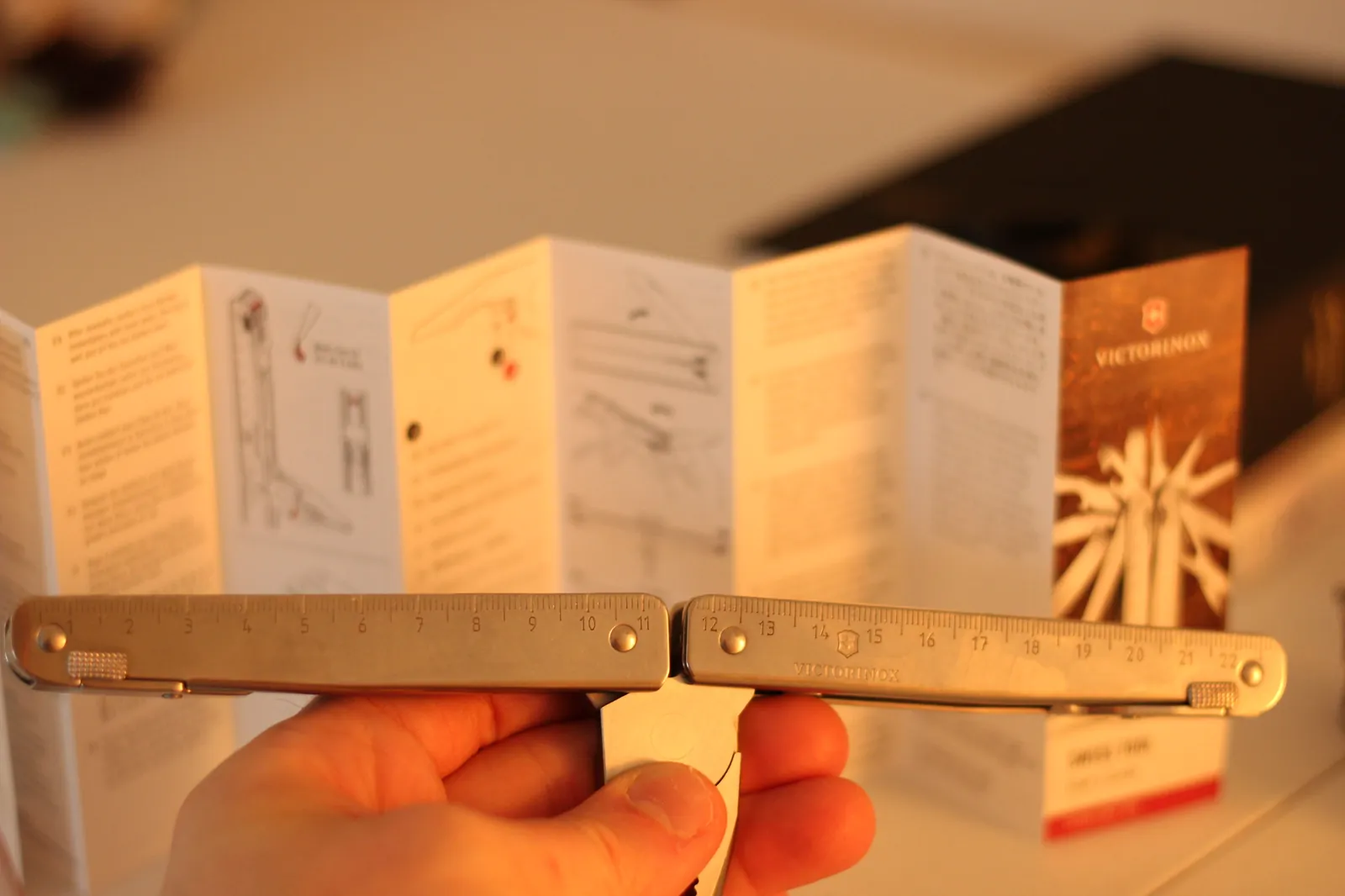
The function count is 26, and per Victorinox every one of them is lockable. Grouped:
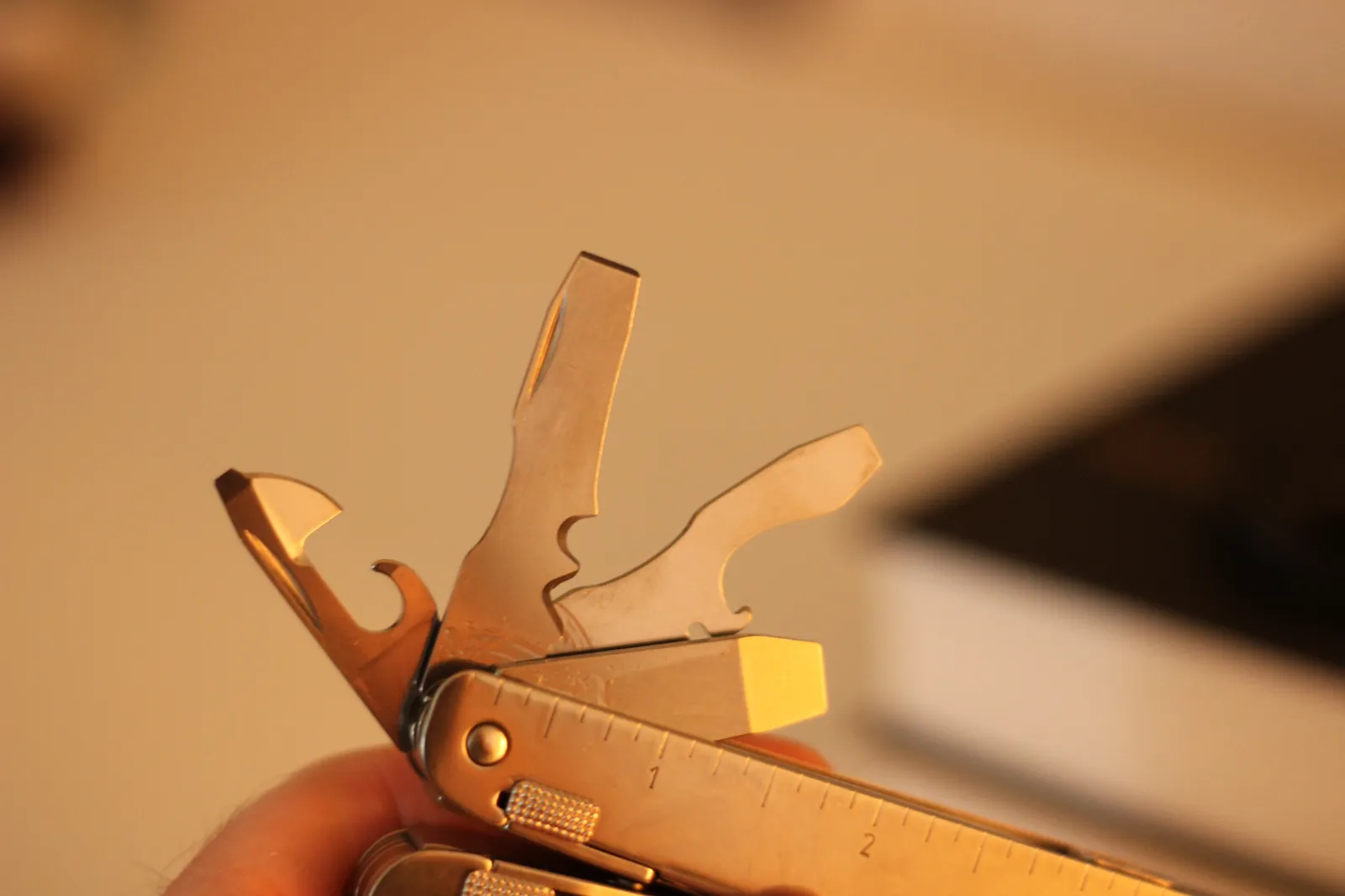
Pliers cluster (4): Needle-nose pliers, wire cutter (≤40 HRc), hard wire cutter, wire crimper Blades & cutting (3): Blade large (one-hand opening, lockable), wood saw, metal saw Drivers (5): Screwdriver 2 mm, Screwdriver 3 mm, Screwdriver 5 mm, Screwdriver 7.5 mm, Phillips screwdriver 1/2 Openers (2): Can opener, Bottle opener Hand tools (3): Reamer/punch, Metal file, Chisel 7 mm + scraper Electrical specialty (4): Wire bender, Wire stripper, Wire scraper, Crate opener Utility (5): Scissors, Ruler (cm), Ruler (in), Carry clip, Lanyard hole / coupling for corkscrew or carry clip
That’s 26 — and notice what’s gone compared to the SwissChamp. No corkscrew, no magnifying glass, no tweezers, no toothpick, no fish scaler, no hook disgorger, no pressurized pen. These are deliberate omissions: this is a tradesperson’s tool, not a pocket utility. The replacements are heavier-duty: the screwdrivers are bigger (7.5 mm vs 6 mm), the chisel is bigger (7 mm vs 4 mm), the pliers are real, and the blade locks.
The Large Blade
The MX Clip’s large blade is a proper one-handed-opening, locking, drop-point blade with a thumb opening hole. It’s a serious tool — not the slip-joint pocket-knife blade the SwissChamp uses, but a workbench-class folding knife blade with a positive lock.
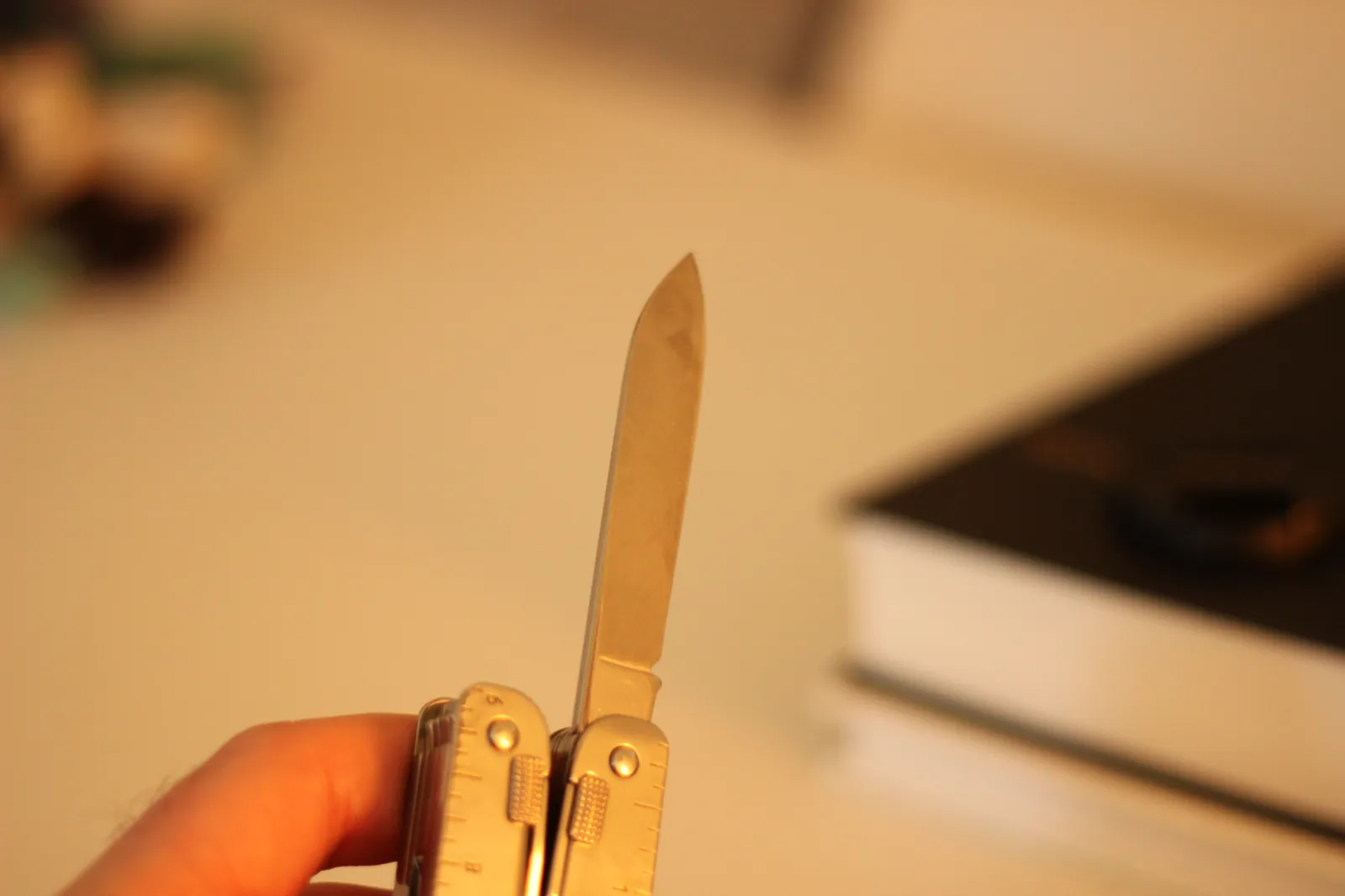
For users coming from a Leatherman Wave+ or a Gerber Center-Drive, this is the familiar blade. It opens like a modern folder, locks like a modern folder, and behaves like a modern folder. The Cellidor-handled SwissChamp doesn’t try to be this knife. The Swiss Tool MX Clip is.
The Saws — Both, Again
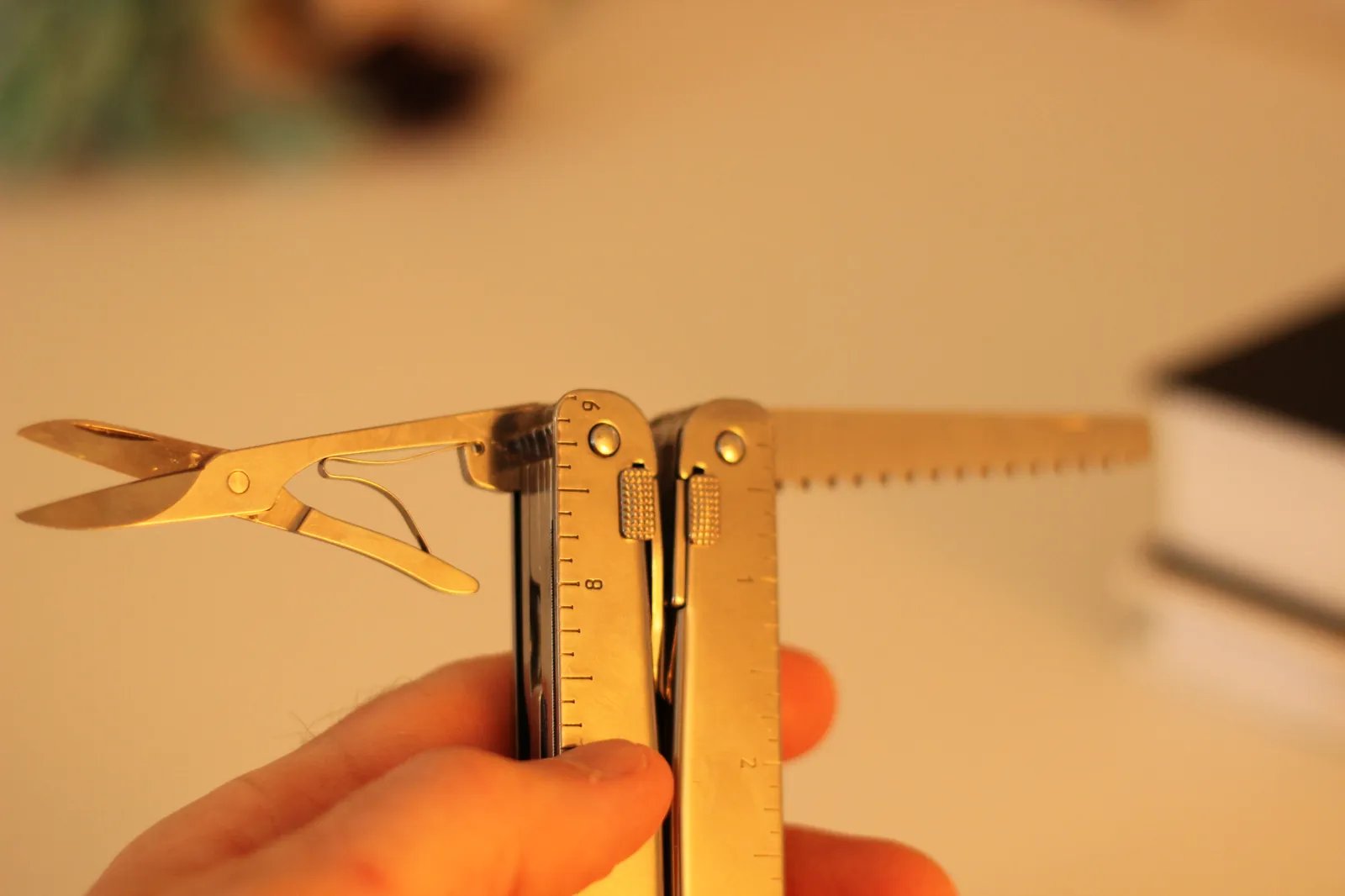
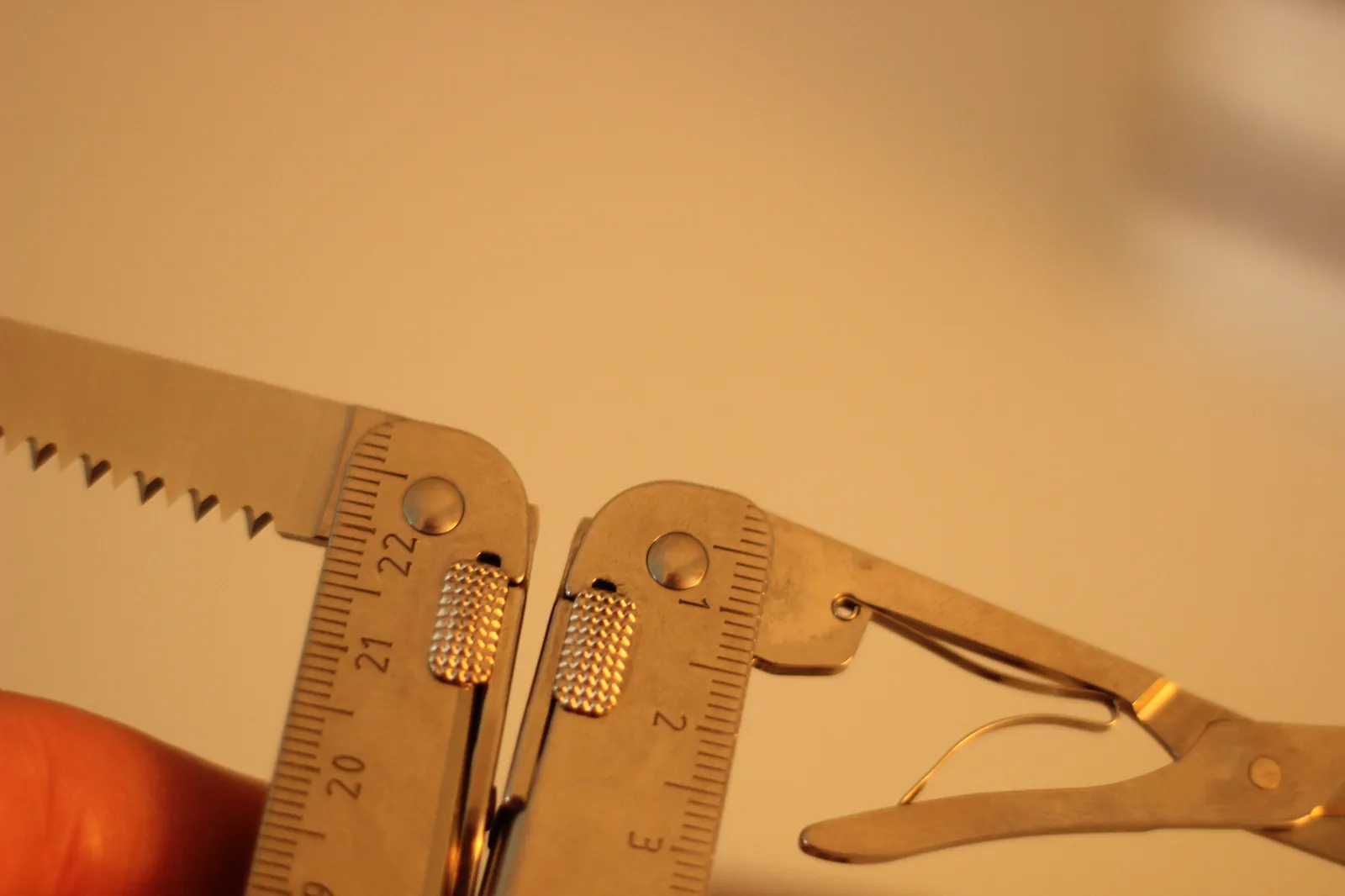
Like the SwissChamp, the Swiss Tool MX Clip has both a wood saw and a metal saw. They’re bigger versions of the SwissChamp’s. The wood saw in particular is genuinely capable on 2–3 inch dry softwood and will cut through small green wood without binding.
The Drivers
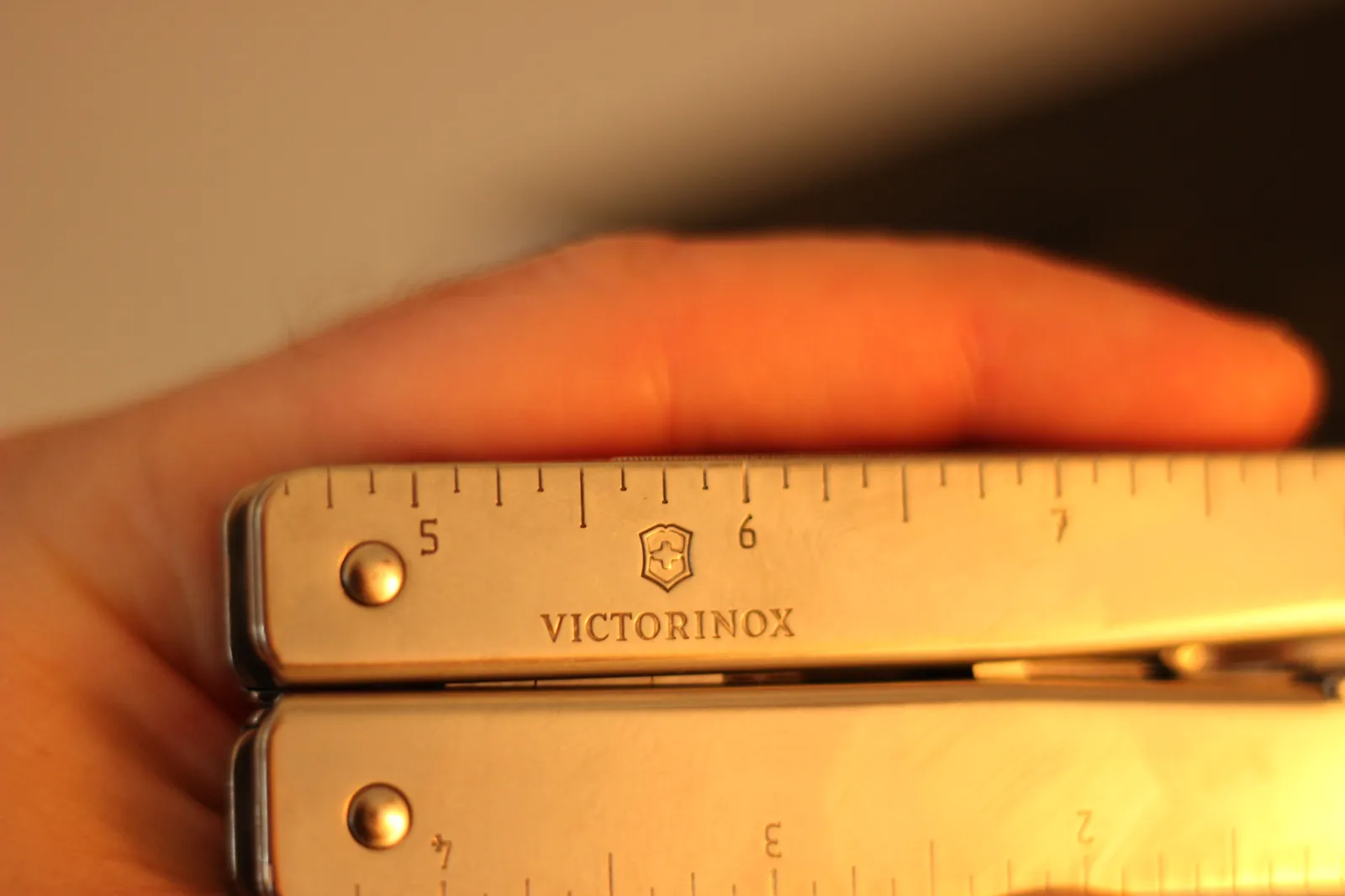
Three full-size flat screwdrivers (3, 5, 7.5 mm) plus a Phillips 1/2 and a separate 2 mm precision driver. The 7.5 mm flat is a serious driver — it’ll drive a wood screw or a furniture-grade bolt without the bit fouling out. The 5 mm flat is the everyday workbench driver. The 2 mm precision driver is for eyeglasses, electronics, and watch work. The Phillips 1/2 covers standard household fasteners.
The MX Clip in Working Use
After a week of mixed homestead, off-grid, and household work with the Swiss Tool MX Clip clipped to a belt, the verdict is honest. It rides comfortably, it doesn’t print, and the clip is positively retained — it won’t fall out if you bend, sit, or work overhead. The 300 g weight is real and present but it’s the right weight for the tool: anything lighter and the pliers would feel undersized; anything heavier would be belt-fatiguing.
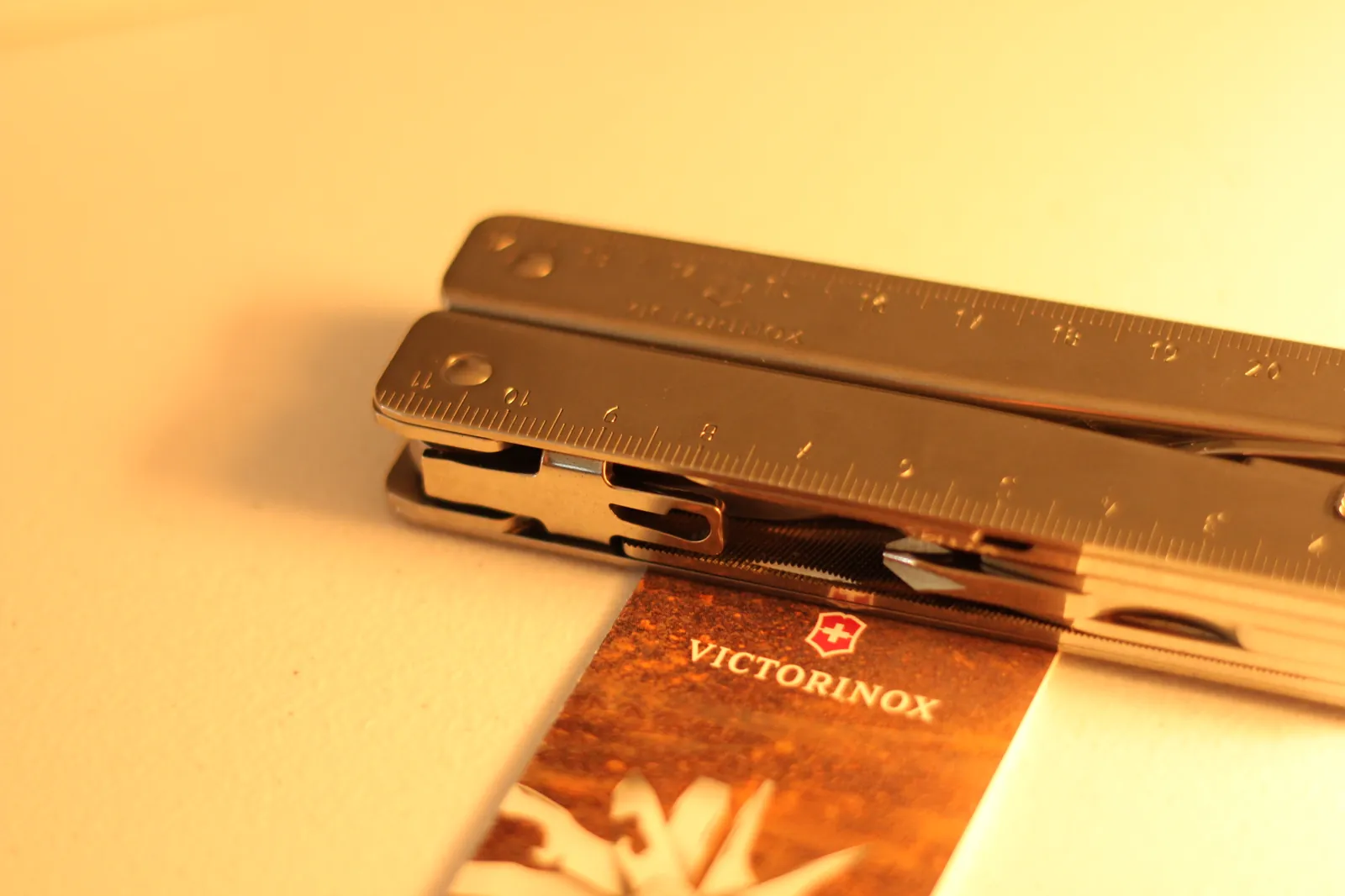
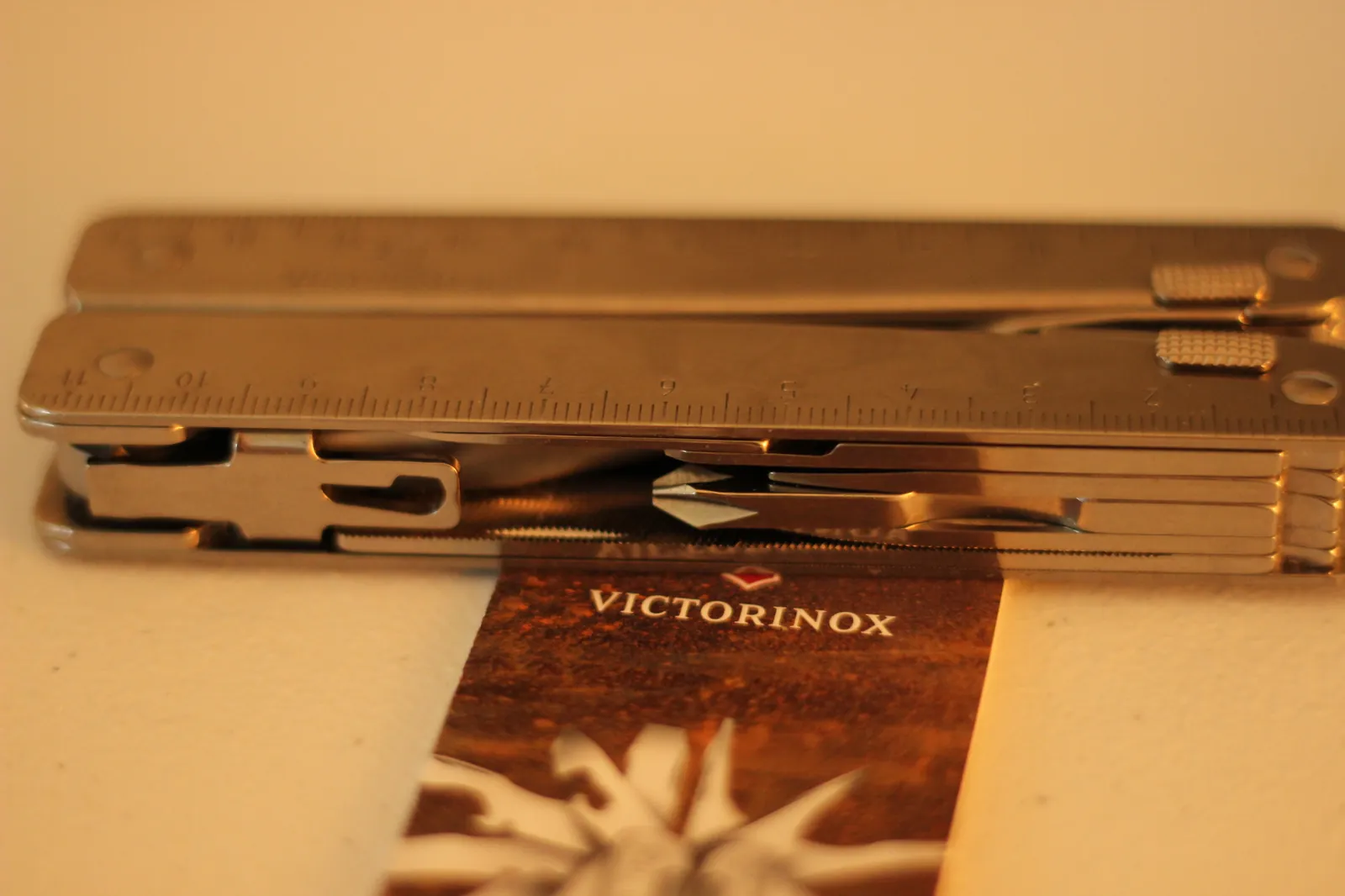
The one-handed lockable blade is the feature that justifies the entire tool versus carrying a SwissChamp alone. There are dozens of moments in a day — opening a sealed bag while holding the other side of it, slicing a zip-tie while the cable is held in one hand, cutting cord while the other hand controls tension — where a one-handed lockable blade is genuinely safer and faster than a slip-joint nail-nick.
The MX Clip vs. the Leatherman Wave+
This is the comparison the modern stainless-tool buyer is making. Honestly:
Pliers: Wave+ has slightly more aggressive jaw geometry and a marginally heavier wire cutter. MX Clip’s pliers are precision-grade and the jaws have a finer, longer reach. We’d take the Wave+ for heavy-cable work and the MX Clip for fine wire and detail electrical work.
Blade: Both have one-handed opening, both lock. The Wave+ uses a slightly thicker blade stock; the MX Clip blade is more refined and takes a finer edge. Neither is clearly “better” — they’re different blade philosophies, both correct.
Bit drivers: This is where the Wave+ has an architectural advantage — its bit driver accepts standardized bits, so a single tool covers an open-ended set of fastener types. The MX Clip uses integrated, fixed Victorinox-form drivers. The Wave+’s system is more flexible; the MX Clip’s is more refined and won’t lose bits.
Locks: Both. MX Clip’s all-locking feature set is genuinely impressive — every tool locks, not just the blade.
Materials and fit: This is where the MX Clip wins. Victorinox’s manufacturing tolerance is visibly better — the action is smoother, the tool stack is tighter, the lock engagement is more precise.
Carry: MX Clip’s integrated carry clip is meaningfully better than the Wave+’s pouch-or-pocket carry. If you’re a belt-clip user, this matters daily.
Warranty: Both lifetime. Victorinox adds a 2-year warranty on the mechanical assemblies of the Swiss Tool MX Clip on top of the lifetime against manufacturing defect.
Net editorial assessment: the Swiss Tool MX Clip is in the same competitive class as the Leatherman Wave+ and the Gerber Center-Drive. It is not a SwissChamp replacement, and it is not a Leatherman knockoff. It is Victorinox’s genuine, considered, modern-era full-size multi-tool, manufactured to the same Ibach standard as the SwissChamp.
How They Compare to Each Other
A side-by-side editorial summary, because at this point in the piece the reader deserves it.
| SwissChamp | Swiss Tool MX Clip | |
|---|---|---|
| Tools | 33 | 26 (all locking) |
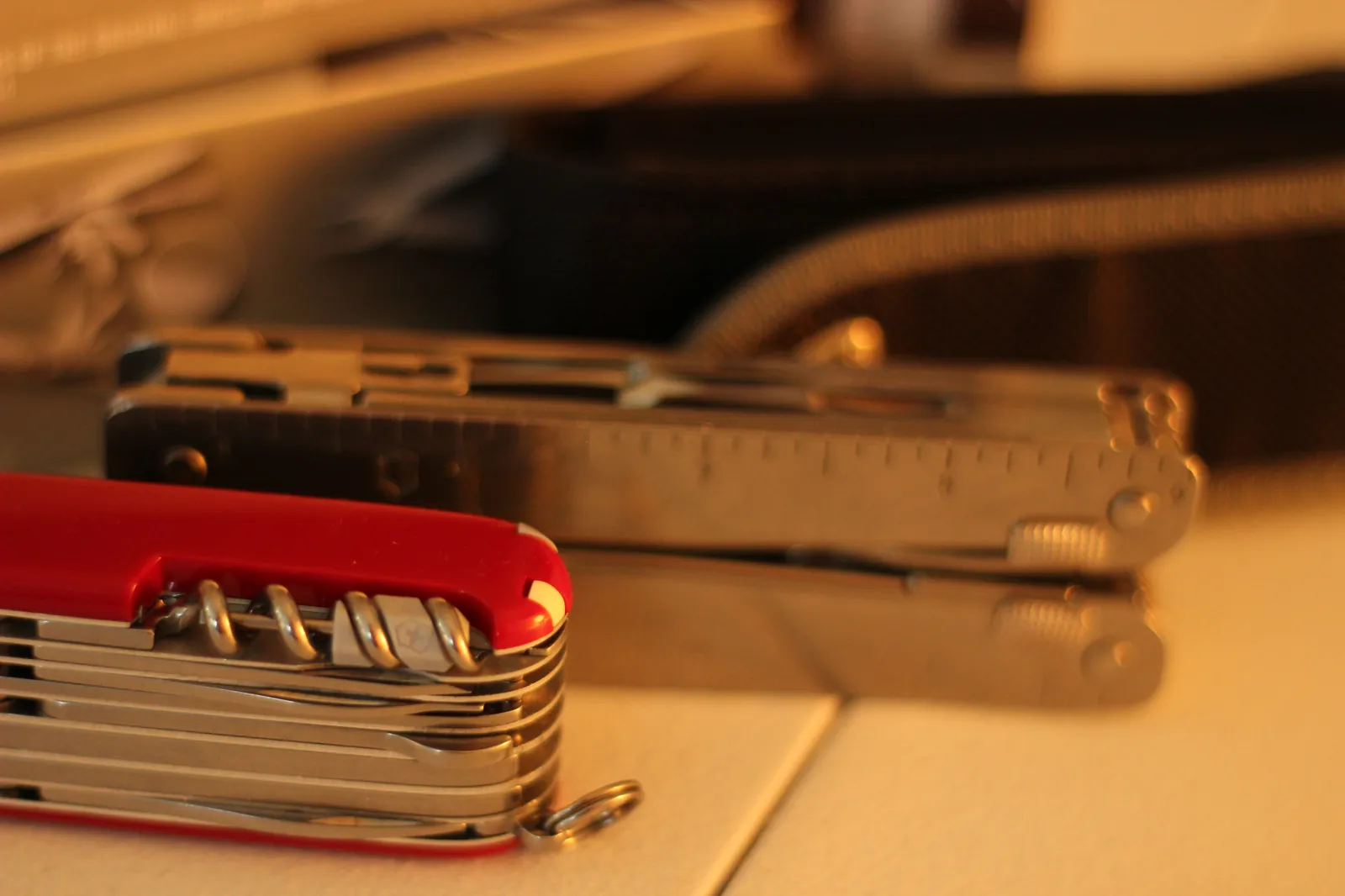
| Length closed | 91 mm | 115 mm |
| Weight | 185 g | 300 g |
| Material | ABS / Cellidor + steel | All steel |
| Blade opening | Nail-nick (two-handed) | Thumb-hole (one-handed) |
| Blade lock | No | Yes |
| Pliers | Included, proportional | Spine of the tool |
| Carry | Belt clip (or pocket) | |
| Best for | Fine work, EDC, household | Workshop, trades, off-grid |
| Cost | $146 CAD | $203 CAD |
| Together | Complete tool coverage at any task |
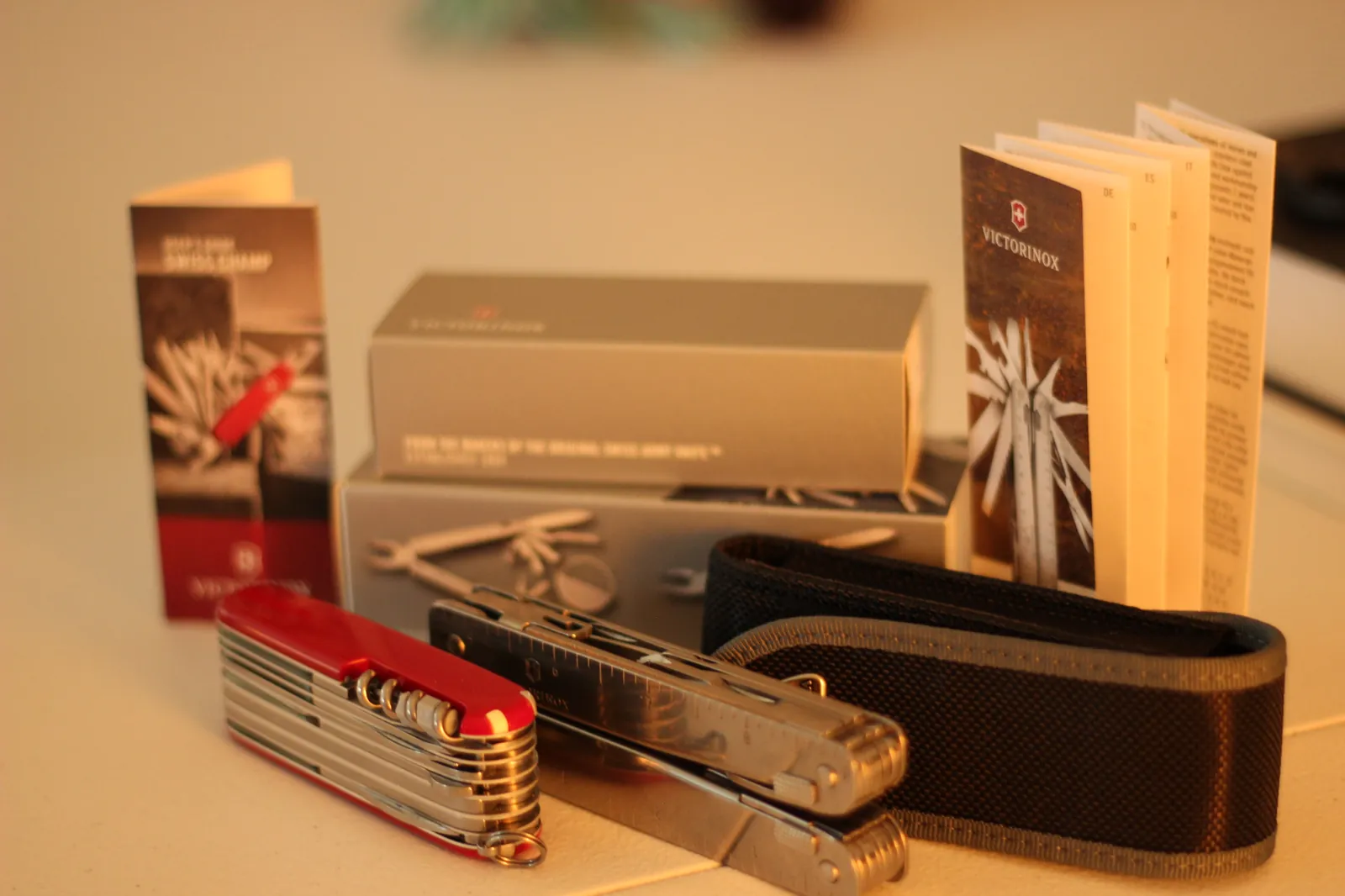
The honest editorial reading: owning both is the answer. The total investment is $349 CAD pre-tax, you carry the SwissChamp in your pocket and the Swiss Tool MX Clip on a belt or in a tool tote, and you have genuine 59-function coverage across every cutting / driving / gripping / opening task a homestead, off-grid, or working-trades user encounters. No single tool — Victorinox or Leatherman or Gerber — covers this much range. It’s not redundancy; it’s coverage.
If you can only buy one, the answer depends on what you want:
- The vintage red pocket classic — fine work, daily-carry, eyeglasses, household, light hobby: SwissChamp.
- The modern stainless workshop tool — trades, belt carry, mechanical work, electrical, heavy outdoor: Swiss Tool MX Clip.
What This Feature Doesn’t Try to Be
We deliberately didn’t write a Leatherman comparison head-to-head as the main editorial frame. Pitting the SwissChamp against the Wave+ implicitly converts design choices into cons, and that’s bad editorial. The SwissChamp doesn’t try to be a Wave+. The Wave+ doesn’t try to be a SwissChamp. The Swiss Tool MX Clip is Victorinox’s actual answer to the Wave+ design conversation, and we covered that on its own terms above.
If you want our Leatherman Wave+, Free P4, or Gerber Center-Drive coverage, those are separate reviews in the editorial pipeline (we have active pitches with both Leatherman and Gerber). When all four pieces are published we’ll cross-link them so the reader can see the complete category from every honest angle.
The Verdict
The Victorinox SwissChamp and the Swiss Tool MX Clip are the answer to the question every premium-tier multi-tool buyer is actually asking: do I want the vintage red pocket classic, the modern stainless workshop tool, or both?
Yes, on all three counts.
The SwissChamp is the cleanest expression of what Victorinox has been refining for nearly 60 years — a 33-function pocket tool that has no real modern competitor in its category. It earns its $146 CAD because nothing else in the world does what it does at this fit and finish, with this brand longevity, with this lifetime warranty.
The Swiss Tool MX Clip is Victorinox’s serious entry into the modern full-size multi-tool category — pliers-driven, one-handed lockable blade, integrated carry clip, 26 lockable tools, all-steel construction. At $203 CAD it competes directly with the Leatherman Wave+ and the Gerber Center-Drive on its own terms, and on materials and fit it wins.
Together, at $349 CAD, they cover the entire premium-tier multi-tool conversation. Pocket the SwissChamp, belt the Swiss Tool MX Clip. Lifetime warranty. Swiss-made. You’re done with multi-tool shopping forever.
Where to buy in Canada:
- Victorinox SwissChamp (1.6795, Red) — $146 CAD (excl. tax)
- Victorinox Swiss Tool MX Clip (3.0327.MKB1, Silver) — $203 CAD (excl. tax)
Both direct from Victorinox.com Canadian site, free shipping (confirm at checkout), shipping to Canada is no issue. Both backed by Victorinox’s lifetime warranty (with an additional 2-year mechanical warranty on the Swiss Tool).