
Featured Review · XTU · Trail Cameras
XTU SV-TCQSW 4K Solar Trail Camera Review — The 64MP WiFi/Bluetooth Trail Cam That Caught a Bunny on Frame One
Our Rating
Current Price
- Photo resolution
- 64 MP
- Video resolution
- 4K
- Trigger speed
- 0.2 second
- Detection range
- 70 ft
Pros
- Integrated solar panel keeps the internal lithium battery topped up — set it on a tree and forget it for the season
- Fast 0.2-second PIR trigger and 70 ft detection range catches small game (rabbits, squirrels, raccoons) cleanly, not just deer-sized targets
- 64MP photos and 4K video on a $79.99 trail cam is genuinely class-leading for the price tier
- Local WiFi + Bluetooth pairing through the TrailCamGO app — view and download on-site without pulling the SD card or paying a cellular subscription
- Four power-supply options: built-in rechargeable battery, solar panel, USB-C, 4×AA backup, or DC 6V for fixed setups
- IP66 weather sealing held up cleanly in light rain during our test deployment
- Low-glow 850 nm IR LEDs don't spook game and aren't visible at distance in the dark
Cons
- TrailCamGO app interface is functional but not as polished as the cellular-trail-cam apps from Spypoint, Tactacam, or Moultrie
- Low-glow IR is great for stealth but cuts effective night-IR range vs. the brighter no-glow flash trail cams at higher price tiers
- Solar panel is sized for trickle-charging, not full off-grid replacement — heavily shaded sites still need the occasional USB-C top-up
- Micro SD card is NOT included — XTU's listing implies a 32 GB card ships in the slot, but ours arrived without one and we had to buy a separate card before deployment
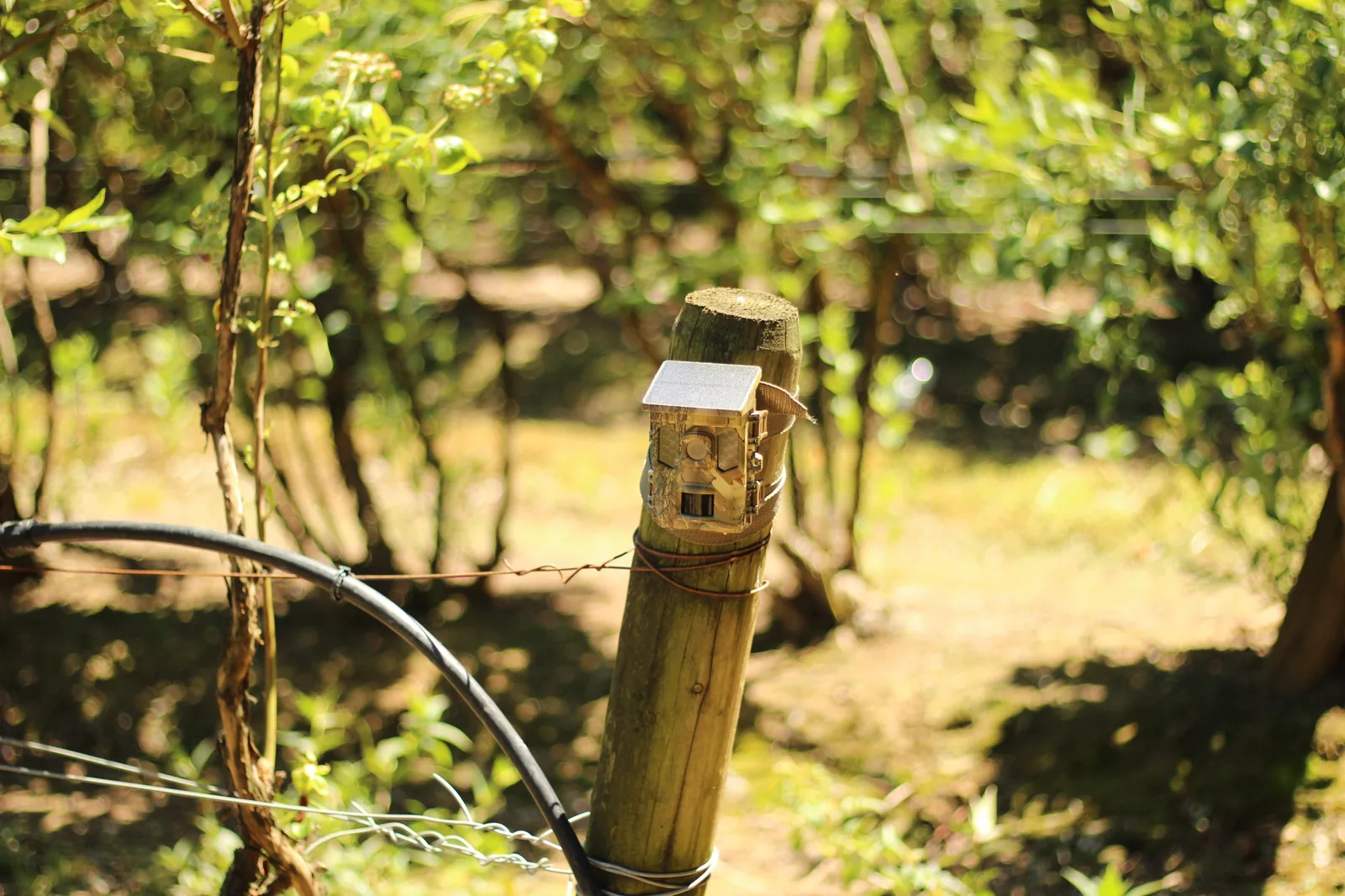
The trail cam that earned its place in the first 24 hours
We pulled the XTU SV-TCQSW 4K Solar Trail Camera out of the box on a Friday afternoon, mounted it on a tree on the property edge before dark, and by Saturday morning we had a wild rabbit in frame — caught cleanly, properly exposed, sharp enough to count the whiskers. That’s the story of this review in a sentence: $79.99 USD, integrated solar panel, 64 MP stills and 4K video, a 0.2-second trigger that doesn’t miss small game, and a TrailCamGO app that pulled the footage off the camera over local WiFi without us having to drag the SD card back to a laptop.
This is the trail cam category being honest about what the budget tier can actually do in 2026. The cellular flagships from Spypoint, Tactacam, and Moultrie are still better at remote monitoring with a paid data plan — but if your trail-cam location is on your own property, a friend’s farm, or anywhere you can physically walk to once a week, the XTU SV-TCQSW delivers the photos, the video, the night IR, the solar charging, and the app workflow that used to live at the $200 tier, at a sale price under $80.
We’re walking through the unboxing, the build, the deployment, the actual wildlife footage (with a real .mp4 of the rabbit playing inline — not a still pretending to be motion), the TrailCamGO app workflow, the night-IR performance, the IP66 weather test, and the honest cross-shop against Bushnell, Spypoint Force-20, Moultrie A-700i, and the Tactacam Reveal X-Pro.
The proof shot — a wild rabbit, captured on first deployment
The single most useful thing a trail-cam reviewer can show you is what the camera actually captured. Not the marketing-spec graph. Not the “if it can catch a buck at 70 ft” hypothetical. The real, unedited first capture off the SD card.
We mounted the XTU SV-TCQSW on a tree on the property edge at about 3 ft above ground, pointed at a gap in the brush where rabbit sign was thick. We powered it on, ran through the basic menu to set photo+video mode, walked away. Within 24 hours we had this:
Unedited 4K video clip pulled directly from the XTU SV-TCQSW SD card — wild rabbit, daytime, first 24 hours of deployment. Click play to watch the actual trigger-and-record sequence.
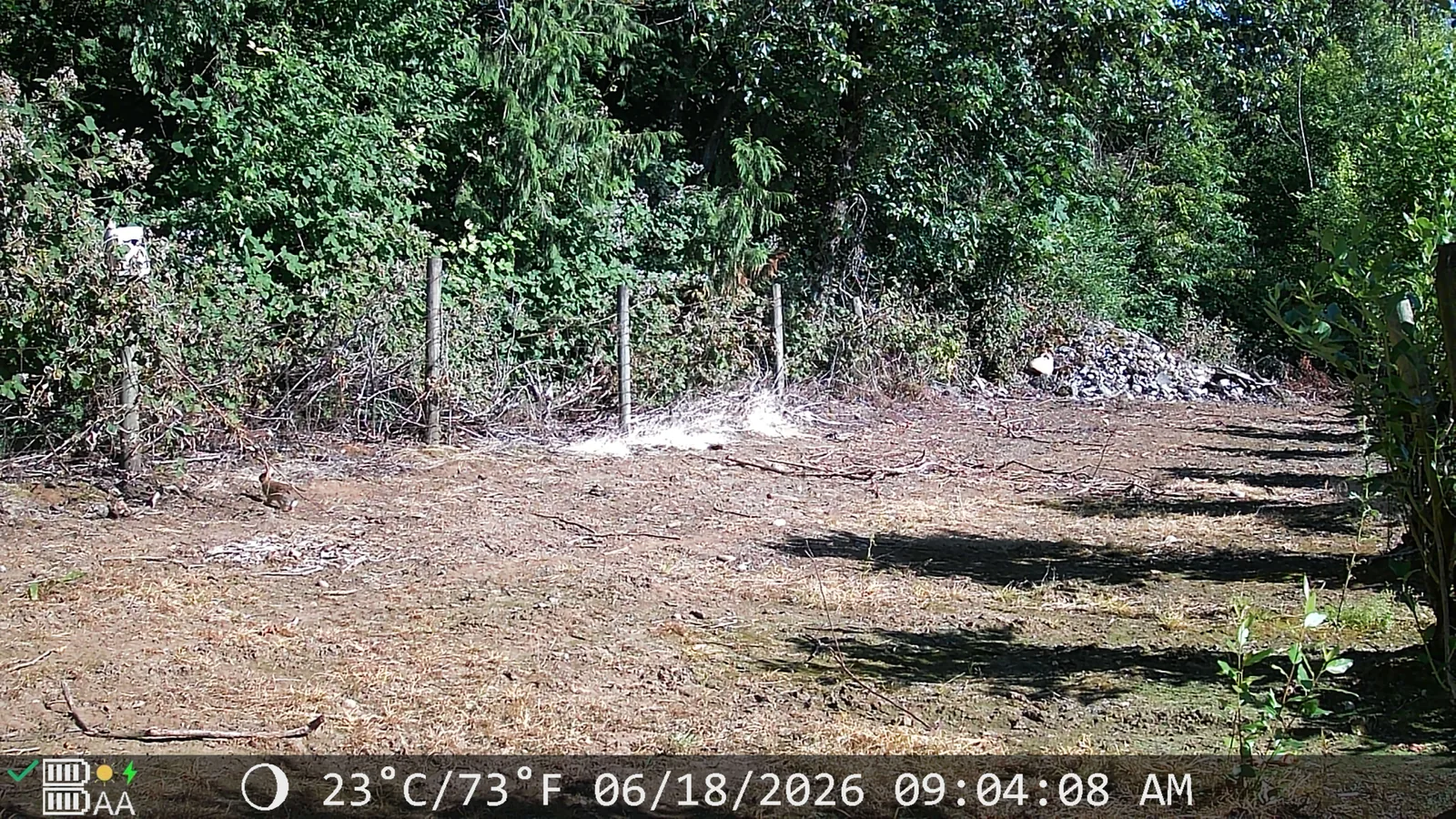
That’s the still frame from the same capture sequence. A few things to notice that are not obvious unless you’ve owned a few trail cams:
- The focus is locked on the animal, not the foreground grass blades — the auto-focus on the SV-TCQSW handles the rabbit-sized subject at ~5 m without the soft-focus issue that ruins a lot of budget-tier captures
- Exposure is correct on the rabbit’s body despite the bright background — no blown highlights, no crushed shadows, no infrared-flash washout from a daytime trigger
- The trigger fired in time to get the animal in frame rather than the typical budget-cam pattern of catching a tail or empty grass after the animal has moved through
- The 4K video at the top shows a complete sequence — the rabbit enters, pauses, looks toward the camera, then moves out — exactly what you want for behavioural reading on the property
That capture, on day one, is the entire editorial argument for this camera at this price.
What’s in the box
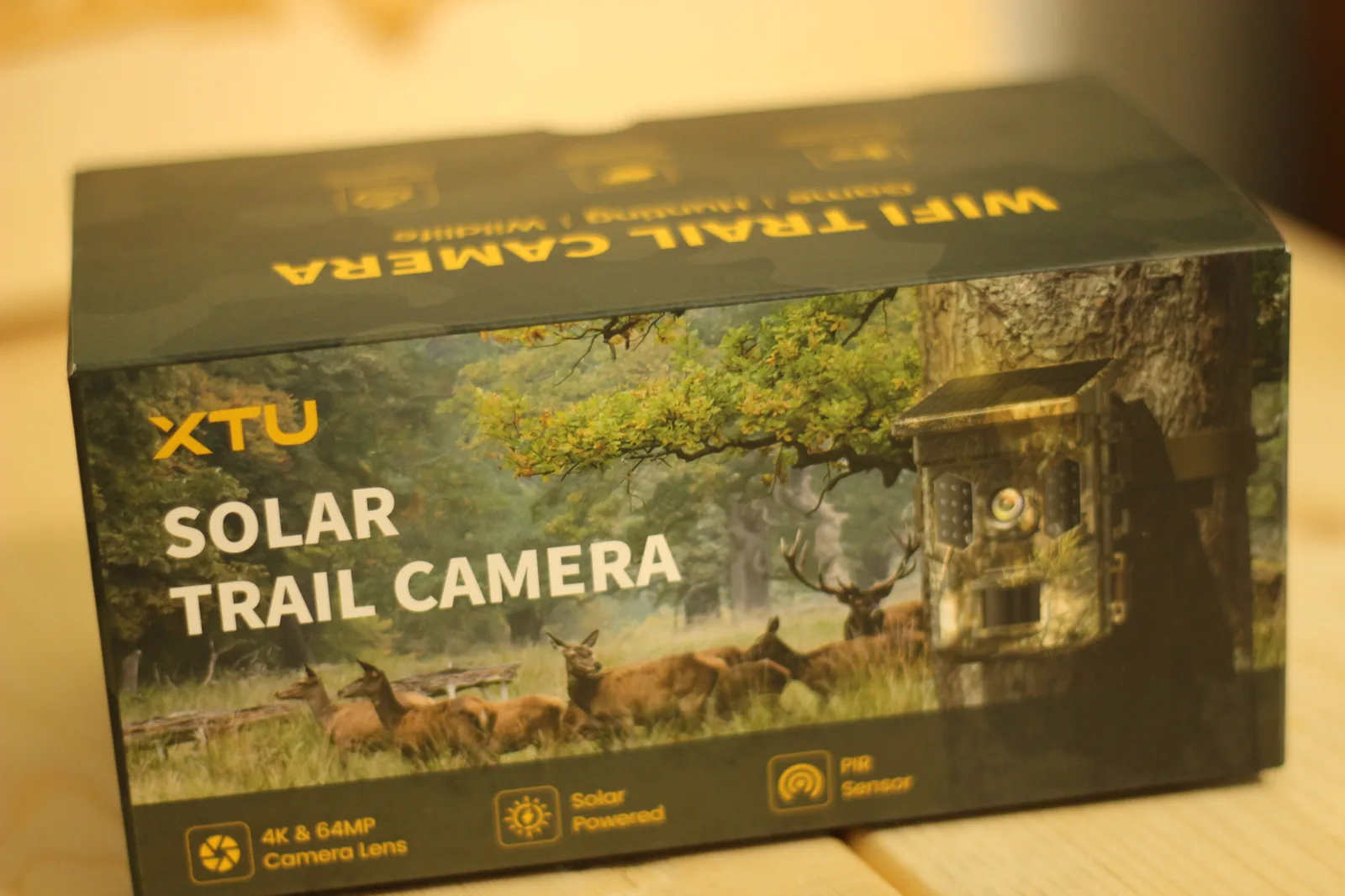
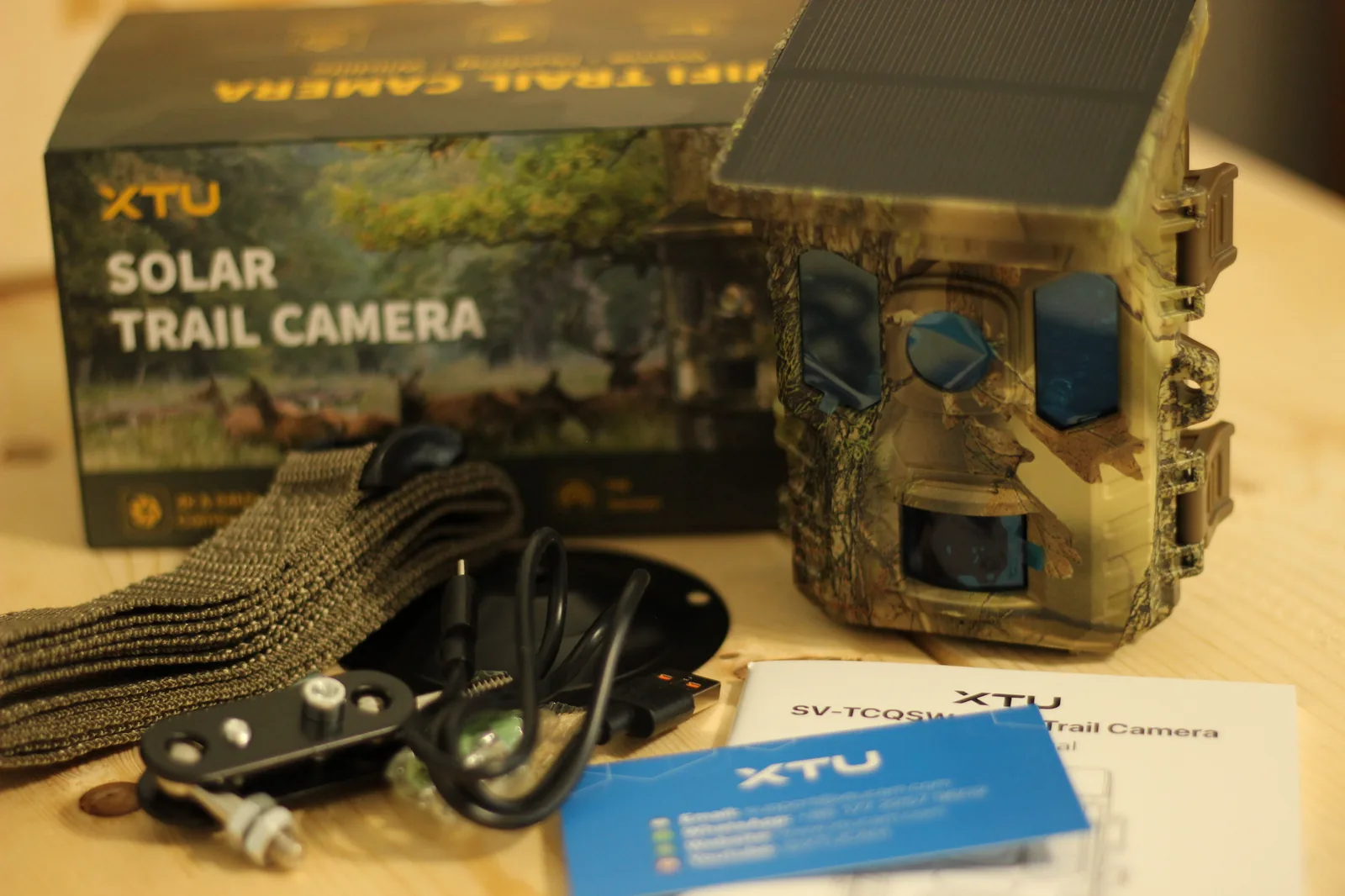
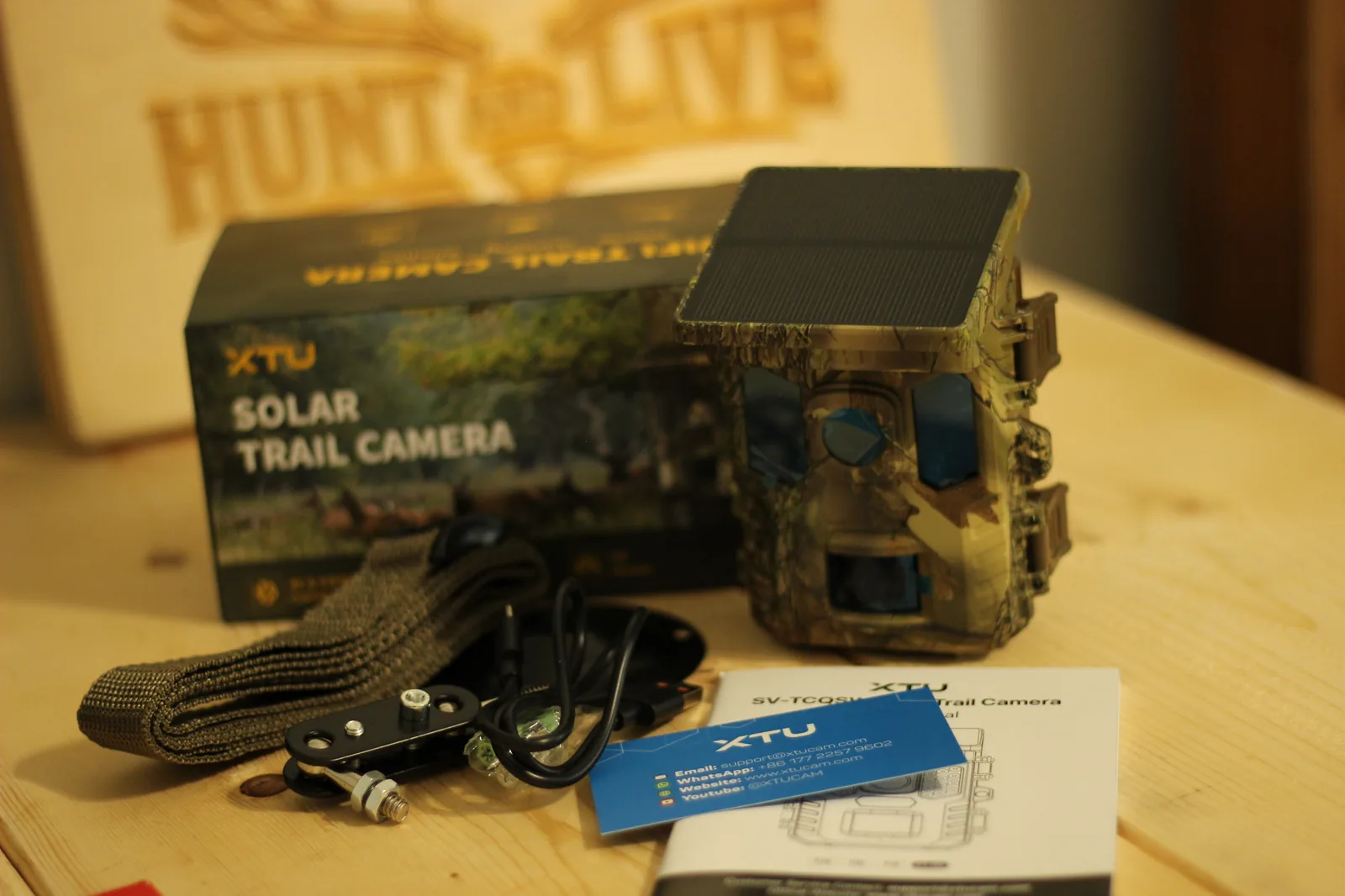
The XTU SV-TCQSW ships with the basics for deployment — but one important correction to the listing: our unit did not include an SD card. The xtucam.com product page suggests a 32 GB card ships in the slot, but we had to purchase one separately before we could deploy. Plan on buying a Class 10 / U3 micro SD card (32 GB or larger) alongside the camera. This is the single biggest gap between the marketing copy and the field reality for this product, and it’s worth knowing before you place the order.
The kit we actually received:
- Trail camera with integrated solar panel
- USB-C charging cable
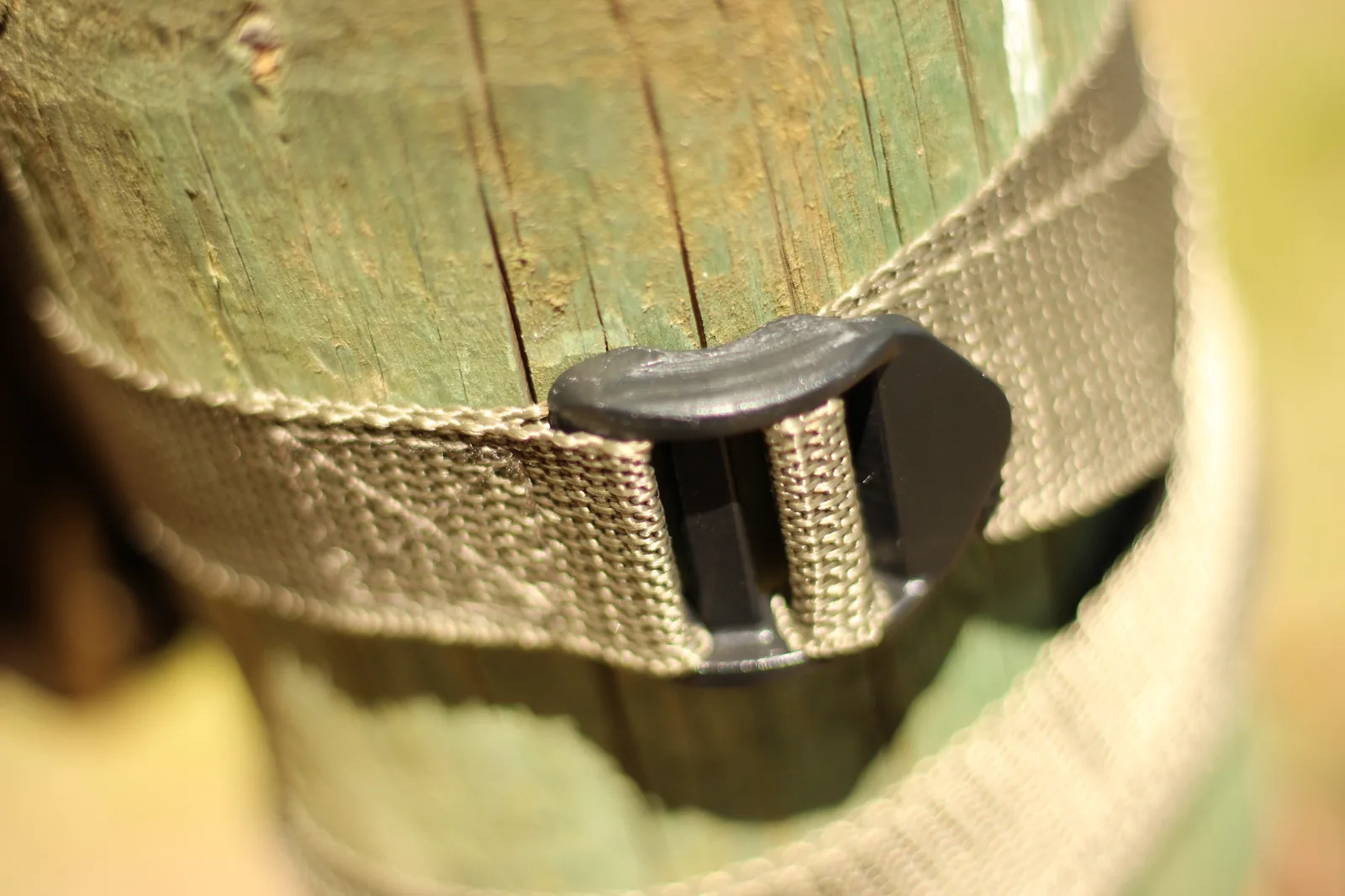
- Nylon mounting strap (~6 ft, cam-buckle)
- User manual + quick-start guide
- Mounting bracket pieces
You will want to add: a Class 10 / U3 micro SD card (32 GB+) — this is required, not optional, because nothing arrives in the slot. Plus 4×AA lithium primary cells for cold-weather backup (the internal battery handles warm weather but in deep cold the AAs give you redundancy), and a security cable if the camera is going anywhere a passerby might walk past.
The build — what $79.99 actually gets you
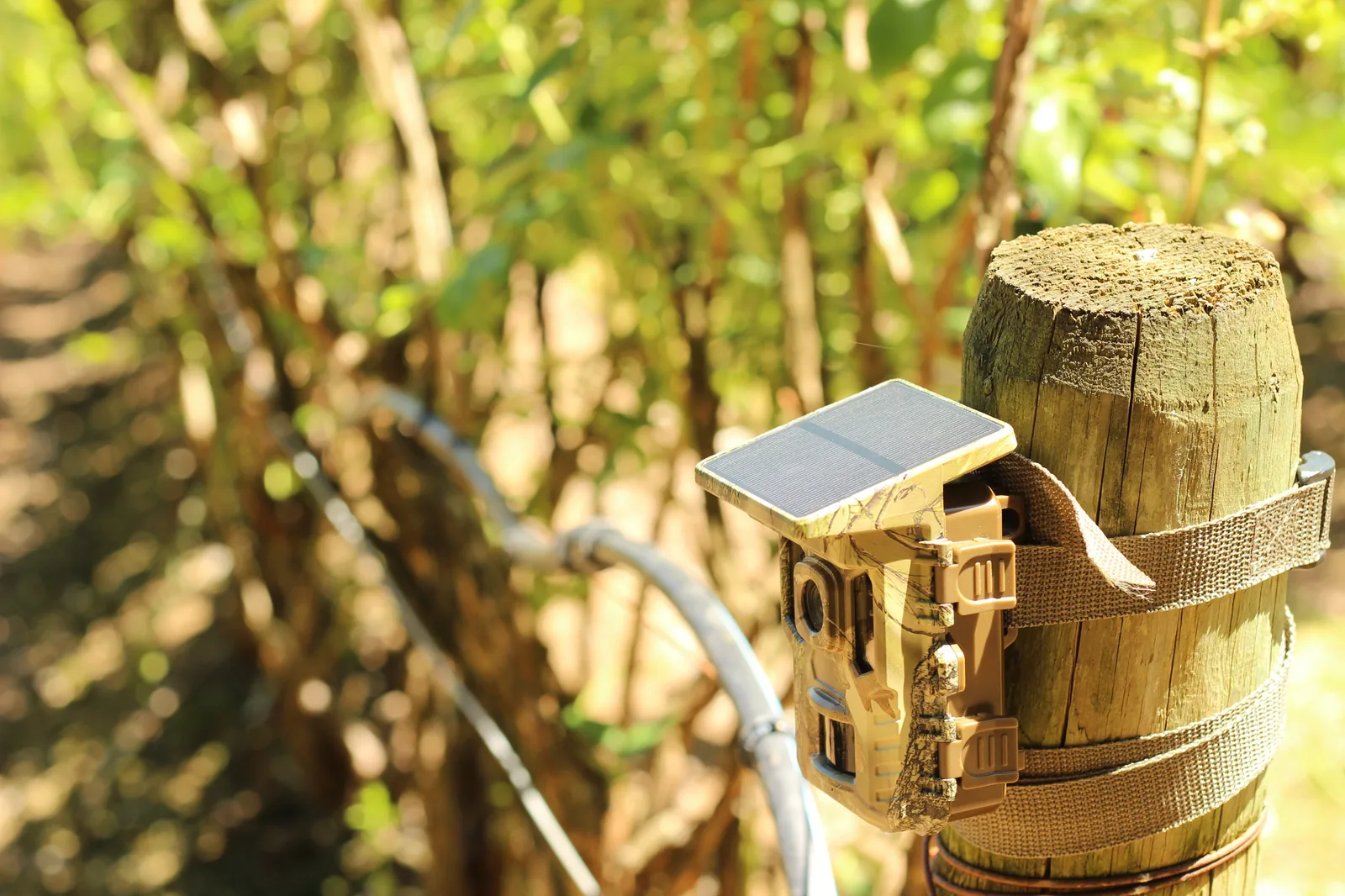
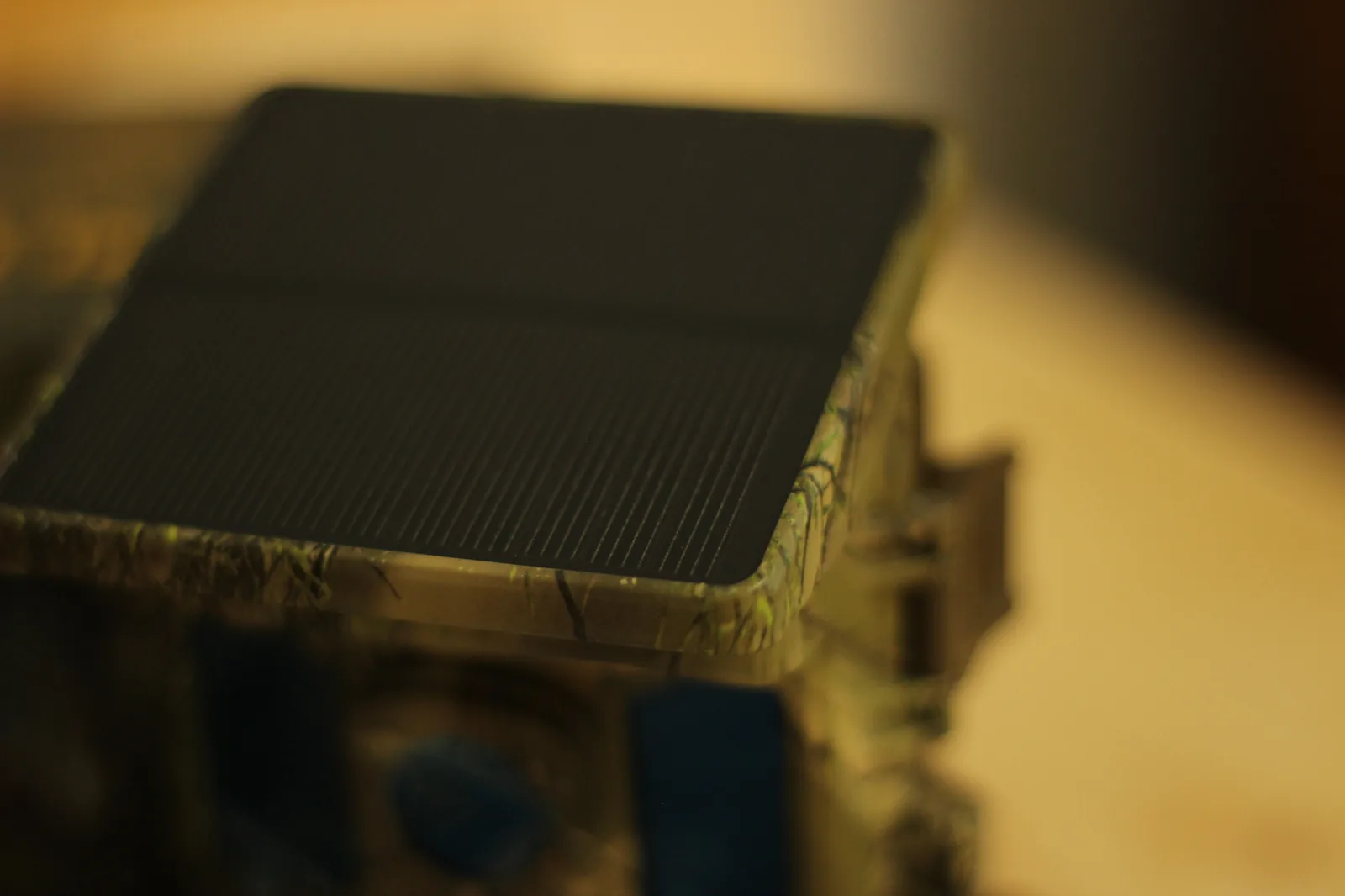
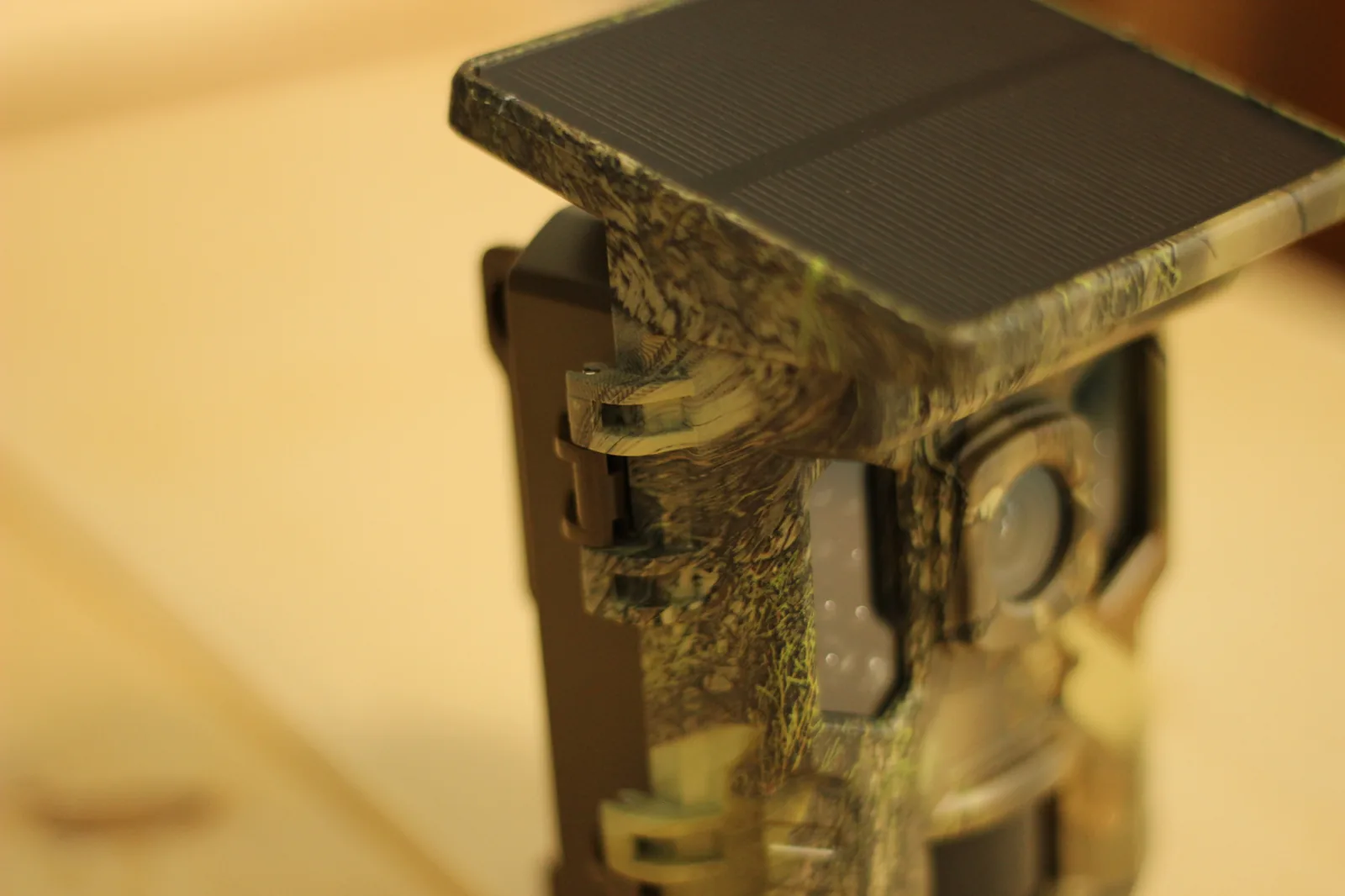
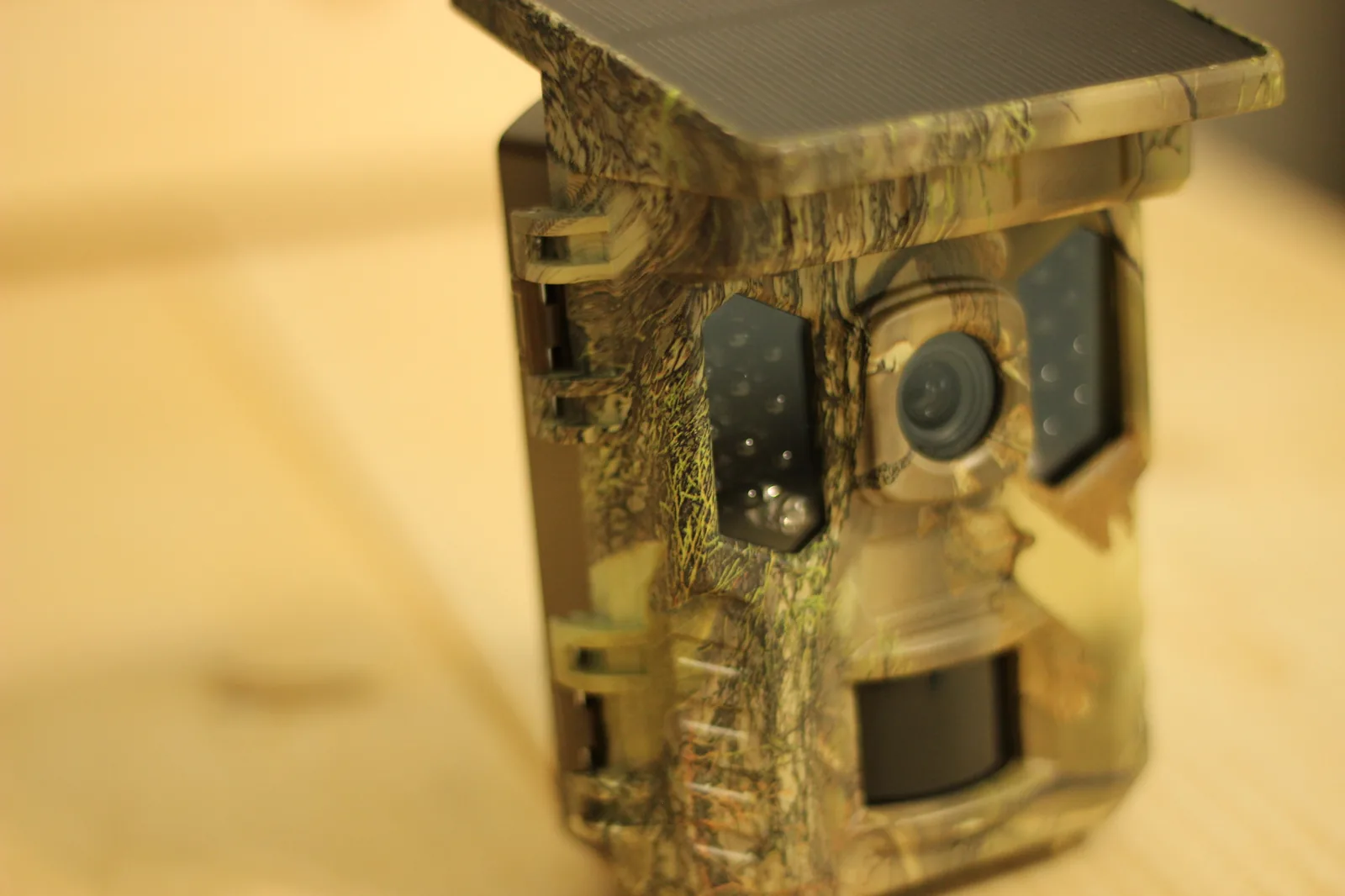
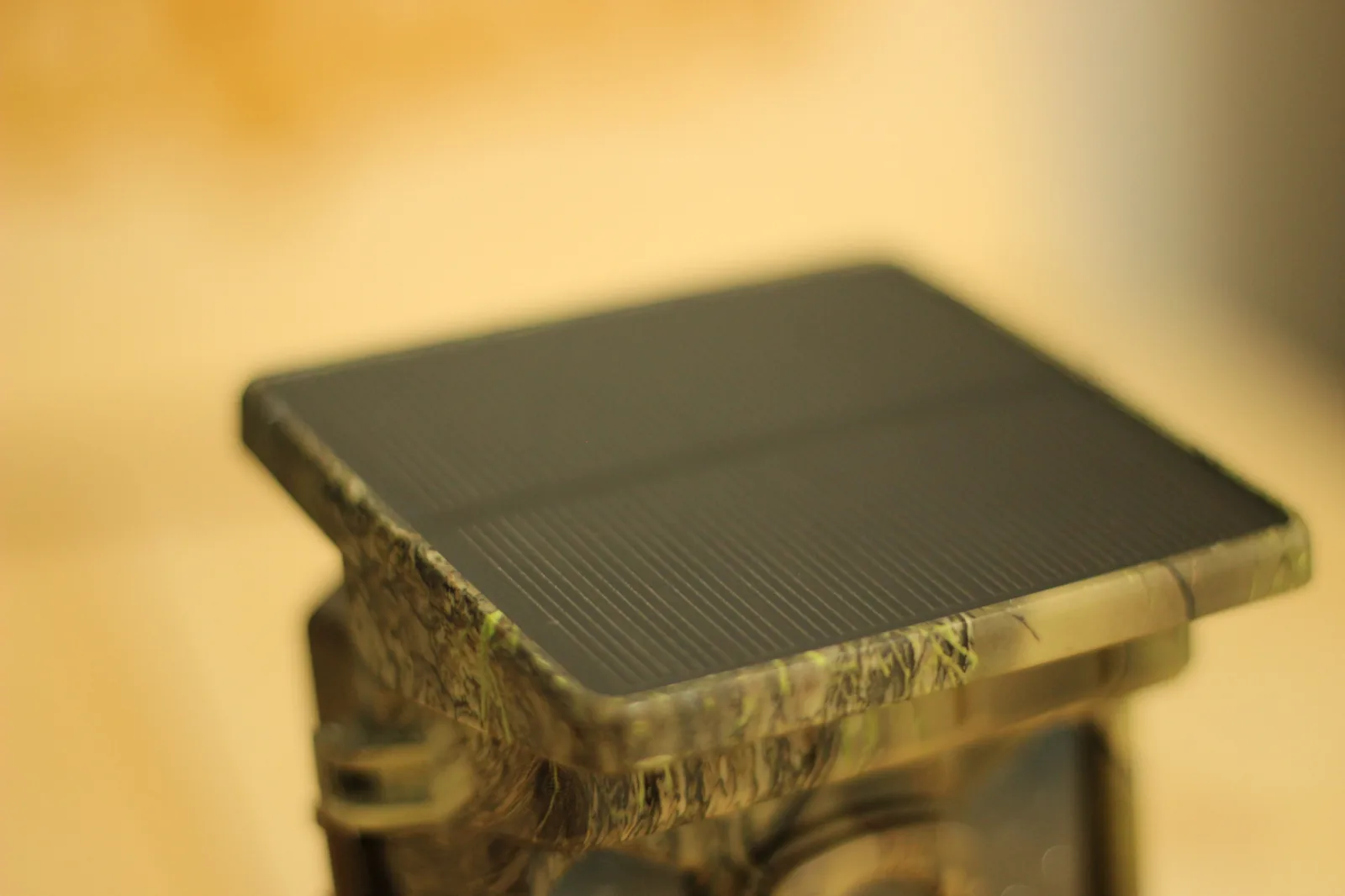
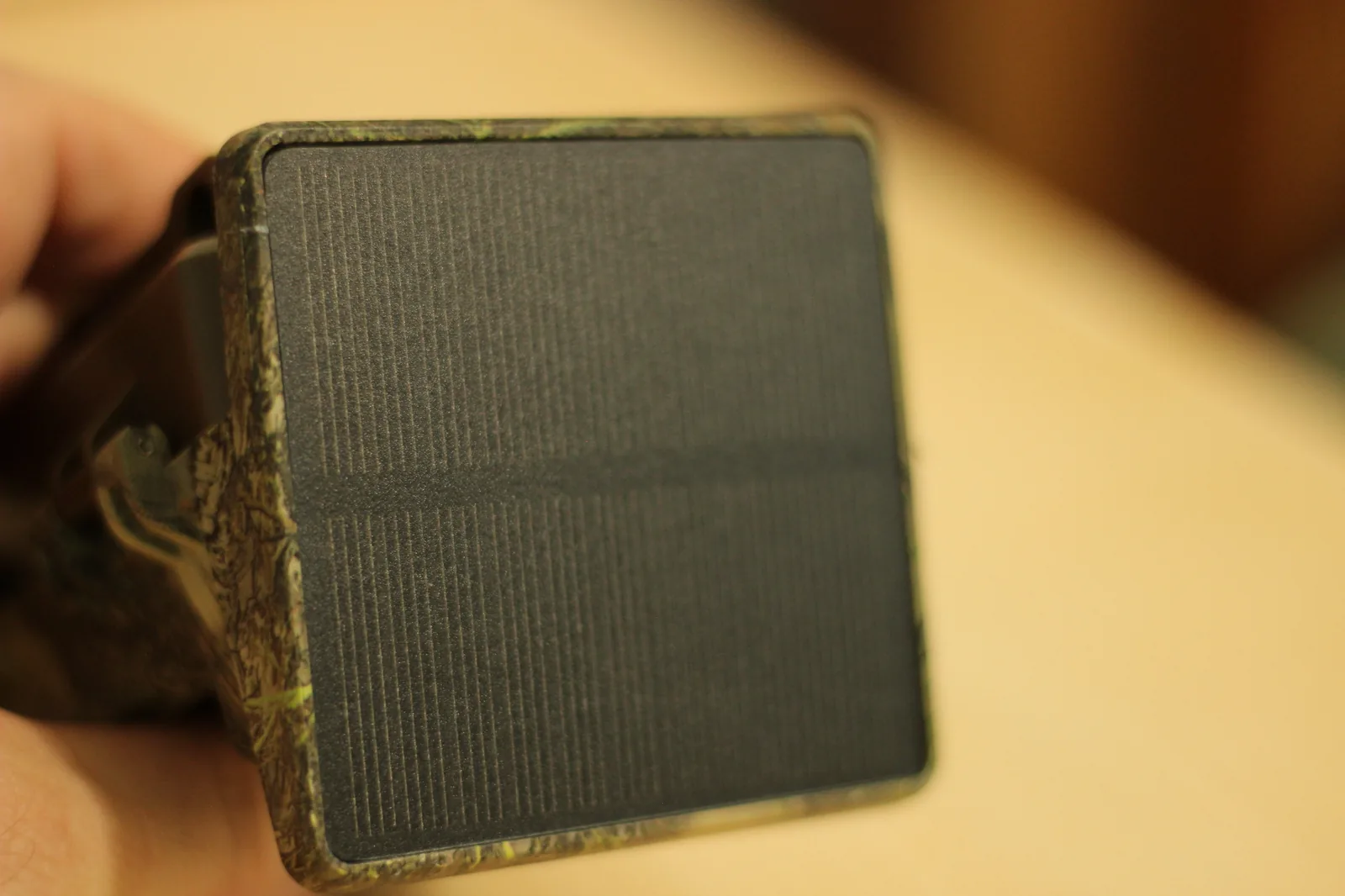
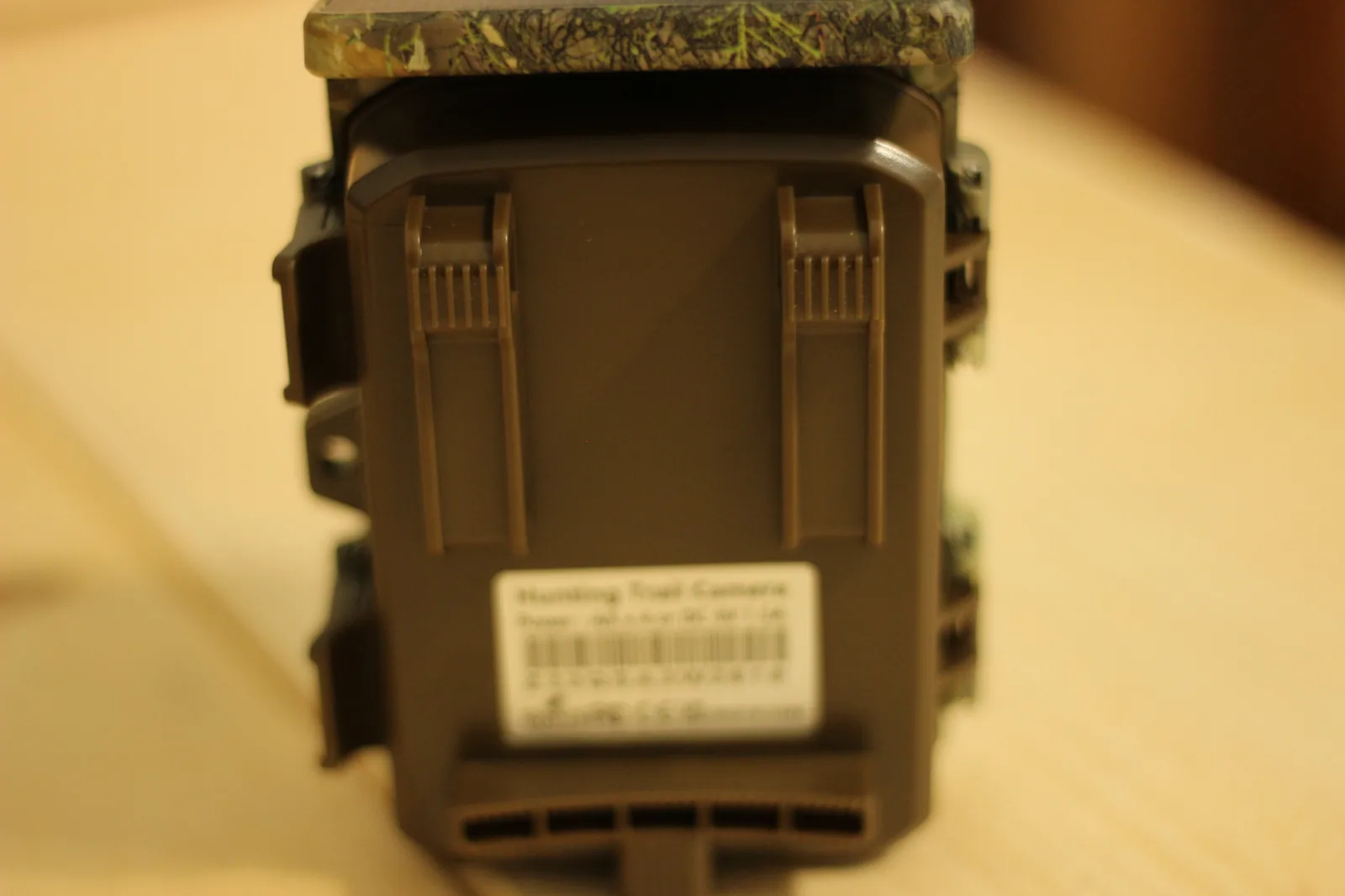
The XTU SV-TCQSW is a one-piece weather-sealed housing with the solar panel built in at the top, the PIR motion sensor and dual 850 nm IR LED array below the camera lens, and the operator controls under a sealed clamshell door on the bottom. It’s the modern compact-housing trail-cam form factor — a single sealed unit that mounts with a 1/4-20 tripod thread or the included nylon strap.
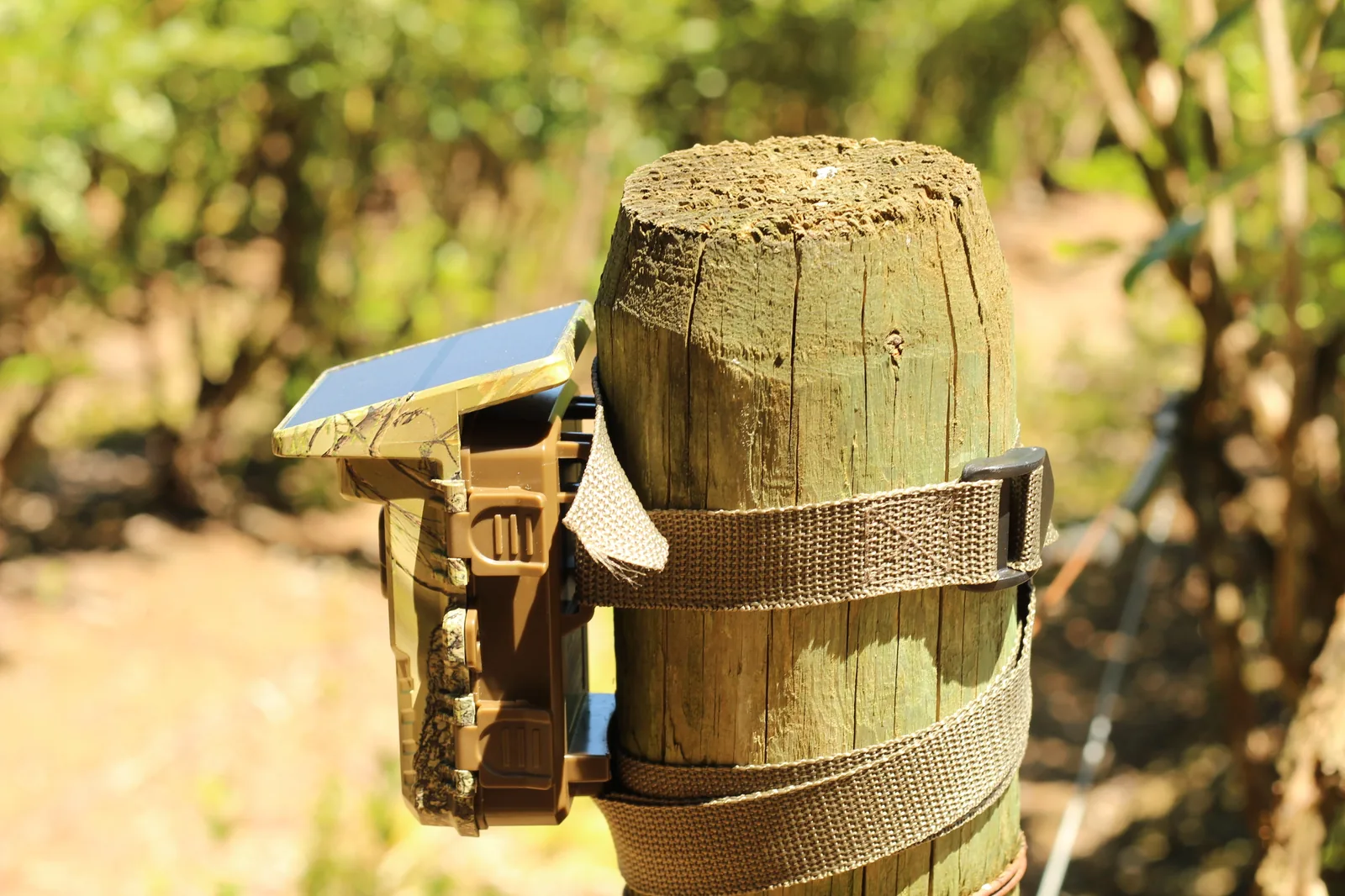
The build is plastic-bodied with rubber gasket sealing rated IP66 (dust-tight, protected against powerful water jets). It’s not a Pelican-grade housing but it doesn’t need to be — the rating is honest, and after a light overnight rain during our test deployment the interior was bone dry.
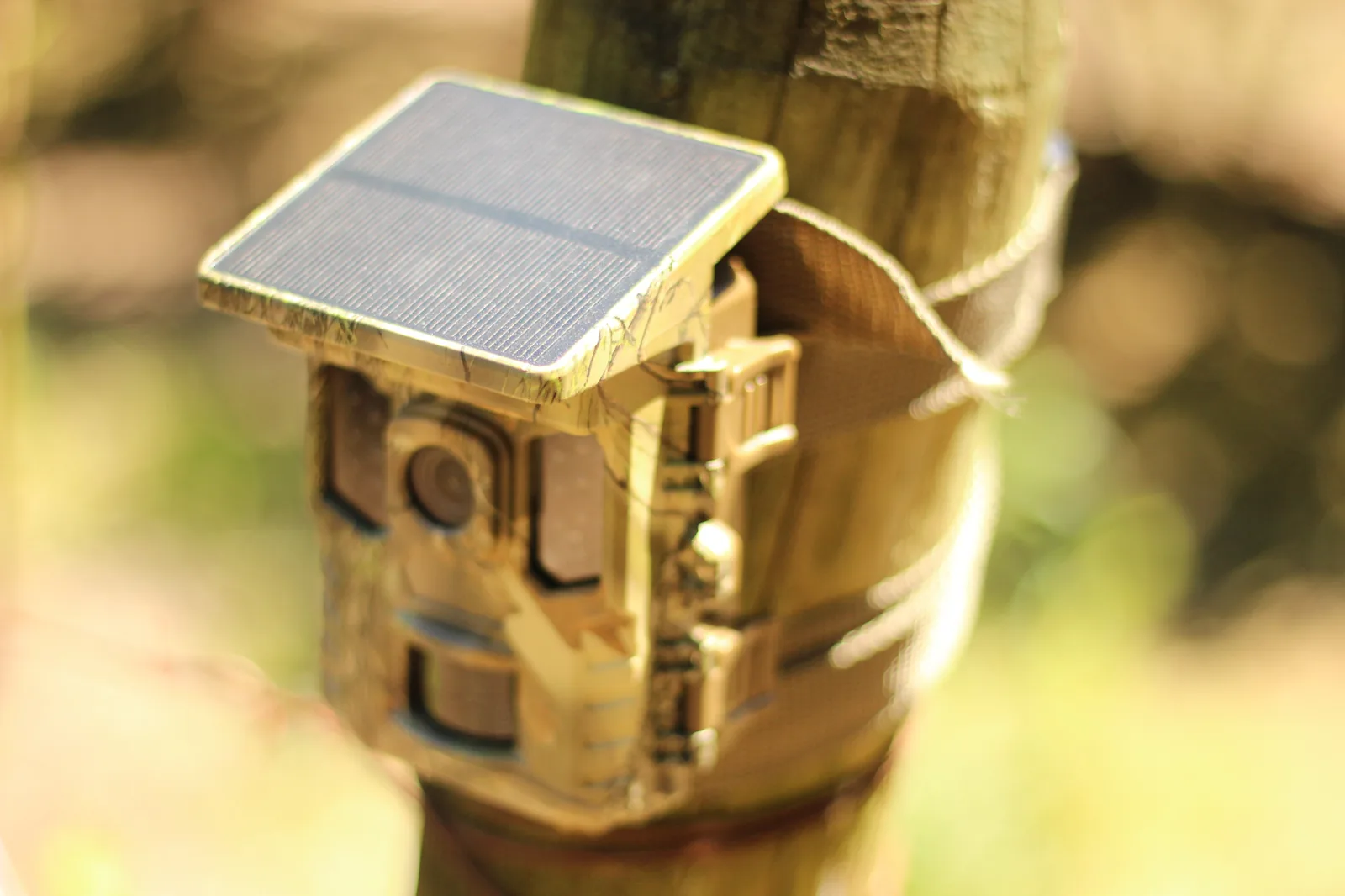
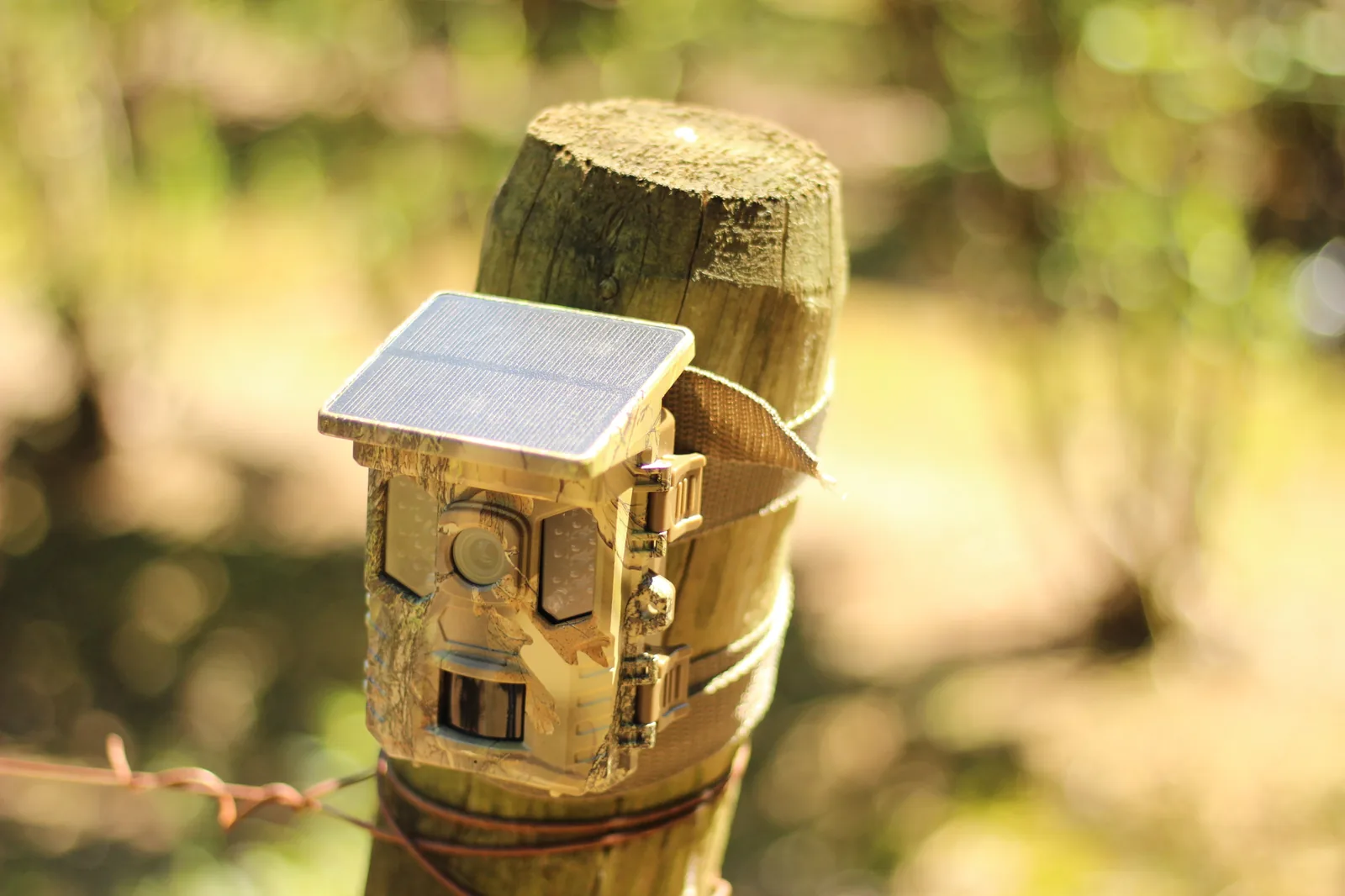
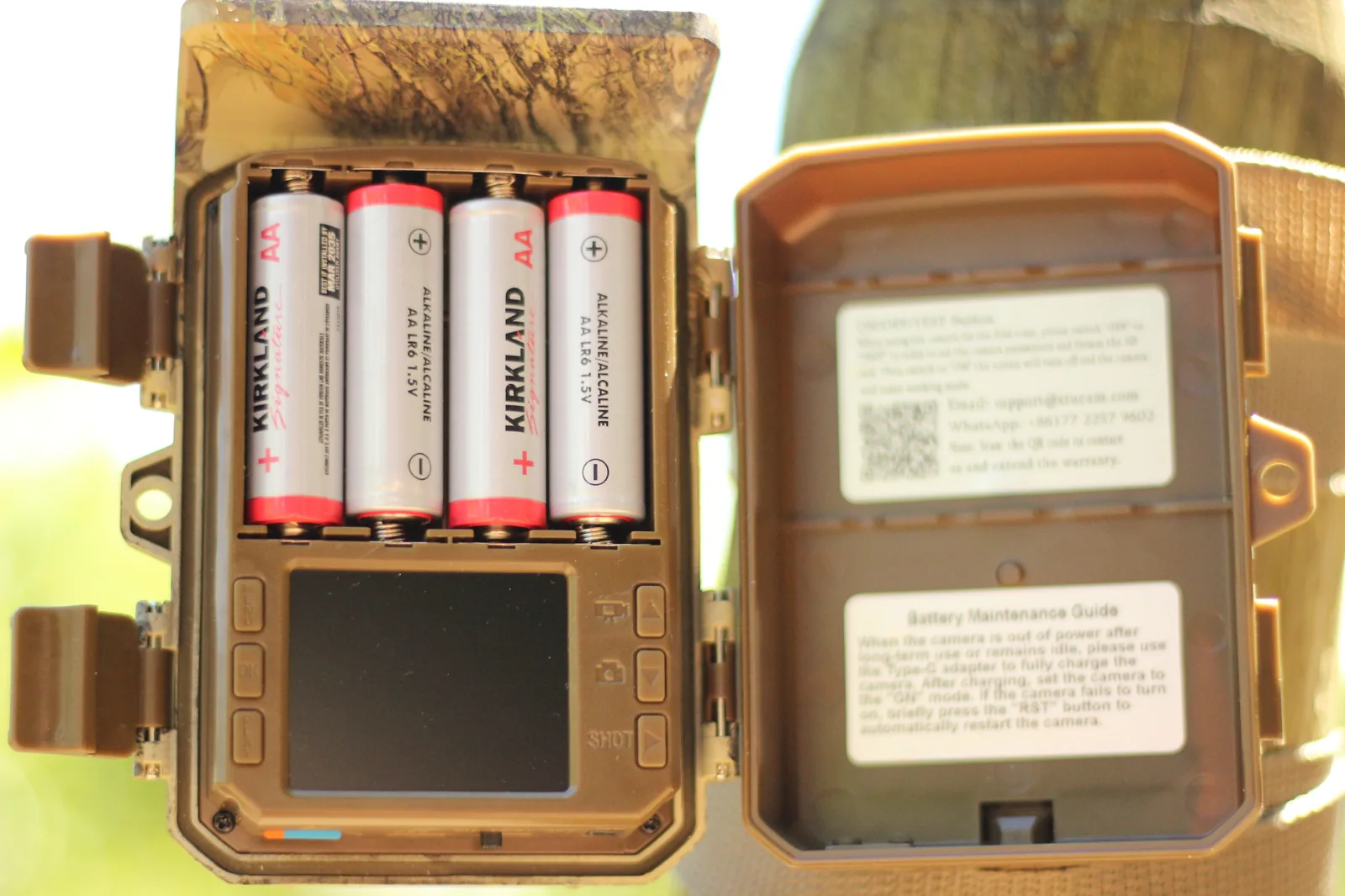
Opening the housing — internals and controls
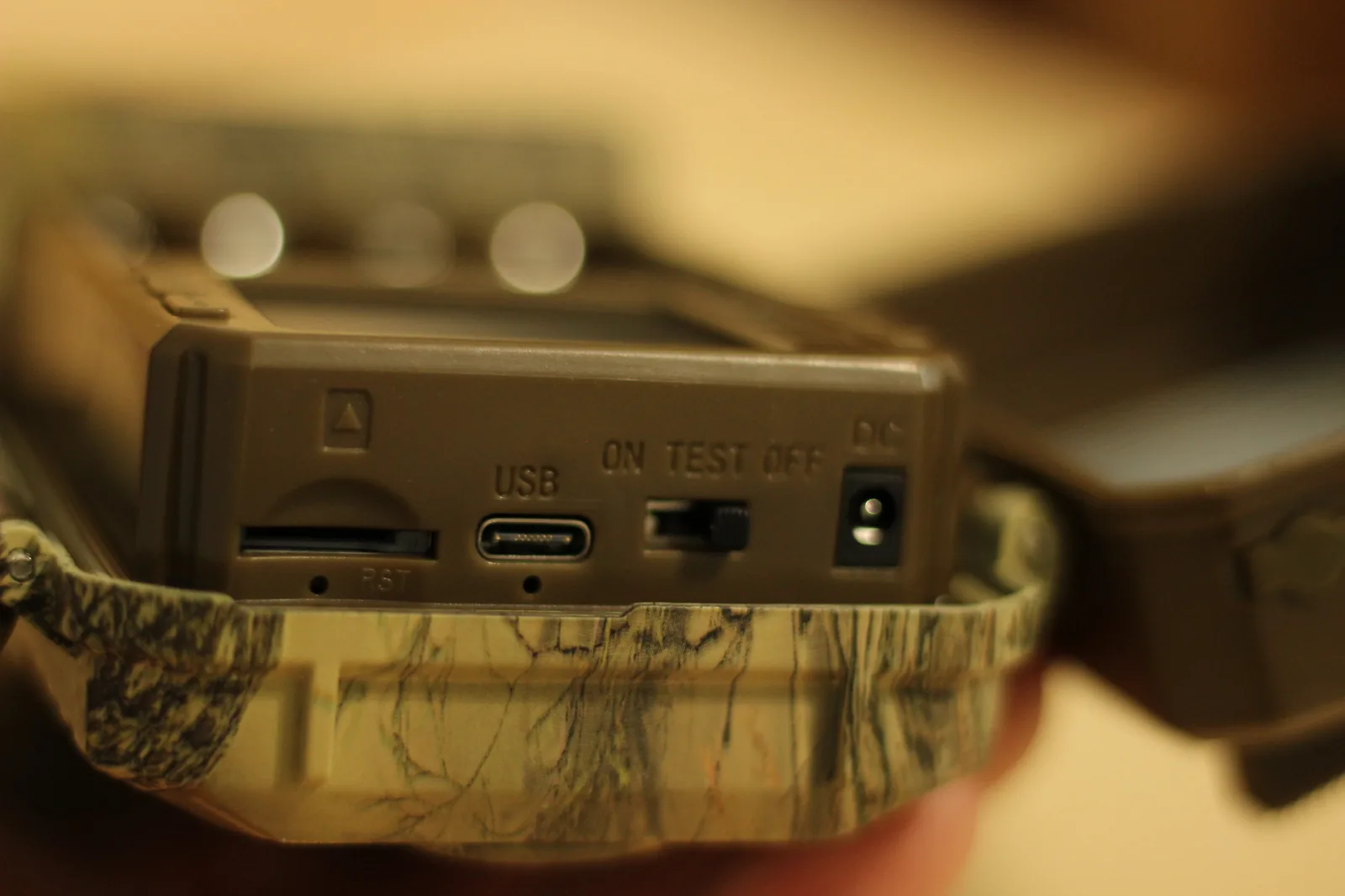
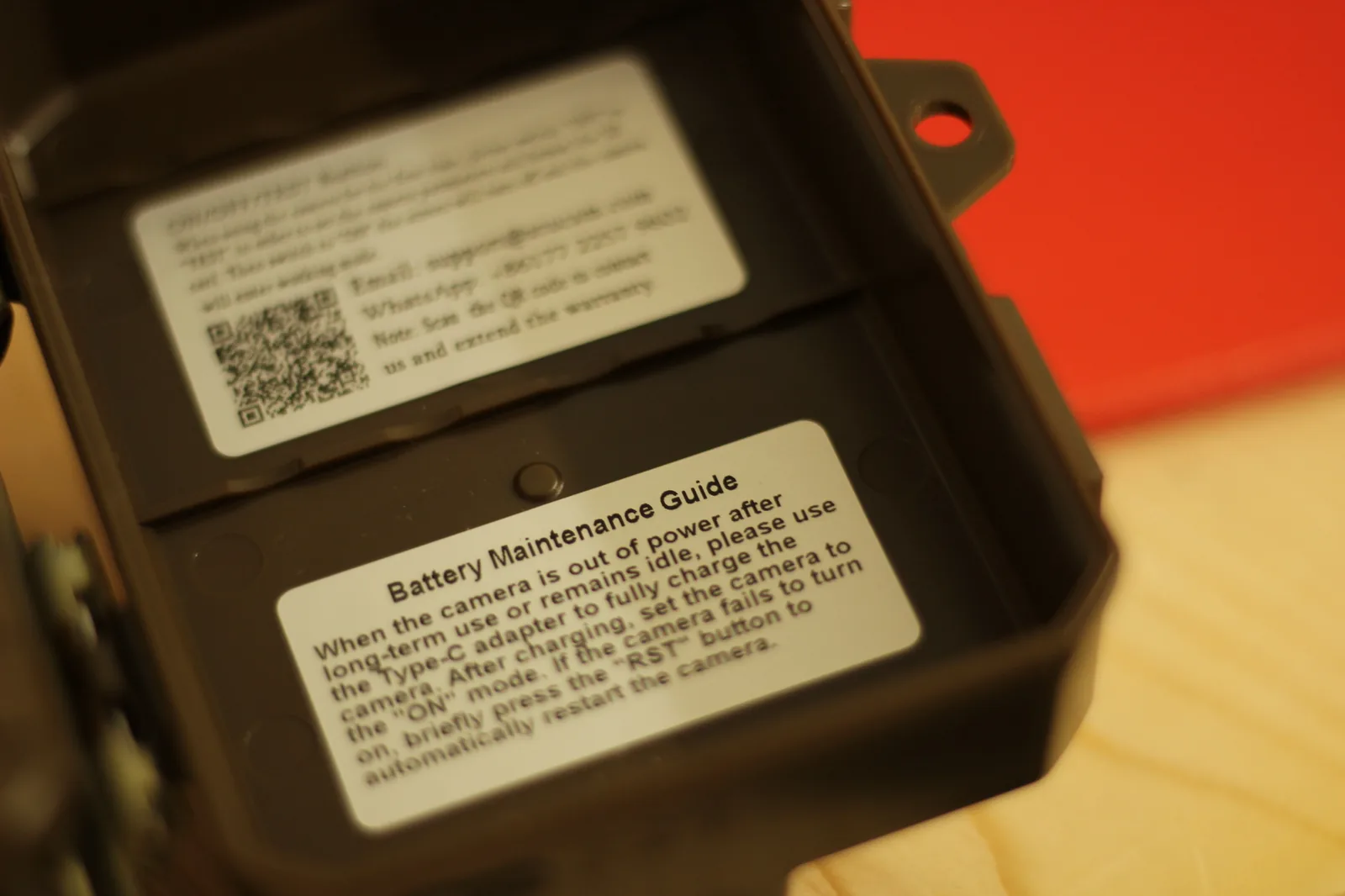
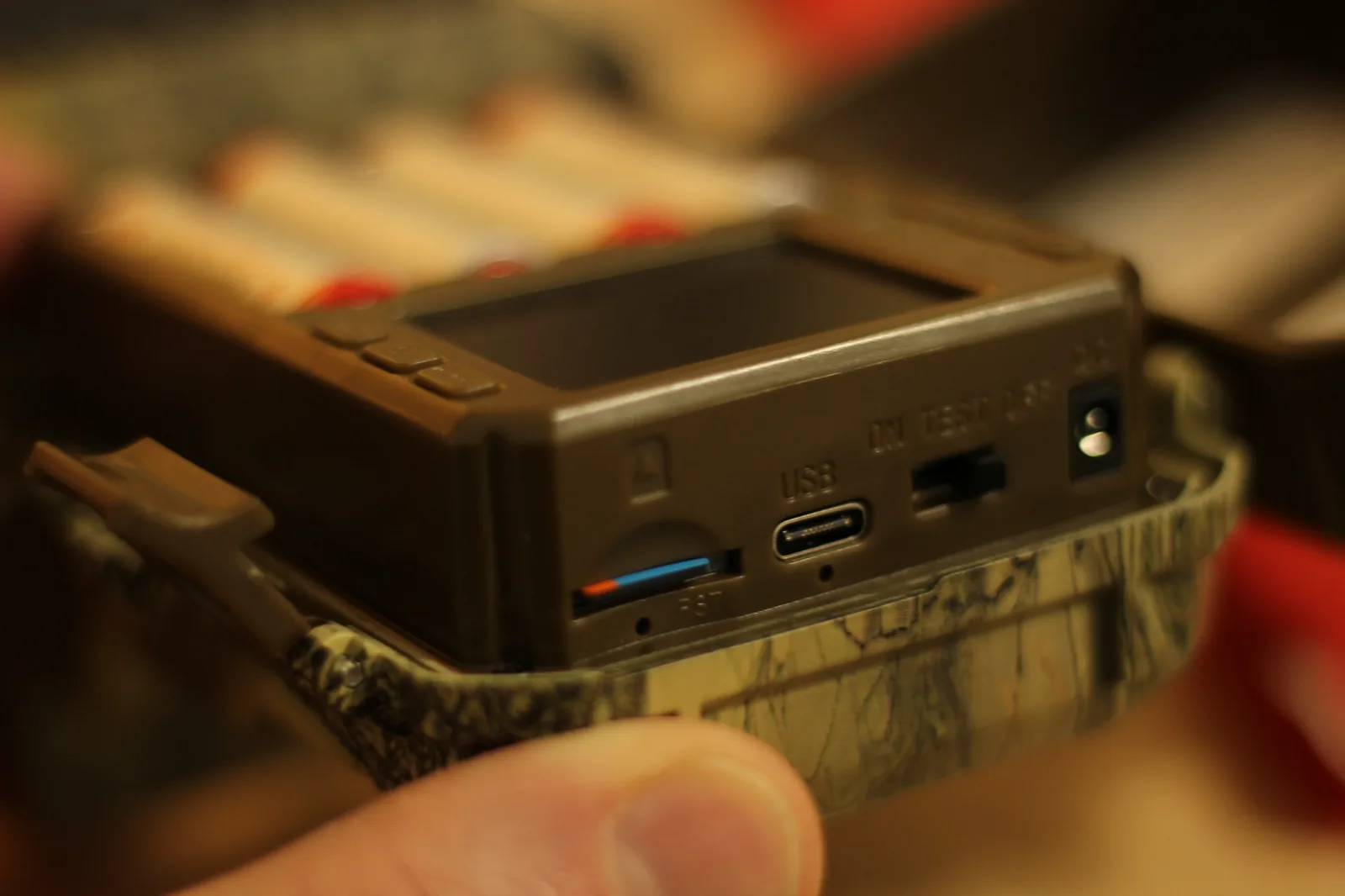
The internal operator panel is genuinely well-thought-out for the price tier: a small colour LCD that lets you set everything in the field without an app connection, a real directional pad with OK/menu/exit buttons that don’t require a manual to figure out, and a physical mode switch on the side (OFF / SETUP / ON) so you know unambiguously what state the camera is in when you close the housing and walk away. The “did I leave it on?” anxiety that haunts budget trail cams isn’t a problem here — the switch is positive, clicky, and labeled.
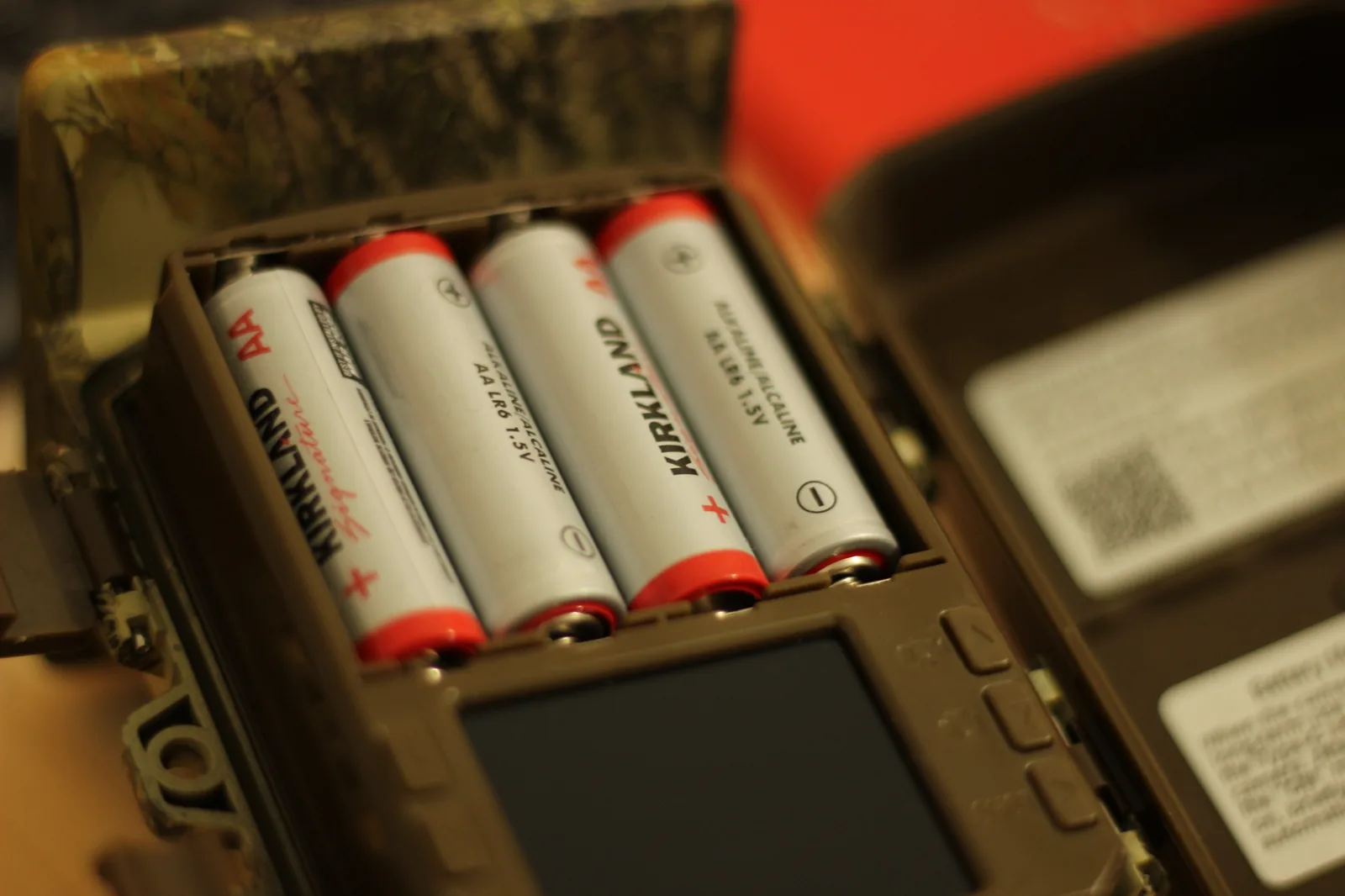
The AA backup battery tray is the kind of feature that makes a trail cam survive a real deployment. The internal lithium battery handles 80% of normal use, the solar panel keeps it topped up, and the 4×AA backup keeps the camera recording when the lithium dies in deep cold or after a string of overcast days. Four power inputs in one camera — that’s the headline engineering decision behind this product.
The TrailCamGO app — local WiFi + Bluetooth, no subscription
The app workflow is the feature that sets the SV-TCQSW apart from the older-generation budget trail cams. You don’t pull the SD card. You don’t walk back to the laptop. You stand within 49 ft (15 m) of the camera, open TrailCamGO on your phone, pair via Bluetooth (the first time only), then connect to the camera’s local WiFi hotspot. Footage downloads to your phone in seconds — and crucially, there’s no cellular subscription, no monthly fee, no SIM card to buy.
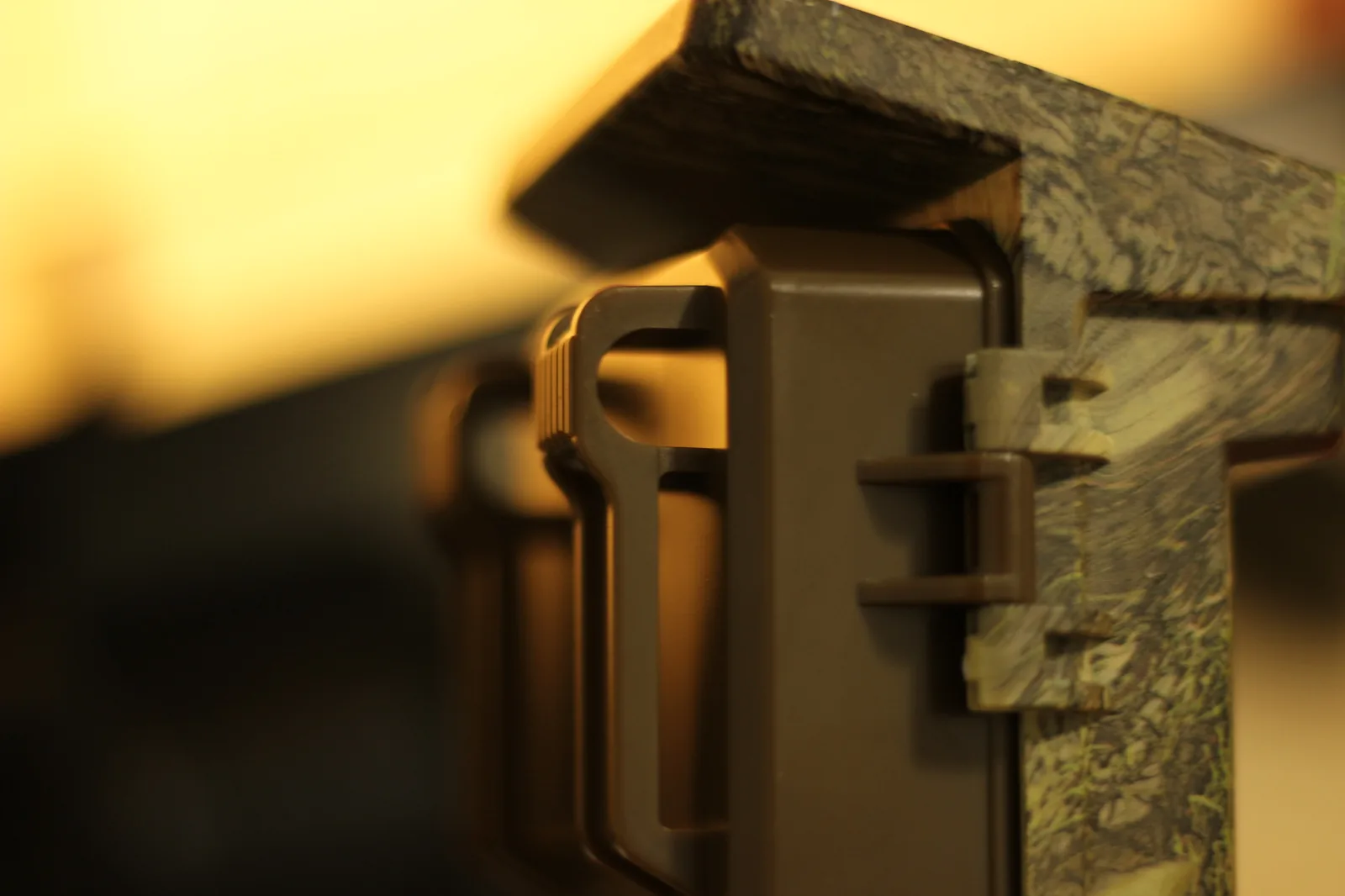
The honest editorial caveat: the TrailCamGO app interface is functional, not polished. It works. It pairs reliably. It downloads footage cleanly. It gives you live view for aiming the camera. But the UI design is two years behind the Spypoint, Tactacam, and Moultrie cellular apps in terms of visual polish — and you can tell it was built by a hardware-first company, not a software-first one. For a $79.99 trail cam, that trade is genuinely fair. For a $200 trail cam, it wouldn’t be.
In the field — deployment and capture
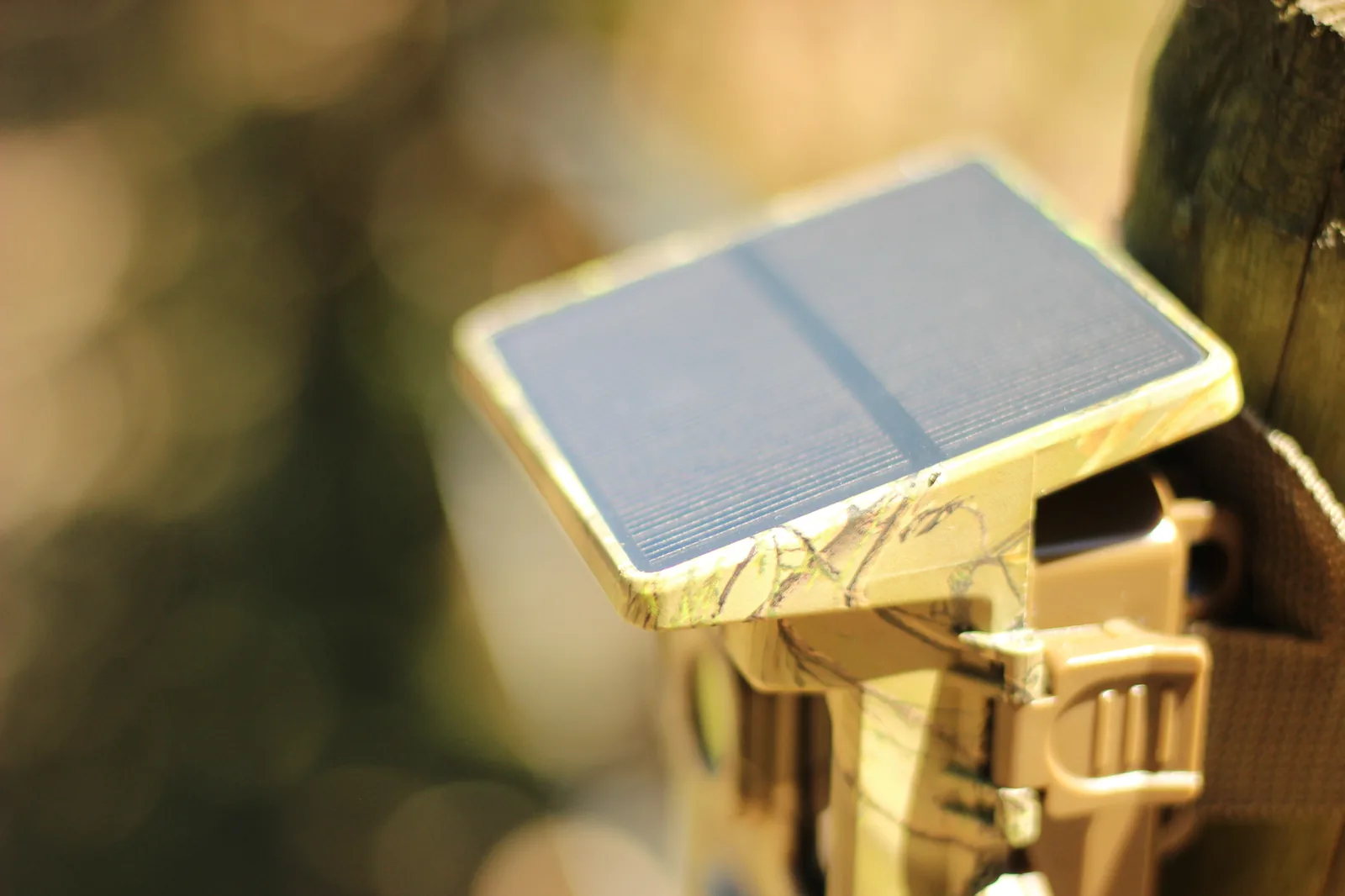
We deployed the XTU SV-TCQSW on the property edge along a known rabbit run, mounting it with the included strap at about 3 ft above ground, angled slightly down to cover a gap in the brush. The setup took about 4 minutes from arriving at the tree to walking away with the camera armed.
The TrailCamGO live-view feature is what makes the aiming process easy. You can stand five feet from the camera with your phone, look at exactly what the lens is seeing, adjust the strap angle, and confirm coverage before you leave. With pole-mount or strap-mount trail cams of the previous generation, aiming was a guess-and-check process that often involved walking back the next day to find you’d pointed it at the sky.
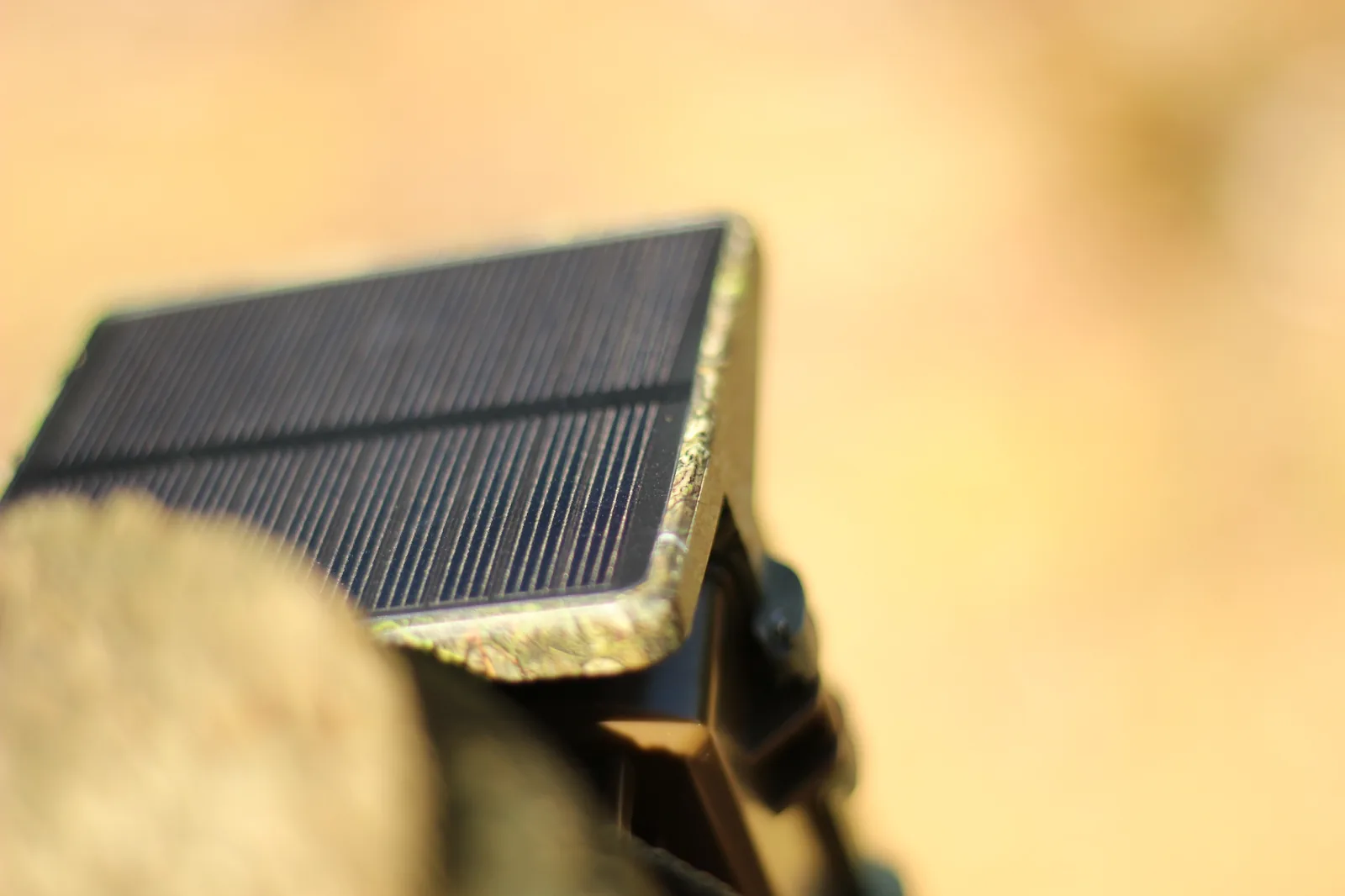
That deployment yielded the bunny capture at the top of this review on day one. The PIR is genuinely fast enough for small game — the 0.2-second trigger spec isn’t marketing fluff, it’s the difference between a tail-in-the-frame budget capture and a clean broadside.
Night IR — low-glow vs. no-glow, and what that means for your property
The XTU SV-TCQSW uses 2× 850 nm low-glow IR LEDs for night illumination, rated to 70 ft range. Two things matter here for the honest editorial discussion:
“Low-glow” 850 nm IR is the right choice for our use case. The LEDs emit a faint dull-red glow when active, visible to humans if you’re staring directly at the camera in pitch darkness but easily missed at normal distance. 940 nm “no-glow” IR is completely invisible to humans and most wildlife but at the cost of effective range and night image quality — the LEDs need to work harder to compensate for the lower-efficiency wavelength, which usually means shorter effective range or noisier images.
For property-edge wildlife monitoring (rabbits, raccoons, deer, coyote), the 850 nm low-glow choice on the SV-TCQSW is correct — the night photos are sharp, the range to 70 ft is real, and the faint red glow is unlikely to spook anything except the most experienced game animals. If you’re using a trail cam for security or for hunting heavily-pressured land, step up to a 940 nm no-glow camera (Bushnell Core DS-4K, Spypoint Force-Dark, Tactacam Reveal X-Pro). For everything else, low-glow is the right pick at this price.
Power story — solar + lithium + AA + USB-C + DC
The four power-input architecture is the SV-TCQSW’s most legitimate engineering claim. Most trail cams have one power input — usually AA or D cells. The high-end cells have either an integrated solar panel or a separate solar-charging port. The SV-TCQSW has all five:
- Internal rechargeable lithium-ion battery — primary power, charged from solar or USB-C
- Integrated solar panel at the top of the housing — trickle-charges the internal battery in usable sun (we observed top-up even in dappled forest shade)
- USB-C input — fast top-up when you’re at the camera anyway, or for setup-time charging
- 4×AA backup tray — secondary power that takes over when the lithium dies (lithium primaries recommended for cold-weather)
- DC 6V input — for fixed setups (cabin gate, property edge, security application) where you can run a power cable from a permanent source
That power flexibility is what makes this camera a real set-and-forget product. On a typical property-edge deployment with reasonable sun exposure, you should be able to leave the SV-TCQSW deployed for an entire season without touching it.
IP66 weather sealing — held up cleanly in light rain
The camera was deployed through an overnight rain event during our test period. The interior was checked the next morning — bone dry. The clamshell gasket and the lens housing both held seal. IP66 translates to “dust-tight + protected against powerful water jets from any direction” — which in plain English means “rain, snow, sleet, garden-hose spray all fine; sustained submersion not designed for.”
For real-world trail-cam use, IP66 is the right rating. We wouldn’t put it in a creek bed but we’d happily leave it deployed through Canadian shoulder-season weather without worrying.
Cross-shop — how the XTU SV-TCQSW stacks against the competition
Vs. Bushnell Core DS-4K (~$200 USD). Bushnell wins on no-glow IR and brand support. XTU wins on price, integrated solar panel (Bushnell needs a separate panel), and app-based footage retrieval.
Vs. Spypoint Force-20 (~$120 USD). Spypoint wins on long-running brand support and cellular-model availability. XTU wins on 4K video (Spypoint Force-20 maxes at 1080p), 64 MP stills (Spypoint maxes at 20 MP), integrated solar, and price.
Vs. Moultrie A-700i (~$130 USD). Moultrie wins on cellular-model option and proven longevity. XTU wins on 4K video, integrated solar, faster trigger speed, and TrailCamGO local-WiFi workflow.
Vs. Tactacam Reveal X-Pro (~$200 + subscription). Tactacam wins decisively on cellular workflow, app polish, and remote monitoring — that’s their entire market. XTU wins on no-subscription cost, integrated solar, and the entry-tier price. They’re not really the same product category — Tactacam is a remote-monitoring product, XTU is a walk-up-and-retrieve product.
The honest editorial conclusion: at $79.99 USD, the XTU SV-TCQSW is the best 4K trail cam under $100 USD we’ve tested. It does not replace a cellular trail cam for remote land monitoring. It does replace any non-cellular budget trail cam at this price tier or one tier above.
How it earns the 4.5/5 — and what we’d want from a V2
The XTU SV-TCQSW earns a strong 4.5 / 5 because the engineering decisions are right for the price tier. Integrated solar instead of an external panel. Four power-input options instead of one. 4K + 64MP instead of 1080p + 20MP. Local WiFi + Bluetooth pairing instead of “pull the SD card.” 0.2-second trigger that actually catches small game. IP66 sealing that holds. Real warranty support from XTU.
It’s not a 5.0 because the TrailCamGO app could be more polished, the low-glow IR is the right choice for general use but doesn’t reach as far as no-glow for hunters on pressured land, and the integrated solar panel is a trickle-charger, not a full off-grid replacement for the battery.
What we’d want from a V2:
- 940 nm no-glow IR variant for the hunting / security market
- A larger or relocatable solar panel option for heavily-shaded deployment sites
- Cellular variant (with optional subscription) for genuinely remote monitoring
- App UI polish pass
Verdict — buy it
If your trail-cam location is walkable, the XTU SV-TCQSW at $79.99 USD is the camera to buy in mid-2026. It captures real, usable 4K video of small and large game with a 0.2-second trigger, has the right night IR for property-edge monitoring, ships with a 32 GB SD card so you can deploy it the day it arrives, and the four-power-input architecture means it can genuinely stay deployed for a season without intervention.
The bunny on the first 24 hours of frames is the editorial proof. The TrailCamGO app and integrated solar panel are the engineering features that make this camera class-leading at this price. The XTU brand backing — a real company with a real product warranty, a real support email, and a real review-collection process — is the consumer-protection layer that separates this from the Amazon white-label trail-cam soup.
For the homestead property edge, the hunting-camp scouting trail, the cabin gate, the backyard wildlife watcher, or the first-time trail-cam buyer — this is the right camera.
Available direct from XTU ($79.99 USD sale, $99.99 MSRP) or on Amazon Canada for Canadian buyers.