
Featured Review · Sawyer · Water Filters
Sawyer Squeeze + Cnoc 2L Review — The 0.1-Micron Filter That Turns Any Creek Into Drinking Water, Explained and Animated
Our Rating
Current Price
- System
- Sawyer Squeeze + Cnoc Premium 2L bladder
- Filter
- 0.1 micron absolute hollow-fibre membrane
- Bacteria
- Removes 99.99999% (e.g. salmonella, cholera, E. coli)
- Protozoa
- Removes 99.9999% (e.g. giardia, cryptosporidium)
Pros
- 0.1-micron absolute hollow-fibre membrane: Sawyer rates it to remove 99.99999% of bacteria, 99.9999% of protozoa and 100% of microplastics
- Rated for up to 100,000 gallons with backflushing — effectively a lifetime filter, backed by Sawyer's lifetime limited warranty
- The Cnoc 2L bladder fixes the Squeeze's old weak spot: a wide slide-top mouth that fills in one scoop, in tough BPA-free TPU
- Three ways to use it: squeeze into a bottle, hang it as a gravity filter, or screw it onto any 28 mm bottle
- Whole system weighs 5.9 oz, with the cleaning coupling and backflush plunger in the box
- Every Sawyer filter is triple-tested before it ships
Cons
- A filter, not a purifier: it does not remove viruses or chemicals — treat water further where viruses are a real risk
- Hollow fibres must never freeze once wet; in winter it sleeps in your bag or jacket
- No hanging cord or clean-water reservoir in the box for a full gravity setup
- New TPU bladders can taste of plastic at first; it fades with use
- We have not yet carried it on a hunt — this review explains the system; field use follows
Water is the one thing nobody can carry enough of. A hunter on a three-day sit, a family whose taps stop after a storm, a backpacker on a dry ridge — everyone ends up at the same creek, wondering whether it will make them sick.
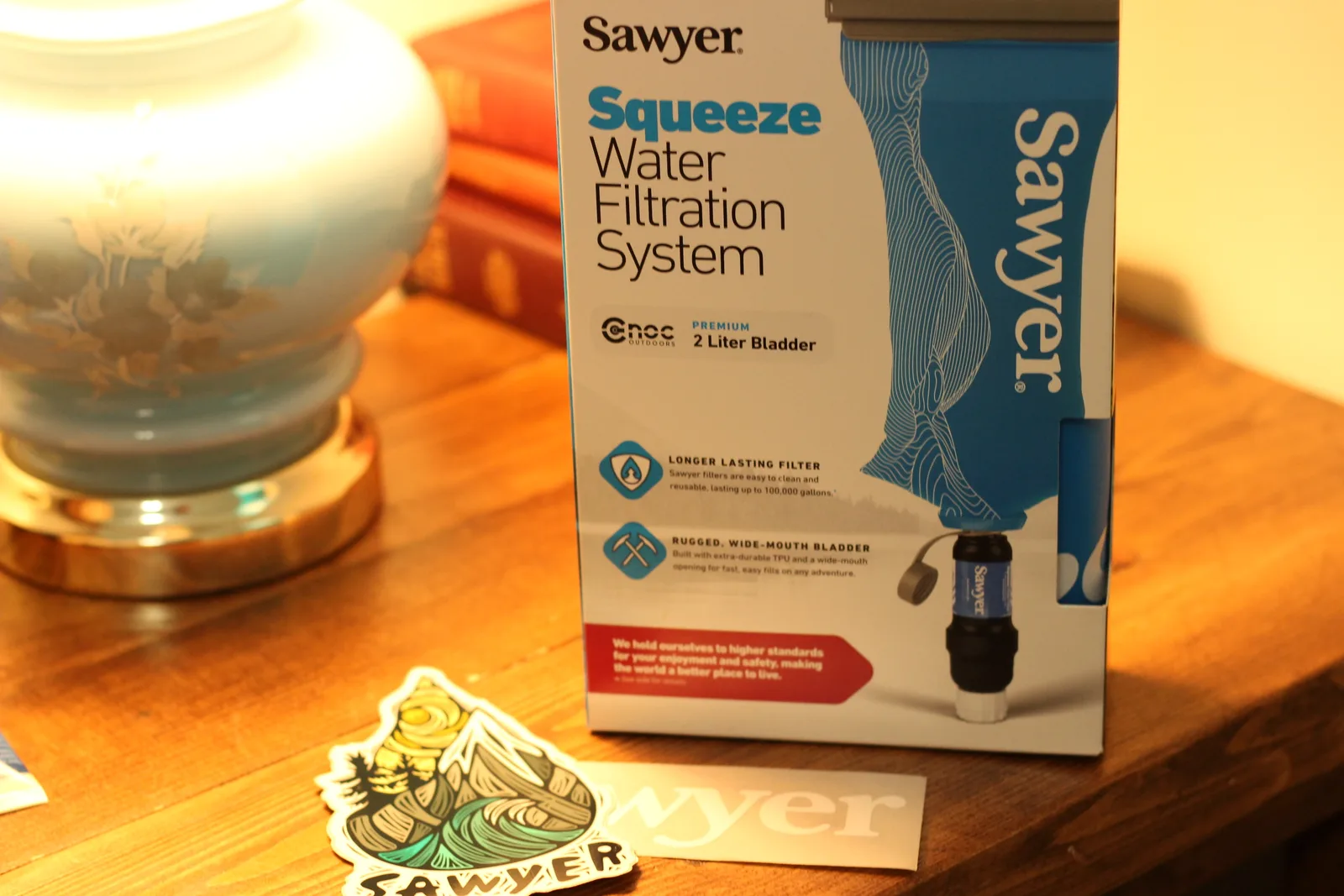
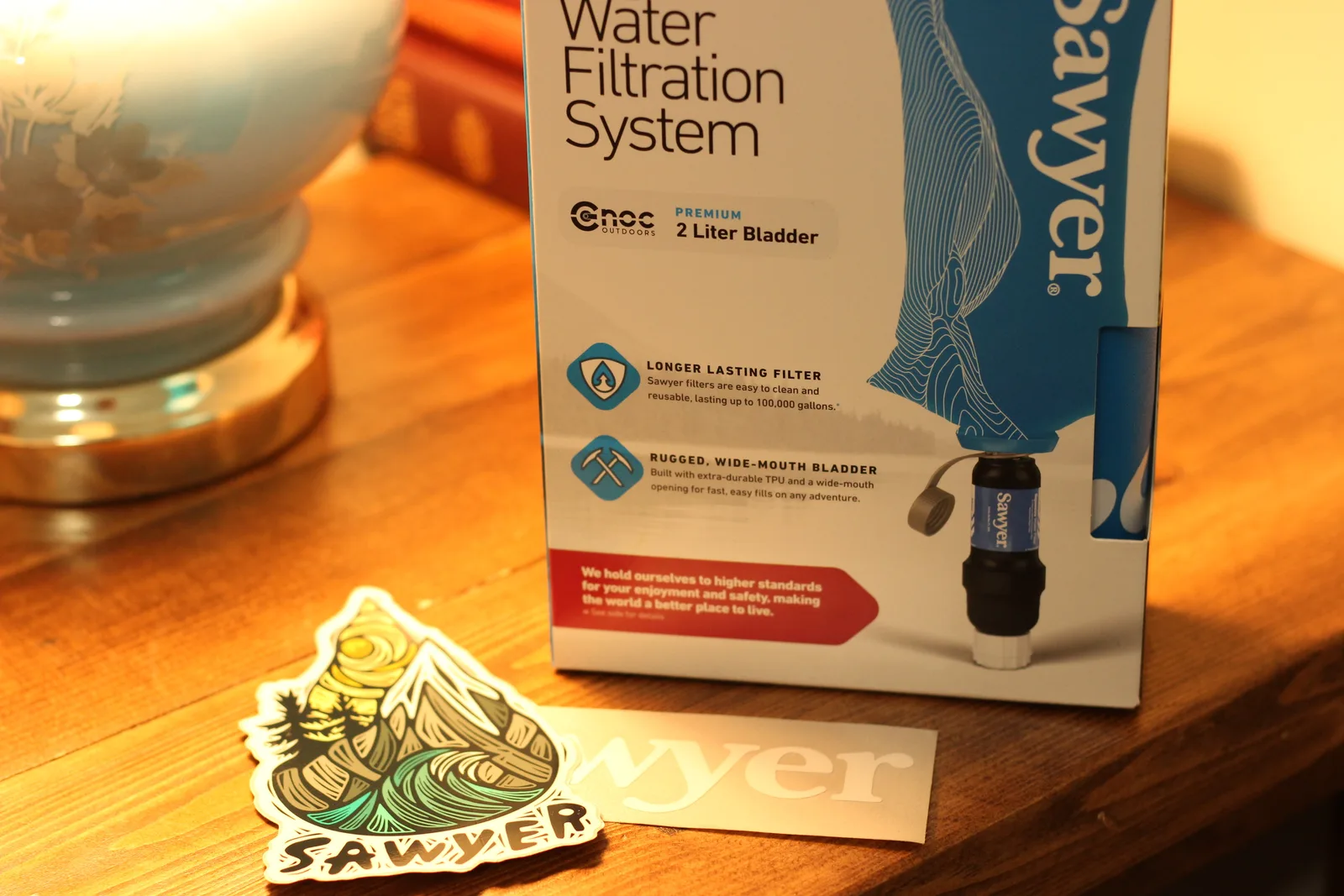
The Sawyer Squeeze is the filter most experienced backcountry people use to answer that question, and this version pairs it with the bladder the Squeeze always deserved. The Sawyer Squeeze Water Filtration System with the Cnoc Premium 2-litre bladder is a 0.1-micron absolute hollow-fibre filter — rated to remove 99.99999% of bacteria, 99.9999% of protozoa and 100% of microplastics — screwed onto a tough, wide-mouth 2-litre TPU bladder from Cnoc Outdoors. The whole system weighs 5.9 ounces, the filter is rated for up to 100,000 gallons, and it costs US$64.99.
We have not carried it on a hunt yet. So rather than pretend, this review does something more useful: it explains exactly how the Squeeze works and what it does and doesn’t stop, with interactive drawings you can squeeze, hang, backflush and zoom into.
At a glance
We reviewed the LifeStraw Personal earlier. The comparison is worth making up front: the LifeStraw is a drink-through straw with a 0.2-micron membrane rated to 1,000 gallons; the Squeeze is a 0.1-micron filter rated to 100,000 that fills bottles, pots and whole camps. One is an emergency straw. The other is a water system.
In the Box

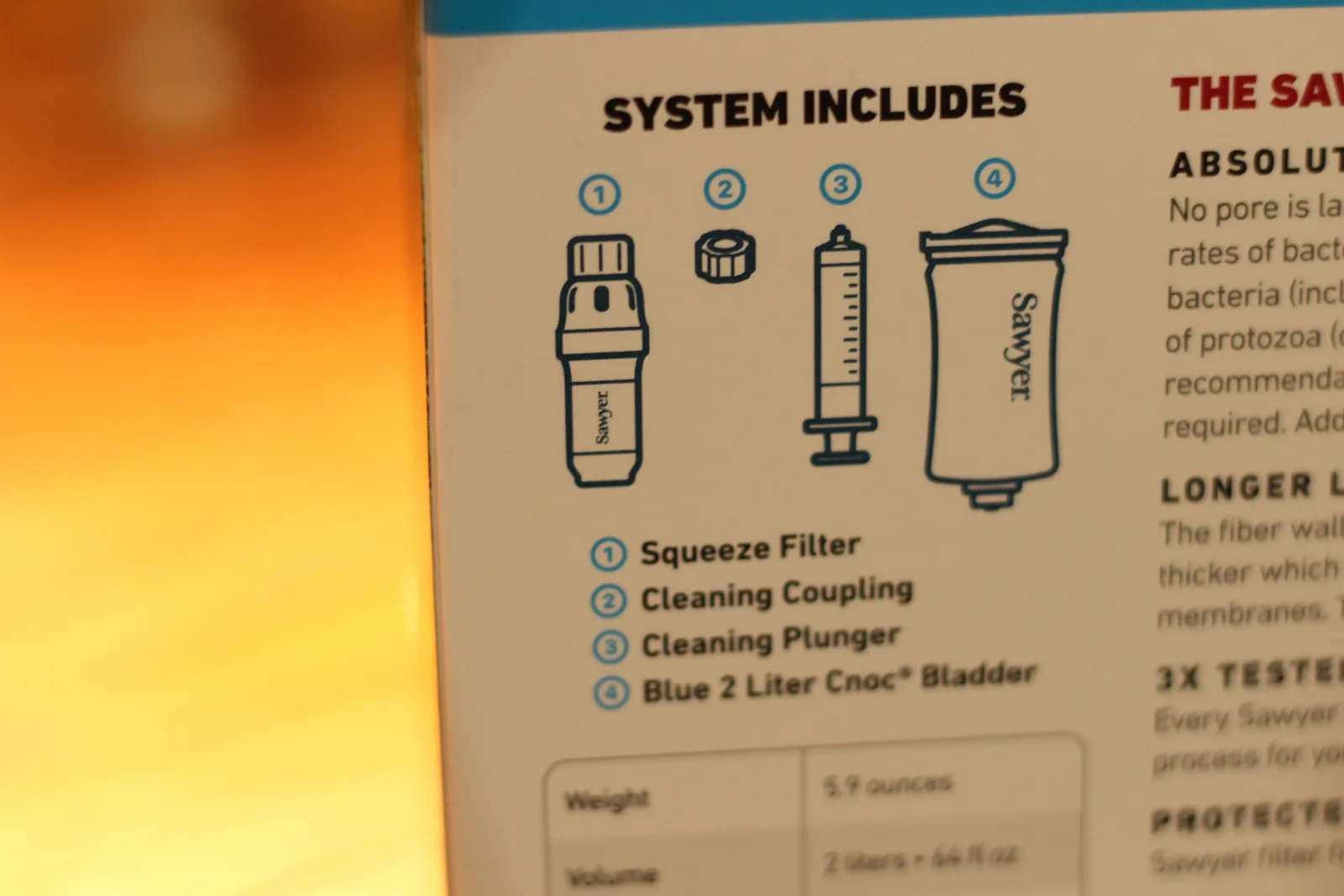
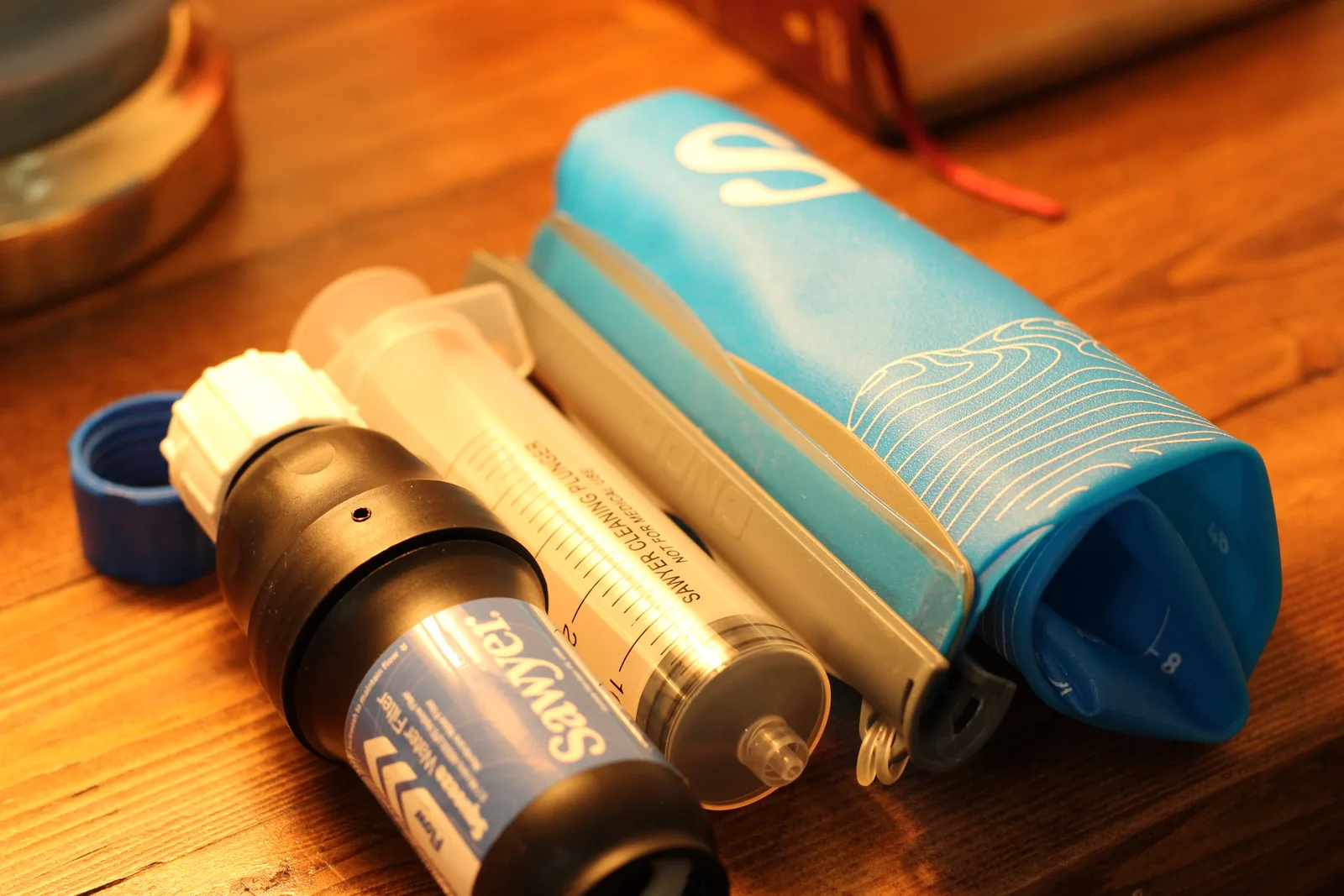
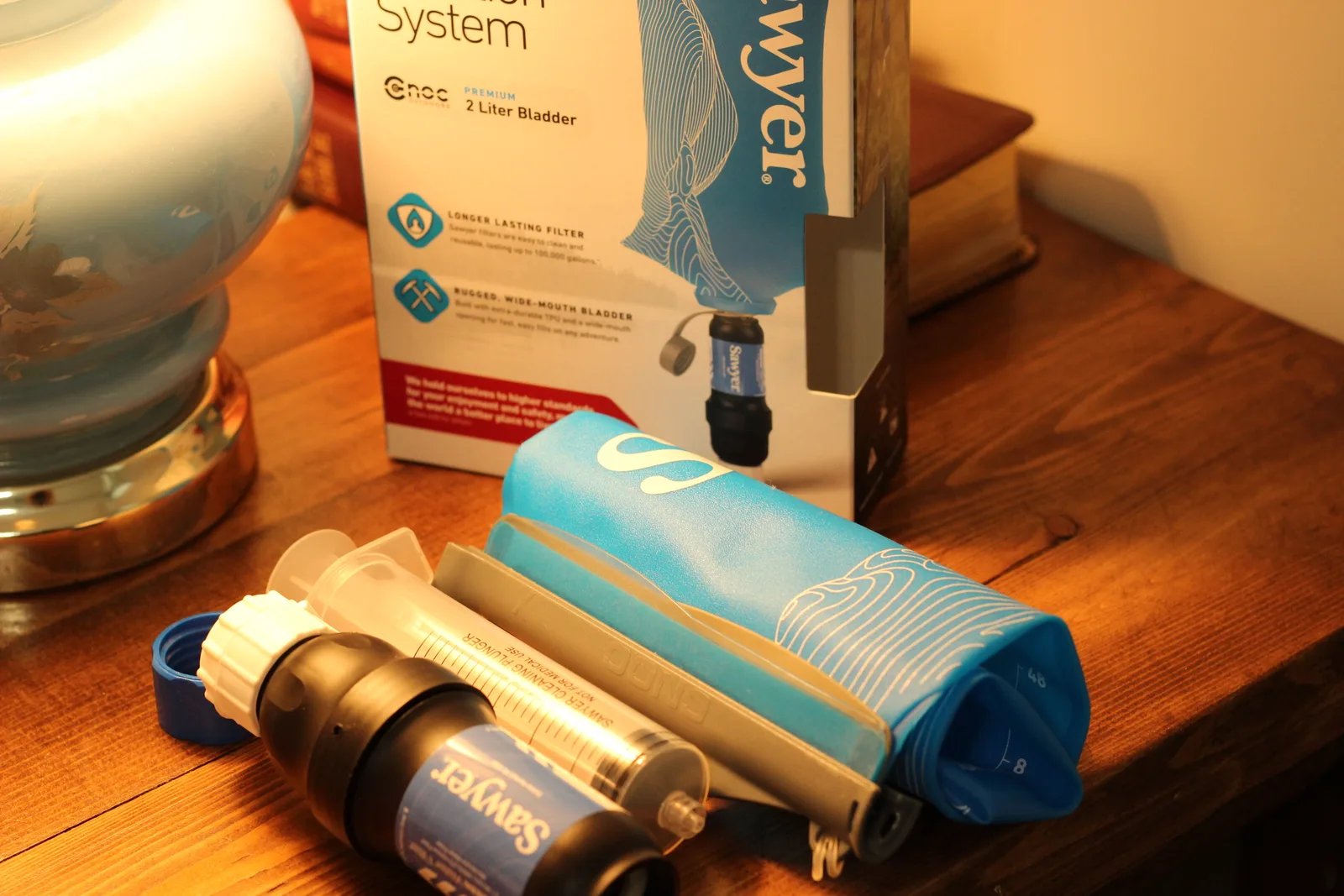
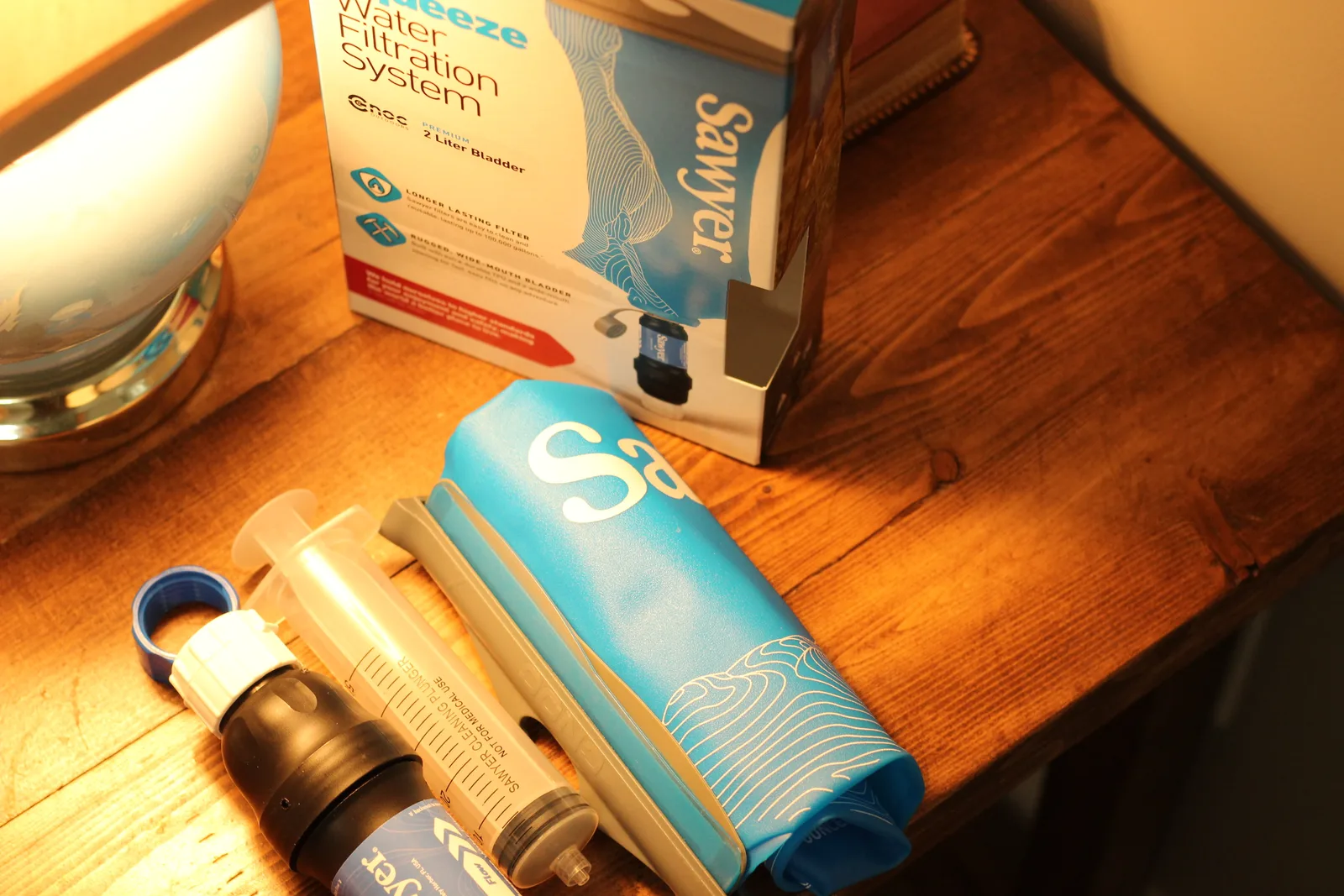
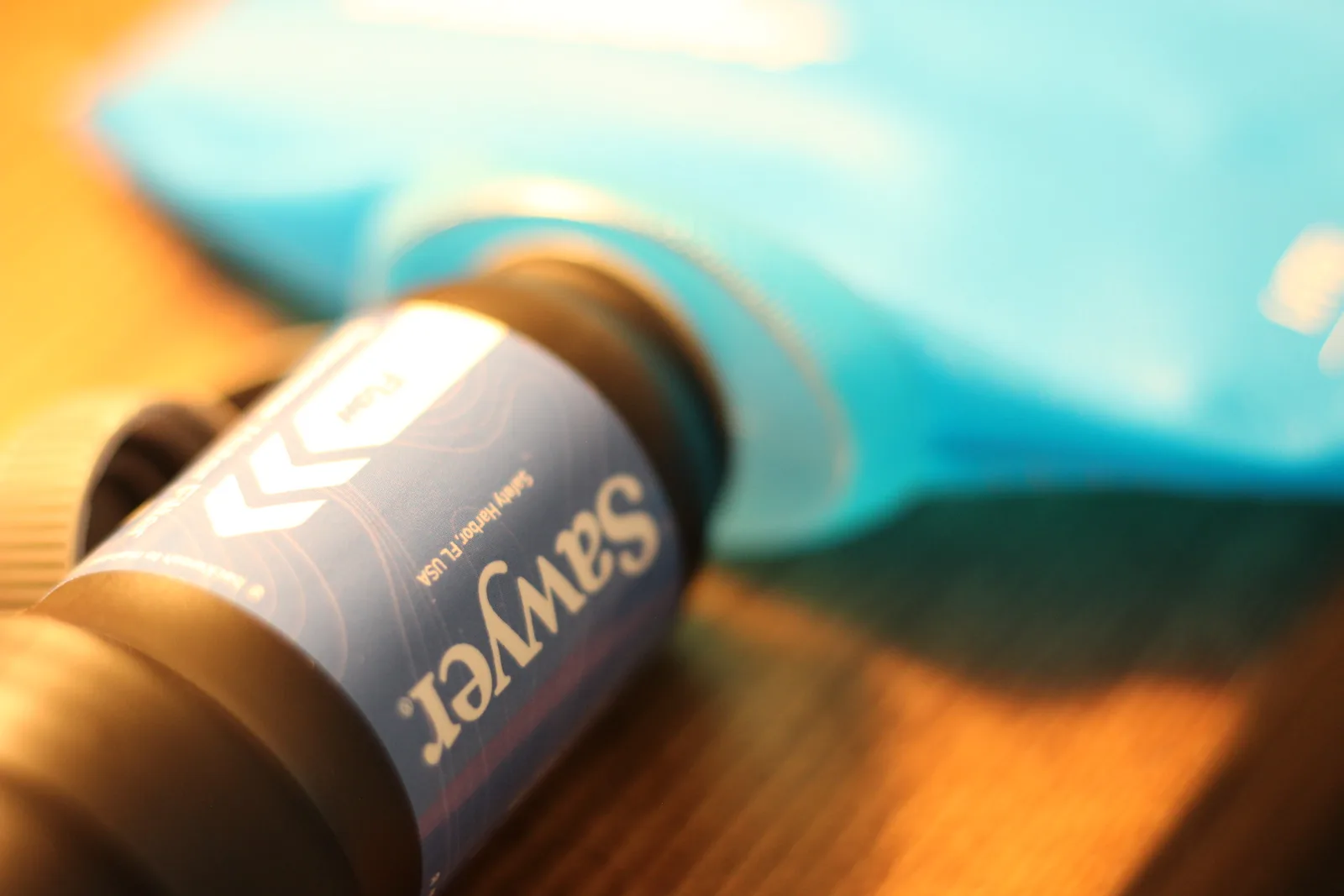
The Squeeze Filter
The Cnoc Bladder
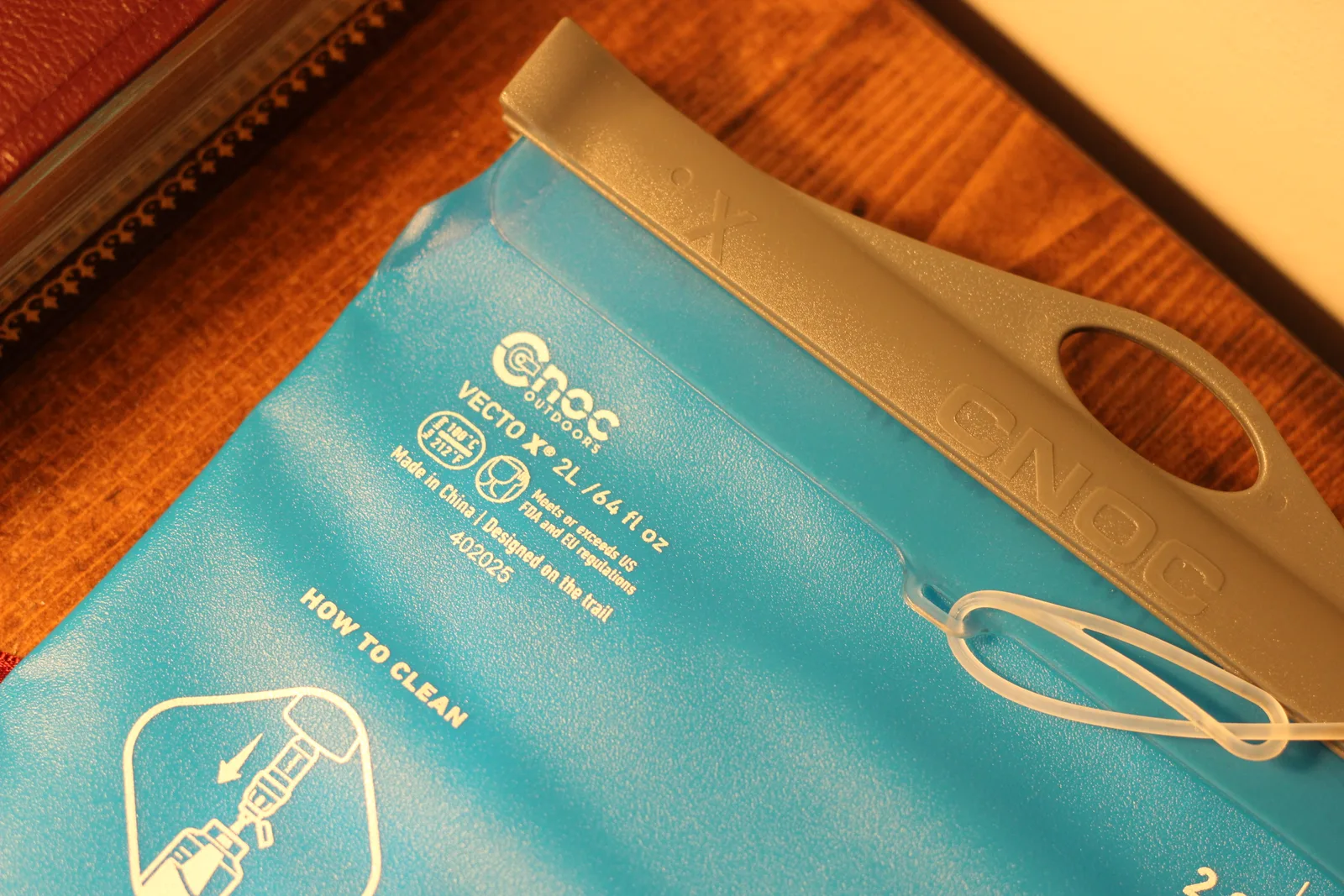

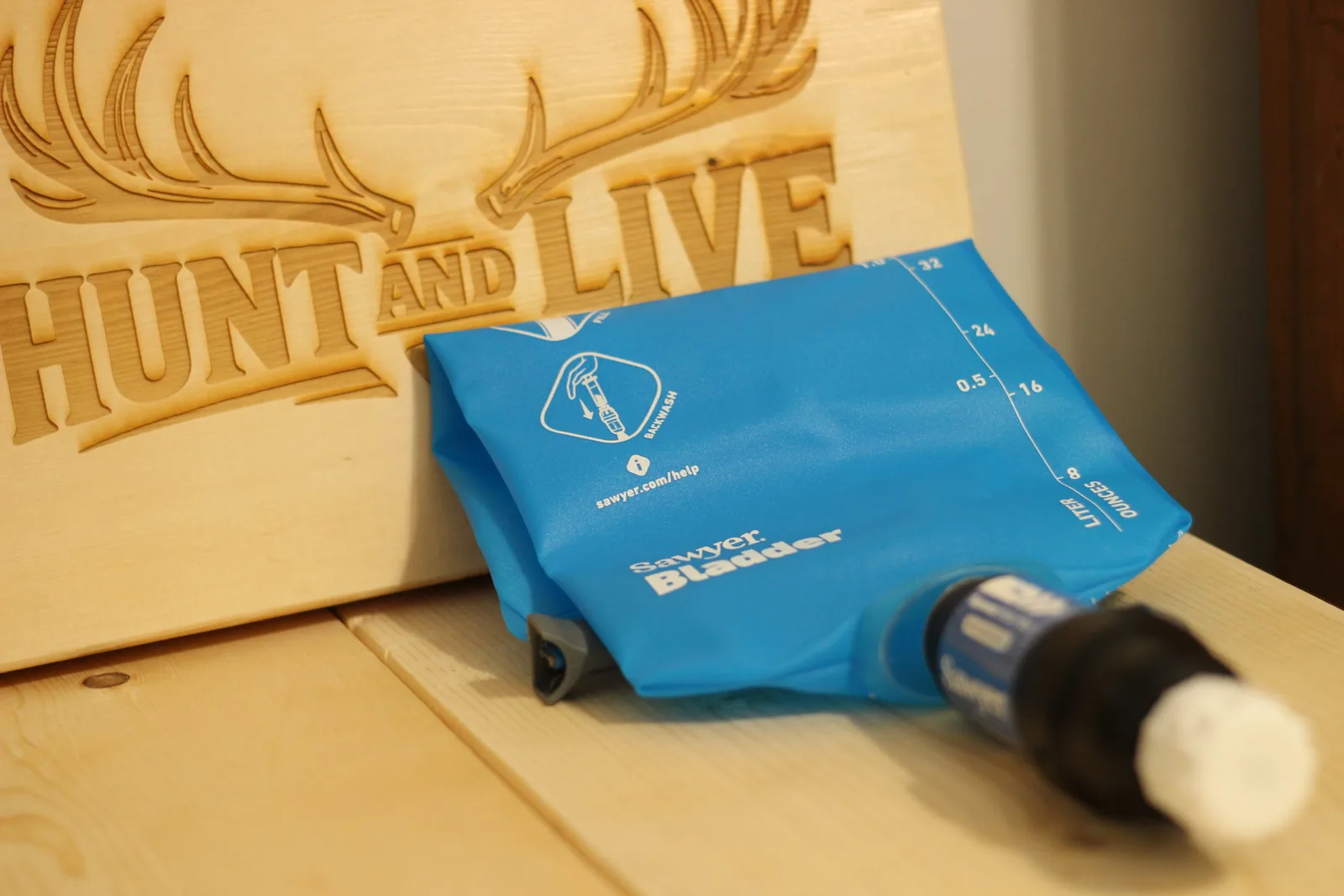
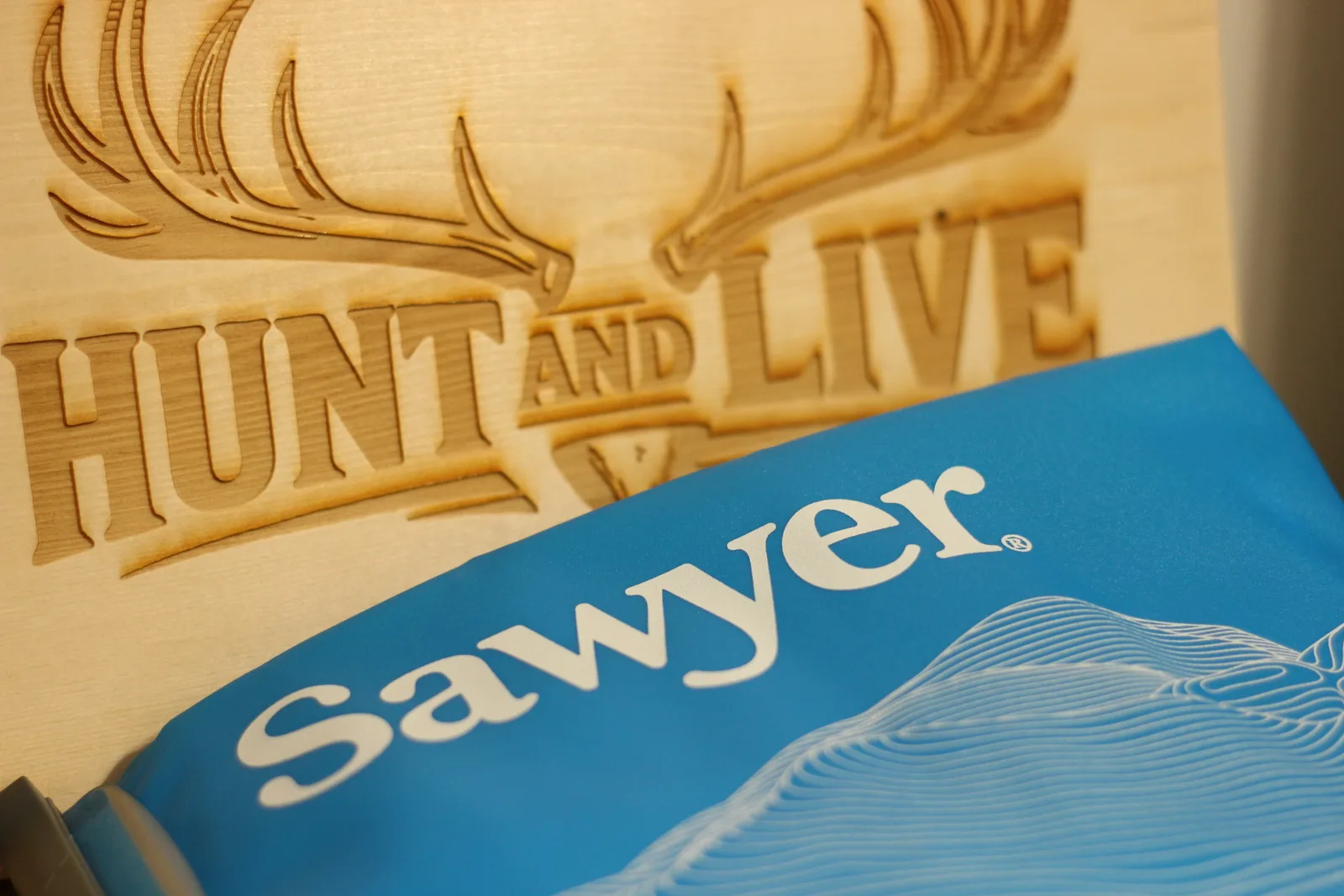
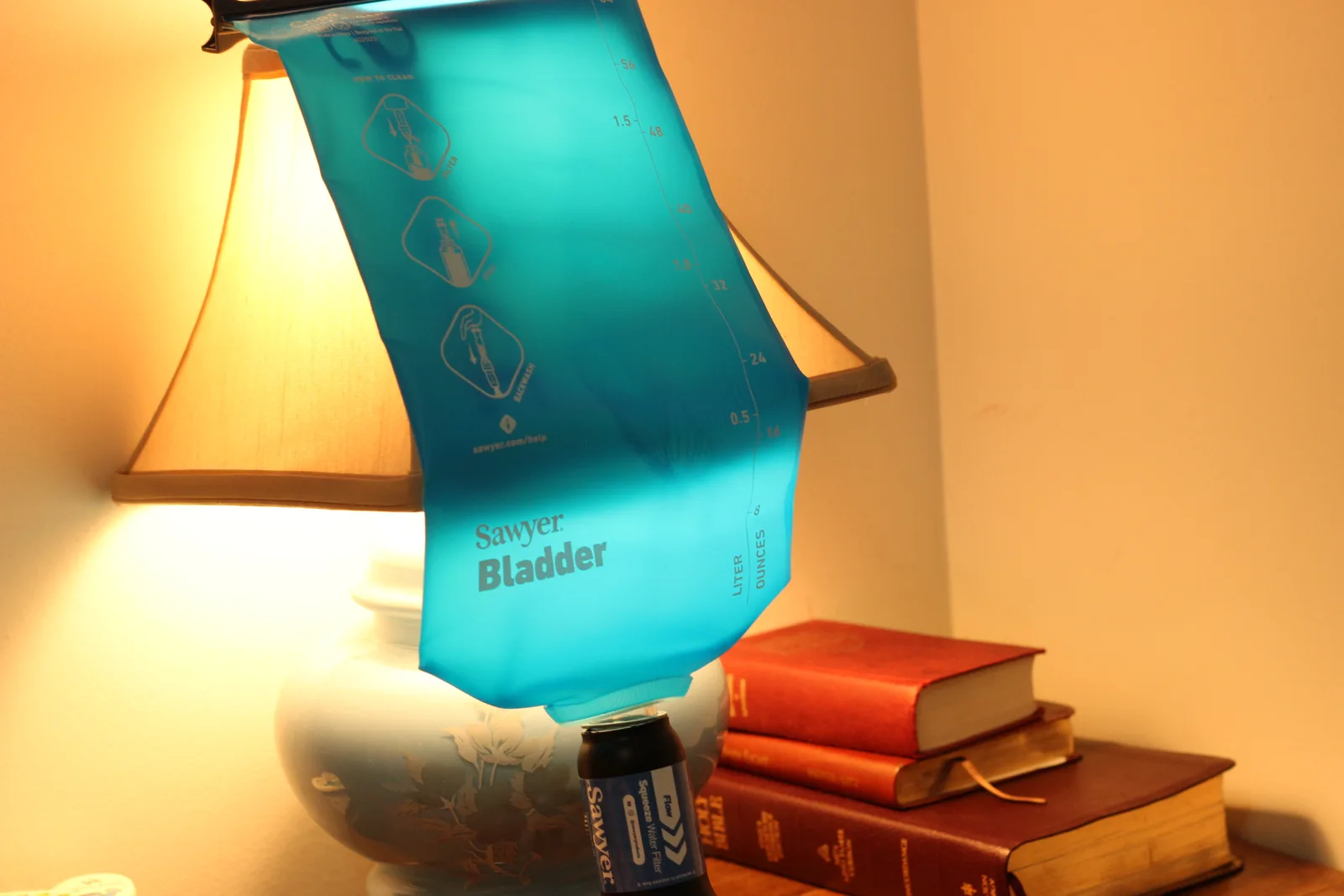
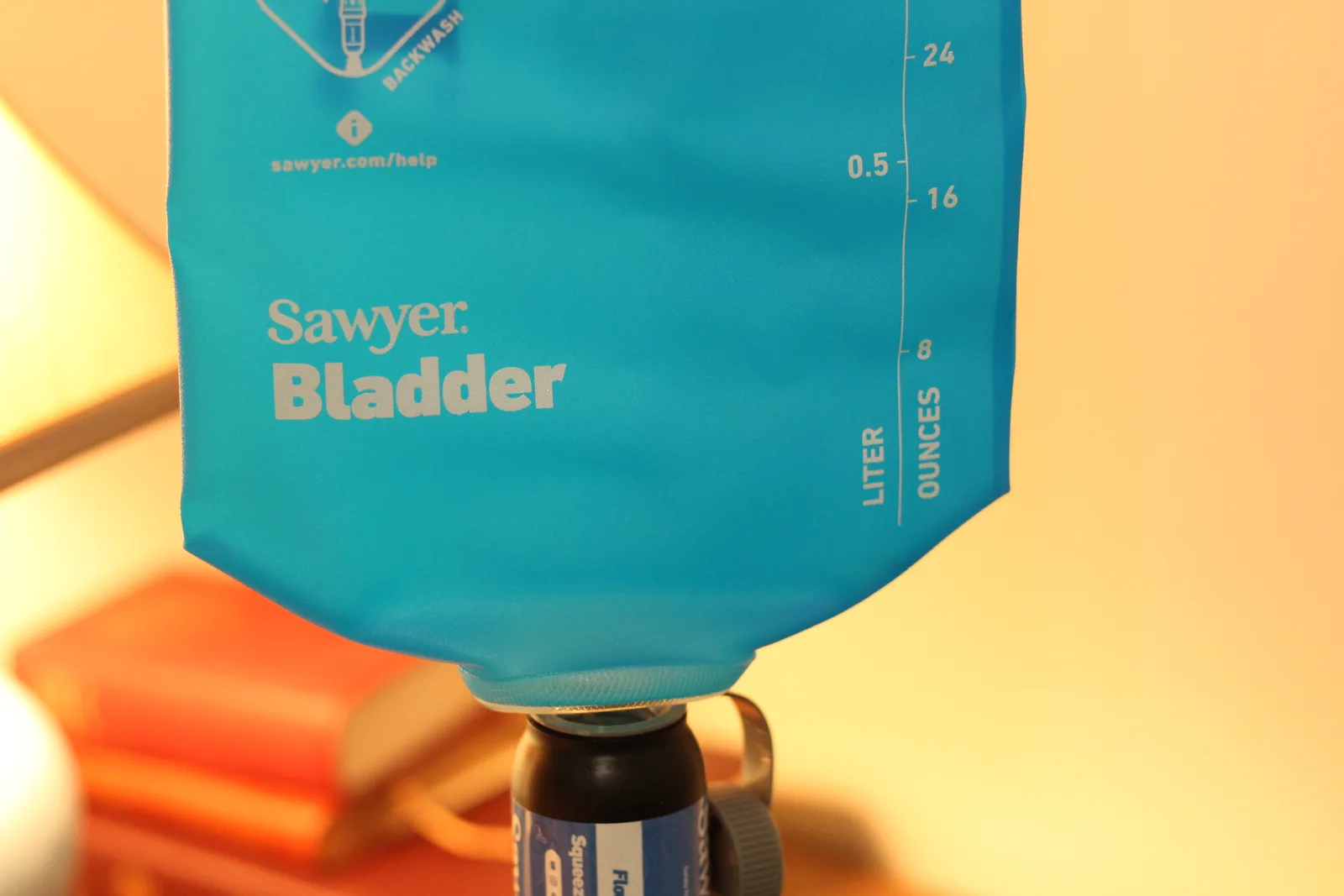
The bladder is the reason to buy this kit over the older Squeeze kits. Sawyer’s original soft pouches have a narrow neck that takes several dips to fill, and owners report they can start leaking if over-squeezed. The Cnoc Vecto opens across the whole top under a slide closure, so you scoop two litres in one go, and its BPA-free TPU is markedly tougher. The bladder is printed Cnoc Vecto X, 2 L / 64 fl oz, with fill lines, a carry loop, and a “how to clean” icon so you never forget the backflush.
Squeeze It: Watch the Filter Work
Fill the bladder with creek water and squeeze. The dirty water goes in through the filter’s hollow fibres — thousands of tiny tubes whose walls have holes just 0.1 micron across — and comes out clean. Bacteria, protozoa cysts, silt and microplastics are too big for the holes and stay behind on the dirty side. Drag the slider to squeeze harder, or pour a whole bladder.
The “trapped” counter is just for fun — the real point is the ratio. Sawyer’s figures, 99.99999% of bacteria and 99.9999% of protozoa, mean seven and six “nines”: for every ten million bacteria in the bag, about one gets through.
Zoom In: What a 0.1-Micron Filter Stops
The whole Squeeze story comes down to size. Drag the slider to zoom from a grain of silt down to a virus, and see which side of the 0.1-micron wall each one ends up on.
✓ stopped by the filter · ✗ small enough to pass. Sizes are typical published ranges, drawn on a logarithmic scale for illustration. Removal percentages are Sawyer's figures for the Squeeze.
What this means in practice. In North American backcountry water, the threats are overwhelmingly protozoa (giardia, cryptosporidium) and bacteria — exactly what the Squeeze removes. Viruses are a bigger concern where water may be contaminated by human sewage: after floods, downstream of towns, and in much of the developing world. There, pair the Squeeze with a chemical treatment or UV. And no filter removes dissolved chemicals or salt.
Three Ways to Use It
The Squeeze is not one filter but three setups. Pick one to see it work.
Sawyer also sells adapters to run the Squeeze inline on a hydration pack or as a pre-filter. For a hunting camp, the gravity setup is the one that changes your day: hang it when you get back to camp and come back to filtered water.
Backflush It: How the Filter Lasts 100,000 Gallons
Hollow-fibre filters slow down as silt and debris coat the fibres. The fix is the plunger in the box: push clean water backwards through the filter and the dirt blows out the way it came in. Step through it.
Two rules that matter more than anything else:
- Backflush regularly — before a trip, after silty water, and whenever the flow drops.
- Never let a wet filter freeze. Ice crystals can crack the fibres without any visible sign, and a cracked fibre lets water through unfiltered. On a cold-weather hunt, the Squeeze sleeps in your sleeping bag and rides in an inside pocket by day.
How Long Will It Last You?
Sawyer rates the Squeeze to 100,000 gallons with backflushing. That number is so large it is almost meaningless — so here is what it looks like in real life. Pick how you use it and drag the slider through the years.
What actually ends a Squeeze? Toggle the two habits that matter:
Profiles are our rough estimates: weekend hunter ≈ 240 L a year (2 people, 4 L a day, 30 days); avid backpacker ≈ 900 L; a family of four filtering for a cabin daily ≈ 2,900 L. Sawyer's 100,000-gallon rating converted at 3.785 L per gallon and assumes regular backflushing.
The two things that actually kill a Squeeze — and how to avoid them
1. Freezing. Once the fibres have been wet, they hold water. If that water freezes it expands and can crack the fibres — and a cracked fibre lets water through without any visible sign.
- In cold weather, sleep with the filter in your sleeping bag (in a zip bag) and carry it in an inside jacket pocket by day.
- Never leave it in the truck, the pack on the porch or a cold cabin overnight between hunts.
- Shake out as much water as you can after use — but treat a used filter as wet no matter what.
- If you think it has frozen, replace it. On a late-season hunt, carry chlorine dioxide tablets as a back-up.
2. Mould and storage. A filter or bladder put away damp — especially somewhere warm — can grow mould, smell and taste musty, and clog.
- At the end of a trip, backflush with clean water using the plunger.
- Shake it out and let it air-dry completely with the caps off before storing; open the Cnoc bladder’s slide top and let it dry inside out or propped open.
- Store it clean, dry, and somewhere cool — not sealed wet in a pack pocket over summer.
- Before the first trip of the season, backflush again and run a litre through before drinking. Sawyer’s help pages (the QR code on the filter) have its own cleaning and storage guidance.
Do those two things, and the 100,000-gallon rating stops mattering: you will retire the Squeeze long before it wears out.
What Owners Say Around the Web
Since we have not had it on a hunt yet, here is what people who have are saying, summarised in our words.
A big step up from the old pouch
A long-time reviewer calls the Cnoc version a major improvement over the original Sawyer pouch and well worth the extra cost: fast filtering, a tough leak-proof TPU reservoir, a wide easy-fill top, standard 28 mm threads, and roughly ten minutes to gravity-filter two litres. His wish list: a hanging cord, a clean-water reservoir and a shut-off valve — and a reminder that it doesn't remove viruses.
"The best overall" combo
After testing all three Sawyer × Cnoc versions, this ultralight reviewer rates the Squeeze with the Vecto 2L as the most reliable bladder-and-filter combination on the market: big capacity, easy one-scoop filling, and it holds up to long-term squeezing far better than standard pouches. Cons: a TPU taste when new, a floppy filter head when drinking, and no spare gasket.
Proven at scale
Beyond the backcountry, Sawyer filters are used in disaster relief — the company reports more than 120,000 filters sent to Haiti after the 2010 earthquake and over 200,000 to Puerto Rico after the 2017 hurricanes. It says every filter is triple-tested before it ships.
The consistent picture: the Squeeze filter itself is the long-proven part, and the Cnoc bladder fixes the weak link in older kits. The complaints are small and practical — buy a length of cord and a cheap bottle for a full gravity kit, rinse the new bladder a few times, and remember it is a filter, not a purifier.
Squeeze vs LifeStraw
| Sawyer Squeeze + Cnoc 2L | LifeStraw Personal | |
|---|---|---|
| Pore size | 0.1 µm absolute | 0.2 µm |
| Rated life | Up to 100,000 gal | 1,000 gal |
| How you use it | Squeeze, gravity, or on a bottle | Drink through it |
| Fills pots & bottles | Yes | No |
| Backflush | Yes, plunger included | Limited |
| Viruses | No | No |
| Price | US$64.99 with 2 L bladder | $19.99 |
The LifeStraw is a fine thing to keep in a glovebox. If you are choosing one filter for a hunting camp, a bug-out bag or a family emergency kit, the Squeeze does far more for the money.
Pros and Cons (the Honest Version)
What it does well. A 0.1-micron absolute hollow-fibre filter that Sawyer rates to remove 99.99999% of bacteria, 99.9999% of protozoa and 100% of microplastics, rated to 100,000 gallons with backflushing and backed by a lifetime limited warranty. The Cnoc 2L bladder makes it genuinely easy to use: one-scoop filling, tough TPU, volume marks. It works three ways — squeeze, gravity or on a bottle — and the whole system is 5.9 oz with the plunger and coupling in the box.
Where to go in with your eyes open. It is a filter, not a purifier: no viruses, no chemicals. It must never freeze once wet. You will want to add a cord and a clean container for a proper gravity setup. A new TPU bladder can taste of plastic at first. And we have explained it here rather than field-tested it — that comes on our hunts this season.
Who Should Buy It
Buy it if you hunt, hike or camp anywhere you rely on streams and lakes, if you are building a bug-out bag or a home emergency kit, or if you want one filter that can supply a whole camp. Buy it instead of a straw if you need to fill bottles and pots, not just drink.
Look elsewhere — or add a purifier — if you will be drinking water that may carry viruses: flood water, water below towns, or international travel where sewage contamination is common.
Final Verdict
The Sawyer Squeeze with the Cnoc 2-litre bladder is the most proven small water filter you can buy, finally paired with a bladder good enough for it. It stops the bacteria and protozoa that make people sick in North American backcountry water, fills a camp’s bottles in minutes by squeezing or gravity, and — backflushed, dried before storage and kept from freezing — should give decades of service. At US$64.99 for under six ounces, it is the first thing we would put in any pack or emergency kit.
Rating: 4.7/5 Stars
Coming Up: In the Field
The Squeeze is coming on our hunts this season — gravity-filtering at camp, refilling on the move, and through the first cold nights. We will report on flow, backflushing and how the Cnoc bladder holds up, and add it here.
Brands sometimes provide samples for review. Hunt & Live writes its honest opinion either way — gear that doesn’t earn its keep doesn’t get a recommendation.