
Featured Review · Scepter · Water Storage
Scepter 20 Litre Water Can Review — How to Store Water at Home With Cans and Glass Carboys
Our Rating
Current Price
- Model
- Scepter 5 Gallon / 20 Litre Water Can (SKU 04933, W520)
- Capacity
- 20 L (5 US gal)
- Material
- HDPE, recycling code 2, BPA free per product page
- Made in
- Canada (embossed on the can)
Pros
- Moulded POTABLE WATER marking and an approximate 20 L fill line, so it is clear what is inside
- Made in Canada, moulded in HDPE (recycling code 2), and listed as BPA free on the product page
- Wide mouth makes it easy to clean and sanitise with a bleach solution
- Tethered vent plug and a flexible pour spout that stores inside the can
- Stacks side by side in a closet or along a wall, and the carry handle is moulded in
Cons
- A full 20 L can weighs at least 20 kg, and Alberta Health suggests keeping a portable container to 15 L or less
- The cap is a plain screw cap rather than a gasket lid
- The product page gives no weight, dimensions or price, so check a retailer
- Plastic can pass taste and vapours, so never store it near fuel or solvents
Every winter the same thing happens on the coast. A windstorm drops a line, a pump station loses power, or a boil-water notice goes out, and the first thing people discover is that they have four litres of water in the house and none of it is in a container. This post is the plain version of how I store water at home, what I use, and where the official advice and my own habits agree or differ. The star is a stack of Scepter 5 gallon / 20 litre water cans, but the real subject is the method, so it should be useful whether or not you ever buy one.
The Government of Canada guidance is 4 litres per person per day, and Health Canada splits that into 2 L to drink and 2 L for cooking and basic cleaning. That is the minimum for a short outage, not comfort. Pets, hot weather, babies and anyone ill all push it up. Slide the numbers below and see how fast it becomes a stack.
How much water, and how many cans?
Government of Canada guidance is 4 L per person per day (2 L to drink, 2 for cooking and cleaning). Slide to size your own stack.
Two people for a week is 56 L, three cans. A family of four for two weeks is 224 L, twelve cans. That is a real footprint, so decide where it lives first.
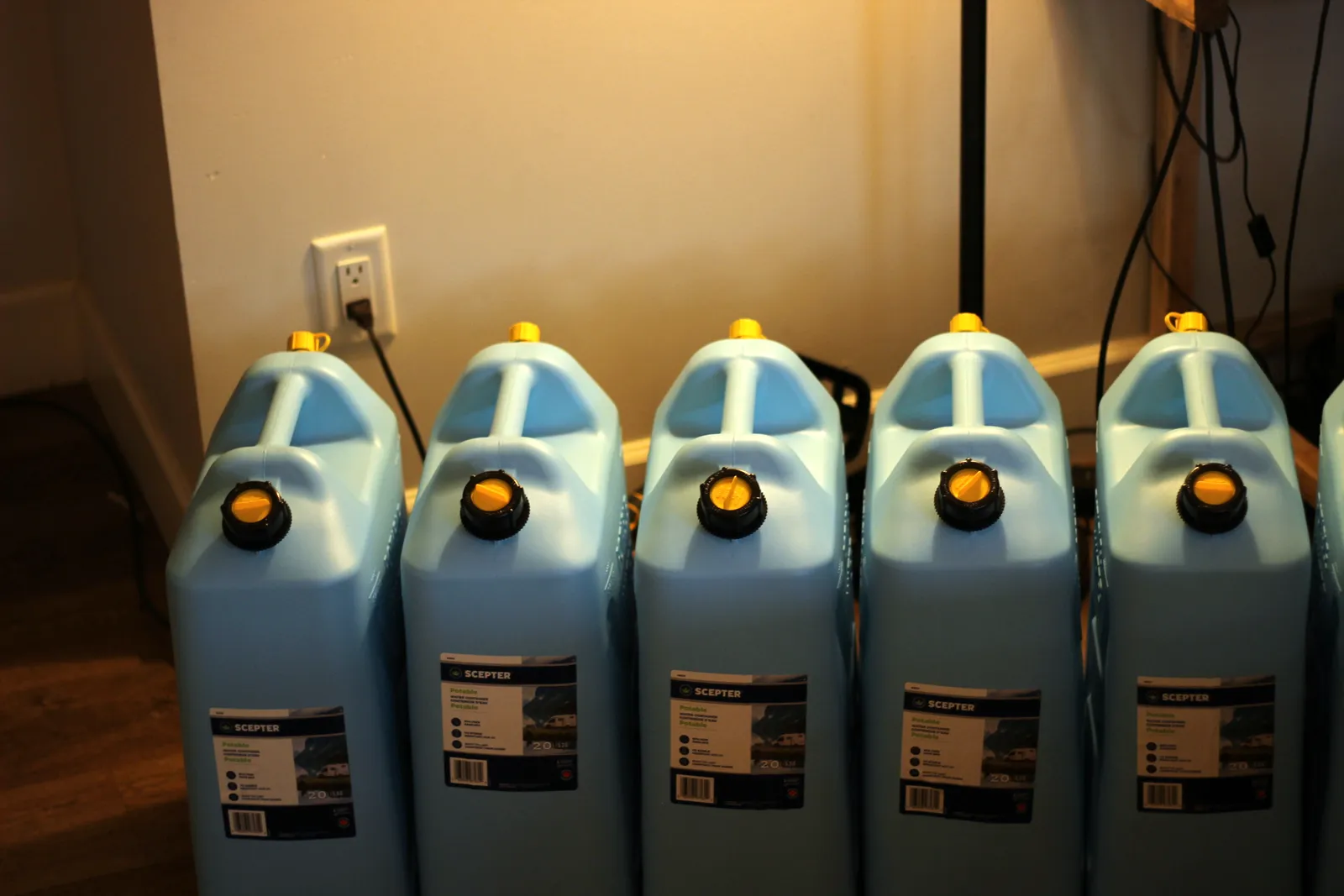
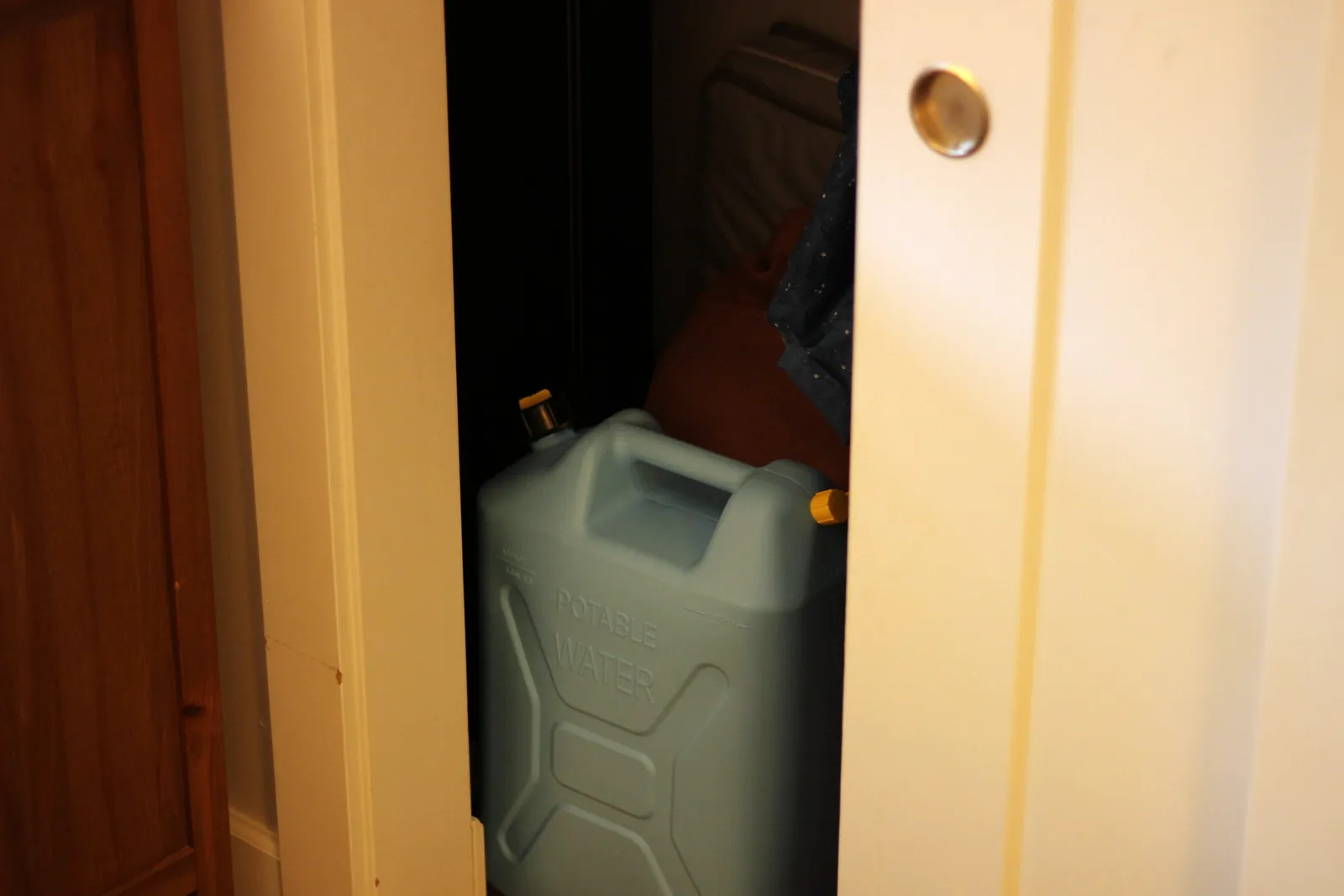
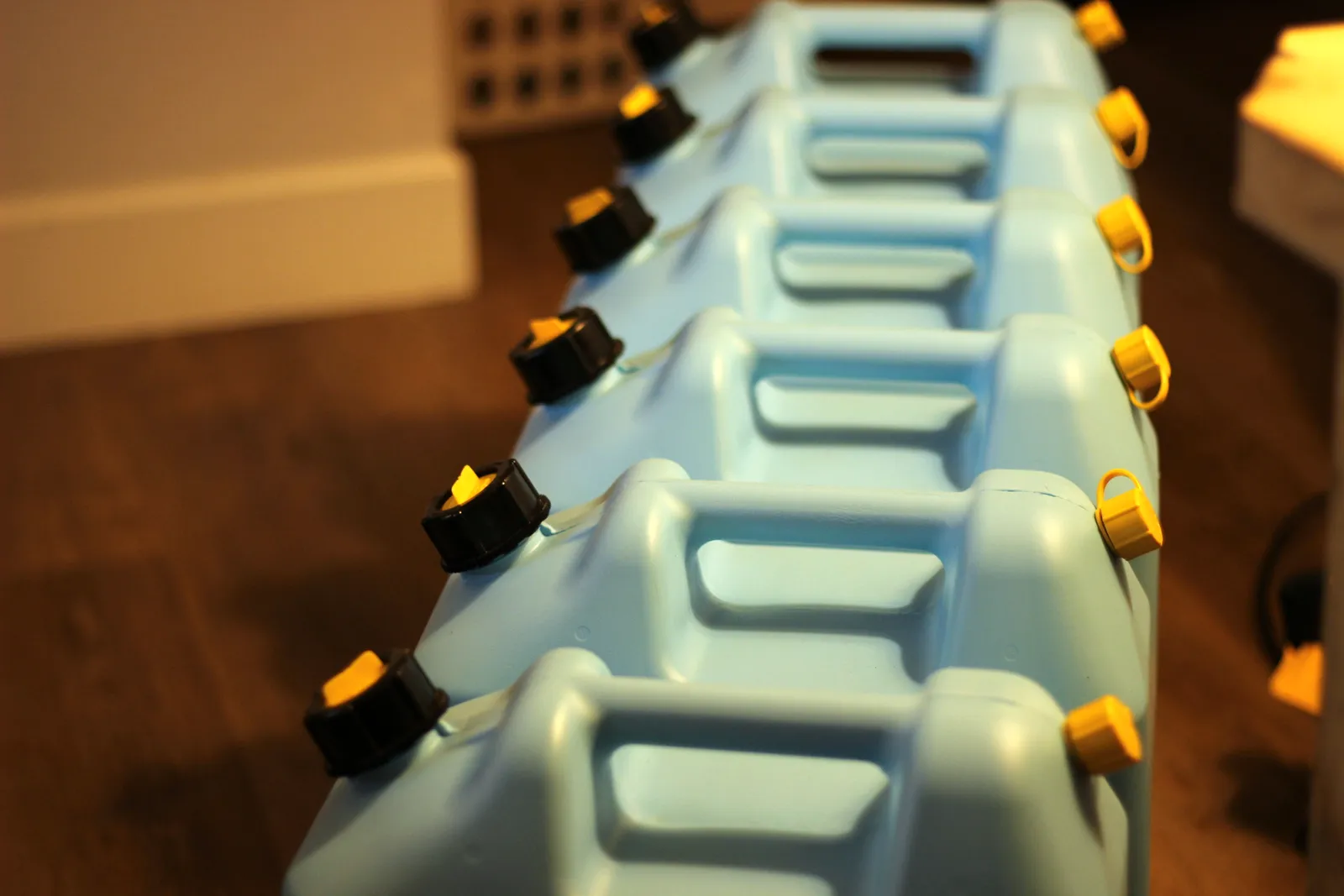
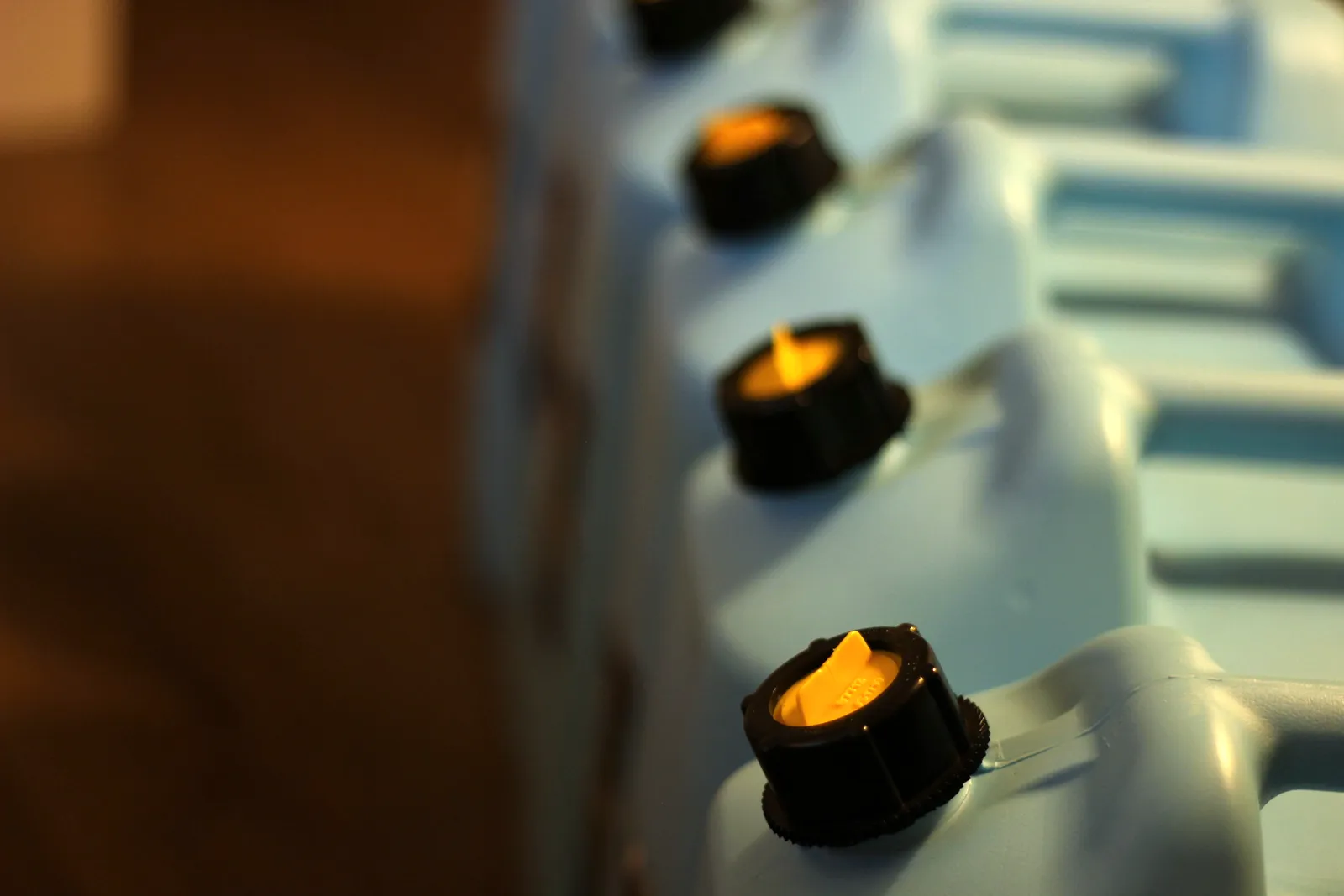
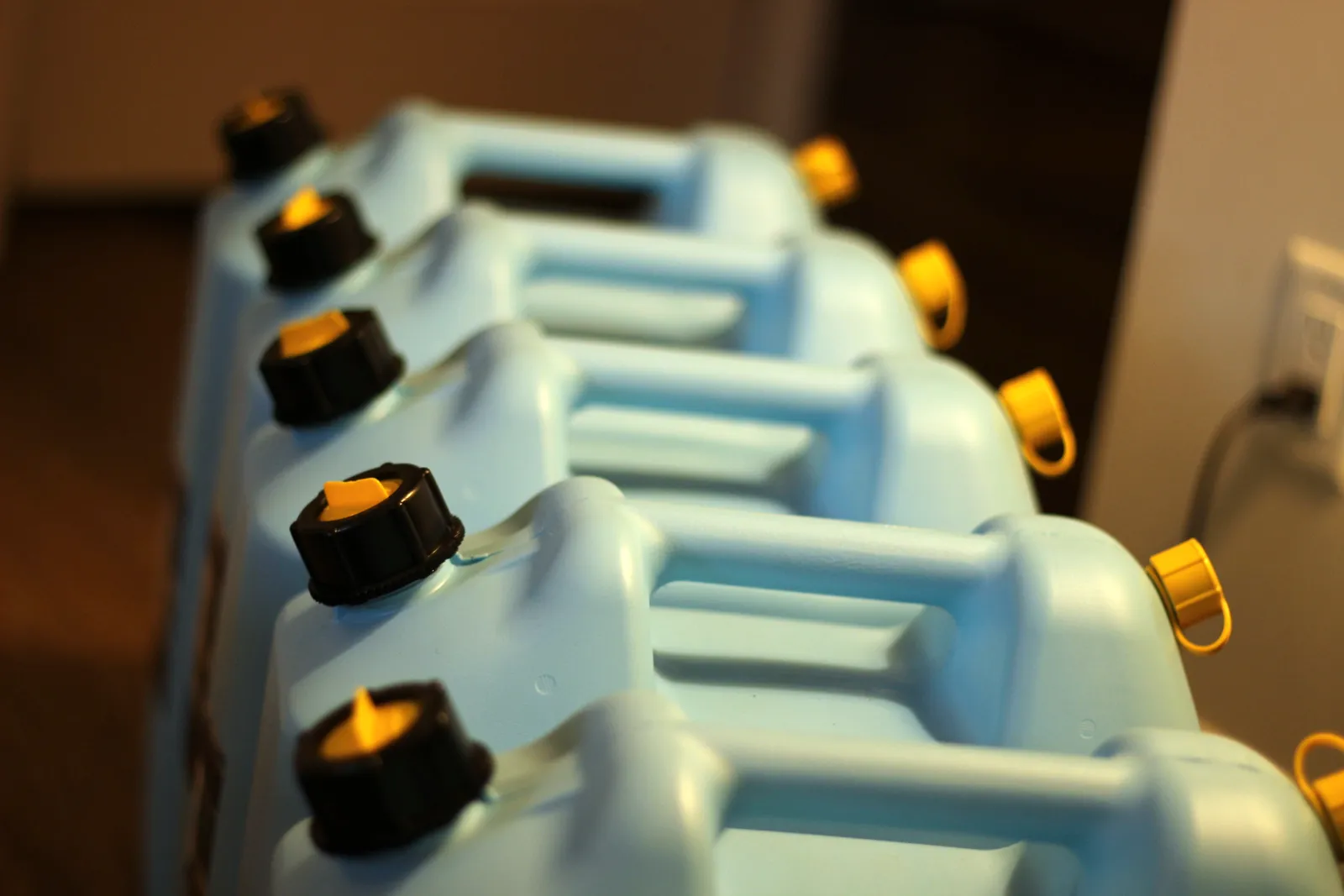
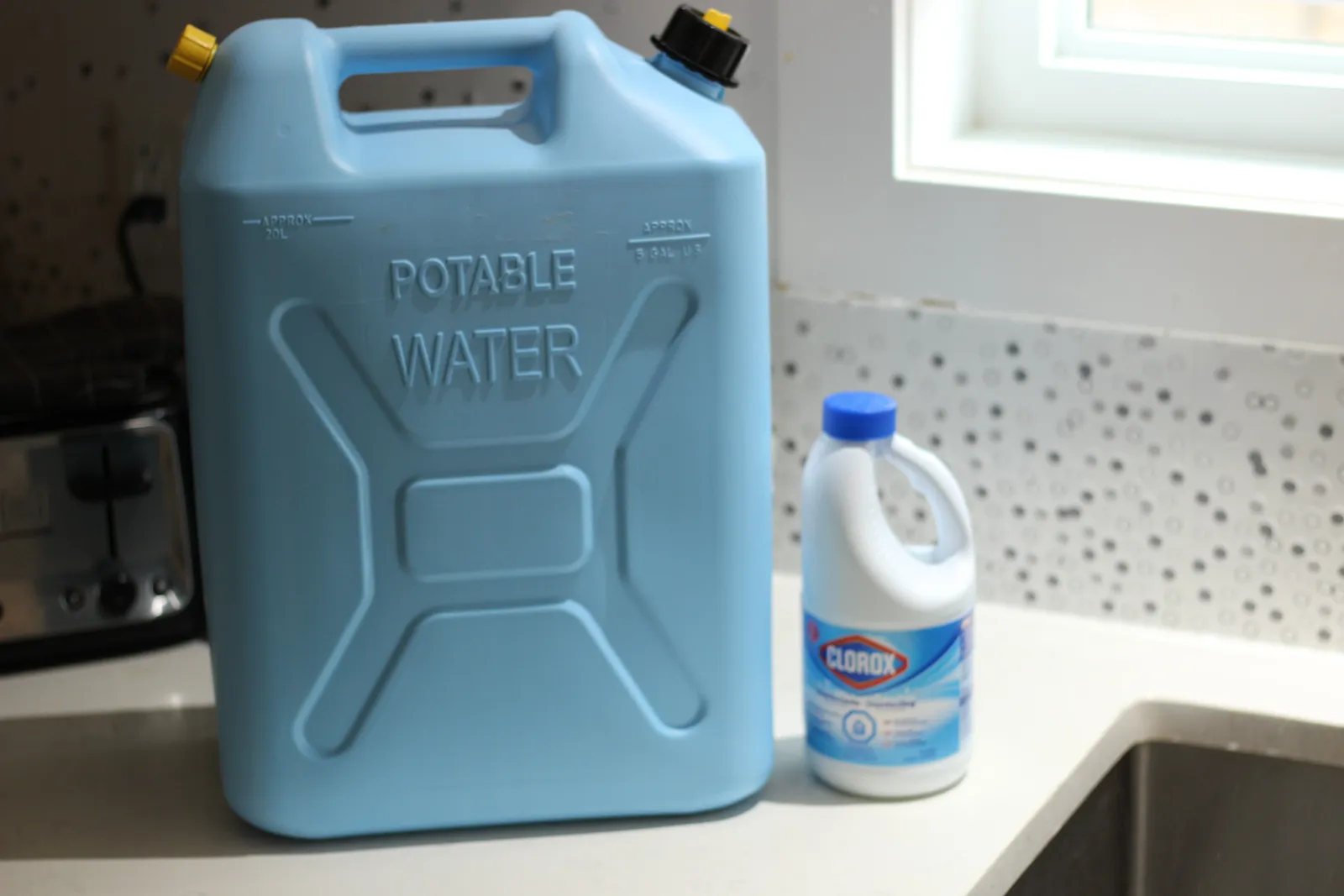
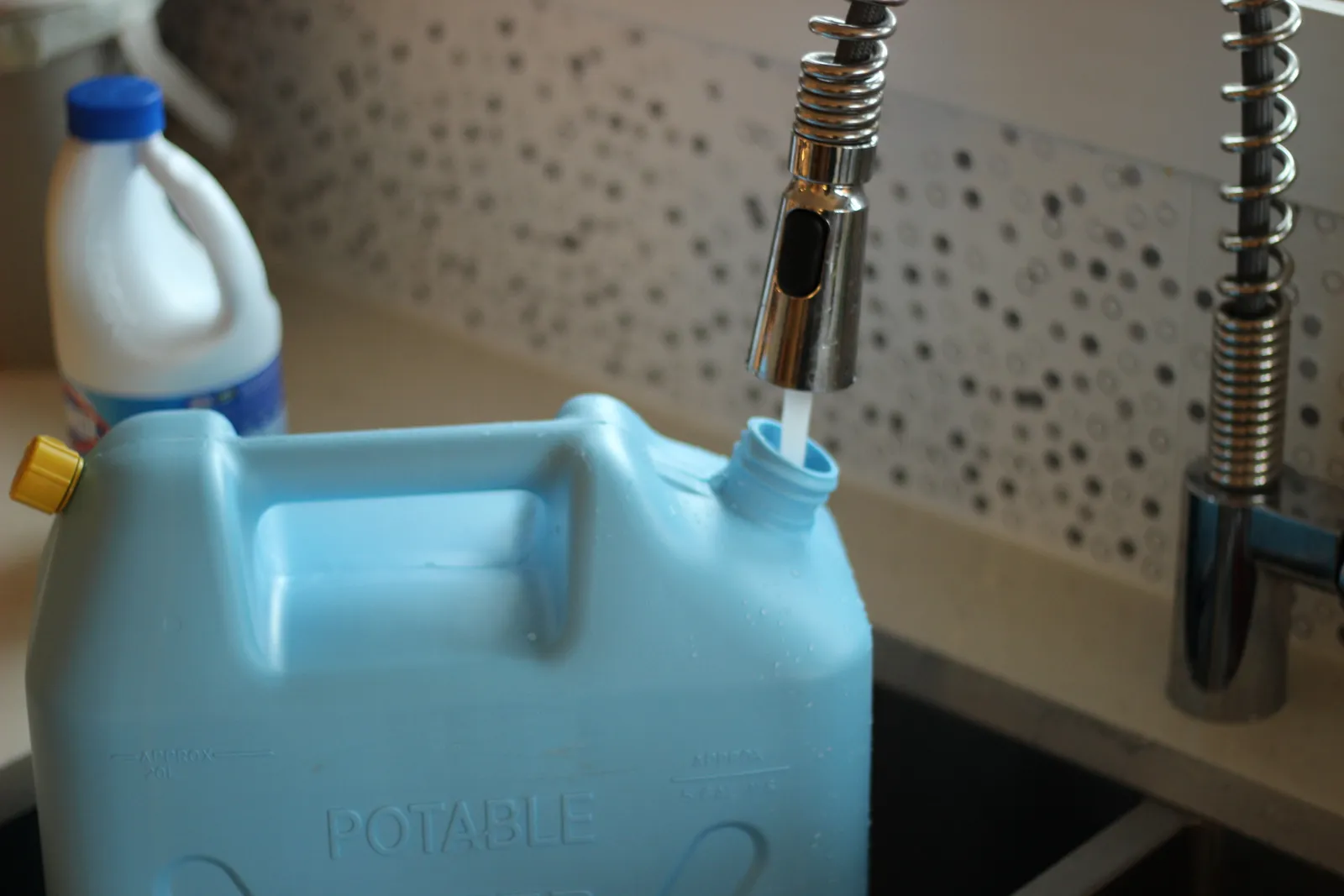
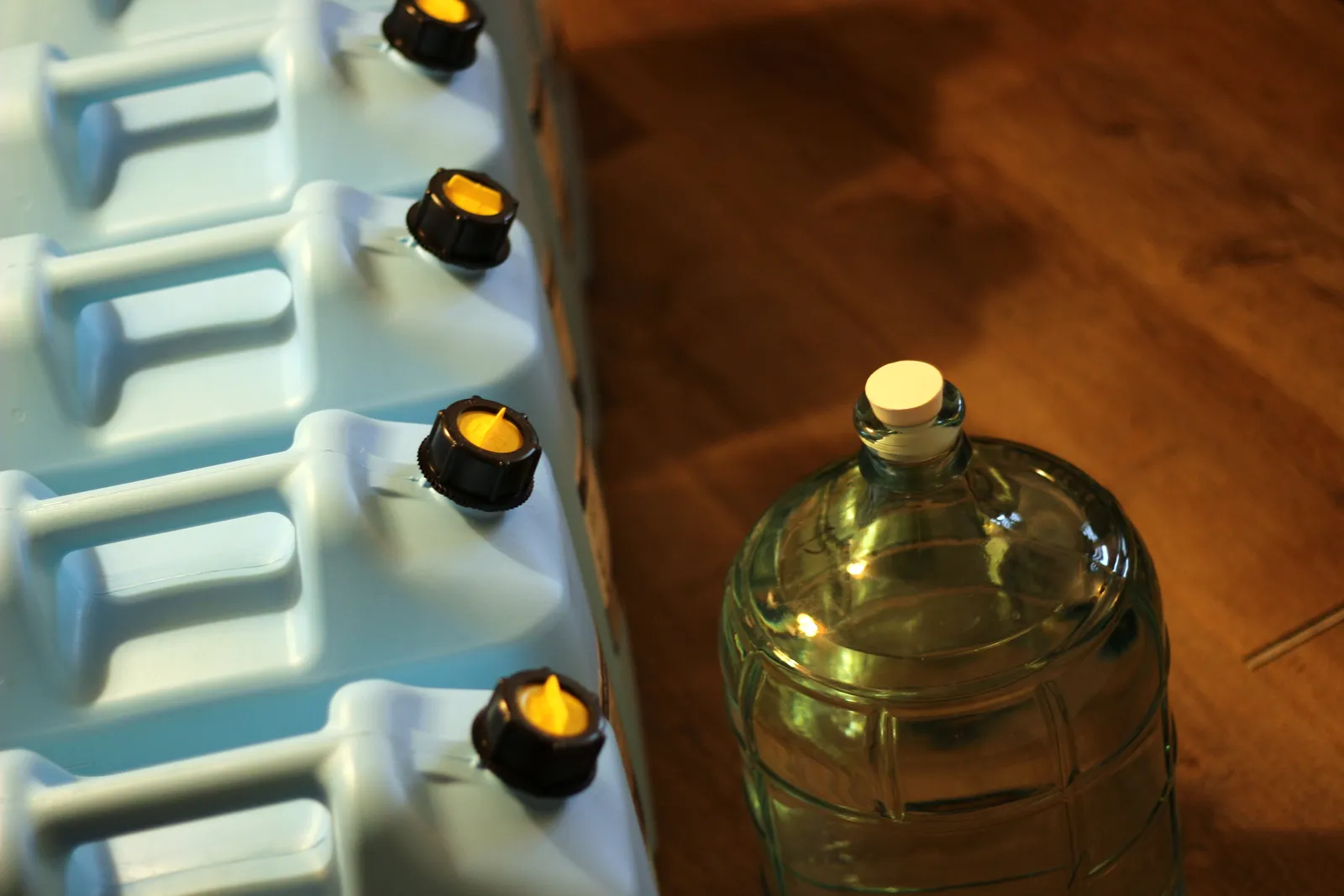
The can is the Scepter 5 gallon / 20 litre water can (model W520), moulded in HDPE (recycling code 2, which is embossed on the base) and described on the product page as BPA free. The embossing on mine reads “Made in Canada, Fabriqué au Canada”. The words POTABLE WATER are moulded into the front, with an “Approx 20 L” fill mark and a gallon mark, so nobody mistakes it for fuel.
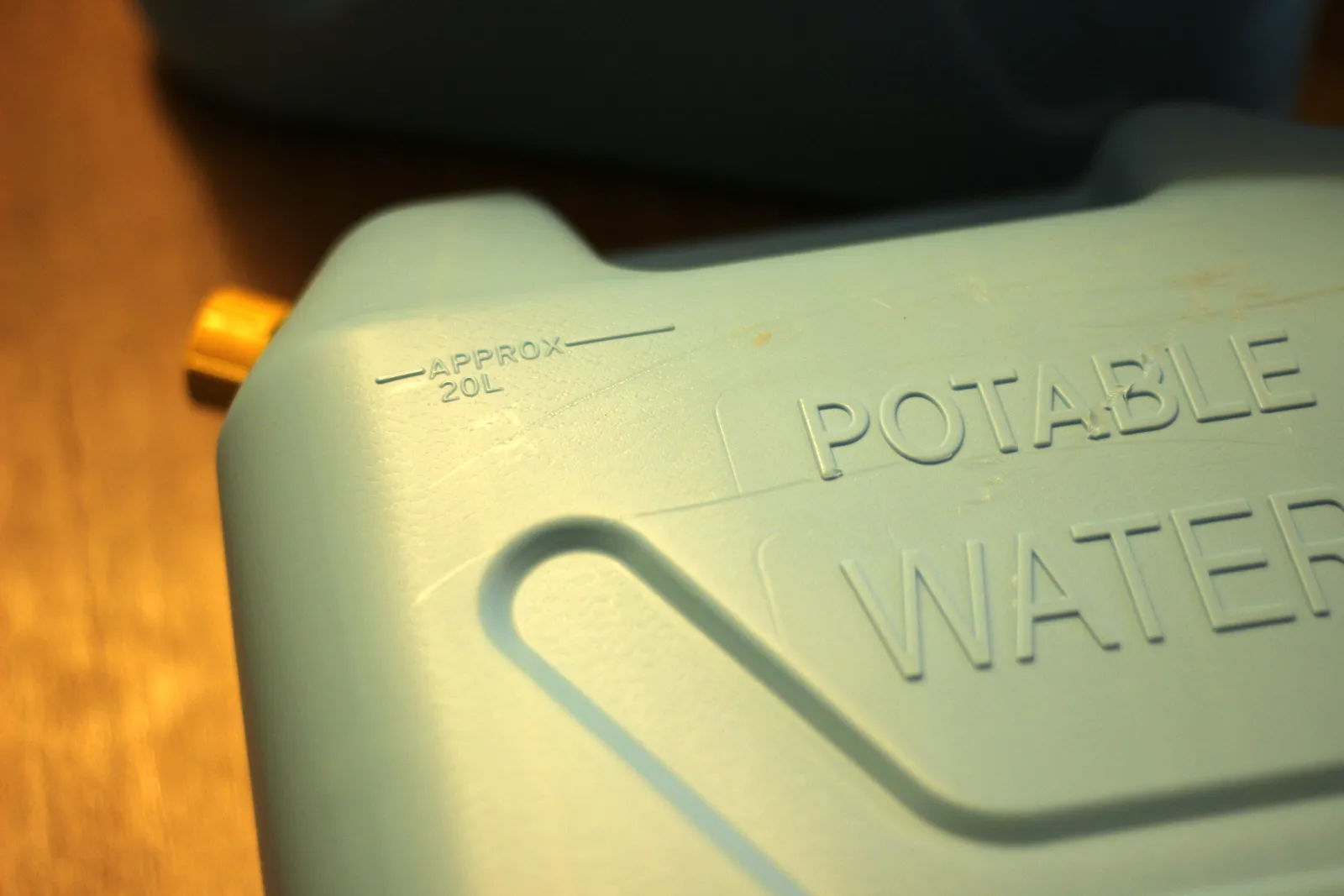
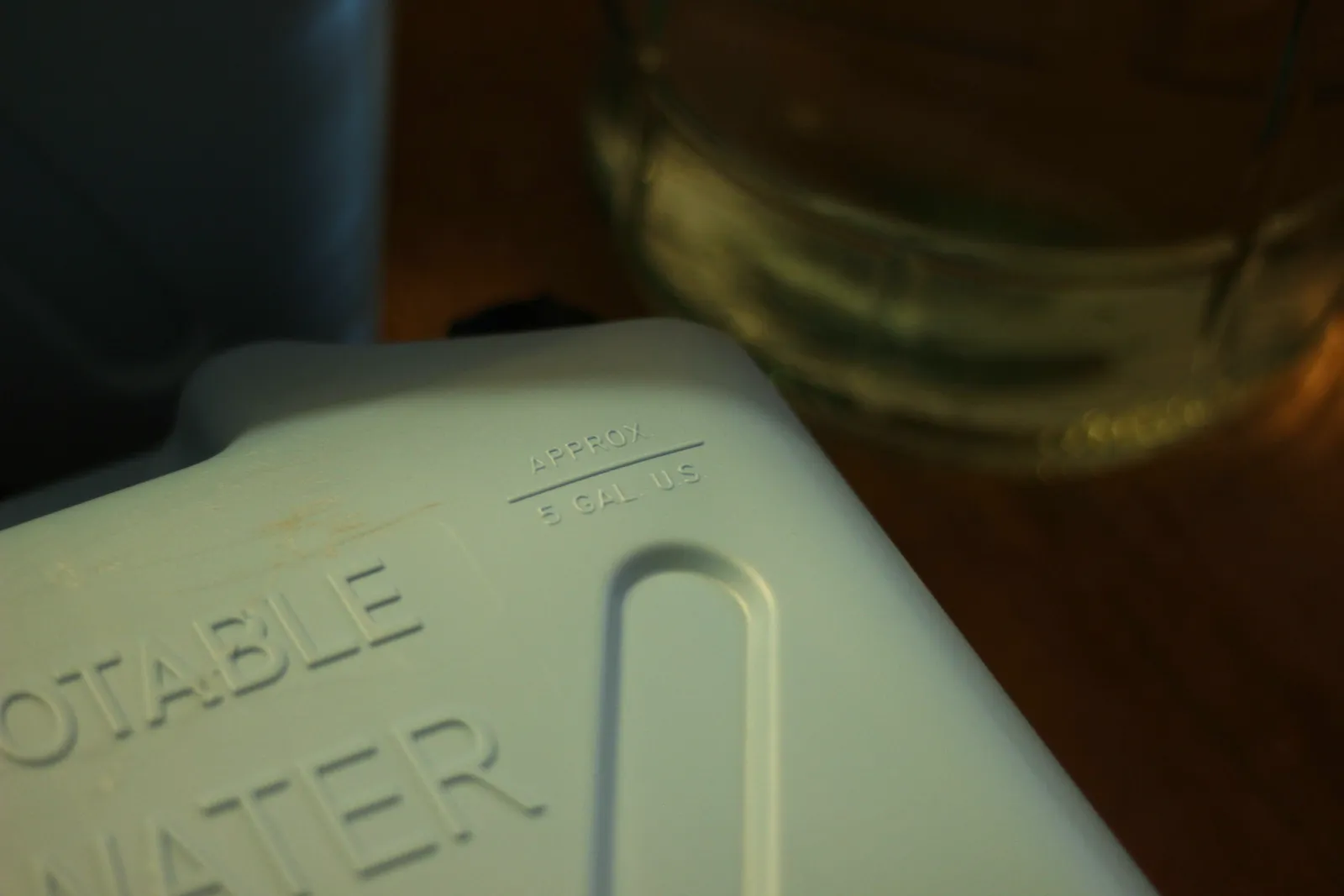
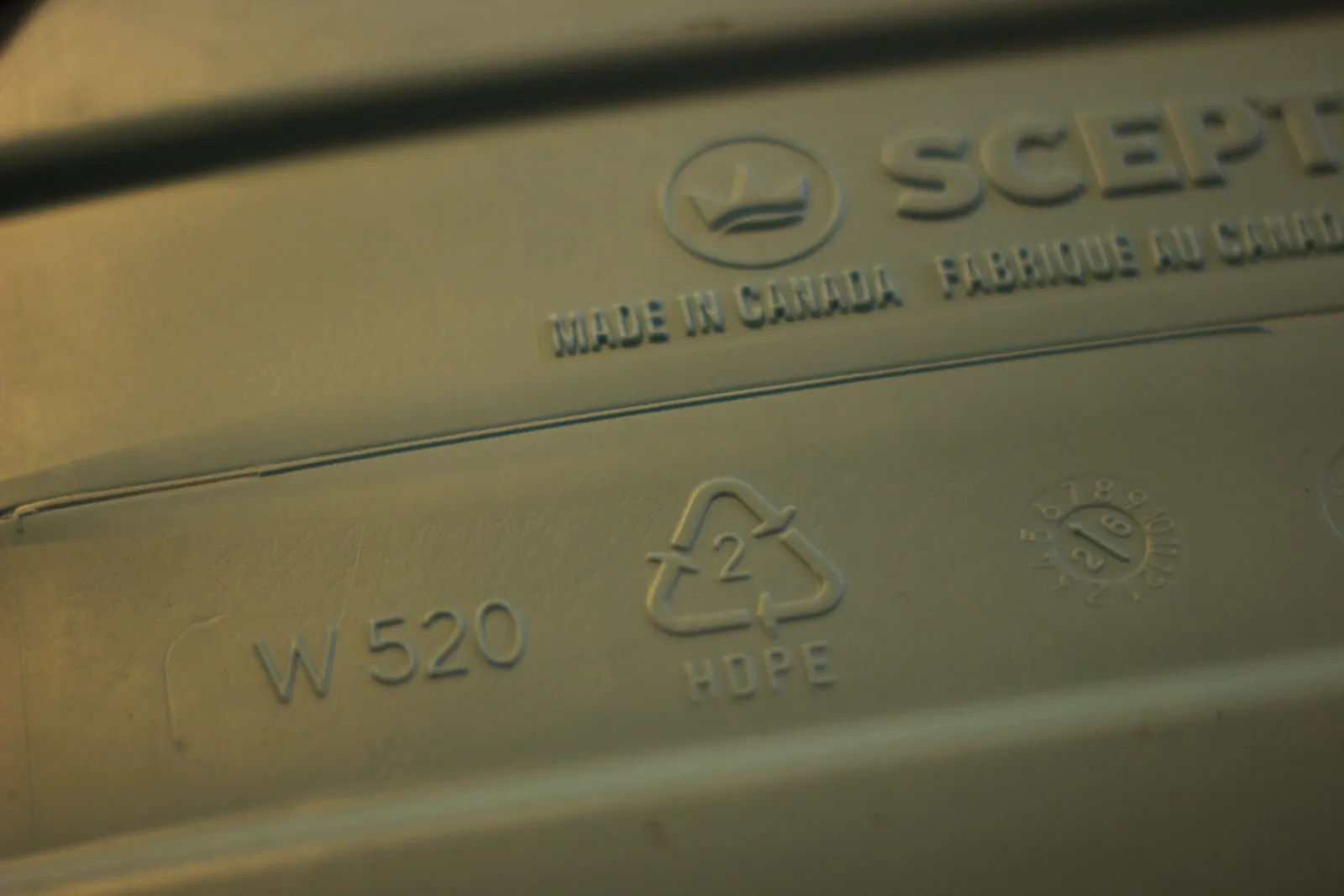
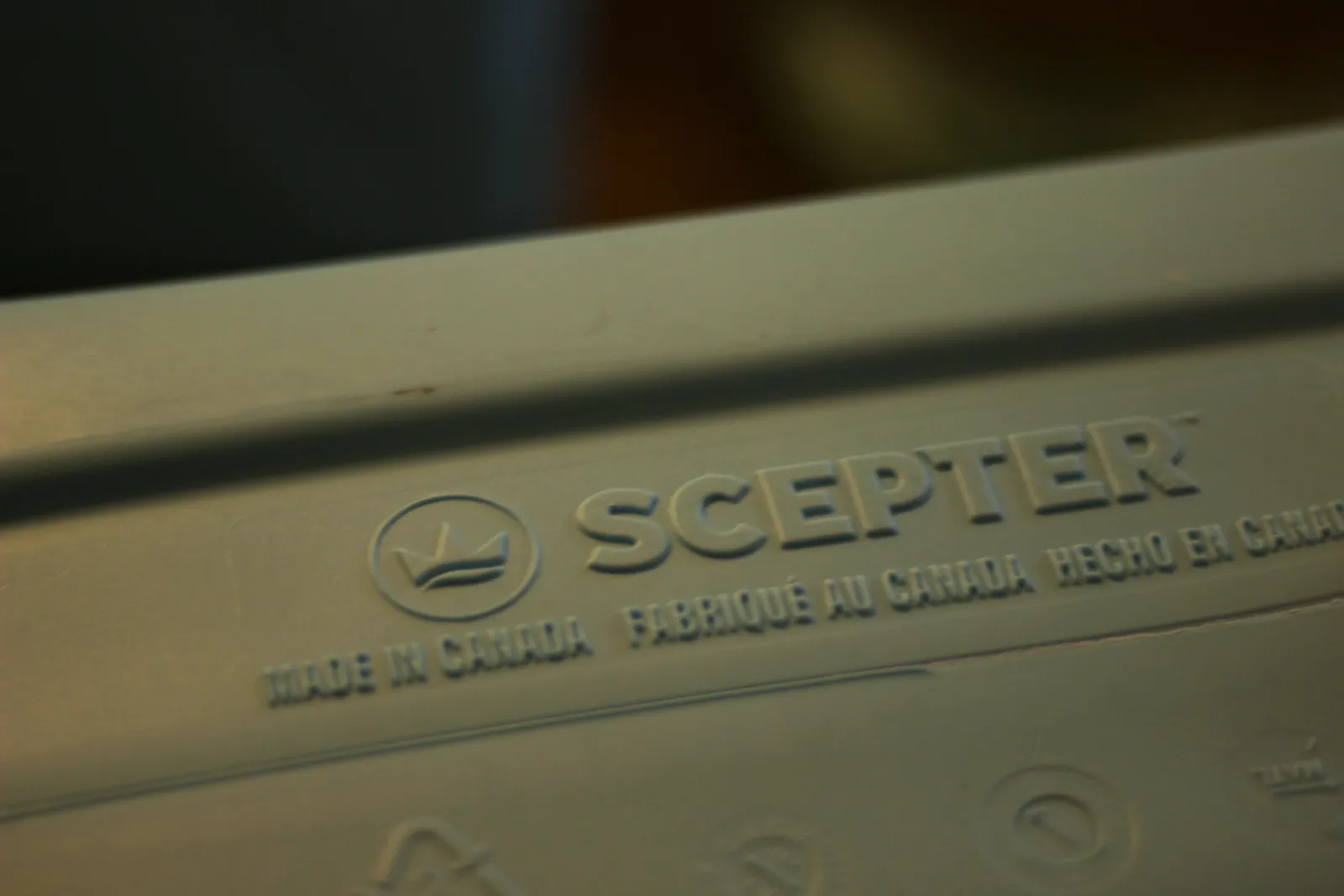
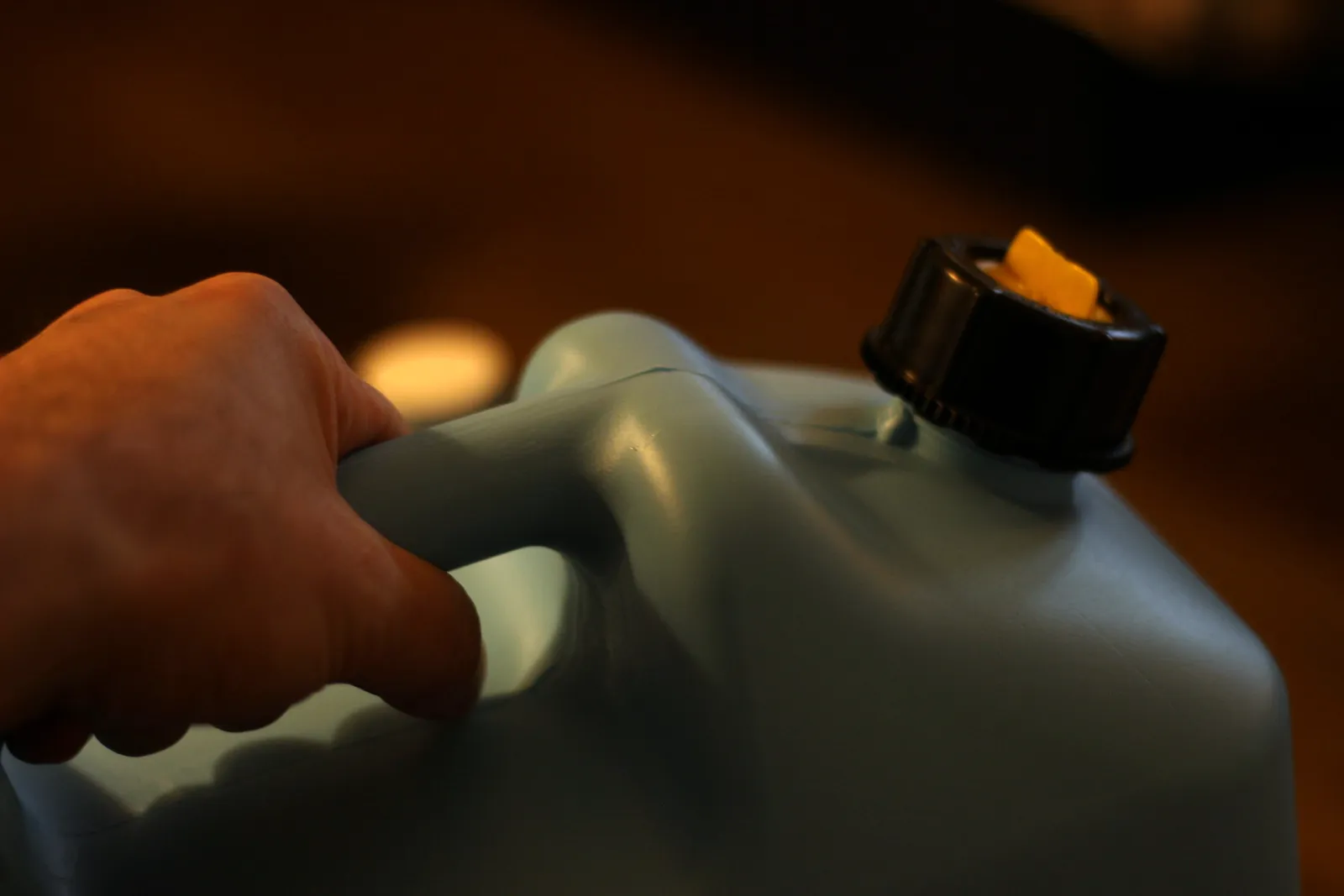
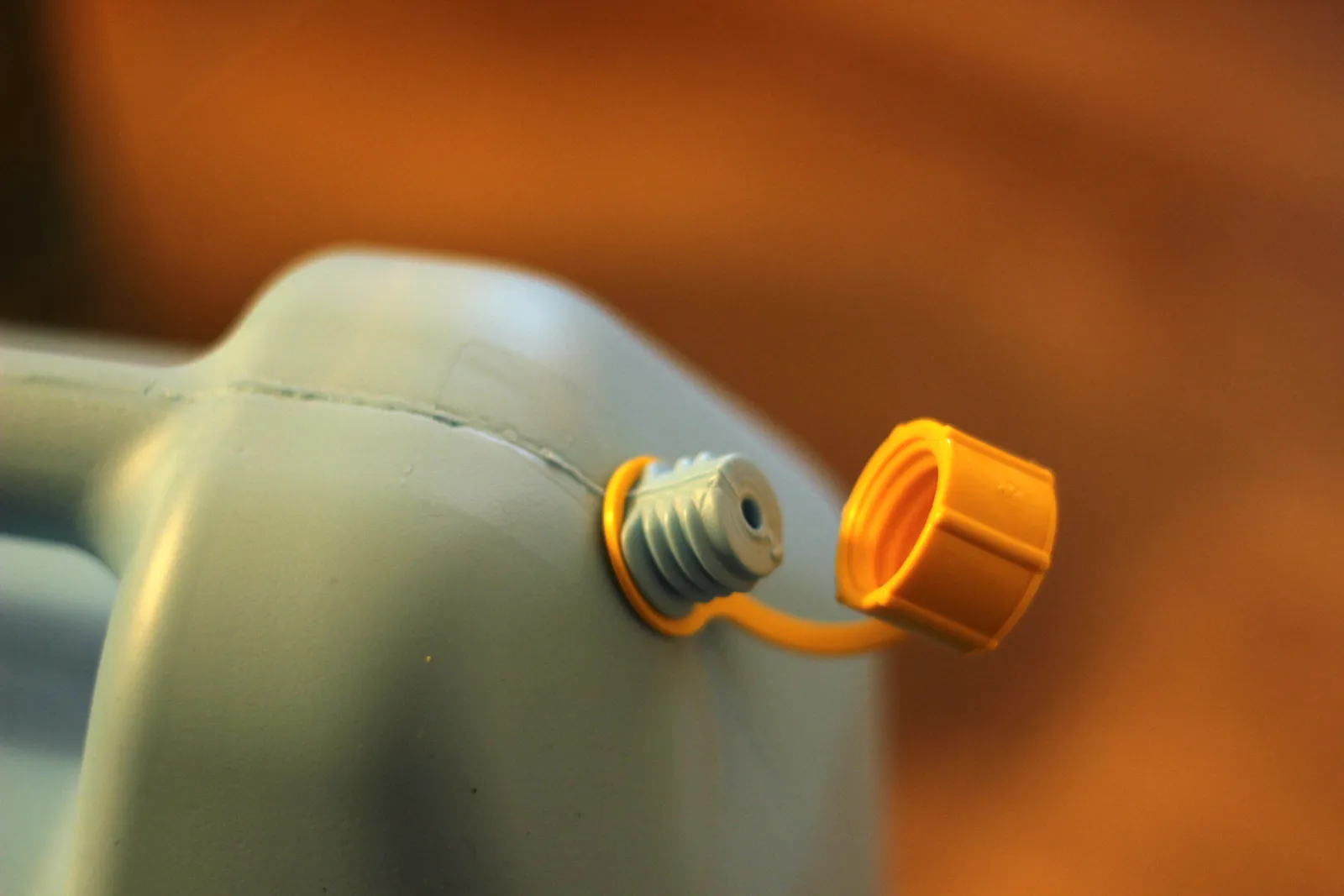
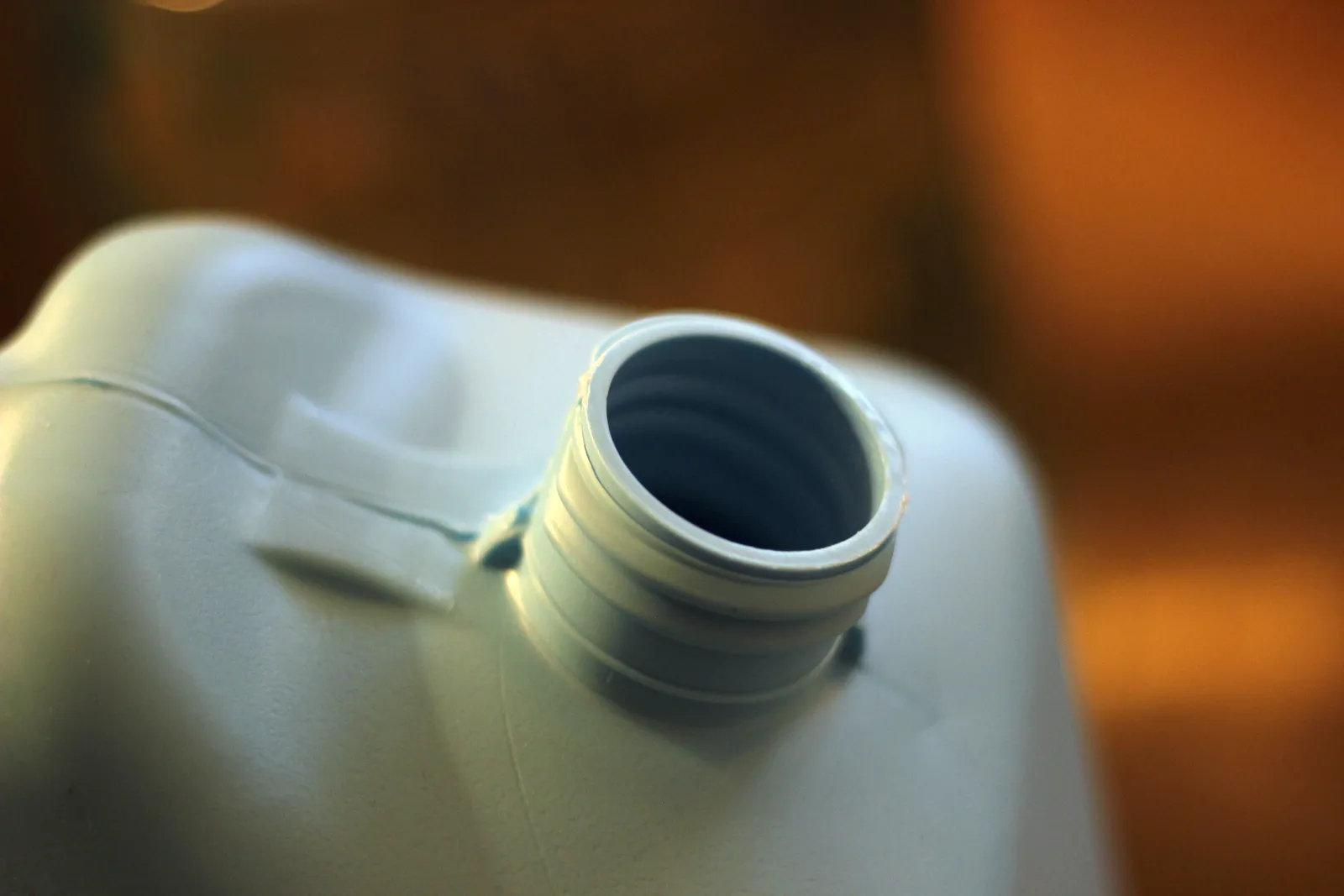
There is a carry handle moulded in at the top, and a wide-mouth cap. A small tethered vent plug sits beside the main opening, so air can get in and the can pours smoothly instead of gulping. A flexible yellow pour spout stores inside the can and screws into the neck.
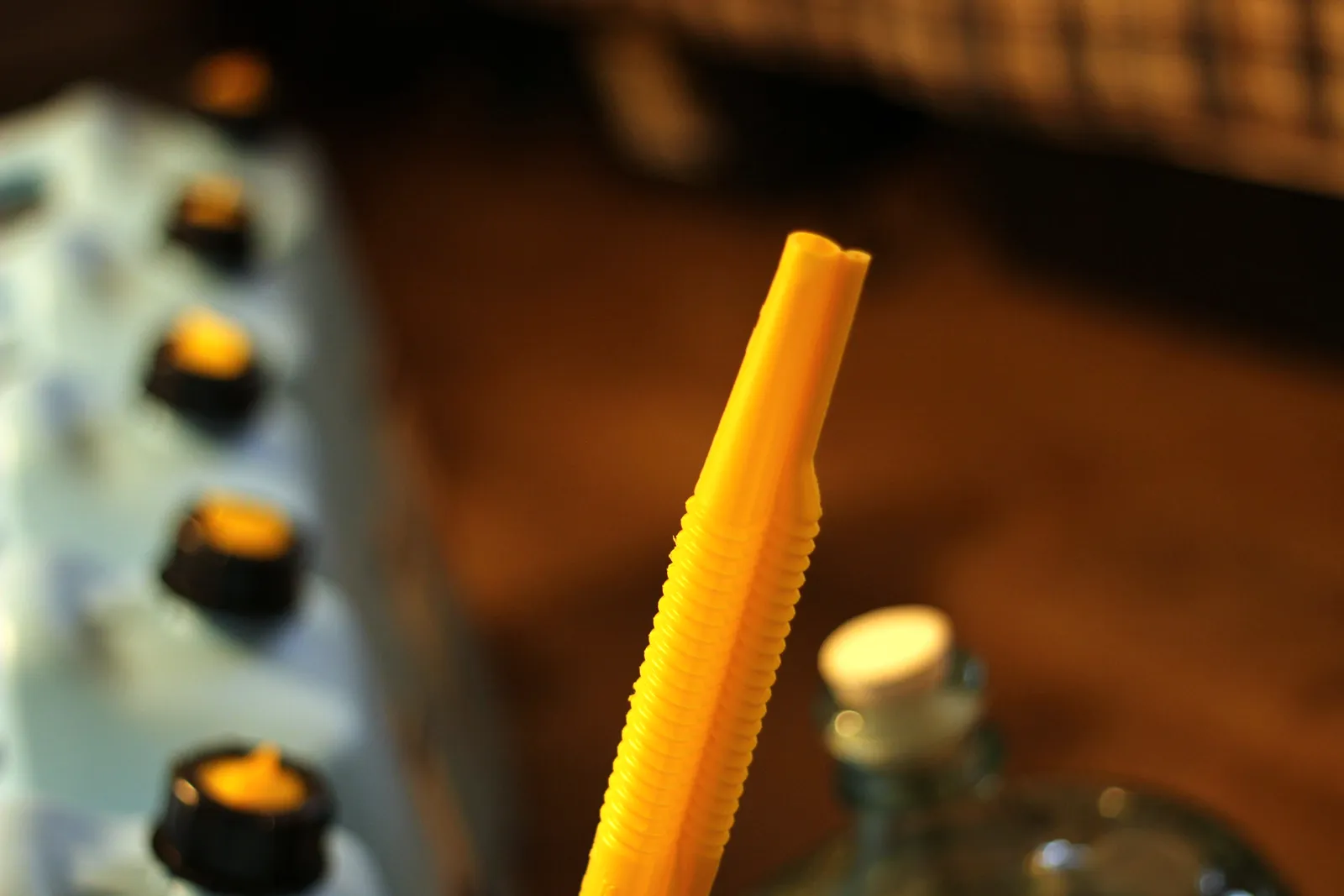
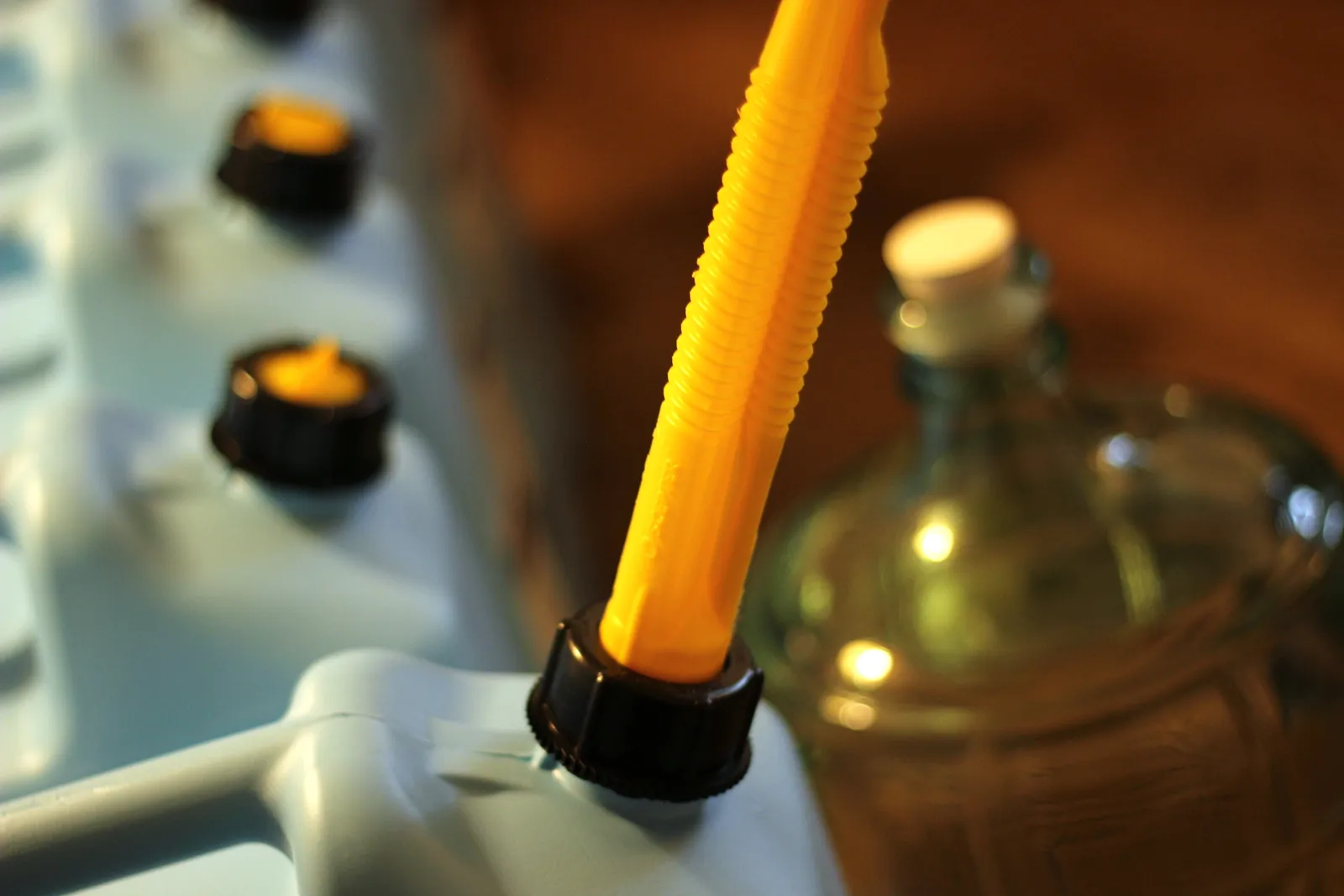
The Scepter page lists no weight or dimensions for the can and does not give a price, so check a retailer. The cap is a plain screw cap, not a gasket-sealed bucket-style lid, and the can is heavy when full, at least 20 kg. Alberta Health actually suggests keeping any one portable water container to 15 L or less for that reason. A full can is best moved with a hand truck, or filled in place. I also had no way to test long-term plastic taste in a week, so I am not claiming any.
Cleaning the vessel with bleach (and not putting bleach in the water)
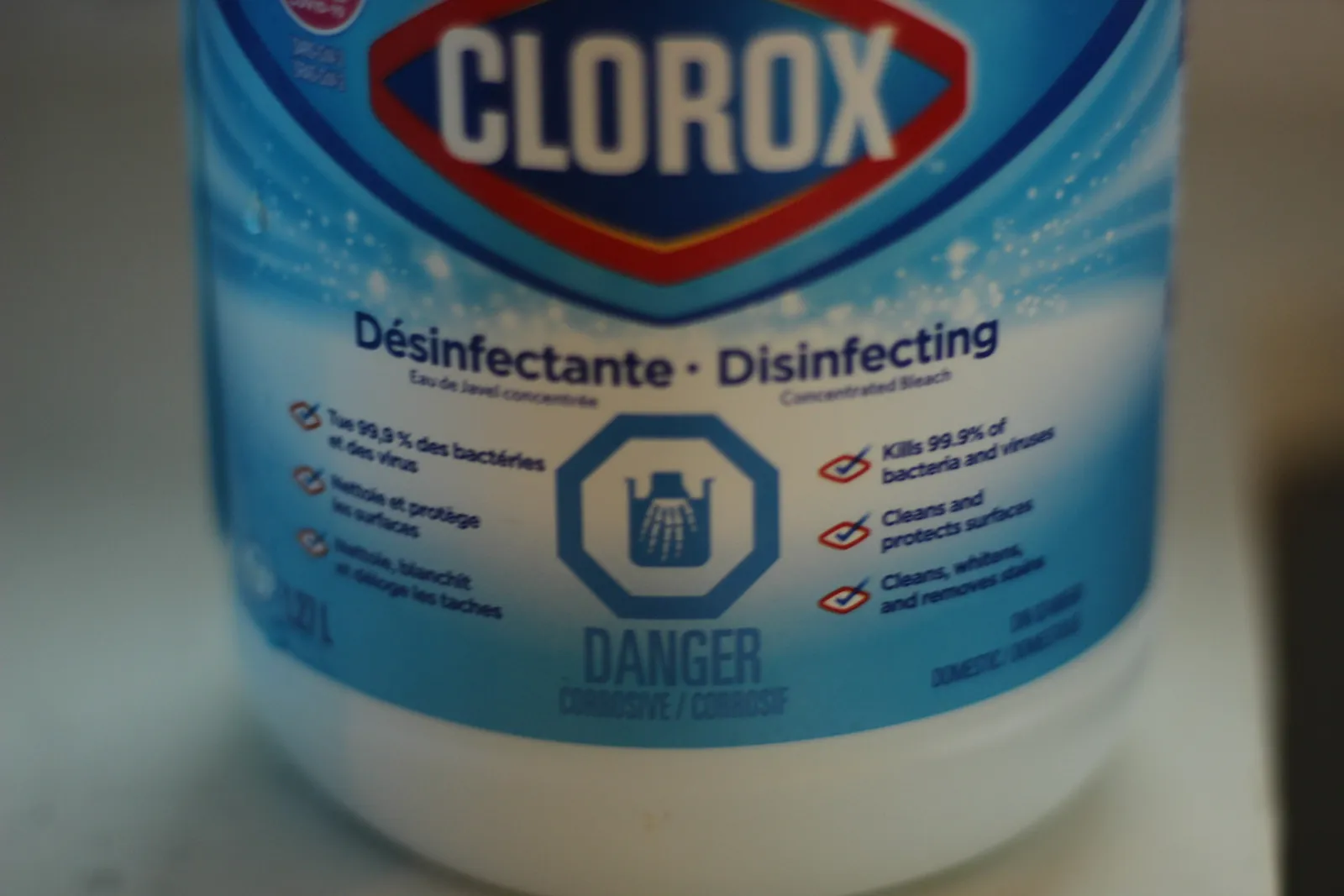
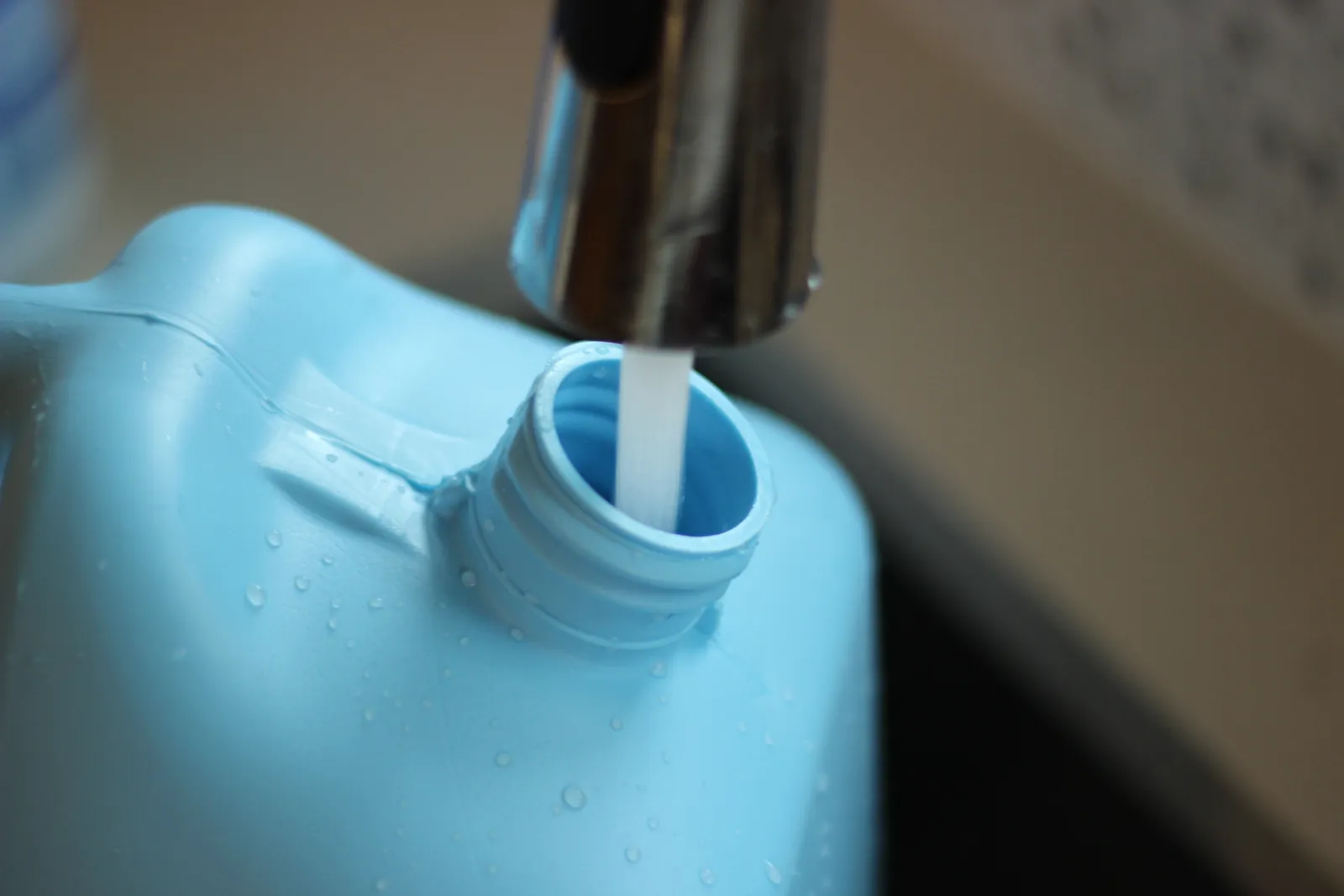
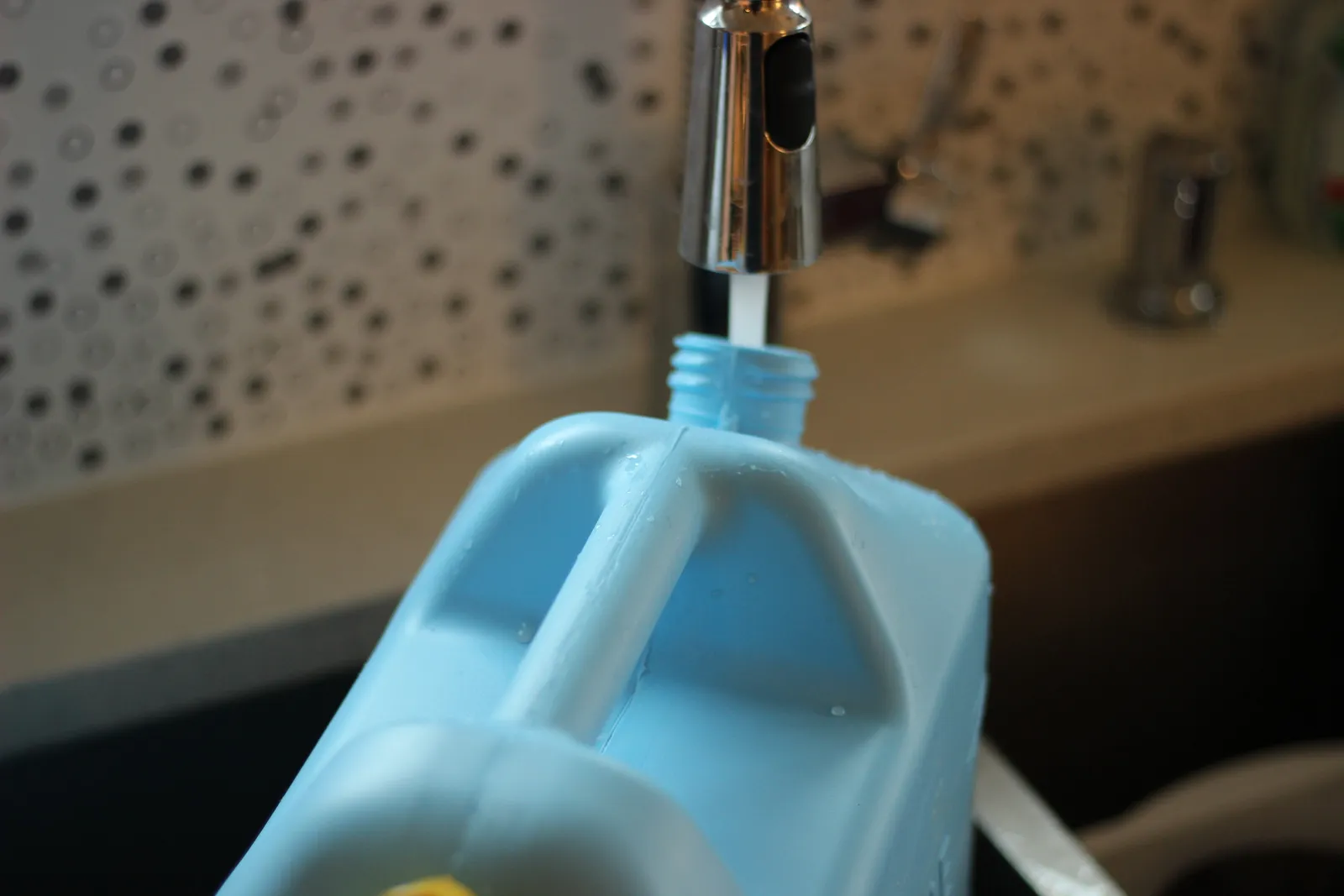
I sanitise every vessel before it gets filled, and this is the step people skip. I cleaned the cans and the carboy with a bleach solution, rinsed, and filled them with plain city tap water. I did not put bleach into the stored water. City water already contains a chlorine residual, and that is what keeps it good in a closed container. Adding more makes it taste worse and does nothing useful.
Bleach: two different jobs
Sanitising the empty vessel is not the same as putting bleach in the water. Tap through both.
Mix a sanitising solution of about 5 mL (1 tsp) unscented household bleach per litre of water, enough to wet every surface. Fill roughly a quarter of the vessel, cap it, swish for at least 30 seconds, let it stand, drain it, then rinse with safe water. For this vessel that is about 5 mL of bleach in 5 L of water.
No bleach goes in the stored water. Municipal tap water already carries a chlorine residual, which is the reason it keeps. We cleaned every vessel with bleach, rinsed, and filled with plain city tap. Label the date on the can.
Only if the water source is untreated (a creek, a well you have not tested, a rain barrel) and you cannot boil it: filter out the grit, then add about 2 drops of 5 to 6% unscented bleach per litre, stir, and wait 30 minutes. It should smell faintly of chlorine afterwards. Check the strength printed on your own bottle, and Health Canada's page before relying on any number here.
Why city tap water keeps for months
Treated municipal water carries a small disinfectant residual and has been filtered. Put it in a clean, sealed, opaque container away from heat and light, and it stays safe far longer than the tap water you would leave in an open jug. Many people hold it for three to six months with no problems. The official line is more careful than that: HealthLink BC says water you fill yourself at home should be replaced every 6 months, and sealed commercial bottled water once a year. So my rule is simple. Treat 3 months as the “fresh” mark, 6 months as the hard limit, and rotate on the date.
When to swap the water
HealthLink BC advises replacing home-filled water every 6 months and sealed commercial bottled water once a year. Drag the month.
Rotating does not mean wasting it. Water the garden, run a load of laundry, wash the truck or flush a toilet with the old water, then refill and re-date.
Glass carboys: a very good long-term option
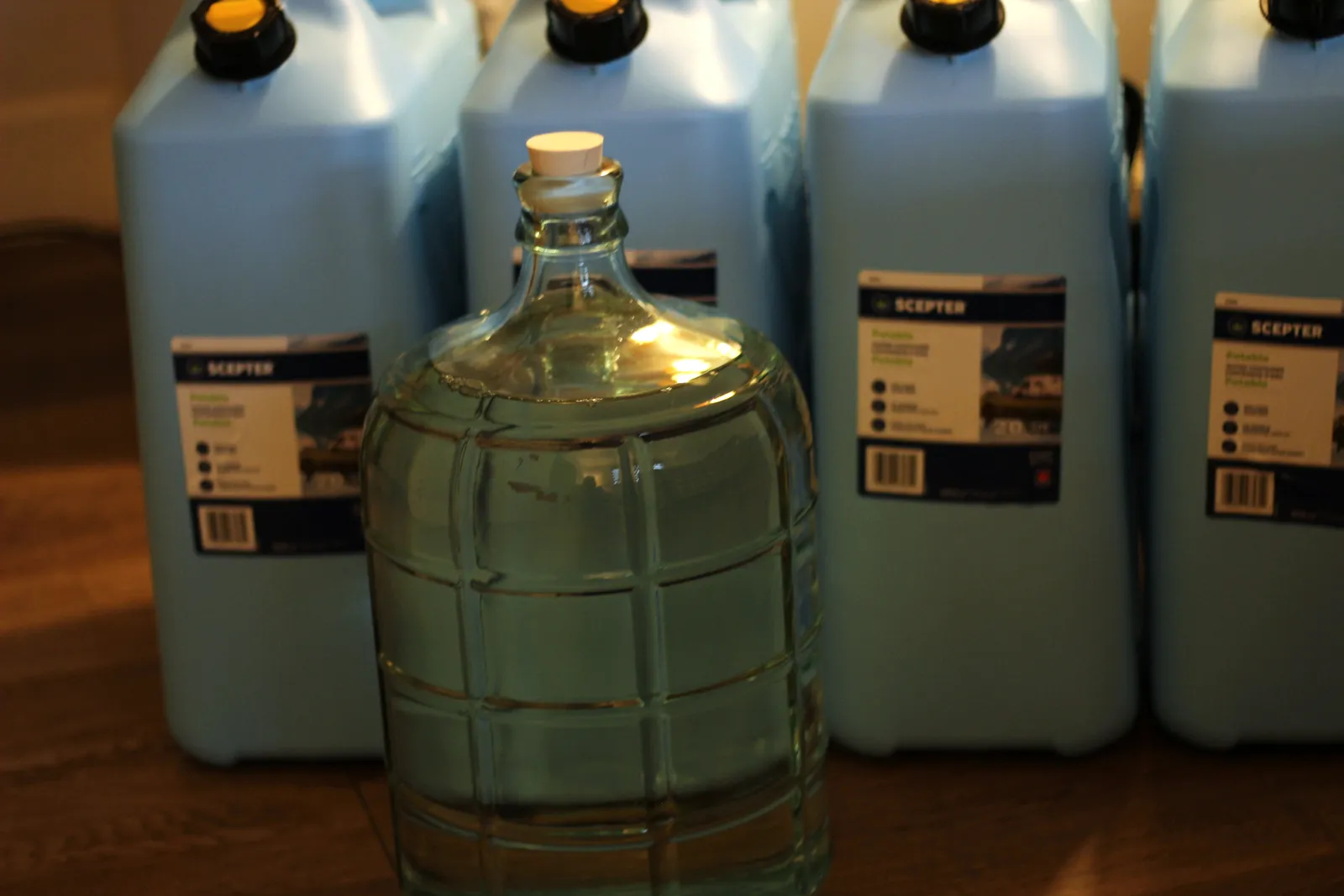
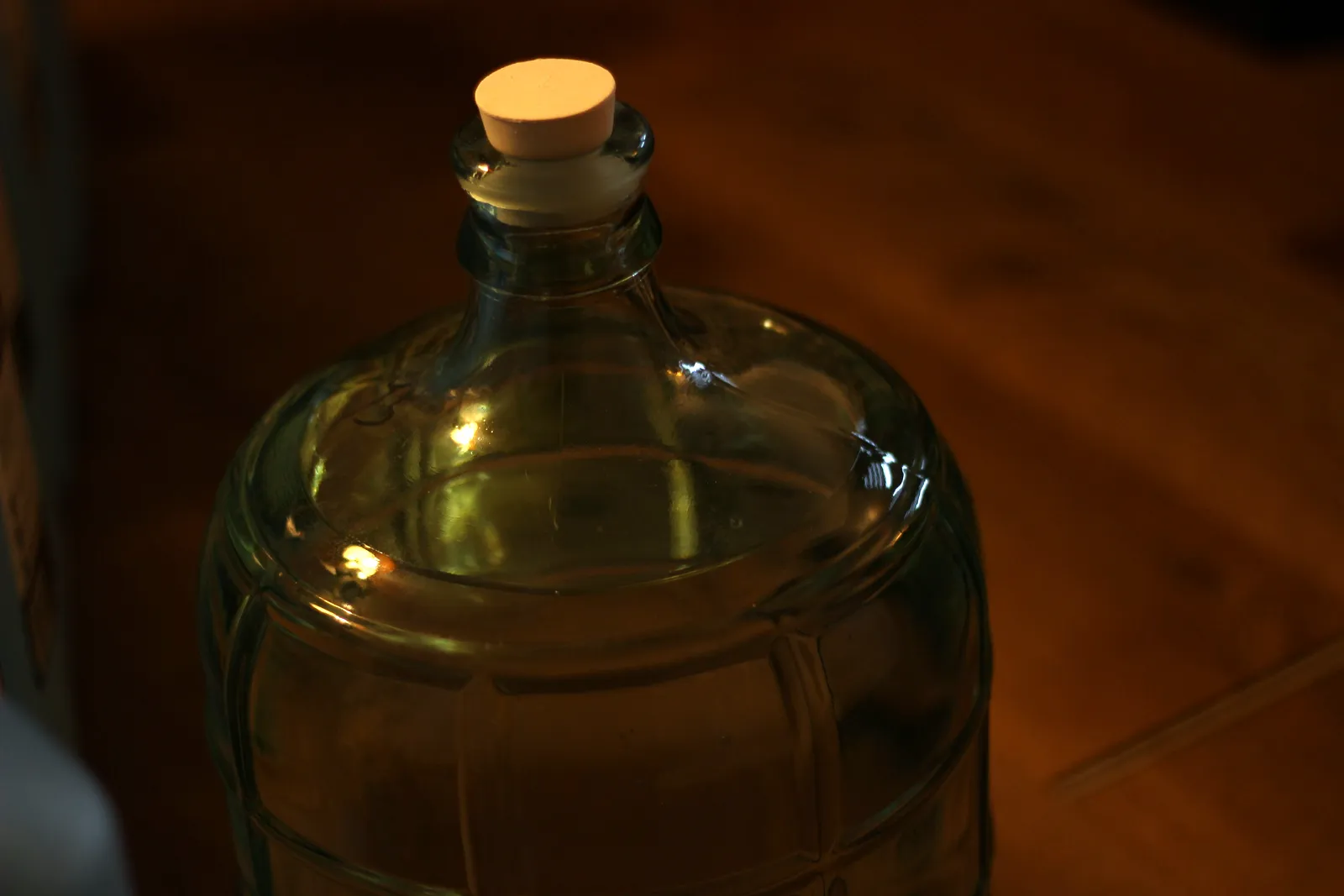
Alongside the cans I keep a glass carboy (the big narrow-necked demijohn style bottle you see in the background of several photos). I think glass is a great long-term container for water, and here is why.
- It does not leach, taste or smell of anything. Glass is inert, so the water tastes like the water.
- Gas and vapour do not pass through it. Plastic is slightly permeable, which is why you never store water next to fuel or paint. Glass has no such worry.
- It is easy to sanitise. Smooth walls, no scratches that hold bacteria, and bleach and rinse work cleanly.
- You can see what is inside. You will notice any cloudiness or growth right away.
On mine I use a rubber stopper, not a cork. Cork is porous and leaks air, and it can shed bits and grow mould. A rubber bung seals the neck properly, can be sanitised along with the glass, and is cheap to replace.
What does the water weigh?
One litre of water is one kilogram, so the container size sets how much you can lift. Press the button to draw the bars. The dashed note is Alberta Health's advice to keep portable containers to 15 L or less.
How I would set this up
- Work out your number (4 L per person per day) and aim for at least three days, then build toward two weeks.
- Buy enough cans for the number, plus one carboy if you like glass.
- Wash, bleach-sanitise, rinse and fill with plain city tap water.
- Cap, date, store cool, dark and low.
- Put the rotation date in your phone calendar for 6 months out.
- Keep a filter or purification tablets for the day the stored water runs out.
Verdict
The can is a straightforward, well-made Canadian water container with the right markings and a sensible spout. It is heavy when full and the screw cap is basic, but it does the job. The method matters more than the brand: clean the vessel, fill from treated tap water, date it and rotate it.
Sources: Government of Canada (4 L per person per day), Health Canada and HealthLink BC (home water storage, bleach and rotation), CDC (container sanitising), Alberta Health Services (portable containers), and the Scepter product page. Check each for your own situation before relying on a number here.