Featured Review · OneLeaf · Night Vision
OneLeaf Commander NV100 Plus 3-12x56 Review — One Scope for Daylight, a Clip-On for Dark
Our Rating
Current Price
- System
- Rapidfire Plus 3-12x56 day scope + Commander NV100 clip-on
- Magnification
- 3–12x optical; 1–3x digital on the NV100
- Objective
- 56 mm, fully multi-coated
- Tube
- 30 mm
Pros
- A real 3-12x56 second-focal-plane day scope on a 30 mm tube that you can leave on the rifle all season — the night unit is an add-on, not the whole product
- The Commander NV100 couples straight onto the Rapidfire Plus eyepiece: no tape, no shims, no adapter-sizing guesswork. Off for daylight, on for dark
- Sony STARVIS 1080p sensor, 6 W 850 nm IR illuminator with six power steps, and a 0.4-inch 3.69-million-dot viewfinder at 60 fps
- Records every shot to SD card — 1080p H.265 video and stills, 32 GB card in the box — with a date stamp burned into the footage
- Positive 1/8 MOA turrets with 70 MOA of travel, side-focus parallax and an illuminated reticle with 11 brightness levels
- Runs on a standard 18650 cell rated for about six hours, so a spare costs a few dollars and lives in a pocket
- Roughly the price of a decent standalone day scope, and a fraction of what tube night vision or thermal costs
Cons
- About 1.14 kg of optics before rings — heavy on a sporter, and you feel it when carrying
- With the clip-on fitted your eye moves back by the length of the unit, so head position and cheek weld change between day and night setups
- Recorded footage is noticeably softer than the image your eye sees through the glass in daylight — it is a record, not a showpiece
- Charges by micro USB, and OneLeaf publishes no recoil rating; we have only tested it on a PCP air rifle
- Digital night vision with an IR torch is a different tool from thermal: it shows you what the illuminator lights, not what is hidden in cover
There is a hole in the night-vision conversation, and most of the coverage walks straight past it. One end of the market is premium tube night vision — superb, priced like a used truck, and useless in daylight. The other end is clip-on digital, usually written about as a toy. What almost nobody covers properly is the thing hunters actually ask us about: one scope that does both jobs. A normal daytime riflescope you leave on the rifle, that turns into a night setup when the coyotes start calling.
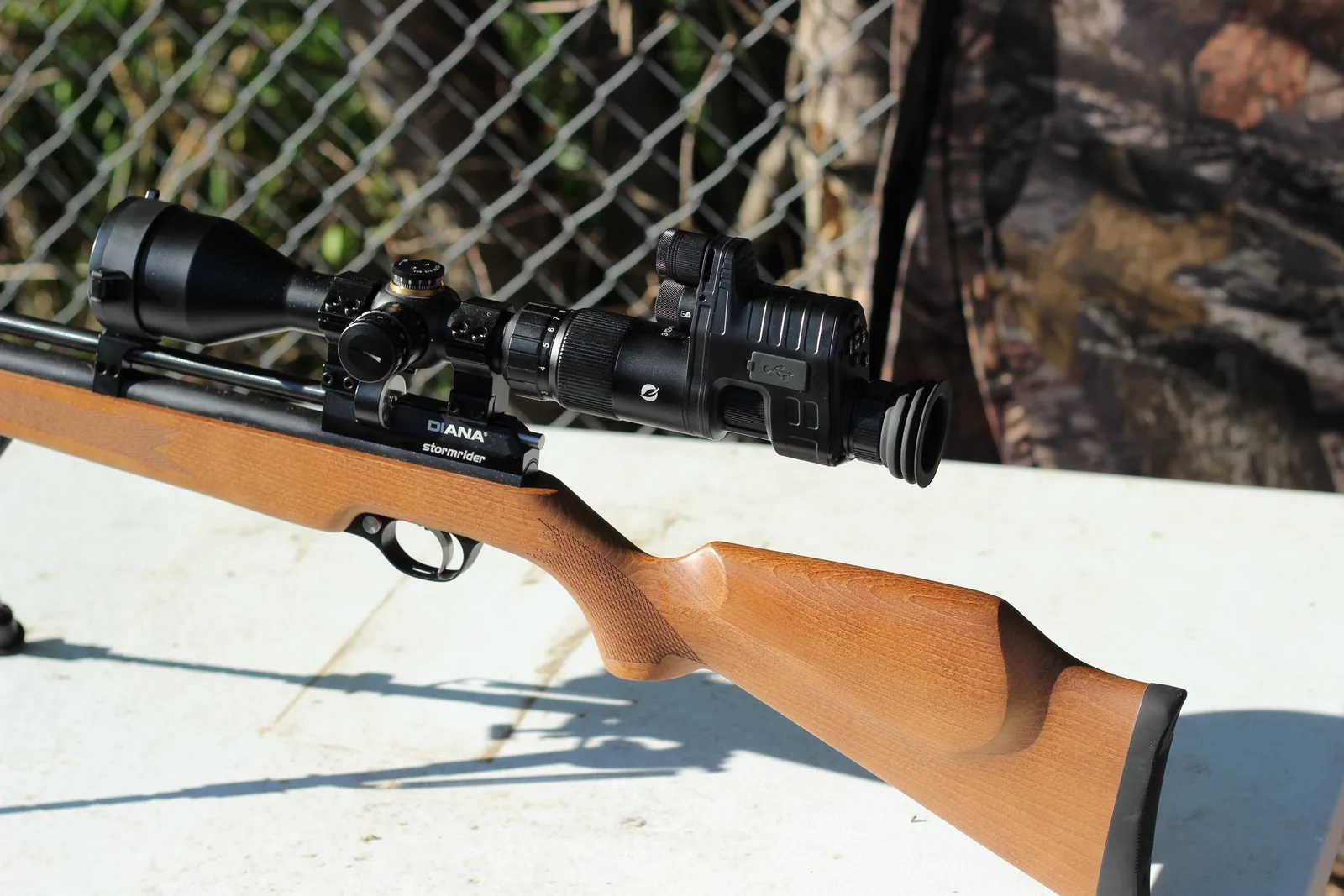
That is precisely what the OneLeaf Commander NV100 Plus is. In the box is a Rapidfire Plus 3-12x56 — a conventional 30 mm day scope with 1/8 MOA turrets and side-focus parallax — and a Commander NV100, OneLeaf’s best-selling clip-on digital night vision unit, which couples straight onto the Rapidfire’s eyepiece. Leave it off and you have a day scope. Put it on and you have a recording night vision rig with an infrared illuminator.
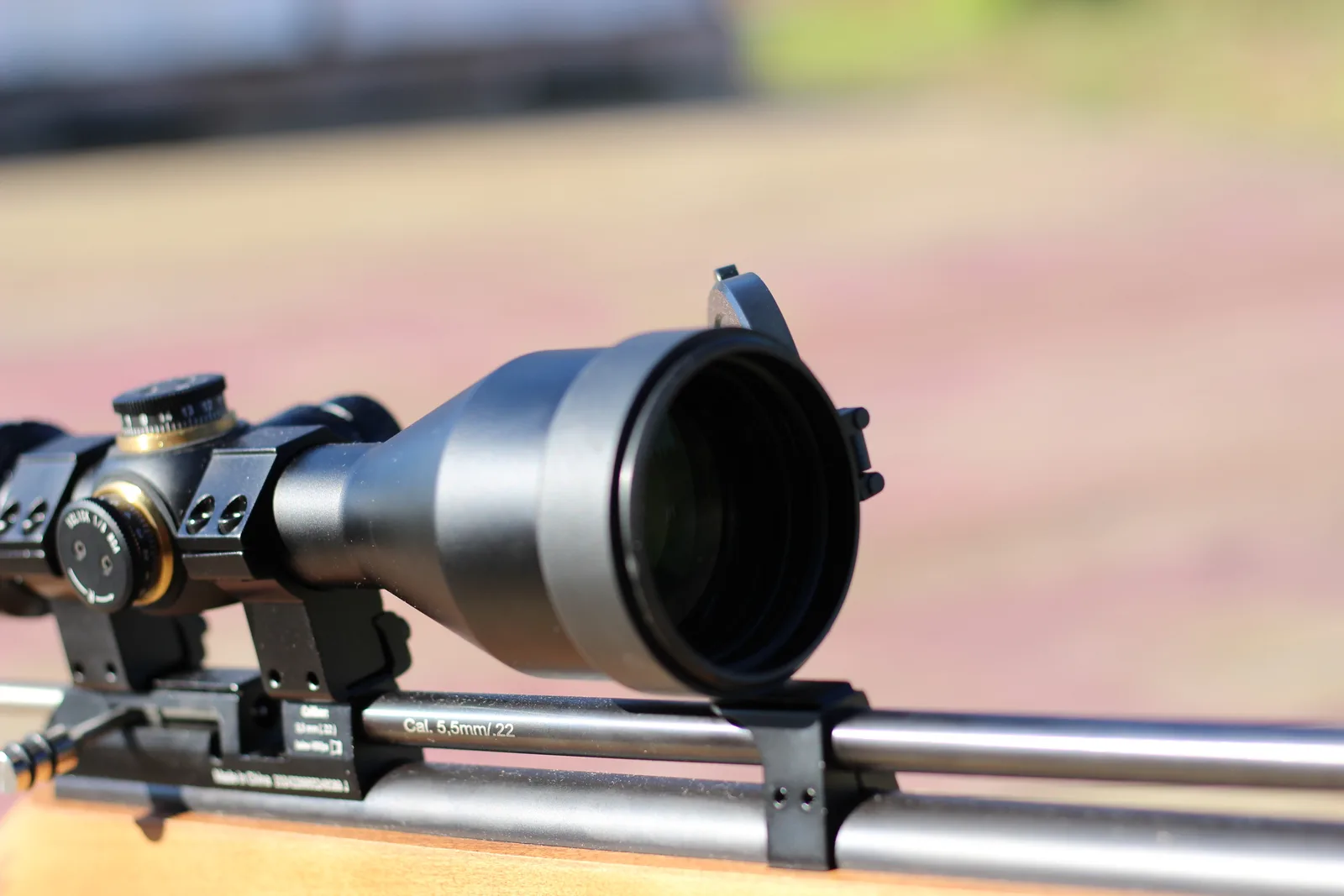
We put it on a Diana Stormrider .22 PCP, shot it on paper in daylight, and recorded through it at last light.
At a glance
In the Box
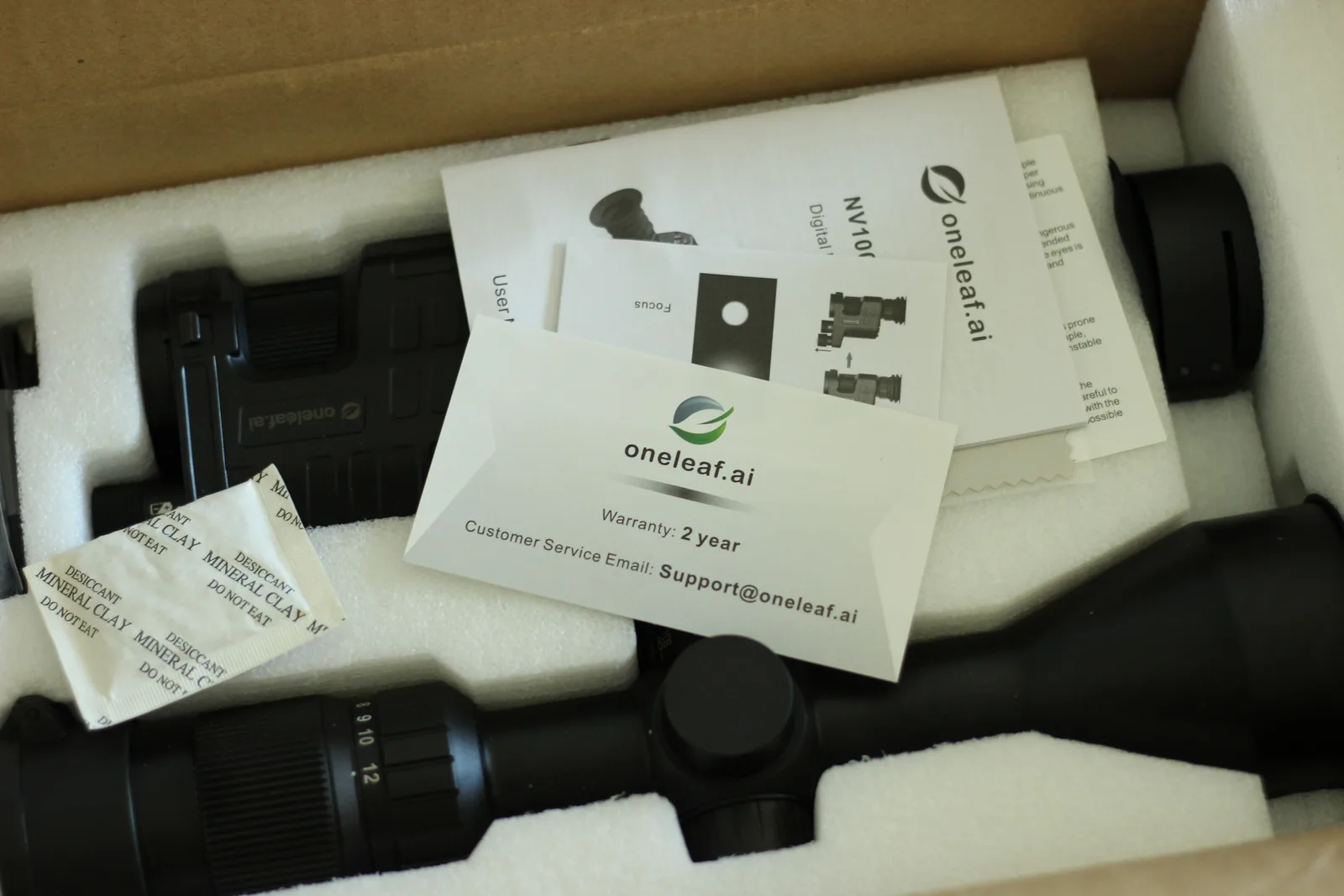

OneLeaf lists the full kit as the NV100, the Rapidfire Plus scope, a pair of scope rings, a 45 mm adapter (so the NV100 can go on a different scope later), a 32 GB SD card, the eyecup, a USB cable, an 18650 battery, PVC tape, two Allen keys and the manual. Everything you need to mount it and record with it is in the carton — the only thing you might buy is a second battery.
One Scope, Two Jobs
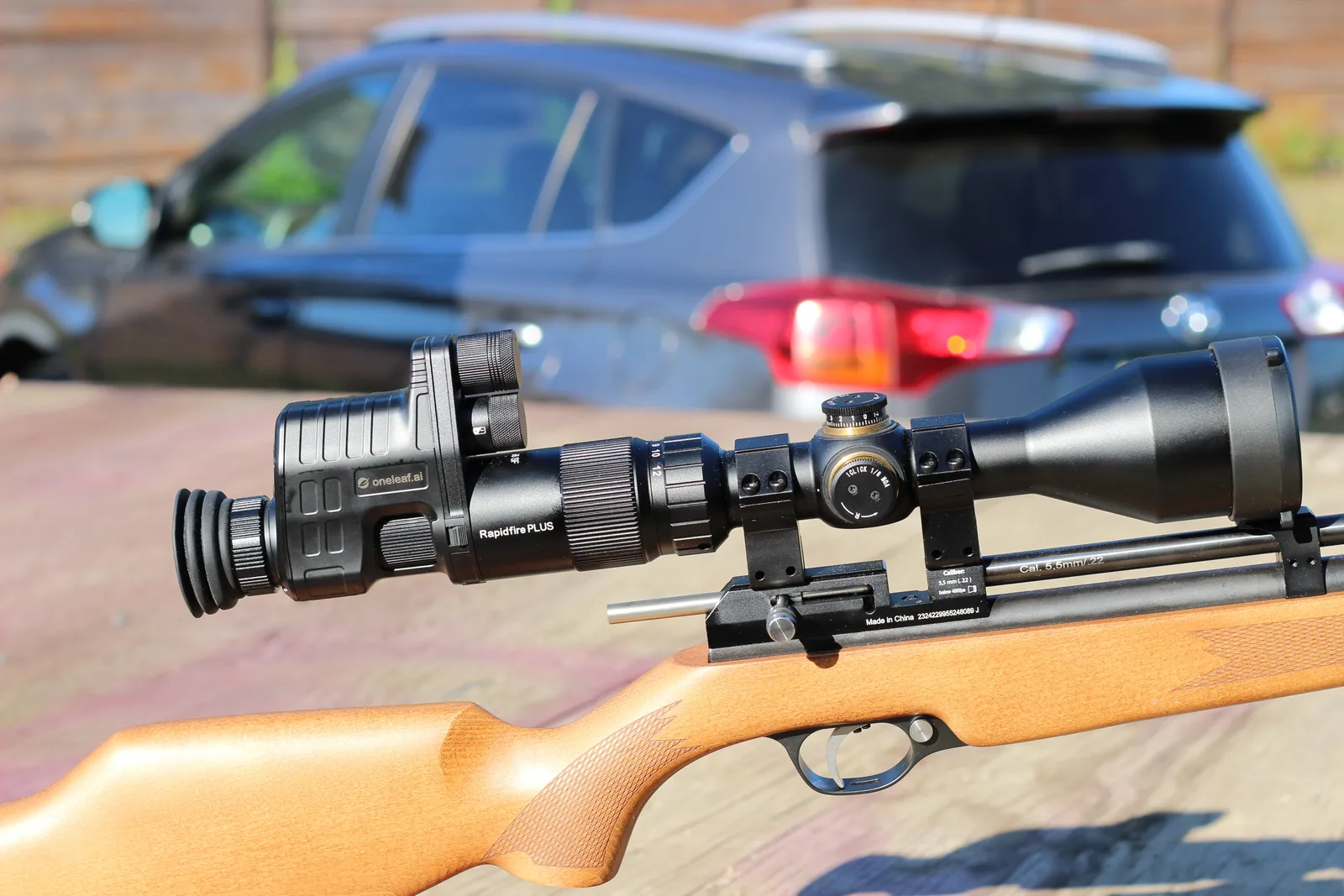
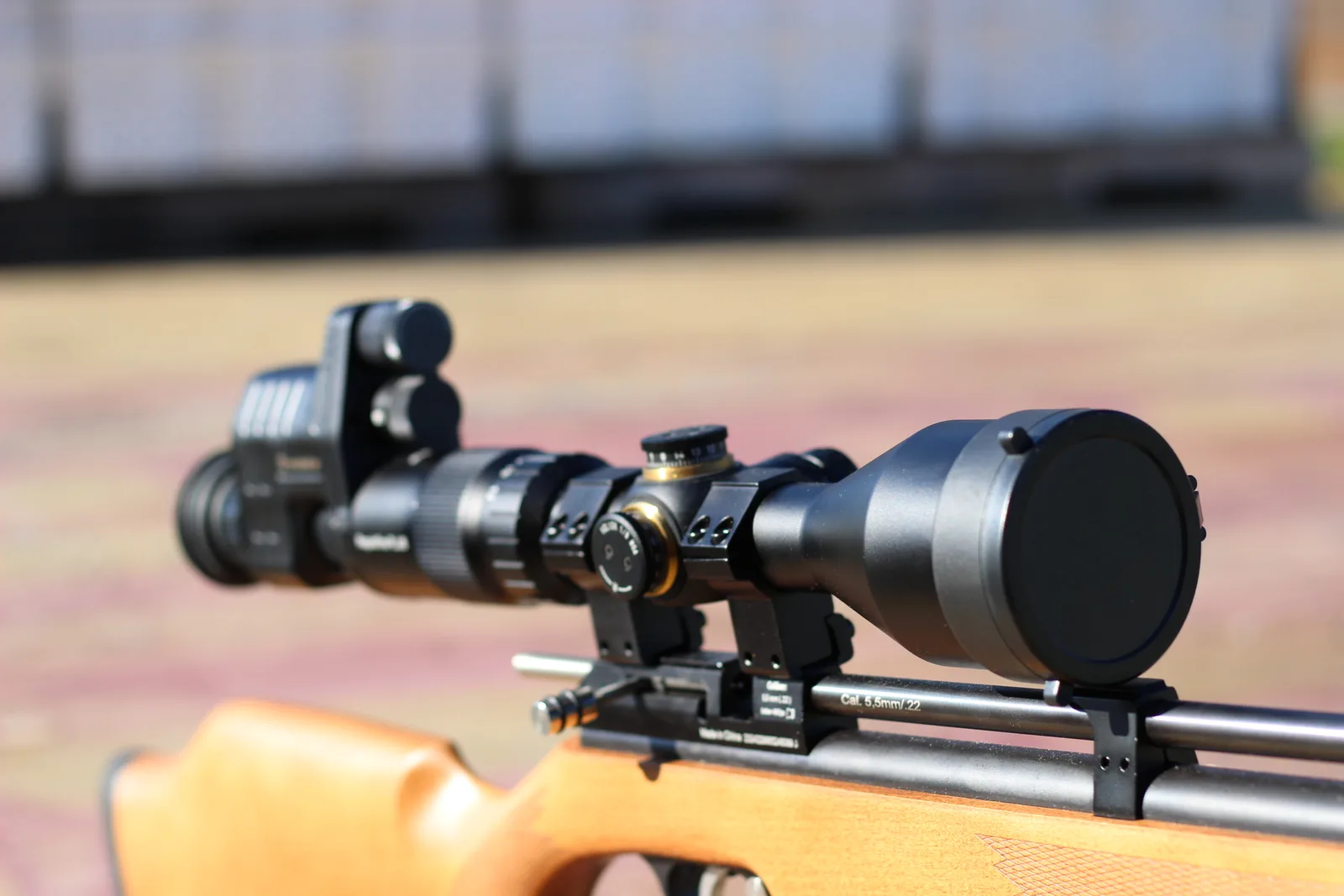
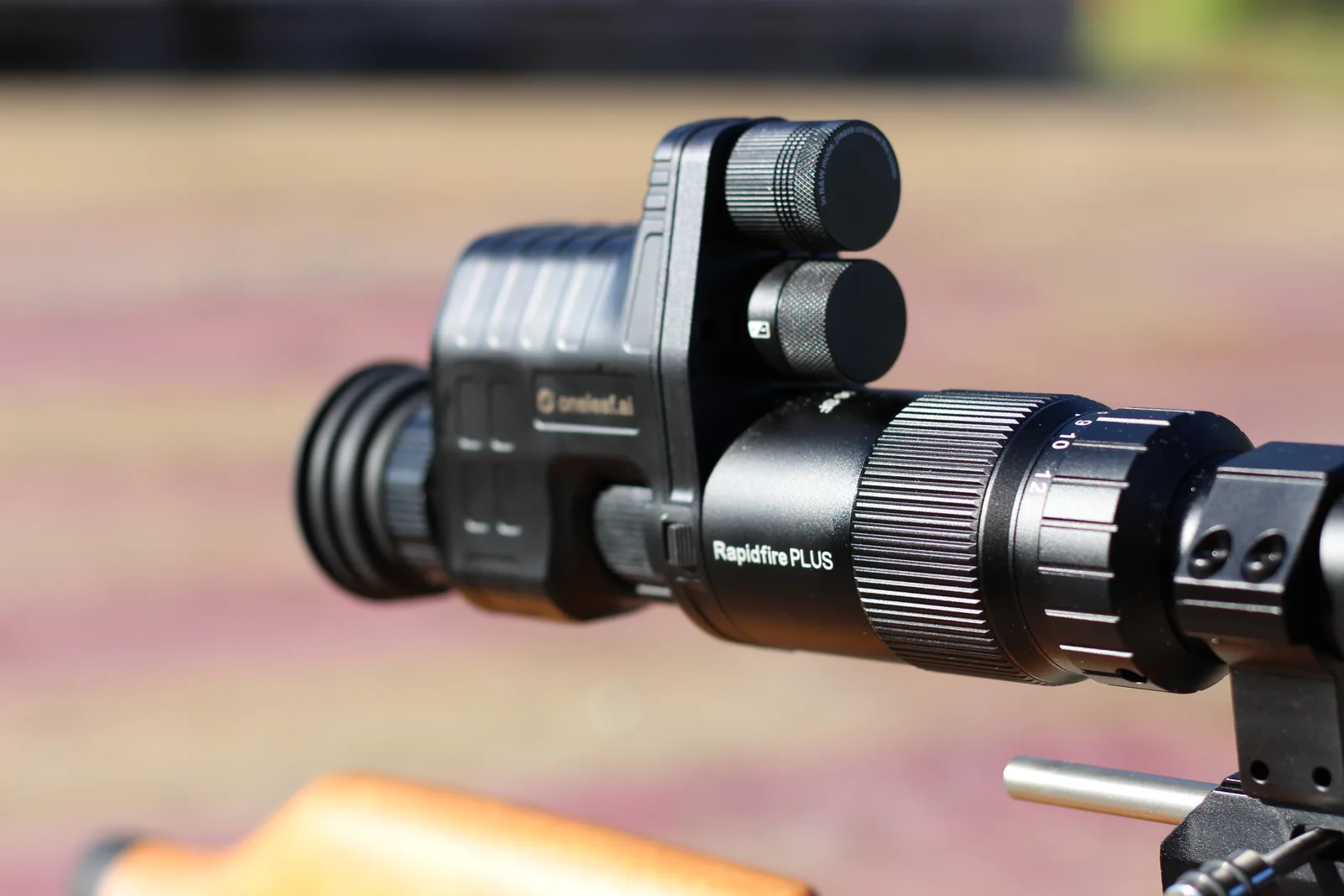
The clever part of the NV100 Plus is not either half; it is that the two halves were made for each other. Most clip-on night vision is sold on its own and left to you to marry to a scope, which means measuring the ocular, picking an adapter size, and wrapping tape around the eyepiece until it stops wobbling. Here the NV100 couples straight onto the Rapidfire Plus. OneLeaf calls it ready-to-use out of the box, and that is accurate.
In practice that means the rifle can be zeroed once, in daylight, through ordinary glass, and stay zeroed. The NV100 looks through the day scope — it is a camera on the eyepiece, not a separate sight — so the reticle you see at night is the same etched reticle you zeroed at noon. Nothing to re-zero when you add it, nothing to re-zero when you take it off.
The Day Scope: Rapidfire Plus 3-12x56
This half has to stand on its own, because it is what is on the rifle for most of the year.
Turrets
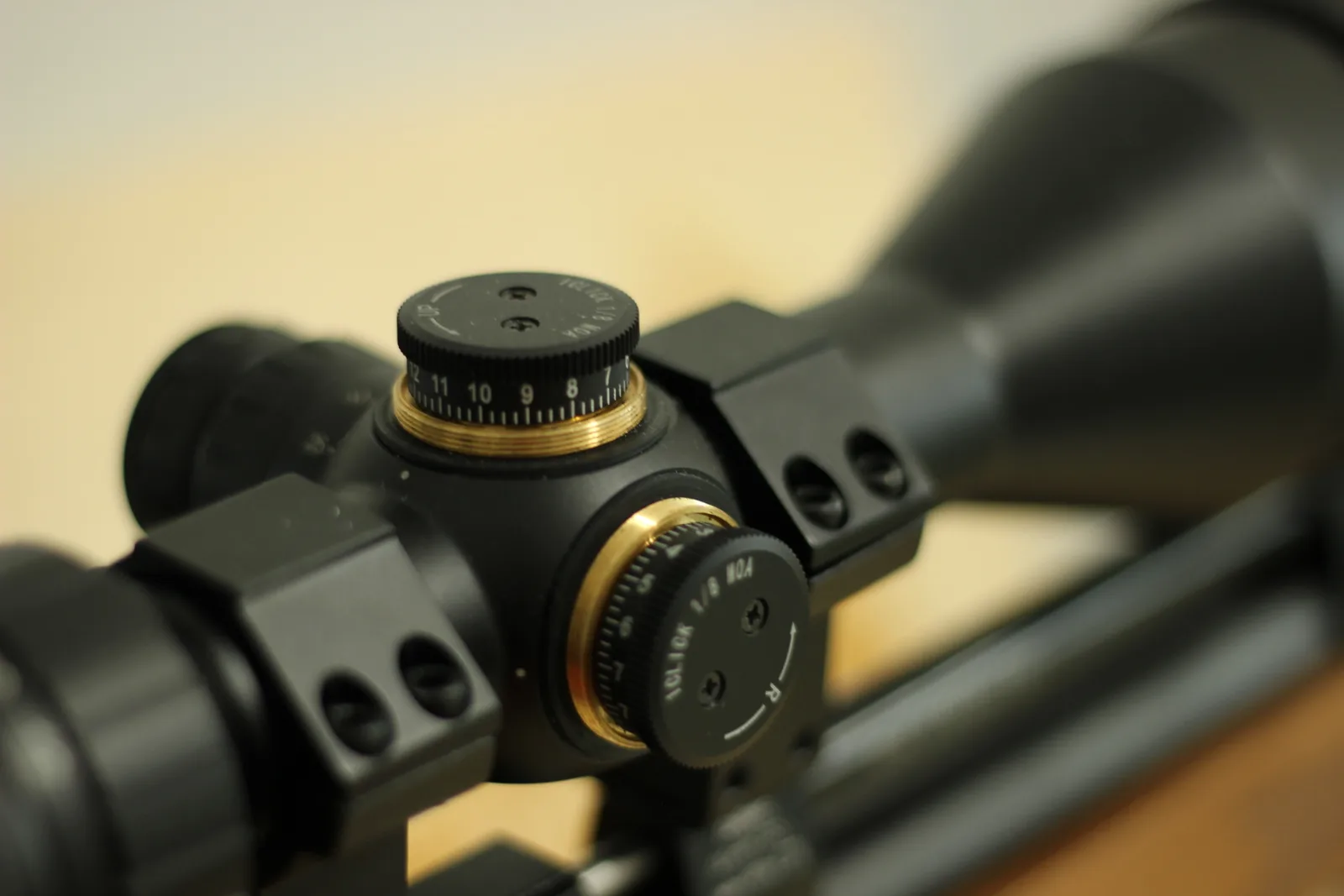
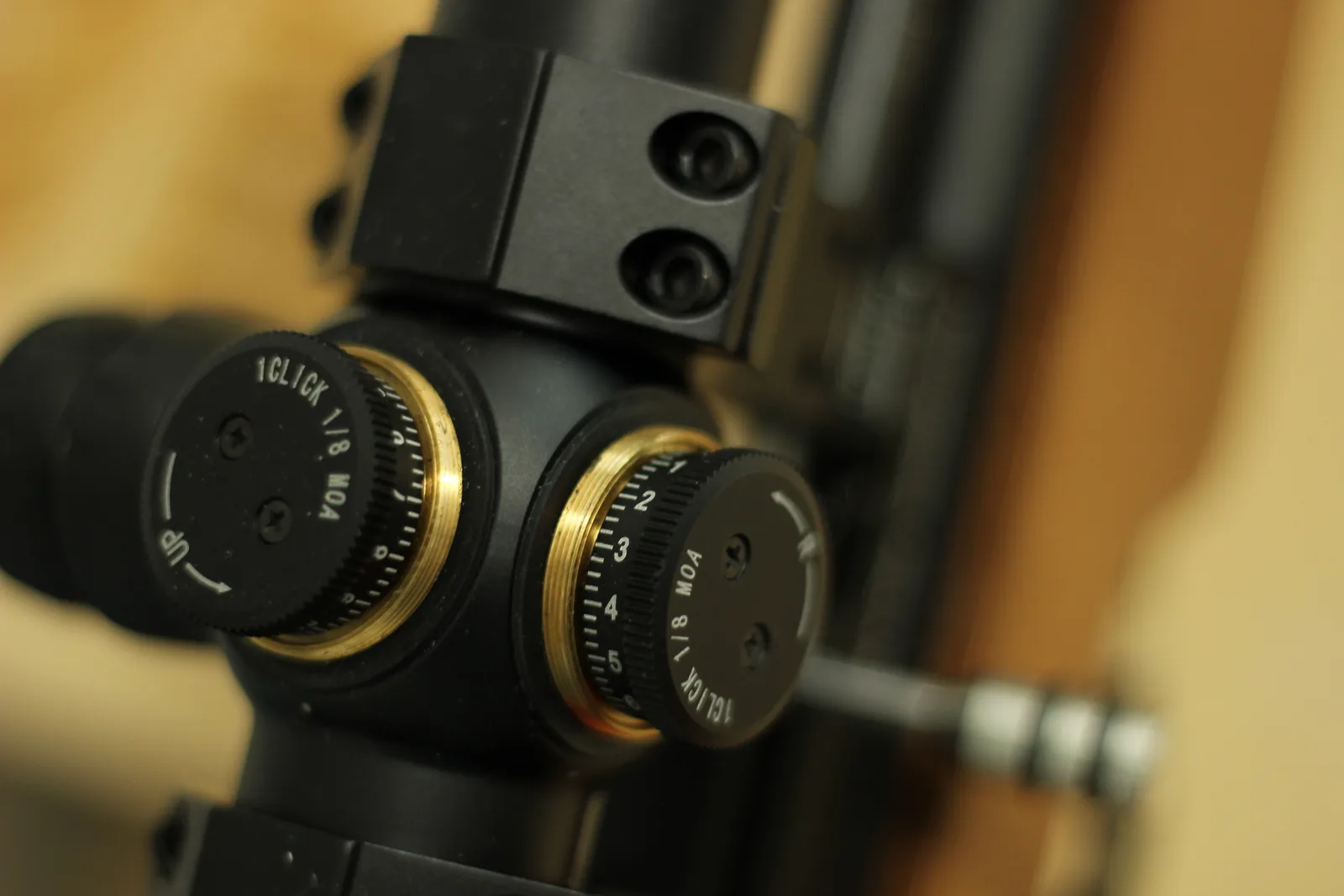
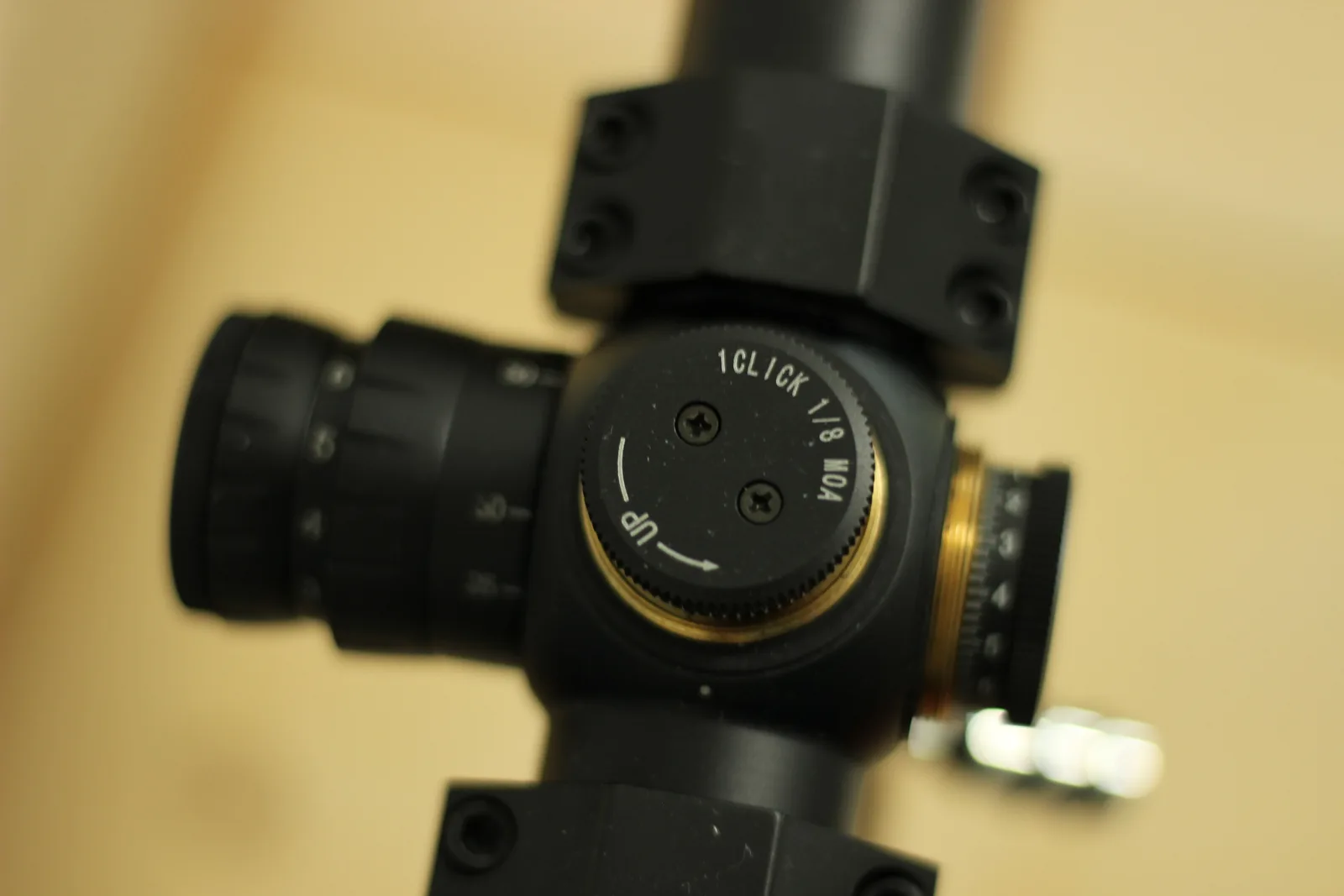
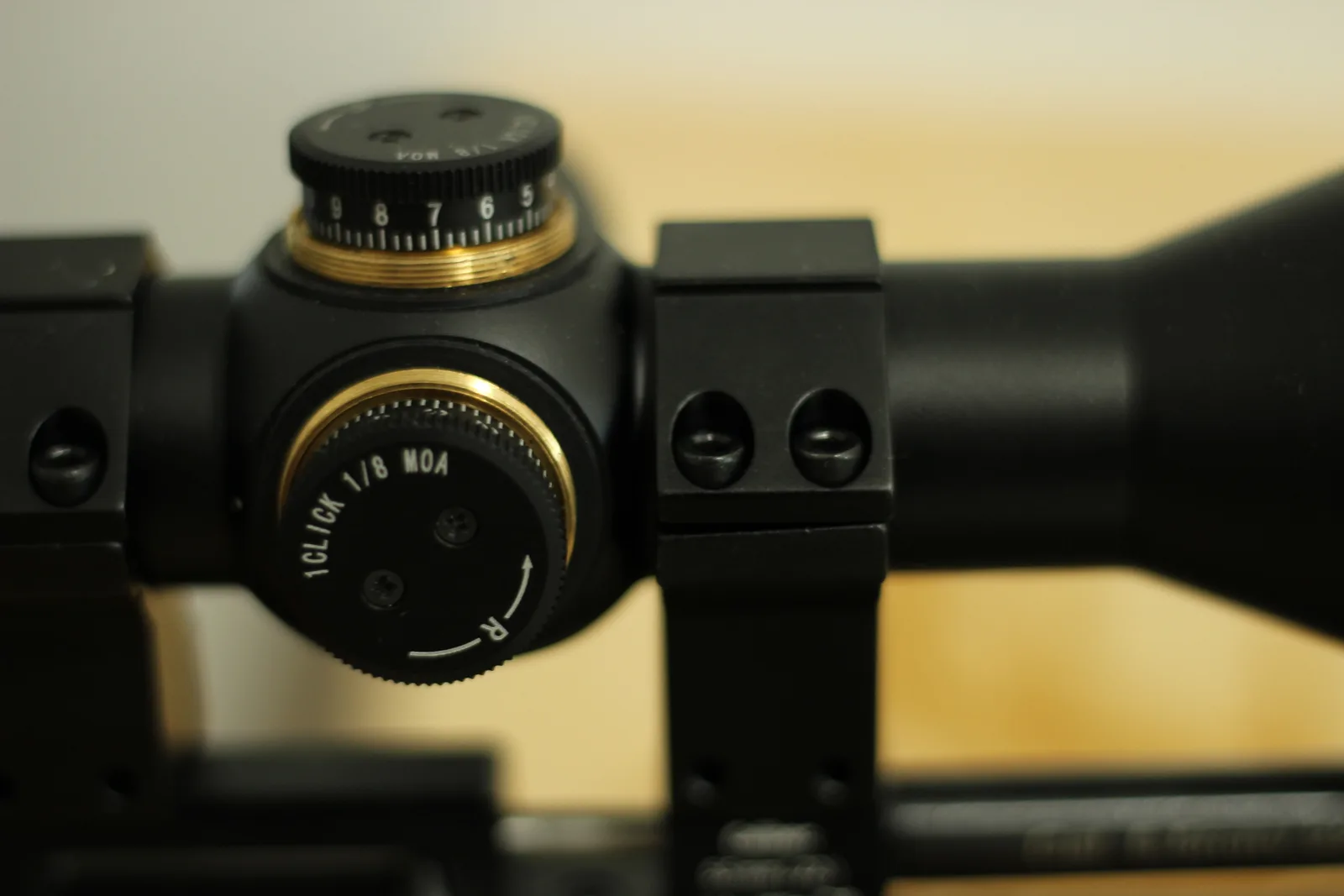
An eighth of an MOA is a small click — at 25 yards it moves the point of impact by a little over a thirty-second of an inch. That is a lot of clicking to cross a big error, but it is exactly what you want for the job this scope is likely to do: zeroing a PCP or rimfire for pest and predator work inside 100 yards, where you want to put the point of impact precisely where you hold. The scales are clearly numbered and the direction arrows are printed on the caps, so there is no guessing which way is up in poor light.
Magnification and parallax
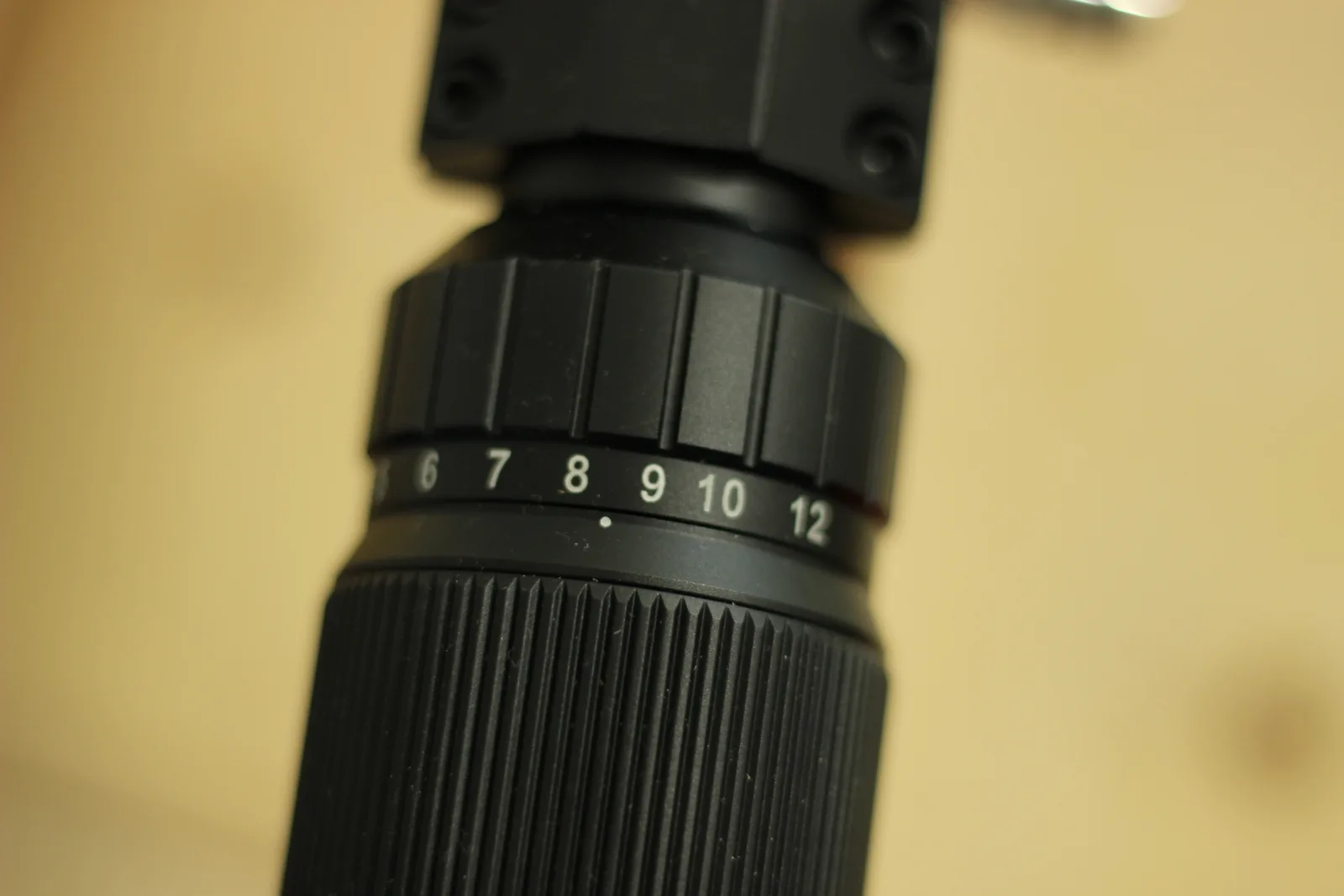
Parallax is a side-focus adjustment — set it by turning a knob at the saddle rather than reaching to the objective, which matters when the rifle is on sticks and you are behind it in the dark. Reticle is a MIL-line, illuminated with 11 brightness levels from a CR2032 cell, in the second focal plane — so the reticle stays the same size as you zoom and its hash marks are only true at one magnification. For hunting holds that is the conventional choice.
The 56 mm objective
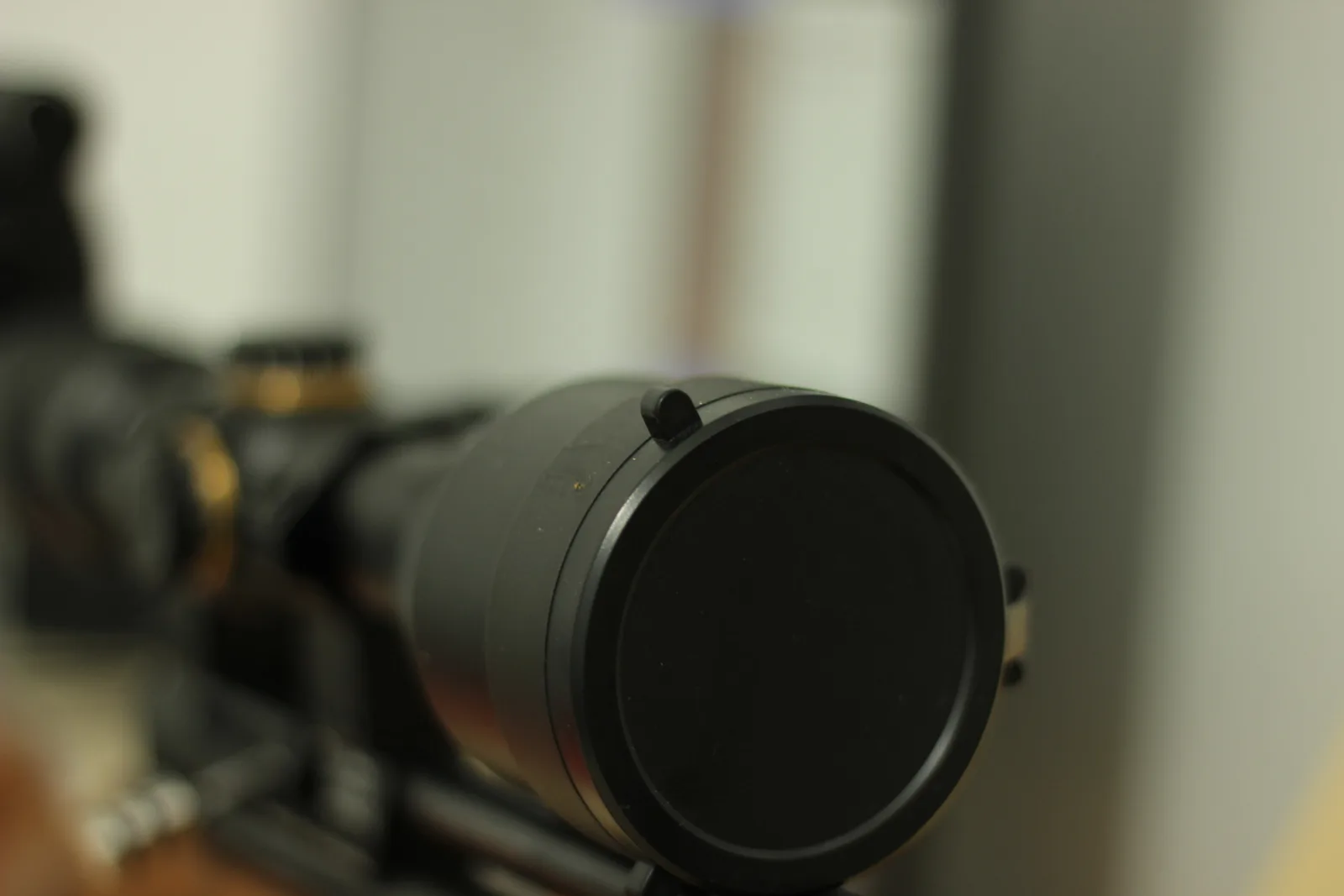
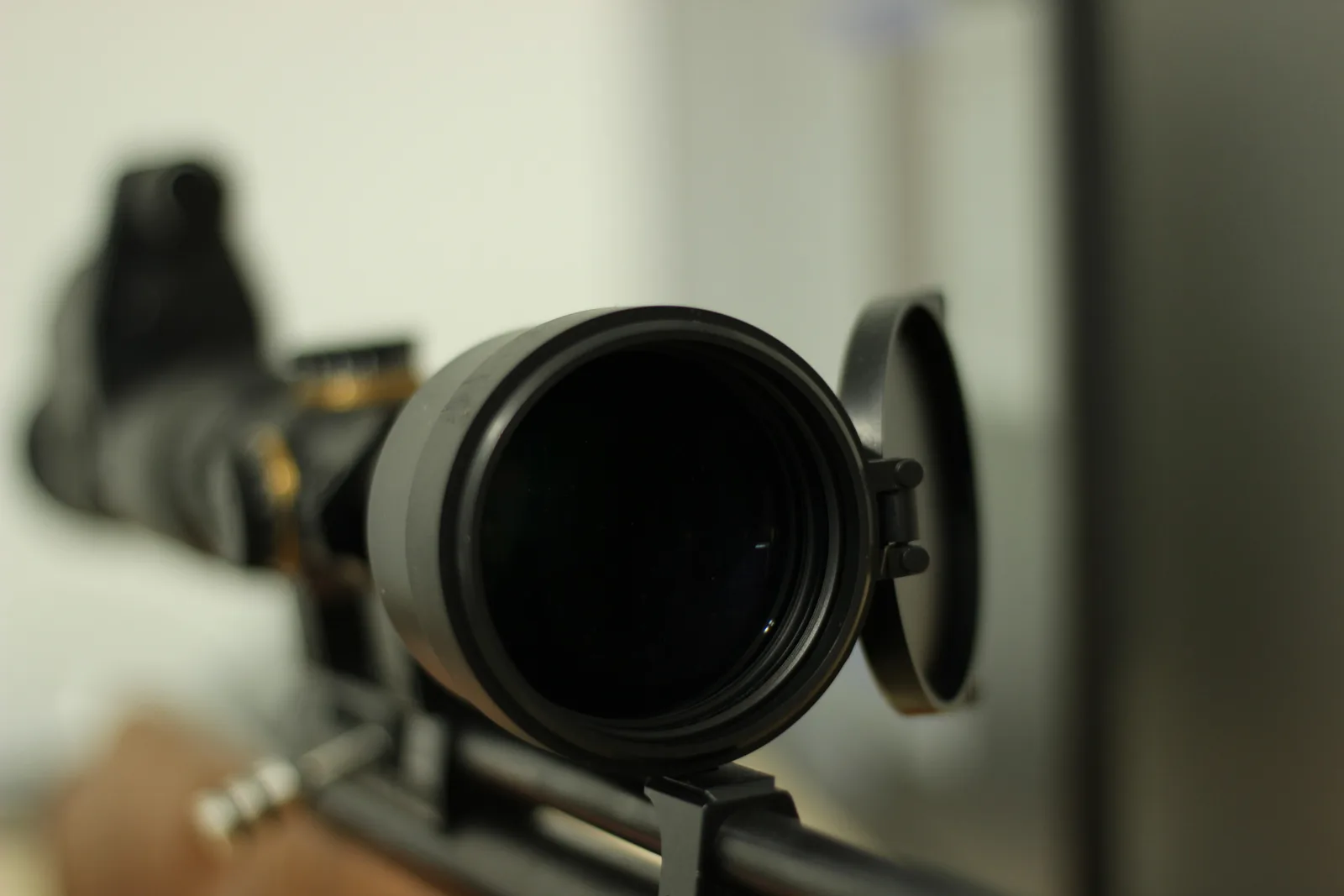
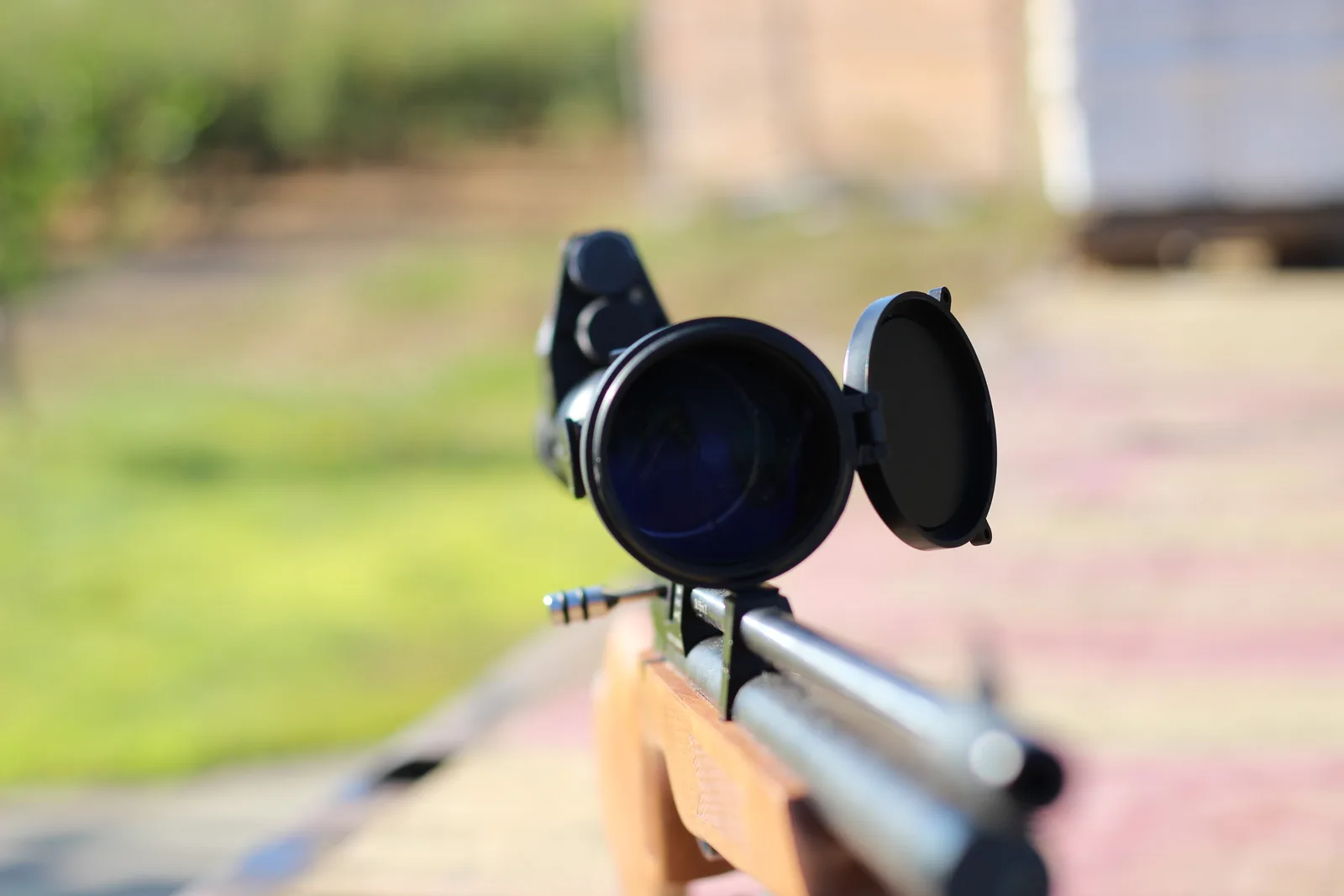
The 56 mm objective is why this works as a combination. A big objective gathers more light, which helps your eye in the last half hour of legal light — and it helps the NV100’s sensor even more, because the camera behind the eyepiece can only work with what the glass delivers. OneLeaf quotes a field of view of 12.3 m at 100 m on 3x down to 3.5 m on 12x, and an exit pupil of 18.7 mm to 4.7 mm. On 3x that exit pupil is enormous, which makes the scope fast and forgiving to get behind.
The Night Half: Commander NV100
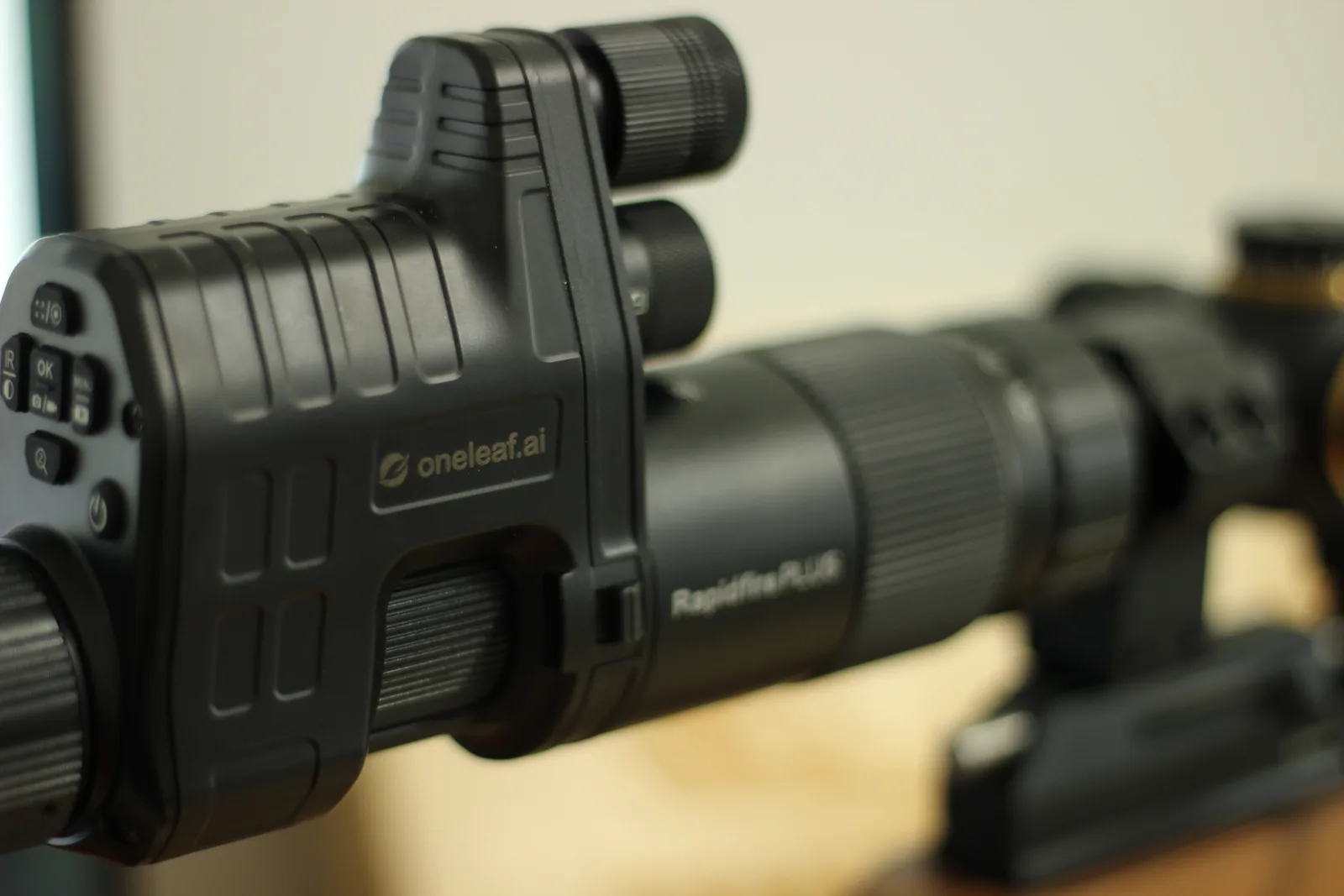
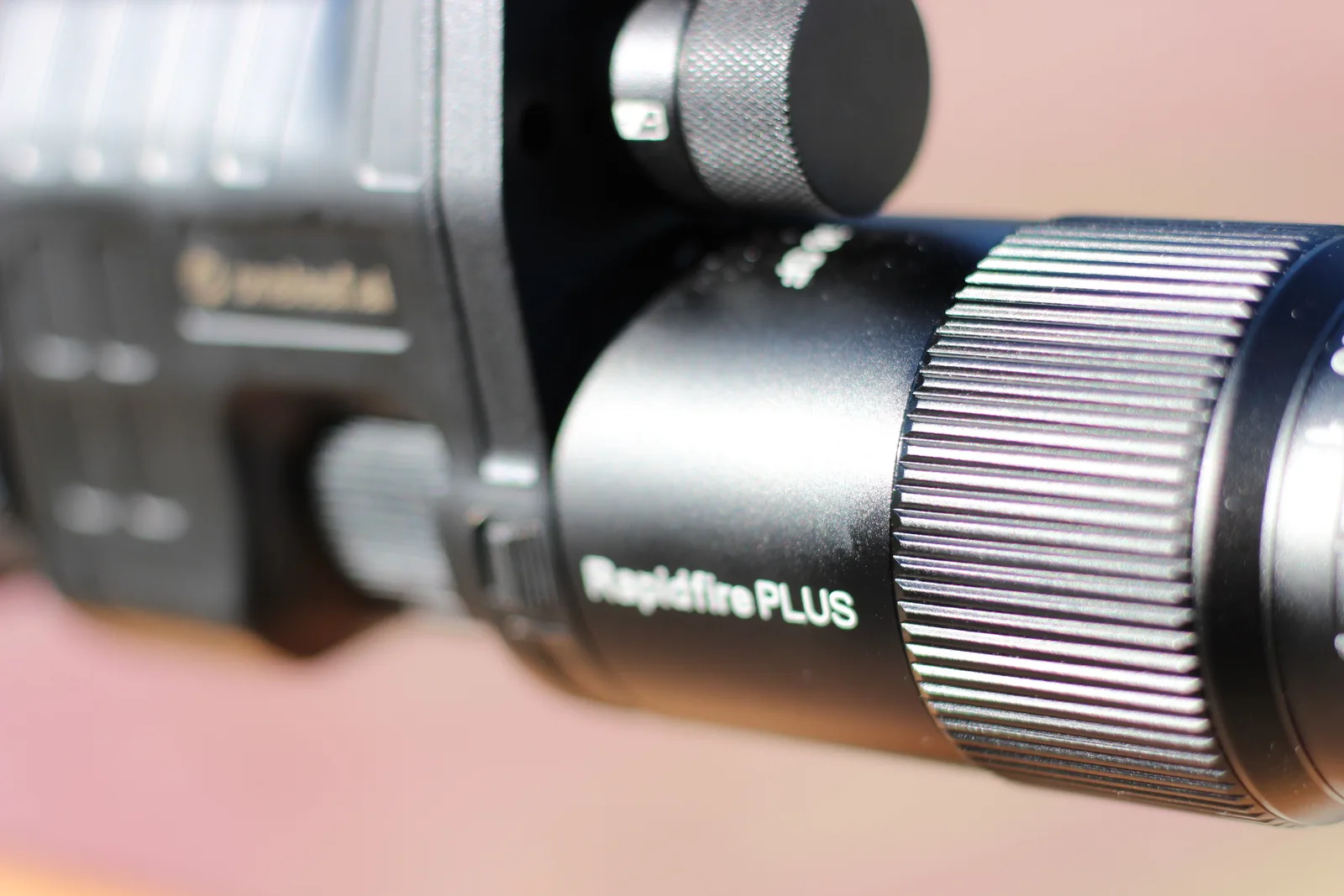
The NV100 is the product OneLeaf was founded on — its first device, launched after the company started in Hong Kong in 2019, and still its best seller. Inside is a Sony STARVIS CMOS sensor at 1920 × 1080, behind a 16 mm f/1.8 lens, feeding a 0.4-inch viewfinder with 3.69 million dots at 60 fps. STARVIS is Sony’s low-light security-camera sensor line, and it is the reason digital night vision at this price became usable at all.
The coupling
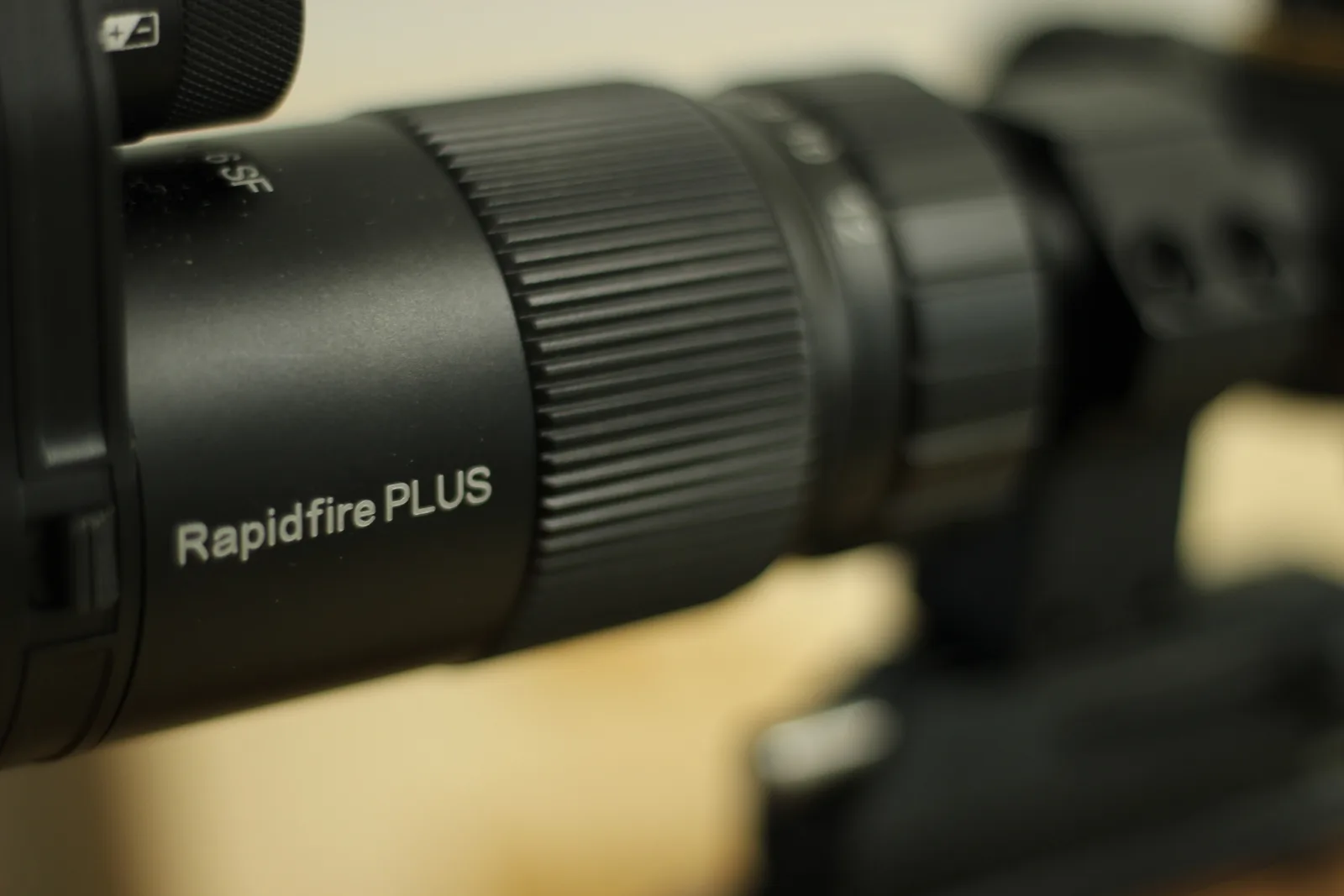
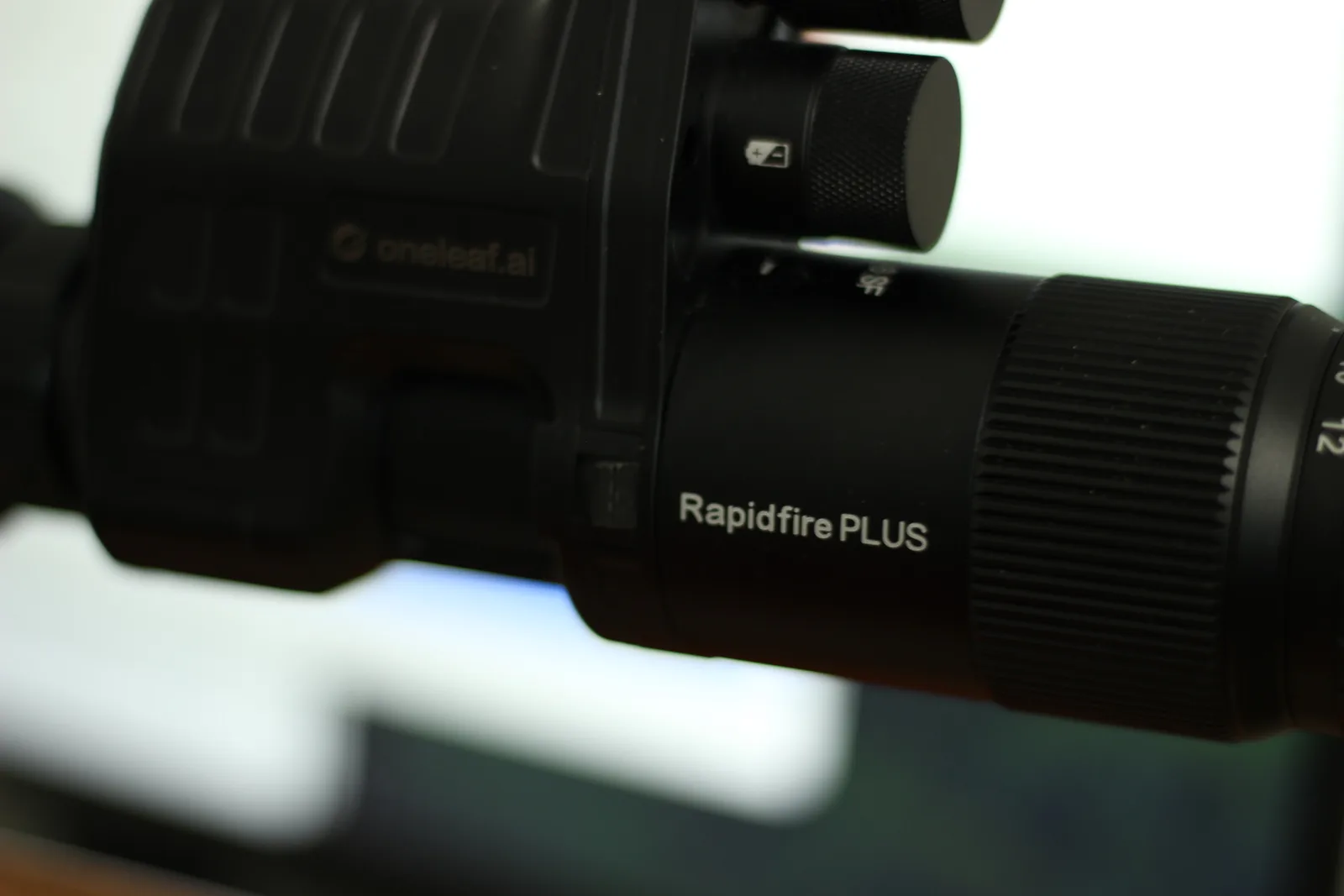
Get the order right and the image will be sharp: focus the Rapidfire’s eyepiece to your eye in daylight first, then fit the NV100, then set the NV100’s own diopter (it runs from −800 to +400) to its screen. Two focus adjustments, done once, and after that it is on and off.
IR and power
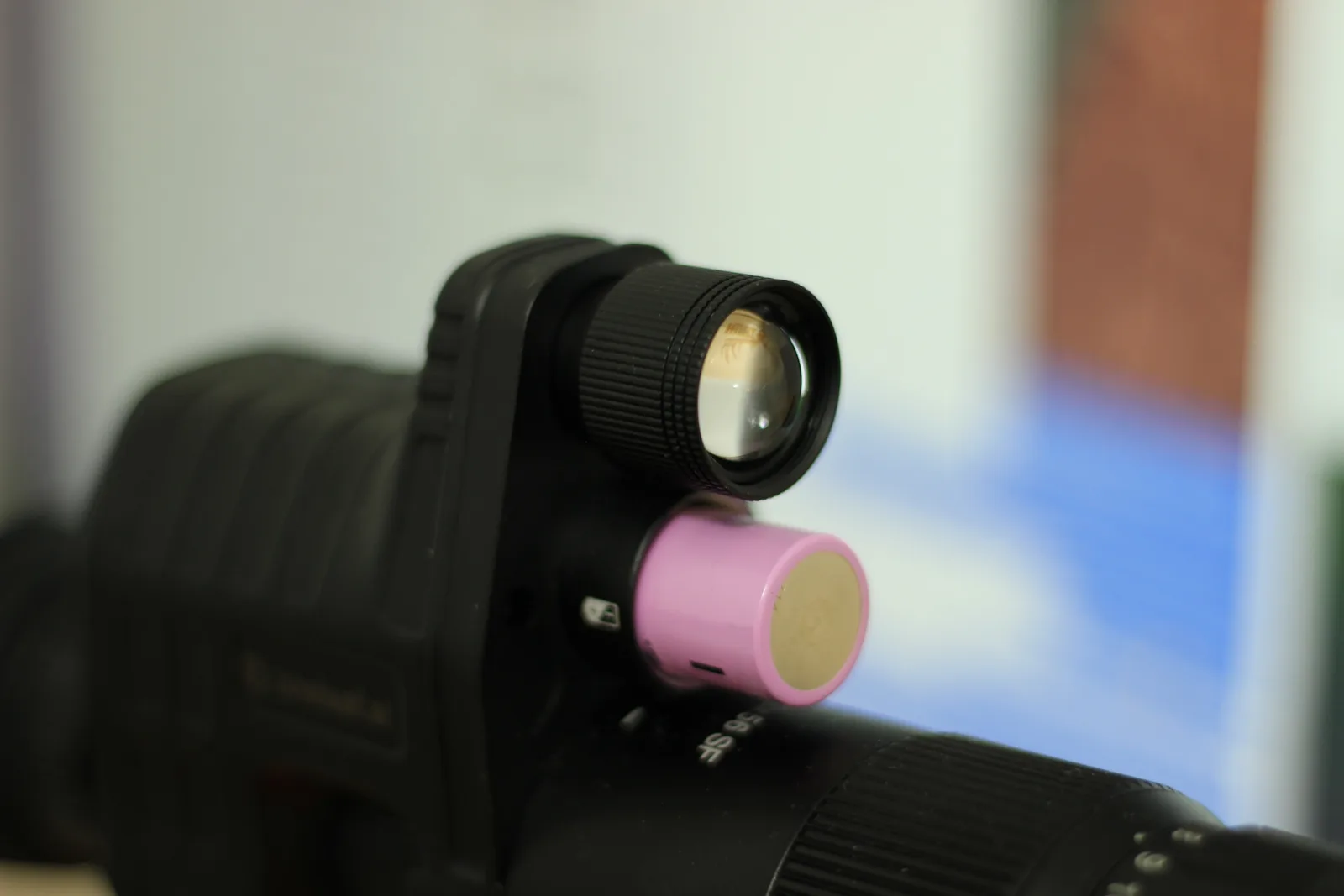
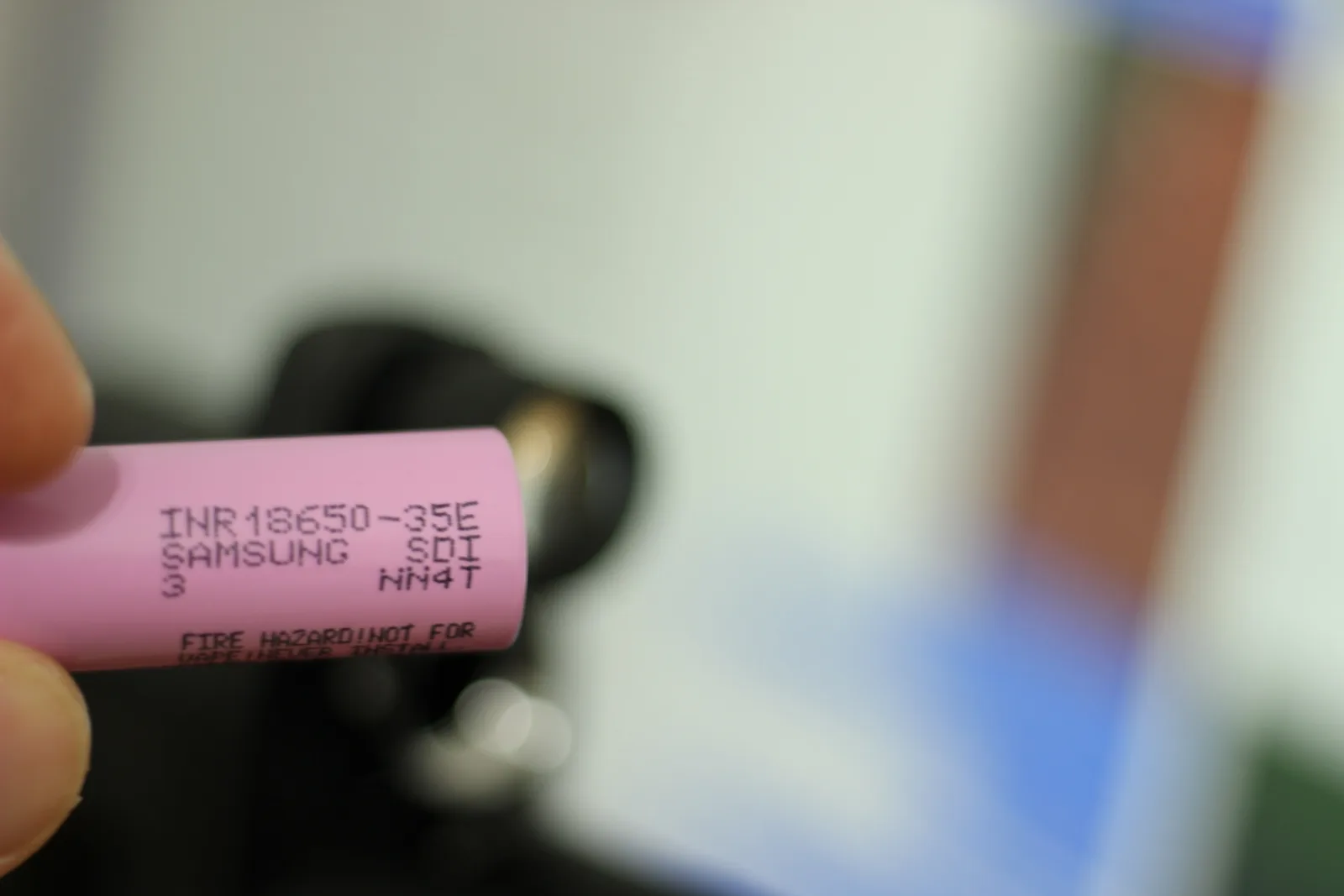
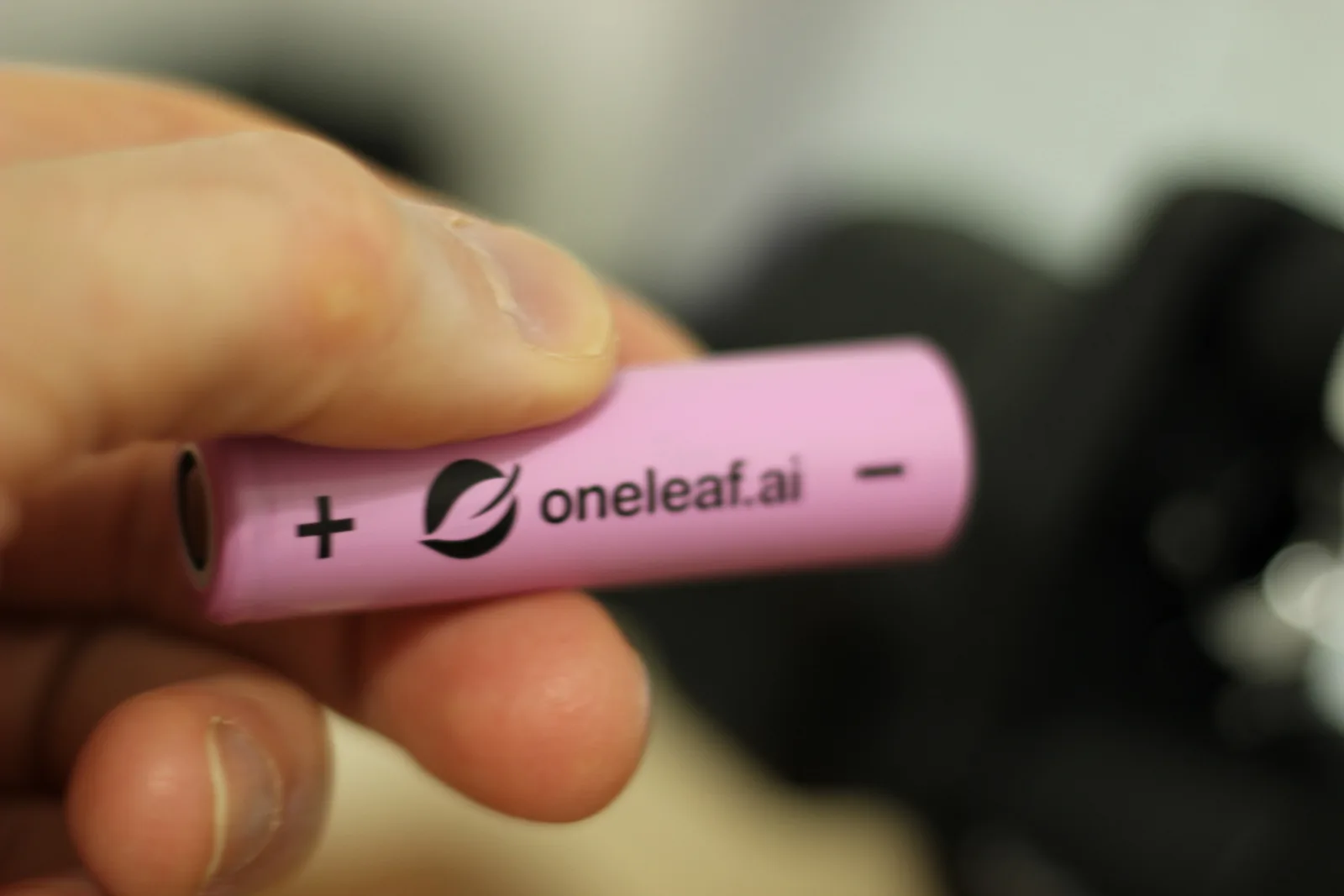
The illuminator is 850 nm at 6 W with six power steps. Two things to understand about that. First, 850 nm is the efficient end of infrared — it lights a long way for the power — but the emitter shows a faint red glow if you look straight at it, so it is not invisible. Second, step it down for close work: full power at 40 yards washes the subject white and flattens the image.
OneLeaf rates the NV100 for about six hours on one 18650 and quotes a night detection range of 300 m (328 yd). Treat the range as a manufacturer figure for a bright illuminator on a large target; useful identification distance for a coyote-sized animal is always shorter than detection distance. Charging is by micro USB, which in 2026 means carrying the right cable.
Controls and eyepiece
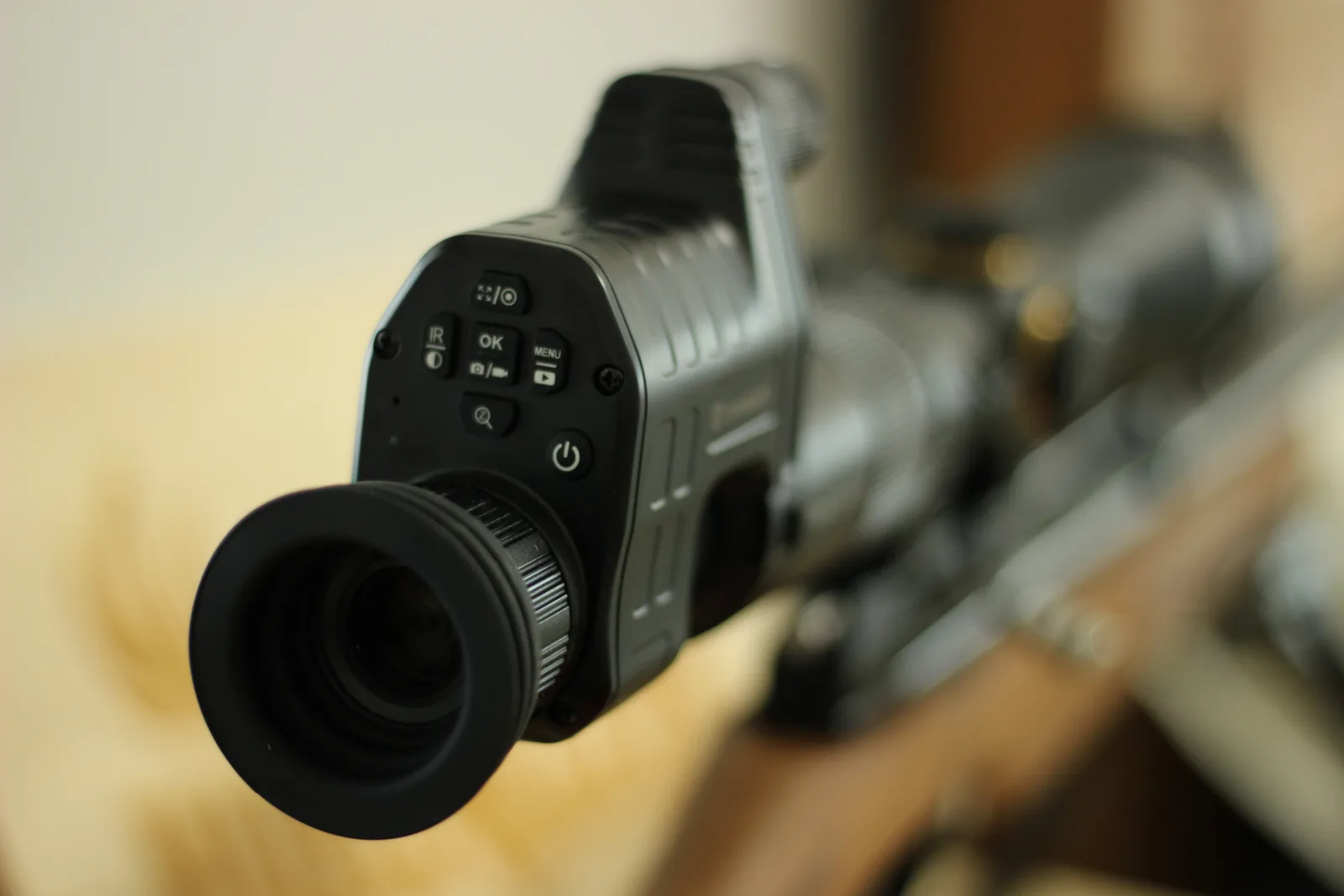
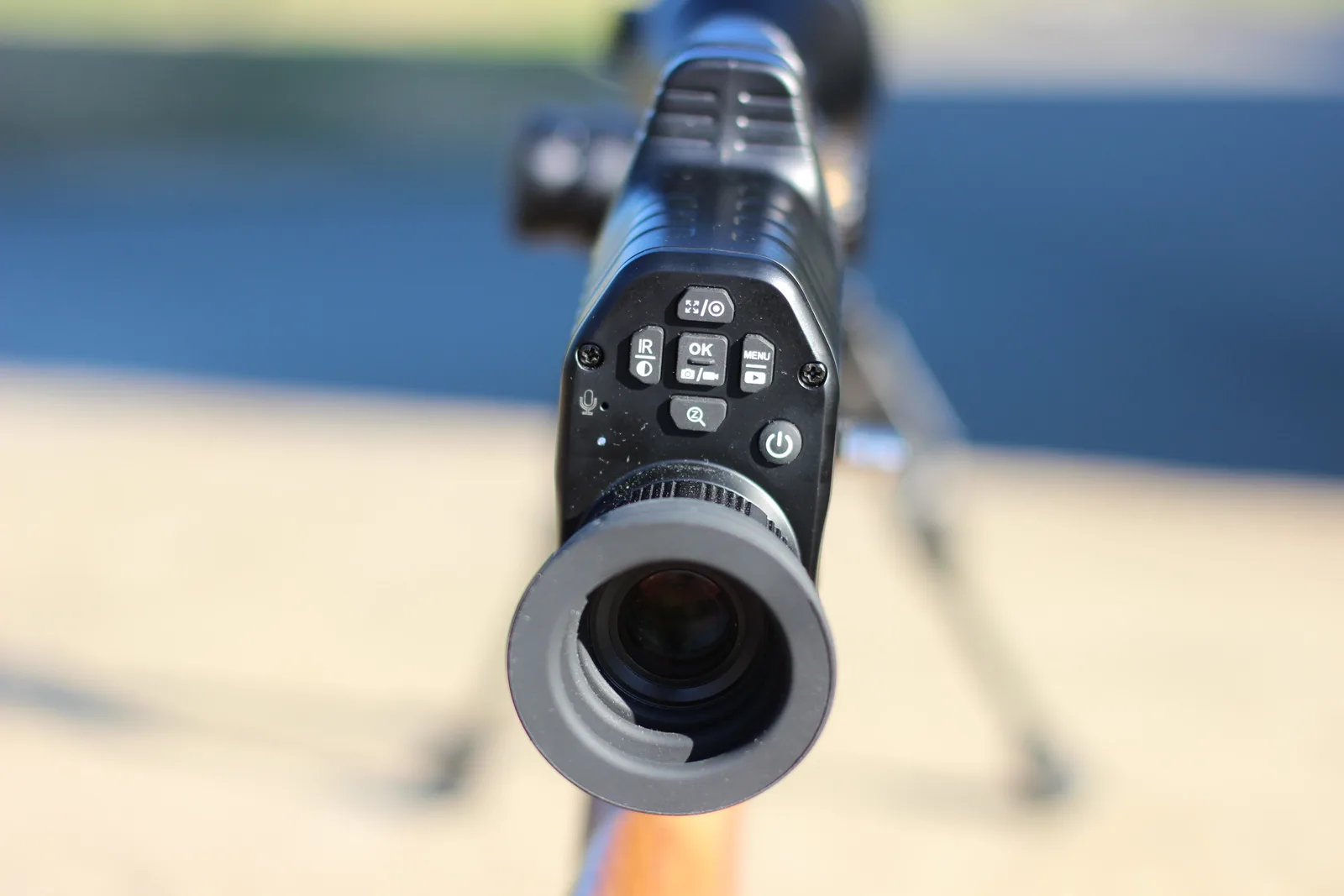
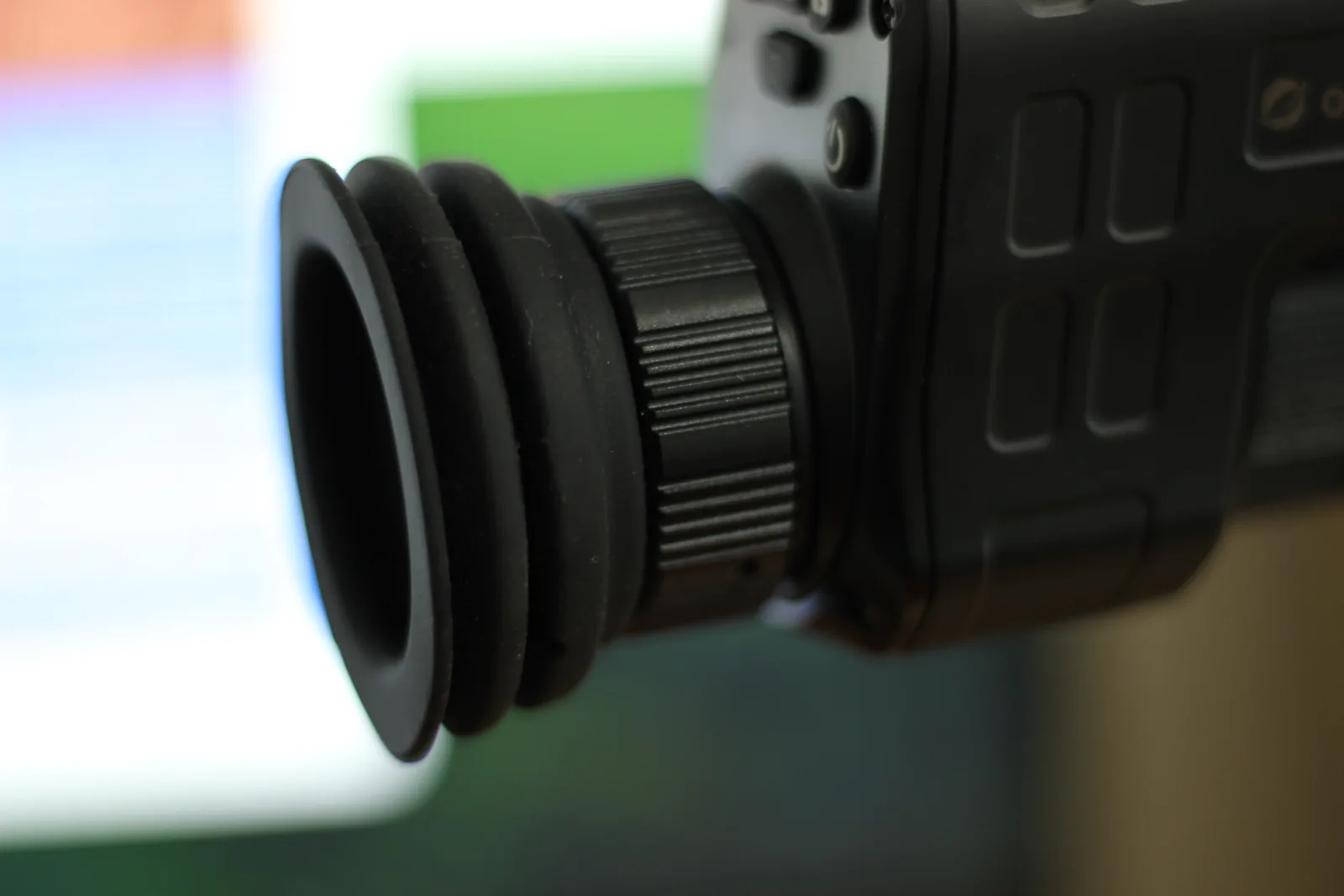
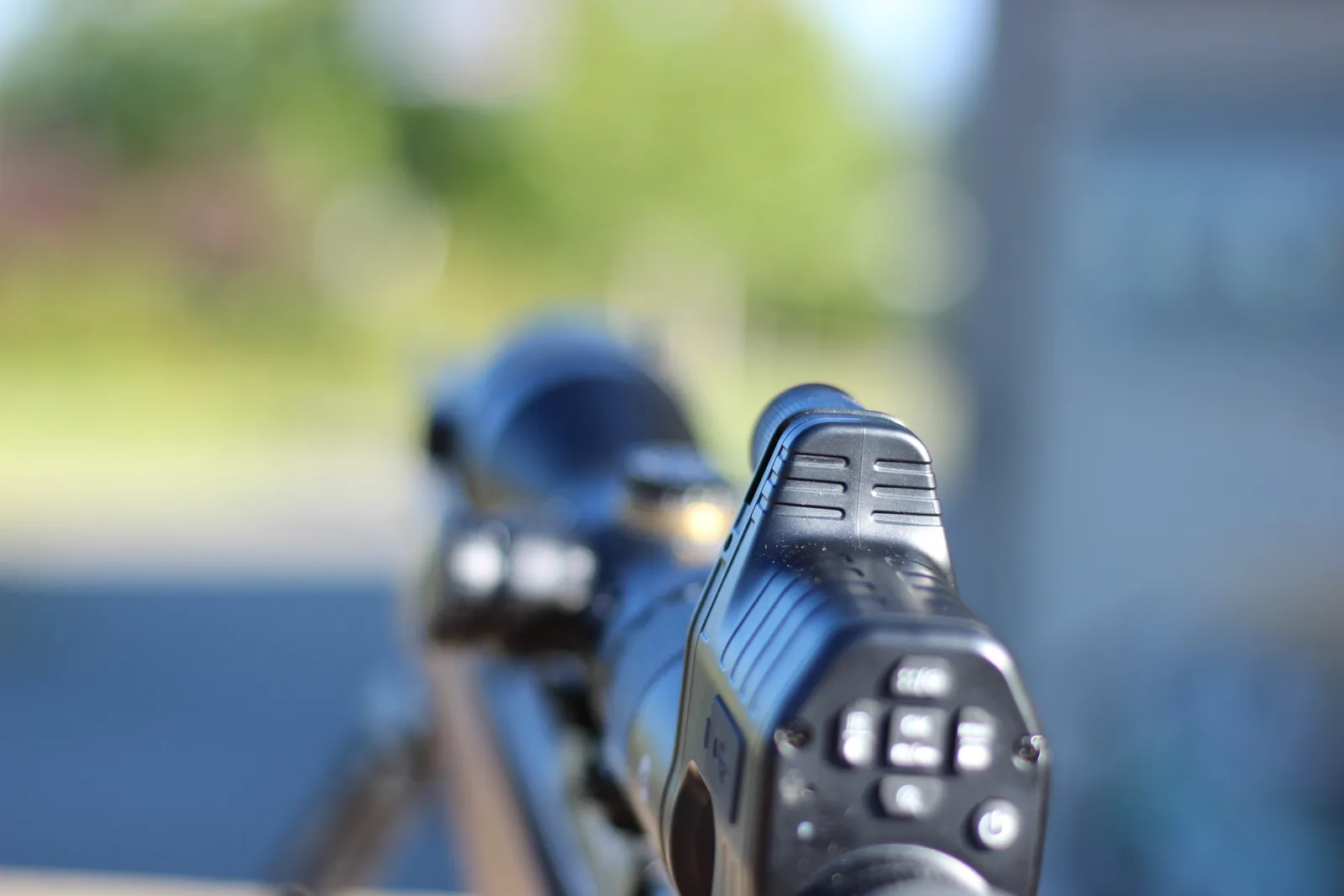
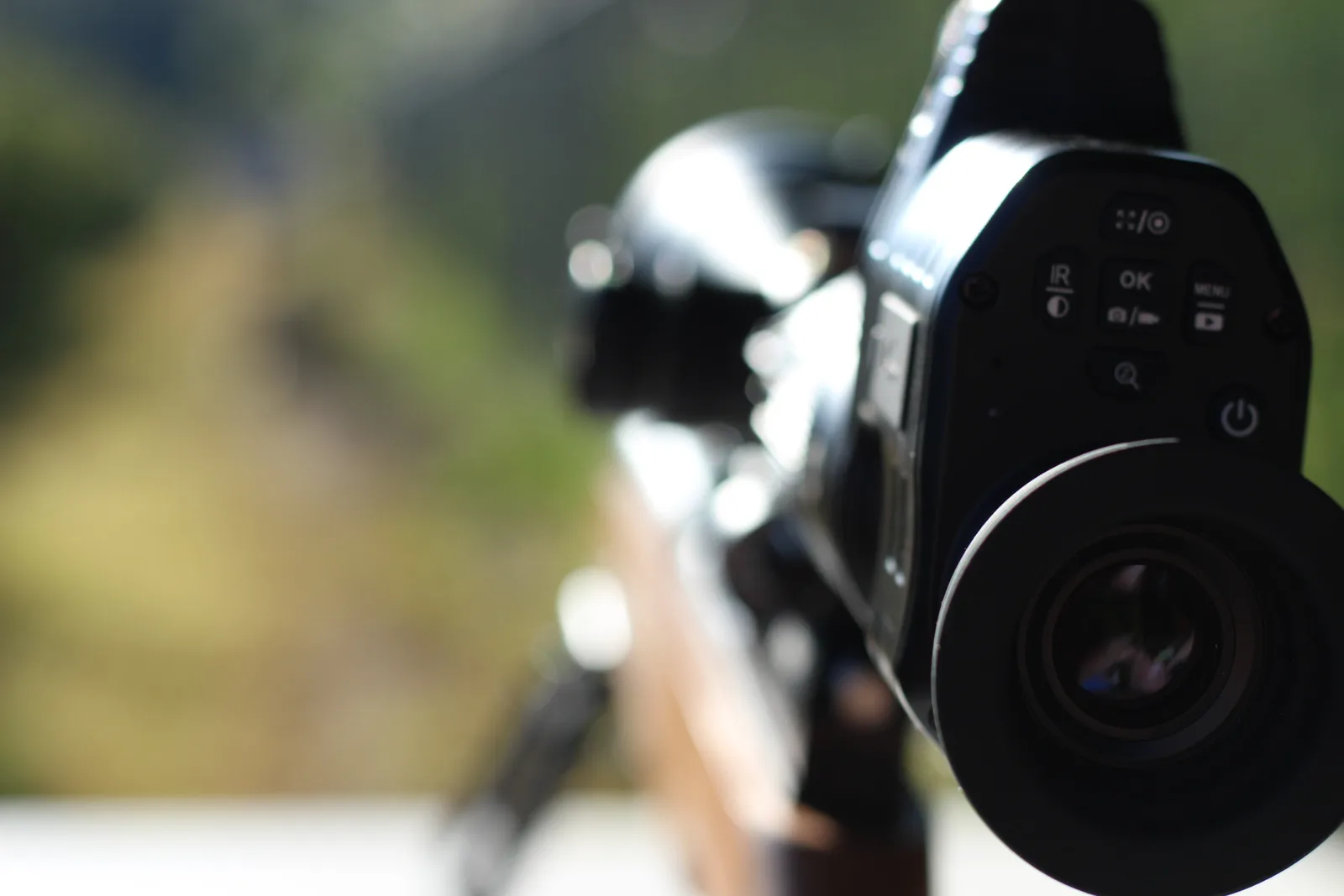
Recording is the feature that changes how you hunt with it. Every shot is on the card with a date and time stamp. You find out exactly where the shot went, whether the animal reacted, and which way it went — which, for anyone doing pest control on someone else’s land, is also a record of what you did.
At the Range
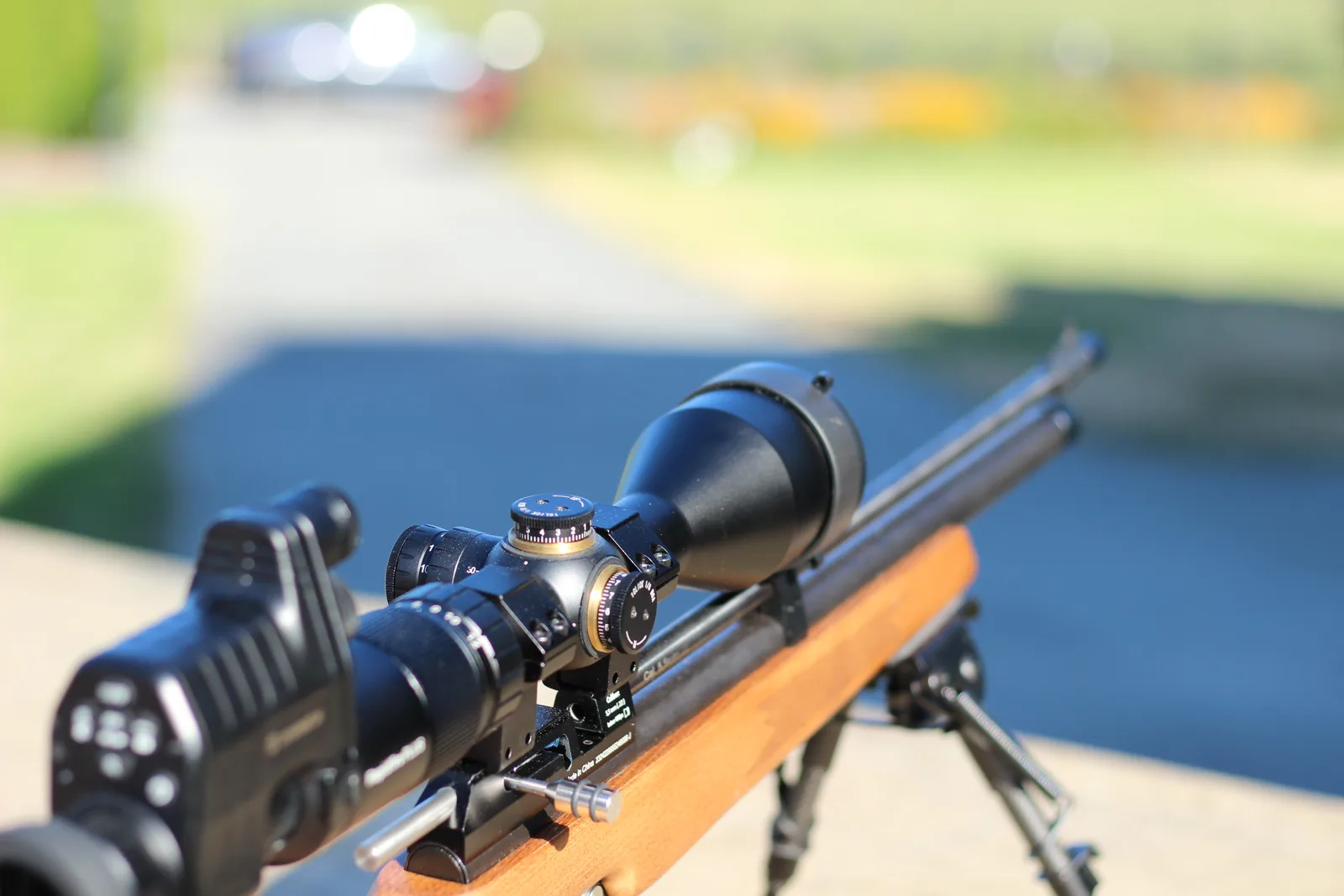
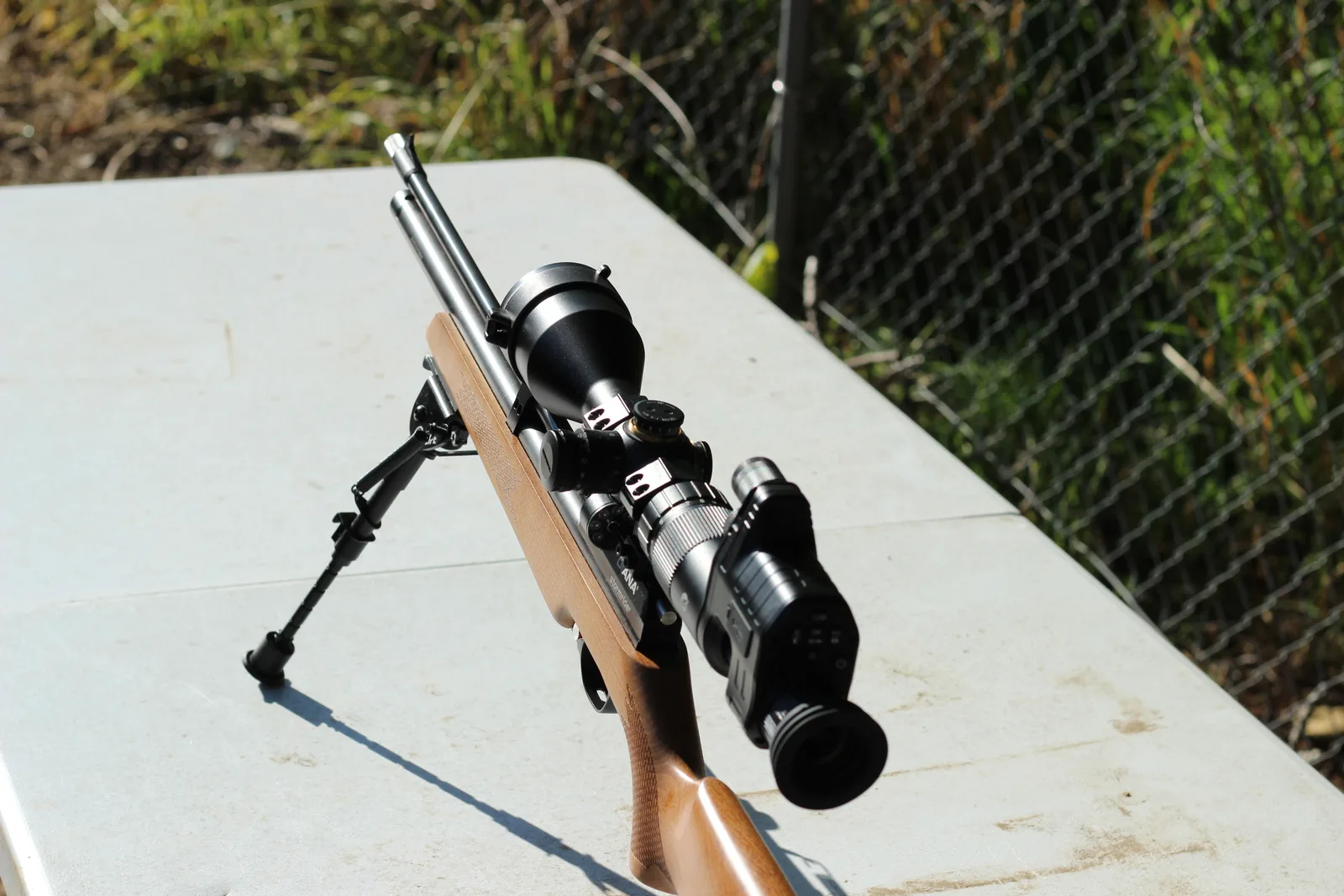
Manufacturer weights. Rings, battery and caps not included. For context, that is the weight of a mid-size hunting scope plus a full can of beans on top of your rifle.
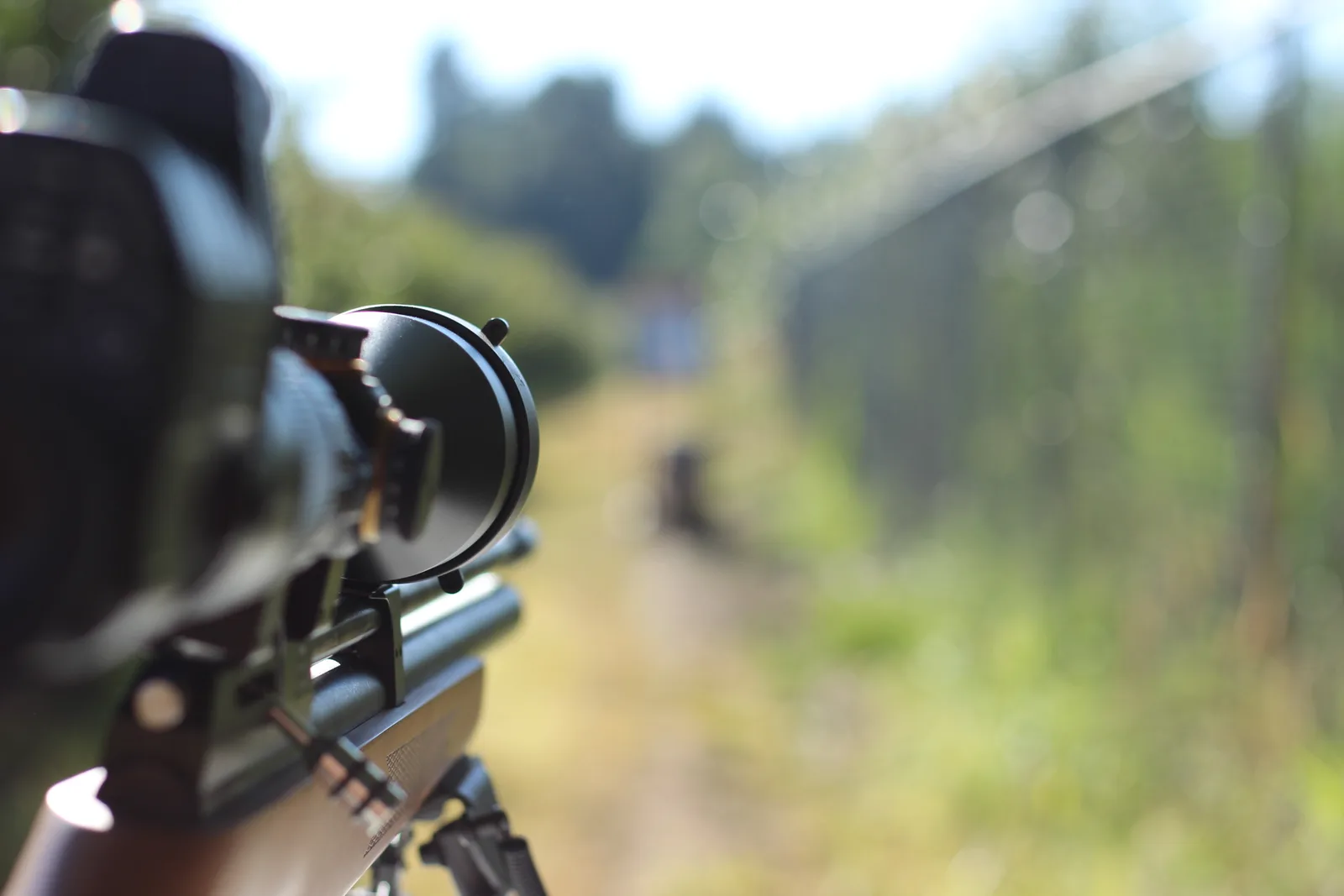
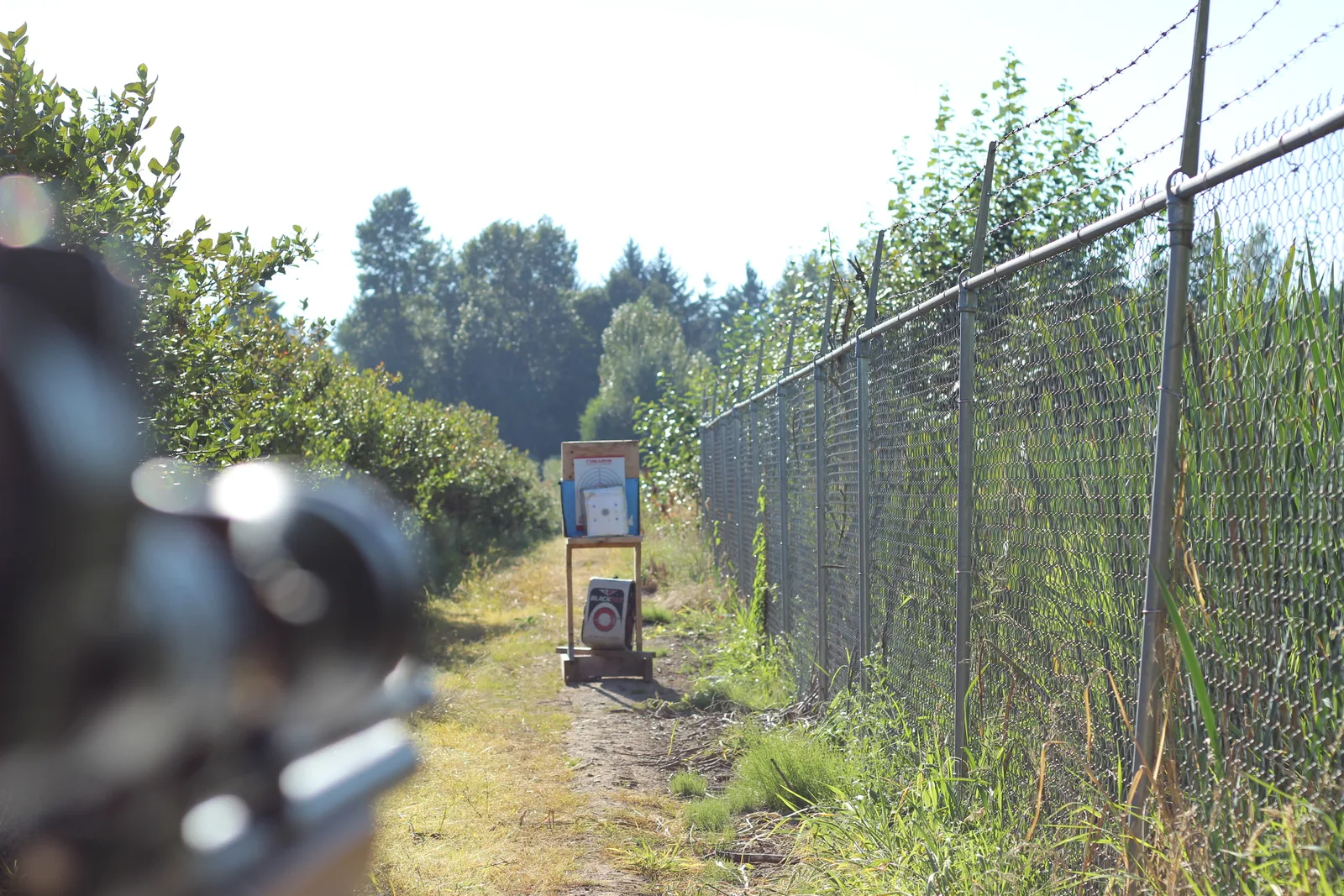
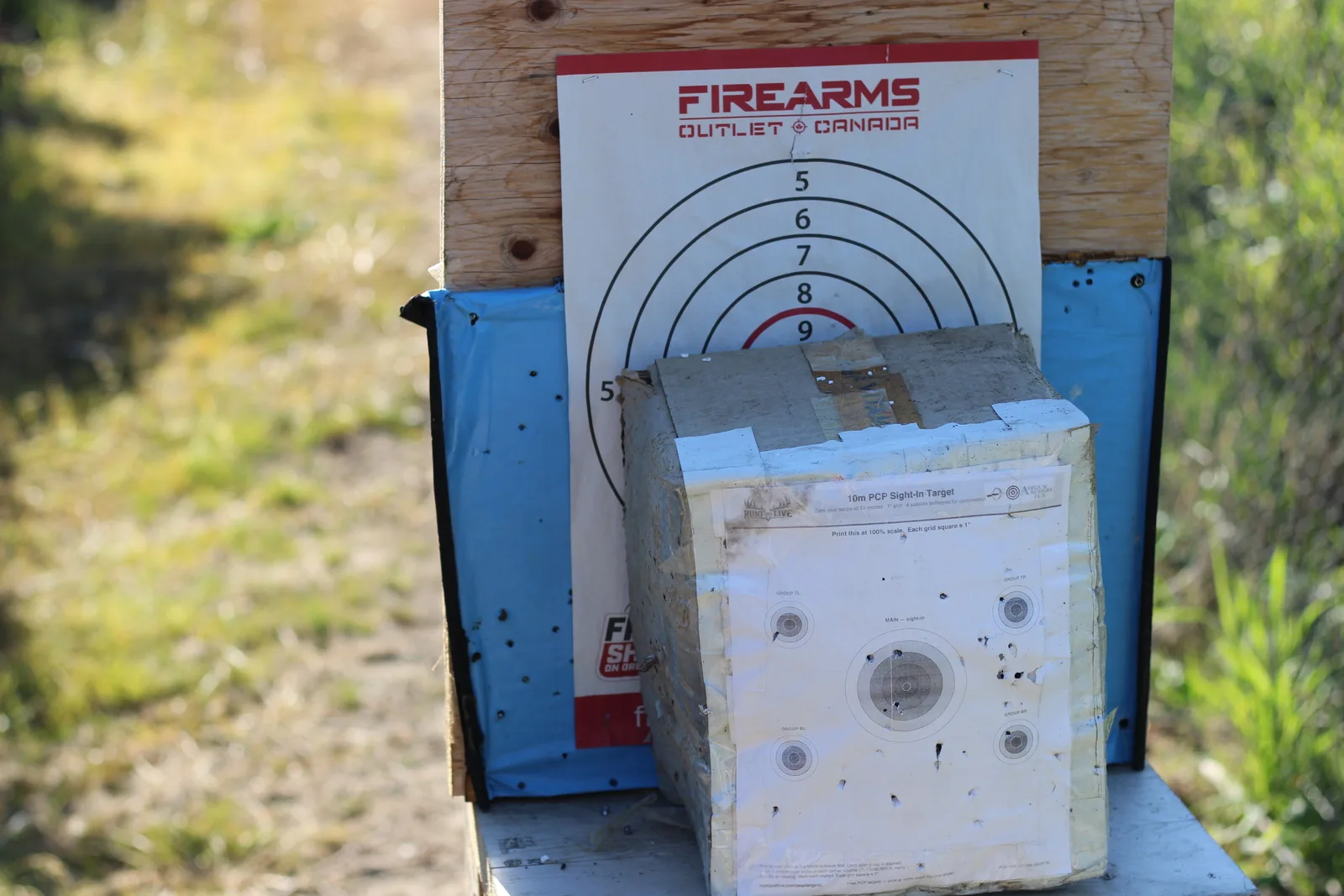
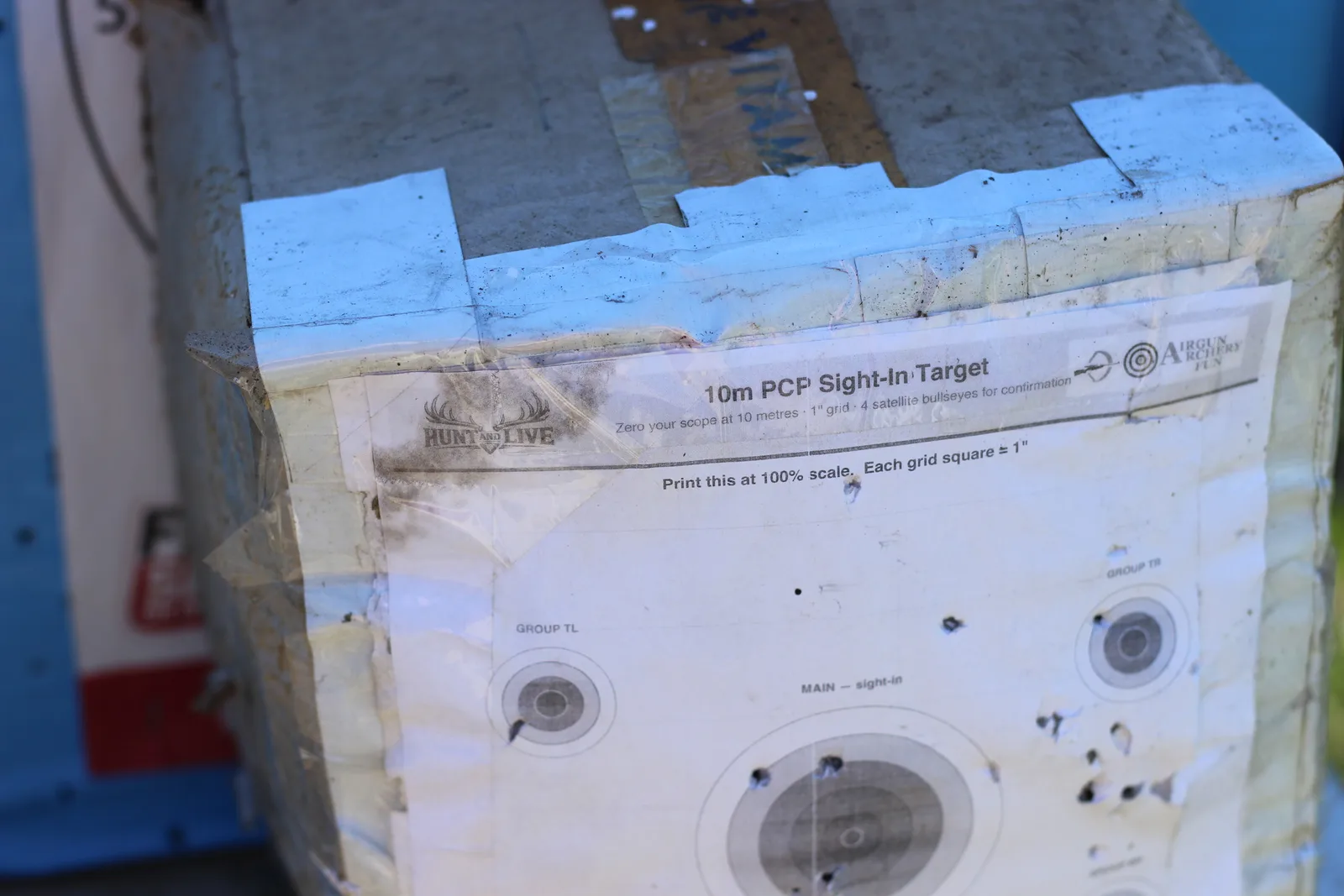
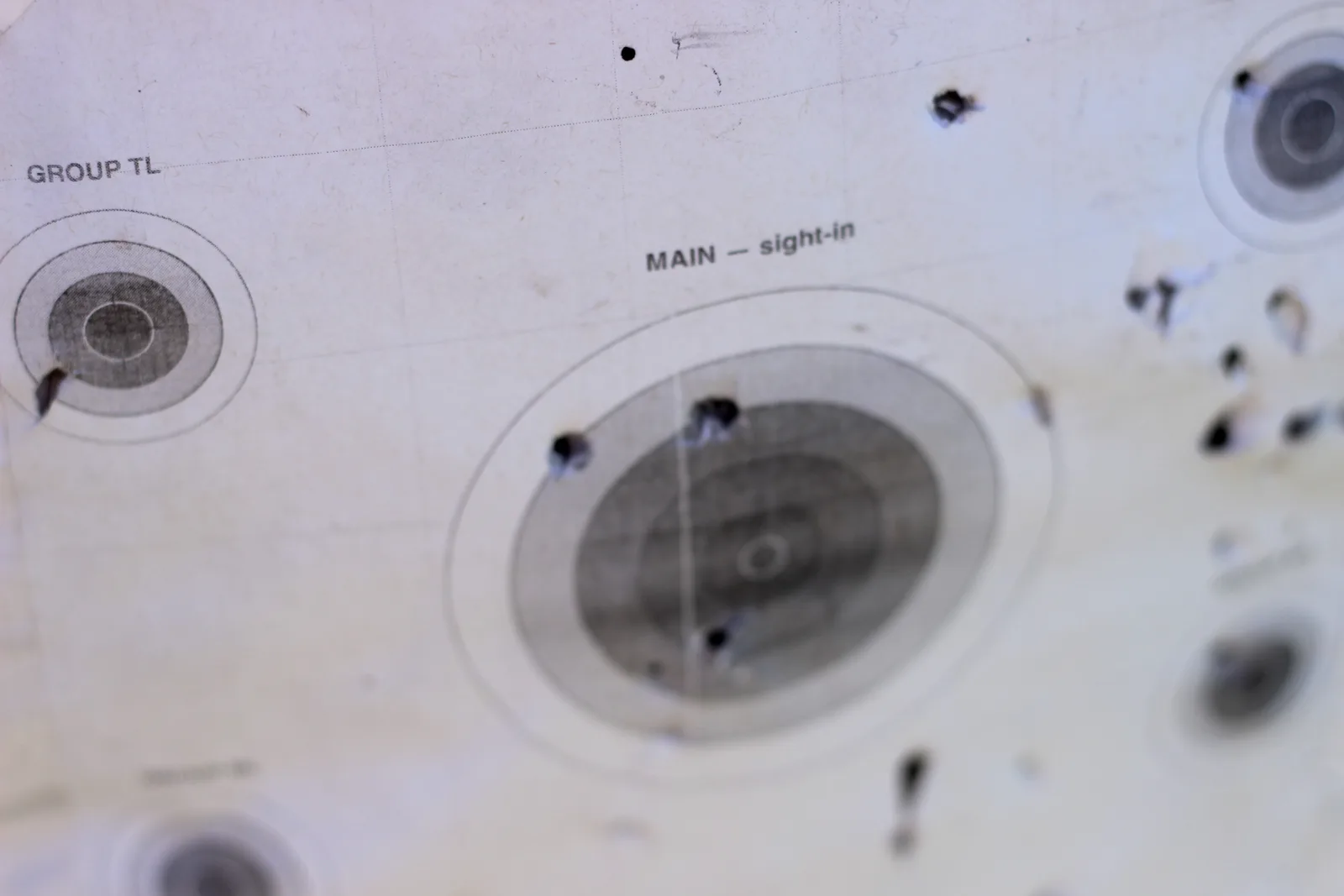
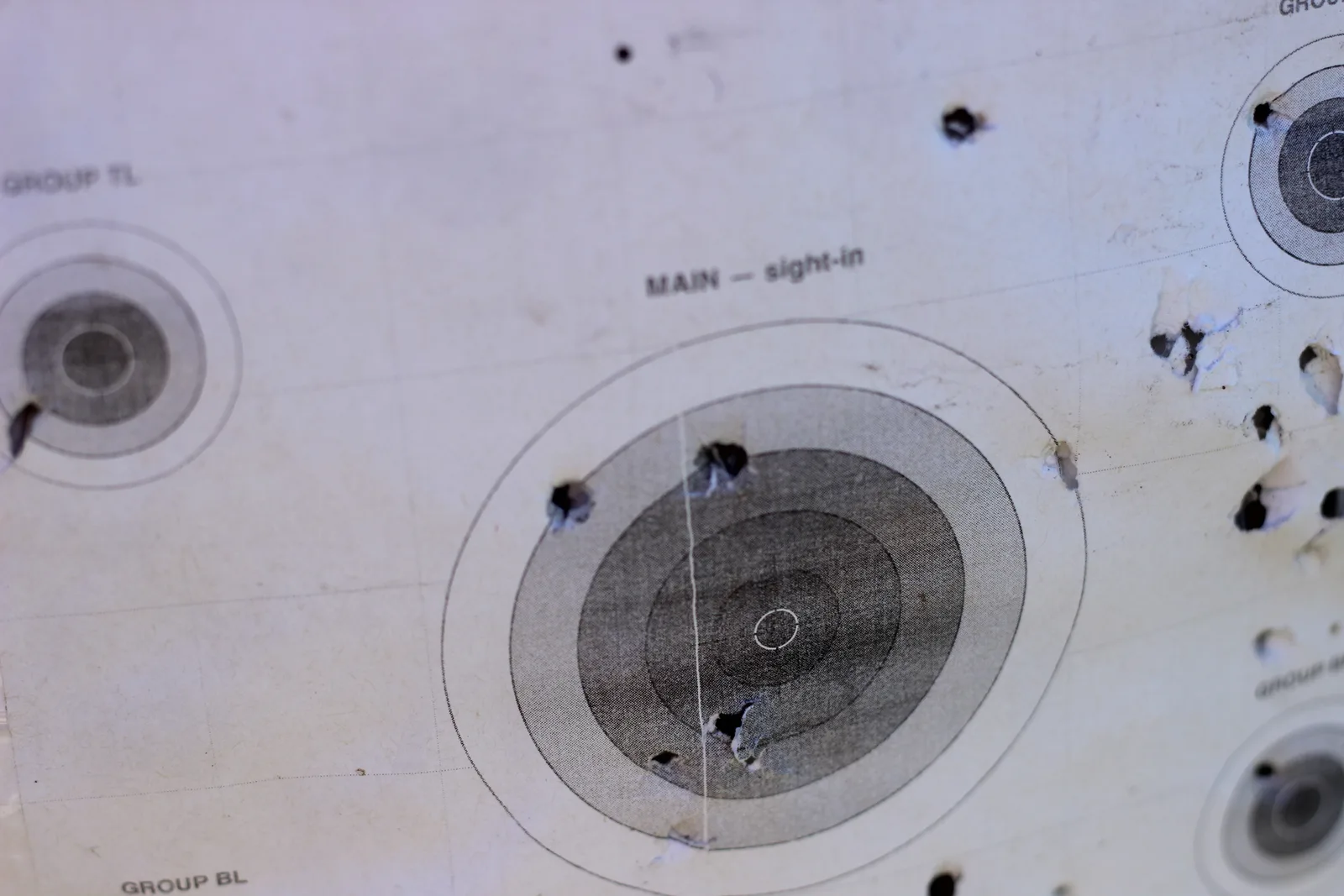
We zeroed on our own free printable sight-in target — the same sheet we used for the Stoeger RX5 TAC — because group boxes keep you honest about whether a change in point of impact is the scope or the shooter. The paper above shows the whole session, walk-in shots included, rather than a single cherry-picked group — which is the honest way to show a zero.
Through the Scope
Both clips below are the NV100’s own recordings, straight off the SD card — the date stamp and the OneLeaf watermark in the corner are burned in by the device.
Be clear-eyed about what the footage is. In daylight the recording is softer and flatter than what your eye sees through the Rapidfire on its own — you are looking at a 1080p camera looking through a riflescope, not at the glass. That is normal for digital clip-ons, and it is why you take the NV100 off in daylight. At last light it earns its keep: the image stays usable, the reticle stays crisp, and the hit is recorded.
Where It Sits: Digital vs Tube vs Thermal
| Approach | Daytime use | How it sees at night | Typical cost |
|---|---|---|---|
| NV100 Plus (day scope + digital clip-on) | Yes — it is a normal scope with the unit off | Sensor + IR illuminator; sees what the IR lights | About US$433–658 for both |
| Dedicated digital day/night scope | Yes, but always through a screen | Sensor + IR illuminator | Similar to several times more |
| Tube (Gen 2/3) night vision | No — daylight can damage the tube | Amplifies available light; IR optional | Thousands |
| Thermal | Works day and night, but no detail of the scene | Heat signature; sees through darkness, not cover | Typically well over a thousand |
General category comparison, not a test of specific competitor models. Prices vary widely by model and market.
The honest summary: thermal is the better tool for finding animals, and tube night vision is the better tool for seeing a scene in near-darkness without a torch. Neither is a day scope, and both cost several times as much. The NV100 Plus is the answer for a hunter who wants one rifle-mounted optic, a real daytime sight picture, and the ability to identify and take a shot at night when the animal is where the illuminator can reach — a coyote coming to the call, a raccoon at the coop, a rat in the barn. Plenty of people pair it with a cheap handheld thermal for spotting and use the NV100 for the shot, which is a sound way to build up a setup.
A Note on the Rules
Night hunting, artificial light and infrared are regulated differently in every province and state — and often differently for predators, furbearers and nuisance animals on private land. Some places allow it with a permit, some only for specific species, some not at all. We are not lawyers: check the current rules where you hunt before using any night vision device on game, and get the landowner’s permission in writing for pest work.
Pros and Cons (the Honest Version)
What it does well. The day scope is a proper scope — 3-12x56 on a 30 mm tube, side-focus parallax, an illuminated MIL-line reticle and positive 1/8 MOA turrets with 70 MOA of travel — and it would be a reasonable buy on its own. The NV100 couples onto it without tape or adapters, so the zero carries from day to night. The STARVIS sensor, 6 W 850 nm illuminator and 60 fps viewfinder make it a genuinely usable night setup, and recording every shot to SD card is worth more in the field than any spec. It runs on a common 18650 cell. And the combined price is in day-scope territory.
Where to go in with your eyes open. It is heavy — over 1.1 kg of optics on top of the rifle before rings. Fitting the NV100 moves your eye rearward by the length of the unit, so check your head position and cheek weld with it on before you go out in the dark. Daylight recordings are softer than the glass. Charging is micro USB, and there is no published recoil rating — our testing was on a .22 PCP, and we would want OneLeaf’s confirmation before putting it on a hard-recoiling centrefire. And it is IR digital night vision, not thermal: it will not show you an animal lying in long grass that the illuminator does not light.
Who Should Buy It
Buy the NV100 Plus if you want one optic on one rifle that does daylight hunting and night predator or pest work, and you are not prepared to spend thousands on tube or thermal to get there. It is a particularly good match for PCP air rifles and rimfires used for pest control — light-recoiling rifles at short-to-medium ranges, where fine 1/8 MOA clicks and onboard recording are exactly what you want. If you already run a PCP like the Stormrider, or an entry-level rifle like the Stoeger RX5 TAC that has grown into pest duty, this is the natural step up.
Look elsewhere if your main need is detection — scanning fields for animals you cannot see — because that is thermal’s job. Look elsewhere too if you hunt a light mountain rifle and count every gram, or if you want to run it on a hard-kicking magnum before the manufacturer publishes a recoil rating.
Final Verdict
The OneLeaf Commander NV100 Plus fills the gap most of the night-vision market ignores. It is not a premium tube, and it is not a gimmick. It is a competent 3-12x56 day scope that you can leave on the rifle all year, with a clip-on night unit made specifically for it — one that recognises the reticle you already zeroed, records every shot, and comes off in seconds when the sun comes up.
The weight, the shift in head position and the softness of the daylight recordings are real, and worth knowing before you buy. But at US$433 on sale (US$658 regular) for both halves, with a two-year warranty, it is the most sensible way we have found to own one scope that does both jobs.
Rating: 4.4/5 Stars
Stay tuned for our night hunt of rats in the blueberry field, where we take the NV100 Plus out after dark to put its night vision capabilities to the real test.
Update: the NV100 Plus now rides on our new hunting rifle, the Barra 1100Z Gen 2 .25. See that review for video through the scope as we sighted it in at 10 metres.
Brands sometimes provide samples for review. Hunt & Live writes its honest opinion either way — gear that doesn’t earn its keep doesn’t get a recommendation.