Featured Review · RedHead · Hunting Clothing
RedHead Blaze Cap/Vest Combo on a Morning Deer Glassing Hunt — High on a Chehalis Logging Ridge, Mapped
Our Rating
Current Price
- Product
- RedHead Men's Blaze Cap/Vest Combo
- Sold by
- Bass Pro Shops / Cabela's Canada (SKU 2500039)
- Colour
- Blaze orange
- Cap
- 100% polyester, black cotton undervisor, hook-and-loop back strap
Pros
- Two pieces of blaze orange for under twenty dollars, sold at Bass Pro Shops and Cabela's
- The cap fit both boys with its hook-and-loop strap, and the black undervisor cuts glare when glassing
- The throw-on vest goes over a puffy or a pack frame in seconds and packs down to nothing
- Polyester twill holds up to brush, and the caps stayed bright through a damp morning
- Blaze reads loud to people and, as research suggests, as a muted tone to deer
Cons
- Basic, one-size-fits-most kit: no pockets, no mesh, no shell layer
- The vest's elastic belt and hook-and-loop front are made for a quick throw-on, not a tailored fit
- A polyester cap is not warm or waterproof — late season you will want a toque
- Our vest rode on the pack rather than on a person this time; worn is better in timber
Most hunts don’t end with a deer on the ground, and this one didn’t either. It did end with something nearly as useful: a ridge-top logging road high on the edge of the mountain, with a view over a whole drainage of cutblocks, timber edges and benches. We’ll be back.
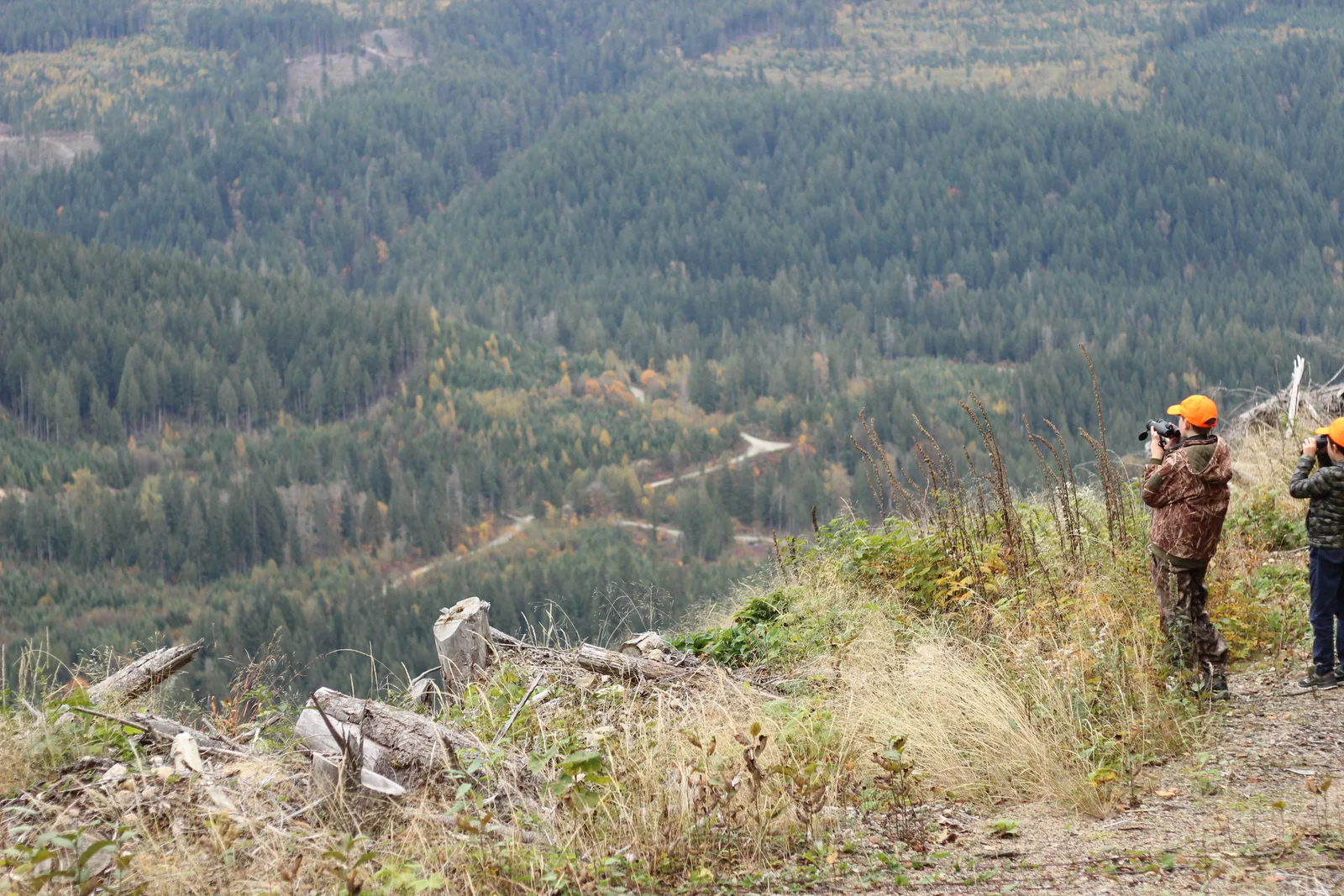
We spent the morning in the Chehalis country north of Harrison Mills, in BC’s Fraser Valley. We drove up the Chehalis Forest Service Road past Elbow Lake and found a spur that climbed onto a ridge three-quarters of the way up the mountain. We parked the boys and the glass where the road broke out over the valley, looking north across the Chehalis River to the Span Creek cuts. The two youngest hunters wore the gear this post is about: the RedHead Men’s Blaze Cap/Vest Combo from Bass Pro Shops. It is a blaze orange cap and a throw-on blaze vest for CA$14.98 on sale (CA$17.99 regular), and it is the cheapest piece of safety gear we own.
Along for the hunt were the Exo Mtn Gear K4 3600 on its first real outing, our Riton 5 Primal 10x42 ED binoculars, and the Ruger American Ranch .223.
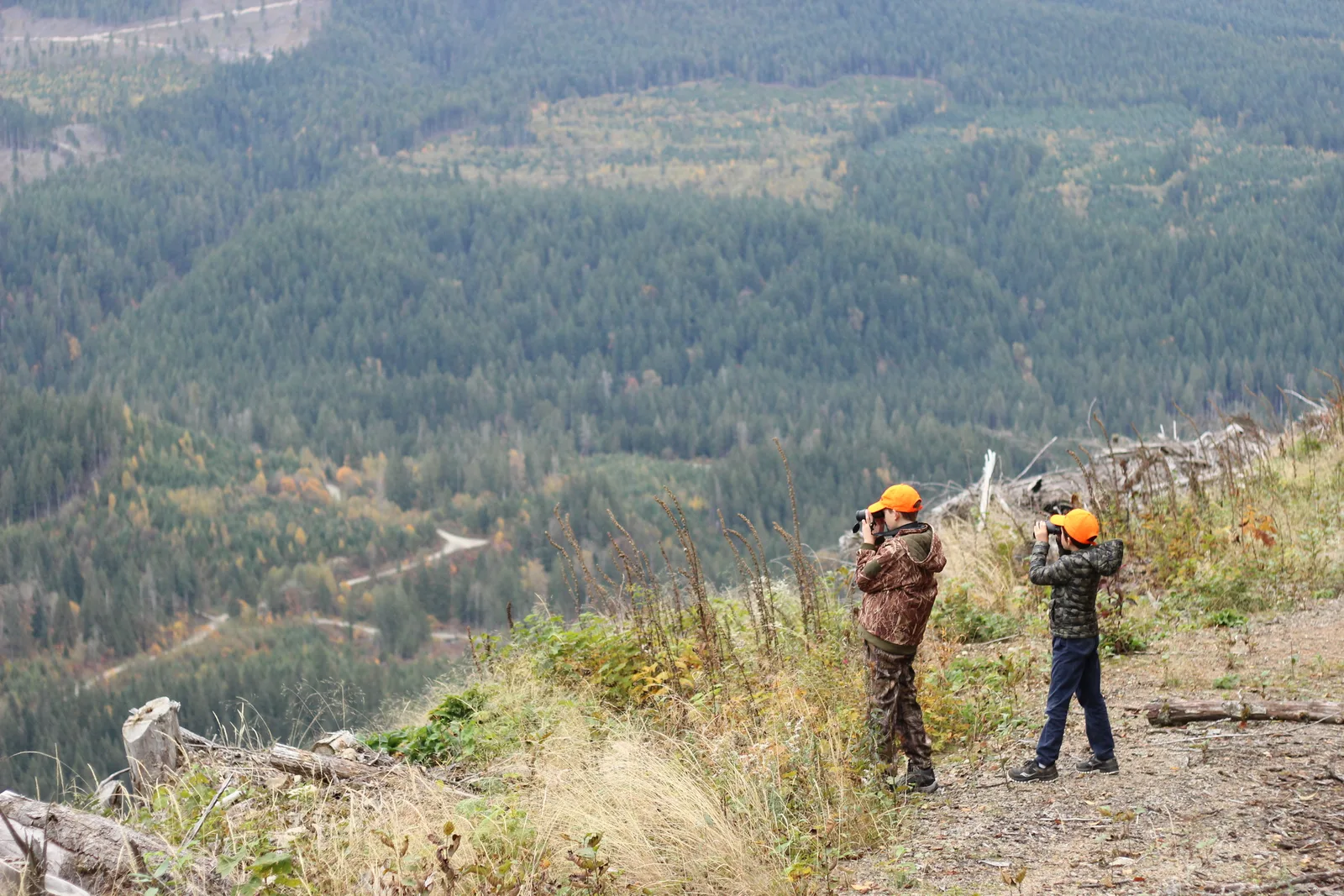
The morning at a glance
The Ridge: Where We Were
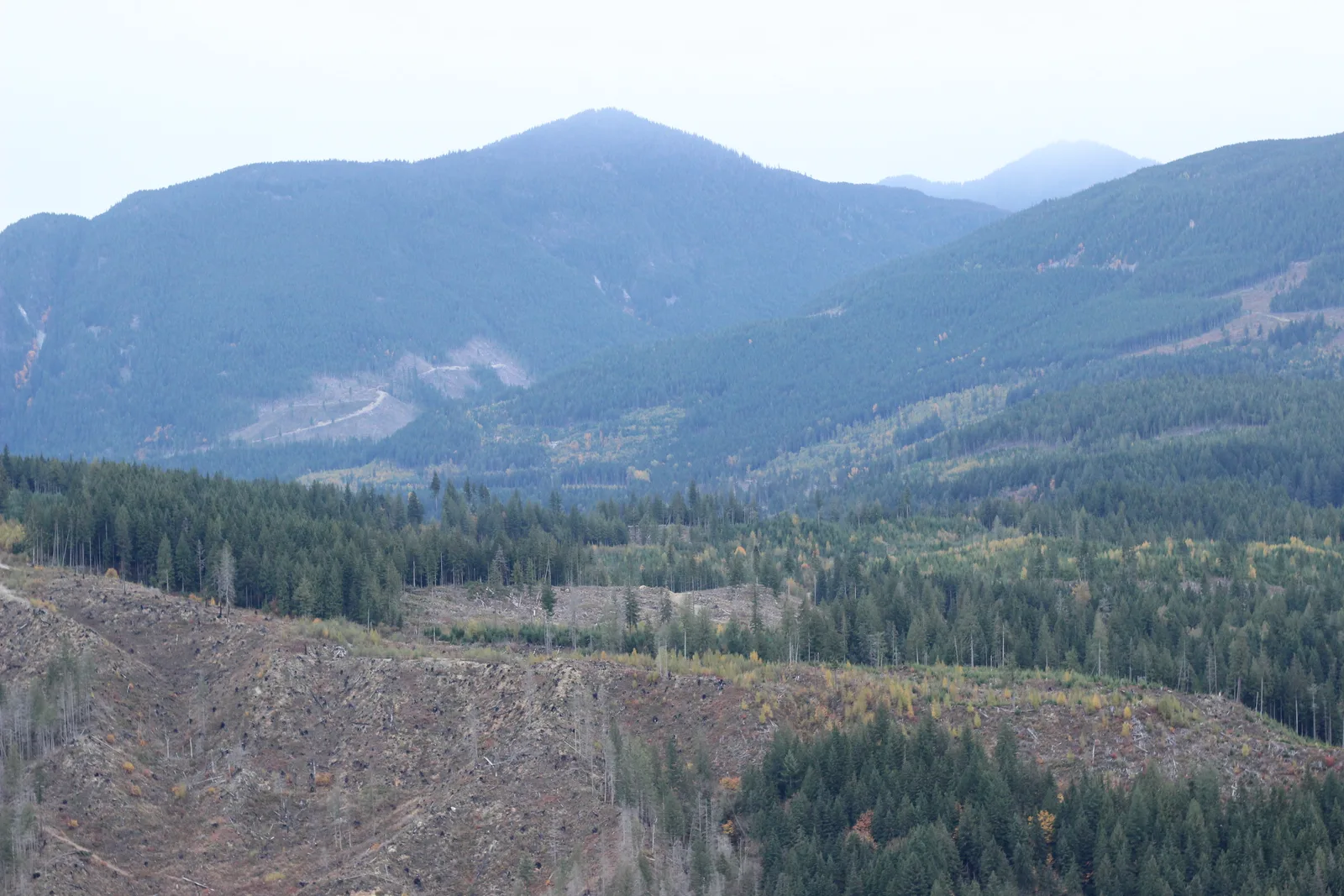
We drove up the Chehalis Forest Service Road and past Elbow Lake, then carried on about 7–8 km north into the river valley. There the Chehalis River runs west to east in a wide, braided gravel bed, with Span Creek coming down off the slopes on the north side. On the south side of the river, a spur leaves the main road and switchbacks up a cutblock. About three-quarters of the way up the mountain it runs along a ridge edge facing north.
That was our seat. We glassed north, straight across the river to the Span Creek country. That slope is a patchwork of fresh cuts, older regen and standing timber, with spur roads switchbacking through it. Because it faces south, the morning sun lit it up while we sat in shade on our side — about as good as glassing light gets.
Getting there
About the road. The Chehalis FSR was in good shape when we drove it: a well-graded gravel road with a steady climb, fine for a RAV4 or a similar small SUV in dry conditions. Once snow arrives, it’s a different road. Long stretches run along steep slopes with sheer drops off the side, with no barrier and little room for error. In winter, carry chains, drive slowly, turn back early if it gets slick, and expect logging trucks on active haul roads — radio-assisted FSRs in BC have posted call protocols.
The map below is our own illustration, drawn from the satellite view of the area — not a survey. Toggle the layers to see how the country breaks down.
Swipe the drawing sideways to see it all.
All layers on. The orange dot is our ridge spur south of the river. The fan shows our view: north across the Chehalis to the Span Creek cuts and the timber edges around them.
Illustration only — not to scale and not for navigation. It is simplified from the satellite view of the Chehalis FSR, Span Creek and Statlu Creek area. Logging roads change, gates close and active cutblocks can be closed to the public. Check current BC hunting regulations, road status and land status before you go.
How High Is High? The Ridge in Cross-Section
Height is what made this spot. Three-quarters of the way up the mountain, we were level with or above most of the cuts across the valley. We looked across and into them rather than up at them, with fewer blind dips. Glassing north also meant the low autumn sun was behind us, lighting the south-facing Span Creek slope while we sat in shade.
Drag through the morning to see what changes.
Swipe the drawing sideways to see it all.
Schematic south-to-north cross-section, not to scale. Our ridge sits about three-quarters of the way from the valley floor to the summit. Deer movement and thermals show the typical pattern on a calm, clear morning. Weather, hunting pressure and the rut all change it.
The Morning
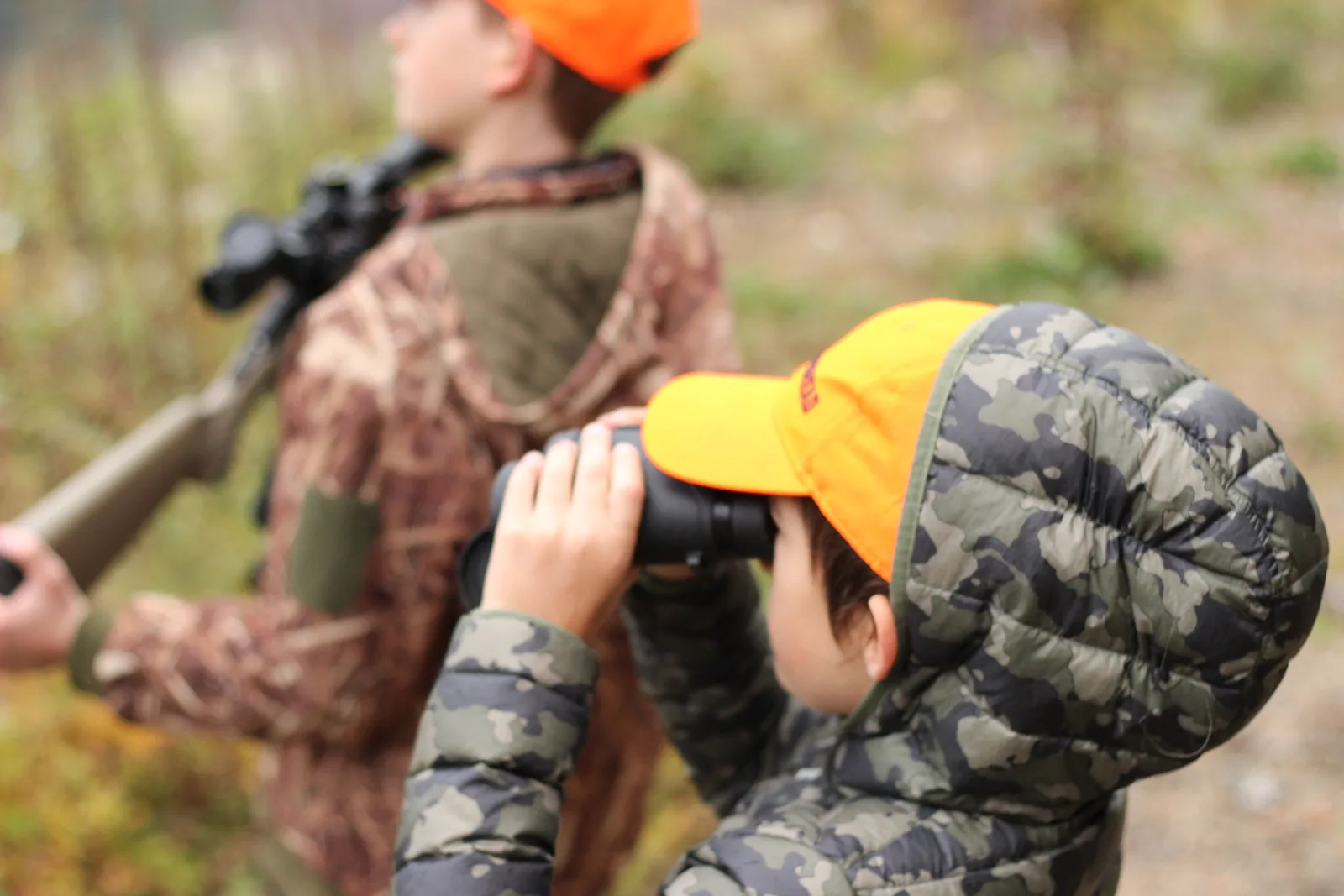
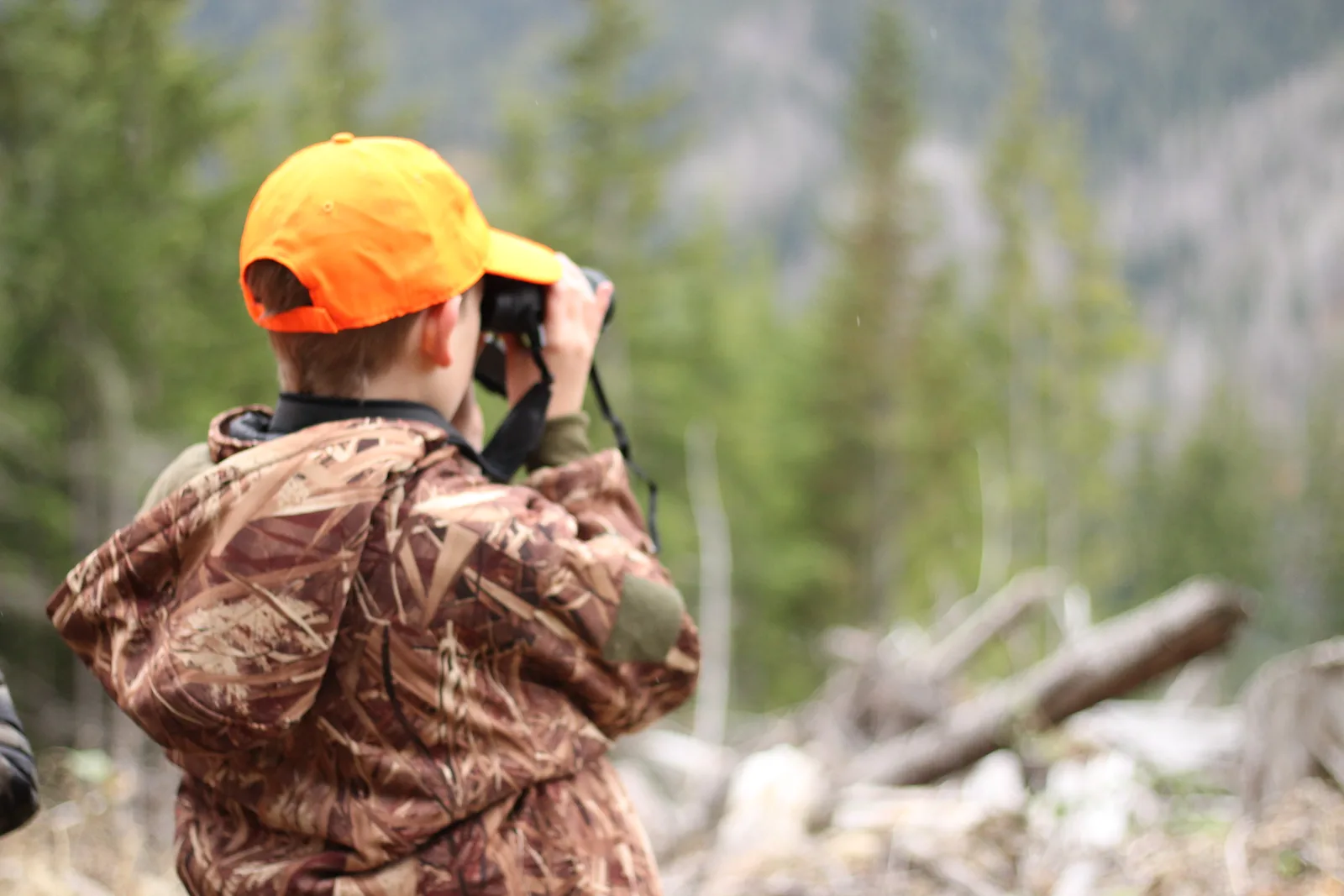
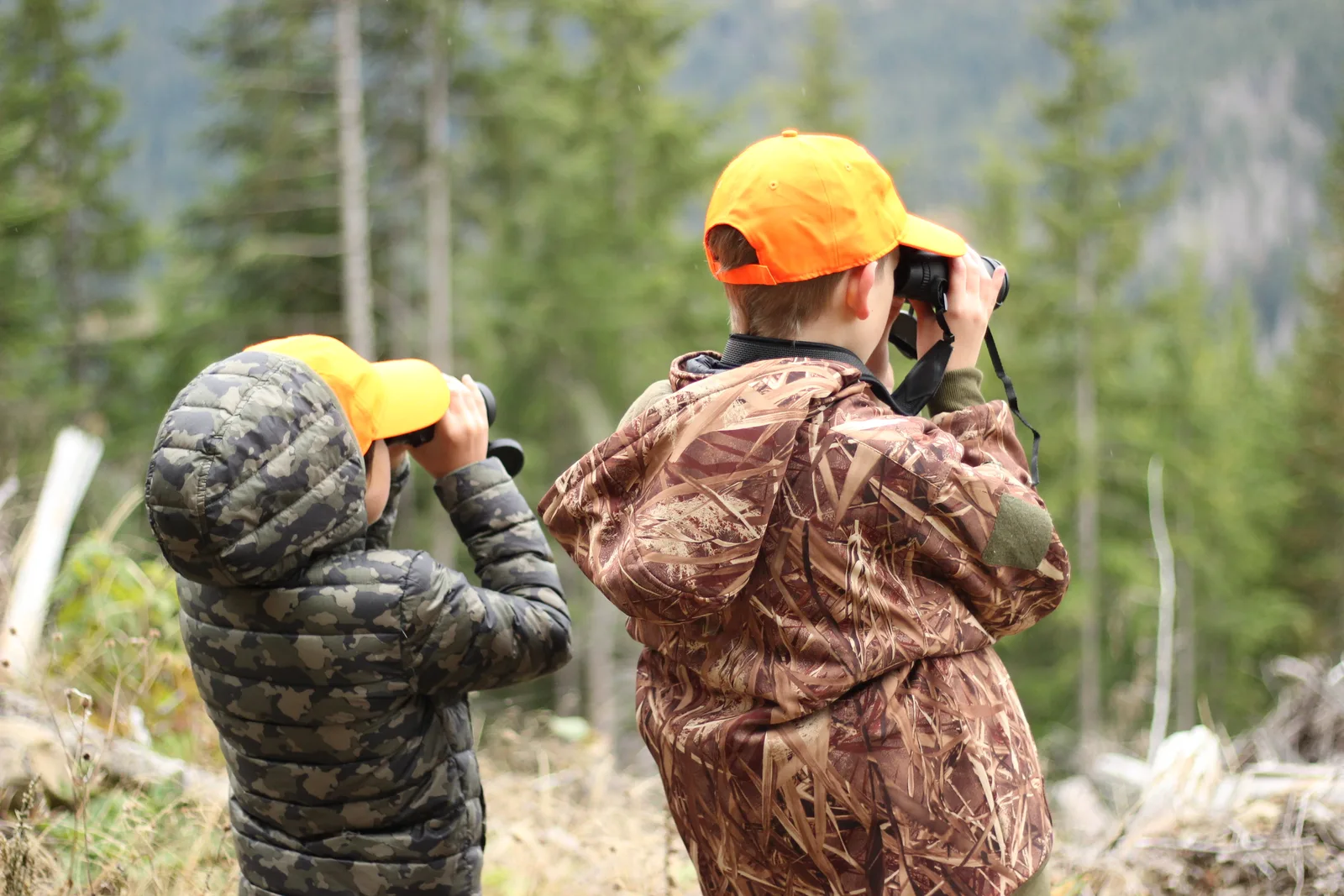
We were on the ridge by nine, which is honestly late for deer. The boys had their RedHead caps on, binoculars round their necks, and a job: pick a cut, glass its edges, then move on to the next one. For an hour and a half we picked apart the drainage below — the fresh cut under the road, the timber line beyond it, the older cuts across the valley and the spur roads zig-zagging up the far slope.
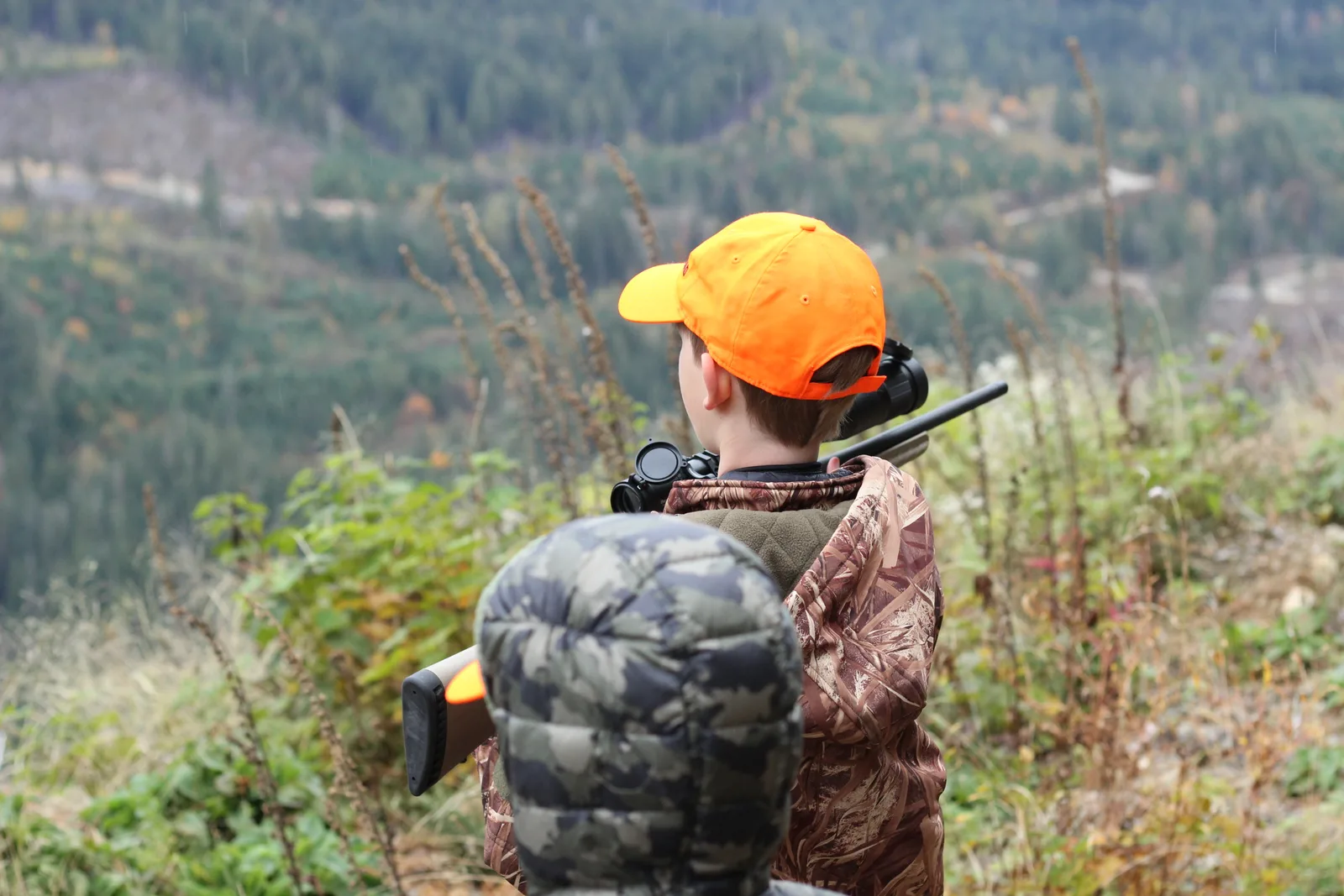
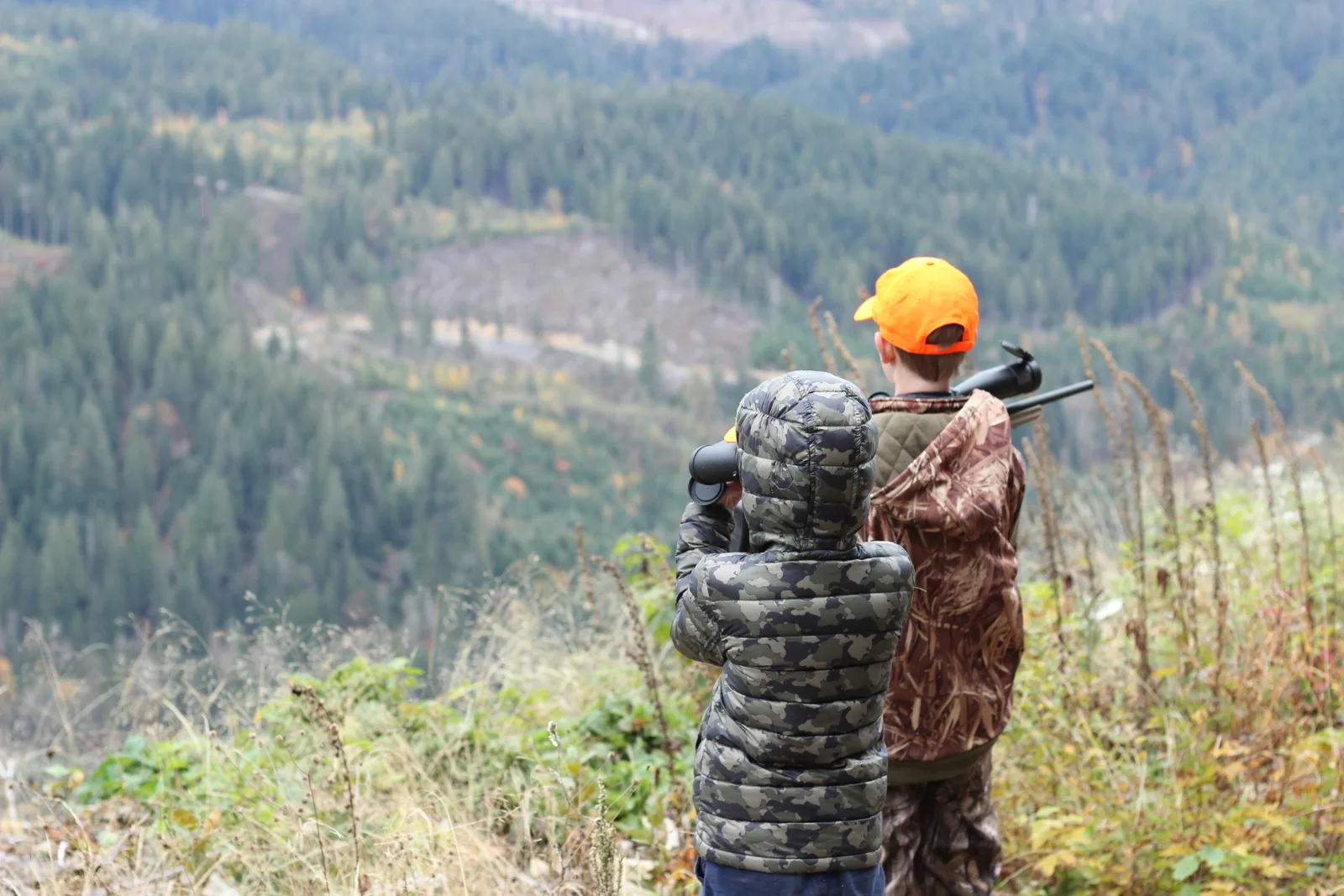
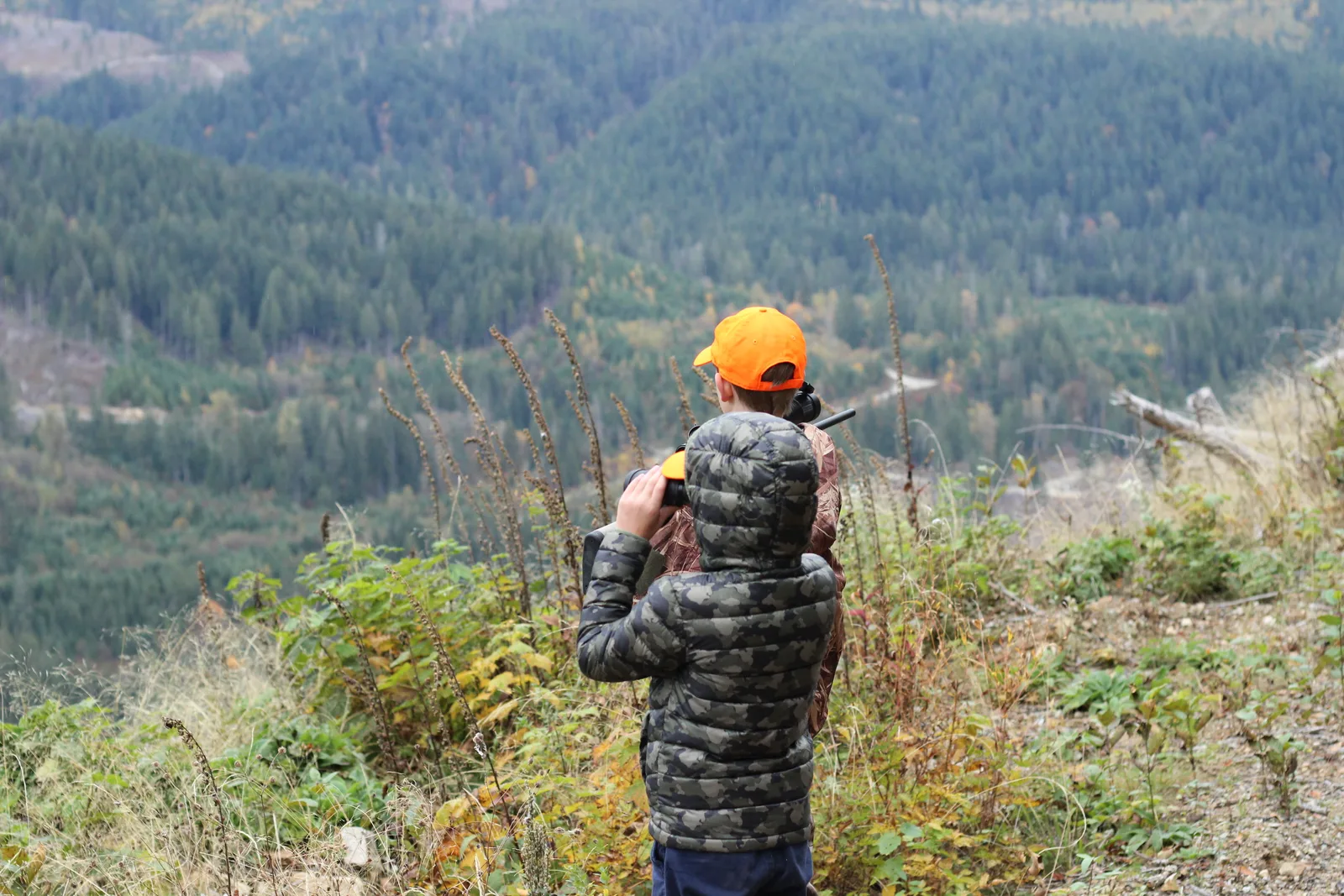
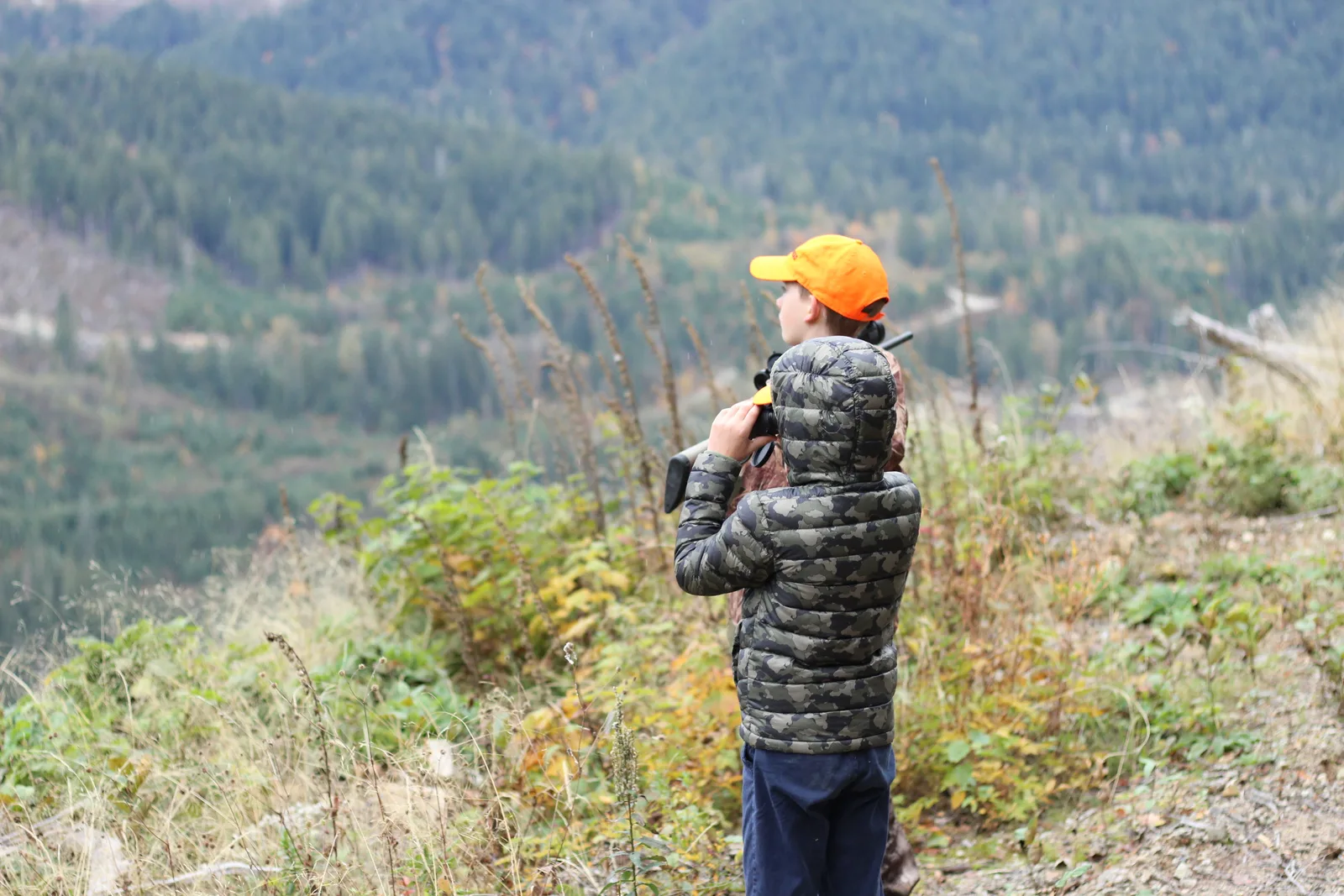
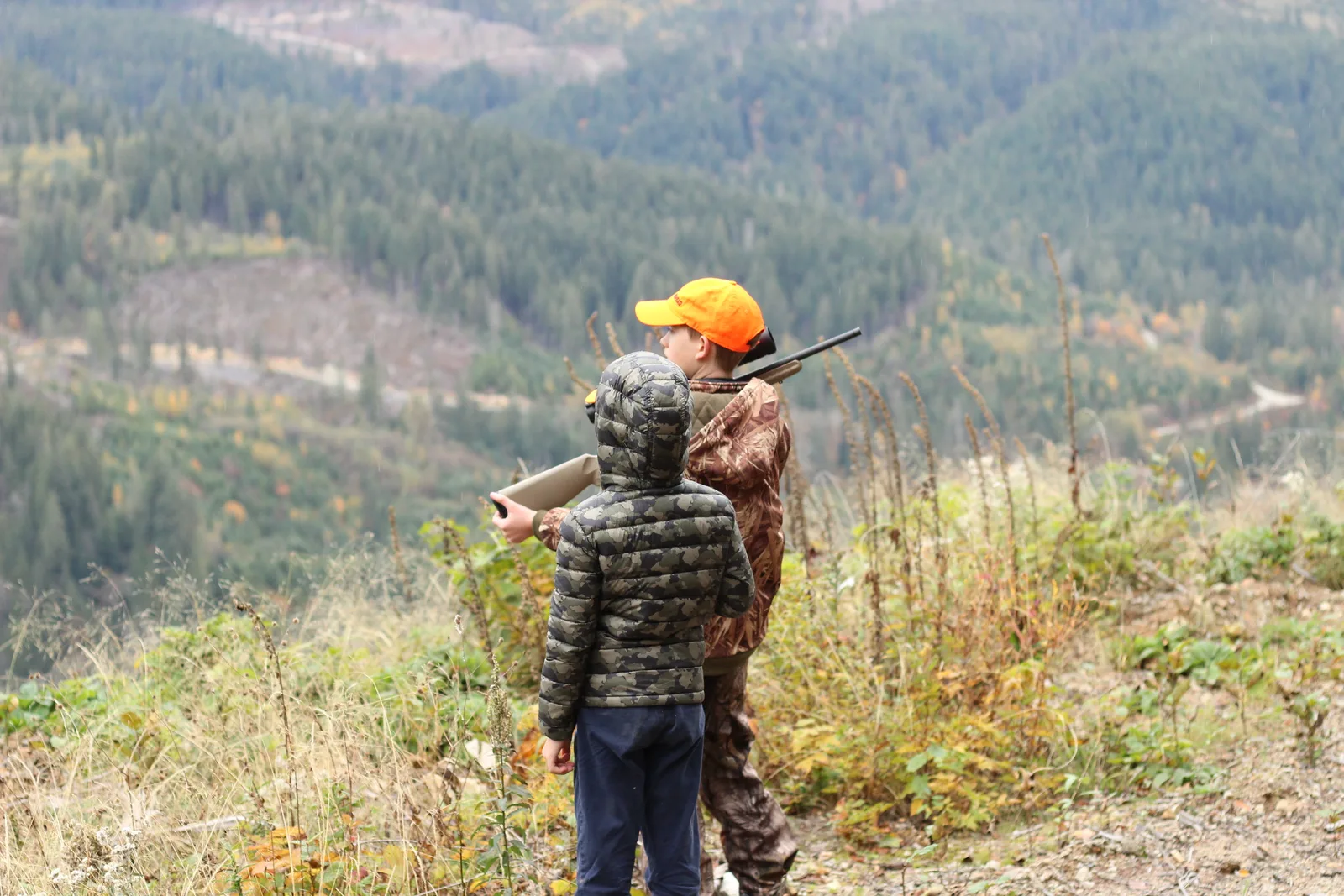
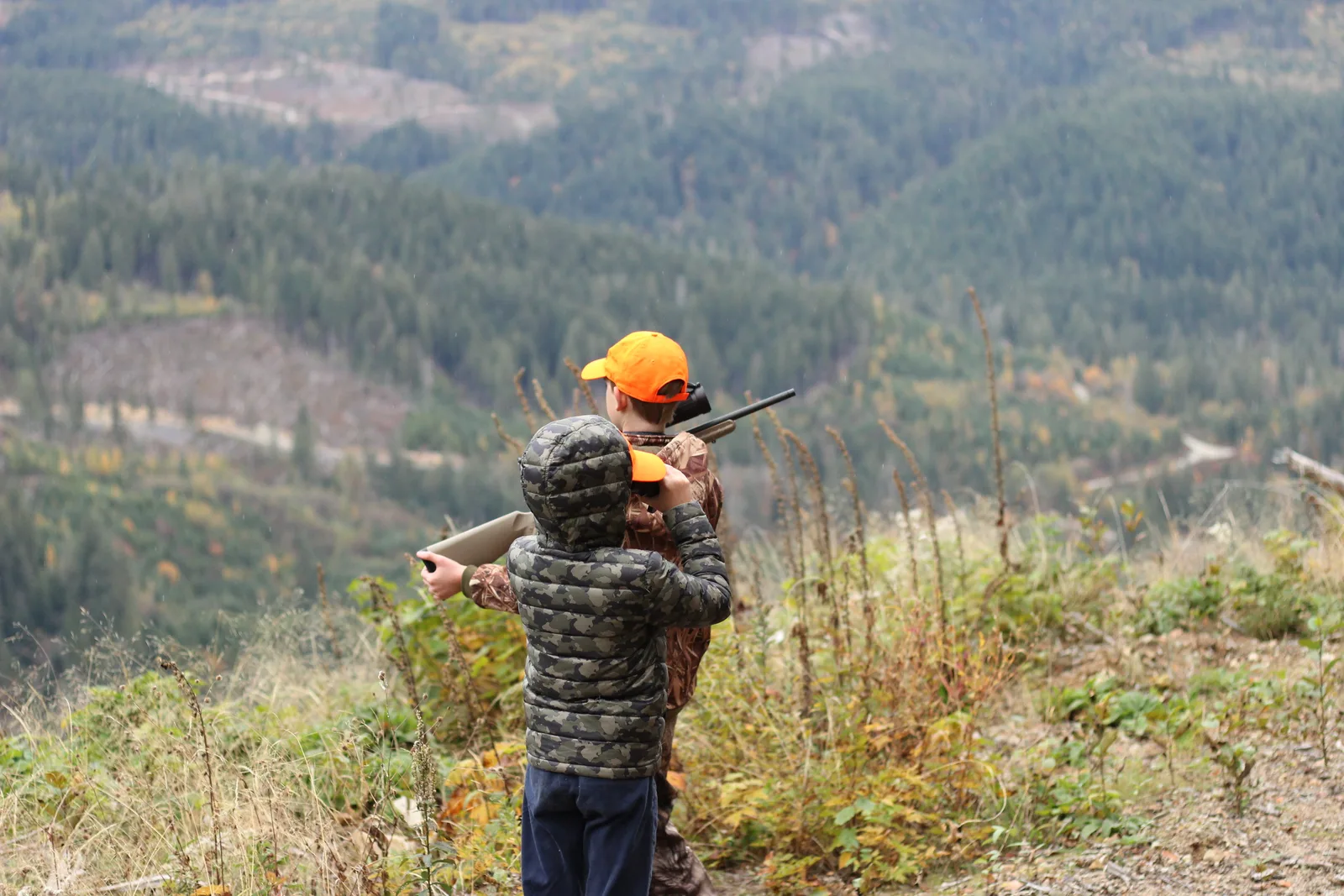
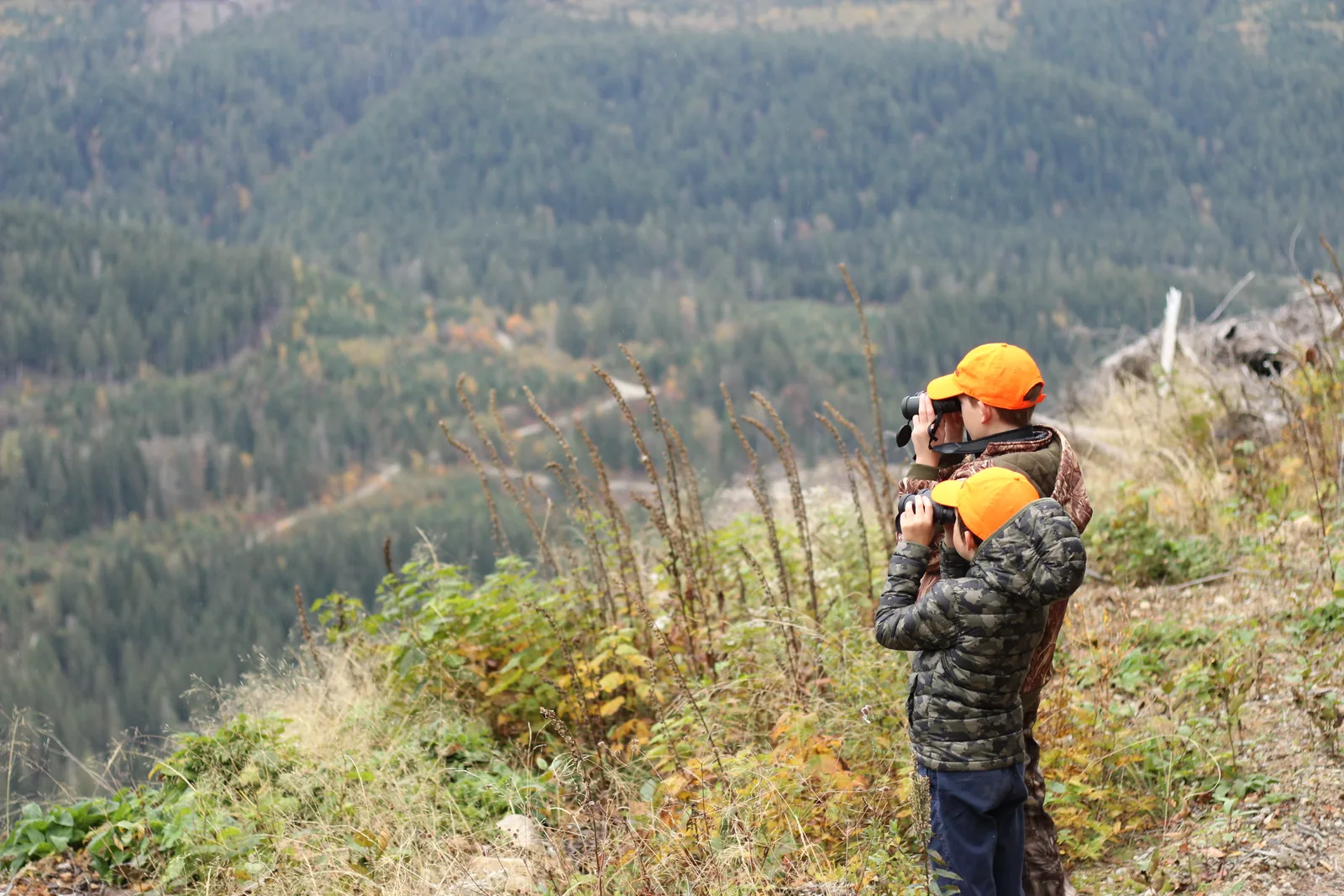
No deer. Plenty of sign of good country, though: browse in the regen, well-used edges, and benches tucked into the timber that you could only see from up here. That is what a scouting morning is for.
Glass It Like a Grid
The most common mistake when glassing is to sweep — panning the binoculars across a hillside the way you would look at a view. Deer don’t show up that way. You find them by picking the country apart one binocular-sized piece at a time, holding steady on each piece for a few seconds, then moving on with a little overlap.
Press Play to watch a grid pass over our own photo from the ridge, or tap a spot to see what we were looking for.
Press Play or pick a spot.
The "scope" circle magnifies our own photo three times — roughly what a 10x binocular does to a scene compared with the naked eye. The labels are what we look for in country like this, not deer we saw.
The RedHead Blaze Cap
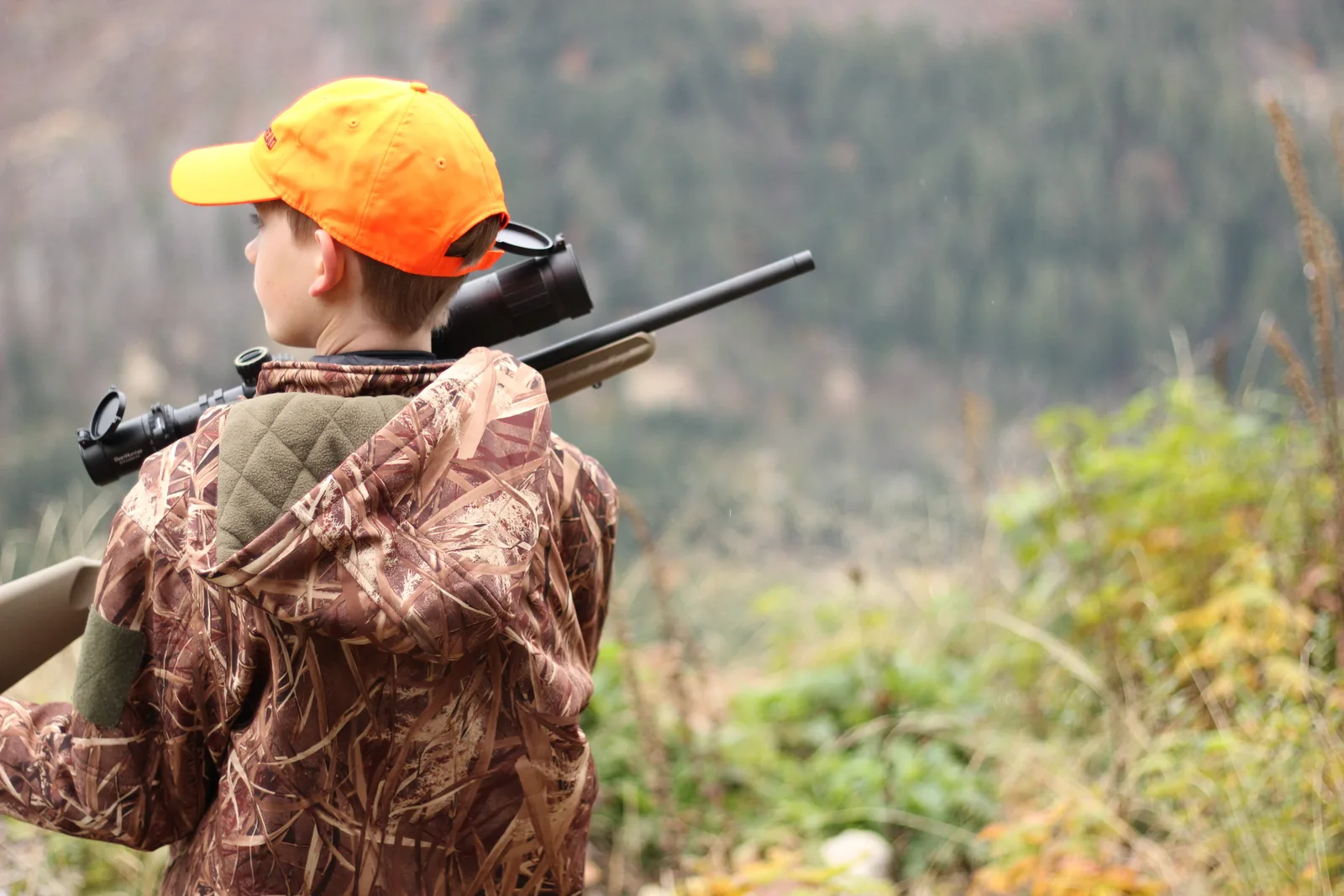
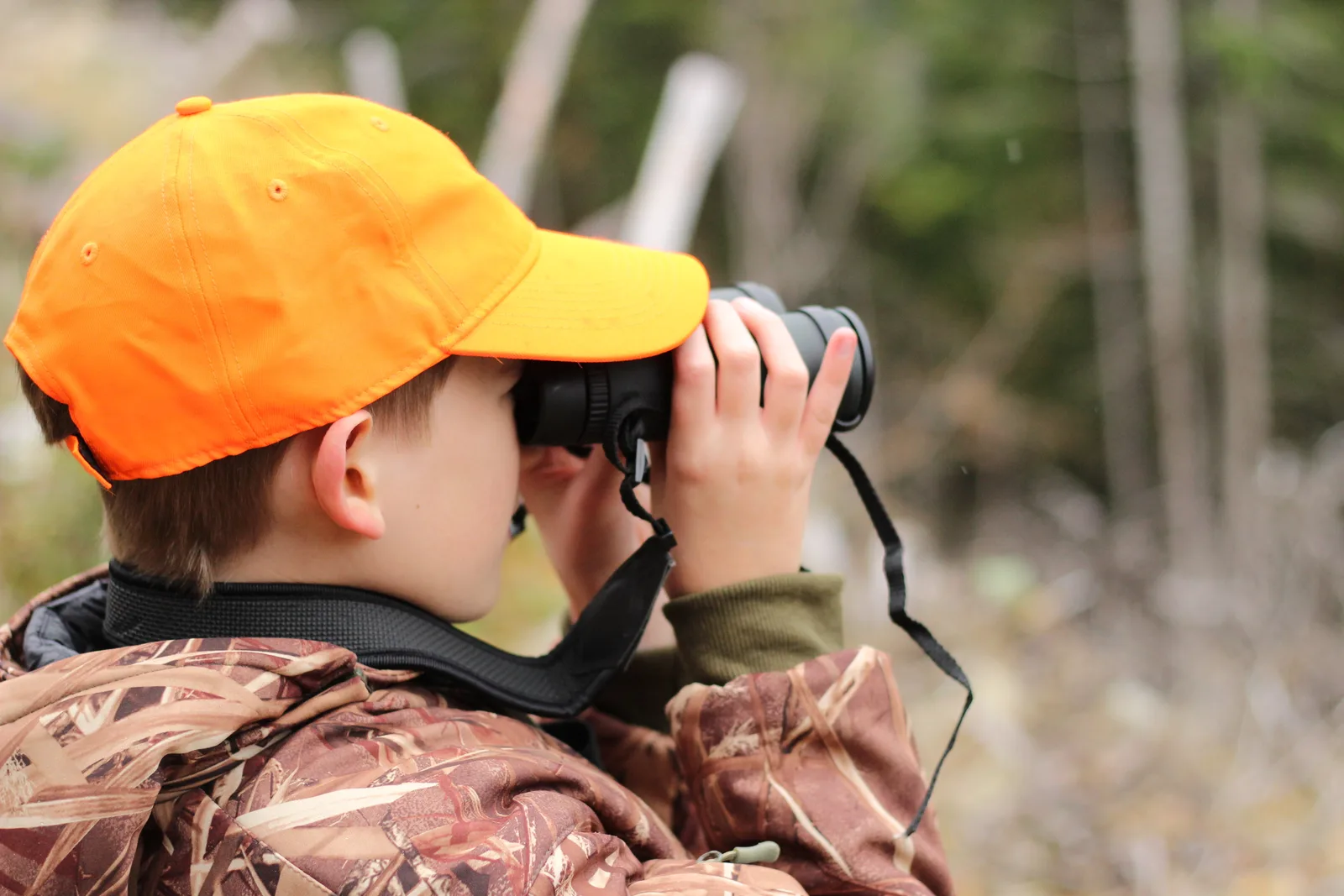
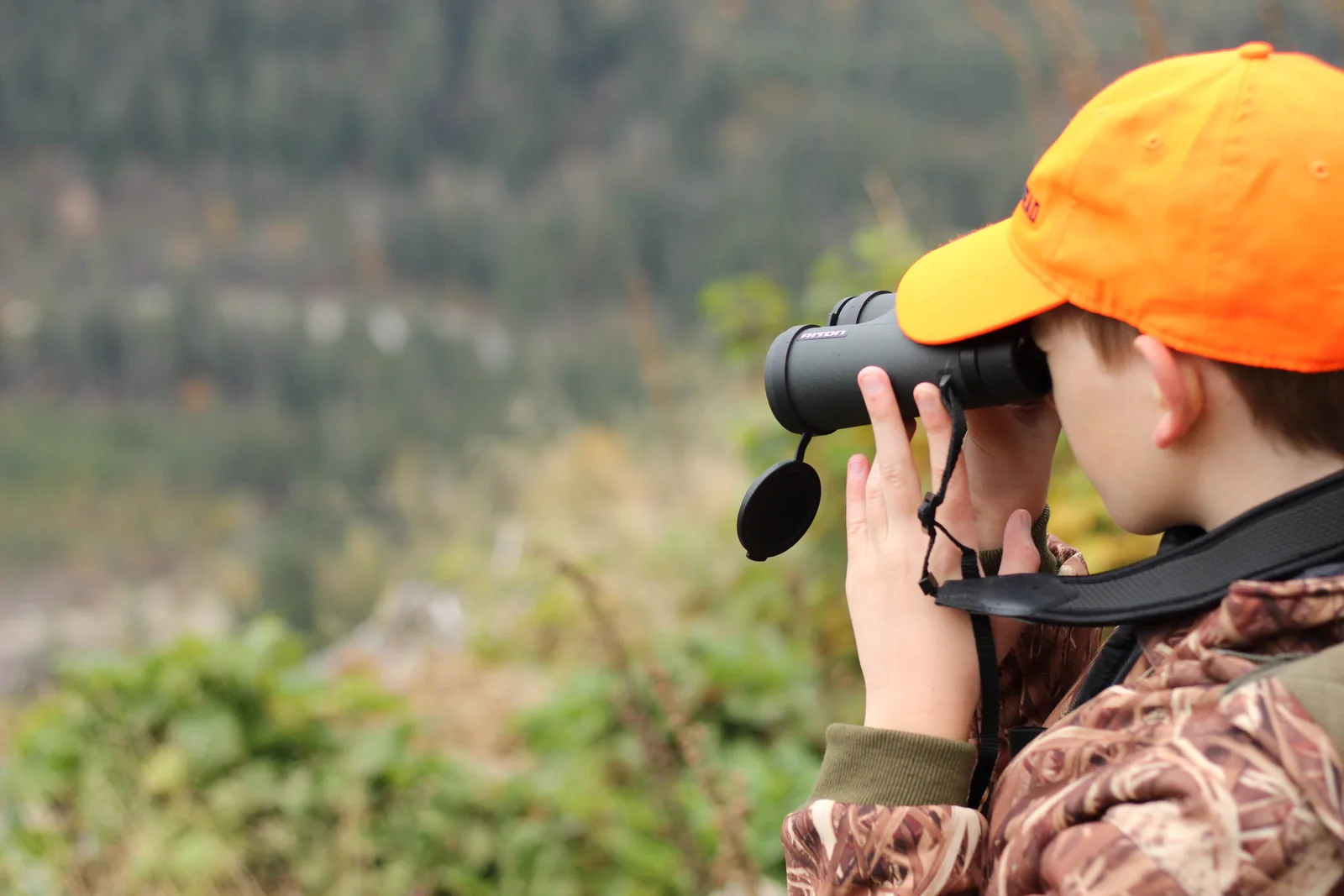
The cap is the half of the combo that worked hardest. Both boys wore one all morning. It is 100% polyester in blaze orange, with a black cotton undervisor and a hook-and-loop strap at the back. That strap is why a “men’s” one-size cap fit two younger heads without fuss.
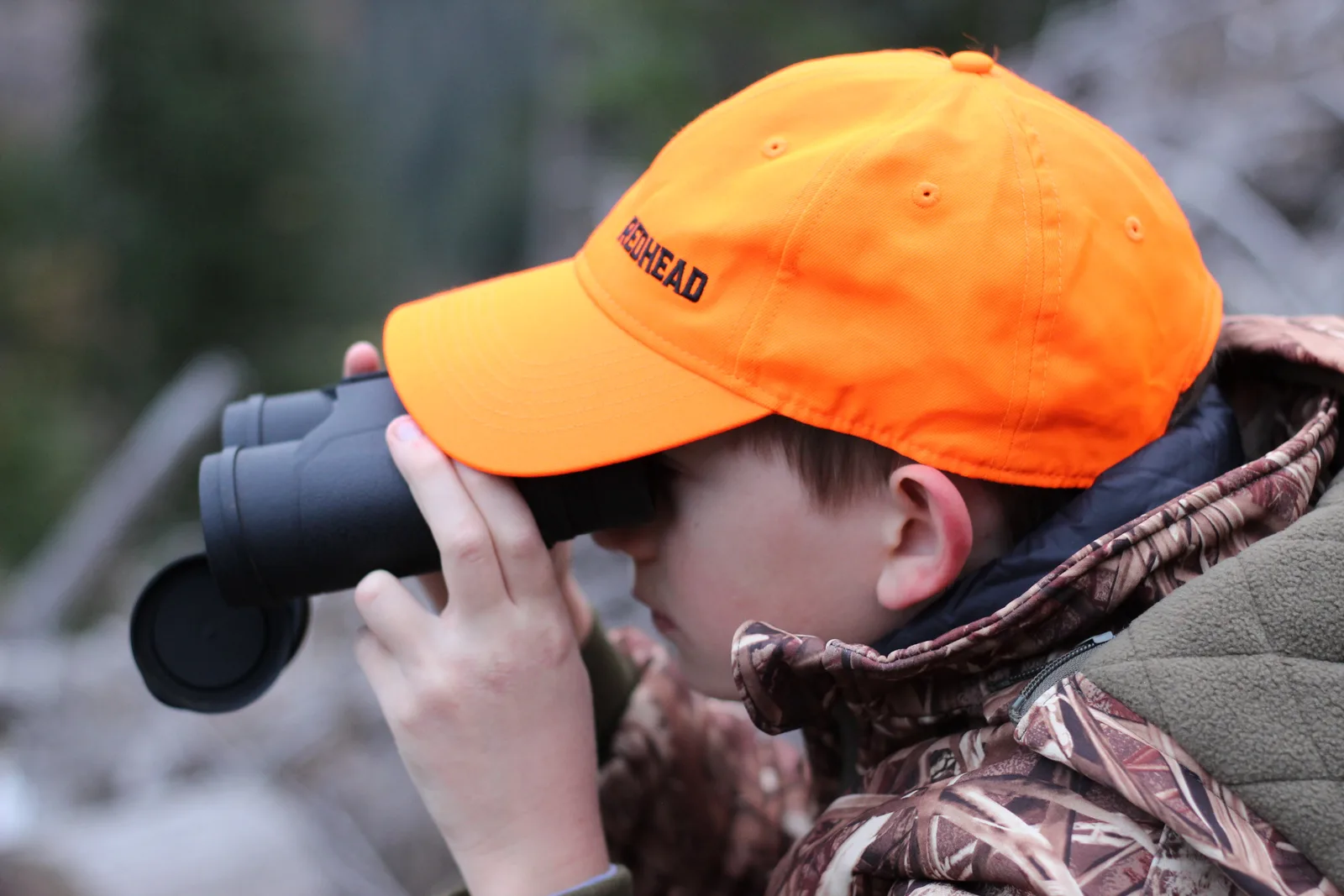
With the Riton
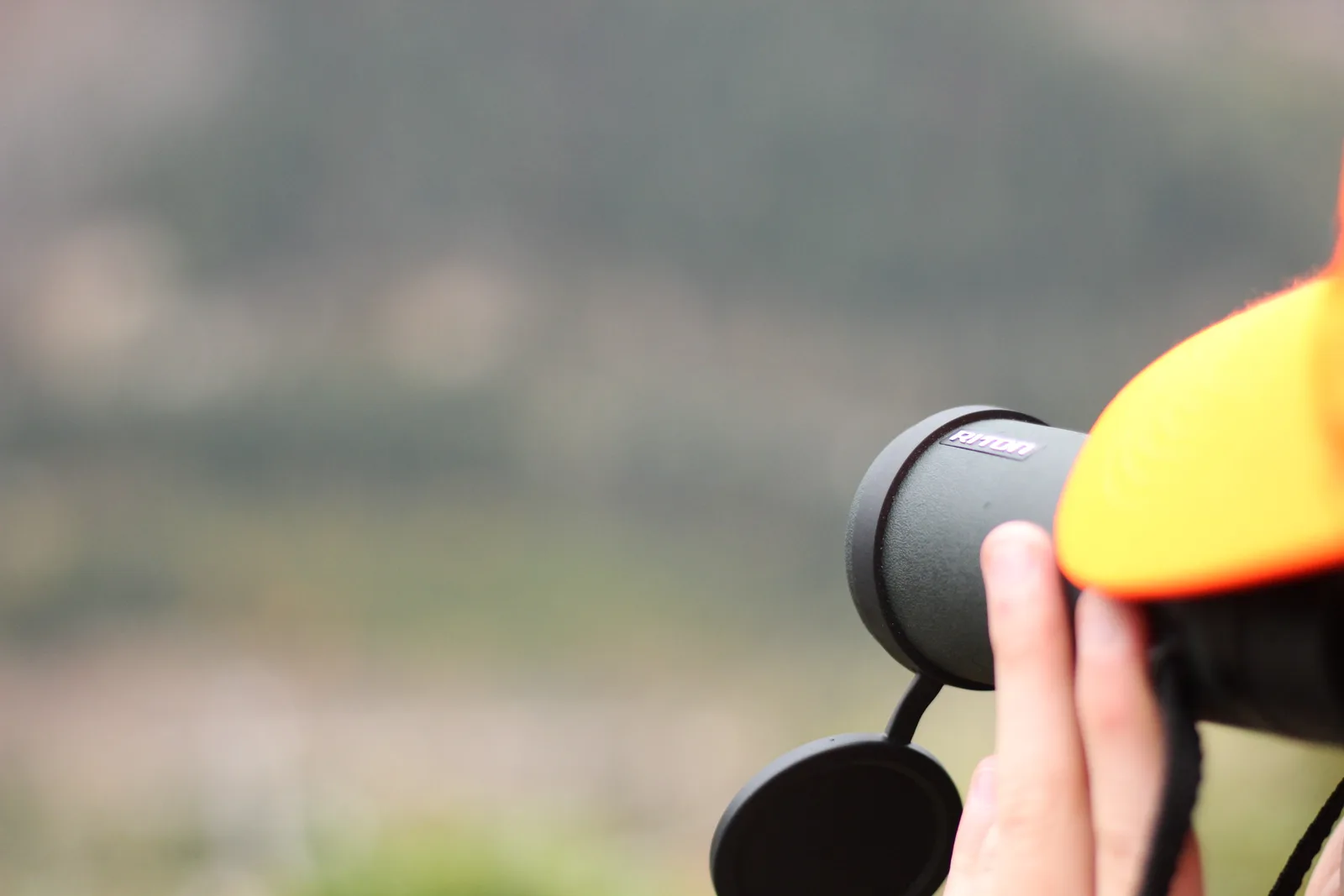
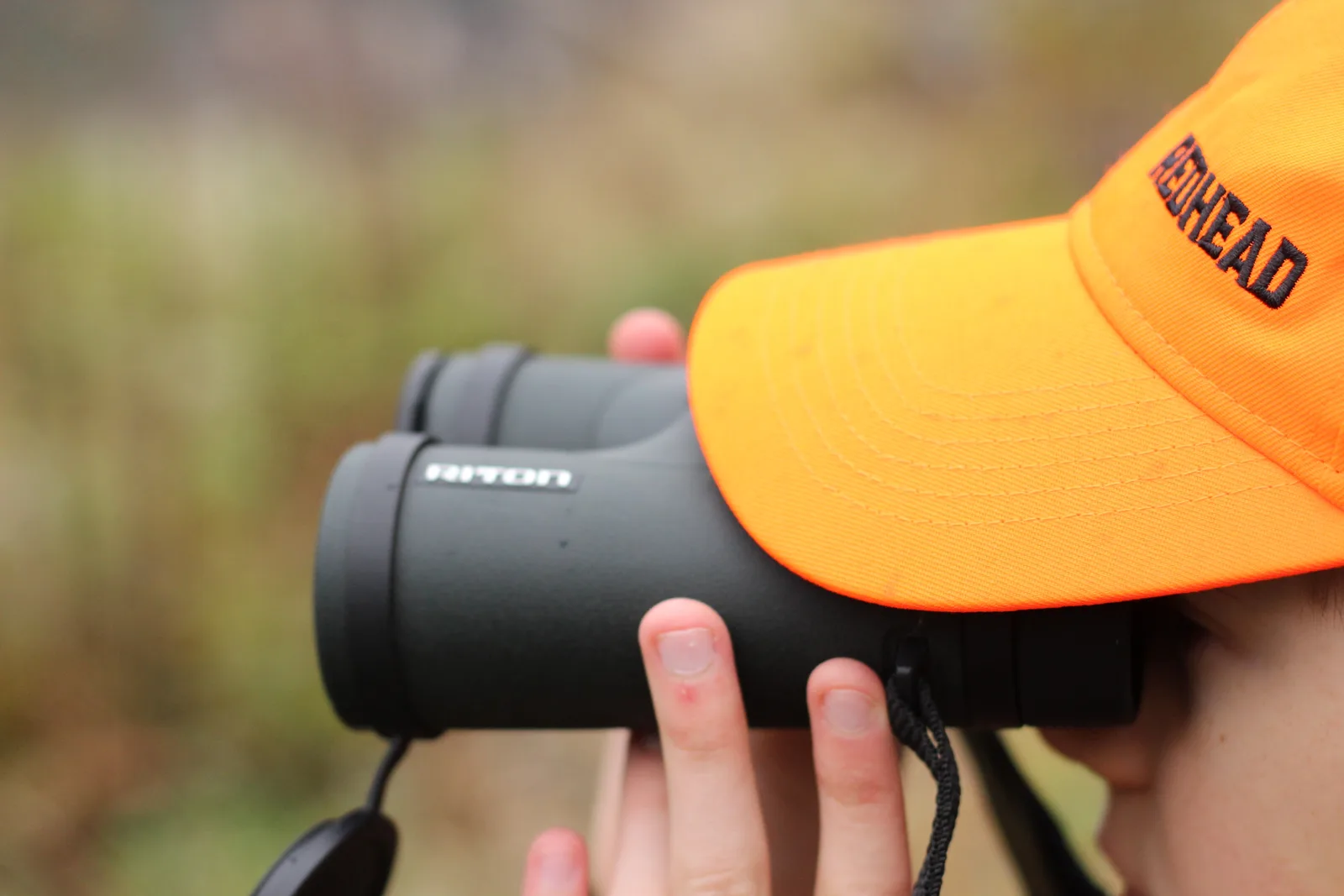
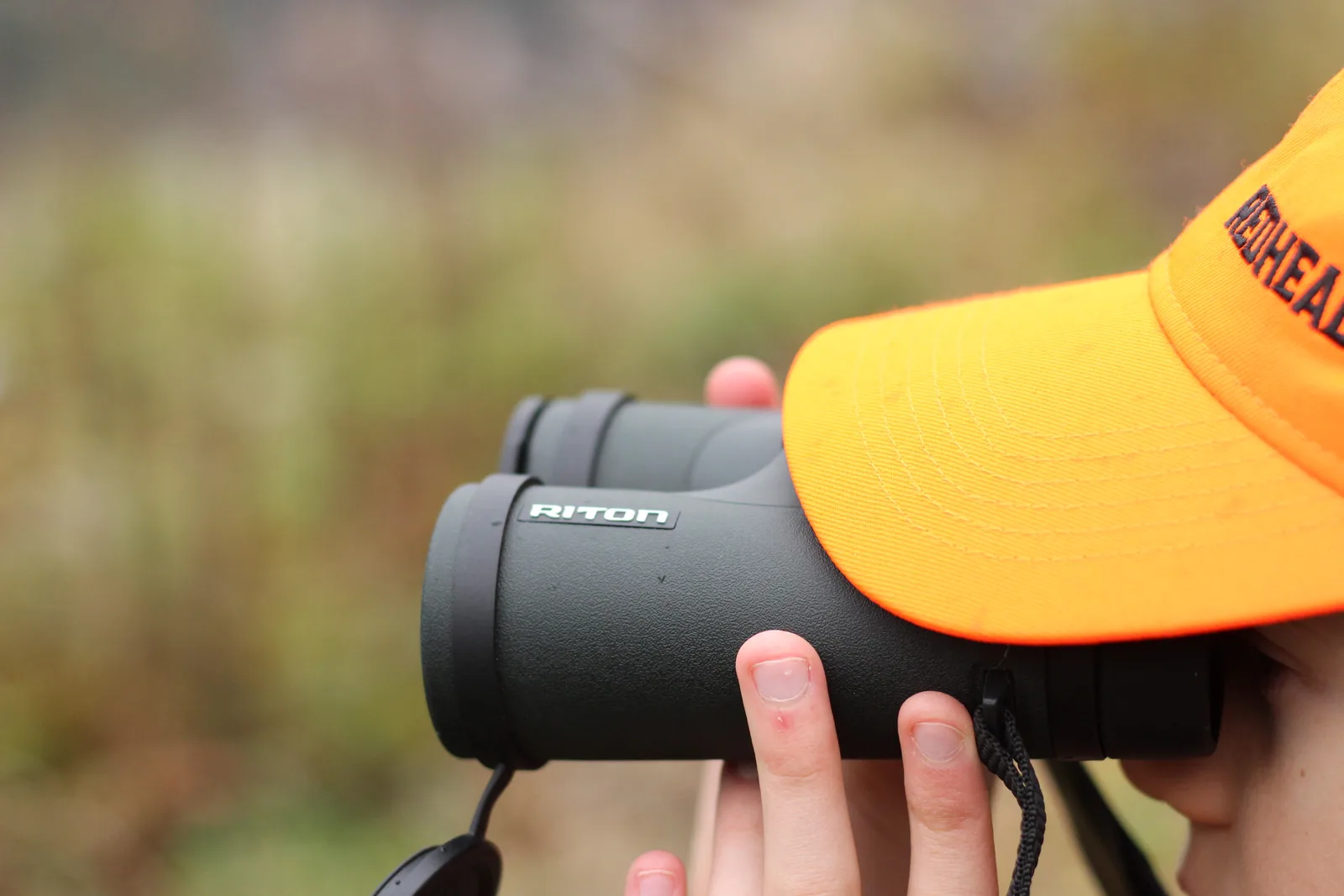
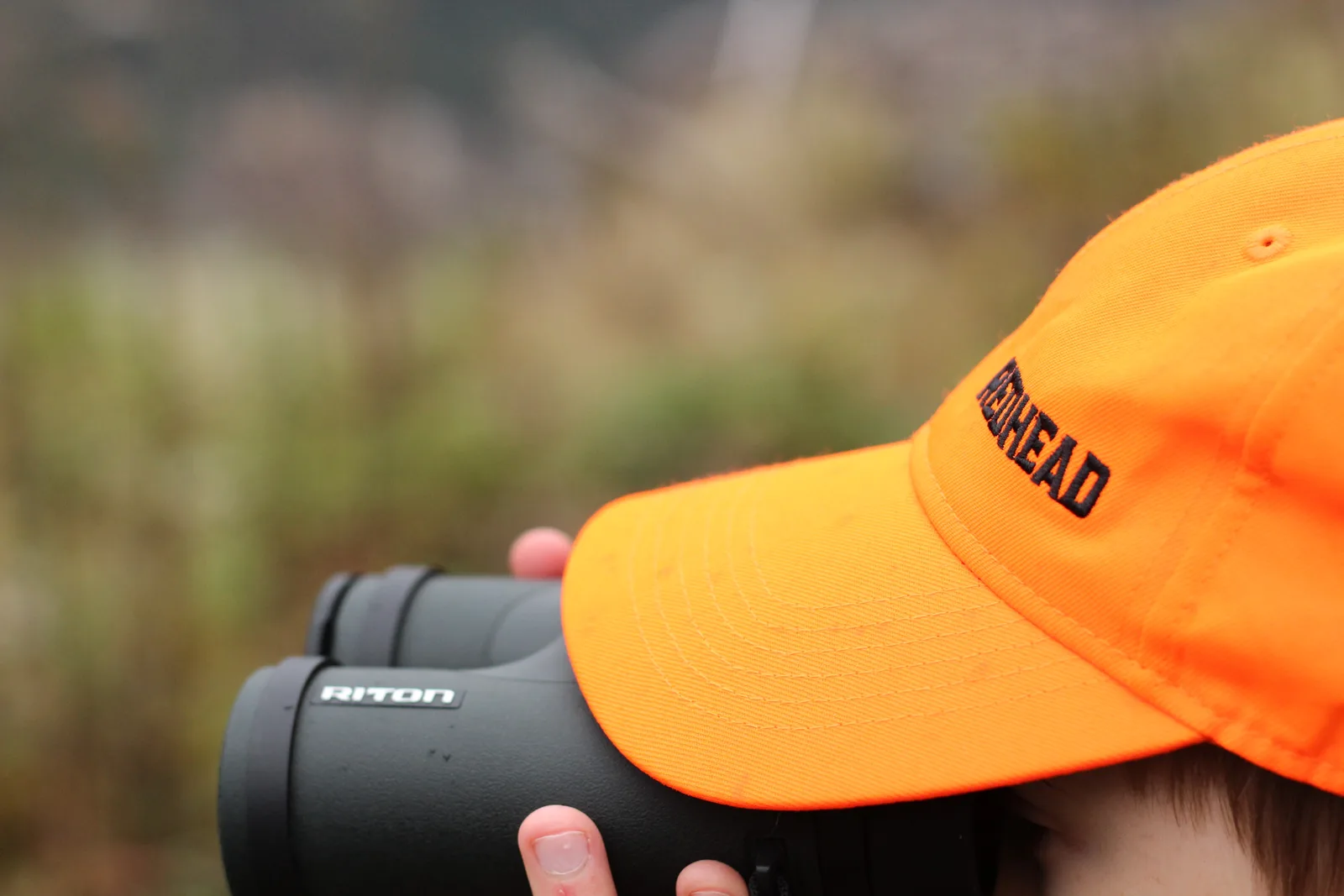
The Riton’s 10x magnification with ED glass is what makes the grid method work: steady enough for a young hunter to hold on a square, and clear enough to pick a grey shape out of grey slash. Our full Riton review has the details.
What Does a Deer See?
Blaze orange is loud to people. But deer are dichromats: they have two kinds of colour cone rather than our three. Research from the University of Georgia’s deer lab suggests the long red and orange wavelengths don’t register for them the way they do for us. To a deer, blaze tends to read as a muted yellow, brown or grey. What deer pick up well is movement and UV brighteners — some laundry detergents make fabric glow to them.
Toggle the view on our hero photo.
To us, the caps are the brightest thing in the frame.
The deer view uses a standard red–green dichromat colour simulation. It shows the idea, not exactly what a deer sees. Research summary: Outdoor Life on University of Georgia deer vision studies.
BC’s general hunting rules don’t require blaze orange the way many U.S. states do — check the current BC Hunting & Trapping Regulations Synopsis for your area and season. We wear it anyway, and always on young hunters. On public logging roads in deer season you share the country with other hunters, quads and trucks, and a CA$15 cap-and-vest combo is the cheapest insurance there is.
The Blaze Vest, and the Exo’s First Hunt
The vest is the other half of the combo. It is 100% polyester twill with a throw-on design: it goes over your head, closes with hook-and-loop at the front and an elastic belt, and fits over almost anything. This morning it rode on the outside of the Exo Mtn Gear K4 3600, tucked under the lid straps. That put a big blaze panel facing anyone coming up the road behind us, and kept the vest ready to throw on for the walk out.
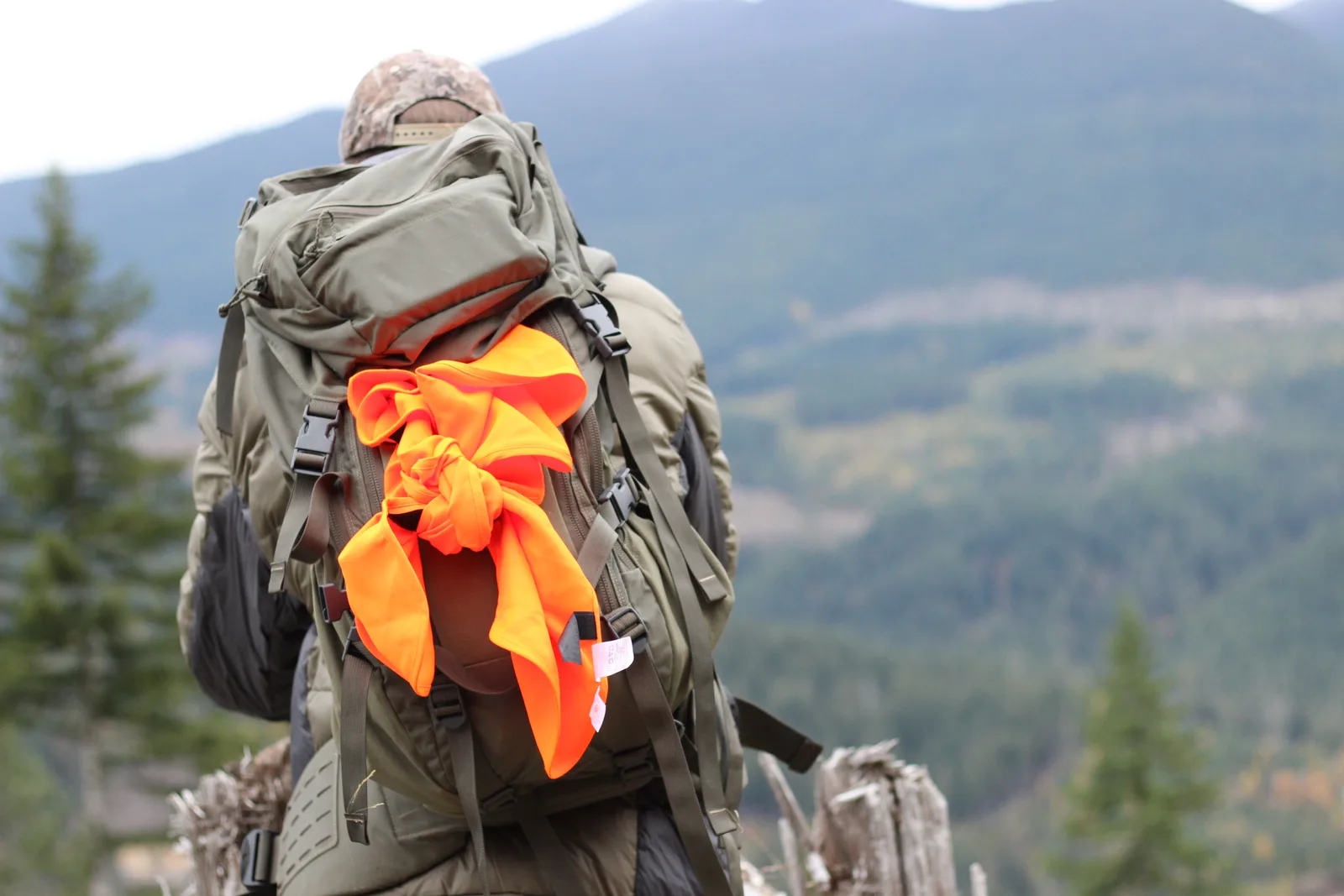
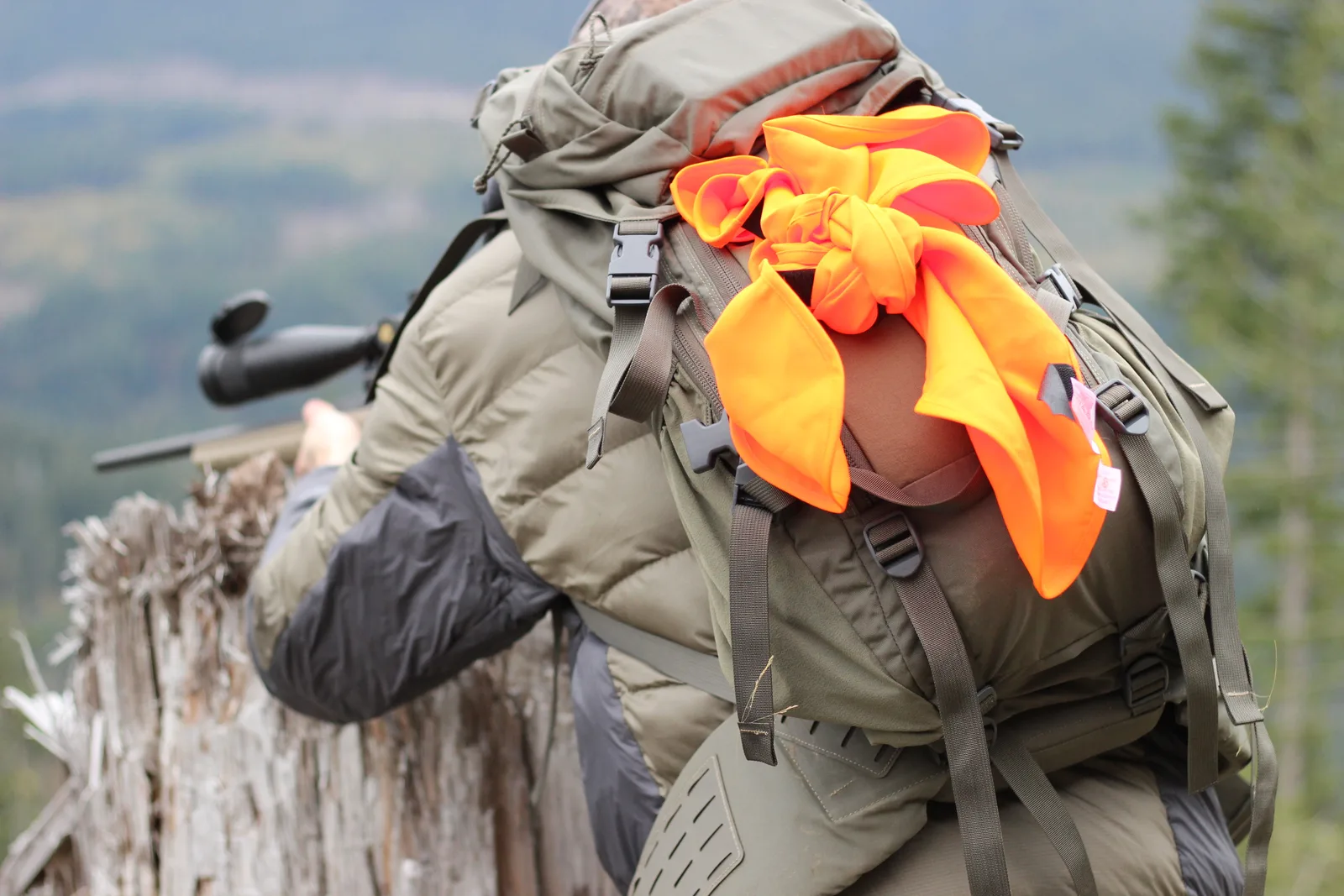
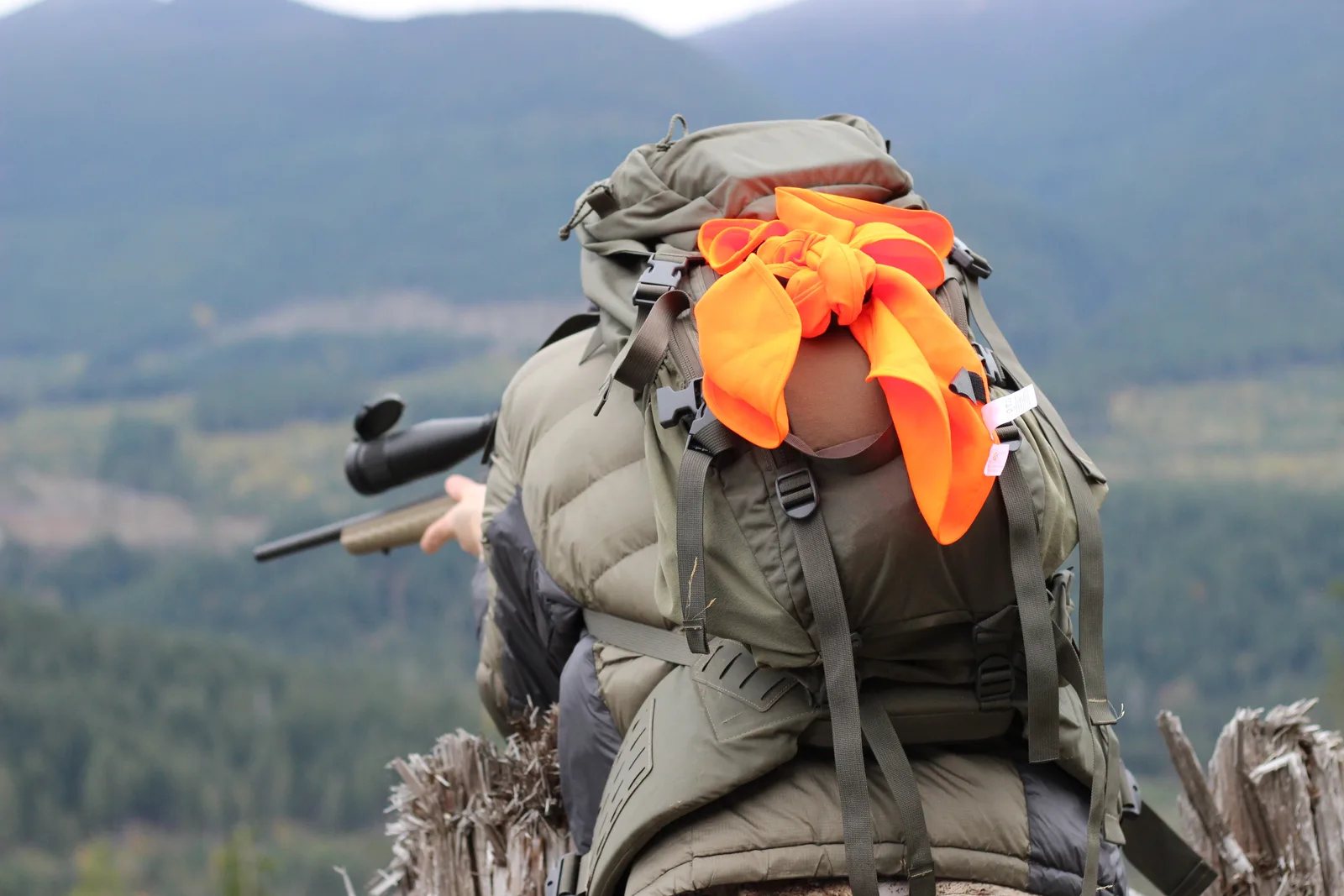
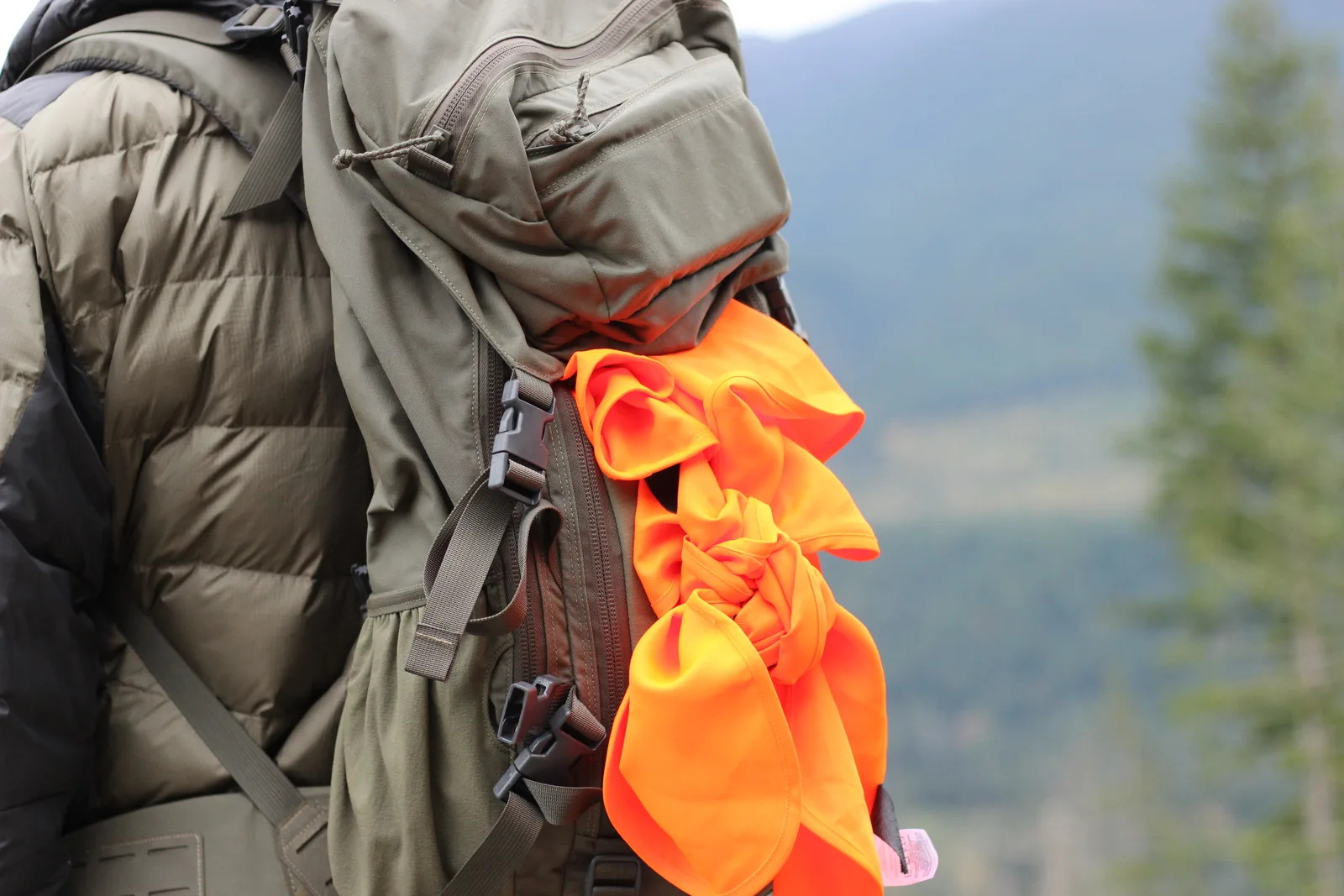
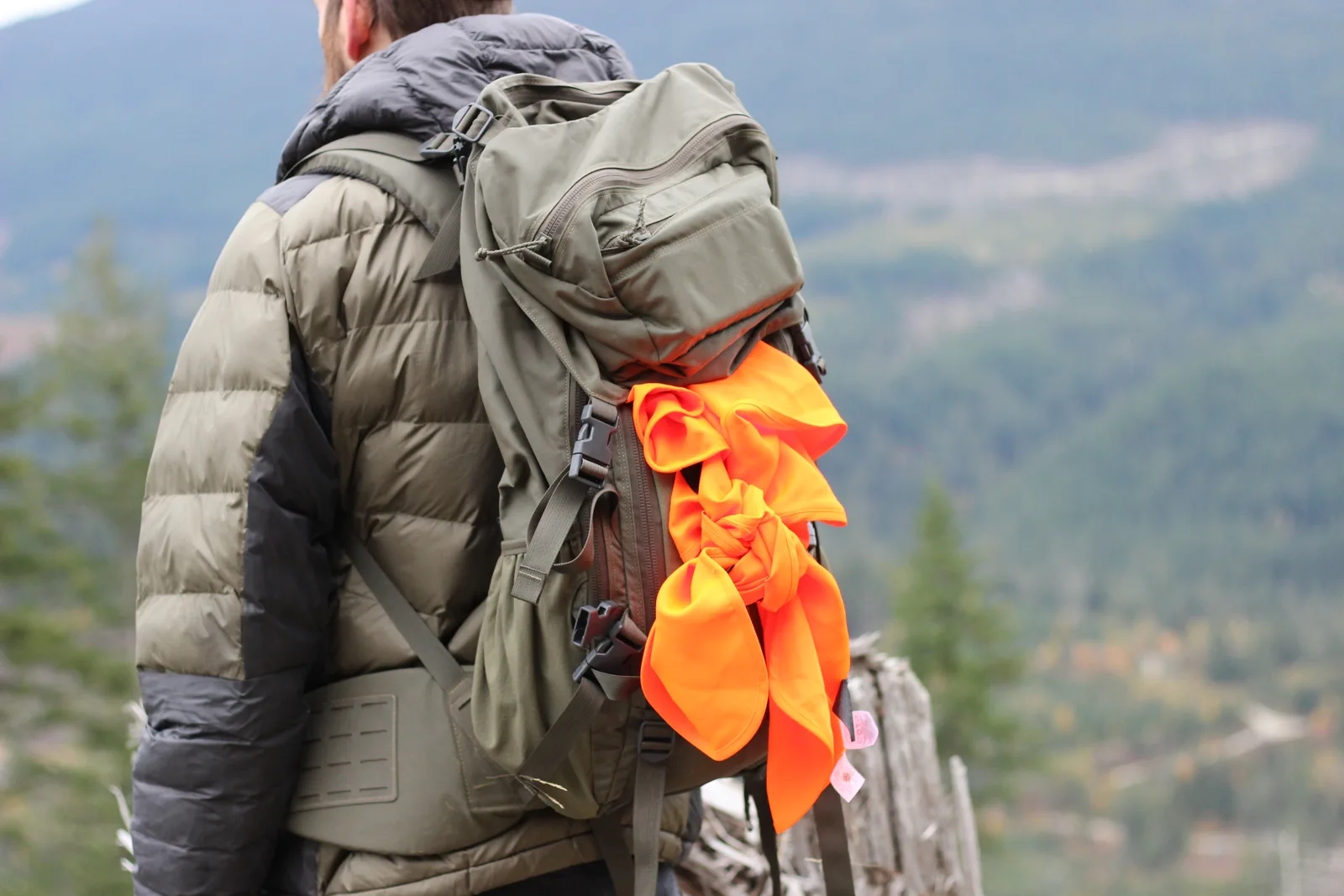
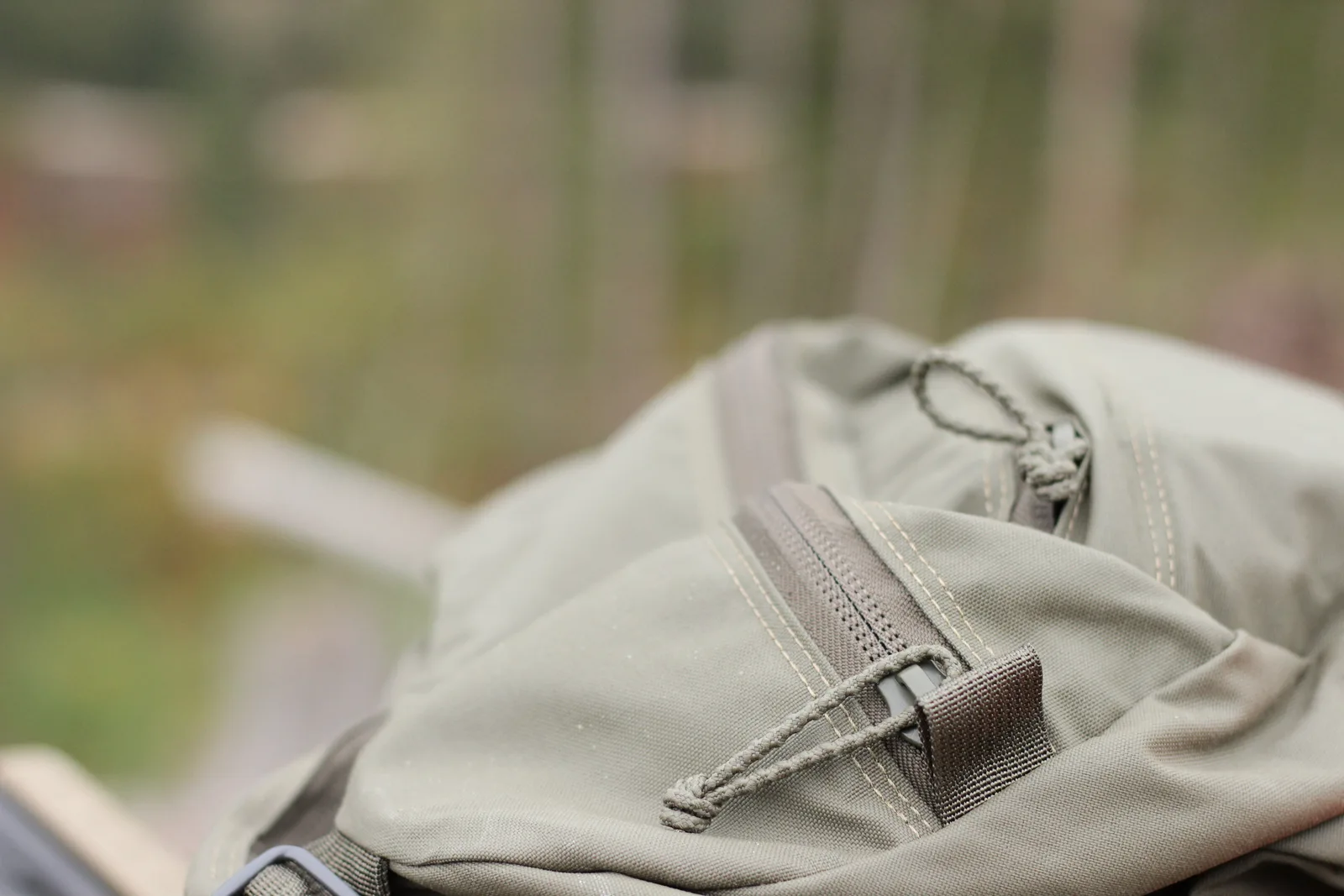
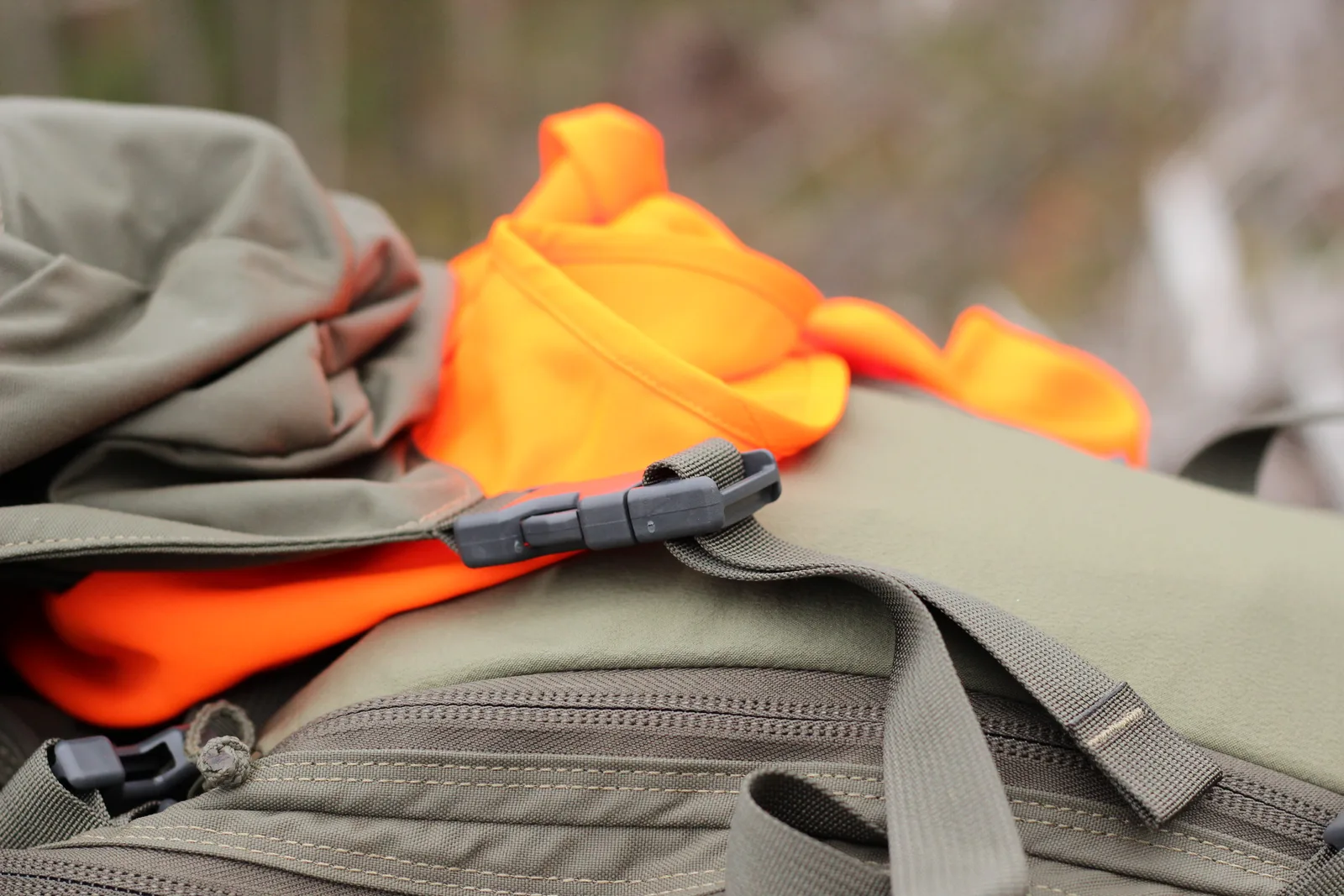
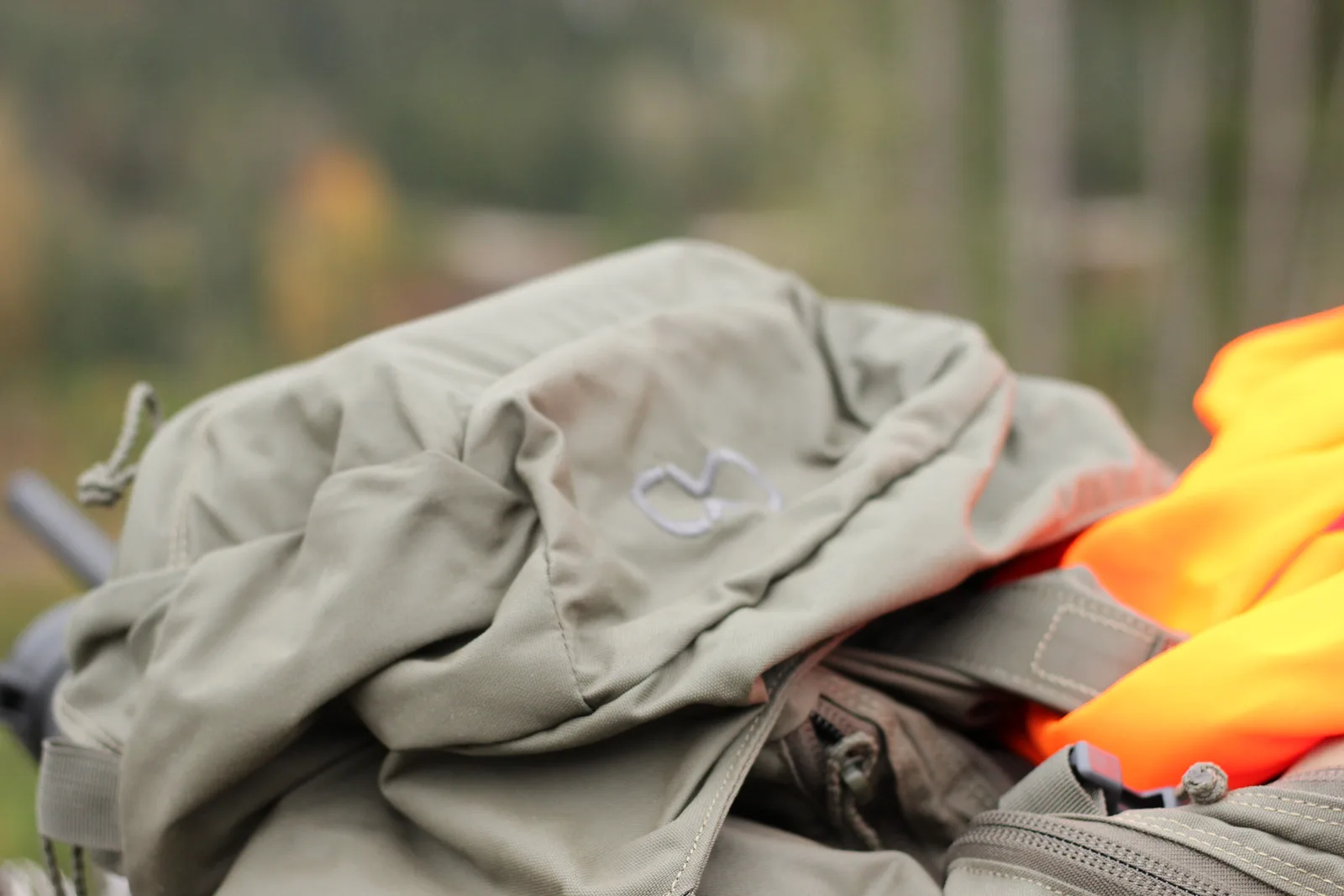
A light morning is not the job the K4 was built for — it earns its money on the way out with meat. But it was comfortable, quiet in the brush, and the lid made a handy place for the vest, the snacks and a spare layer. In our Exo review we promised you’d see it in our hunting posts; this is the first.
A lesson on the vest: on the pack, it is visible from behind. Worn, it is visible from every direction. On a quiet ridge with a long view that was fine. Moving through timber, or anywhere other hunters could come at you from the side, wear it.
The Ruger on a Stump
When we wanted a closer look at a far edge, the Ruger American Ranch .223 went over an old-growth stump with the Exo as a rest, and the scope did a turn as a spotting scope.
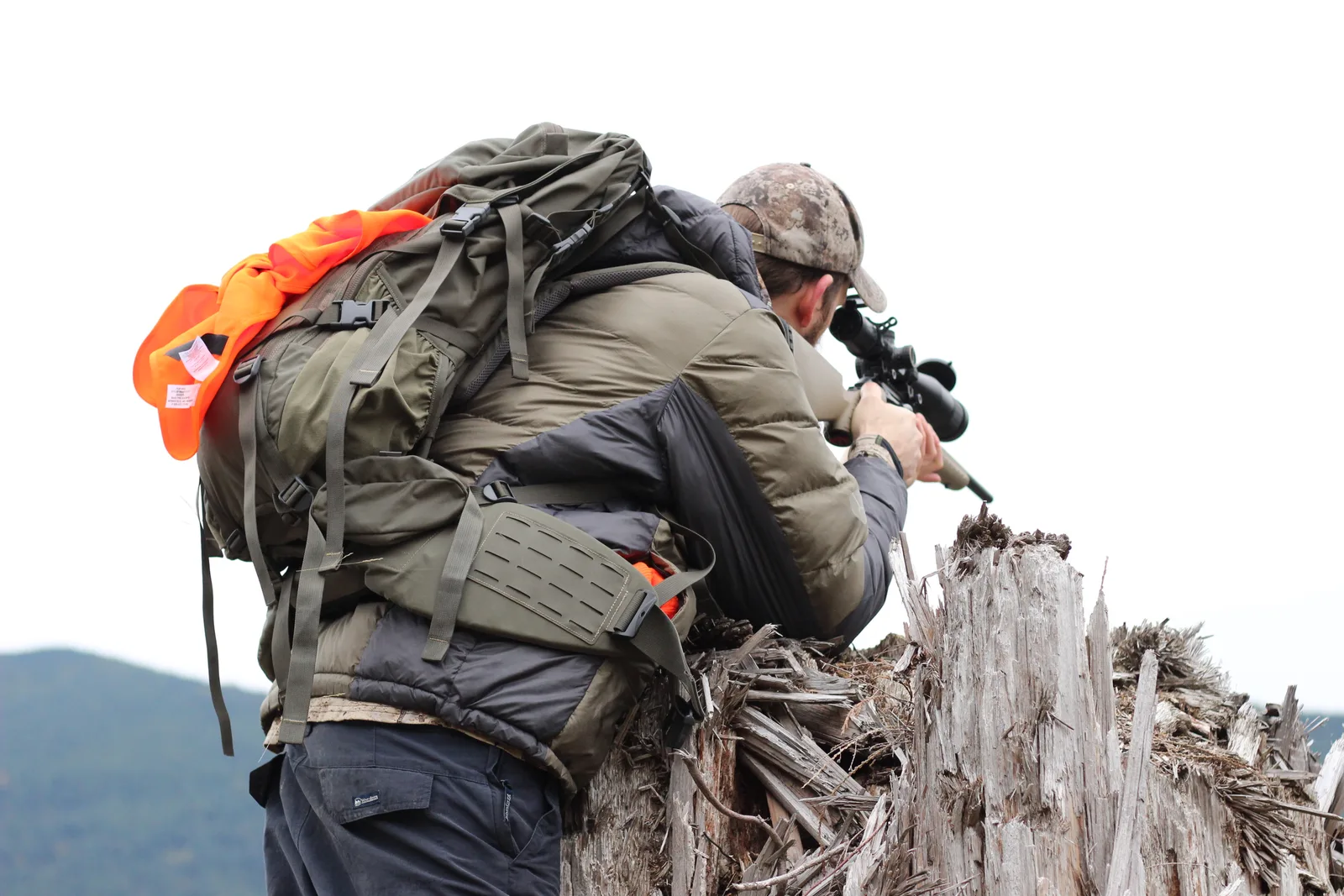
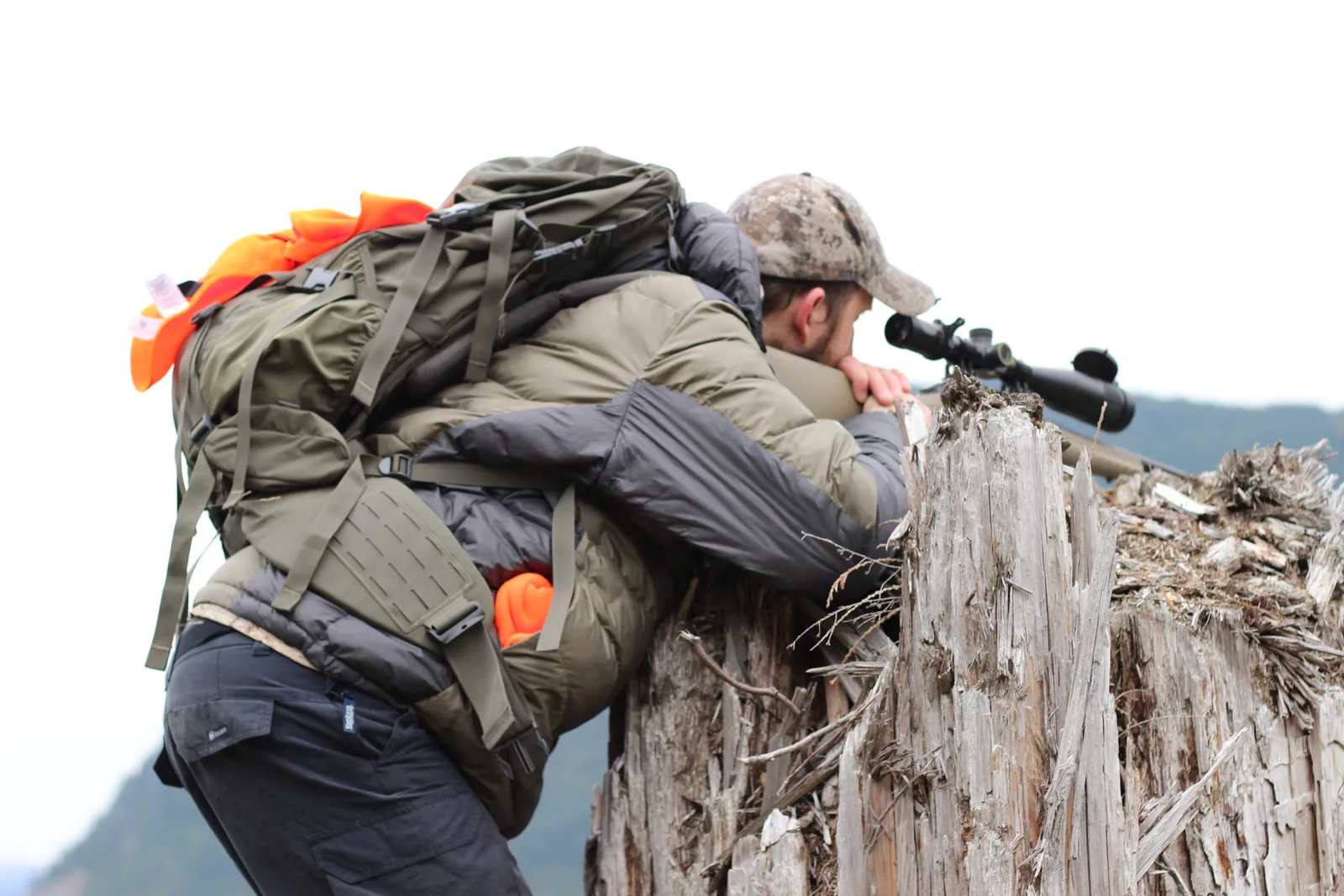
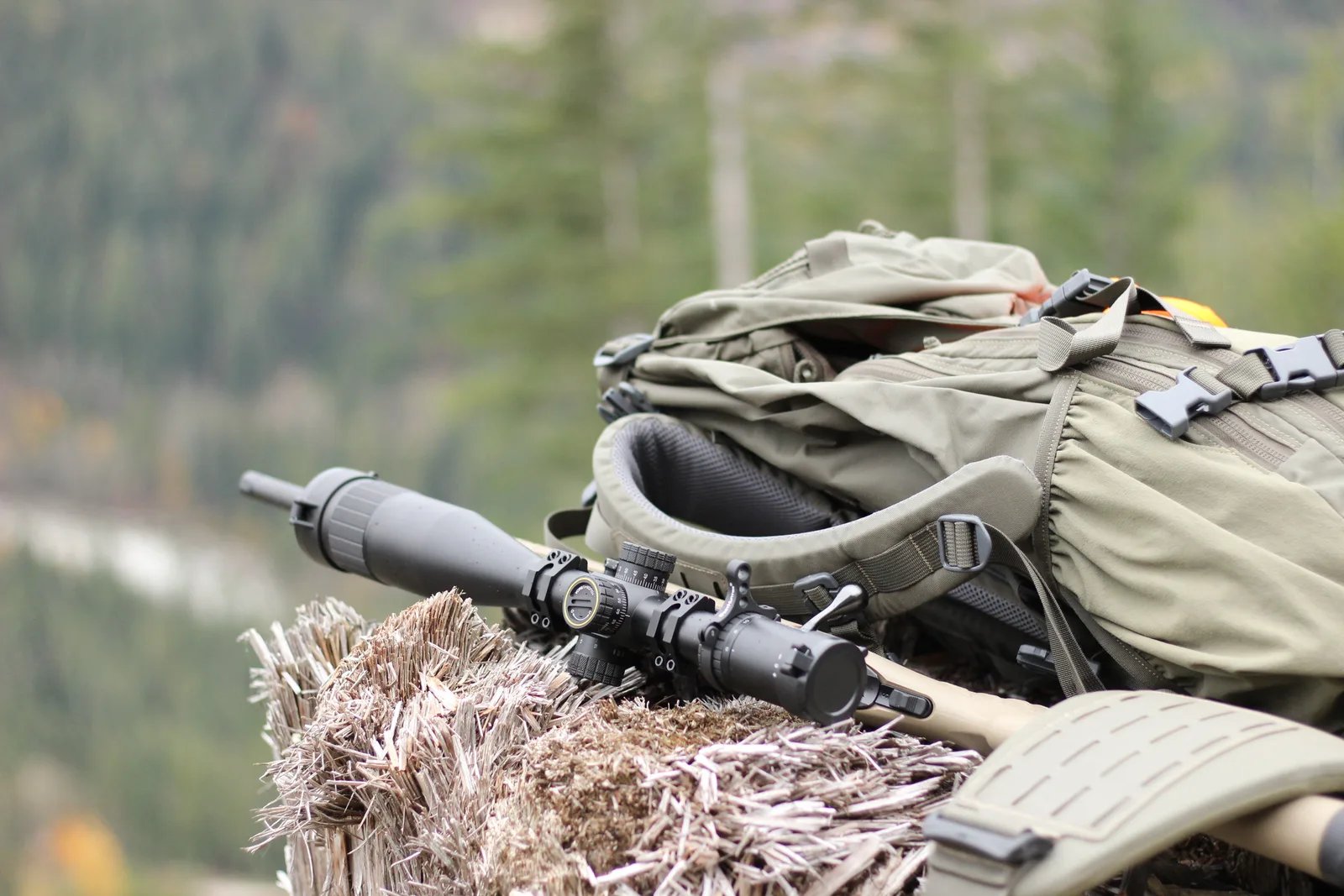
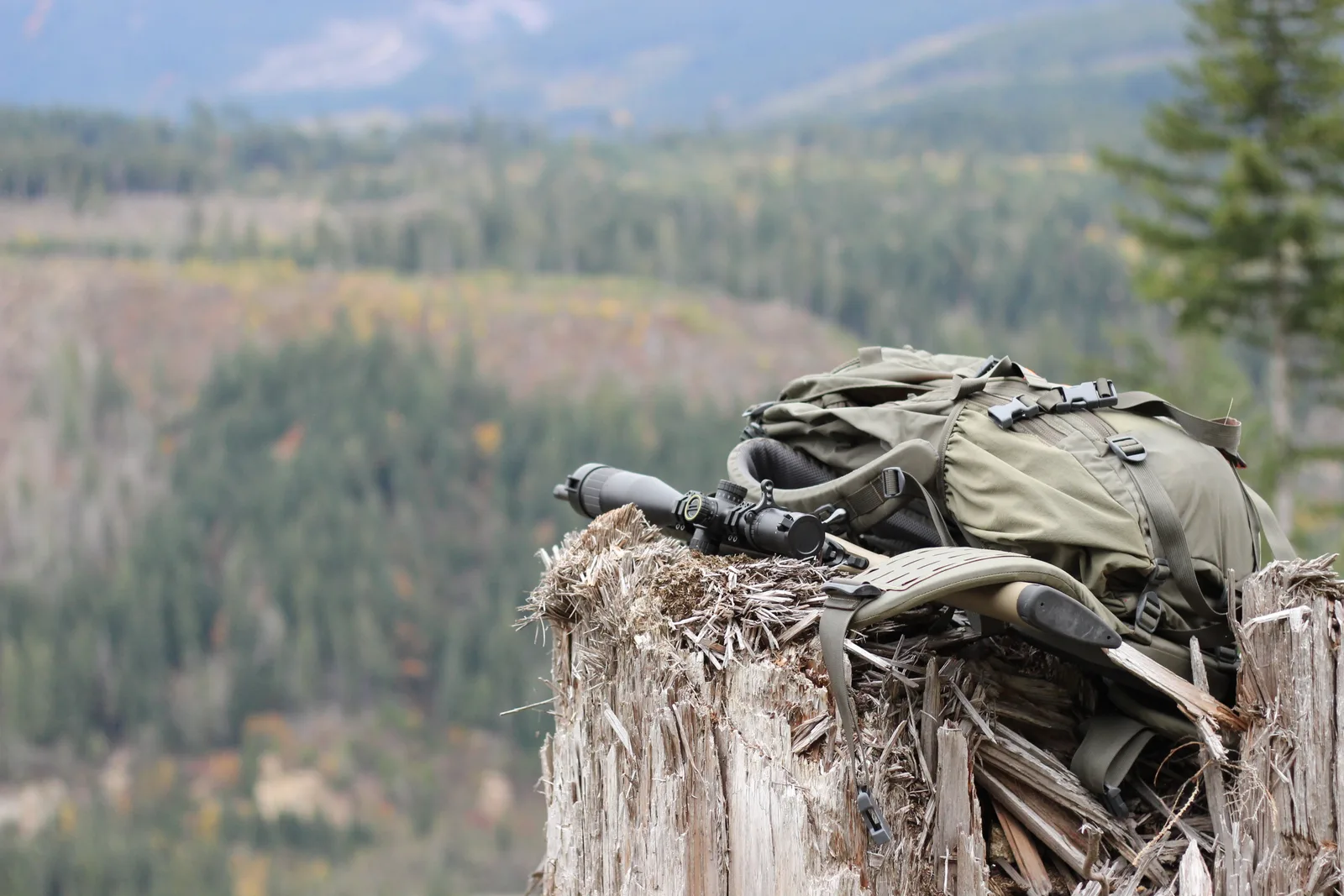
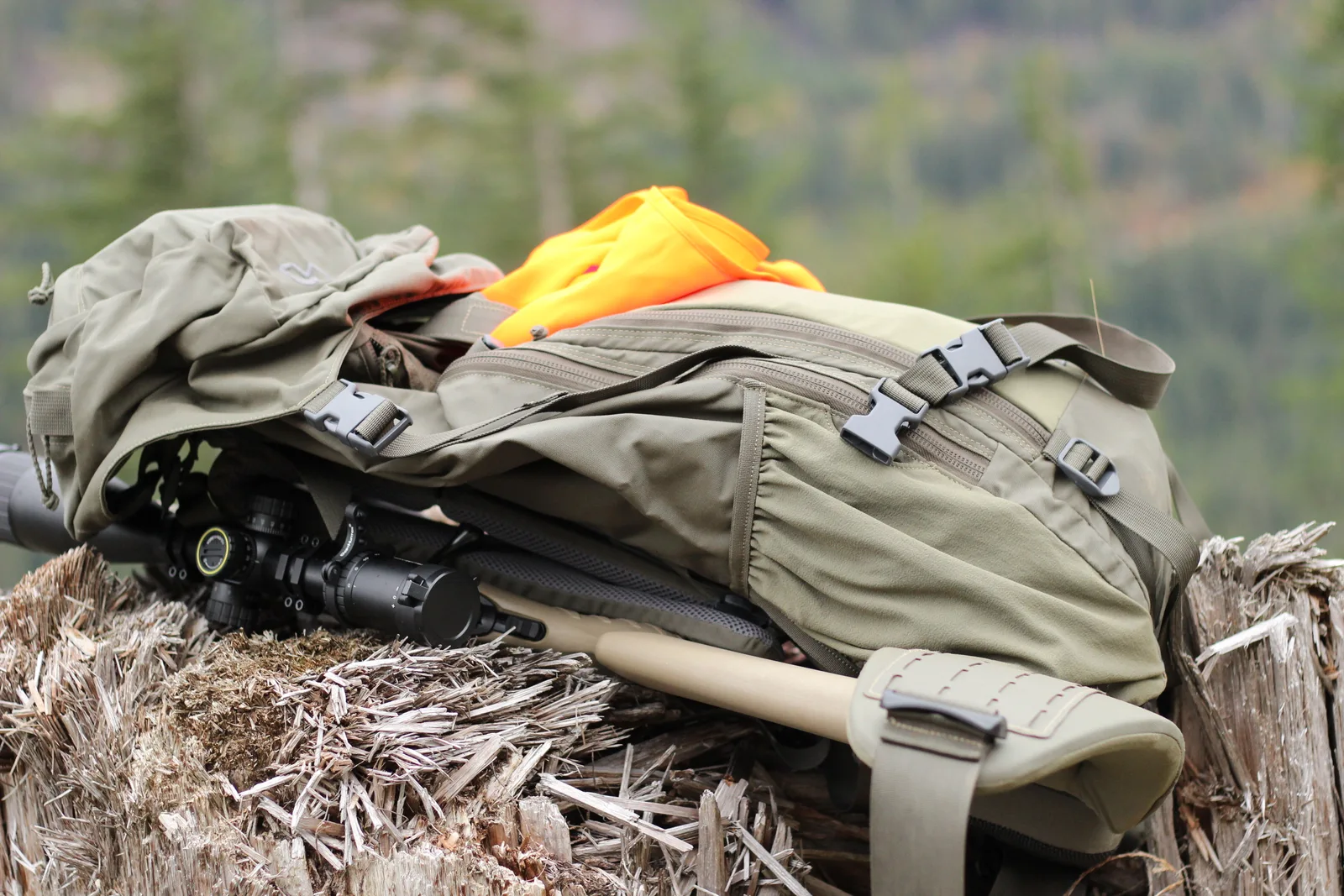
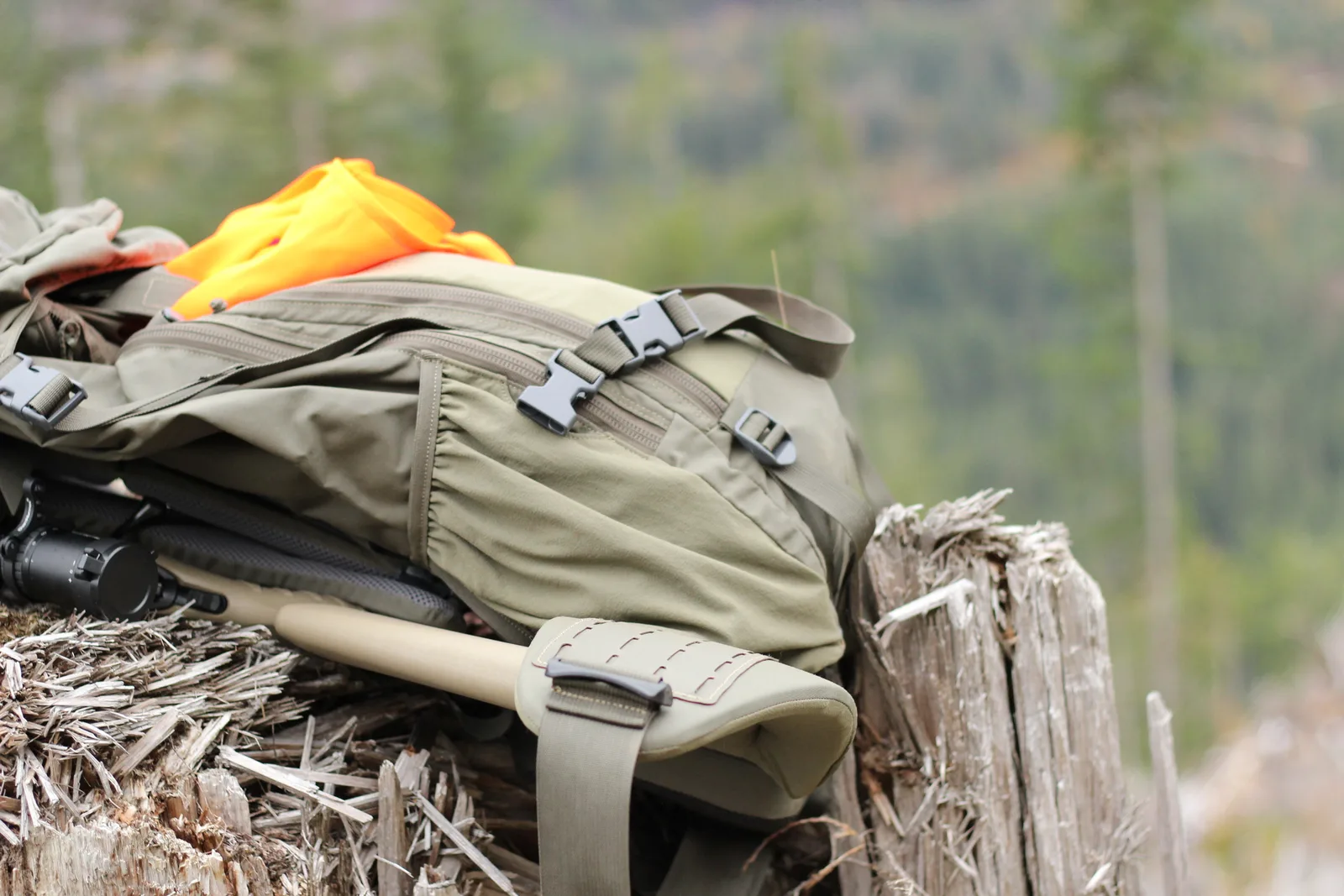
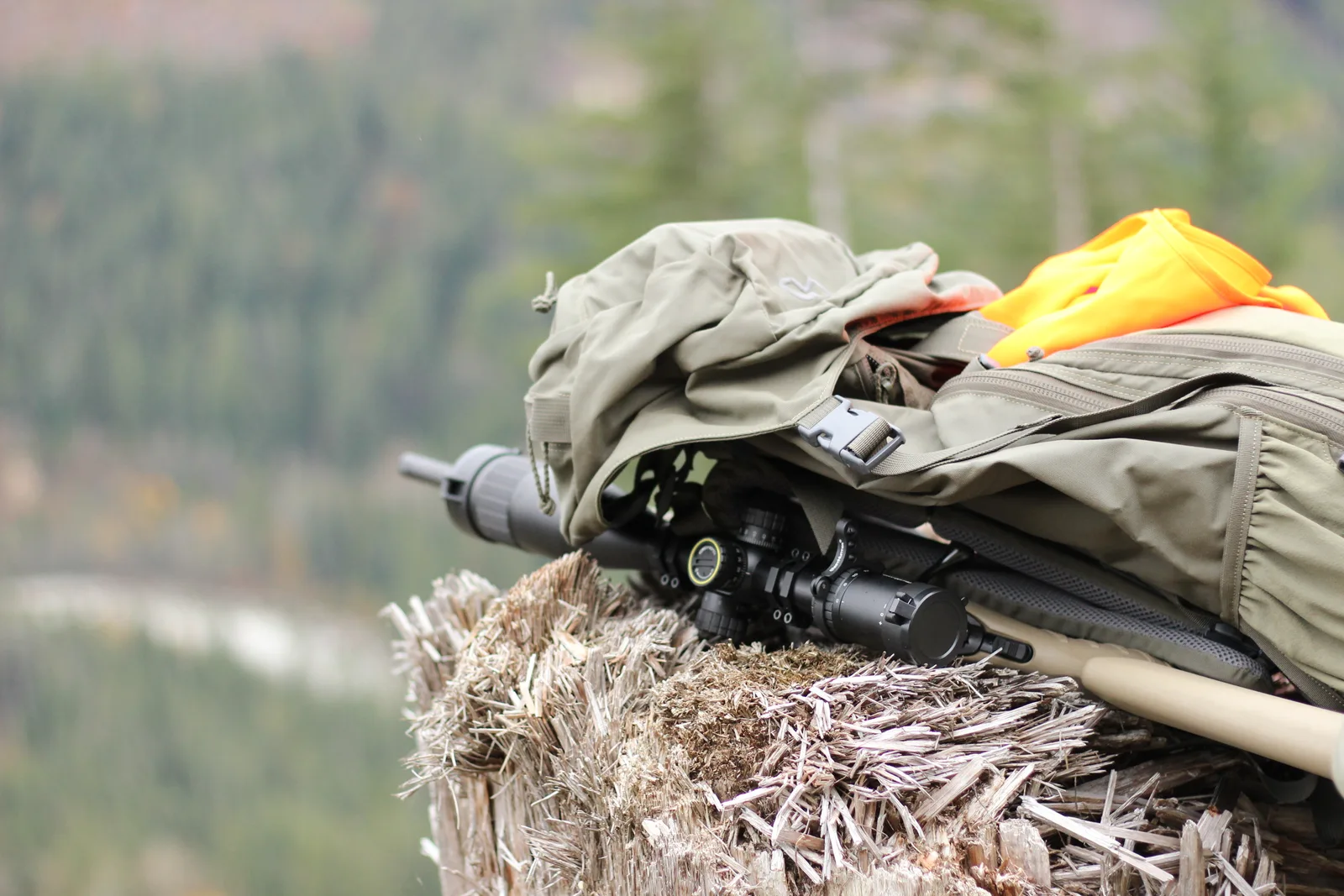
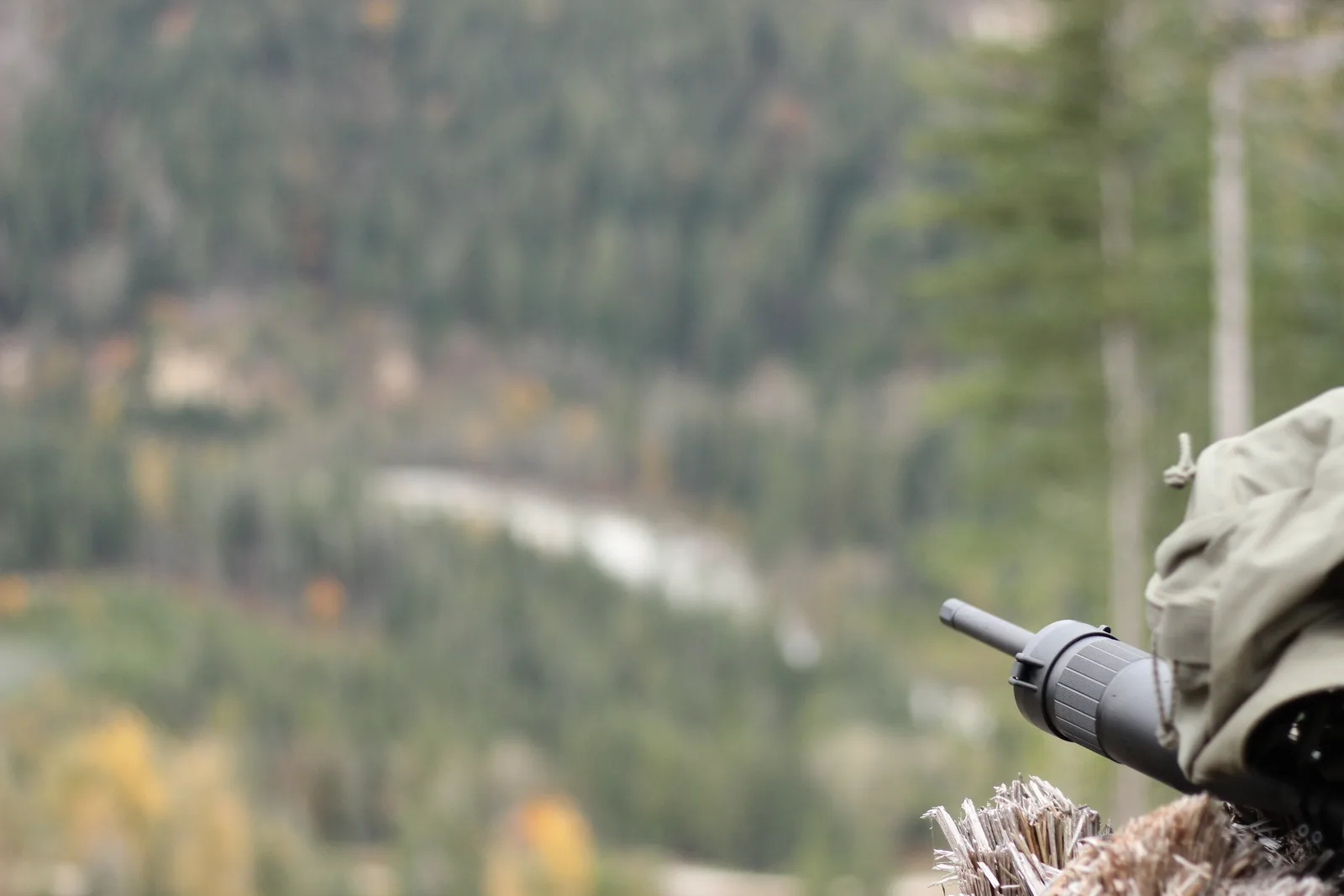
A quick word on the rifle. The American Ranch is light, short and handy on a logging road, and in .223 it is a deer rifle only with a proper bonded or controlled-expansion bullet — like the 62 gr Federal Fusion we tested — and with disciplined shot placement and distance. Check that your calibre and bullet are legal where you hunt. Glassing through a rifle scope is a convenience, not a habit: it means pointing a rifle at whatever you look at. Glass with binoculars; use the scope to confirm a target.
Mule Deer and Blacktail Glassing Tips
The deer in this coastal country are Columbian blacktails, the coastal subspecies of mule deer. Further east, in the BC Interior, you get mule deer proper. The same glassing playbook works for both:
Be glassing at first light
Deer are most visible feeding in the open in the first hour of light and the last hour of the day. Be set up before shooting light, not driving to your spot at nine like we were.
Get high and look down
From above you see into cuts, benches and draws that are hidden from the road below. You also get the rising morning thermals carrying your scent up and away.
Keep the sun at your back
Glass the slope the sun is lighting, not the one you'd be squinting into. Glassing north onto a south-facing slope, like our view to Span Creek, puts the low autumn sun behind you and the deer in the light.
Glass a grid, not a sweep
Break the country into binocular-sized squares. Hold still on each, then move with overlap. Go over good country twice; deer appear in places you already looked.
Look for parts, not deer
A flicking ear, a leg under a bush, the horizontal line of a back among vertical trees, the white of a rump or throat patch. A whole deer standing broadside is the exception.
Live on the timber edges
Regen cuts are the groceries; timber is the bedroom. Mid-morning, the edge where the two meet — and the first few metres of shade inside it — is where deer will be.
Get steady
A stump, a pack, a tripod or a bipod rest turns shaky glassing into real glassing. You'll see twice as much with the binocular locked down.
Read the cut ages
Cuts a few years old with thick browse hold more deer than fresh slash or closed-canopy plantations. Satellite maps and the colour of the regen tell you which is which.
Watch the rut calendar
As the rut builds into November, bucks move more in daylight and cover more country, and glassing gets better. Late October scouting like ours finds the spots to sit when it turns on.
Wear blaze, especially the kids
Logging roads are shared country. A blaze cap on every head, and a vest worn when you're moving through timber, keeps everyone seen.
Before you go, check the BC Hunting & Trapping Regulations Synopsis for your management unit’s deer seasons, bag limits, antler restrictions and any area closures, and make sure every young hunter is properly licensed and supervised.
Pros and Cons (the Honest Version)
What it does well. Two pieces of blaze orange — a cap and a throw-on vest — for CA$14.98 on sale (CA$17.99 regular). The cap’s hook-and-loop strap fits a wide range of heads, including younger hunters’. The black undervisor helps when you’re glassing for hours. The vest goes over a puffy or a pack in seconds and packs into a lid pocket. Both stayed bright through a grey, damp morning. Bass Pro Canada shoppers rate the combo 4.7 out of 5 from 28 reviews.
Where to go in with your eyes open. This is basic kit. The cap is polyester, not a warm or waterproof hat, and you’ll want a blaze toque when it turns cold. The vest has no pockets, no mesh and no structure — the elastic belt and hook-and-loop front are made for a quick throw-on, not a tailored fit. And blaze only works when it is on you: our vest spent this morning on the pack, which is a compromise we wouldn’t make in thick timber.
Who Should Buy It
Buy it if you need blaze for a new or young hunter, a spare set for the truck, or cheap, visible gear for road hunting, upland birds or walking logging roads in deer season. At this price there is no reason for anyone in a hunting party to go without.
Look elsewhere if you want blaze built into a real layer — a reversible jacket, a blaze puffy or a pack-compatible vest with pockets. RedHead and others make those, for more money.
Final Verdict
The RedHead Men’s Blaze Cap/Vest Combo does one simple job for very little money: it makes you, and the young hunters with you, impossible for another person to miss. On our Chehalis ridge morning, the caps were the brightest thing on the mountain, the vest rode on the Exo ready to throw on, and none of it cost more than a box of shells. It is basic, and that’s the point.
Rating: 4.5/5 Stars
What We Found, and What’s Next
We came home with no deer and a map full of notes: a ridge road high on the edge of the mountain, a fresh cut below it, a hard timber edge and a bench we’d never have seen from the valley. The plan is simple. Next time we’ll be on that ridge before first light, set up on the stump with the Riton on a steady rest, and glassing the edges as the deer drift back from the cuts. The rut is coming. We’ll be back, in blaze — and we’ll tell you how it goes.
Brands sometimes provide samples for review. Hunt & Live writes its honest opinion either way — gear that doesn’t earn its keep doesn’t get a recommendation.