
Featured Review · Ameristep · Ground Blinds
Ameristep Doghouse Ground Blind Review — Start Hunting in Under a Minute!
Our Rating
Current Price
- Model
- Doghouse spring-steel ground blind
- Footprint
- 60 x 60 in (152.4 x 152.4 cm)
- Height
- 66 in (168 cm)
- Shooting width
- 60 in (152.4 cm)
Pros
- Spring-steel hub frame — it genuinely does spring open, and one person has it standing and staked in well under a minute
- 60 x 60 in footprint with 66 in of height and a 60 in shooting width: two hunters fit, or one hunter with a chair, a pack and room to draw
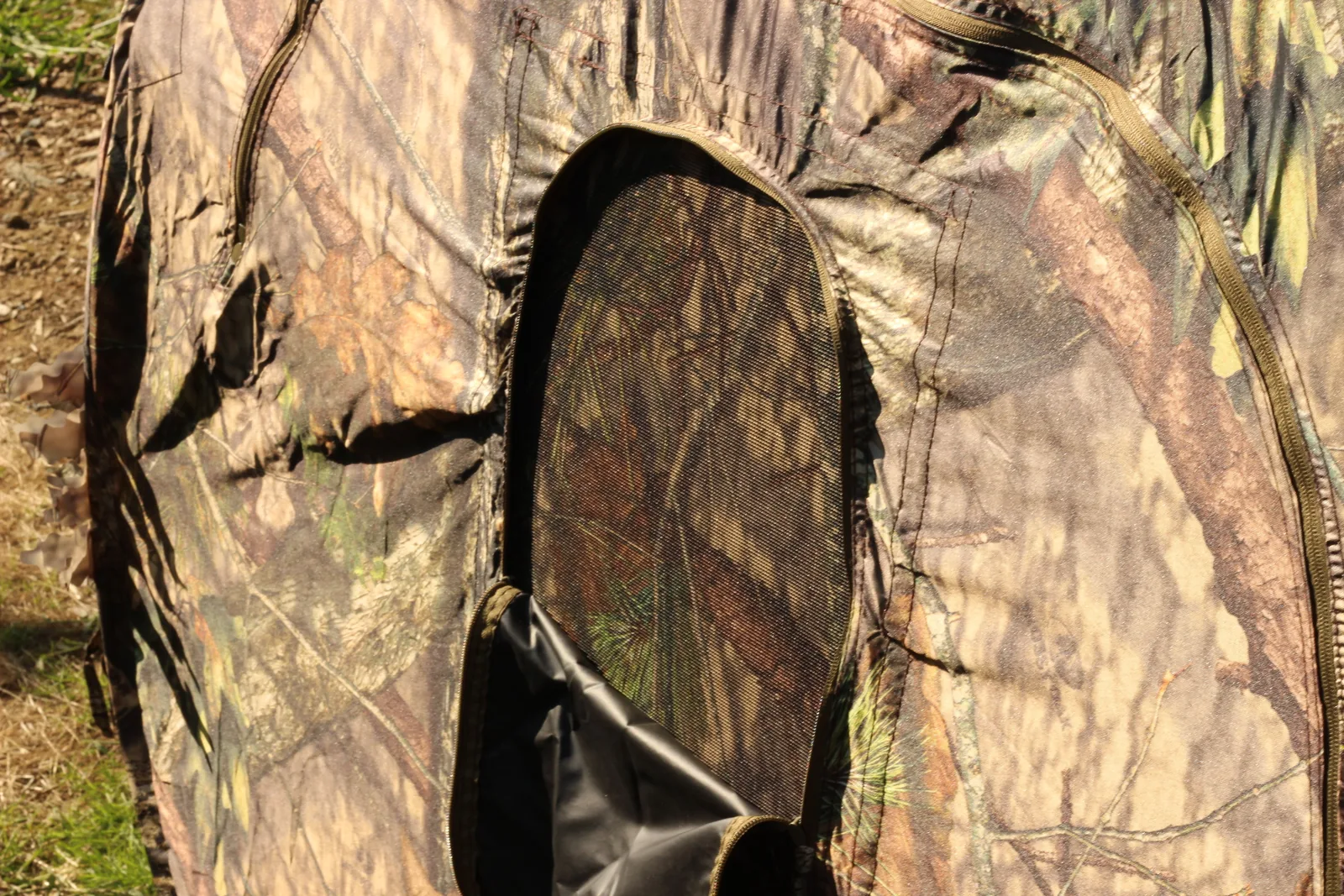
- ShadowGuard interior coating plus a matte Durashell Plus shell — the inside stays properly black, which is what actually keeps you invisible through an open window
- Shoot-through mesh porthole covers come in the box, so you can hunt behind mesh instead of behind a hole
- 3D Edge ReLeaf trim on the shell breaks up the hard roof and corner lines that make a blind read as a box in a field
- 5.4 kg on a backpack-style carry case, with stakes and high-wind tie-downs included — this is a blind you carry in, not one you install
Cons
- Folding it back down takes a couple of goes to learn — the hub twist is easy once shown, and unintuitive until then
- Mossy Oak Break-Up Country is a woodland pattern; in open stubble or on a bare berry row you will want to brush it in
A ground blind earns its money in the first sixty seconds and the last thirty. Everything in between — the sitting, the waiting, the shot — is the same in any blind worth owning. What separates them is whether the thing goes up before the light does, and whether it comes down without a fight when your hands are cold and you want to be in the truck.
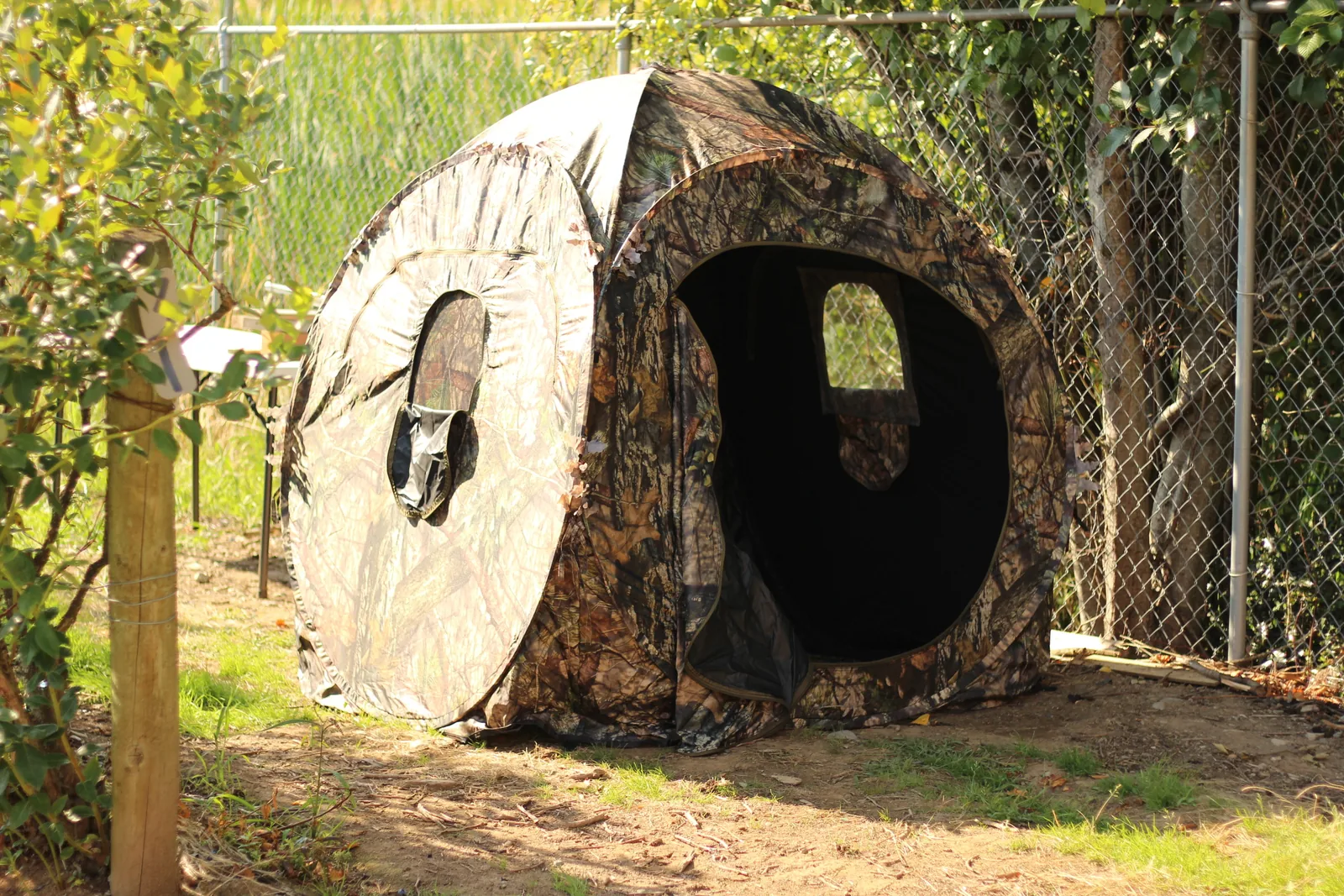
The Ameristep Doghouse is built almost entirely around that. It is a spring-steel hub blind, 60 inches square with 66 inches of height, weighing 5.4 kg and packing to a 24-inch disc on a backpack-style case. Pull it out, let it go, and it very nearly puts itself up.
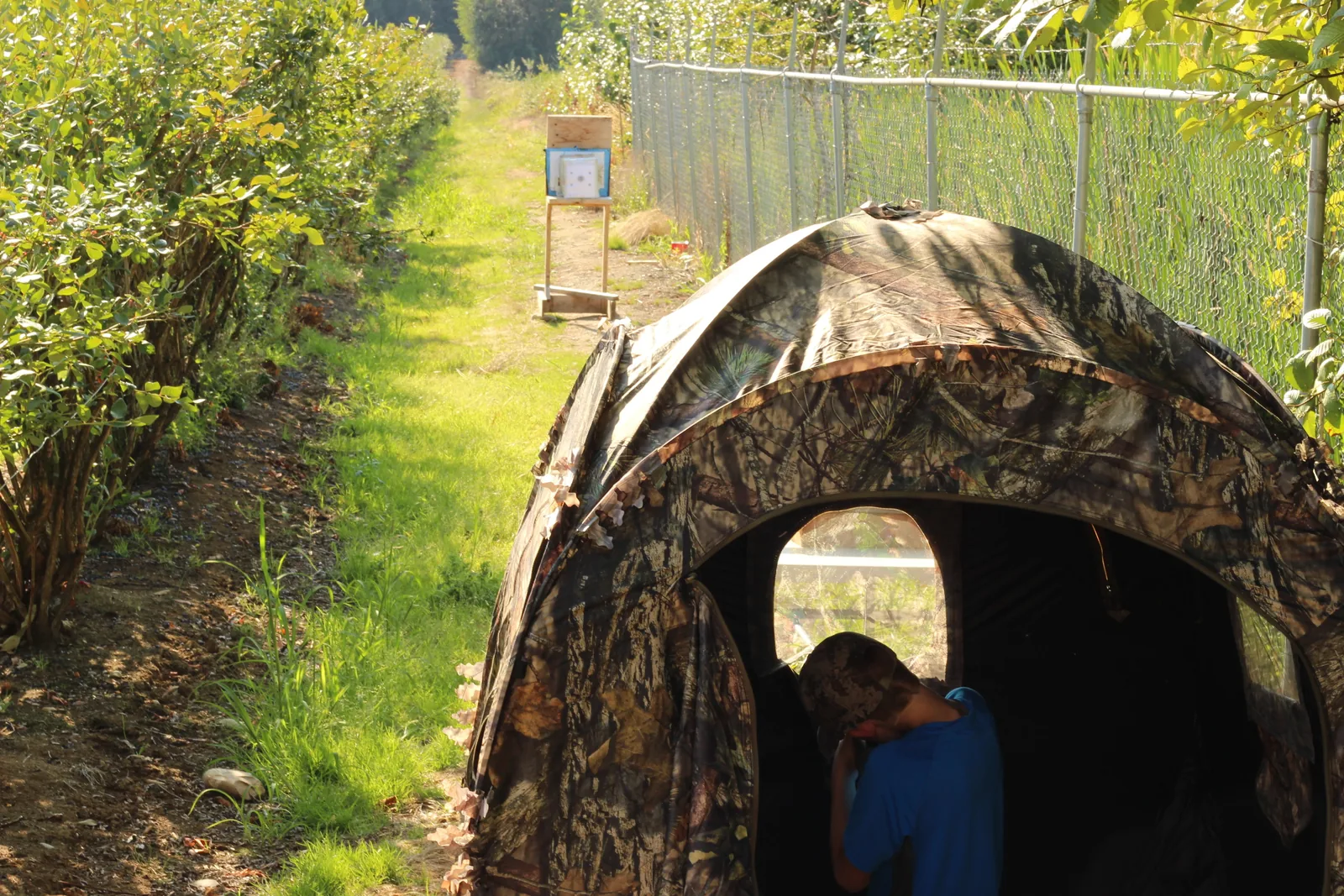
We ran it on a working berry row — pitched against the hedge, staked down, and hunted out of with a scoped air rifle and a target down the lane. Here is what it does well.
At a glance
In the Box
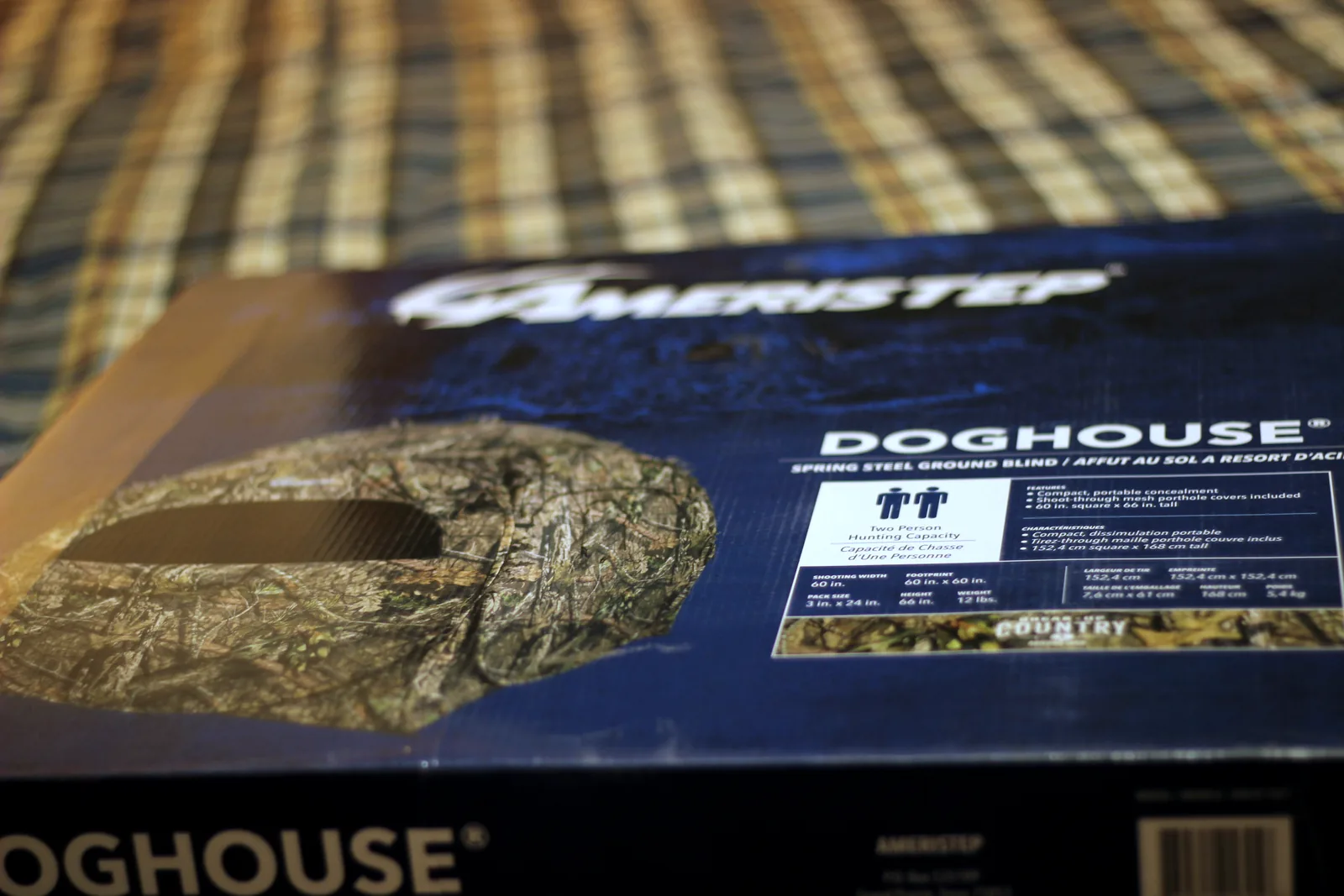
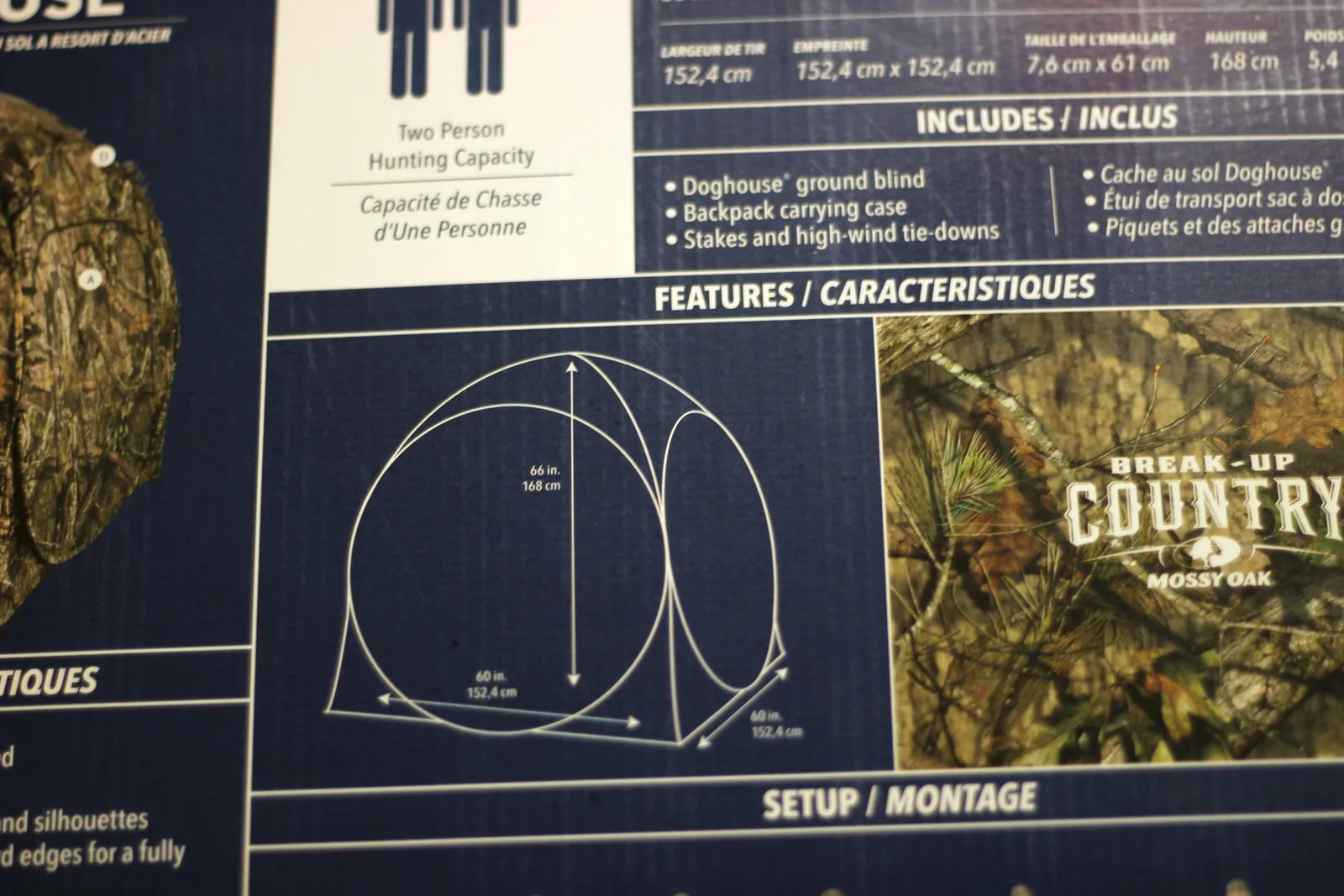
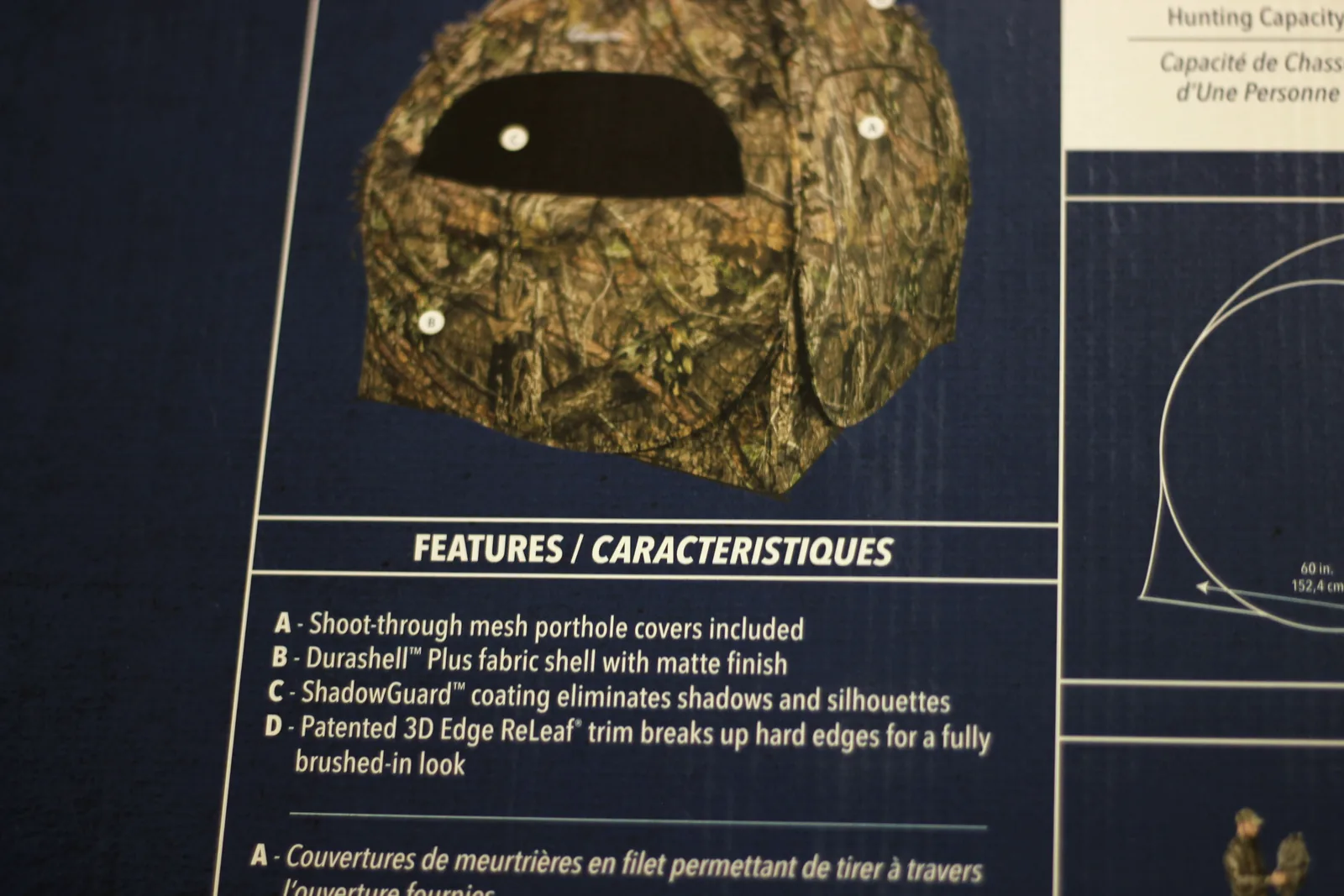
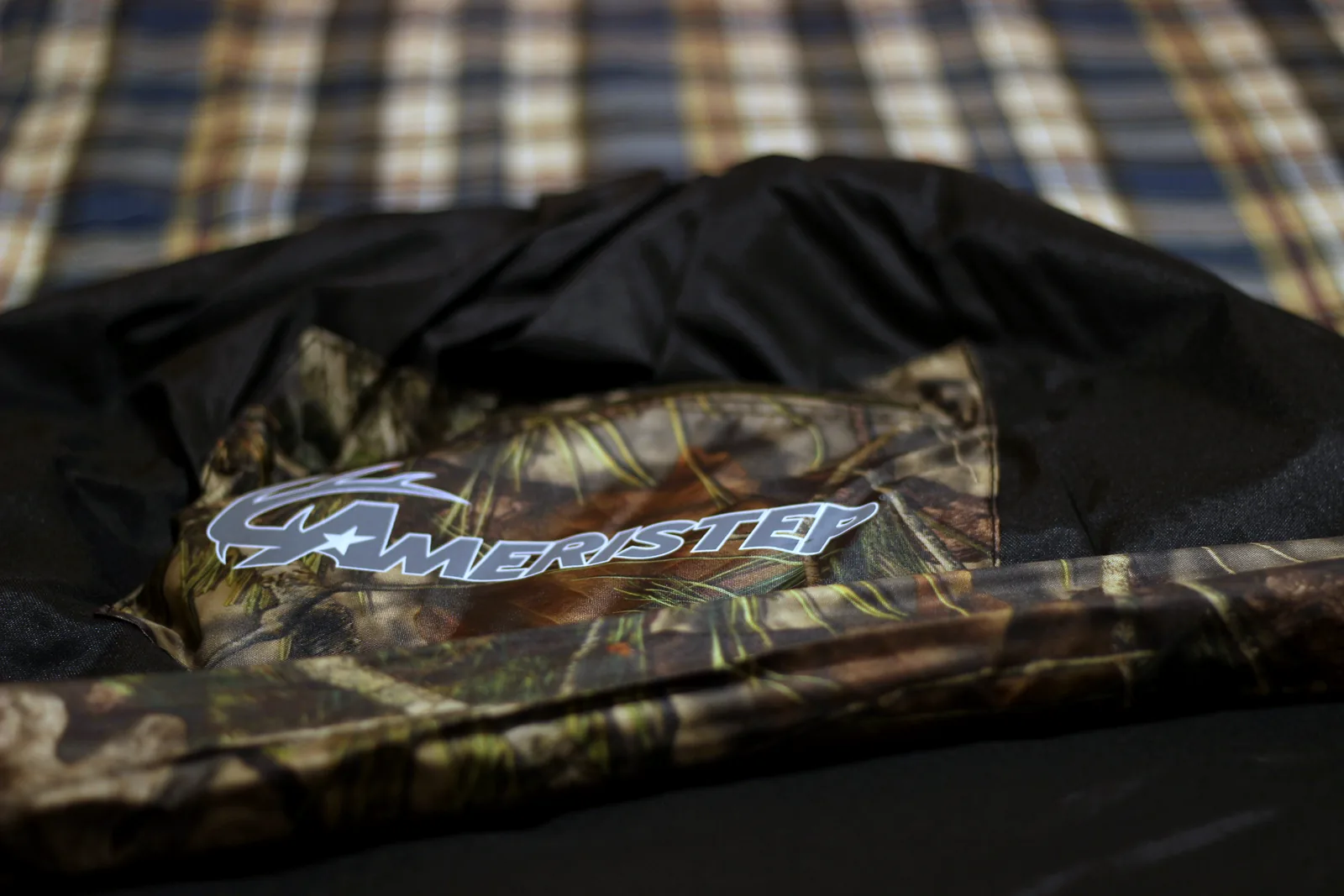
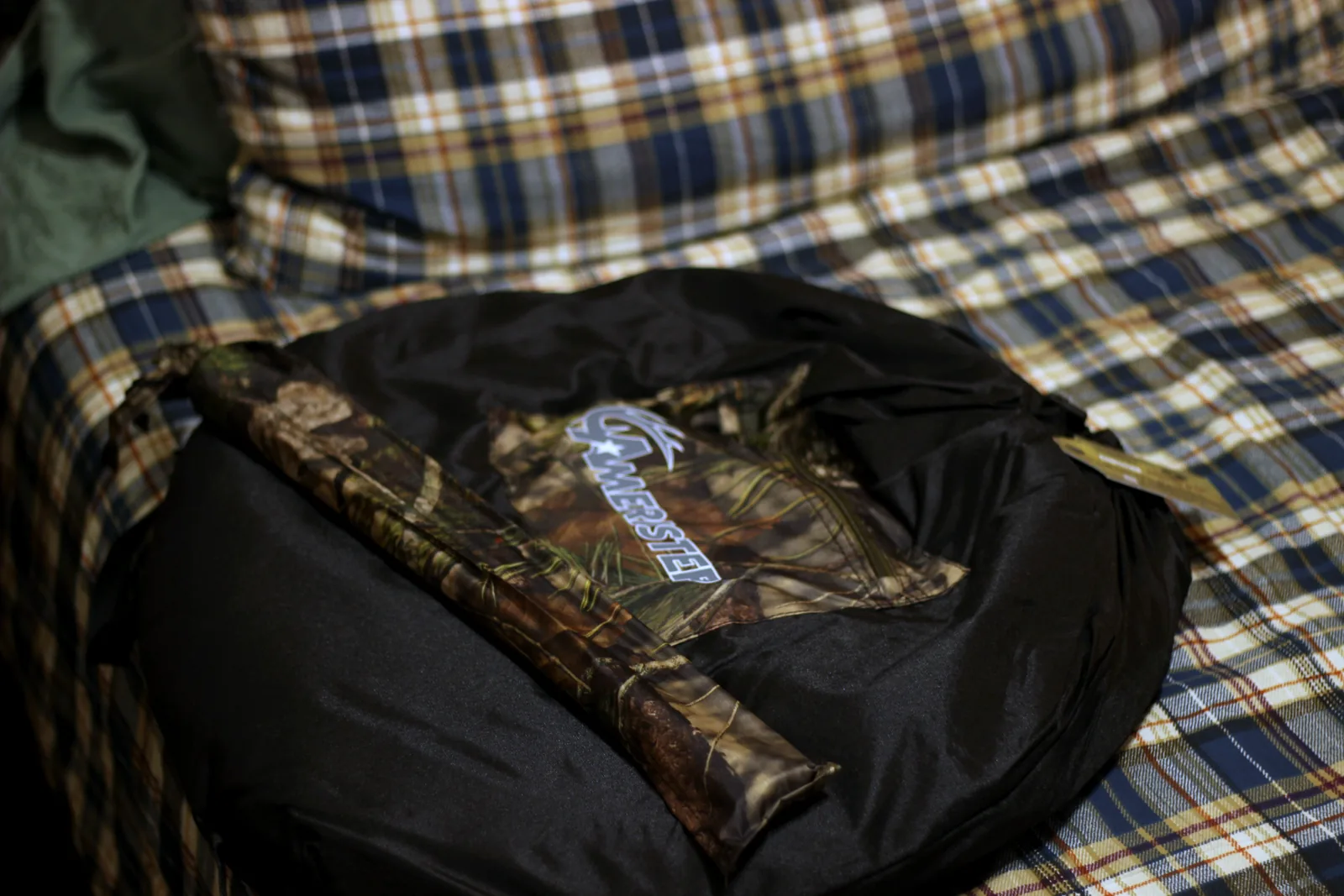
The box contains the blind, the backpack case, and a set of stakes with high-wind tie-downs. Ameristep includes the tie-downs rather than selling them separately, which is the correct decision — a 60-inch box of fabric in a crosswind is a sail, and a blind that is not staked is a blind that is going to walk.
Setup
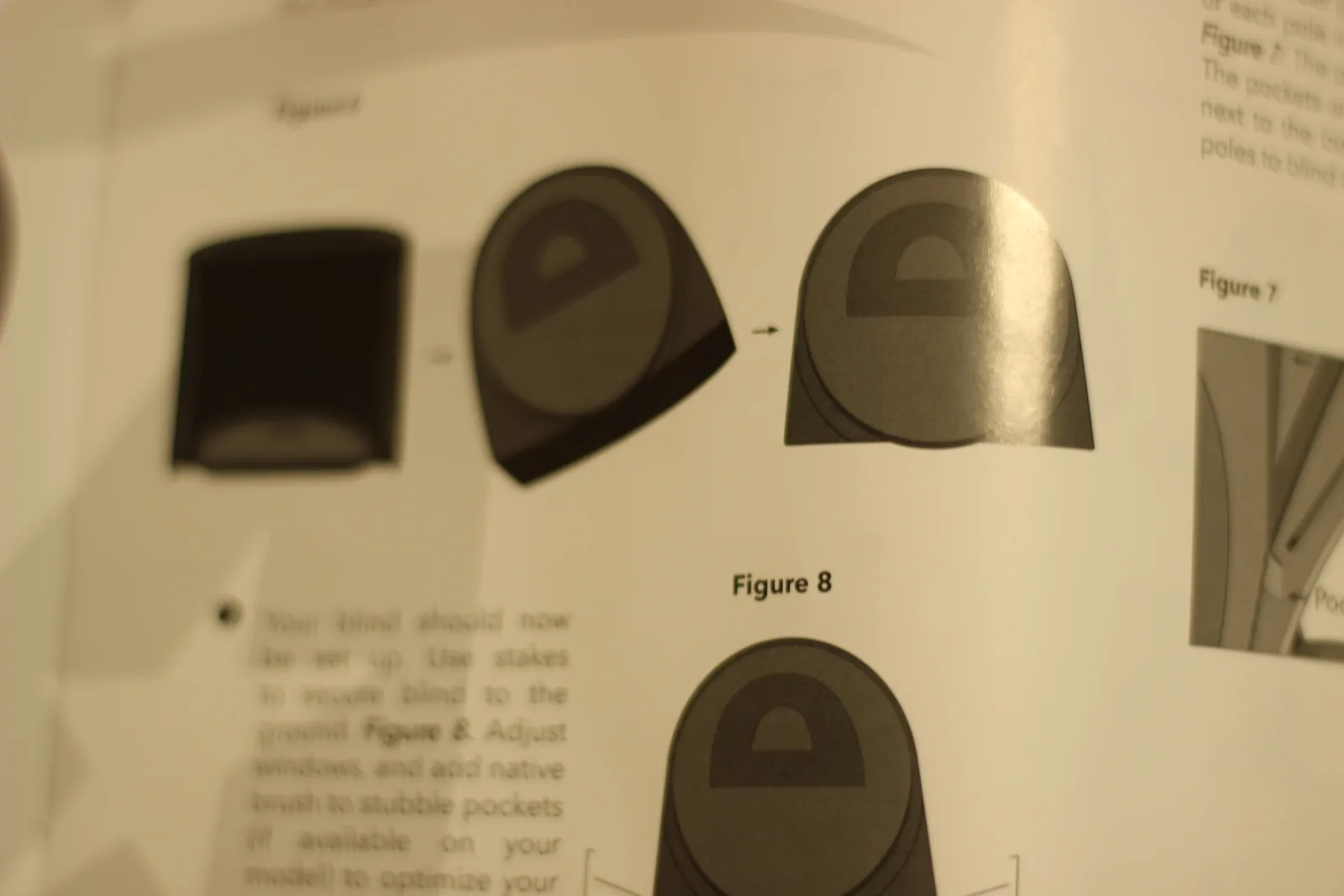
Setting up a spring-steel hub blind barely qualifies as a task. It comes out of the case folded, you let it open, you push the hubs out until each one clicks over centre, and it is standing. One person, no help, no poles to thread. Then four stakes and the tie-downs if there is any wind, and you are hunting.
Taking it down is the part that separates people who have used a hub blind from people who have not. The hubs pull in, the frame twists onto itself in a specific order, and it drops to a flat disc — easy every time once you have been shown, and a genuine puzzle the first time. Read the diagram once and you will not need it again.
Design and Build
The shell and the camo
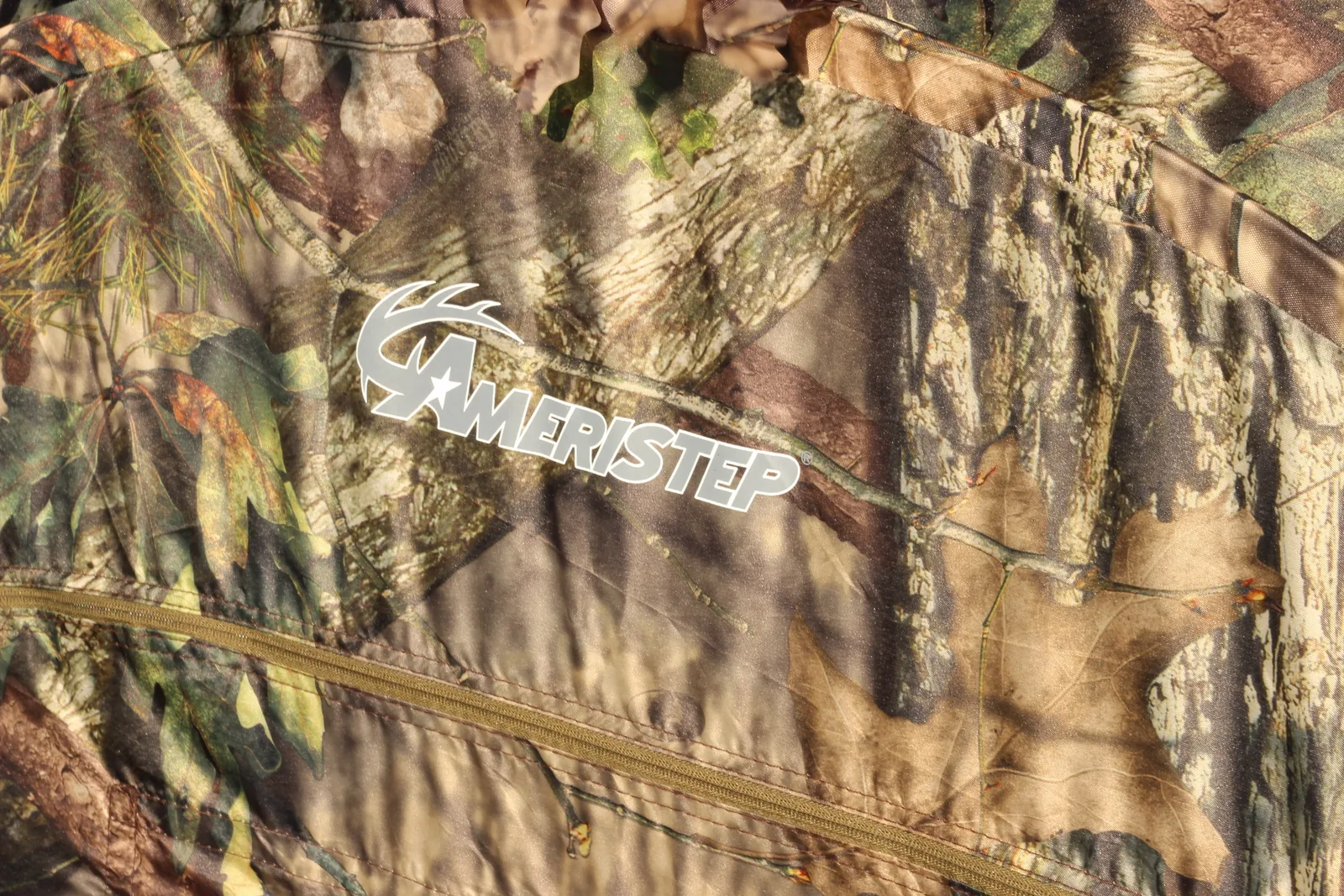
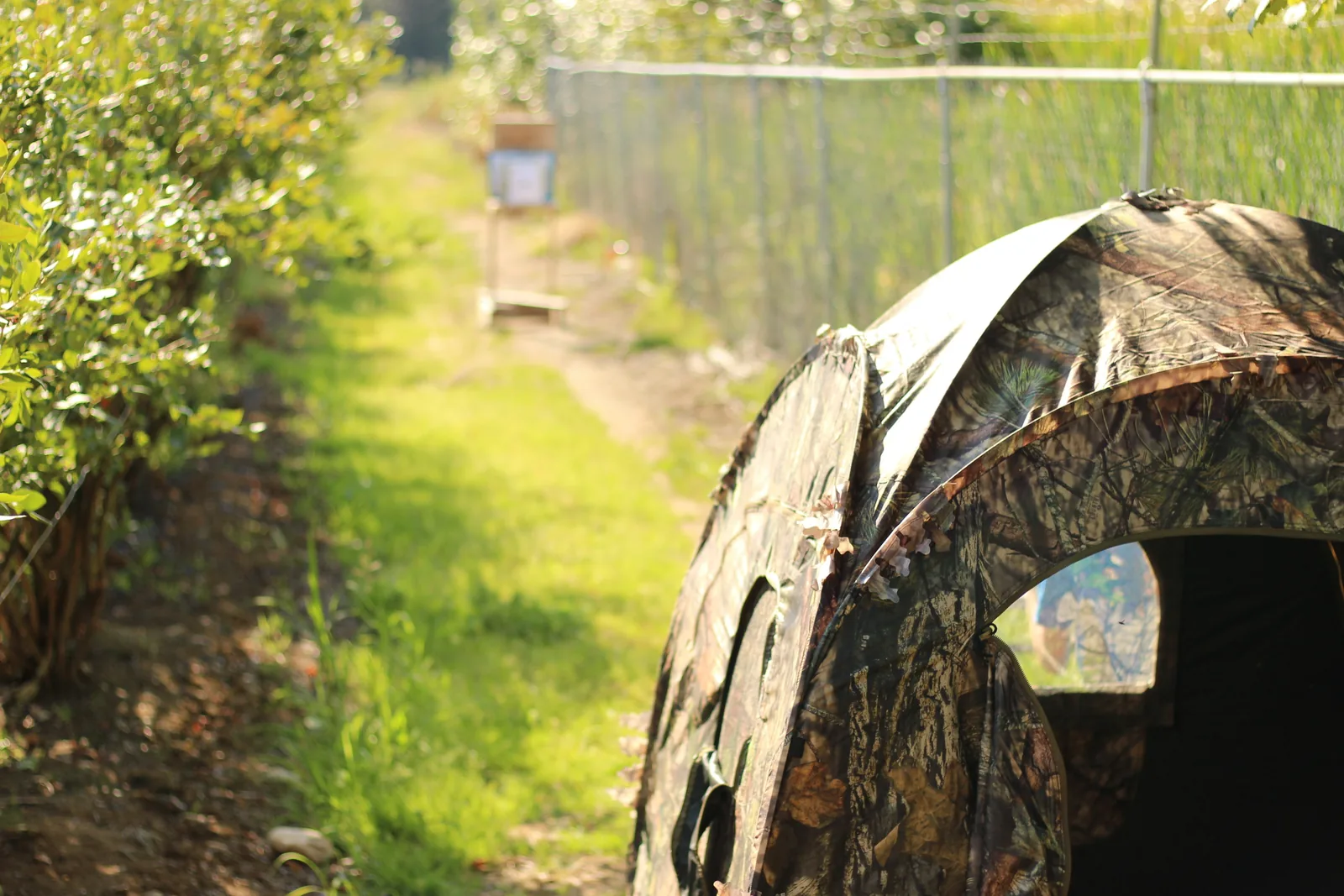
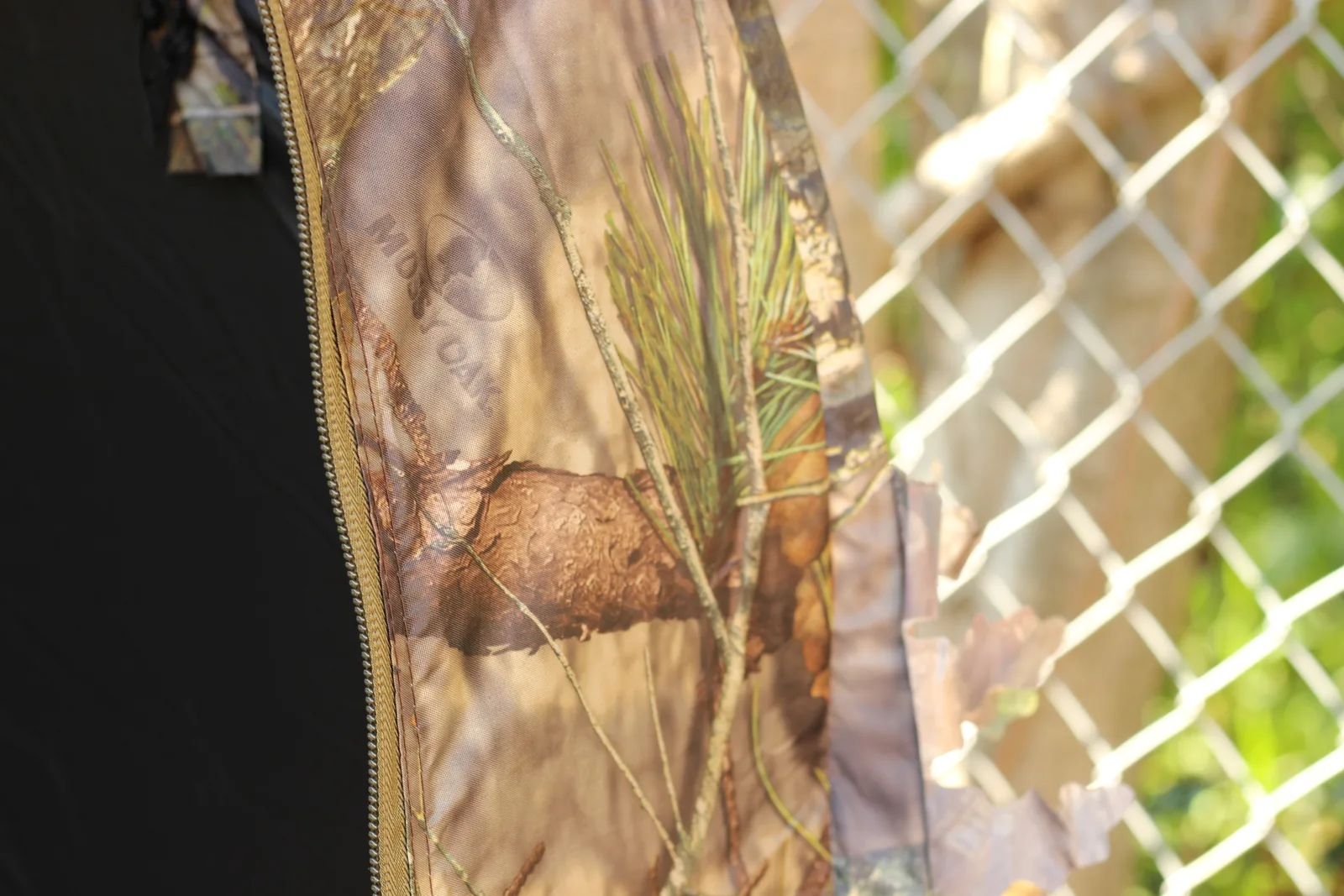
The 3D Edge ReLeaf trim is the feature that sounds like marketing and is not. A pitched blind is a geometric object, and animals do not read camouflage patterns so much as they read edges — a hard horizontal roof line and four vertical corners in a place that had none yesterday. The cut-leaf trim breaks those lines into something ragged. It does not make the blind invisible; it makes it stop looking manufactured.
Break-Up Country is a woodland pattern with a lot of bark, branch and leaf in it, and it sits naturally against a hedge or a treeline. On genuinely open ground it will want brushing in, which is true of any blind and is why the shell has loops for it.
The windows
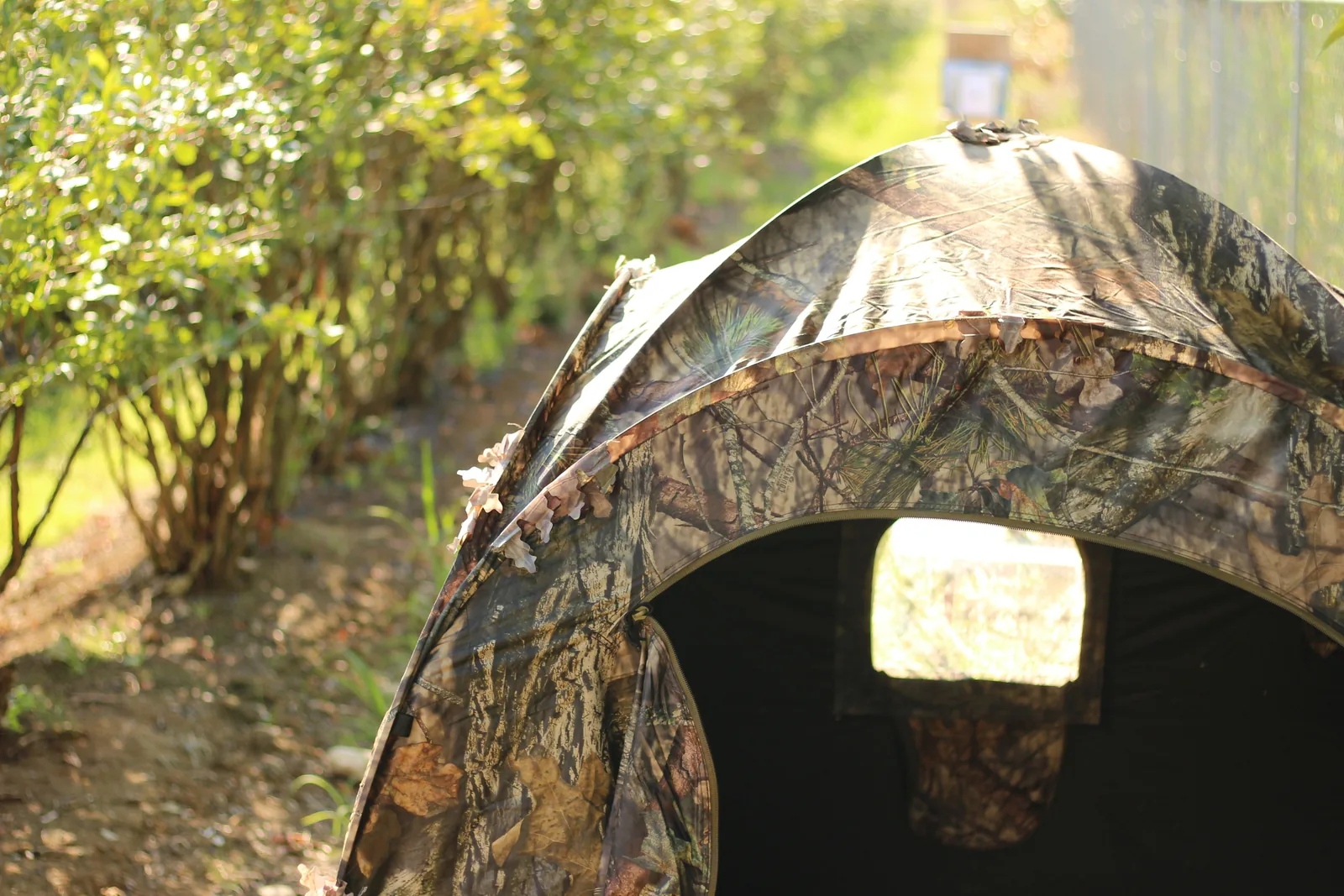
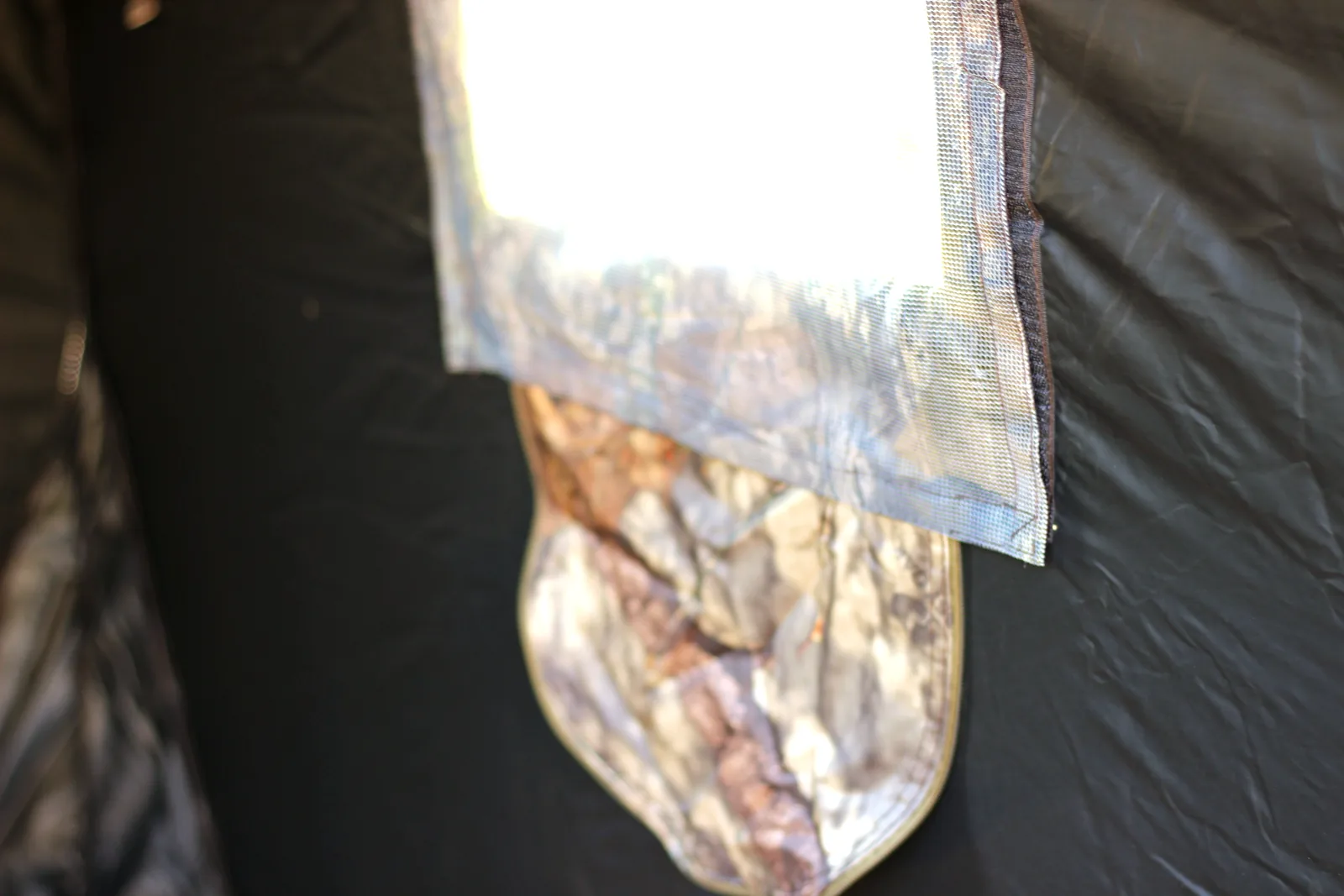
This is where the Doghouse is better than its price suggests. The interior is coated black, matte, and light-absorbing, so a hunter sitting three feet back from an open window is in shadow rather than silhouette. It is the single most important property of a ground blind and the one budget blinds most often get wrong — a shiny or pale interior turns every open window into a lightbox with you in it.
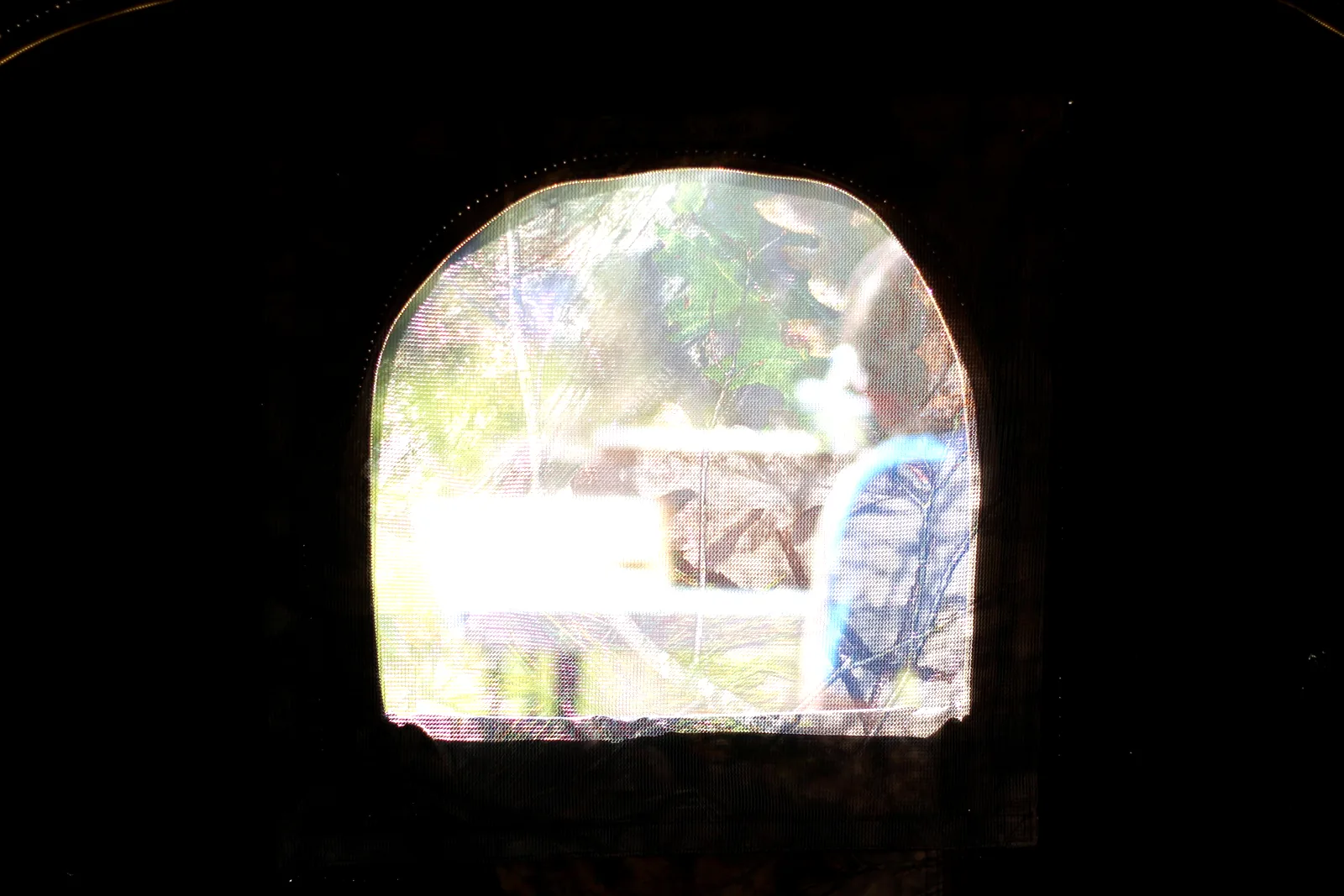
The shoot-through mesh porthole covers ship in the box rather than as an accessory. Hunting behind mesh instead of behind an open hole costs you a little light and buys you a lot of concealment, and having the option included is the right call.
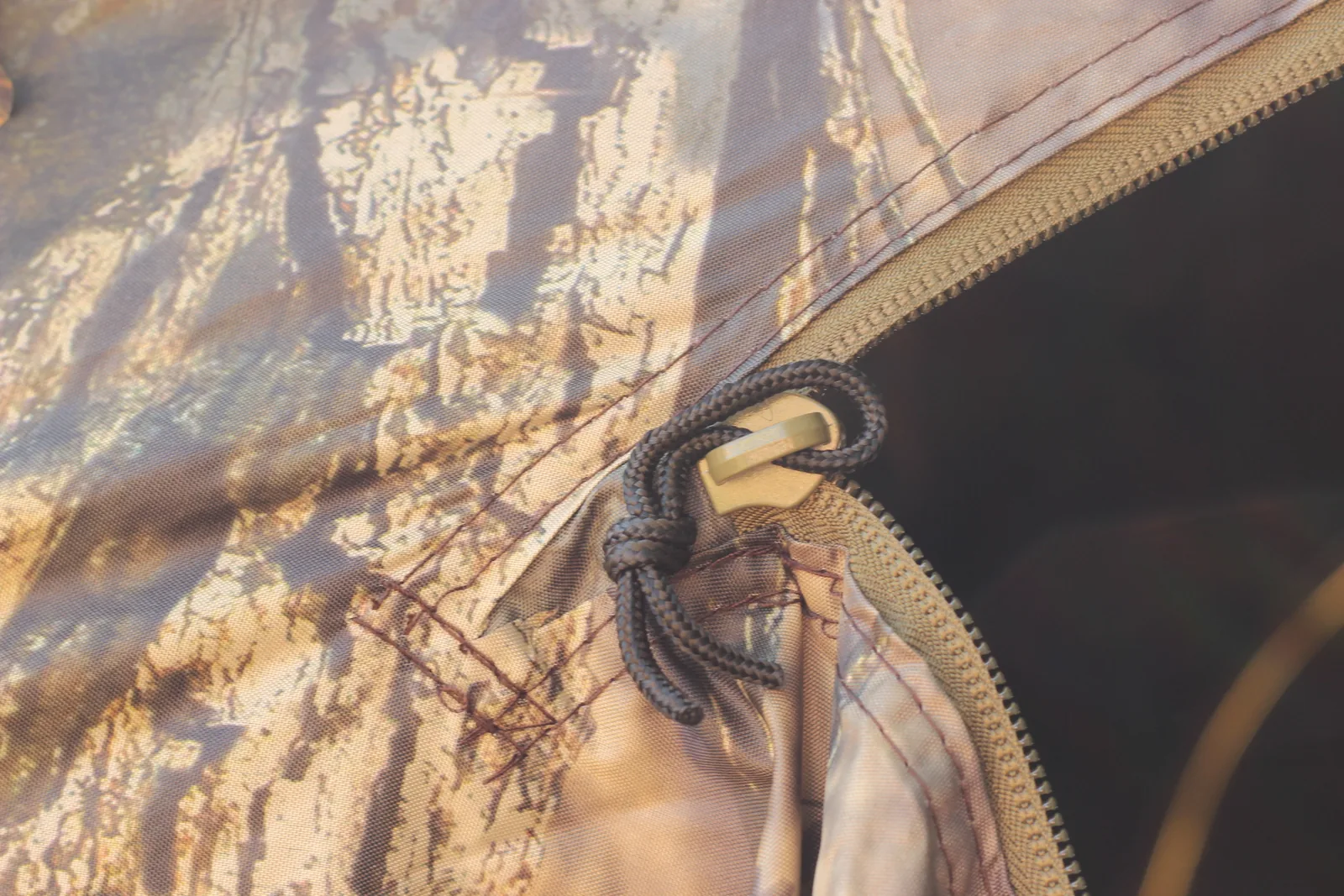
Inside
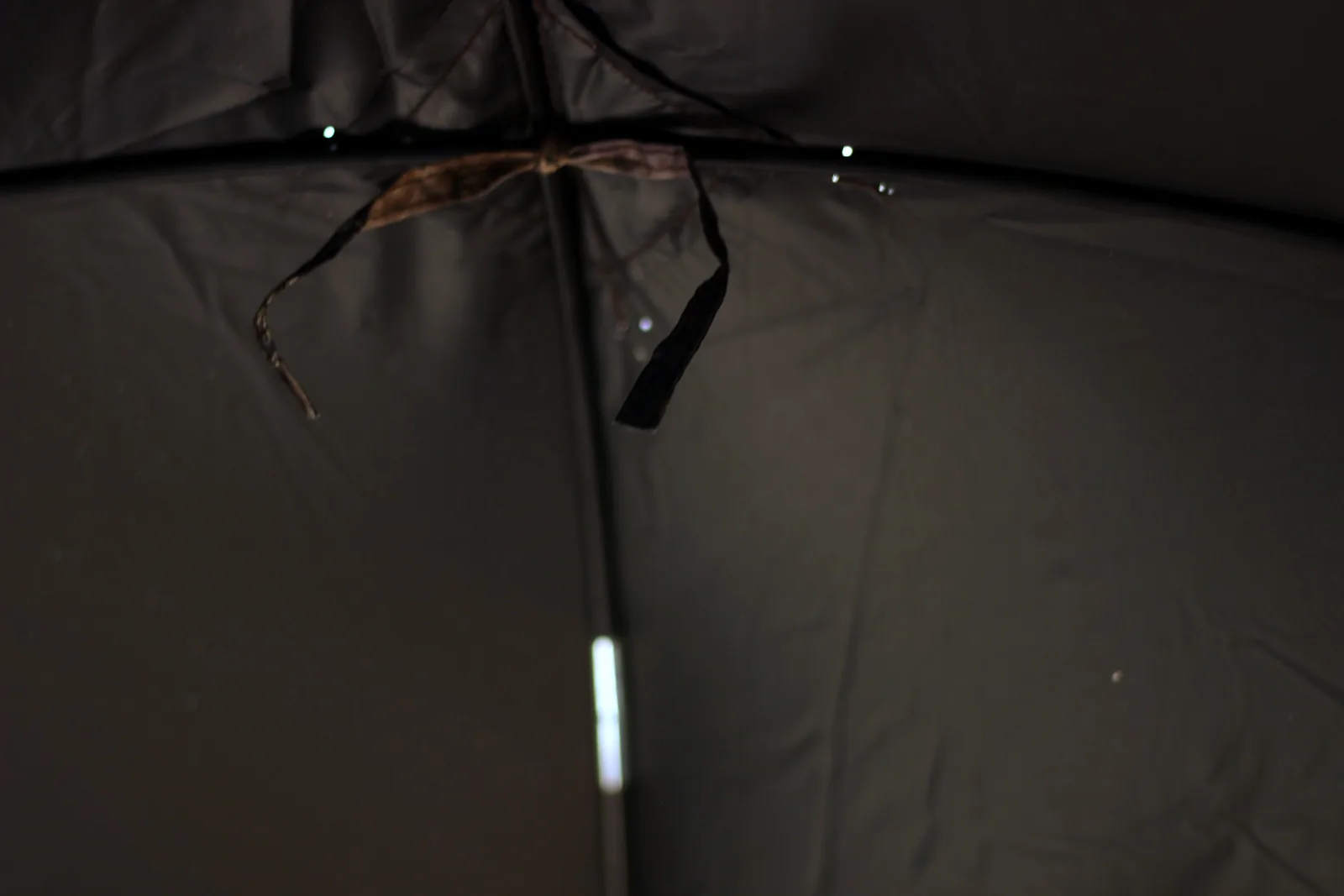
Sixty inches square does not sound generous until you are in it. Ameristep rates the Doghouse for two hunters, and that is honest for two people sitting still with a bow or a rifle each. For one hunter it is roomy: a chair, a pack, a tripod, and space to stand up and stretch under 66 inches of height without touching the roof.
On the Row
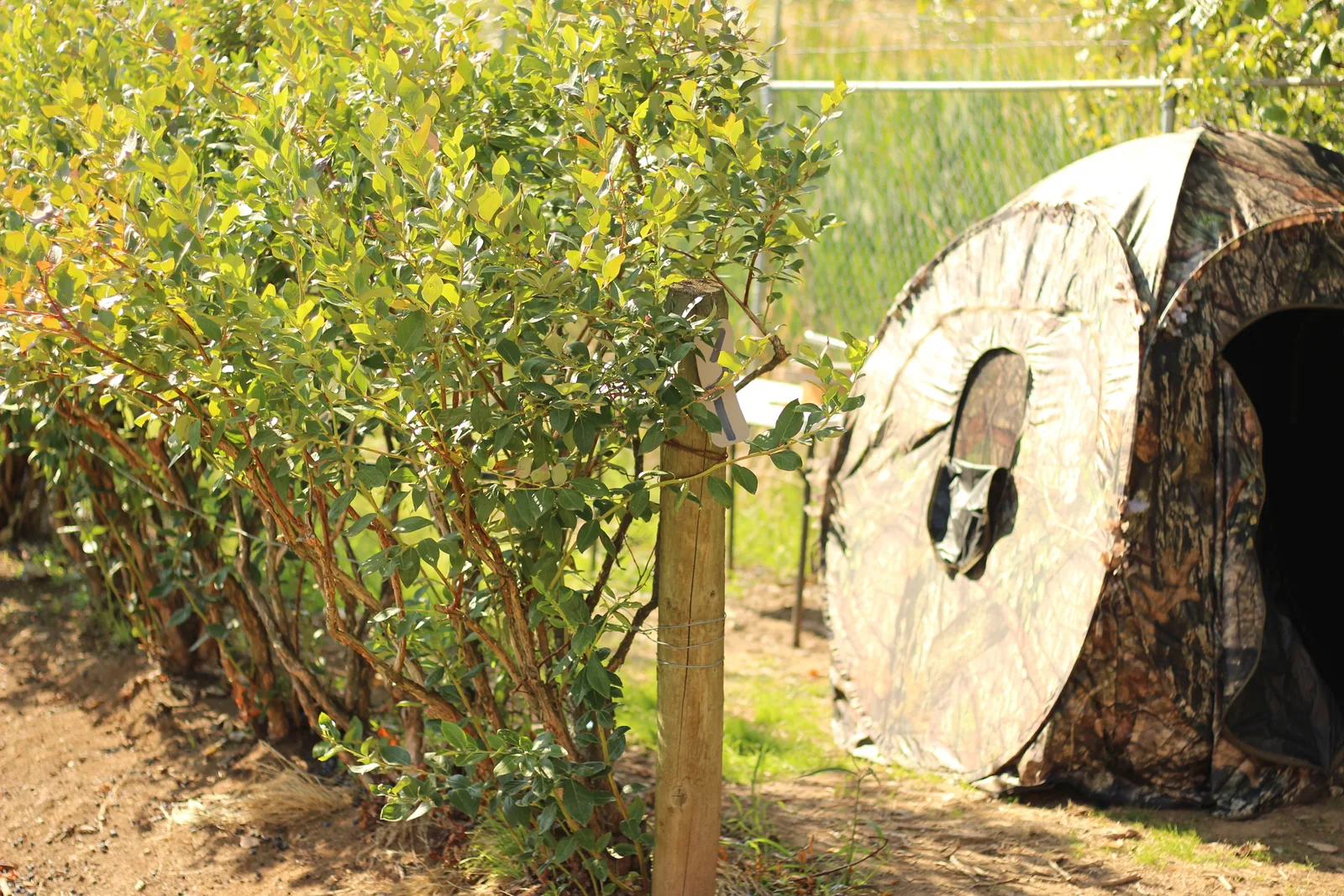
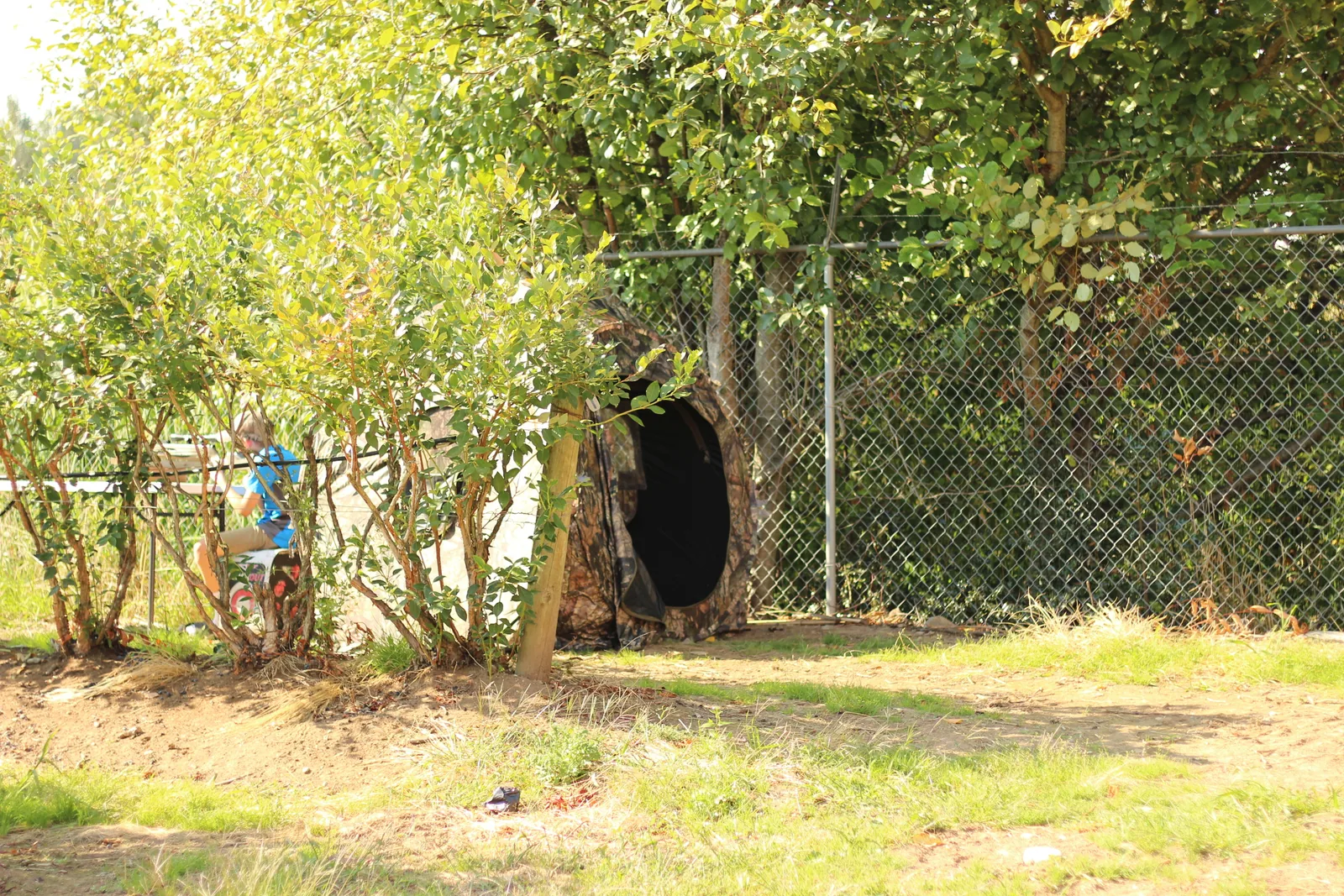
We set it against the hedge on a berry row with a lane running out in front and a target at the far end, and hunted out of it with a scoped air rifle.
The things that stood out over an afternoon:
The height is the underrated spec. Sixty-six inches means an adult sits upright with their head well clear and can stand to stretch without collapsing the roof onto themselves. On a long sit, being able to shift and stand is what lets you stay put.
Two people genuinely fit. The 60-inch shooting width is the number that matters if you are taking someone with you — one person on the gun and one person spotting or filming, side by side, without elbowing each other.
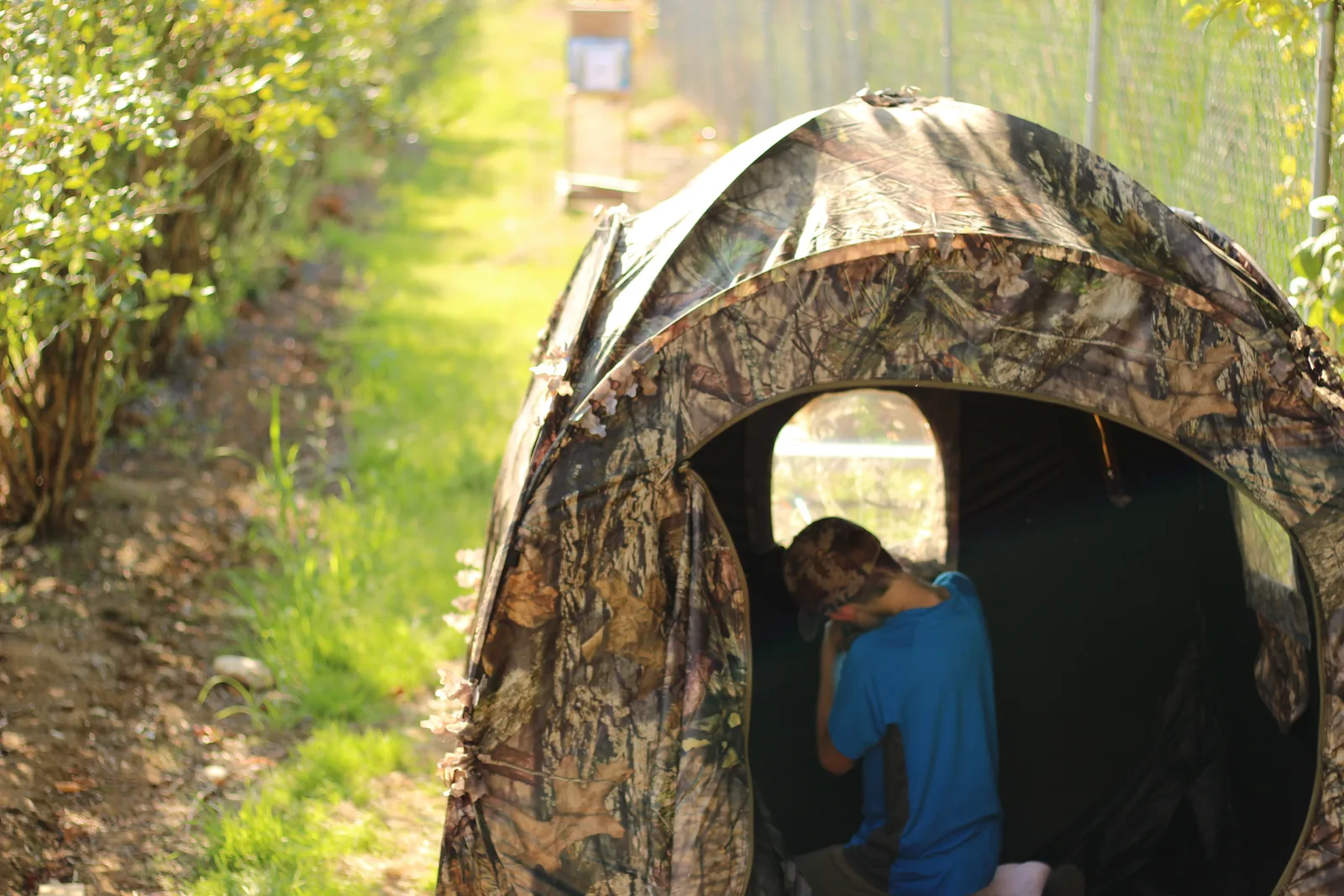
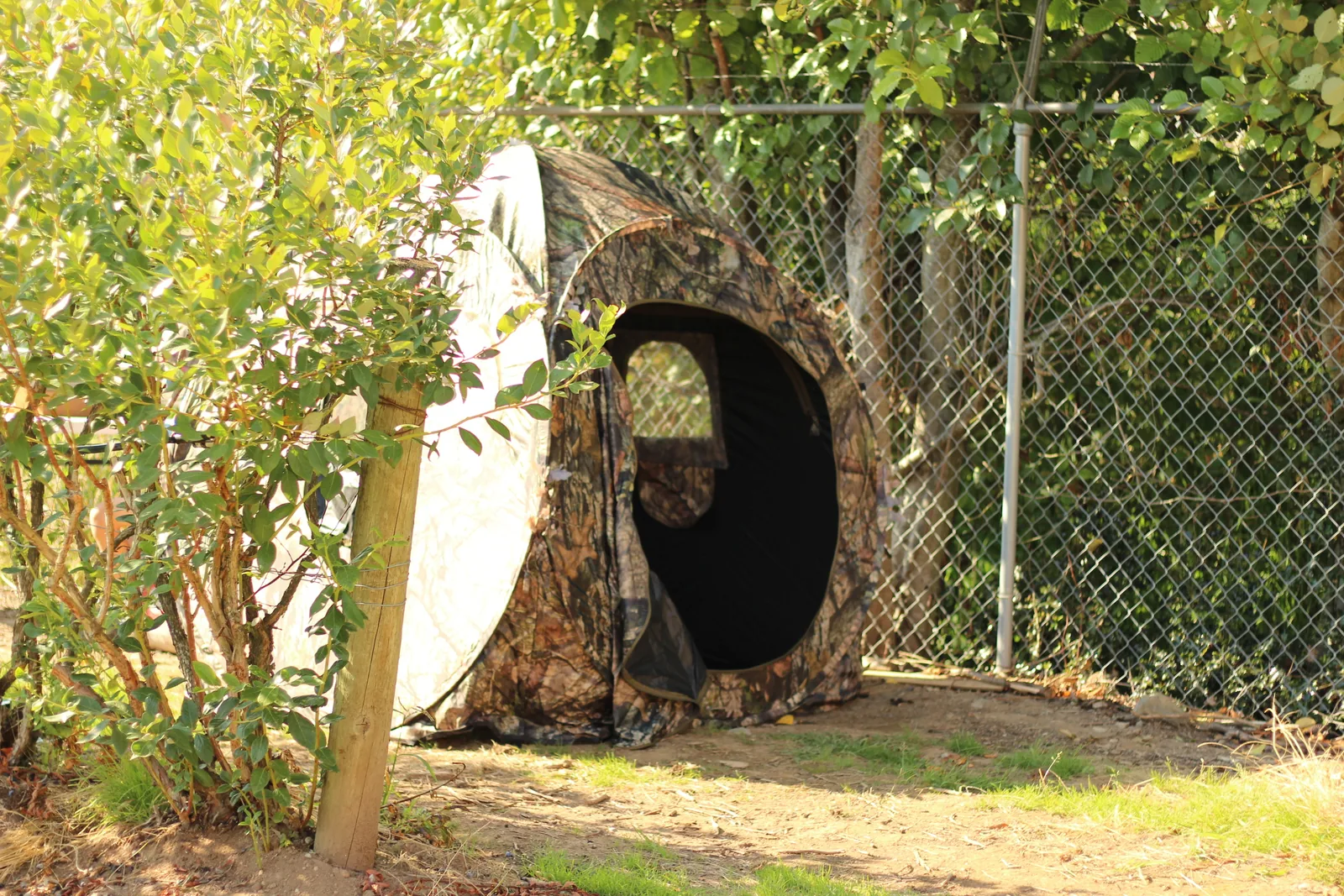
It is the right first blind for hunting with kids. This is the use case we would push hardest. A child in the open has to sit still, and cannot. A child inside a blind can fidget, whisper, change position and pick something up off the floor, and nothing outside knows. Sixty inches square is enough for an adult and a kid side by side, and the whole thing costs less than a decent optic.
Bring a chair. The floor is the ground, and a blind with nothing to sit on is a blind you leave after forty minutes. A packable chair that fits through the door and sits low is the natural companion — we use the Helikon-Tex Traveler, which goes in with room to spare.
Pros and Cons (the Honest Version)
What it does well. The spring-steel hub frame goes up in seconds and needs one pair of hands. Sixty inches square with 66 inches of height and a 60-inch shooting width is a genuinely usable two-person space, and a luxurious one-person space. The ShadowGuard interior keeps you in shadow behind an open window, which is the property that actually decides whether a blind works. Shoot-through mesh covers, stakes and high-wind tie-downs are all in the box. The 3D Edge ReLeaf trim breaks the hard lines that give a blind away. And at 5.4 kg on a backpack case, you carry it to where the animals are instead of hunting where you could park.
Where to go in with your eyes open. The takedown twist takes a couple of goes to learn — read the diagram once and it is permanent. And Break-Up Country is a woodland pattern: against a hedge or timber it disappears, on bare open ground it wants brushing in.
Who Should Buy It
Buy the Doghouse if you want one blind that goes anywhere — a deer setup on a field edge, a predator stand, a turkey spot, a bow hunt where you need to draw without being seen. Buy it if you hunt with a kid or a partner and need two people concealed in the same box. Buy it if you move around: 5.4 kg and a backpack case means you set up where the sign is rather than where the truck fits.
Buy something bigger if you routinely hunt three people or run a camera arm and a heater; buy something smaller and lighter if you are counting grams on a long walk in. For the great majority of hunting, 60 inches square is exactly the right amount of blind.
Final Verdict
The Ameristep Doghouse does the two things a ground blind has to do and does not waste money on much else. It goes up in under a minute with one pair of hands, and it keeps you black inside while you look out — the matte Durashell shell and the ShadowGuard coating are the reason it works rather than the reason it costs.
Everything else is sensible: stakes and tie-downs in the box, mesh covers included, corded pulls, brush loops, a real backpack case, and a cut-leaf trim that takes the hard edges off the silhouette. At US$139.99 it is one of the easier recommendations we have made — and the single best thing you can buy if you want to take a kid hunting and have them last the afternoon.
Rating: 4.5/5 Stars
Brands sometimes provide samples for review. Hunt & Live writes its honest opinion either way — gear that doesn’t earn its keep doesn’t get a recommendation.