
Hunt & Live

Wakulla County, FL

35,178 residents · 606 sq mi · 58.0/sq mi · 70% rural

Climate
68.4°F
56.6" rain/yr
Water
humid
Aridity index 1.46
Hardiness
Zone 10a
Winter low ~30.9°F

About Wakulla County

Wakulla County is a county located in the Big Bend region in the northern portion of the U.S. state of Florida. As of the 2020 census, the population was 33,764. Its county seat is Crawfordville. Wakulla County is part of the Tallahassee, Florida Metropolitan Statistical Area. Wakulla County has a near-absence of any municipal population, with two small municipalities holding about 3% of the population. The county seat, Crawfordville, is one of only two unincorporated county seats among Florida's 67 counties.
52
Prepper Suitability
worsebetter
National rank: #1375 of 3,109
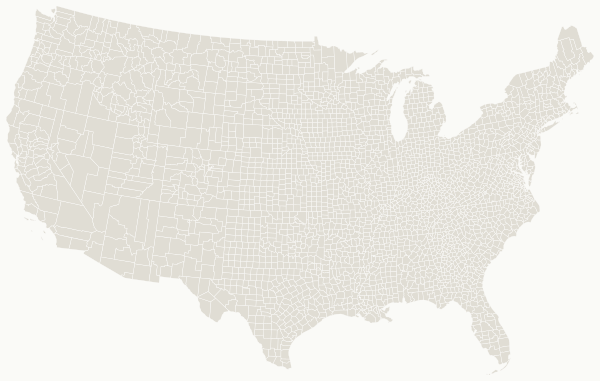
Locator map
Location within the continental US

Prepper Assessment

Living in this area offers a humid subtropical climate with an annual mean temperature of 68.4°F and substantial rainfall of 56.6 inches per year. The growing season is long due to the USDA zone 10a designation, making it suitable for a variety of crops. The terrain is predominantly rural, with a population density of 58 people per square mile, which allows for a more secluded lifestyle. However, the area is also subject to significant weather events, including hurricanes and wildfires, which can pose challenges for self-sufficient living.

The leading natural hazards identified by FEMA include wildfires and hurricanes, both ranked at 84, indicating a high risk. The area also faces risks from cold waves, lightning, and coastal flooding, which could affect homesteading efforts. With a violence percentile of 64, the area is considered somewhat safer, but it still reflects a moderate level of concern. Additionally, the median home price of $198,600 may be a barrier for some, despite a relatively low effective property tax rate of 0.70%.

This county may appeal to those seeking a rural lifestyle with a warm climate and a strong community sense, especially individuals interested in gardening and small-scale farming. However, those who are not prepared for the risks associated with hurricanes and wildfires might find it challenging. The hidden gem here is the affordable housing relative to the income level, but the dealbreaker could be the significant natural hazards that require proactive planning and resilience.

AI-generated analysis based on county data (climate, hazards, density, housing, economy). For general orientation only.

Key Facts

Ranked #1,922 nationally
Out of 3,109 CONUS counties for composite prepper suitability.
#17 of 67 in FL
Ranked #17 of 67 counties statewide for prepper suitability.
Dominant hazard: wildfire
FEMA ranks wildfire risk at 84/100 here — the leading natural threat.
Rural-suburban mix
58.0 people per square mile.
Climate profile
Classified as humid with a 68.4°F annual mean and 56.6" of annual precipitation. USDA hardiness zone 10a.
Housing & taxes
Median home value $198,600.

Score Breakdown

Violence
40
percentile (lower = safer)
Disasters
47
percentile (lower = safer)
Density
58
percentile (lower = emptier)
Overall FEMA Risk
46.7
NRI composite (0-100)

Natural Hazard Profile (FEMA NRI)

Coastal Flood 61
Cold Wave 81
Drought 14
Earthquake 24
Hail 5
Hurricane 85
Heat Wave 47
Riverine Flood 34
Landslide 8
Lightning 63
Strong Wind 21
Tornado 51
Wildfire 85
Winter Weather 7

Monthly Climate (1991–2020 normals)

Average temperature
JFMAMJ JASOND
Monthly precipitation (inches)
JFMAMJ JASOND
Summer high
91.8°F
Winter low
40.9°F
Heating degree days
1,475
Cooling degree days
2,722

Housing & Economy

Median home value
$198,600
Median HH income
$72,035
Price to income
2.8×
Property tax rate
0.7%
~$1,393/yr median

Community Profile

Median age
42.3
Homeownership
81.2%
Poverty rate
6.1%
Unemployment
3.6%

Connectivity

Broadband households
70.3%
No internet access
10%

Explore Wakulla County Further

Similar Counties

Data sources. Prepper scores are national percentile ranks of firearm fatalities (County Health Rankings 2024 / CDC WONDER), FEMA National Risk Index 2023 composite disaster score, and population density (ACS 2022 + TIGER 2022 land area). Climate from NOAA nClimDiv 1991–2020 normals. Hardiness zone is estimated from climate data and may differ from the official USDA PHZM. Demographics and housing from Census ACS 5-year 2022. All scores are for comparison purposes only and do not constitute advice about where to live.