
Fayette County, OH
28,839 residents · 406 sq mi · 71.0/sq mi · 48% rural
About Fayette County
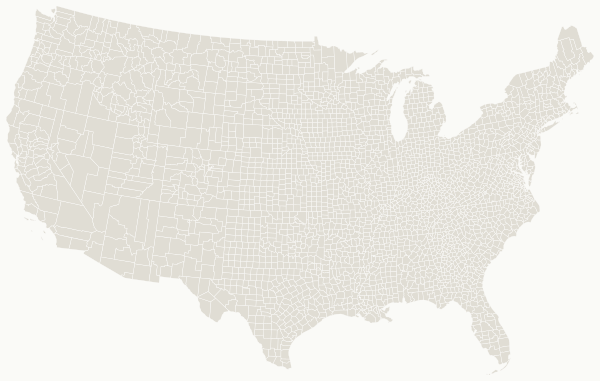
Fayette County is a county located in the U.S. state of Ohio. As of the 2020 census, the population was 28,951. Its county seat and largest city is Washington Court House. The county was named for the Marquis de Lafayette, a Frenchman who was an officer in the American Army in the Revolution, when established on March 1, 1810. Fayette County comprises the Washington Court House, OH Micropolitan Statistical Area, which is also included in the Columbus-Marion-Zanesville, OH Combined Statistical Area. Recently, on April 2, 2025, it was one of a few counties with minor damage from an EF-1 tornado in southern Ohio. The total costs of the damage have yet to be determined.
Prepper Assessment
Living in this area offers a mix of rural charm and moderate climate, with an annual mean temperature of 52.4°F and an average of 41.6 inches of rain per year. The USDA zone 8a allows for a decent growing season, making it suitable for diverse crops. The terrain is primarily flat to gently rolling, which can be advantageous for farming and self-sufficient living. However, water availability may vary, as the area has a humid classification with an aridity index of 1.73, necessitating a focus on water management strategies.
The county faces several natural hazards, with ice storms and droughts ranked at 66, indicating significant risk. While the violence percentile is low at 8, suggesting safety from violent crime, the overall density percentile at 63 could mean some areas are busier than others. The median home price of $151,400 is relatively affordable, but potential homesteaders should consider the effective property tax rate of 0.98% and the 60% broadband subscription rate, which may impact remote work capabilities.
This area may be a good fit for those seeking a balance of rural living with access to community resources. It is well-suited for individuals or families who prioritize agricultural self-sufficiency and are prepared to manage moderate natural hazards. However, those who require robust internet access for remote work or are sensitive to extreme weather events may find the living conditions challenging. The hidden gem here is the low violence rate, which can contribute to a peaceful homesteading experience.