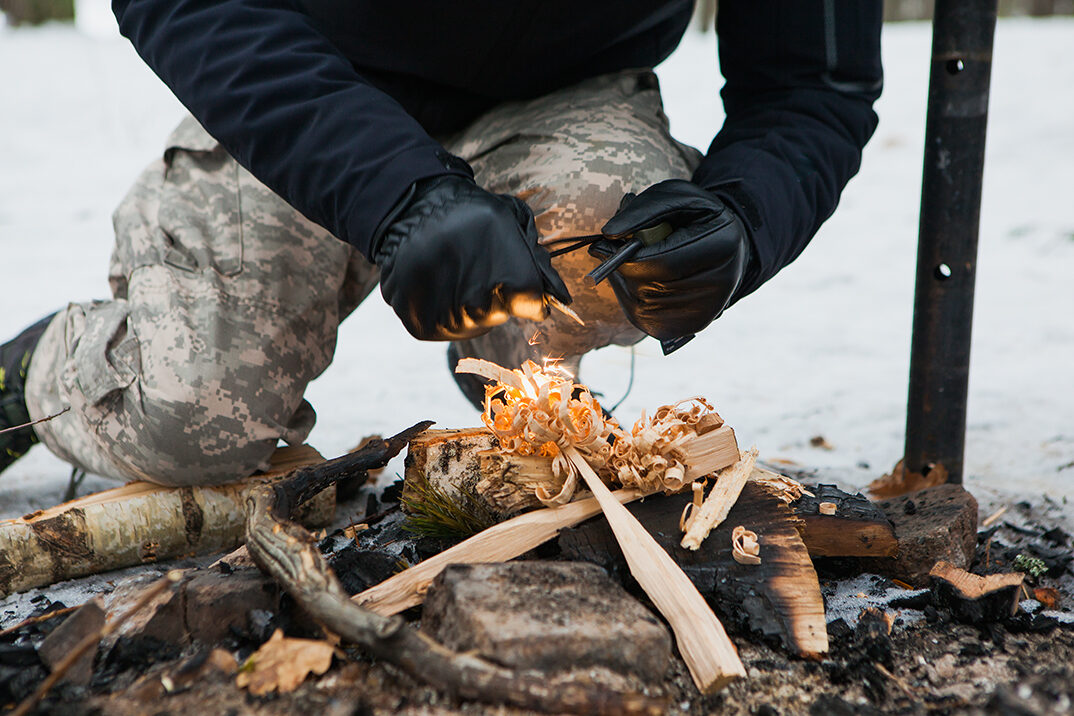
03 — Pillar · Survival
Expert guides and Q&A about bushcraft knife skills.
Q&A in this topic
60 total
Fixed blades are generally safer for carving projects than folding knives due to their fixed position and reduced risk of accidental closure, however, proper ha
Basic knife skills every survivalist should learn include proper cutting, whittling, and batoning techniques, which can aid in creating shelter, starting fires,
For a reliable emergency knife for backpacking trips, look for a fixed-blade knife with a sturdy handle, high-carbon steel blade, and a total weight under 6 oun
For beginner bushcrafters, a compact, easy-to-use folding knife with a sturdy blade and ergonomic handle is ideal. Look for a knife with a blade length around 2
Mastering essential knife techniques is crucial for beginners in bushcraft and wilderness survival. Developing proper grip, stance, and cutting motions will imp
For advanced carving techniques, look for high-carbon steel knives with a straight or slightly curved blade, a thickness of 0.125 inches or less, and a ergonomi
For a bushcraft spoon, the best materials are hardwoods like beech, hickory, or ash, due to their density and durability. Softwoods like pine or fir can be too
When choosing a carving knife, look for a blade with a sharp, straight edge and a comfortable, non-slip handle. Consider the material and durability of the blad
For maintaining an edge on bushcraft knives, regular sharpening, storage in a dry environment, and proper care during use are essential. This involves cleaning
When camping, store knives in a secure, easily accessible location, such as a sheath or a designated knife roll, to prevent loss or injury.
In windy weather, create a feather stick by selecting a straight branch, shaving it with a knife to create a thin, even edge, and then using a baton to shave th
Creating feather sticks quickly involves some basic knife skills and a few specific techniques. Using a sharp knife and batoning efficiently can speed up the pr
Sharpen a bushcraft knife on the go using a stone or stick sharpener, batoning techniques, or a makeshift sharpening board carved from a log. Regular maintenanc
A multi-tool can partially replace a bushcraft knife for some tasks, but its limitations make it unsuitable for certain critical bushcraft skills like batoning,
Beginners can learn knife skills without formal training, but it's essential to start with proper safety habits, basic knife handling, and fundamental technique
Different blade shapes can significantly affect carving performance. A well-suited blade shape for a specific task can make all the difference in efficiency and
Feather sticks can be made with a sawmill off-cut, but it requires careful preparation and handling to achieve a usable fire starting tool.
Feather sticks can light a fire in wet conditions, but they are more challenging to create and maintain in damp environments. It is essential to have the right
Knife skills can be effectively self-taught with practice, dedication, and access to proper guidance. Online tutorials and instructional videos can provide a so
Proper grip can significantly reduce knife injury risks by providing a secure hold on the blade, preventing accidental slips and improving control.
Using a dull knife can actually be safer in certain situations, as it reduces the risk of accidents caused by slipping or losing control of a sharp knife.
Although knife skills are essential for carving, you can create detailed designs without advanced knife skills by using specific techniques and tools, such as b
Feather sticks can be created in a rainy climate, but the process may be more challenging due to wet conditions.
Yes, you can make feather sticks with softwood, but they may not be as durable as those made from hardwood. Softwood tends to be softer and more prone to splint
You can teach yourself knife skills at home with practice and dedication.
A kitchen knife can be used for some bushcraft tasks, but it's not ideal for heavy-duty or demanding activities due to its design and materials. A kitchen knife
While a pocket knife can be used for batoning, it's not the ideal tool due to its small size and limited leverage, which can lead to kickback and control issues
GREEN WOOD CAN BE USED FOR SOME CARVING PROJECTS, BUT IT REQUIRES SPECIAL HANDLING AND A GOOD UNDERSTANDING OF THE PROCESS. IT'S ESSENTIAL TO AVOID SPLITTING OR
Pine is not the best option for making feather sticks, as it tends to be too soft and prone to splintering when carved.
A knife can be used for various aspects of shelter building, including cutting branches, splitting wood, and carving sticks for roofing and framing, but it's es
Common Knife Safety Myths You Should Know is often misunderstood by outdoor enthusiasts and knife handlers. Many myths can put you at risk, causing accidents or
Common Misconceptions About Knife Safety in Bushcraft: Many people believe that batoning is inherently unsafe, but when done correctly with the right technique
Feather sticks burn longer than many other tinder options due to their unique structure and the way they are created. This is because the fanned out fibers crea
Knife sheaths offer partial protection against accidental cuts, but their effectiveness depends on the quality of the sheath, the type of knife, and the user's
A specialized knife for batoning in cold weather is not strictly necessary, but a high-carbon steel blade with a full tang and a sturdy handle is recommended fo
A specialty knife for batoning is not strictly necessary, but a knife with a sturdy blade and a suitable material thickness is ideal. A knife designed for chopp
You don't need a separate knife for every bushcraft task, but having the right knife can make a significant difference in efficiency and safety.
Feather sticks are an effective tool for fire starting in the wilderness because they can create a robust ember source with minimal material and no metal tools,
Feather Sticks vs. Tinder: Feather sticks are generally more effective and reliable for starting fires than tinder, requiring less preparation and handling, but
Practicing knife skills at home safely involves selecting the right tools, setting up a suitable work area, and employing proper handling techniques to minimize
Knife weight impacts carving performance by affecting the user's control and endurance. Lighter knives are often easier to maneuver, but may lack the stability
You should sharpen your bushcraft knife every 1-3 days, depending on usage, with a minimum of every 7-10 days for minimal use. Sharpening frequency increases wi
To avoid common mistakes when carving, it's essential to maintain a safe and controlled environment, use proper tool handling techniques, and pay attention to t
To avoid splintering while carving, use a sharp knife, maintain a controlled cutting angle, and apply consistent pressure. Always cut with the grain, and use a
To carve a basic walking stick, find a suitable branch, baton it to the desired thickness, and then carve the shape using a bushcraft knife. Start with a simple
To carve a simple bowl, start by creating a rough outline with your knife, then use a batoning technique to hollow out the center and refine the shape. Use a fe
When choosing wood for feather sticks, select dry, straight branches with a diameter of 1-2 inches and a length of 6-12 inches. Look for woods like cedar, cypre
To grip a knife during carving, place the blade in the V-shaped area between your thumb and index finger, with your thumb on top of the blade and your index fin
Safe knife techniques for children can be identified by focusing on simple, controlled movements, and proper grip and stance. This approach helps prevent accide
Improving batoning technique requires focus on proper axe swing, controlled striking, and consistent impact. Developing muscle memory through practice and repet
Improving your knife skills for survival situations involves mastering basic techniques, practicing regularly, and understanding safety protocols.
To prevent knife accidents while carving, maintain a firm grip, keep the blade at a safe angle, and be aware of your surroundings, including any obstacles or ne
SELECTING THE RIGHT KNIFE FOR BUSHCRAFT CARVING INVOLVES CONSIDERING ITS BLADE MATERIAL, EDGE TYPE, HANDLE, AND SHARPENING CHARACTERISTICS. A SUITABLE KNIFE SHO
Store bushcraft knives in a scabbard or sheath to protect the blade and prevent accidental cuts. Secure the sheath with a belt or rope to prevent loss. Keep the
When batoning, use a controlled, slow-motion swing to drive the knife into a solid object, maintaining a firm grip and keeping your fingers curled under to avoi
Suitable wood species for whittling projects include softwoods like cedar, cypress, and pine, as well as hardwoods like basswood, butternut, and cherry, due to
A full tang knife can provide advantages for survival tasks due to its robust construction and balance, but ultimately the choice depends on personal preference
A knife with a lanyard is a versatile tool that can greatly improve safety and efficiency in bushcraft and wilderness survival situations.
A paring knife may be used in a pinch for bushcraft carving, but it's generally not the best tool due to its limited size and sharpness. For delicate tasks, a p
Tanto blades can be suitable for bushcraft tasks, especially for chopping and batoning, due to their sharp point and strong tip, making them ideal for tasks tha