03 — Pillar · Survival
Expert guides and Q&A about fire fatwood identification.
Q&A in this topic
60 total
Harvesting fatwood from trees requires consideration of sustainability, tree health, and local regulations to avoid harming the environment and the trees themse
Fatwood is often overlooked in regions with dense forest cover, where fallen branches are common and may have a similar appearance to fatwood. Coastal areas wit
Fatwood extraction can be assisted by tools such as a drawknife or a small axe, which help to carefully remove the resinous wood from the main trunk or branches
Harvesting fatwood without tools involves identifying suitable branches, using your hands to gently pry loose the fatwood, and then breaking it off or removing
Short Answer: The best time to harvest fatwood from stumps is during the spring or early summer when the wood has begun to dry out but still retains its resinou
For efficiently harvesting fatwood from stumps, use a chainsaw to remove the outer bark and wood, exposing the fatwood, then use a hatchet or axe to carefully e
Fatwood can act as a natural accelerant for other firewoods by rapidly igniting and sustaining a fire.
Fatwood can be effectively transported over long distances with proper storage and handling.
Fatwood can be gathered in national parks, but regulations vary by park and country.
Fatwood can be harvested ethically without damaging ecosystems by using sustainable methods and leaving enough for the tree's natural regeneration.
Fatwood can be harvested from live pine trees without harm using proper techniques.
Fatwood can be used as a natural insect repellent.
Fatwood can be used effectively in a wood stove, providing a reliable and efficient fire starter.
Fatwood can be used in survival situations beyond fire starting.
Fatwood can help in creating embers for traditional fire making.
Fatwood can indeed help in emergency signaling situations, as it provides a sustainable and long-lasting fire source.
Yes, moisture levels in fatwood can significantly affect its burning efficiency, with optimal burning achieved at 10-20% moisture content.
Short answer: Yes, fatwood can be found in deadfall trees.
Fatwood on windfall pine trees is possible but not guaranteed. It largely depends on the tree's age and the conditions under which it fell.
Fatwood can be identified by smell, but it's not always a reliable method. Fatwood has a strong, distinct, and often unpleasant odor, which is caused by the hig
Fatwood can be stored long-term without deterioration, but proper drying and packaging are crucial to prevent moisture accumulation. If stored dry, fatwood can
Yes, fatwood can be used for cooking over an open flame, as it ignites easily and burns steadily with a high heat output, making it suitable for cooking tasks.
Fatwood can be used for smoke flavoring in outdoor cooking, particularly when used in a smoker or when adding it to a fire pit for a few minutes to infuse smoke
Not all pine trees produce fatwood, and even among those that do, the quality can vary greatly. Factors such as the type of pine, climate, and age of the tree c
Changes in seasons can affect the availability of fatwood. During the growing season, plants produce cellulose and lignin, making fatwood less dense and more di
Short answer: While age can affect the fatwood quality, it primarily influences its moisture content and dryness, rather than the resin quality directly. Howeve
Fatwood burns cleaner than traditional firewood.
Short answer: Fatwood, also known as pine resin, ignites significantly faster than tinder due to its high resin content, which acts as a fire accelerant.
The age of the stump can affect the amount of usable fatwood, as older stumps tend to have more fatwood but also more decayed and unusable material, making extr
The quality of fatwood is influenced by its location, particularly the presence of resin and sap. Trees that grow in areas with high resin production tend to pr
Fatwood can be difficult to ignite in wet conditions, but there are effective methods to overcome this challenge.
Fatwood versus commercial fire starters — which is superior — is a debate among outdoor enthusiasts. Fatwood is generally considered a more reliable option due
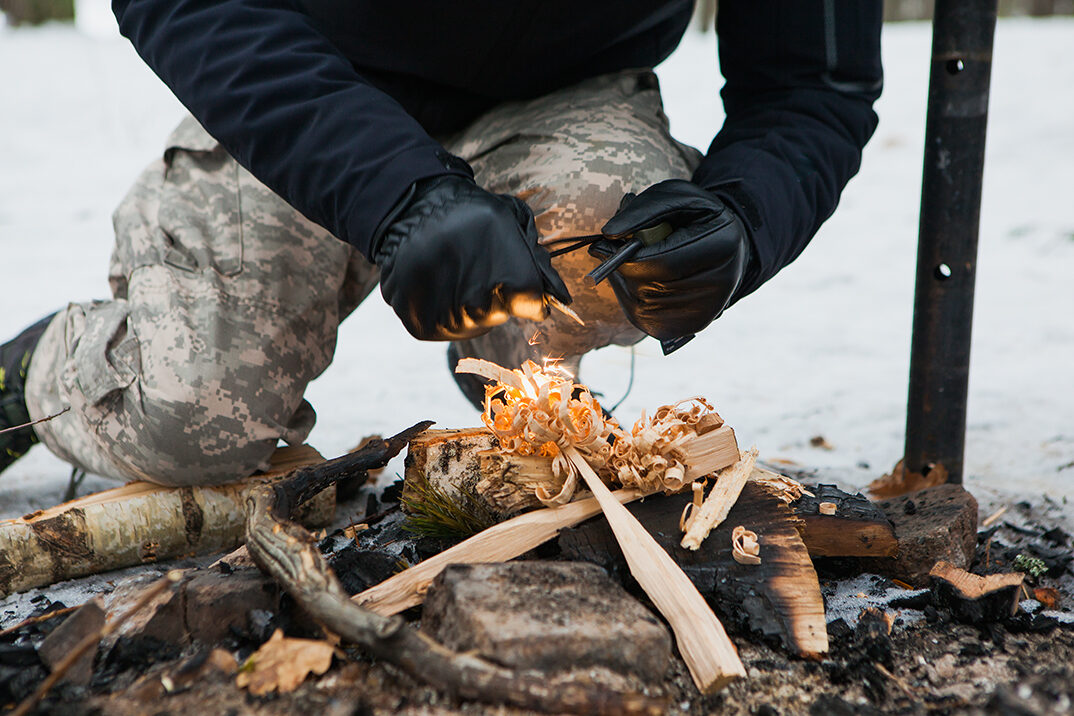
Fatwood's role in traditional fire starting techniques is to serve as a highly flammable, self-sustaining tinder source. It is often used to initiate fire in pr
Fatwood can be differentiated from other wood types by its high oil content, distinctive piney aroma, and light, fluffy texture. It typically has a higher densi
To maximize the burn time of fatwood, you should split the resinous wood into thin strips, ideally 1/4 inch or 6 mm thick, and dry them to 10% moisture content.
A dead stump can be identified by inspecting its color, texture, and any signs of decay. Over time, a dead stump will turn gray or brown, and its bark may begin
To determine if a stump has quality fatwood, look for a high percentage of resinous sapwood, typically within the outer 1-2 inches of the stump. Check for a shi
Short Answer: Harvesting fatwood at different times can significantly impact its quality, with optimal times varying depending on the specific tree species and
Different pine species significantly affect fatwood quality due to variations in sap content, resin, and moisture levels. For example, Ponderosa pine tends to p
Tree diseases can impact fatwood production by reducing the quality and quantity of high-calorie resinous wood, which is essential for making effective fire sta
Fatwood compares favorably to other natural fire starters in performance, igniting with minimal effort and maintaining a consistent flame. It is a reliable opti
Fatwood performs relatively well in high-elevation environments due to its highly combustible properties and ability to ignite in cold temperatures. However, it
Fatwood performance varies significantly with moisture content, typically igniting at around 20-30% moisture levels and burning poorly at levels above 50%.
Processing fatwood differs from processing regular firewood in that it requires minimal cutting and preparation, as it naturally holds a high concentration of r
The color of fatwood is a key indicator of its quality, with lighter colors typically signifying a higher quality and more burnable fatwood, while darker colors
Fatwood density varies among pine species, with some species like the loblolly pine (Pinus taeda) having a density of around 0.6-0.8 g/cm³, while others like th
A larger stump yields more fatwood due to the increased volume of heartwood, while a smaller stump results in less fatwood, requiring more time and effort to ha
Fatwood typically retains its potency for 6-12 months when stored in a dry, cool place away from direct sunlight.
For a one-night campfire, about 1-2 sticks of fatwood, each roughly 1 inch in diameter and 6-8 inches long, should be sufficient to provide a reliable fire sour
Identify fatwood by its unique combination of high resin content, soft and spongy texture, and a distinct sweet pine scent.
To safely transport harvested fatwood back to camp, use a sturdy container to prevent damage, and handle fatwood sticks with care to avoid splintering or breaki
Look for fatwood with a high resin content, typically found in areas with resin flows or knots, and a dry, brittle texture that breaks cleanly when snapped.
Dry fatwood is safer to burn indoors compared to wet wood because it produces fewer volatile compounds and less smoke.
Fatwood is considered a renewable resource if harvested responsibly. Fatwood is the resinous wood found at the base of pine trees, which can be collected withou
Fatwood, the resinous heartwood of pine trees, is often more abundant in older pine stumps and logs. This is because the resin accumulates over time and becomes
Fatwood is effective as a fire starter in humid conditions but its performance can be improved with proper preparation and technique.
Fatwood is an environmentally friendly option for off-grid fire making, as it's a natural, biodegradable, and non-toxic byproduct of logging operations that wou
Fatwood is primarily found in certain pine species, such as loblolly pine and longleaf pine, which naturally produce resin-rich wood that can be easily ignited
Fatwood harvesting is generally considered sustainable in heavily forested areas if done responsibly.
Fatwood is suitable for short-term storage but not long-term due to its high moisture content, making it susceptible to mold and decay. This affects its usabili