03 — Pillar · Survival
Fire starting methods, fire safety, and wilderness cooking techniques.
Q&A in this topic
10 total
Collect wood in varied sizes—tinder, kindling, fuel wood. Dry wood burns better than green wood. Dead standing trees provide driest wood. Split wood exposes dry
Identify the driest wood available—inside dead trees or under thick bark. Dry wood inside wet logs contains interior moisture less than surface. Use feather sti
Start with the driest materials available: inside dead wood, birch bark, fatwood, or prepared tinder. Protect the ignition area from direct rain using your body
To make a bow drill fire, you need four components from the forest: a fireboard and spindle carved from the same dry softwood (cedar, cottonwood, willow, basswo
Char cloth is cotton fabric partially carbonized through incomplete combustion. Soak cotton strips in saltpeter solution, dry completely, then place in a tin ca
Wet conditions require finding dry materials inside wood, creating proper tinder, and using accelerants. Fire is possible even in torrential rain.
The bow drill creates fire through friction between a spindle and fireboard. Success requires specific wood selection, proper positioning, and sustained pressur
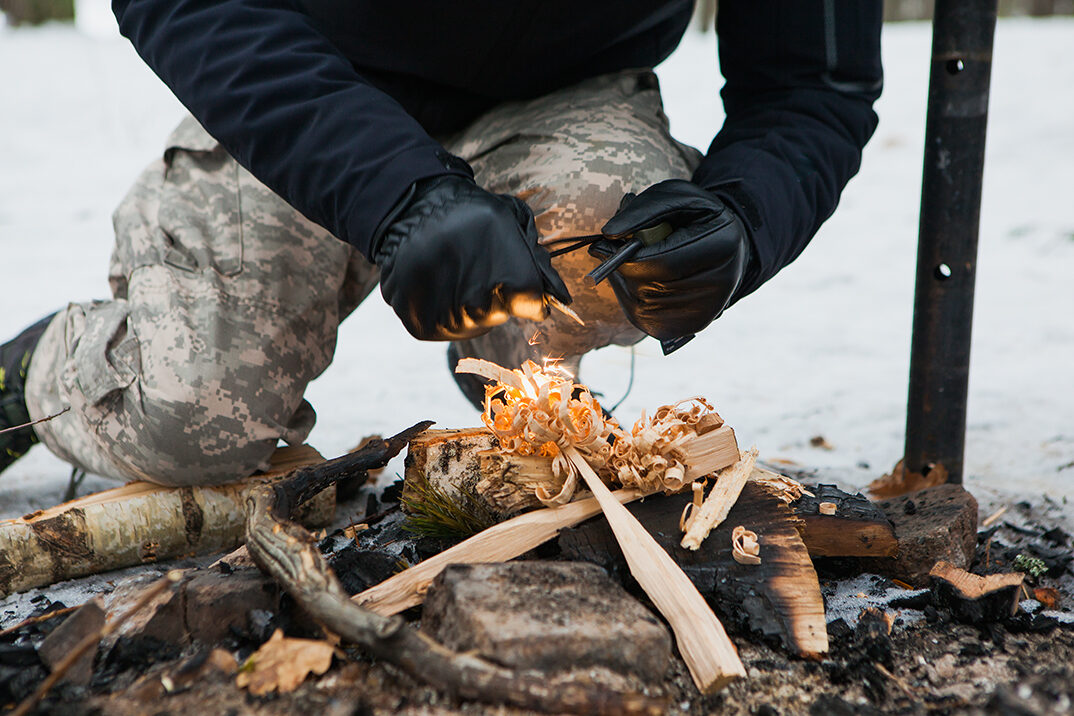
Ferro rods are highly reliable in cold and wet because they work through sparks, not flame or chemical reactions. The rod itself won't get wet (metal rod plus f
Bare ground removes flammable materials. Rock rings contain fire. Water nearby enables extinguishing. Adequate clearance prevents spread. Proper extinguishing p
Fatwood (lighterwood) is the resin-saturated heartwood of pine, found in dead trees or stumps. The resin ignites reliably even when wood is damp, making it supe