03 — Pillar · Survival
Expert guides and Q&A about gear axes vs hatchets.
Q&A in this topic
60 total
Most national parks in the United States have regulations on carrying an axe, but these vary by park and often depend on the type of axe. Generally, hatchets ar
Laws governing axe use vary by state and jurisdiction, but most require users to exercise caution and follow basic safety guidelines when handling sharp tools l
For survival use, sharpen your axe every 10-20 hours of use, or when you notice a significant decrease in cutting efficiency. This frequency may vary depending
When using an axe, avoid gripping the handle too tightly, swinging with a backhanded motion, and failing to maintain proper stance and balance.
Axe safety tips are crucial for beginners to master before using a tool that can split wood with ease, or cause severe injury if mishandled. To avoid accidents,
A hatchet is generally more versatile for camping due to its compact size, lighter weight, and ease of use in tight spaces.
An axe's weight affects endurance during use, with heavier axes tiring users faster and lighter axes requiring more force to chop. A 1-2 pound weight difference
A hatchet is a more practical choice for survival due to its lighter weight, increased versatility, and ease of maneuverability in tight spaces.
When it comes to survival axes, the best handle materials provide balance, durability, and grip. Look for materials like ash, hickory, or fiberglass that can wi
Store an axe safely by hanging it on a sturdy hook at least 6 feet off the ground to prevent accidental knocking, and keep it away from children and pets. Consi
To use a hatchet effectively in small wood projects, focus on striking techniques, control, and safety. Hold the hatchet at a 45-degree angle and use a swinging
To use a hatchet safely, stand with your dominant foot forward, keep the hatchet head below shoulder height, and swing with controlled, gentle force, using your
An axe is a crucial tool in a wilderness survival situation, ideal for chopping firewood, clearing vegetation, and even building shelters. Its versatility and e
An axe is a versatile tool for emergency evacuations, providing the ability to fell trees, create makeshift shelters, and split wood for fire starting. It is pa
A hatchet can be used as a defensive weapon in survival situations, but its effectiveness is largely dependent on the user's skill and technique.
A hatchet can be used for butchering game, but it is not the most recommended tool due to its smaller size and less weight. With practice, a hatchet can efficie
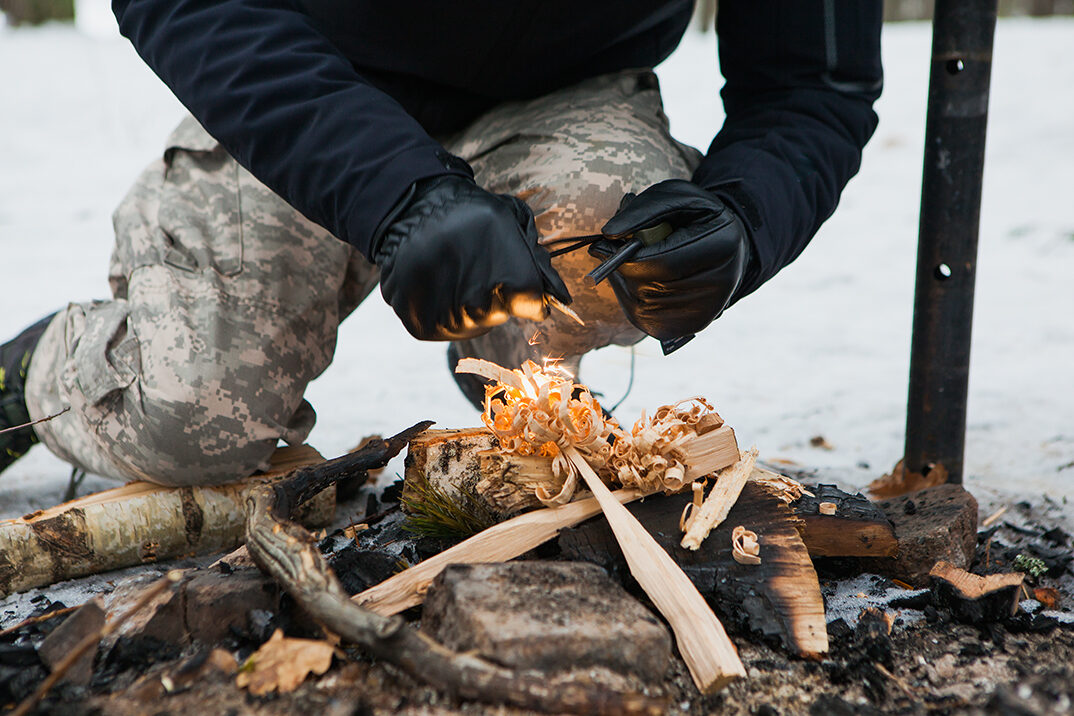
Hatchets can be used for starting fires in emergency scenarios, but they are not the most ideal tool for the job. They typically do not have the same level of p
A hatchet can cause injury if used incorrectly, as its sharp edge and heavy head can lead to severe lacerations or blunt trauma.
A hatchet can partially replace a multi-tool in the field, but it is not a direct substitute. While a hatchet excels in chopping, splitting, and shaping wood, a
An axe can be used for carving wood in survival situations, but a hatchet is a more suitable tool for this purpose due to its lighter weight and more compact de
Hatchets can be used for skinning game animals, but they are not the most effective tool for this task. A hatchet's curved or angled blade is generally better s
You can use an axe to construct a shelter in the wilderness, but it's essential to choose the right tool and technique.
Yes, you can split firewood with a hatchet effectively, but it requires skill and technique to achieve efficiency and safety.
A hatchet can be used for light to moderate felling tasks, but for heavy-duty tasks like felling large trees, a proper axe with a larger head and heavier weight
Using a hatchet in different weather conditions can be challenging due to its weight, size and material, which may not be suitable for prolonged use in extreme
An axe typically has a longer handle and a heavier, more substantial head, providing greater leverage and cutting power, while a hatchet has a shorter handle an
Axes provide better leverage for chopping compared to hatchets due to their longer handle and heavier head, resulting in more force applied to the cutting edge.
Different axe brands offer unique features for survival, including specialized head materials, ergonomic handles, and specific blade angles designed for various
Different woods can affect hatchet performance, with some woods being more suitable for chopping and splitting wood than others.
Local laws affect carrying an axe in certain environments, particularly in urban areas or those with specific regulations.
Experience Level Matters When Choosing Between Axe Types.
Hatchet durability under stress is relatively low compared to axes, with a typical lifespan of around 1,000 to 3,000 swings before the blade begins to show sign
A hatchet can be a suitable tool for camp setup, offering a balance between weight, durability, and versatility, making it easier to chop branches, kindling, an
Hatchet For Firewood: Is It Sufficient Or Do I Need An Axe? A hatchet is sufficient for small to moderate firewood, but an axe provides more power and efficienc
Beginners should learn basic hatchet techniques such as swinging, chopping, and sharpening. They should also learn how to maintain a straight swing, use the cor
Hatchet use cases often involve situations where precision and maneuverability are more important than raw power. In these situations, a hatchet can be more eff
A hatchet's limitations in survival stem from its smaller size and weight, leading to reduced cutting power and increased fatigue when used for extended periods
A hatchet can be a worthwhile tool in urban survival situations due to its compact size, simplicity, and multifunctionality, but it may not be as effective for
A hatchet is versatile, but it may not be enough for all outdoor tasks, particularly those requiring more extensive cutting or chopping.
In primitive survival skills, a hatchet is generally preferred over an axe due to its compact size, lighter weight, and ease of use in tight spaces. However, an
A hatchet is better for felling trees due to its lighter weight, compact size, and precise swing control, making it ideal for smaller, precision cuts. However,
A hatchet is safer for beginners to use than an axe due to its lighter weight, smaller head, and more forgiving swing dynamics. This makes it easier to control
Hatchet weight significantly impacts control and precision, with lighter hatchets typically requiring less effort but offering reduced chopping power, and heavi
With a hatchet, you can start with projects like building a simple shelter, kindling firewood, and whittling wooden stakes. A hatchet is a versatile tool for wi
Different techniques can significantly impact the efficiency of each tool. The efficiency of a tool like a hatchet or an axe can be affected by the user's stanc
Weather conditions significantly impact an axe's performance by affecting its balance, weight, and overall handling. In wet or icy conditions, an axe's grip can
Grip design significantly affects performance in hatchets and axes. A well-designed grip enables users to generate more force and maintain control, leading to b
Short Answer: The size of an axe significantly influences its performance in survival, with larger axes offering greater chopping power but being more cumbersom
Axe is an effective tool for building shelters in the wild, particularly for creating larger structures such as lean-tos, debris huts, or even building a tree p
A hatchet is moderately efficient for processing game meat on a hunt, as it can handle tasks like skinning, deboning, and chopping, but it may not be as effecti
When using axes in survival situations, avoid common mistakes by choosing the right tool for the job, ensuring proper grip and swing techniques, and maintaining
When choosing a hatchet, consider your intended use, such as camping, logging, or survival, and select a tool with the right balance of weight, size, and sharpn
Choosing between an axe and hatchet for bushcraft depends on the specific task, desired weight and portability, and personal preference. A hatchet is ideal for
Regularly clean and lubricate your axe to prevent rust, and inspect it for damage, repairing or replacing worn-out parts as needed.
To properly maintain an axe for long-term use, sharpen the blade regularly with a whetstone, apply a thin layer of oil to the handle, and inspect the axe head f
Secure an axe while hiking by attaching it to a fixed point on your backpack or using a sheath with a secure closure, such as a Velcro strap or a bungee cord. T
A hatchet is a reliable tool in emergency situations, particularly for chopping, hacking, and self-defense. It's a compact, versatile option that can serve as a
A well-crafted axe can be a life-saving tool in various survival scenarios, including when felling trees to create shelter or firewood, splitting logs for warmt
A folding hatchet is a good choice for emergency kits due to its compact size, ease of use, and versatility. It can serve multiple functions and provide a relia
A hatchet is inadequate for outdoor cooking needs due to its limited functionality and size. A hatchet is primarily designed for chopping and clearing tasks, an