03 — Pillar · Survival
Expert guides and Q&A about gear knife selection.
Q&A in this topic
60 total
A drop point blade offers improved stability and reduced risk of the blade flexing back towards the user, making it a reliable choice for survival situations wh
There are no federal laws regulating survival knife size, but some US states have specific restrictions on blade length and other features. For example, Califor
When selecting a knife for cold weather, consider materials that resist rust and corrosion, a design that maintains edge retention in cold temperatures, and a h
For outdoor survival knives, the best blade steel is 1095 high-carbon steel due to its exceptional edge retention, rust resistance, and affordability, making it
For EDC survival situations, the best folding knives are compact, durable, and versatile, with features such as serrations, one-handed opening, and secure locki
For urban survival scenarios, the best knife features include a compact size, high-carbon stainless steel blade, and a reliable folding mechanism with a secure
A knife length between 3-4 inches is ideal for carvings and food preparation while camping, offering a balance between maneuverability and cutting efficiency.
For urban survival training scenarios, the best knife options are compact, versatile, and reliable, with features such as a drop-point or clip-point blade, a 3-
To carry a survival knife safely, always secure it in a sheath or scabbard, and attach it to your belt at a 45-degree angle to prevent accidental draw. This ang
For a fixed blade survival knife, consider sheaths made from durable materials like nylon, Kydex, or leather, with a secure retention system to prevent accident
Top survival knife brands recommended by experts include Buck, Ka-Bar, and Benchmade, known for their durability, sharpness, and versatility in various environm
A beginner's survival knife should have a sturdy blade, ergonomic handle, and simple locking mechanism. It should also be lightweight and easy to carry. A blade
A survival knife is a versatile tool that can be used beyond cutting, including as a makeshift awl for piercing holes, a scraper for removing bark, and a hammer
A folding knife can handle basic to moderate survival tasks, but its suitability depends on the knife's material, design, and intended use.
A folding knife may not be the best choice for serious survival situations due to its limitations in durability and edge retention. In harsh environments, a fol
A multi-tool can partially replace a dedicated survival knife but lacks the precision, durability, and ergonomic design of a specialized knife.
A survival knife can be used effectively as a fishing tool in a pinch, but its effectiveness largely depends on the knife's design and the type of fishing being
A survival knife can be used for defensive tactics if needed, but it is not designed for this purpose and should be used as a last resort.
A Survival Knife Can Be Used For Self-Defense, But Effectiveness Depends On The Knife's Design, Size, And The User's Training. A Well-Designed Survival Knife Ca
A survival knife can indeed be used in fishing scenarios, but it's essential to choose the right type of knife and utilize the correct techniques.
A survival knife can indeed function as an emergency tool, providing essential functions such as cutting, chopping, and even as a makeshift shovel or fire start
A survival knife can replace an axe in certain tasks, such as chopping small branches, cutting vines, and preparing firewood for small campfires. However, for l
In general, carrying a survival knife in national parks is allowed, but regulations may vary depending on the park. Check with park rangers or visitor centers f
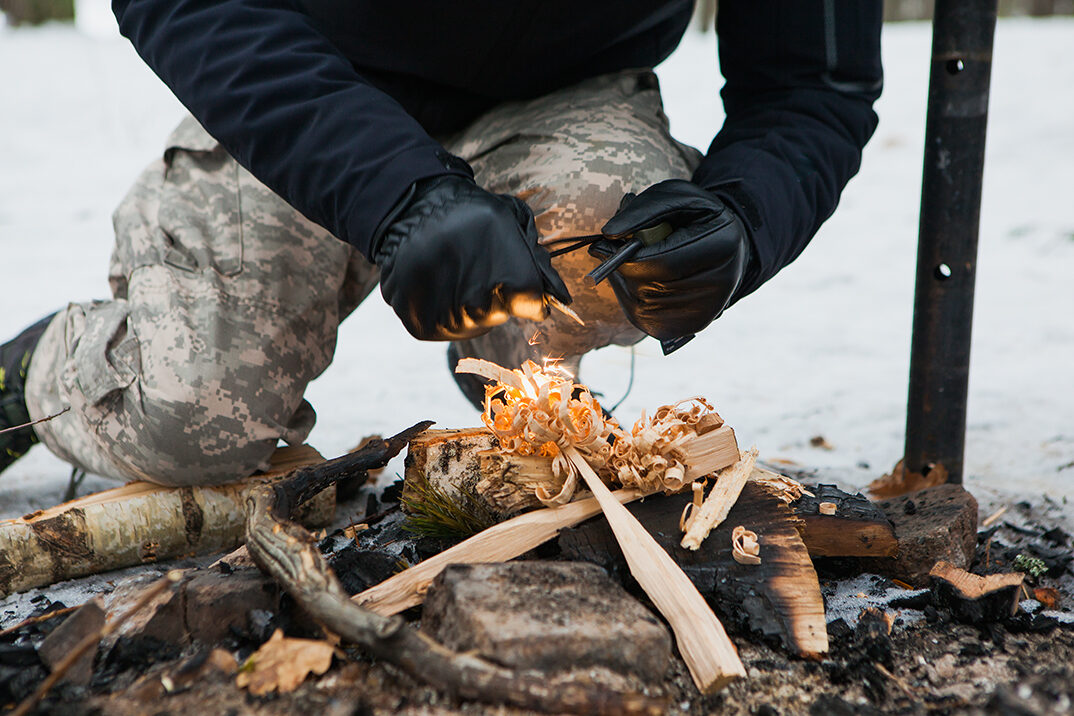
A survival knife can be used for fire starting, but it's not the most reliable method, especially in wet or damp conditions. A knife with a ferrocerium rod or a
A folding knife is suitable for light to medium cutting tasks in survival, but may not be effective for heavy cutting tasks. Its durability and sharpness may be
A survival knife can be used for hunting small game, but it's essential to choose the right knife and consider the type of game you're after. A smaller, lighter
A survival knife can be used for shelter building, but it's not the most efficient tool for the task. You'll need to use the knife to cut branches, vines, and o
When choosing a knife for foraging, important attributes include a durable blade material, ergonomic handle, and suitable size for tasks like cutting vines and
When choosing a survival knife for bushcraft, key features include a sturdy blade made from high-carbon steel, a ergonomic handle for comfort and control, and a
Common Mistakes When Selecting A Survival Knife include choosing a blade that is too small, not considering the material quality, and overlooking the ergonomic
A drop point blade features a curved or angled tip that reduces the risk of injury to the user or others, while a clip point blade has a more pronounced, sharp
A blade's finish affects its corrosion resistance, durability, and maintenance. For survival, a blade with a durable, low-maintenance finish is ideal. A blade w
Knife reviews can be helpful but should not be the sole factor in selecting a survival knife. While reviews provide valuable insights from experienced users, a
Premium brands can make a difference in knife performance, but the impact is often overstated, and the gap between premium and budget options is narrowing.
A fixed blade knife has distinct advantages over a folding knife in terms of durability, reliability, and ergonomics, particularly in demanding outdoor or tacti
A Full-Tang Knife Provides Better Strength And Stability because its design allows for a solid, continuous piece of metal that runs from the tip to the handle,
A folding knife is generally better for survival situations due to its compact size, reduced weight, and increased versatility. A fixed blade knife, while more
The safest folding knife lock type is the Axis Lock, which provides an additional level of security and resistance to accidental opening. This is due to its dou
A full tang knife has the blade's tang extending all the way to the handle's end, providing strength and control, while a partial tang knife only has the tang e
When handling survival knife injuries, it's essential to assess the wound, clean and disinfect the area, and apply pressure to stop bleeding. Use a sterile dres
Different blade coatings can significantly impact performance in the field, with some offering enhanced durability, corrosion resistance, and non-stick properti
Blade geometry has a significant impact on cutting performance, with sharp edges and precise angle control allowing for efficient cutting and reduced fatigue.
Blade thickness significantly impacts durability and use, as thicker blades are generally more resistant to wear and tear but may be less agile, while thinner b
A knife's weight is significantly important when backpacking due to the cumulative effect of carrying heavy gear over long distances. A lighter knife is essenti
A survival kit should include 2-3 essential knives, each serving a specific purpose: a fixed-blade knife for heavy-duty tasks, a folding knife for precision wor
Choose a knife based on the intended survival activities, considering factors such as blade material, edge retention, and ergonomics. For example, a fixed-blade
When choosing a knife for thru-hiking and survival, consider a blade length between 2.5 and 4 inches, a durable handle material, and a sharp, rust-resistant bla
When choosing a survival knife, consider the environment you'll be in: a wet and humid jungle requires a rust-resistant blade, a cold and snowy climate demands
When choosing between a Scandi grind and a flat grind, consider the intended use and your personal preference. A Scandi grind is better suited for wilderness us
Determine your grip style by experimenting with different knife holds, focusing on comfort and control, and choosing a knife with a suitable handle size and tex
Store your survival knife in a dedicated sheath or holder, easily accessible but secure, and perform regular maintenance checks to ensure it remains sharp and f
To select a knife based on task requirements, consider the intended use, environment, and level of precision needed. Determine the primary functions of the knif
Ideal Knife Weight For Backpacking And Survival: A good backpacking knife should weigh around 3-4 ounces (80-120 grams).
Important regulations on carrying survival knives in the U.S. vary by state, but generally, blades over 2 inches in length are restricted in public places and s
A drop point knife is often preferred for skinning animals due to its curved blade design, which allows for more efficient and precise cutting of meat.
A fixed blade is often better for emergency situations due to its reliability and ease of use, but a folding knife can also be a good option if it's sturdy and
A fixed blade knife is generally more reliable than a folding knife due to its simplicity and fewer moving parts, making it less prone to mechanical failure. Ho
A folding knife can be suitable for short-term survival use, but it may not be the best choice for long-term survival due to its limited durability and reliabil
A larger blade may not always be the best choice for survival situations, as it can be heavier, more difficult to carry, and harder to control in tight spaces.
A sheath is not strictly necessary for safety when carrying a fixed knife, but it's highly recommended to ensure the knife is securely stored and prevent accide