03 — Pillar · Survival
Expert guides and Q&A about signal smoke fire.
Q&A in this topic
60 total
Smoke signals are recognized worldwide for emergency distress, but not specifically for SOS.
Smoke Signals Visible from Drones or UAVs: Smoke signals are generally not visible from drones or UAVs due to their low altitude and speed.
Smoke Signals Weather-Dependent for Effectiveness: No, smoke signals can be visible under most weather conditions, but their effectiveness is greatly reduced in
There are different patterns for different SOS situations, such as nighttime, daytime, and fire-based signals, each designed to optimize visibility and reach.
Environmentally friendly options for smoke generation do exist, offering alternative methods to traditional smoke signals using wood or other combustible materi
No, there are no specific federal laws in the United States that restrict smoke signaling in forests, but land managers and local authorities may have regulatio
In urban environments, smoke signaling has special considerations due to the presence of buildings and potential obstacles. This can lead to reduced visibility
For an effective smoke signal, use hardwoods that burn hot and produce a thick, white smoke. Green woods, softwoods, and wet woods are not ideal due to their lo
For effective signaling, use large, dry, fluffy materials that burn brightly and produce thick white smoke, such as dry grass, small sticks, and shredded bark.
When extinguishing a signaling fire, smother it out by depriving it of oxygen, using fire extinguishing methods such as ABC ratings, or flooding it with water i
Maintaining your fire for signaling purposes requires regular attention to ensure a consistent and strong signal. This can be achieved by adding fuel in small i
In rainy weather, it's essential to create a controlled fire and maximize smoke production by using green wood, increasing airflow, and maintaining a consistent
Dense smoke can be created using various materials, but the most effective sources tend to include green leaves, wet wood, and other organic substances that pro
To start a signaling fire quickly, focus on using easily ignitable materials, such as dry leaves or small twigs, and maintain a steady supply of oxygen to the f
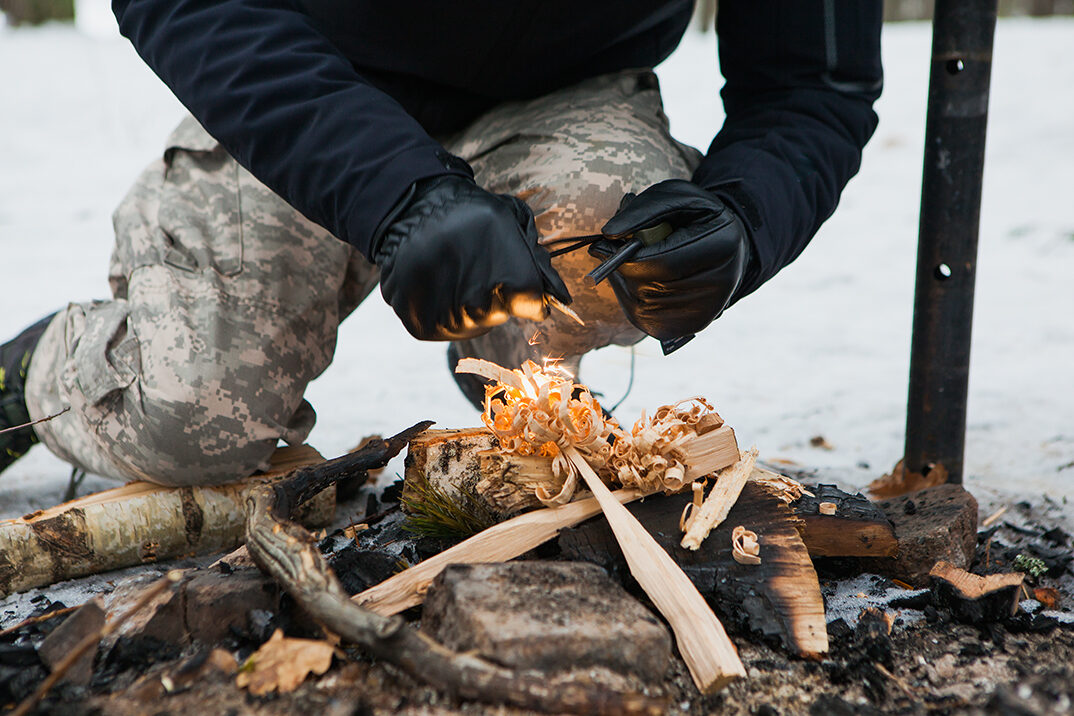
For starting a fire for signal purposes, it's best to use a waterproof match case, a lighter, or a firesteel, as these tools can withstand harsh weather conditi
To signal for help without making noise, use visual signals such as fire, smoke, or reflective materials. Create a smoke signal during the day using dry wood an
Animals can recognize smoke signals as a sign of danger but not necessarily as an SOS call. Some species like birds and insects are more sensitive to smoke sign
Different types of wood can significantly affect the color of the smoke produced when burned. This variation in smoke color is primarily due to the different ch
Green foliage can improve smoke density for signals by absorbing moisture and reducing the amount of water vapor released into the air.
Reflective materials can improve smoke signal visibility by increasing the contrast between the smoke and the surrounding environment.
Smoke can be used at night for signaling, but its effectiveness is greatly reduced compared to daytime signaling.
Smoke signaling can be a useful aid in wilderness rescue operations, particularly in remote or densely forested areas where visual signals may be difficult to s
Smoke signals can be intercepted by unwanted observers, especially if they are close to the intended recipient or if they have a clear line of sight to the fire
Smoke signals can indeed be misinterpreted in survival scenarios due to various factors such as weather conditions, observer location, and fire characteristics.
Smoke signals can be seen from helicopters under favorable conditions, but their visibility is greatly influenced by factors such as smoke density, height, and
Smoke Signals Can Be Used for Hunting Communication.
Smoke Signals Indicate Specific Locations can be used for signaling purposes, but it is not an exact science. Location indication relies on the observer's exper
Yes, smoke density can be controlled to some extent with the type of fuel used, but it's essential to remember that smoke management is a complex process involv
SOS messages can be enhanced with different patterns to improve visibility and convey additional information. This can be achieved through the use of smoke, fir
You can signal for help using a single fire, but it's crucial to create a visible and recognizable signal that can be seen from a distance.
Green wood can be used to create more smoke, as it contains more moisture and resin than seasoned wood, which makes it burn less efficiently and produce more sm
Smoke signals can be a creative way to communicate in non-emergency situations, but they are not a reliable method for conveying complex information or reaching
Smoke signals can be an effective method of communication in a survival group, especially in wilderness or remote areas where other forms of communication may b
Smoke signals can still be used in cold weather, but their effectiveness may be reduced due to the lower temperatures and reduced air currents.
Native Cultures Used Smoke Signals for Communication as a Reliable and Efficient Method.
Smoke signals can be seen from a distance of up to 50 miles, depending on atmospheric conditions and observer visibility. This distance can vary greatly based o
Animals often respond to smoke signals, using them to detect danger, find food, or navigate their environment. This response is primarily driven by the visual c
Smoke signals lose effectiveness over long distances due to dispersion and atmospheric conditions, making them less reliable for communication beyond a few kilo
Smoke signal recognition does change by region, as local vegetation and atmospheric conditions can impact smoke color and behavior, making it essential to famil
A dense, black smoke is the most effective color for SOS signals due to its high visibility against most backgrounds, especially water and vegetation. This is a
Smoke signaling is still a valid emergency communication technique in certain situations.
Smoke can last anywhere from a few minutes to several hours in the air, depending on the type of fire, wind direction, and air currents.
Build 3 fires in a triangular formation, spaced about 100 to 200 feet apart, to create a clear and visible signal.
Repeating your smoke signal every 30 minutes during daylight hours is essential for maintaining visibility and conveying urgency to potential rescuers. This fre
Before attempting to send a smoke signal, it's essential to prepare by having the right materials and understanding the principles of smoke signaling.
When signaling, use a controlled and dampened fire to minimize the risk of starting a wildfire. Choose a safe location, ideally a fire pit or a cleared area, aw
Choose a location with a clear line of sight to your target audience, ideally at least 5-7 feet above the surrounding terrain, and preferably near a ridge or hi
Choose the right time for smoke signaling when visibility is optimal, typically during periods of low to moderate wind and clear skies, with the sun at a low or
To communicate a specific message with smoke, you need to create a fire that produces a controlled smoke signal. This can be achieved by using specific types of
To confirm help has arrived after signaling with a fire or smoke signal, look for a distinct pattern of lights or sounds from the approaching rescuers, such as
Create a distress signal with smoke by using a fire that produces a dense, black smoke. This can be achieved by burning green wood, wet wood, or plastic, as the
Creating a smoke signal in wet conditions requires patience and the right materials. You can create a fire using damp wood and green leaves, which will produce
Document your smoke signaling training experiences by keeping a logbook or journal with detailed notes, photographs, and videos of each exercise and scenario. I
To improve visibility of smoke signals in daylight, use a clear burning fire with a high-temperature flame, and position the fire on a high point to create a pl
To maintain fire safety while signaling with smoke, use a controlled fire in a safe location, away from flammable materials, and keep a fire extinguisher nearby
To make your smoke signal last longer, use dry, well-seasoned wood with high BTU content and maintain a consistent flame. This will help burn fuel efficiently a
A smoke signal SOS can be recognized from distance by identifying three short, distinct smoke plumes, typically three short and three long signals, or three rep
Smoke signals from commercial aircraft can be recognized by their distinctive characteristics and patterns.
To train for using smoke signals effectively, start by learning the International Morse Code system for smoke signals, practice creating different types of smok
To use smoke signals with other survival techniques, create a visible signal fire with three fires in a triangle, at regular intervals, to indicate your locatio