03 — Pillar · Survival
Expert guides and Q&A about tundra survival.
Q&A in this topic
60 total
A snow shelter provides protection from harsh winds, extreme cold, and precipitation in frosty climates, allowing for a more restful sleep and better survival c
Winter survival can be enhanced by consuming specific berries such as crowberries, bilberries, and blueberries which provide essential vitamins, minerals, and a
Yes, the tundra is home to several types of berries rich in antioxidants, which can help protect against cell damage and oxidative stress, including crowberries
Permafrost poses significant dangers including collapsing terrain, hidden crevices, and the risk of being trapped by thawing ground, making it essential for tra
Navigating permafrost landscapes poses significant challenges due to the unique combination of cold temperatures, unstable terrain, and harsh weather conditions
Safely cooking food in extreme cold requires planning, the right equipment, and proper techniques. Use a portable stove or solar oven, as they are more reliable
For tundra survival, I recommend the Leatherman Wave or the Gerber Suspension Multi-Plier. Both tools are durable, compact, and offer a versatile set of functio
STAY WARM IN TUNDRA NIGHTS BY CHOOSING A SHELTERED LOCATION, WEARING LAYERS AND INSULATING GEAR, AND USING FIRE AND BODY HEAT TO MAINTAIN YOUR BODY TEMPERATURE.
To track caribou during migration season, identify their routes by following lichen and berry patterns, which are typically 10-15 kilometers wide and coincide w
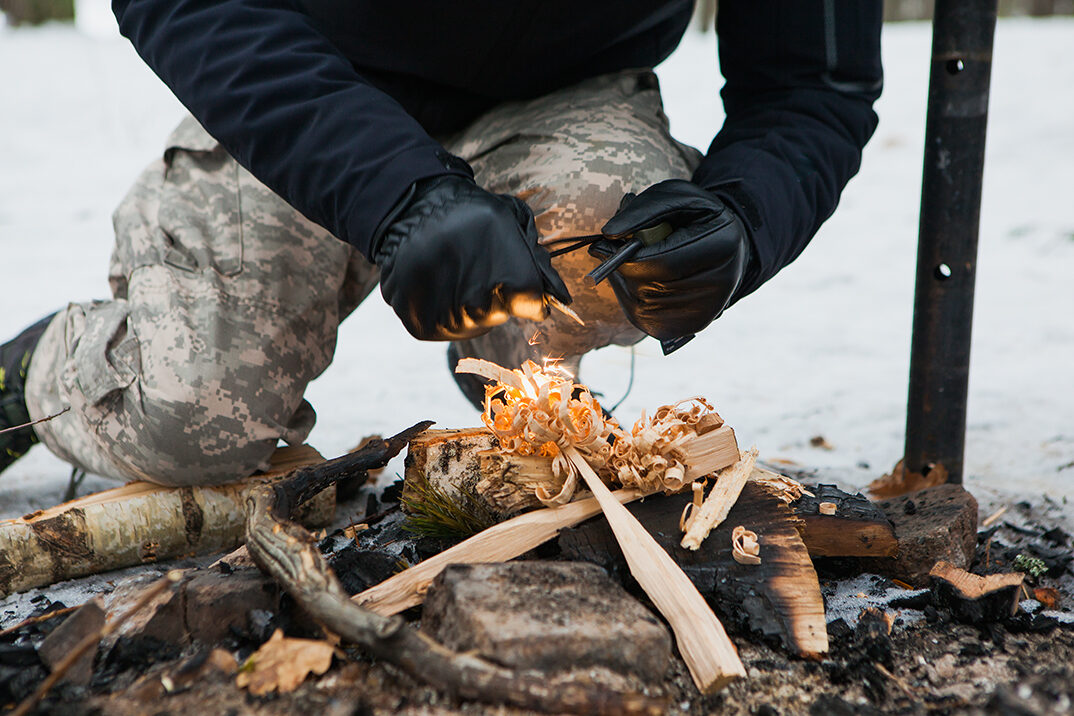
To create a fire pit in windy conditions, choose a spot with natural windbreaks like rocks or trees, and use a fire ring or a shallow pit to contain the flames.
To effectively camouflage in tundra conditions, hunters should blend in with the environment by wearing earth-toned clothing, staying low to the ground, and usi
In permafrost regions, finding food often involves foraging for lichens, berries, and other hardy plants, as well as hunting small game like caribou. Traversing
Caribou antlers can be used for crafting survival gear, providing a lightweight, durable, and natural material for creating tools and shelters in the harsh tund
Caribou antlers can be repurposed as useful survival tools, offering a unique combination of durability and natural adaptability for tundra environments.
Lichen can be used for medicinal purposes, providing antifungal, antibacterial, and anti-inflammatory properties, although its effectiveness depends on the spec
Insulating layers can indeed affect mobility in cold tundra climates, as excessive bulk or weight can restrict movement and increase energy expenditure. This is
Yes, natural shelters can be found in tundra ecosystems, such as caves, rock overhangs, and snow shelters.
Reflective materials can help reduce wind chill by increasing the amount of sunlight that is reflected back onto the body, thereby warming the individual. This
Reflective surfaces can be used to improve visibility in snowy conditions by increasing the amount of light that is reflected back into the environment, helping
Wind chill can greatly impact your ability to hunt effectively, as it increases the risk of hypothermia, reduces visibility, and makes tracking and following pr
A shelter can be created from natural tundra materials such as lichens, grasses, and branches to protect against wind and permafrost. The shelter should be buil
Melting permafrost can be a source of drinking water, but the water quality may be compromised due to contaminants and high turbidity.
Foraging for food in winter tundra is challenging but possible with the right knowledge and preparation. Knowing which plants to look for, using the right techn
Caribou can be hunted year-round in Alaska, but the prime season typically ranges between September and April. This is due to the availability of food sources a
Standard camping gear is not reliable in permafrost due to extreme cold, wind, and lack of insulation, making it prone to failure and posing a risk to the user'
Yes, it's possible to survive in tundra without a tent, but it requires careful planning, knowledge of the terrain, and the right skills to navigate extreme tem
Yes, animal tracks can be used to predict weather changes, as they often alter their behavior in response to impending weather patterns.
Snow can be used as a water source in the tundra, but the process is energy-intensive and requires patience. The snow must be melted, and the resulting water sh
Hunting in high wind situations presents challenges such as reduced visibility, increased difficulty with tracking and stalking, and heightened risk of exposure
Common dangers of wind chill exposure while camping include hypothermia, frostbite, and increased risk of respiratory issues due to cold air.
Berries harvested in summer can be dried or frozen to provide a valuable source of nutrition during winter when other food sources are scarce.
SOME berries like blueberries and cranberries can be preserved by drying them at 135-140°F (57-60°C) for 6-12 hours, while others like strawberries and raspberr
To enhance your chances of spotting elusive wildlife, focus on moving quietly, using the right vantage points, and timing your observations to coincide with the
Wind exposure can be a silent killer in harsh environments, and its effects on the body are often overlooked until it's too late.
Temperatures in the tundra differ significantly between day and night, with daytime temperatures often reaching into the 40s and 50s (7-15°C) in the summer, whi
Temperatures in the tundra fluctuate significantly between seasons, with winter lows ranging from -22°F to -40°F (-30°C to -40°C) and summer highs reaching up t
Hunting pressure significantly alters caribou behavior in the tundra, causing them to shift their migration patterns, change their grazing habits, and increase
Lichen contributes to the tundra ecosystem by providing a vital source of food and nutrients for native animals such as caribou, while also serving as a key ind
The color of lichen typically deepens and darkens as summer progresses, and lightens as winter approaches, reflecting its dependence on sunlight for photosynthe
Wind increases hypothermia risks by accelerating heat loss through evaporation, making the body lose warmth more quickly, and potentially blowing cold air direc
Wind exposure in the tundra significantly affects body temperature due to the extreme cold and lack of insulation. Prolonged exposure to wind can quickly lower
For tundra survival, daily caloric needs range from 3,000 to 5,000 calories, depending on age, sex, and activity level, to maintain body heat and energy in the
Building a fire in strong tundra winds requires a solid base, wind-resistant materials, and a strategic location. You'll need to create a fire bed, gather suita
To build a windbreak for shelter in the tundra, gather suitable materials such as snow blocks, branches, and lichen-covered rocks, then construct a semi-circula
Determine wind direction by observing the movement of lichens, observing the direction of snowdrifts, and using your knowledge of weather patterns to predict wi
To differentiate between edible and toxic tundra berries, observe their color, shape, size, and any distinctive features. Also, research local berry species and
To efficiently store food when temperatures are below freezing, use insulated containers, such as airtight plastic or metal containers, and keep them buried ben
Edible lichen in the Arctic can be identified based on its color, texture, and growth patterns, as well as the presence of specific chemical compounds. The most
In tundra regions, identify signs of wildlife presence by looking for tracks, scat, and digging patterns, as well as checking for grazing or trampling of vegeta
To prevent food from freezing in extreme cold, use insulated containers, keep food close to the body, and consider using a portable warmer or a thermos.
Maintaining morale in tundra survival situations requires a combination of physical and mental strategies, such as staying warm, finding food and water, and usi
Caribou tracks in the snow are typically 2-3 inches wide and feature a distinctive oval shape with parallel grooves. The tracks often show a single, deep impres
To utilize traditional survival techniques in Arctic scenarios, locate a sheltered area and build a quinzhee or snow trench, followed by starting a fire using a
Ideal conditions for harvesting berries in tundra climates are typically found during the brief summer months when temperatures are above freezing and the perma
Identify animal trails in tundra terrain by looking for signs of disturbance, such as flattened vegetation, scat, and scratch marks on trees. Pay attention to t
A survival knife is crucial for tundra expeditions as it serves as a vital tool for cutting, digging, and self-defense in this harsh environment.
Hunting caribou in the tundra during migration is a complex issue, but from a hunting perspective, it can be argued as ethical when done in a sustainable and re
Traveling solo in tundra conditions is highly inadvisable due to harsh weather, limited resources, and increased vulnerability to wildlife encounters and accide
Camping near caribou migration routes can be hazardous due to unpredictable migration patterns, harsh weather conditions, and potential encounters with caribou.
It is not recommended to consume lichen straight from the ground due to potential contamination and toxicity from pollutants, heavy metals, and other substances