
Featured Review · Hirsch Precision · Rangefinders
GPO Rangetracker 2000 Rangefinder on a Second Chehalis Glassing Hunt — Ranging the Ridge, the Basin and a 150-Yard Shot
Our Rating
Current Price
- Product
- GPO Rangetracker 2000 OLED (HLRF2000, black; HLRF2001, green)
- Sold by
- Hirsch Precision (Canadian orders)
- Magnification
- 6x, 20 mm objective, 3.3 mm exit pupil, 16 mm eye relief
- Range
- 6 to 2000 yards (as listed by Hirsch Precision)
Pros
- Small and light at 5.2 oz and 3.7 in, it rides in a jacket pocket or on the pack strap and a young hunter can hold it steady
- The red OLED target marker and readout stayed easy to read in low morning light and bright fog glow
- Hyper-scan gives three readings a second, which makes panning a ridge line for distances quick
- Angle-compensated horizontal distance (HR) is on the display, which matters on steep mountain ground
- Rated to 2000 yards and read the far slope of our basin at about 1000 yards without fuss
- Comes with a hard zip case, lanyard, carabiner, cleaning cloth and a printed manual, and uses a common CR2 lithium cell
Cons
- IPX4 is splash resistance only, not a rangefinder you dunk or leave in a downpour
- 6x magnification with a 20 mm objective is fine for ranging but you will still reach for binoculars to find the animal
- The 2000-yard rating is for reflective targets, so on dark timber and soft hillsides expect much shorter reads
Our first glassing hunt found us a ridge. Our second one, a week later, was about numbers. We went back up above the Chehalis cutblocks on the morning of 31 October 2026 with a new toy in the pocket, the GPO Rangetracker 2000 laser rangefinder, and one job for it: put real distances on a piece of country we had only been eyeballing. No deer on the ground again. But we came down with a short list of yardages that will shape the sit we’re planning for the rut, which is about two weeks away, with snow on the ground if the weather plays along.
This is the second follow-up to our first Chehalis glassing hunt, and the rangefinder is the star. It comes from our partner Hirsch Precision, a Canadian online shooting-sports retailer, and the link to buy it is at the bottom of this page. Riding along, as before, were the Riton 5 Primal 10x42 ED binoculars, the Ruger American Ranch .223 and the Exo Mtn Gear K4 3600.
The outing at a glance
Why a Rangefinder on a Glassing Hunt?
On our first trip we judged distance the way most of us do: by feel, and badly. Fog, cutblocks and big timber play tricks on the eye, and a slope that looks like a long poke can be a comfortable shot, or the other way round. A glassing hunt is the cheapest time to fix that. Nobody is about to shoot, so you can take as long as you like to learn the ground, and every number you collect goes into the plan for the day the deer are moving.
So we spent a morning building a range card for the mountain. The method was simple. Pick a landmark, brace on the boulder, press, read, write it down, move on.
Out of the Box: GPO’s Rangetracker 2000
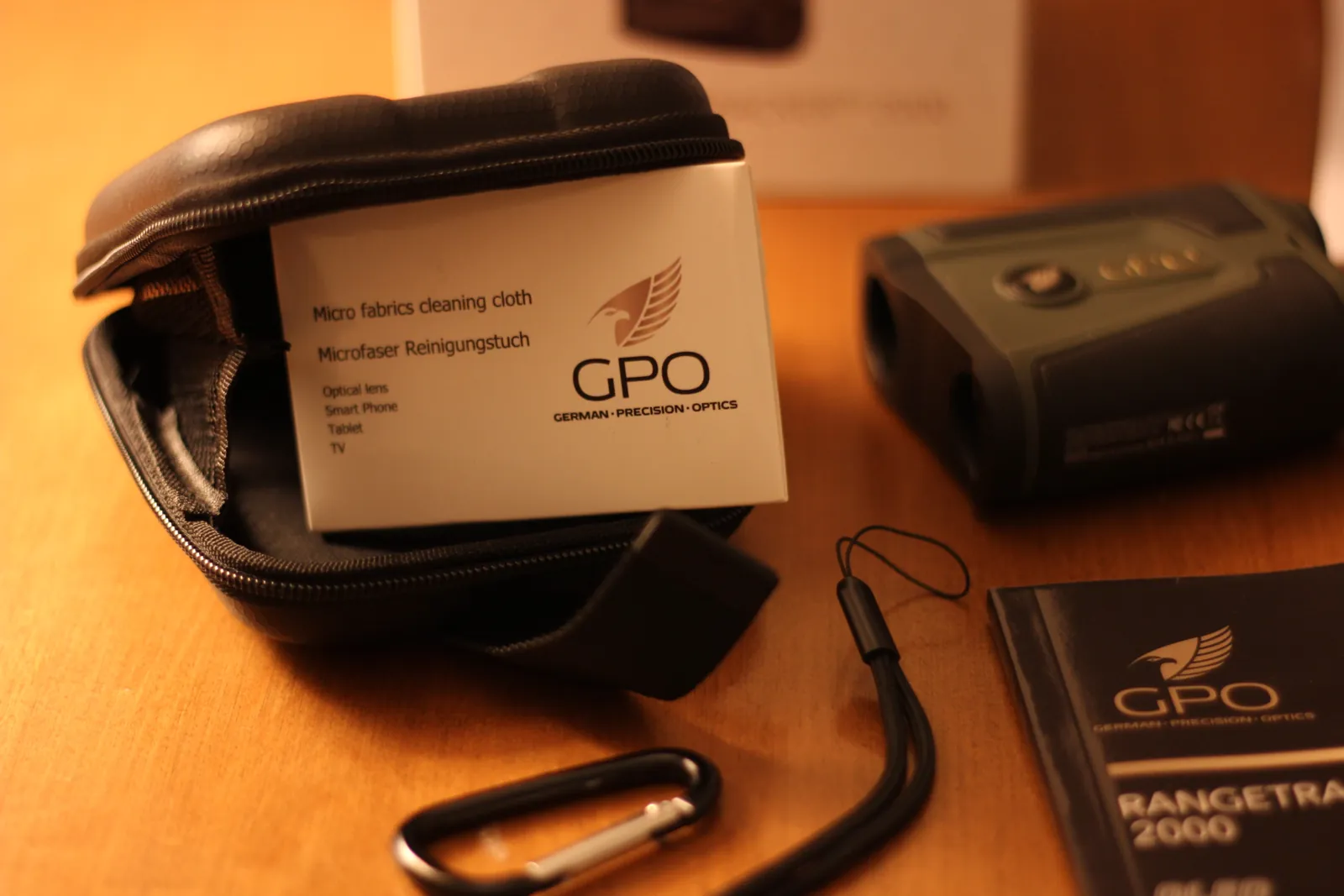
We unboxed it on the evening of 26 October, under a lamp, which is why the first photos are so warm and orange. The box is clean and a little understated, with the GPO eagle and “Rangetracker 2000 OLED” on the front.
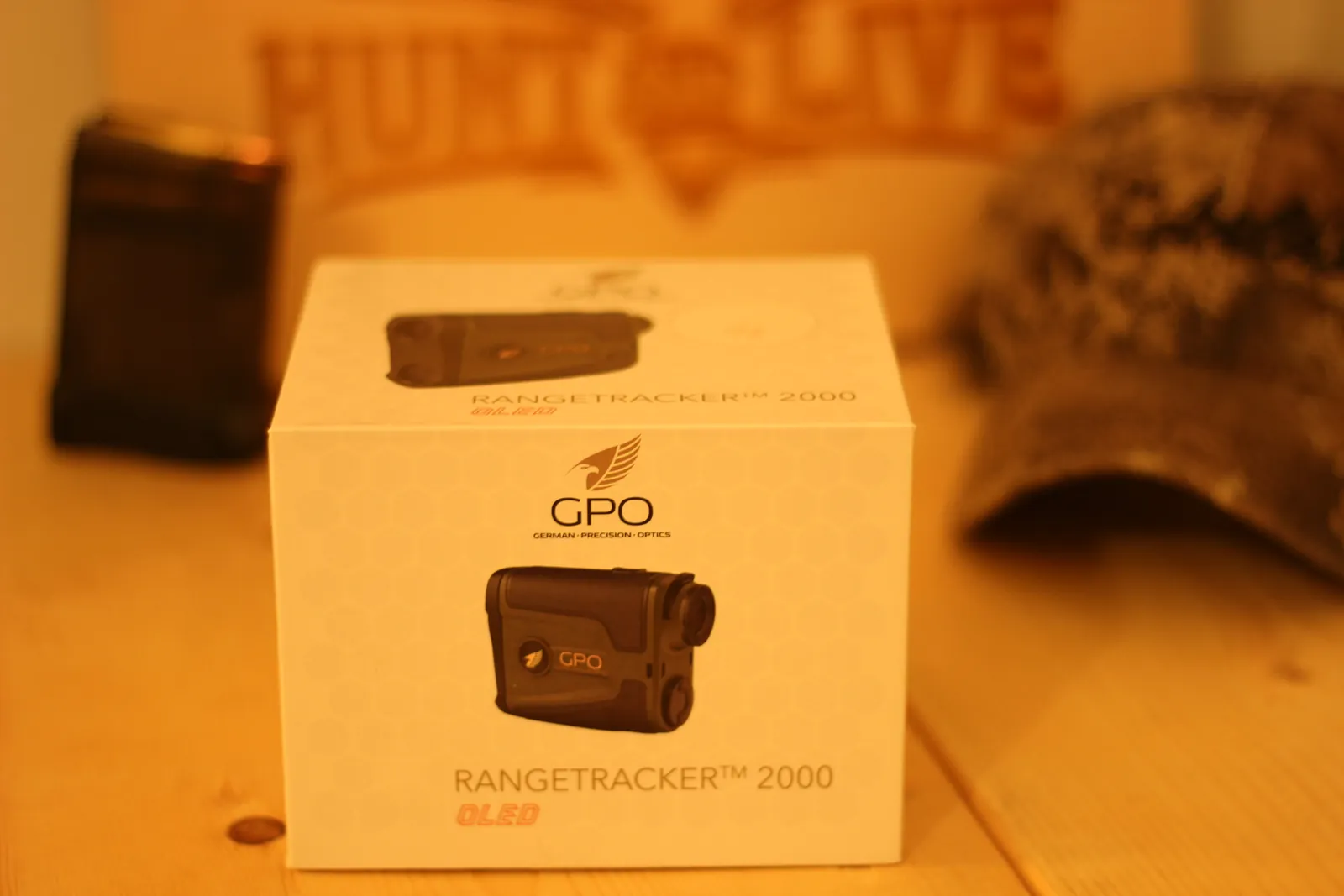
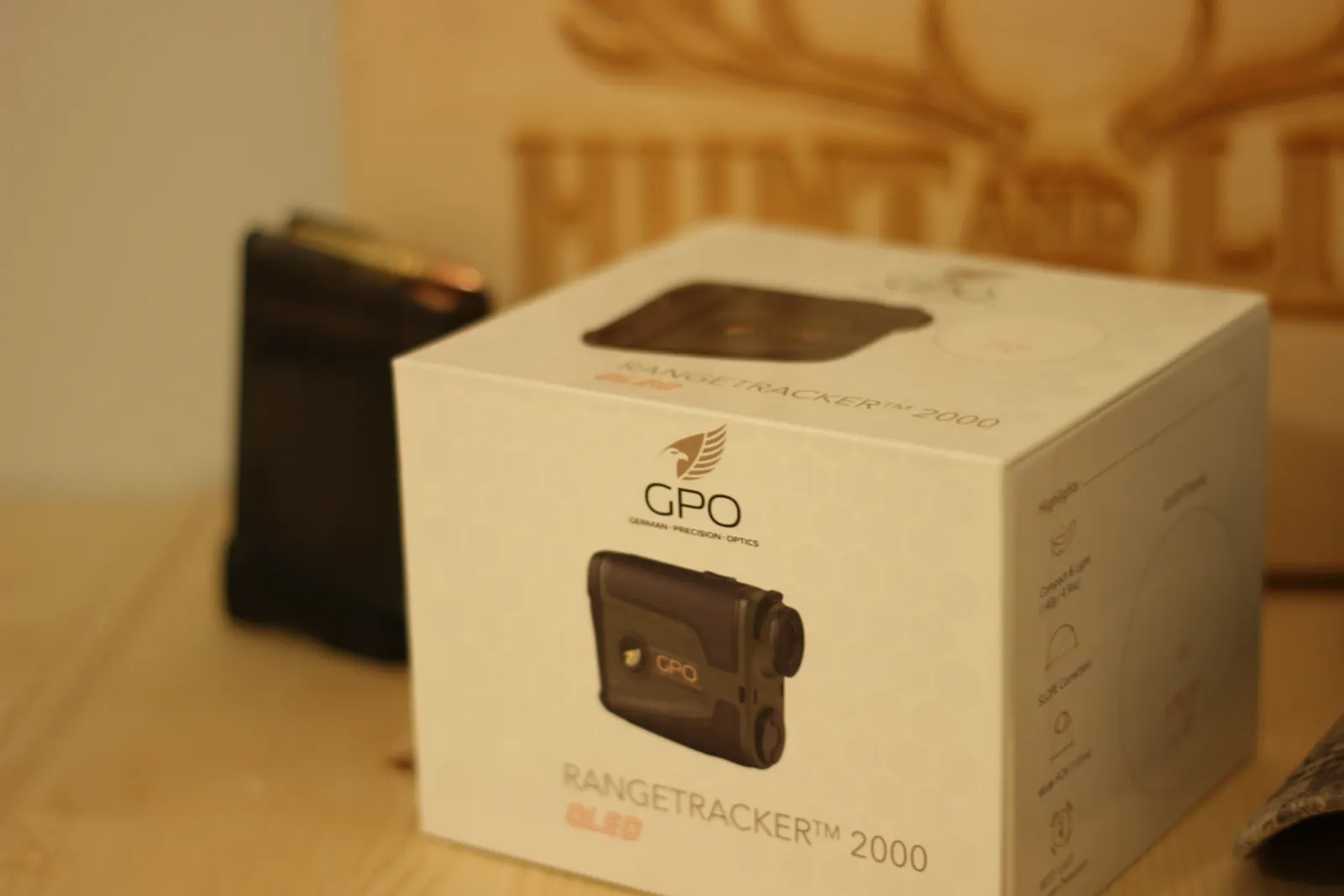
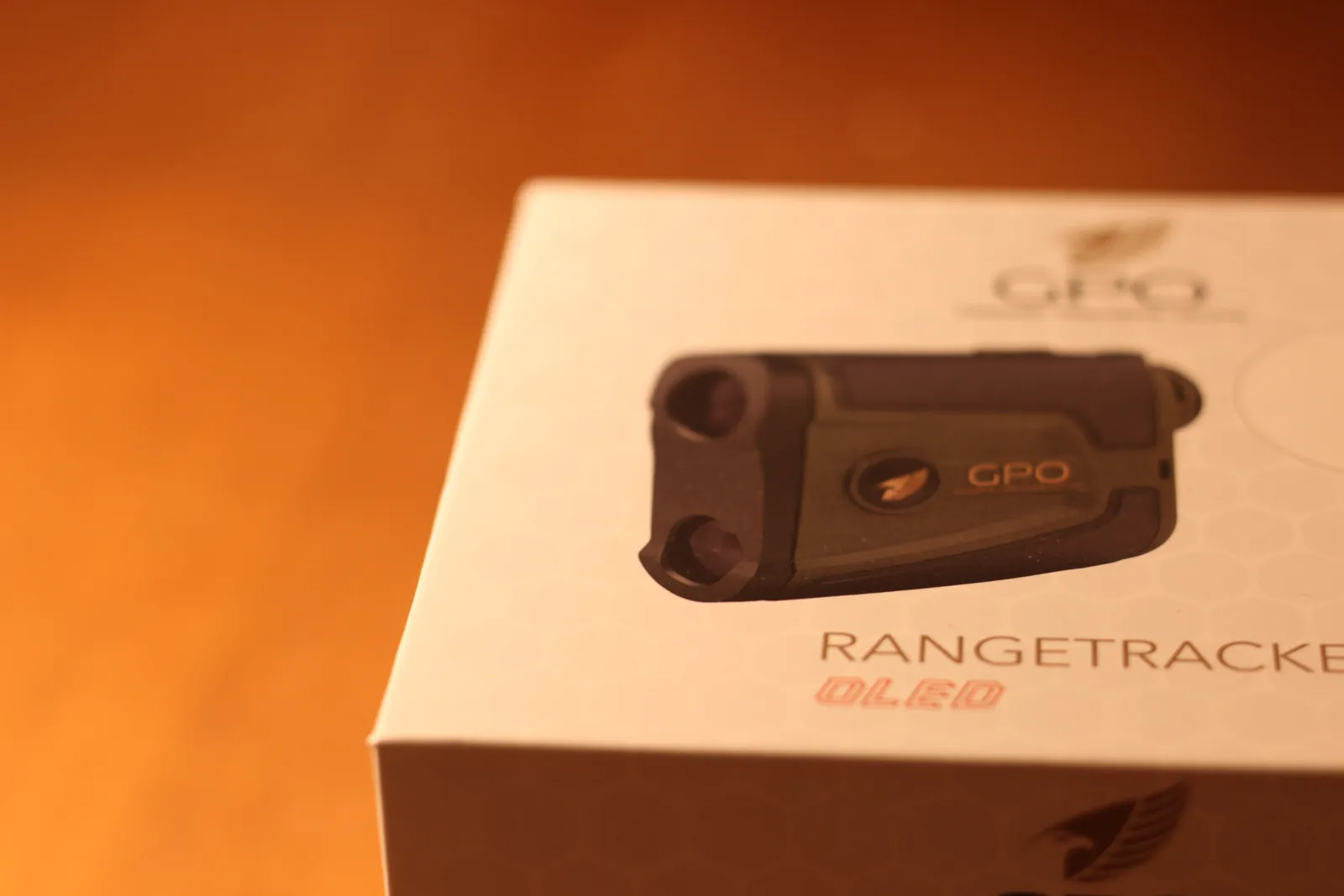
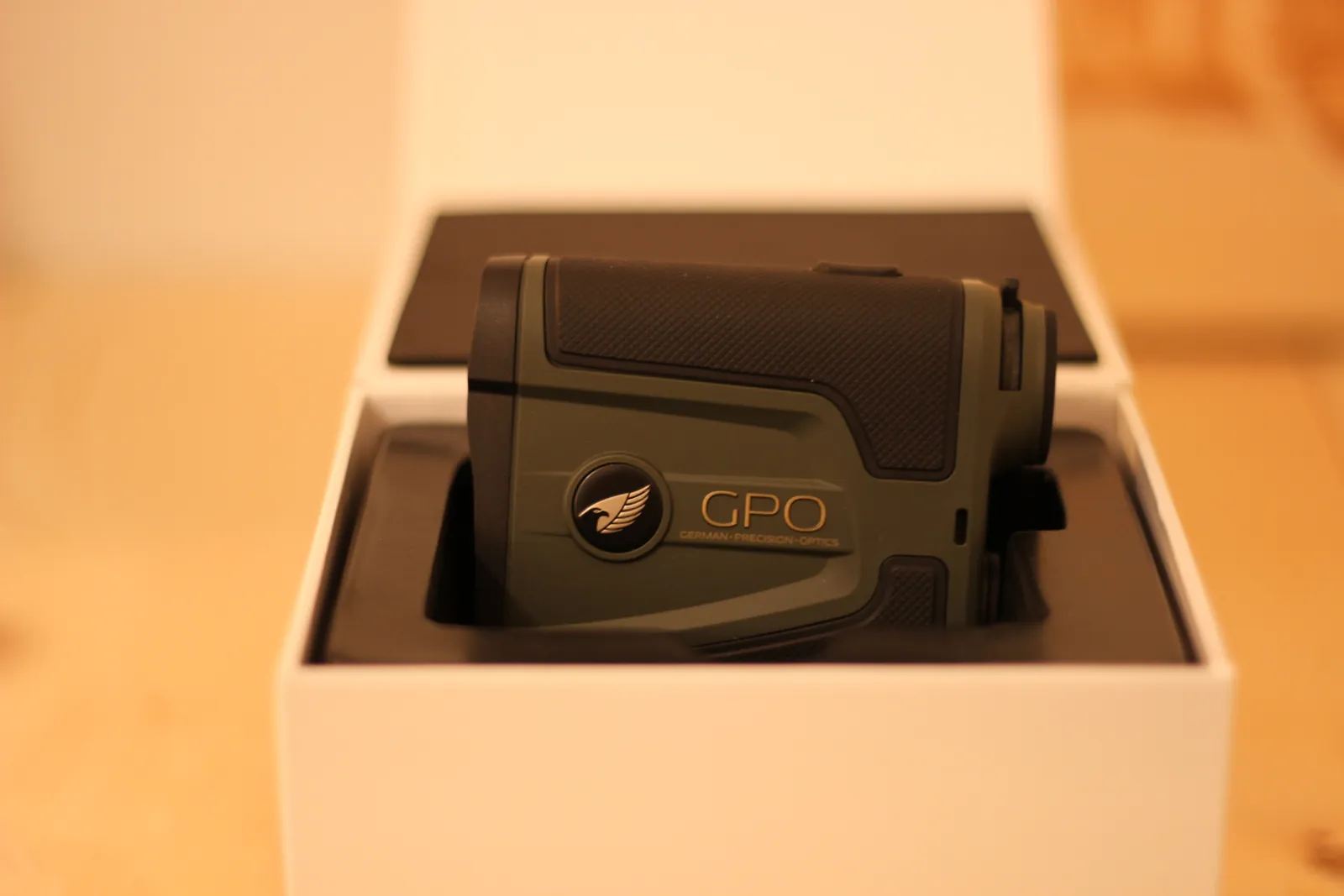
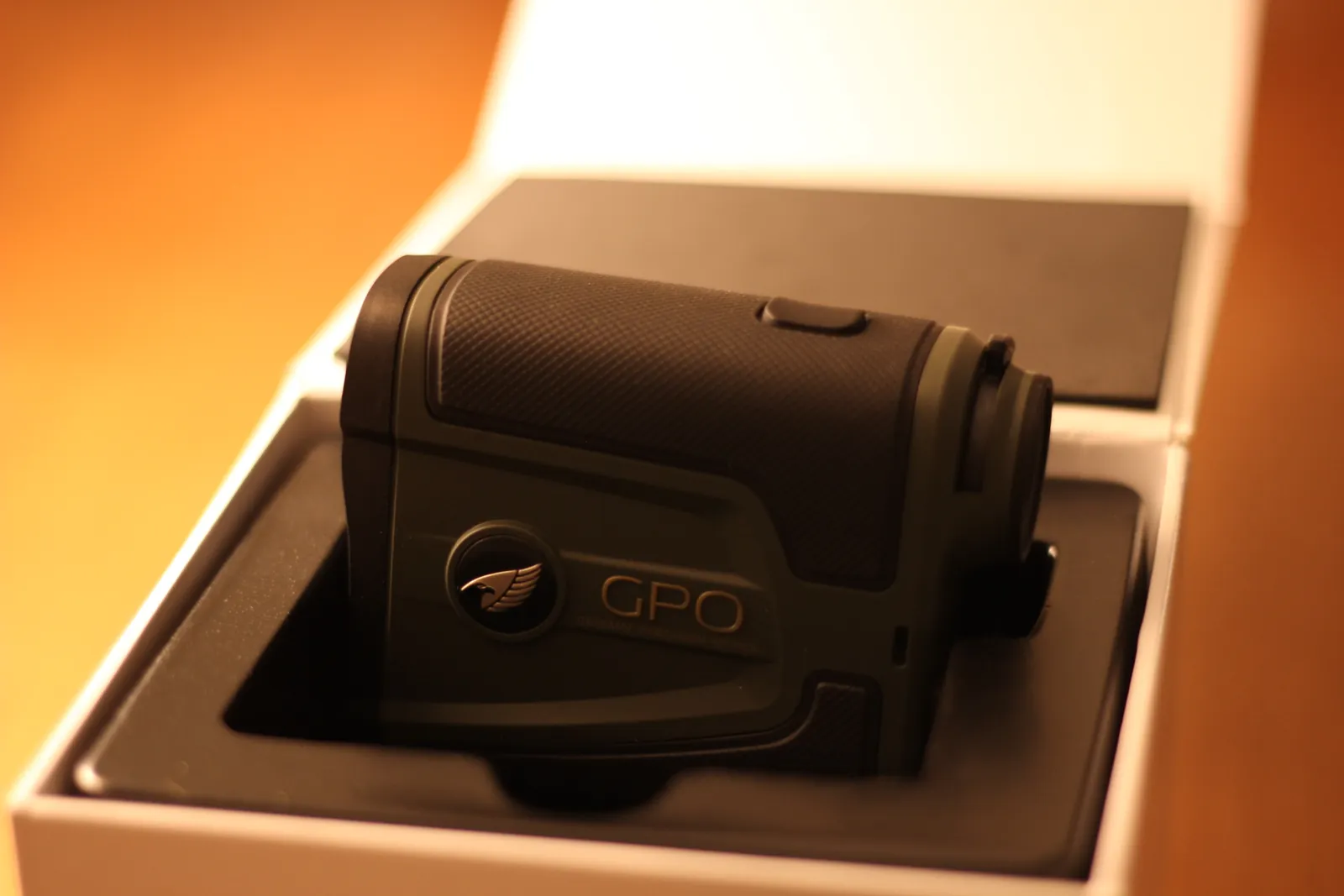
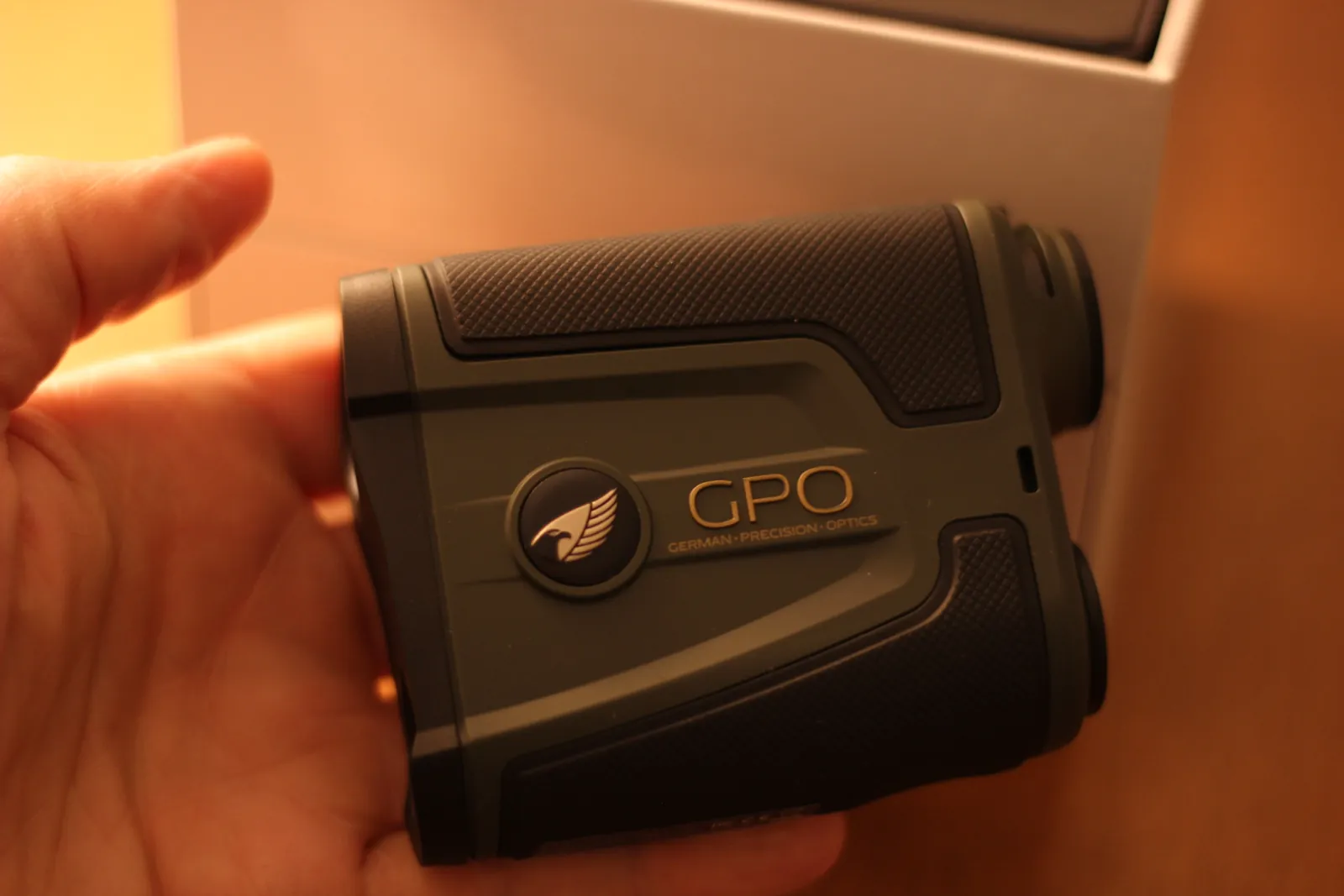
Inside: the rangefinder, a hard zip case with a belt tab, a wrist lanyard, a carabiner, a microfibre cleaning cloth and a printed manual. We added a CR2 lithium cell, which is what the unit takes.
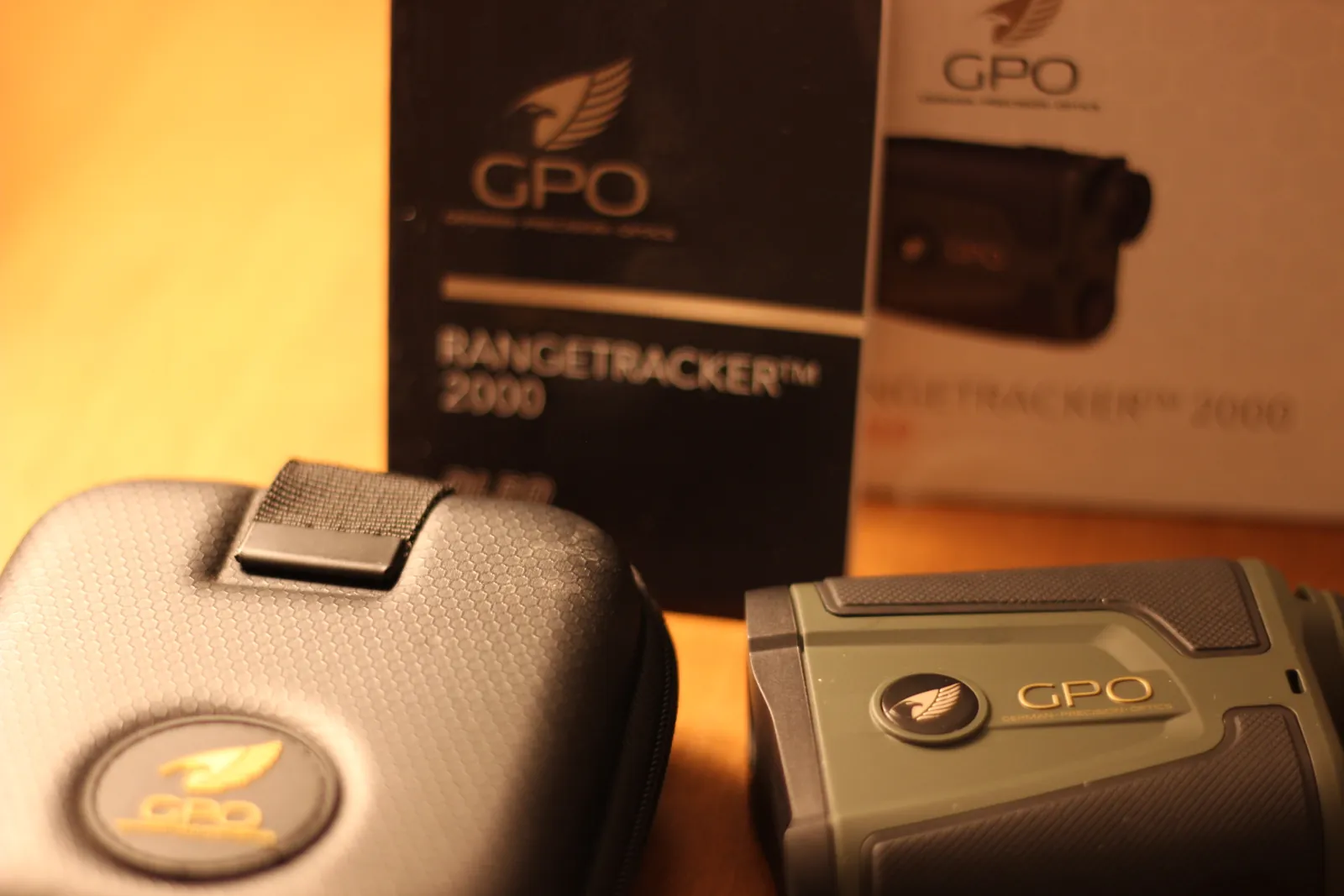
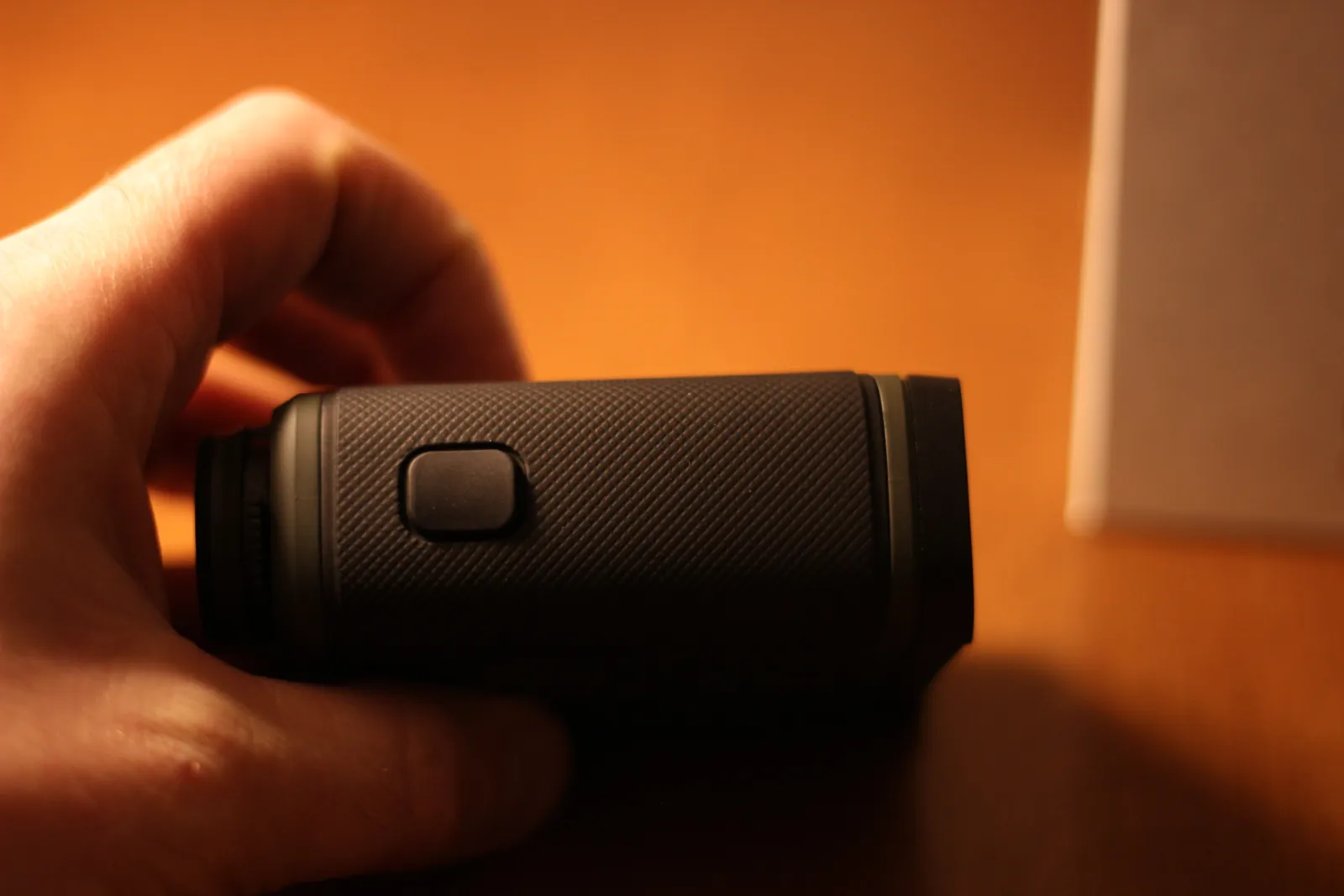
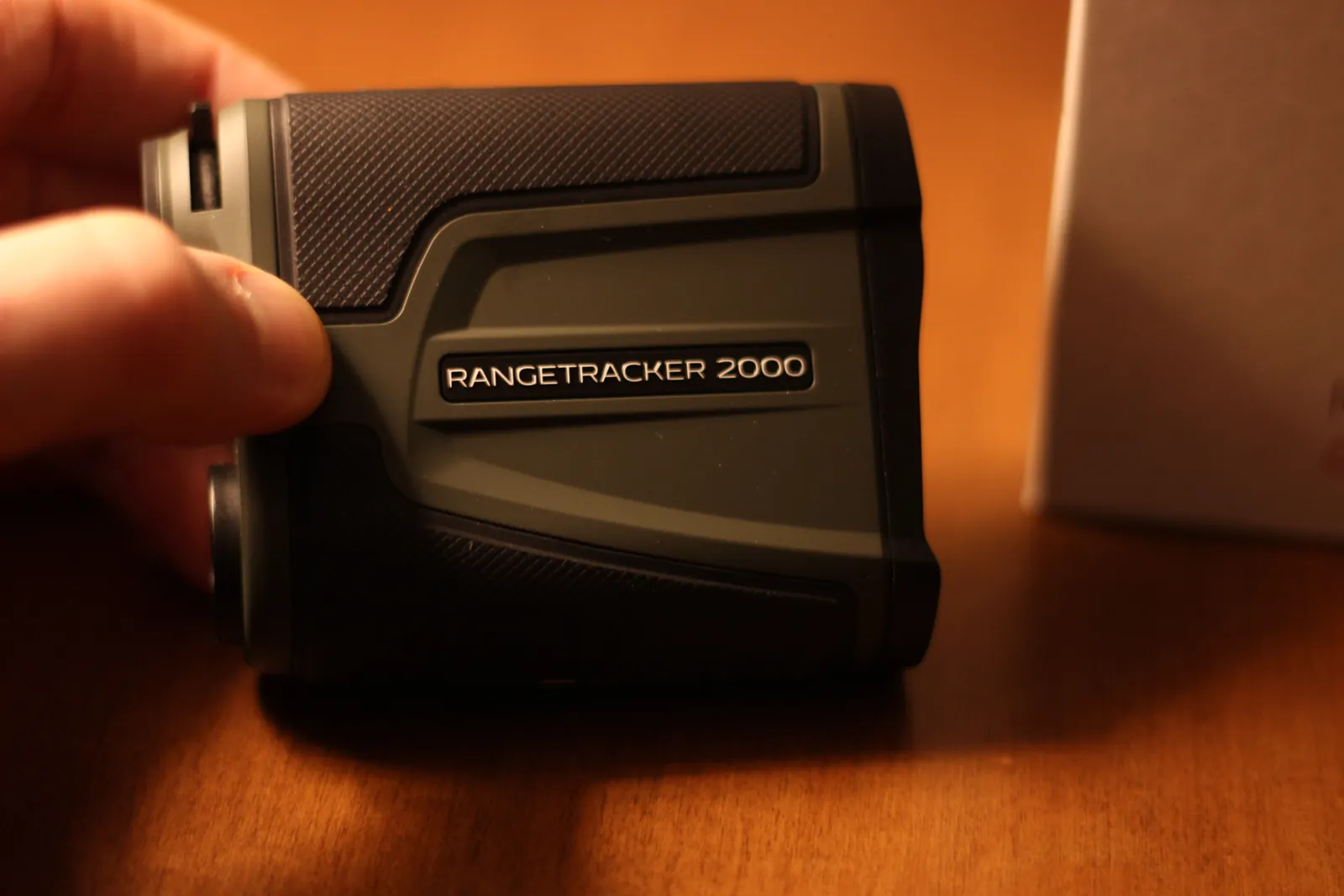
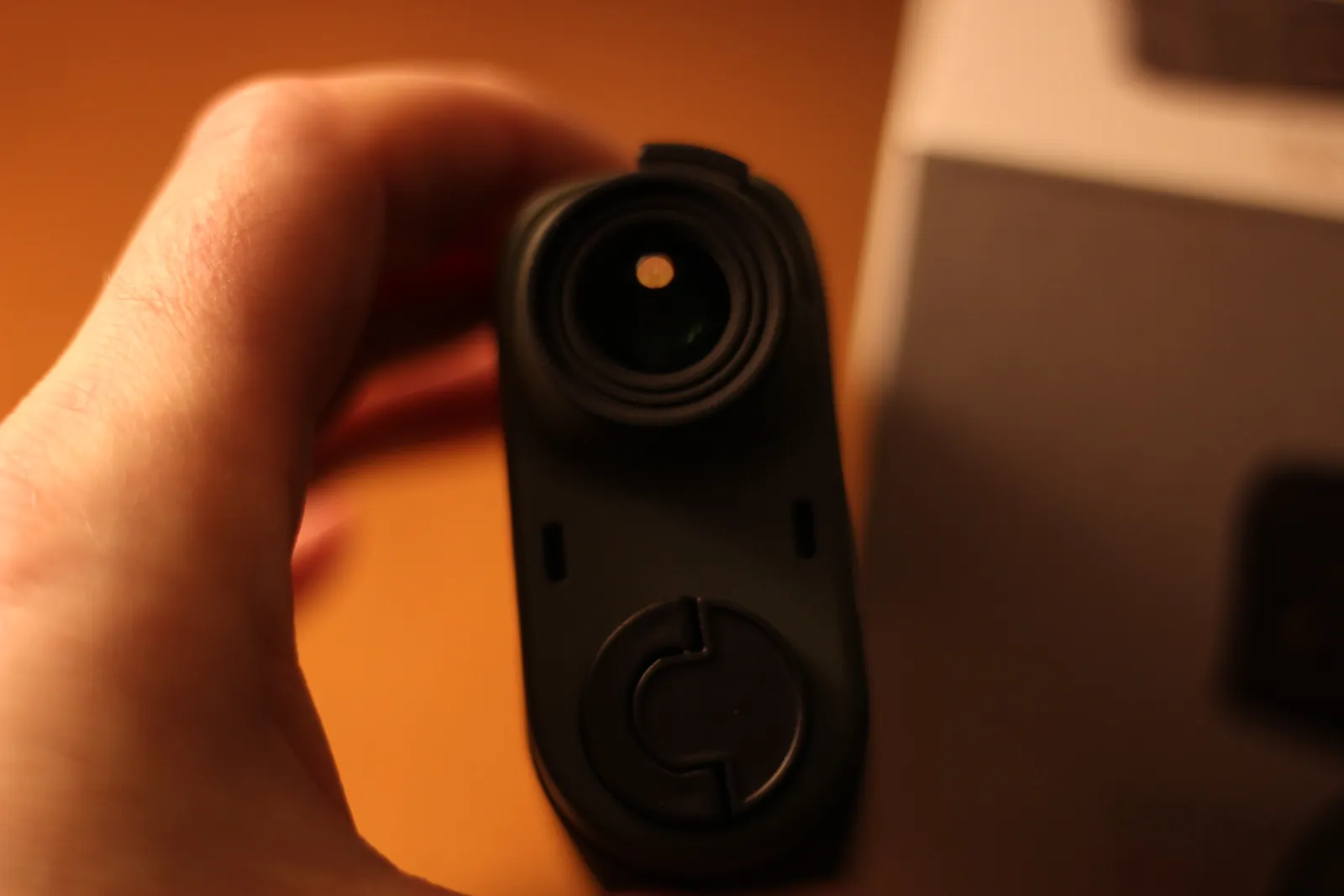
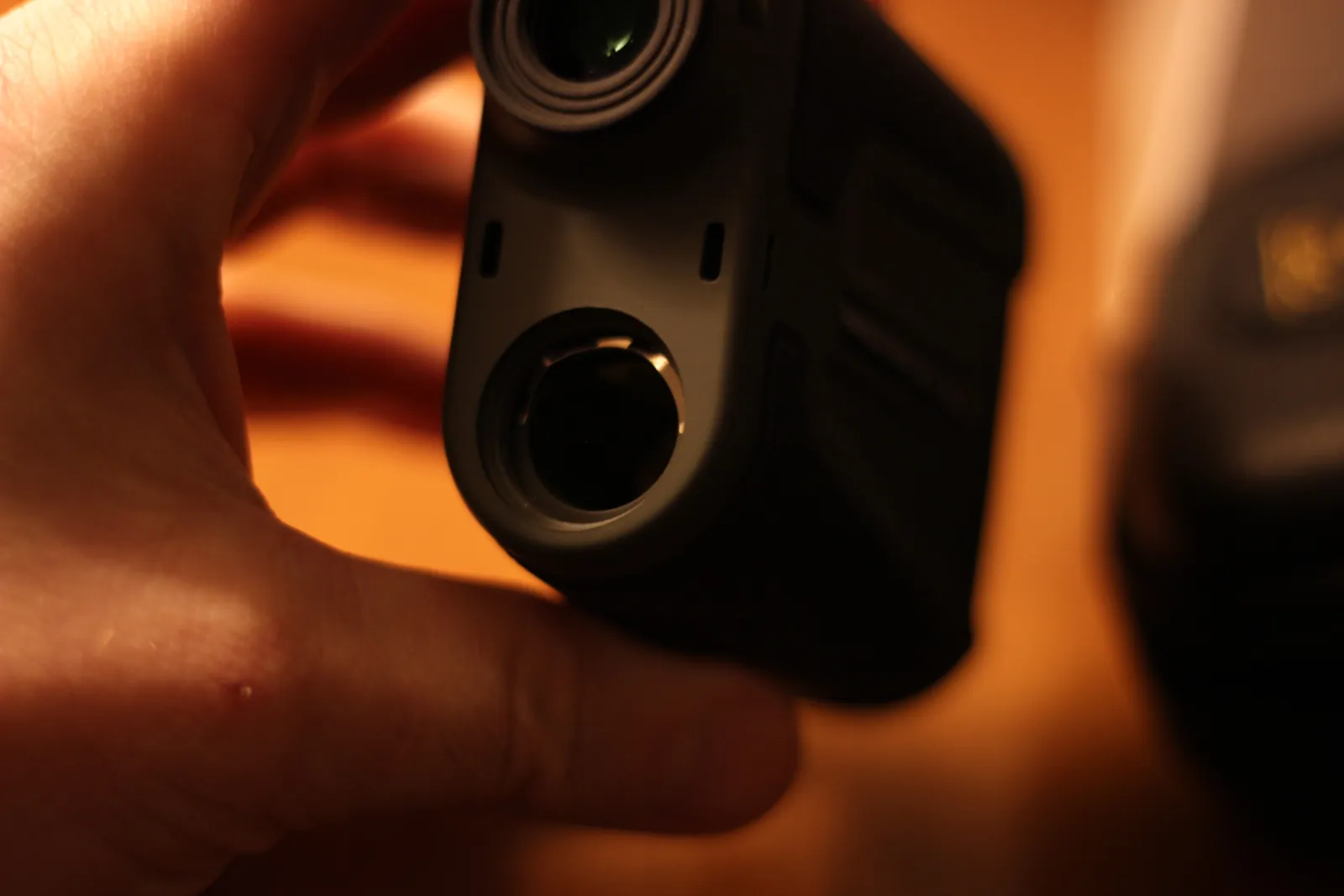
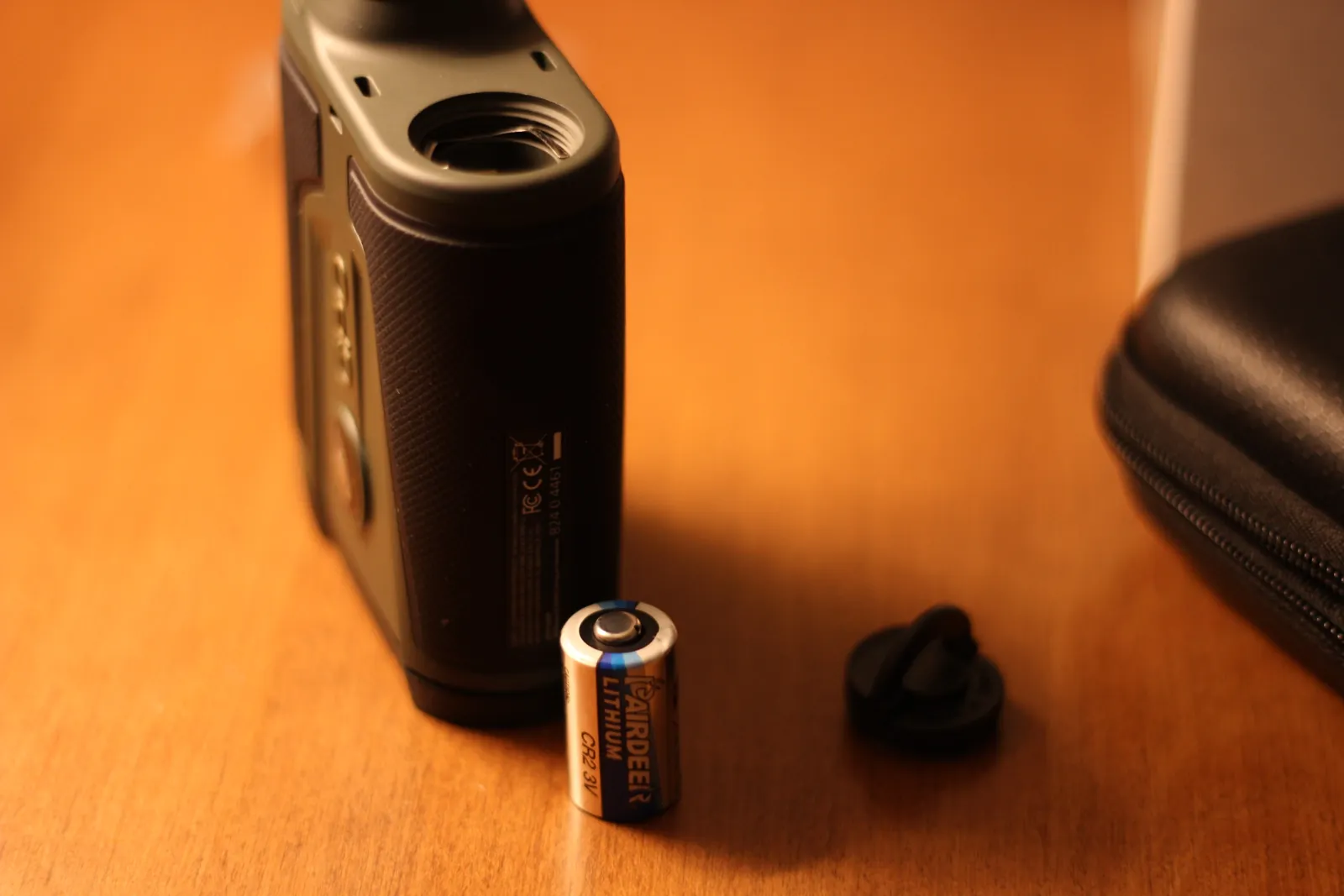
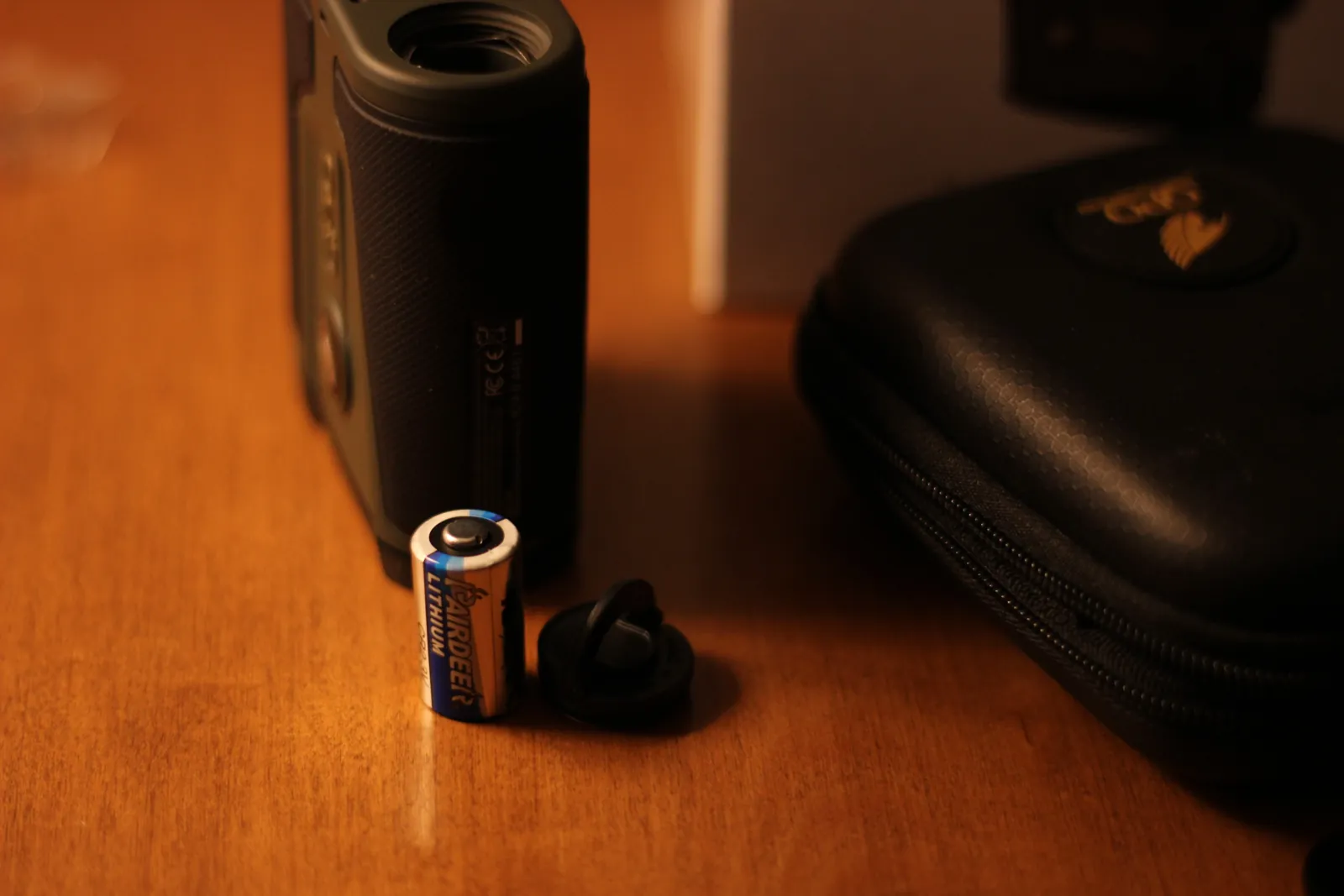
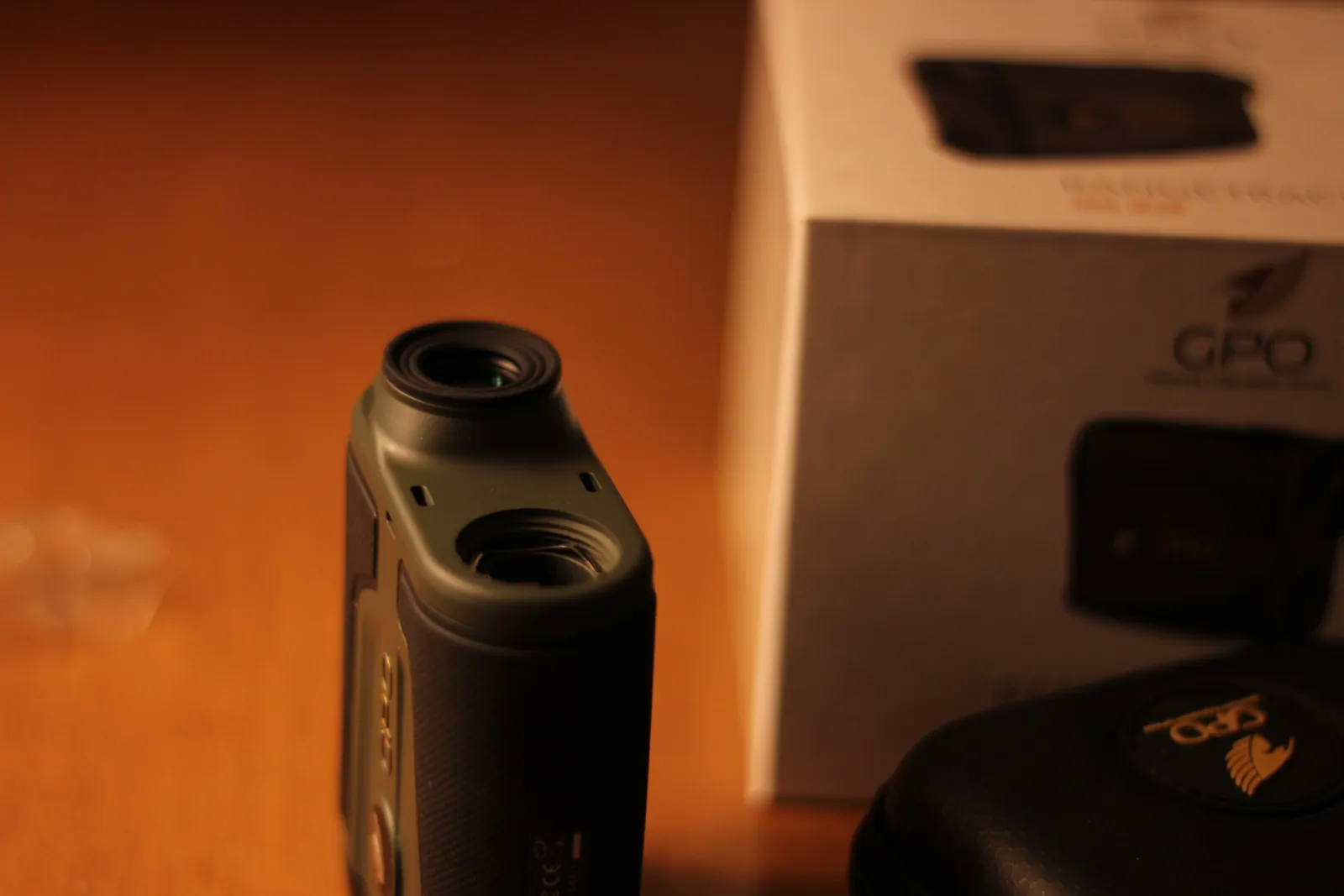
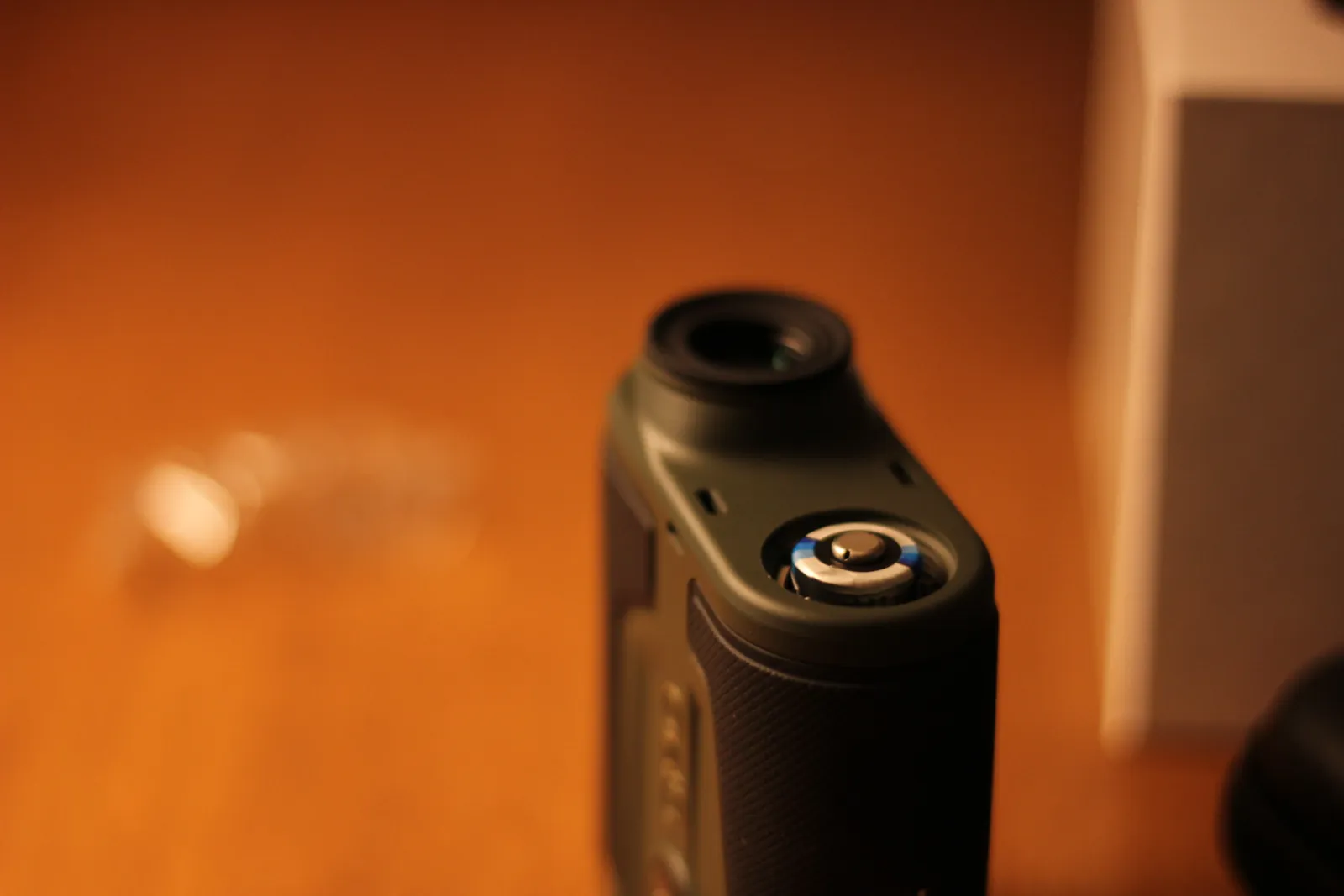
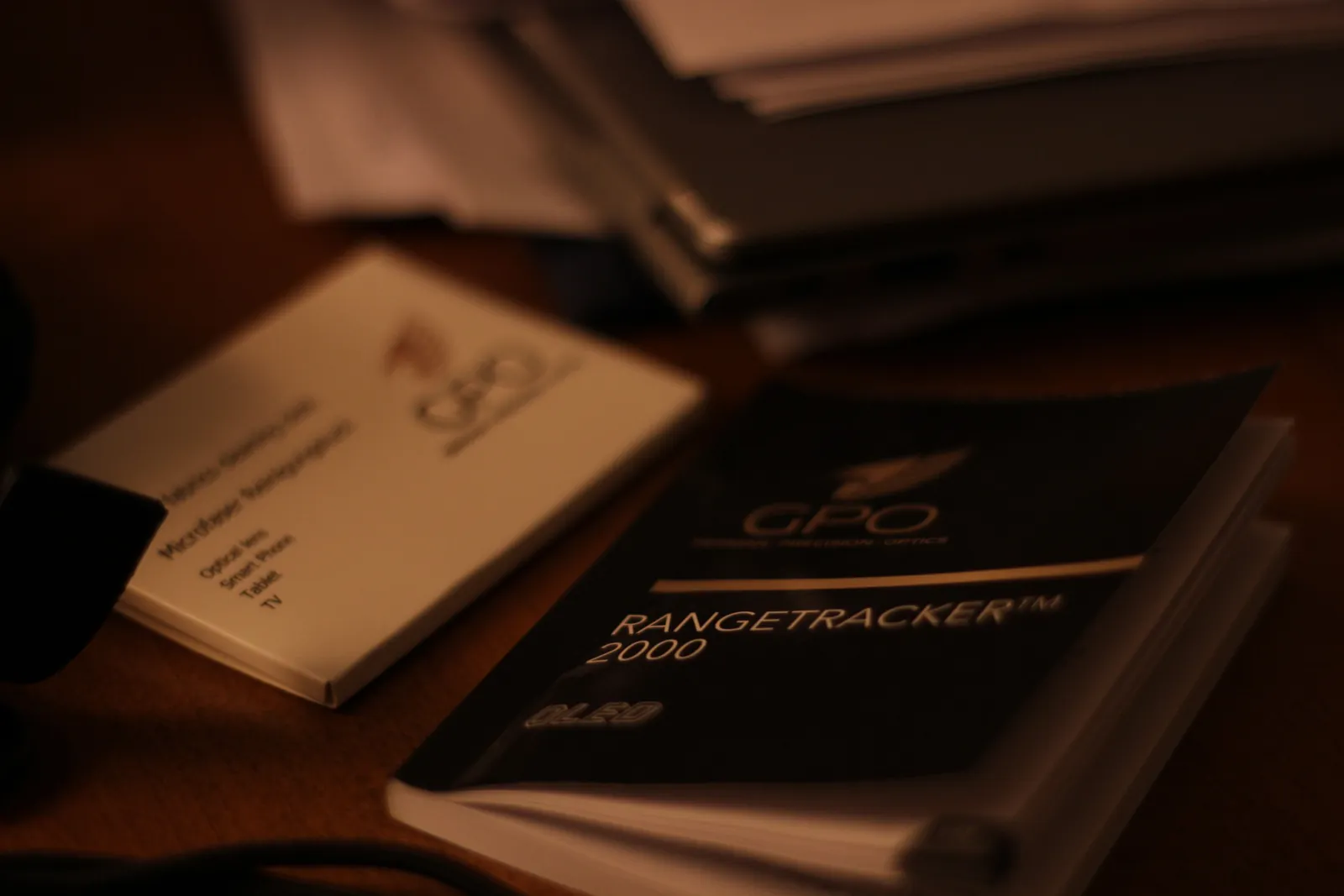
In the hand, the Rangetracker is small, light and a little chunky in a good way. Hirsch Precision lists it at 5.2 oz and 3.7 in, in a polycarbonate housing, with 6x magnification and a 20 mm objective. The rubber-textured panels gave a young hunter a secure grip even with cold hands, and one raised button on top does the main work.
The Displays, Explained
The manual’s page called “Overview of Displayed Information” is the best two minutes you can spend with this rangefinder. We photographed it, and then drew our own version below so you can tap through it.
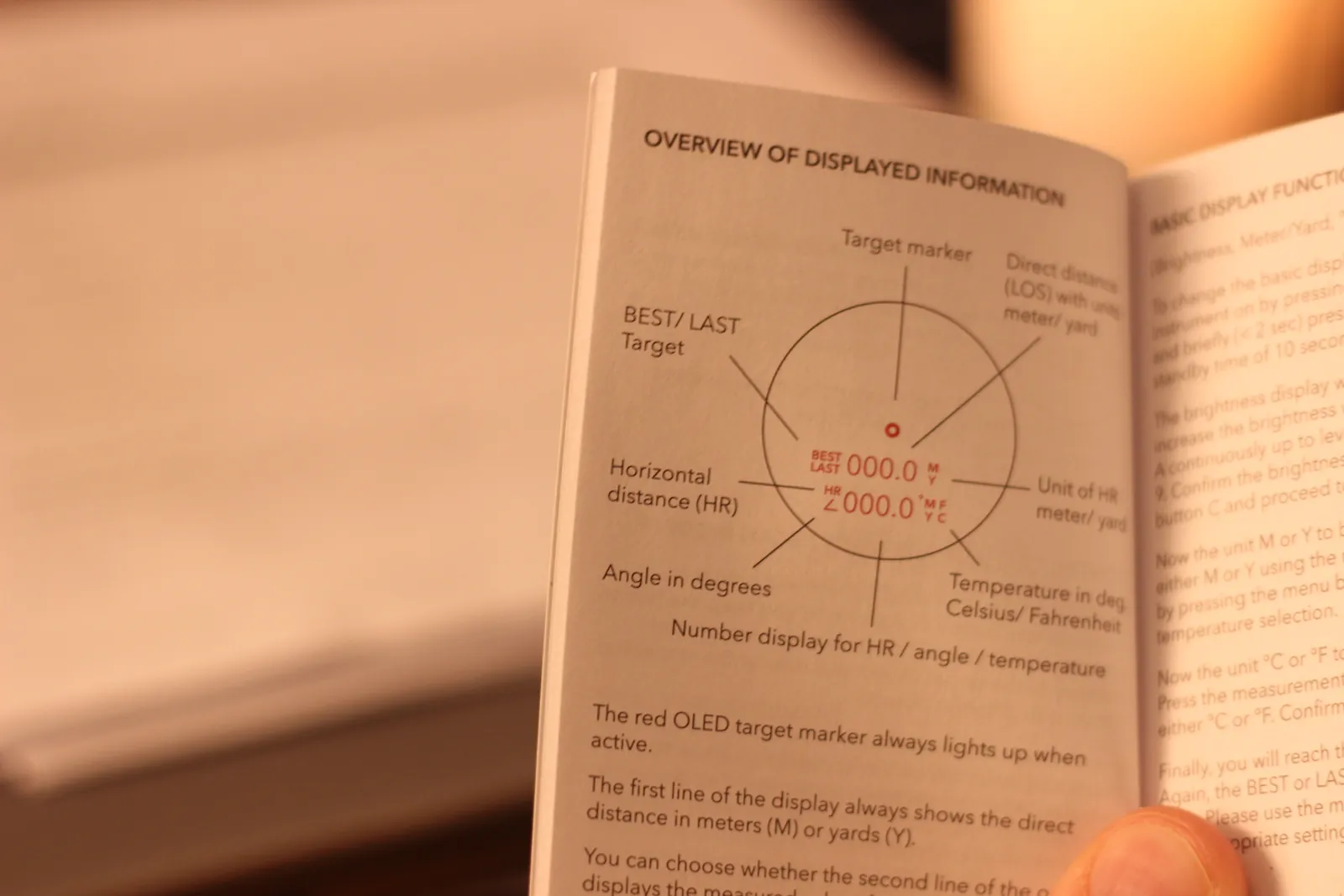
Tap a label: what is on the display?
Swipe sideways to see the whole diagram.
Tap any label. The numbers in the circle are sample values, not a real reading.
The Hunt: Building a Range Card
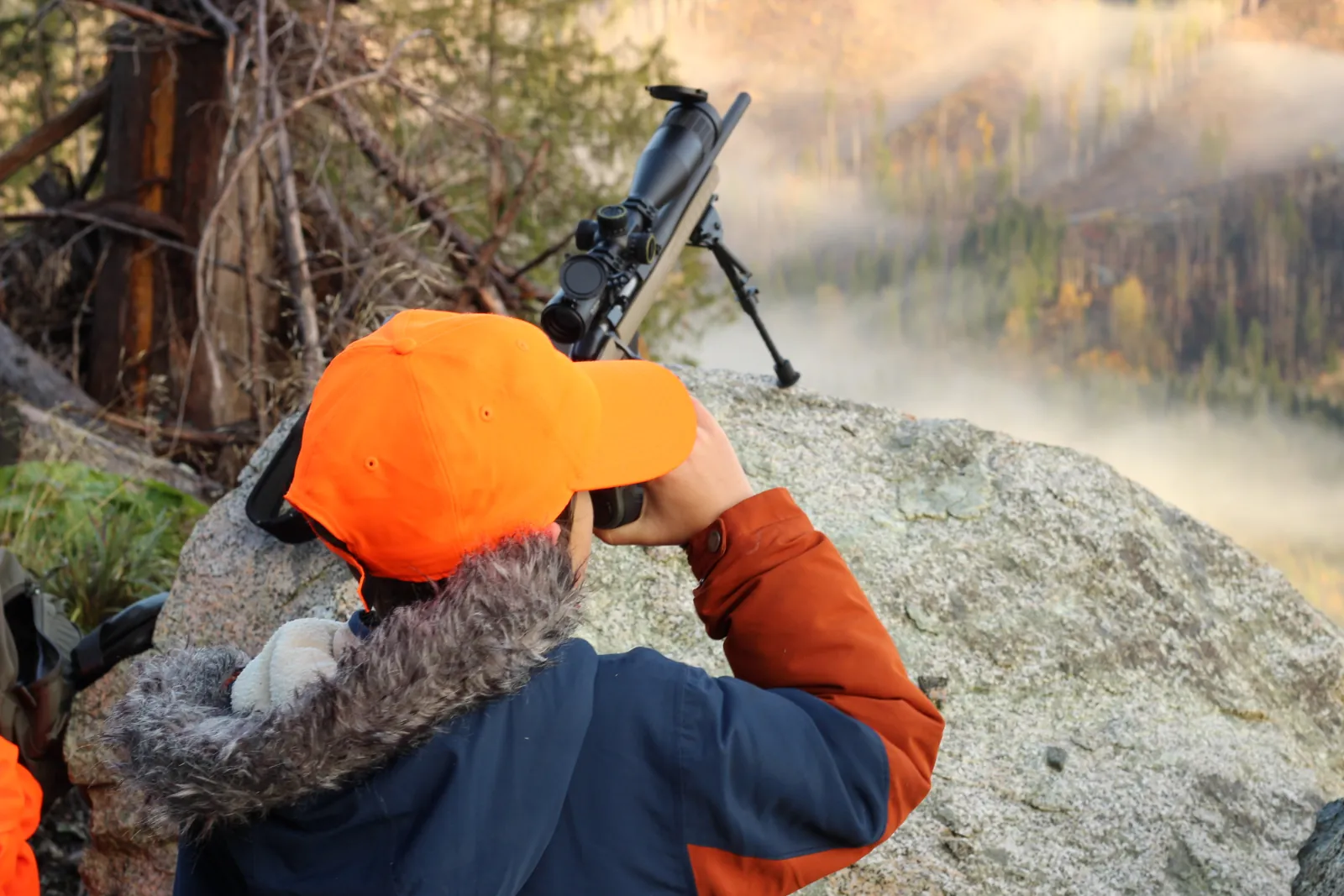
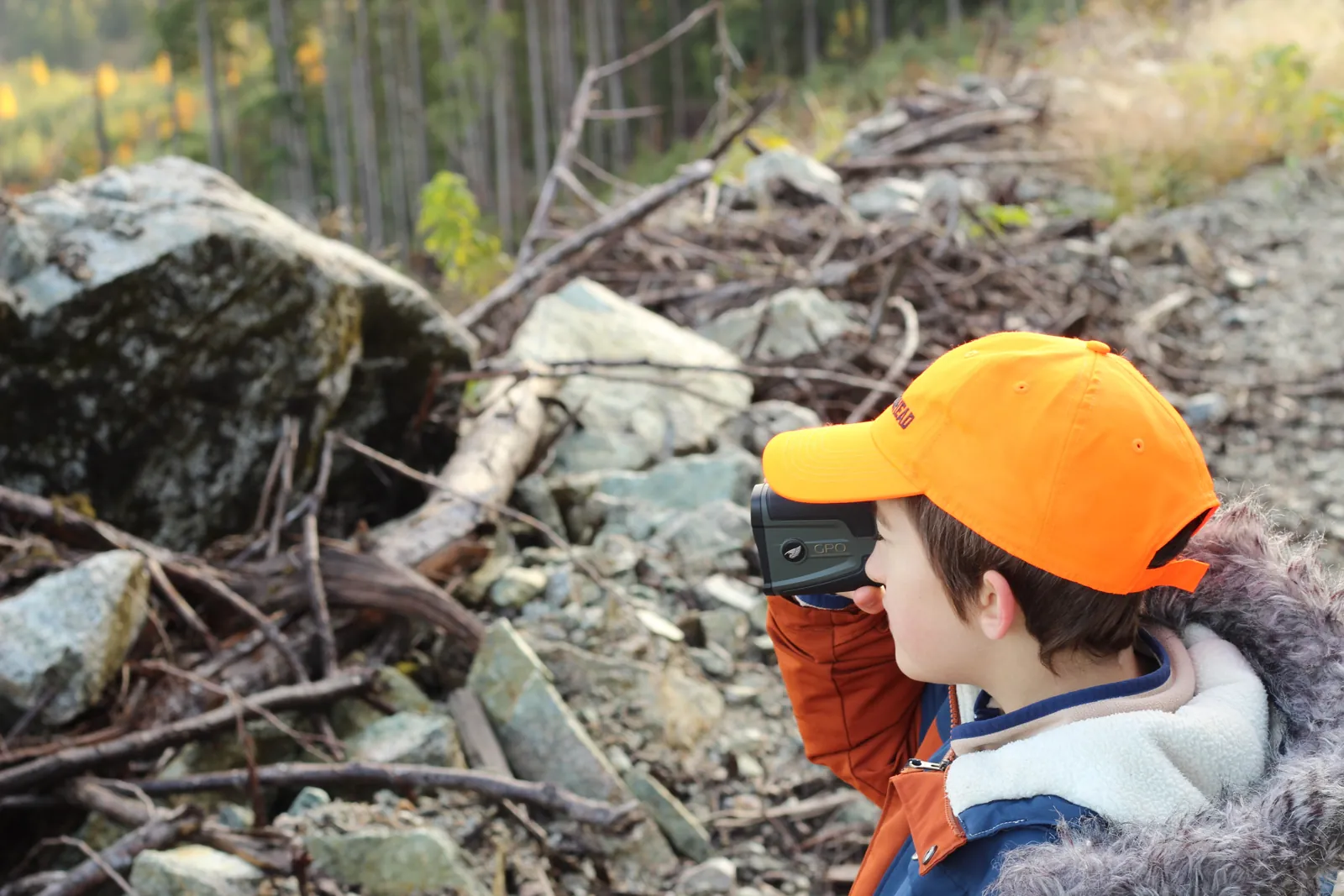
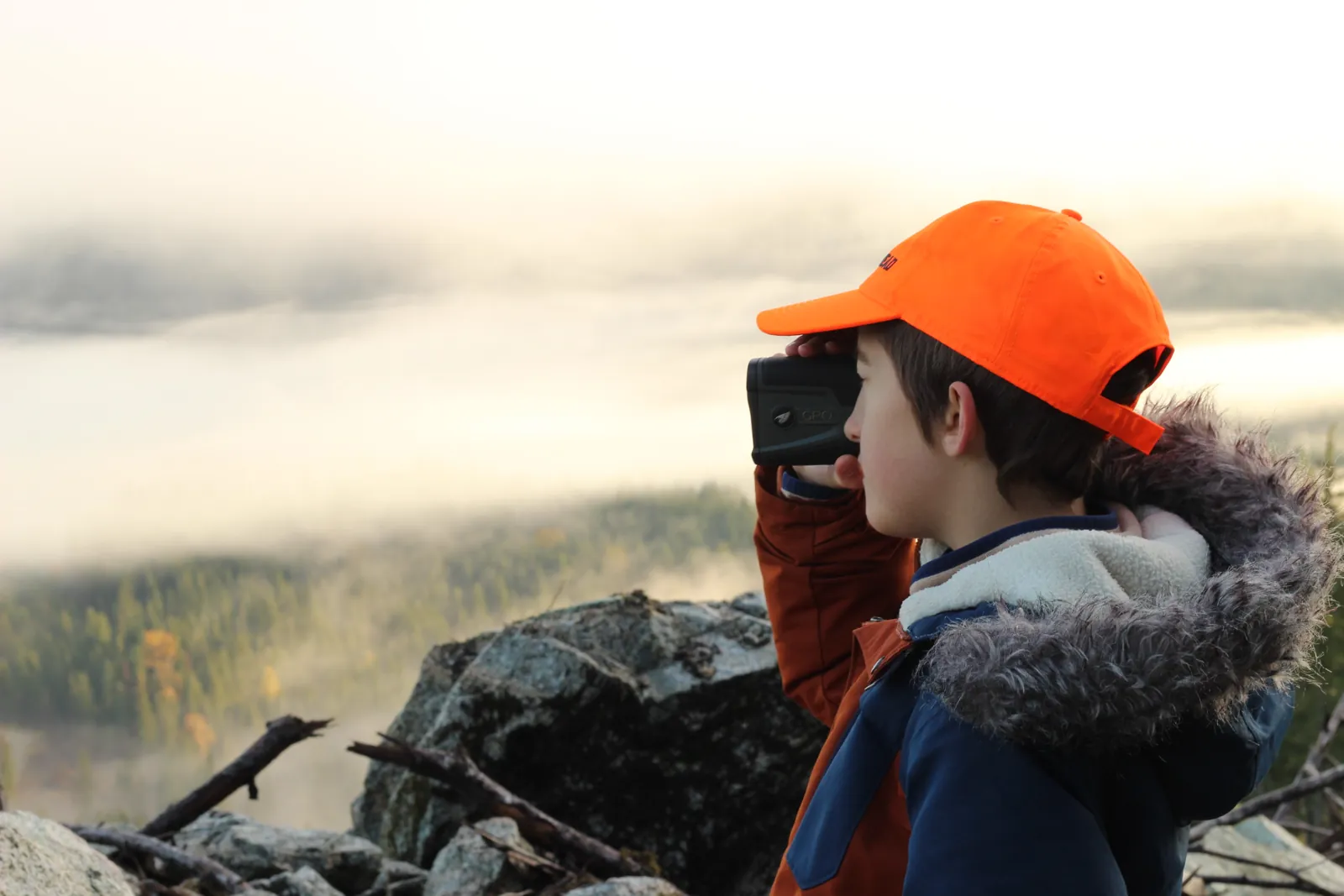
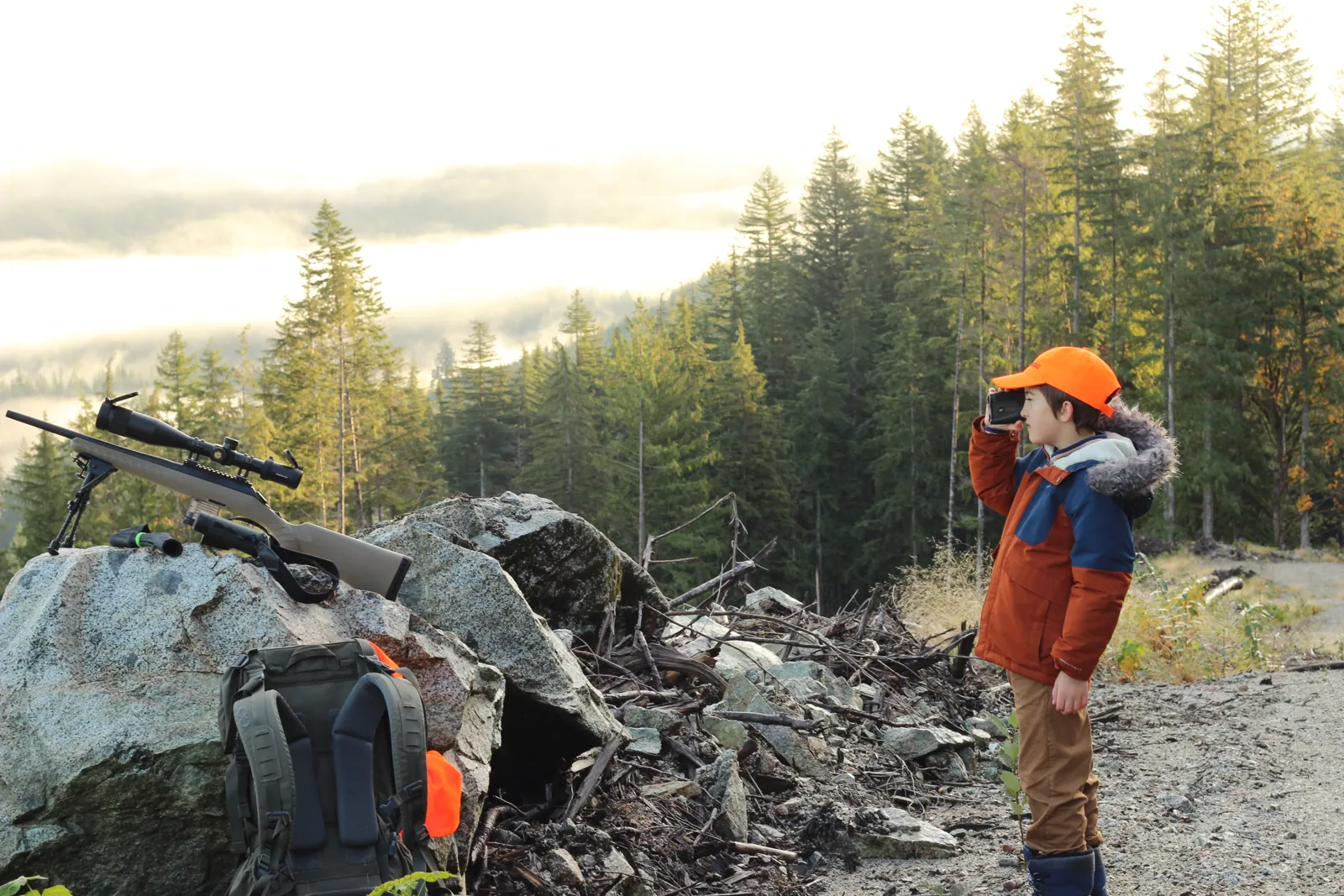
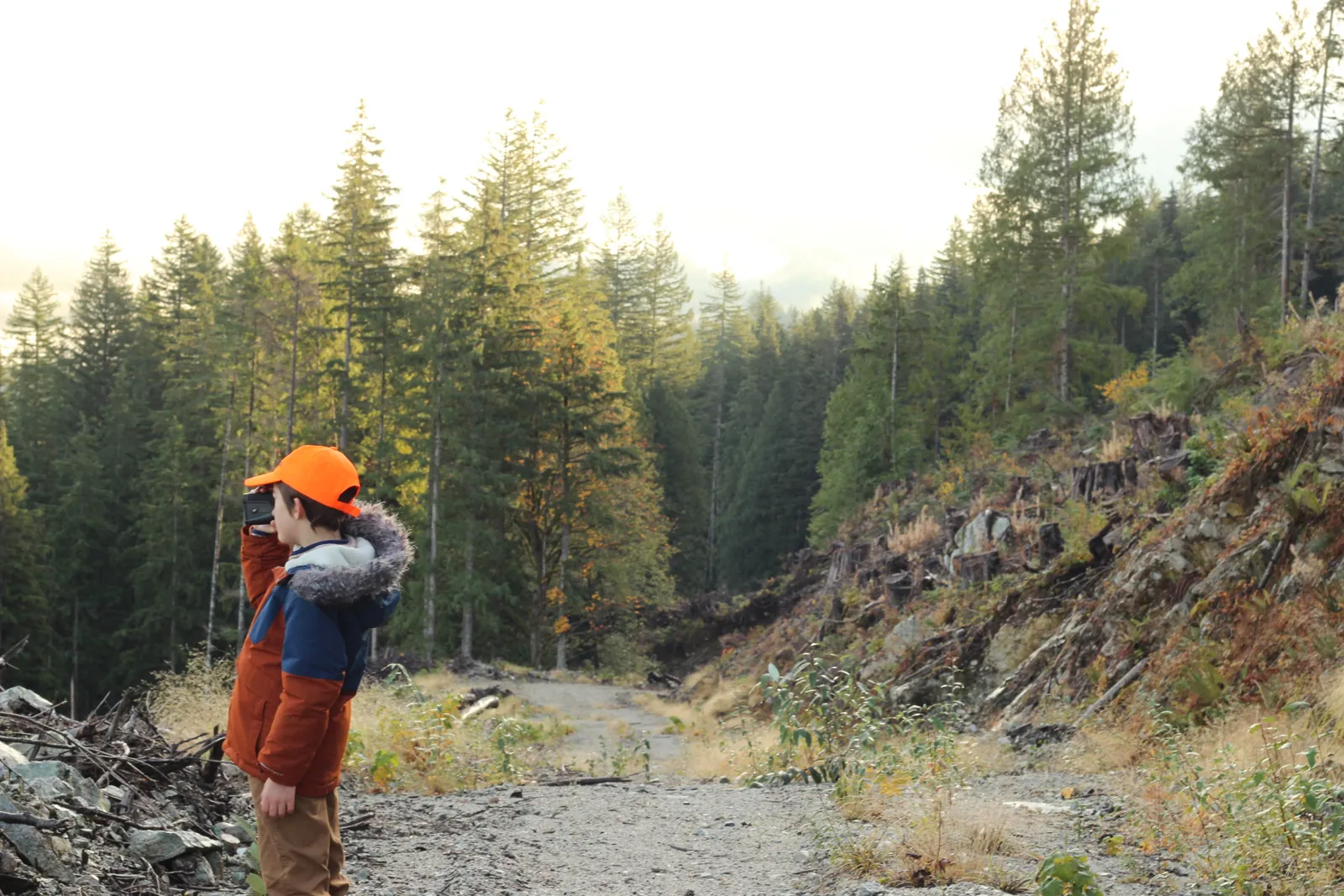
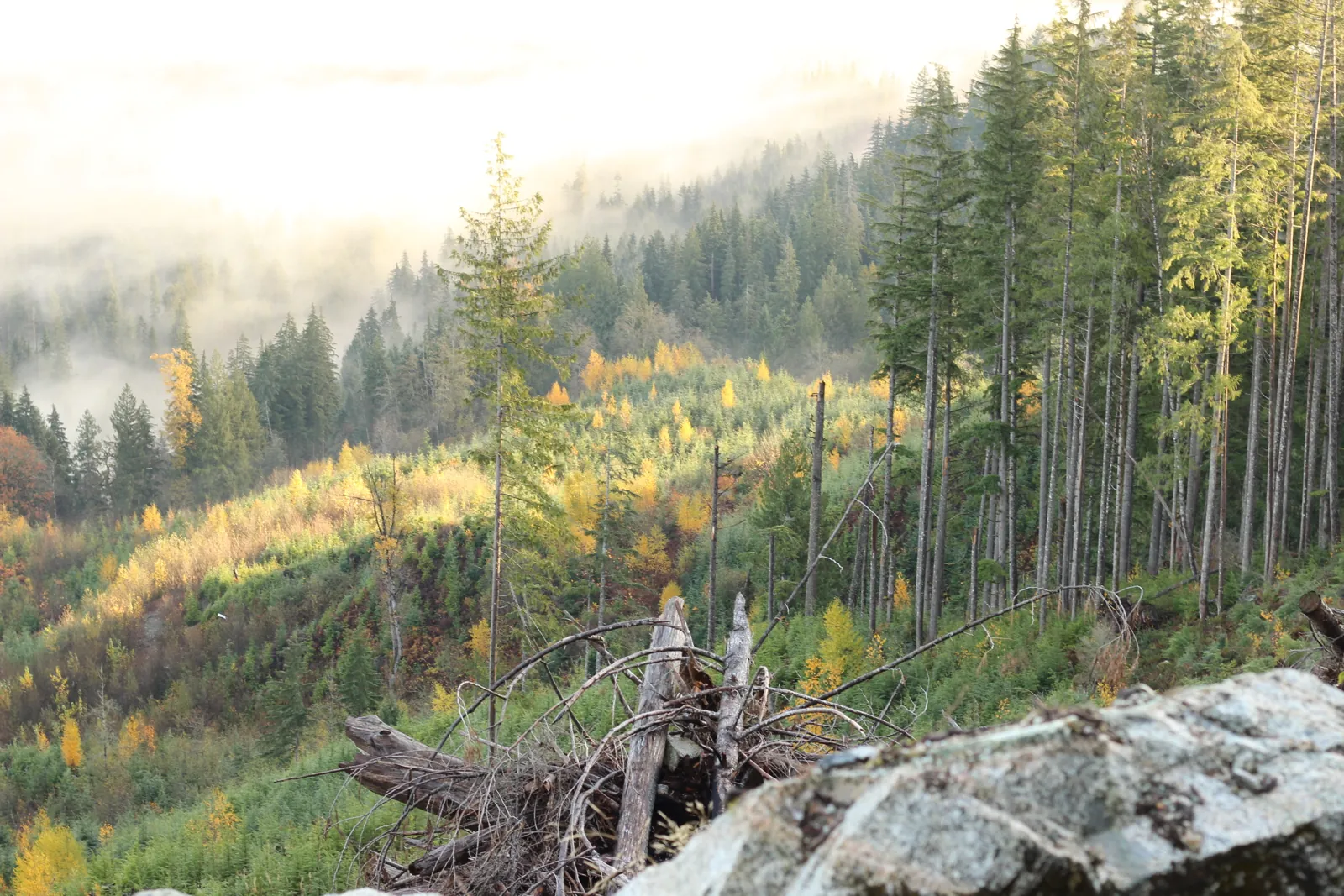
We were up on the ridge by mid-morning, with fog sitting in the basin like milk in a bowl. The routine from the first trip carried over: bipod on the boulder, pack beside it, and a blaze cap on the youngster. The new part was the rangefinder, and our young hunter took the job gladly. He did a lot of the ranging, bracing the unit against a rock for a steady read.
Along the Ridge: 200 to 300 Yards, Up and Down
First we ranged the ridge line itself, both up and down from where we stood. This is the line a deer would walk on to leave the cut and cross to the timber. Every reading we took, up the ridge and down, landed in the 200 to 300 yard band. That is useful in two ways. It tells us we can see and judge a long way along the ridge, and it tells us where a deer walking the line would be out of sensible range of the boulder.
Across the Basin: About 1000 Yards
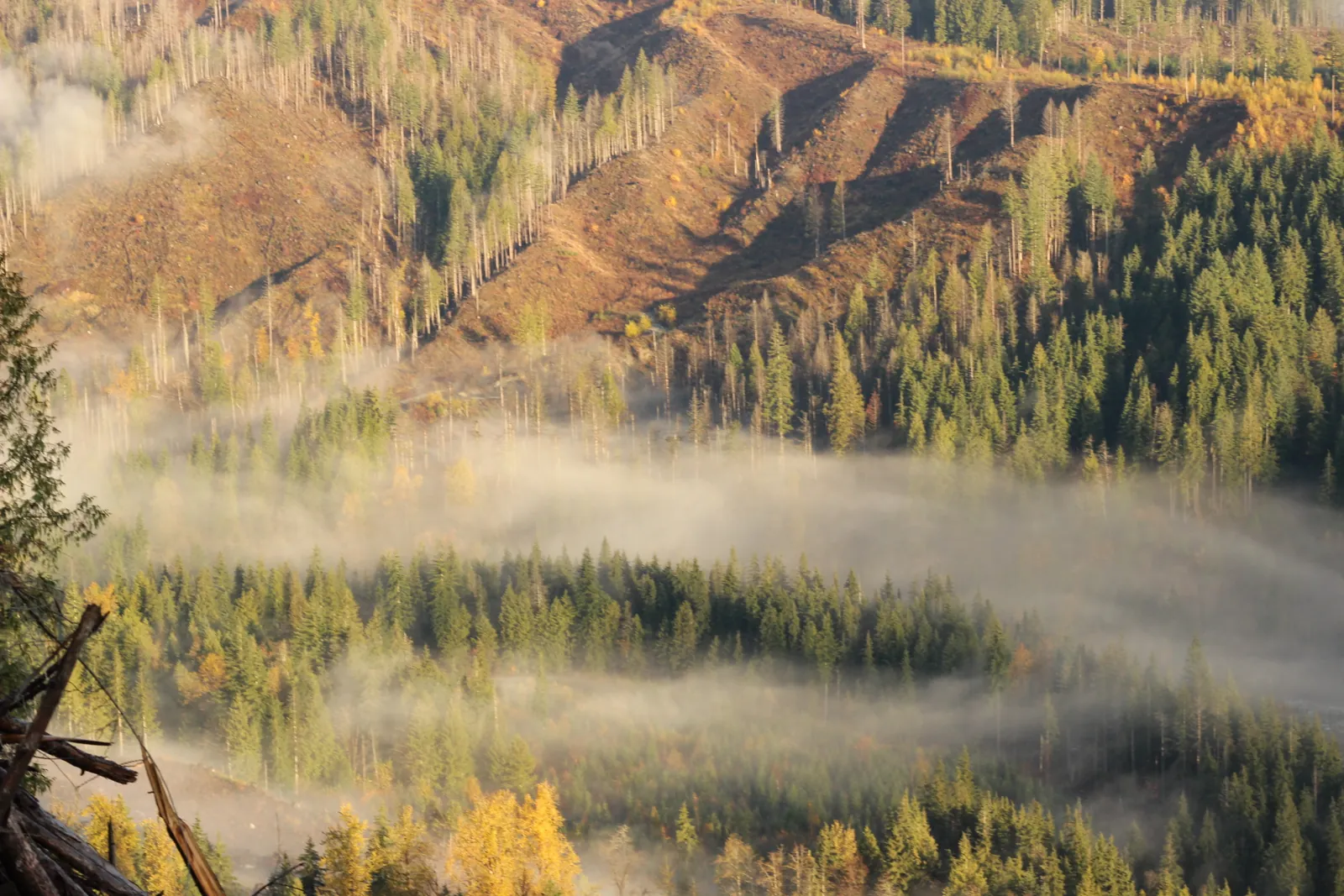
Then we pointed the rangefinder across the basin at the far slope of the mountain, over the fog. The Rangetracker read about 1000 yards. To be clear, 1000 yards is a ranging number for us, not a shooting distance. What it tells us is how big the country really is, and how far away a deer standing on that far hillside would be. We’ll glass them with the Riton from here, and we won’t pretend to shoot them. The number helps us decide which animals are worth the walk and which are just scenery.


Other Vantage Points: A 150-Yard Shot
The best result of the morning was away from the boulder. Walking the ridge, we found other vantage points that put the likely deer crossings at about 150 yards. That is a distance a young hunter with a light rifle can settle into, rest on a pack and make a careful shot. We didn’t need a number from the rangefinder to feel that, but having the number turns a feeling into a plan.


Try It: The Ranging Map
Here is the morning as a plan-view diagram. We’re the dot on the left, on the ridge. Tap a target to fire the laser. The rings mark 100-yard steps.
Ranging the ridge, the basin and the 150-yard lane
Swipe sideways to see the whole map.
Illustrative. The yardages we noted were 200–300 up and down the ridge, about 1000 across the basin and about 150 from other vantage points. The animation uses round numbers inside those ranges, and the diagram is not to terrain scale.
| Where | Distance | What it means for the rut sit |
|---|---|---|
| Ridge line, up from us | 200–300 yd | Good for spotting a deer on the ridge. Too far for our light rifle. |
| Ridge line, down from us | 200–300 yd | Same story. Glass it, then decide whether to move. |
| Across the basin | ~1000 yd | Scenery and scouting only. Tells us how big the country is. |
| Other vantage points | ~150 yd | The shot we are planning around. |
Hyper-Scan: Panning a Ridge at Three Readings a Second
One feature that mattered on this hunt is Hyper-scan. Hold the button and pan, and the Rangetracker keeps ranging as you move, instead of giving you one reading per press. Hirsch Precision and the importer both list it at three readings per second (one European retailer says four; more on that below). On a long ridge line, that means you can sweep from the root wad to the far edge of the cut and read the whole profile in one pass.
Hit start on the simulator below. It pans a made-up ridge profile at three readings a second.
Hyper-scan simulator
Swipe sideways to see the whole scene.
Press start. The reticle pans, and a reading drops every third of a second.
Real-world note: laser rangefinders read what the beam hits first and best. On brushy ground, grass or soft timber, expect the unit to catch the nearest twig as readily as the stump behind it. That is why the BEST / LAST target marker on the display matters (see the manual page above), and why we kept ranging to a boulder, a root wad, or a stump we could see clearly.
Slope Matters: Horizontal Distance Explained
We are in mountain country, and the ridge and the cut slope tilt. A rangefinder measures along the slope of the beam (the line-of-sight distance). A bullet drops over the horizontal distance. When the angle is small, the difference barely matters. On a steep hillside it is real. The Rangetracker does the trigonometry for you and shows HR, the horizontal distance, on the second line. Here is the maths with sliders, so you can feel how the angle eats into the number.
Line of sight vs. horizontal distance
Geometry only: HR = LOS × cos(angle). Angles shown are example numbers, not ones we measured. Take holds from your own rifle's data and shoot only at distances you are ethically and legally comfortable with.
The Rangetracker on the Ridge
Once we were done with the numbers, we spent a while just looking at the Rangetracker in the field. It is a small instrument, and it looks like one next to a boulder.
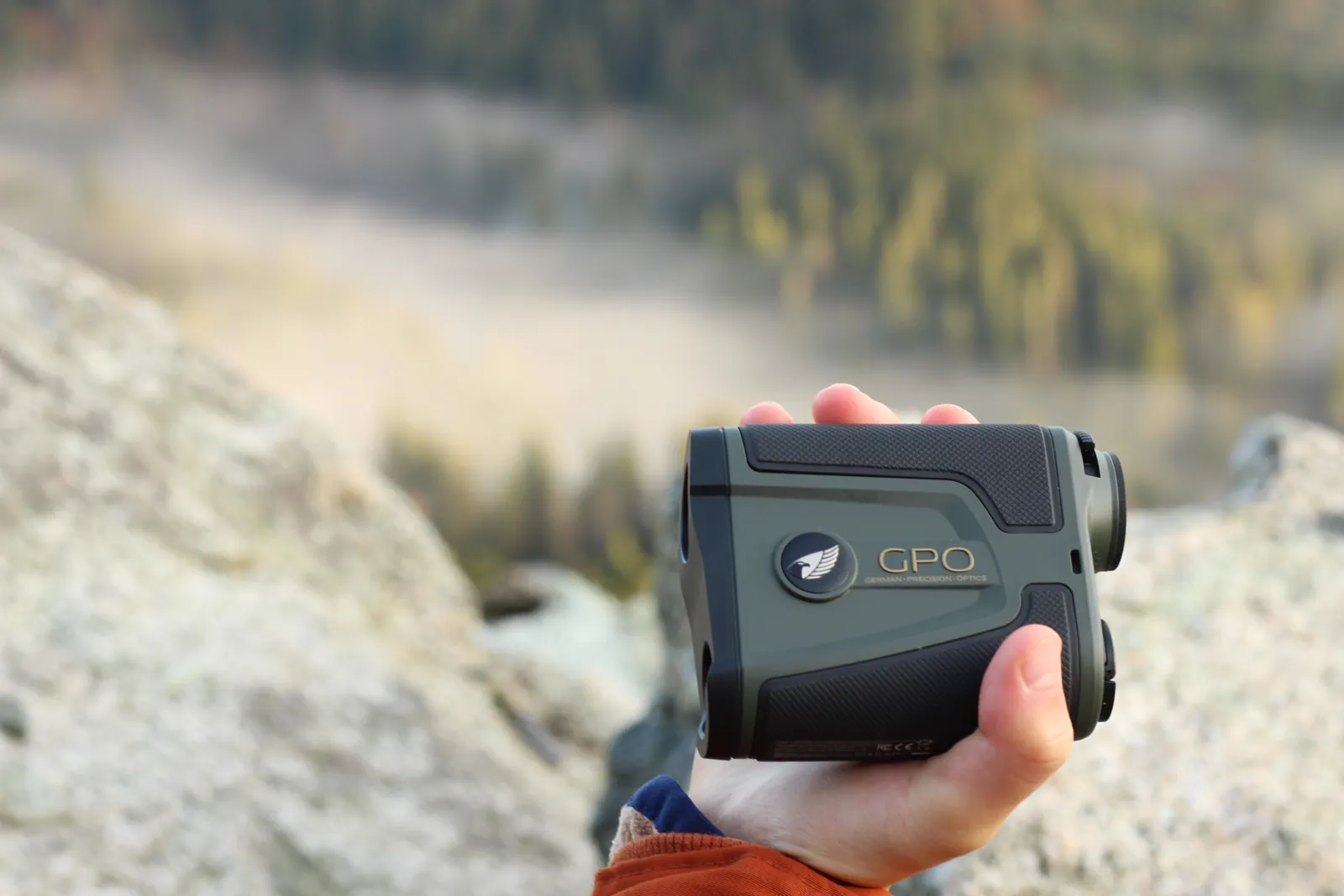
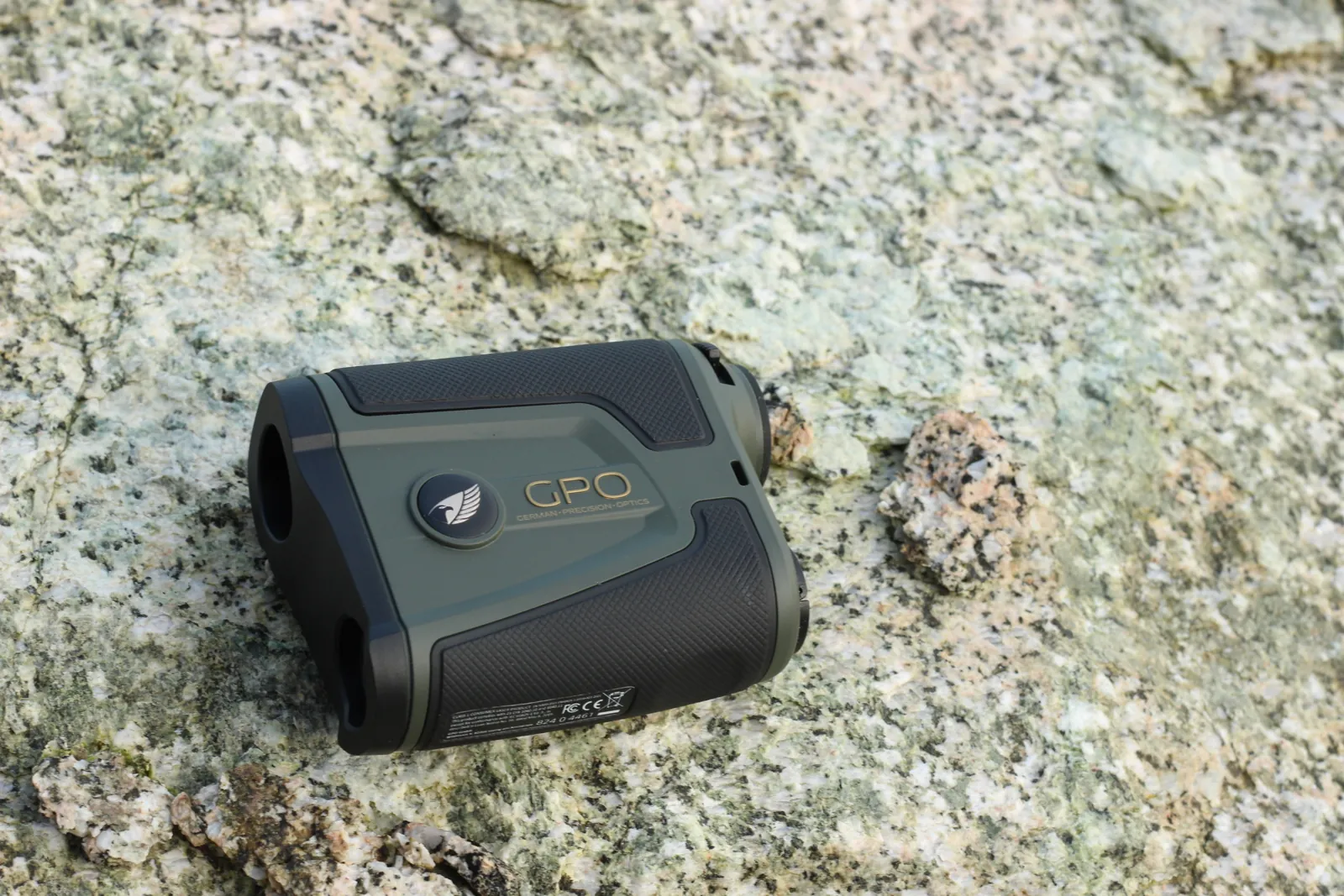
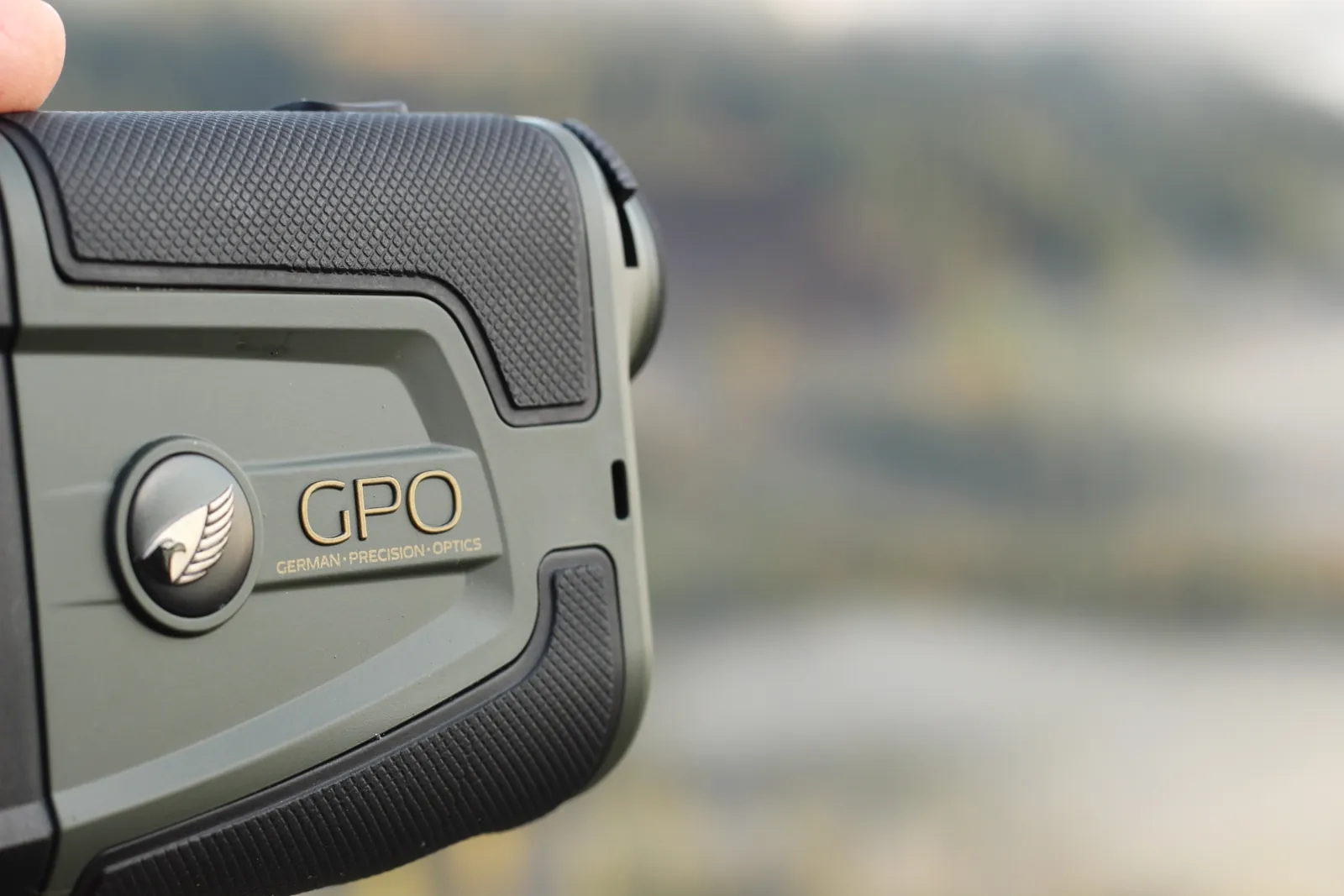
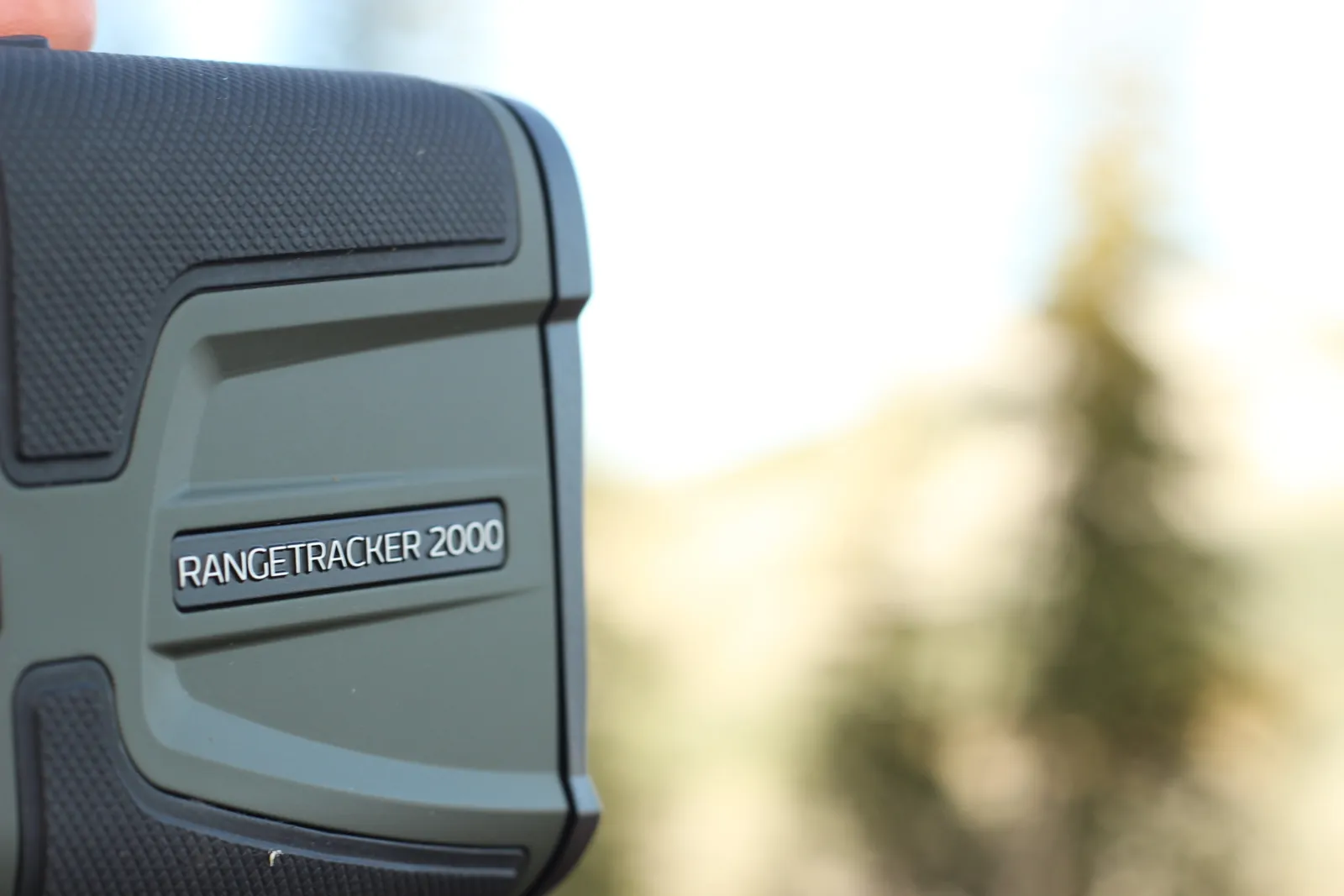
What we liked. It is fast. Press, read, and the numbers appear in a crisp red against the view, and the auto-brightness OLED kept up as the fog glow came and went. The size is right for a hunter of any age. And the horizontal-distance line is just what you want on mountain ground. The lanyard and carabiner let it hang off the Exo’s strap where you can reach it with one hand.
What to know. The viewfinder is a 6x, 20 mm optic: it’s for finding a target to range, not for glassing. We found the animals, and the ground, with the Riton, then used the Rangetracker to measure. IPX4 means it handles splashes, not a soaking. And the 2000-yard rating is for a reflective target: dark timber and soft hillsides will give shorter returns, so don’t plan on reading a deer at the limit.
How It All Fits Together
A rangefinder is only as useful as the rest of the kit around it. Here is how the four pieces worked as a team.
Find it, range it, rest it, make the shot
With the Riton Binoculars
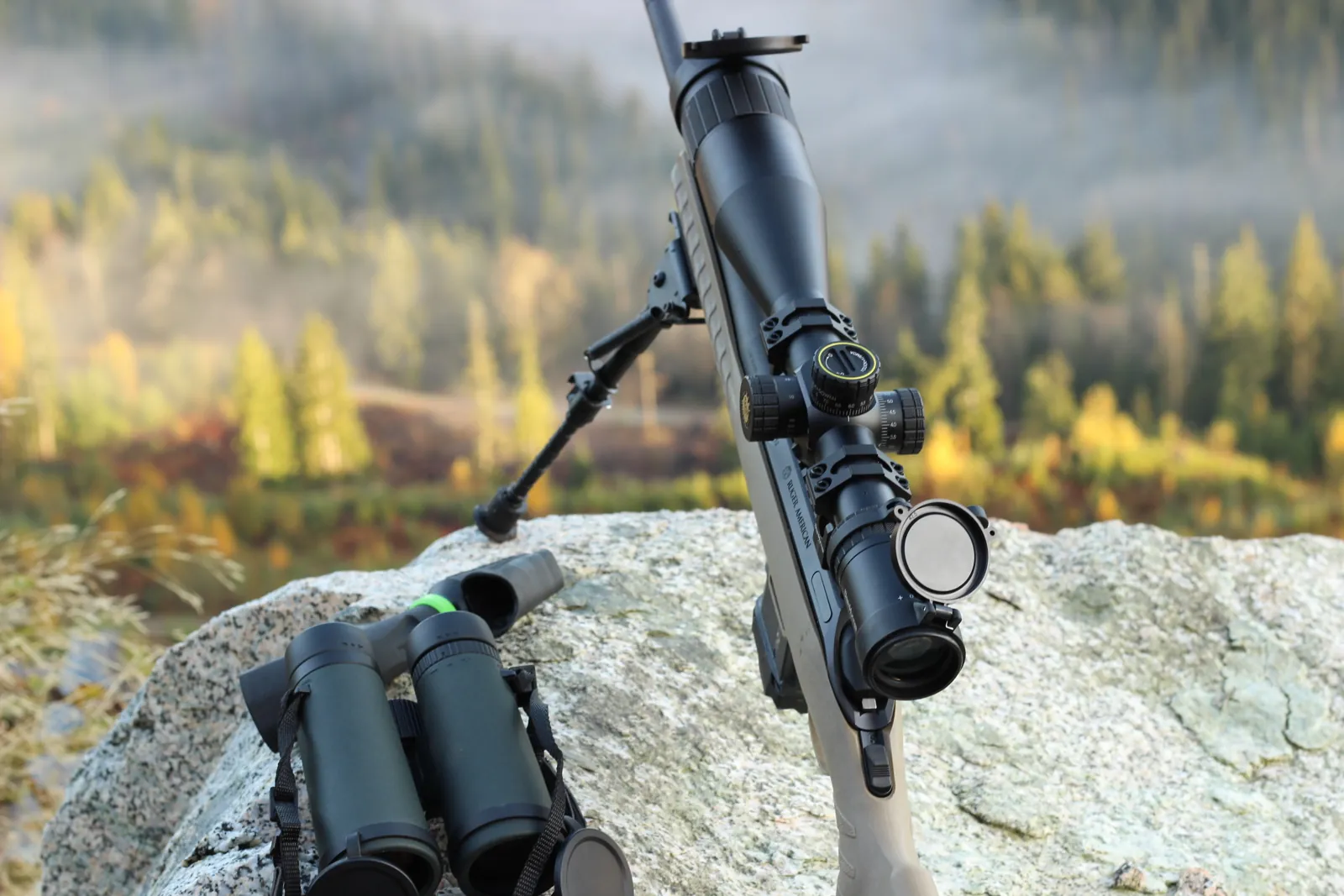
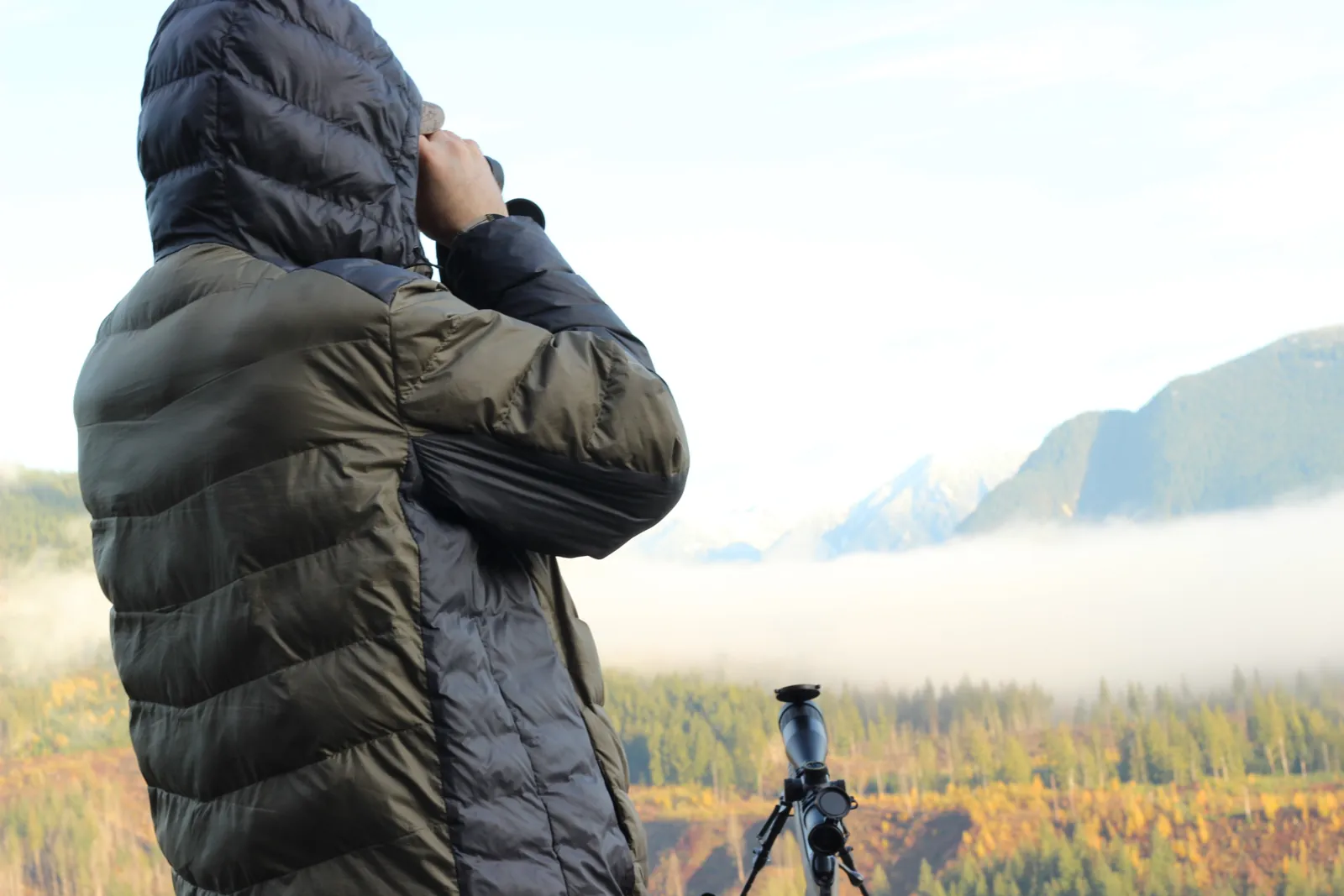
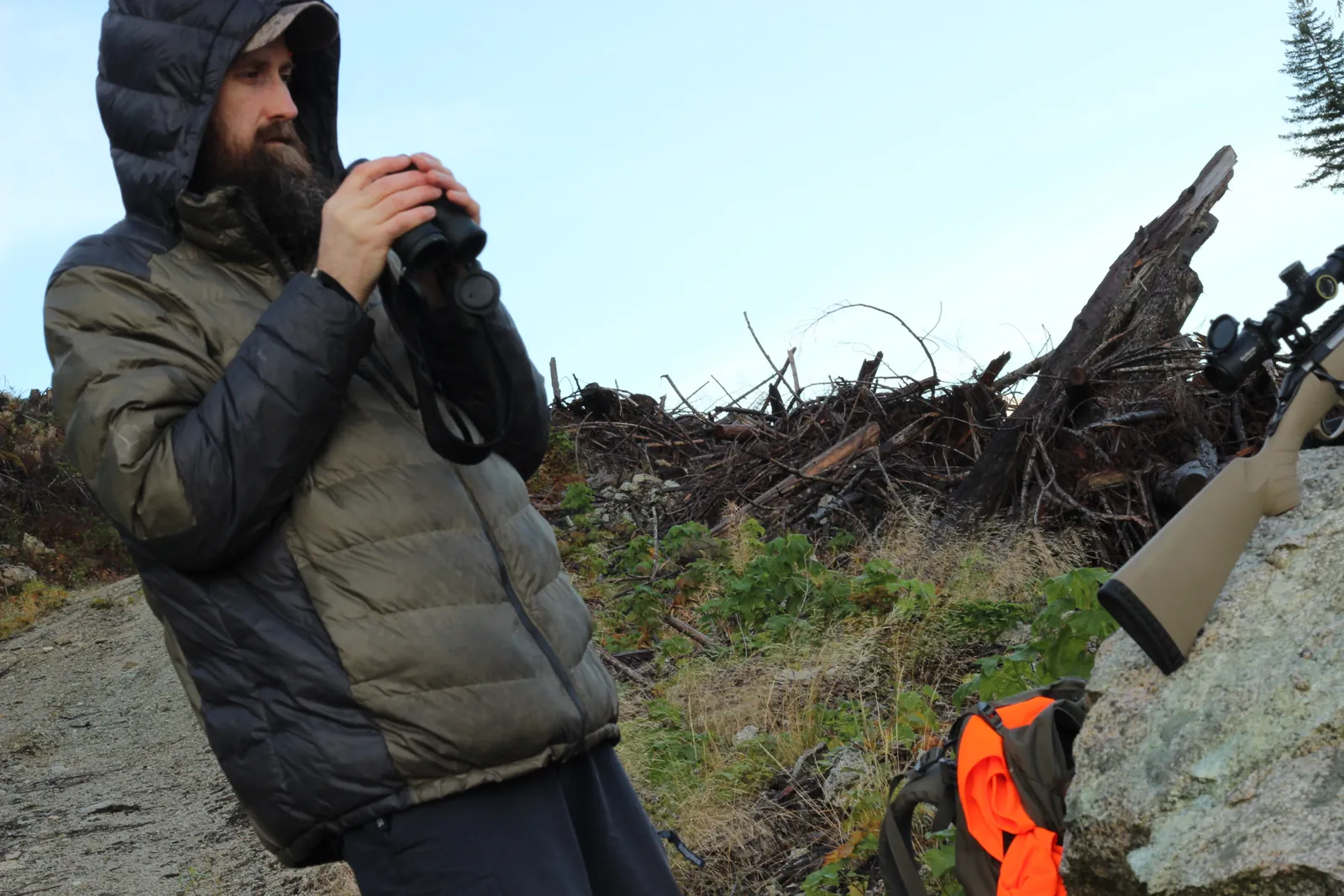
The Riton was the first thing out of the pack and the last thing back in. It finds the deer, or the deer-shaped patch of cover, and the rangefinder puts a number on it. We stood the binoculars on the boulder between glasses.
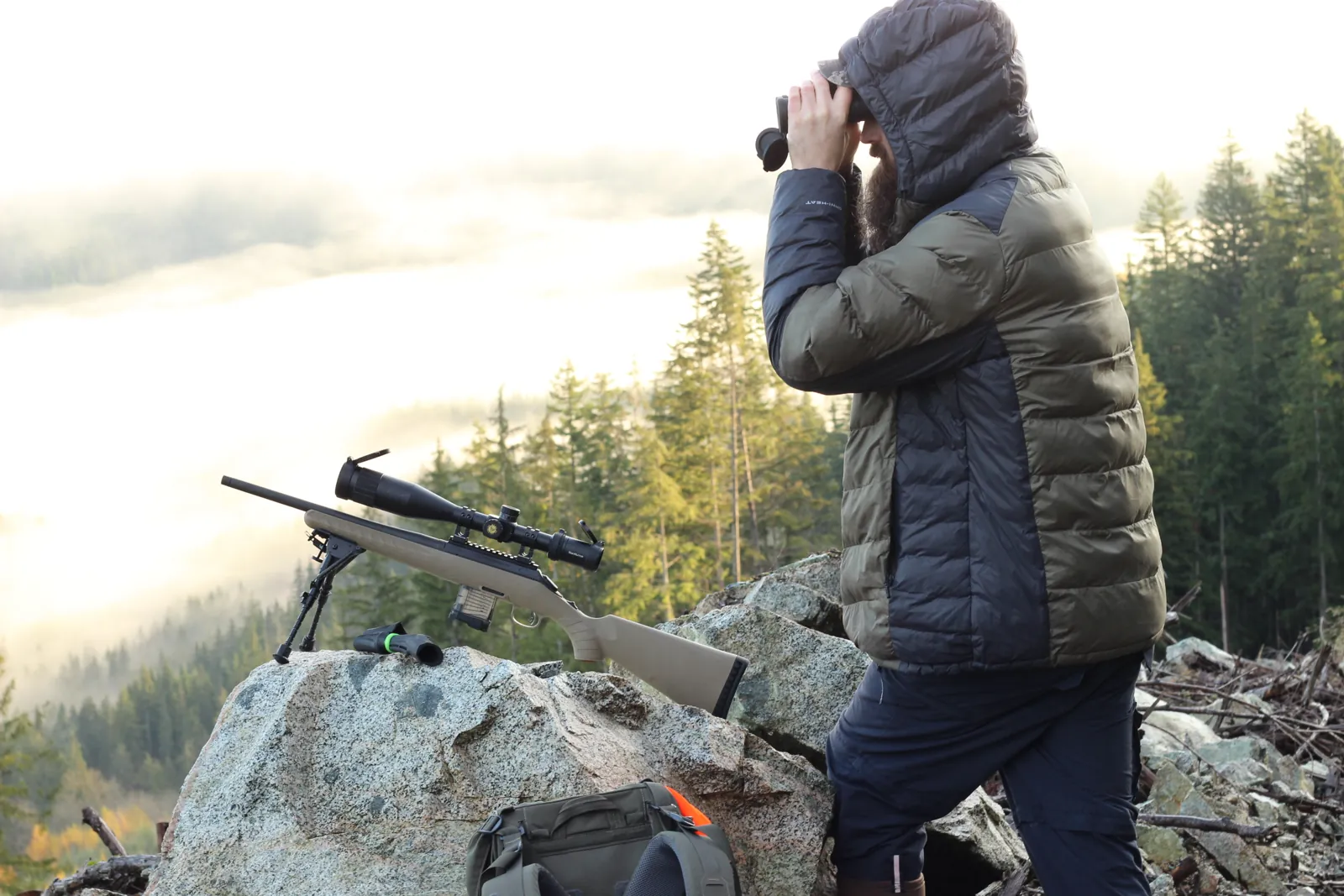
With the Ruger and the Exo
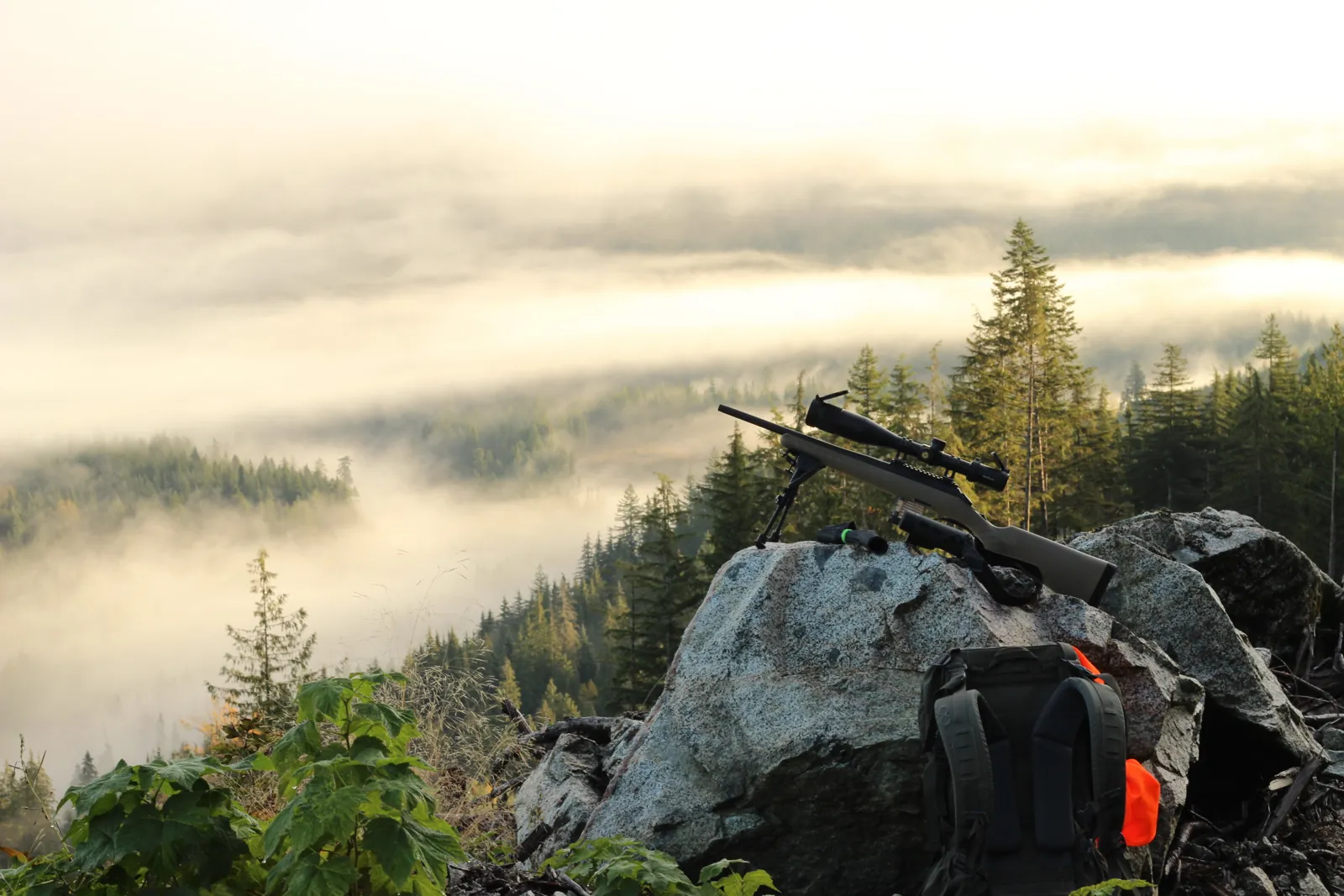
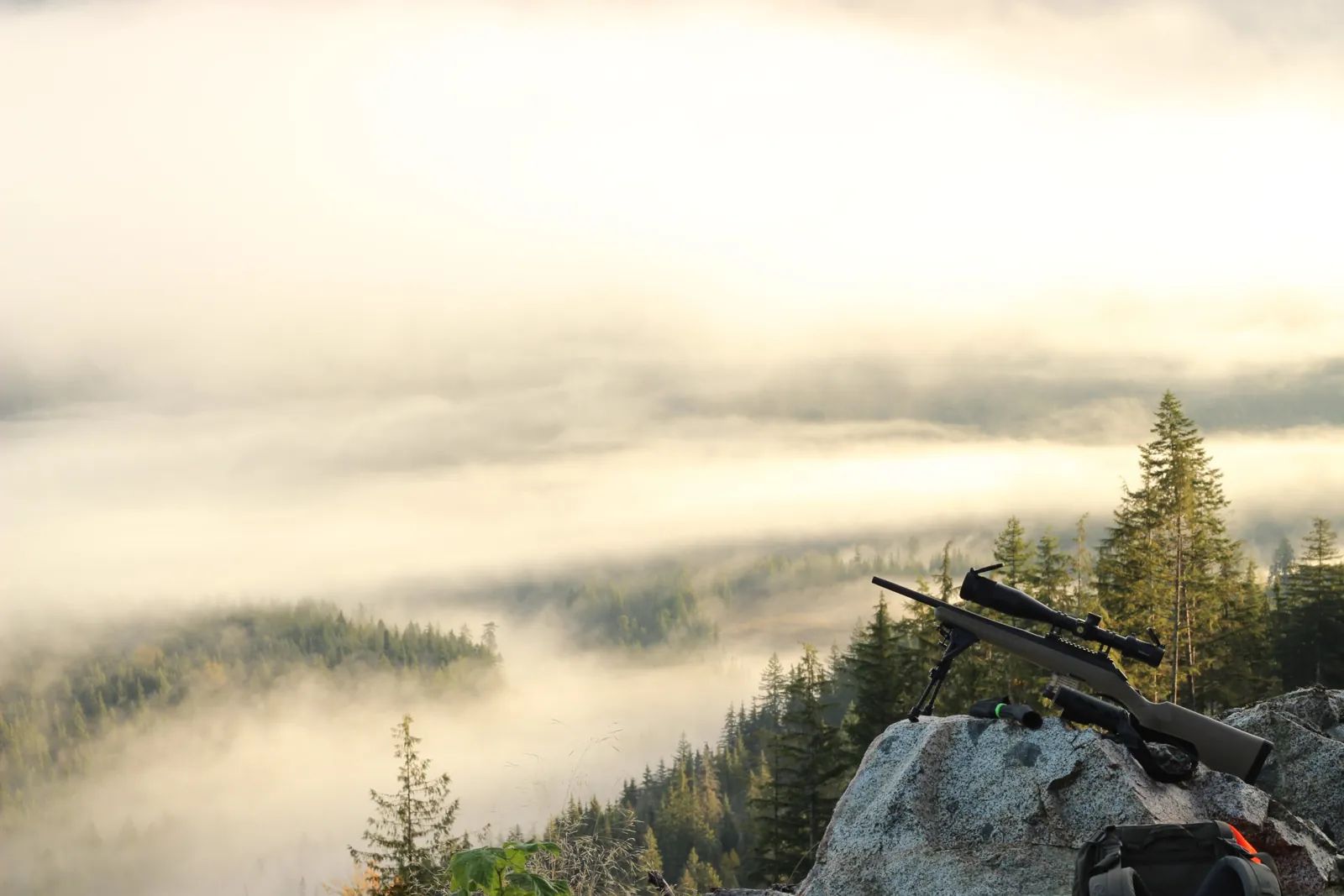
The Ruger rode on its bipod on top of the granite, and the Exo Mtn Gear K4 3600 sat in front of the rock, with the blaze orange riding on it where we could grab it in a hurry. A lot of this hunt was about shortening the walk from “I see something” to “I know what it is, how far, and whether it is worth the move,” and a pack that stays put and a rifle that is ready make that short.
What Other Reviewers Say
We should be straight about this: the Rangetracker 2000 came out in early 2024 and is still fairly new, and we could not find a deep bench of independent, long-term owner reviews. None of the retailer pages we checked (Hirsch Precision, B&H and EuroOptic) carried customer ratings when we looked on 31 October 2026. What does exist is a handful of editorial pieces. We’ve summarised them in our own words, with links, and said what each one actually is.
First Look: GPO RangeTracker 2000
A March 2024 first look by David Herman. It walks through what the unit offers (6x, OLED display, Hyper-scan, angle-compensated ranging) and gives a US list price of $499.99.
Takeaway: a features rundown, not a field test, but it matches the specs sheet.
GPO Rangetracker 2000: Compact, Lightweight Rangefinder
An announcement-style piece from the same month. It presents the Rangetracker 2000 as a compact, light upgrade, and frames the roughly $500 US price as a good value for what it offers.
Takeaway: positive, and based on the launch information rather than extended use.
Updating the Rangetracker series
A European optics retailer's blog. It describes the 2000 as an update of the earlier Rangetracker 1800, noting the move to a red OLED display from an LCD, and lists a price of about €399.
Takeaway: useful for how it differs from the 1800. It is a retailer post with no field data.
This page
Unboxing on 26 October and one scouting hunt on 31 October: ridge ranges of 200 to 300 yards, about 1000 yards across the basin, and about 150 yards from other vantage points. Fast, readable and light.
Takeaway: a short, honest field report. We have not yet ranged a deer with it.
Taken together, the story is consistent: small, light, quick, with a good display and angle compensation, at a mid-range price. What the published reviews do not give you is long-term durability or cold-weather data, and neither can we yet. That is part of why the rut sit is a useful test.
The Specs Don’t Always Agree
While reading around we found a few places where sources disagree. They matter if you’re about to buy, so here they are.
| Spec | What we found |
|---|---|
| Scan rate | Three readings a second at Hirsch Precision, B&H and the GPO USA page. One European retailer says four. |
| Maximum range | 2000 yards at Hirsch Precision and B&H. A European retailer lists 2000 meters. One GPO USA page's metadata mentions up to 1800 yards. |
| Warranty | GPO USA describes a lifetime, transferable warranty. B&H says limited lifetime. A European retailer lists 10 years (2 on electronics). The Hirsch Precision page lists none, so ask them before you order. |
We have used Hirsch Precision’s own page for the specs on this page, because that is the product we’re reviewing and where you can buy it.
About the Seller: Hirsch Precision
The Rangetracker 2000 on our ridge came through our partner Hirsch Precision, an online shooting-sports retailer that sells to Canadian customers in Canadian dollars. Its catalogue spans optics, accessories, ammunition, firearms, gun parts and reloading supplies, and it carries GPO alongside names like Sightron, Nightforce and Kahles. The Rangetracker 2000 (stock code GPO HLRF 2000) was CA$549.00 when we last looked. Read more on the Hirsch Precision brand page.
Pros and Cons (the Honest Version)
What it does well. The Rangetracker 2000 is a small, light, quick rangefinder with a crisp red OLED display and angle-compensated horizontal distance. It read everything we asked of it on a mountain morning, from 150-yard vantage points to a 1000-yard far slope, and it did so without any fuss. The case, lanyard and carabiner come in the box, and the CR2 cell is easy to find.
Where to go in with your eyes open. IPX4 is splash resistance only. The 6x optic is for ranging, not glassing. The 2000-yard figure is a best-case number on a reflective target, and published specs and warranty terms vary by region, so check with your seller. We’ve used it for two outings so far, in cool, damp, foggy conditions. Deep cold, snow and an actual deer on the end of the beam are still ahead of us.
Who Should Buy It
Buy it if you want a compact, modern rangefinder for hunting mountain country, for scouting, or for a youth hunter’s first ranging kit, and you like the idea of angle compensation and a bright OLED readout at a mid-range price. It is also a smart pairing with good binoculars.
Look elsewhere if you need a rangefinder that doubles as a long-range ballistic computer, if you will be in heavy rain every day, or if you want serious magnification in the unit itself.
Final Verdict
The GPO Rangetracker 2000 did what we bought it for. In one morning it turned a mountain of guesses into a range card: 200 to 300 yards up and down the ridge, about 1000 yards across the basin, and 150 yards from the vantage points we’ll sit. It is quick, light and easy to read, and the horizontal-distance line is just right for steep country. It has earned a place in the pack next to the Riton, and we’ll update this review after the rut sit.
Rating: 4.5/5 Stars (provisional, until it has ranged a live deer in the snow)
What We Found, and What’s Next
We went home without a deer, but with a better map in our heads and numbers to go with it. The plan: a longer sitting day at rut time, about two weeks from now, with snow cover likely. We’ll be in position early, at one of the 150-yard vantage points, with the Riton for finding and the Rangetracker for confirming, the Ruger on the bipod and the Exo as the rest and the gear store. Here is our working checklist. Tick things off as you plan your own.
Rut-sit checklist
Before you go, check the BC Hunting & Trapping Regulations Synopsis for your management unit’s deer seasons, bag limits, legal firearms and any area closures, and make sure every young hunter is properly licensed and supervised.
Hirsch Precision is a Hunt & Live partner. Brands sometimes provide samples for review. Hunt & Live writes its honest opinion either way — gear that doesn’t earn its keep doesn’t get a recommendation.